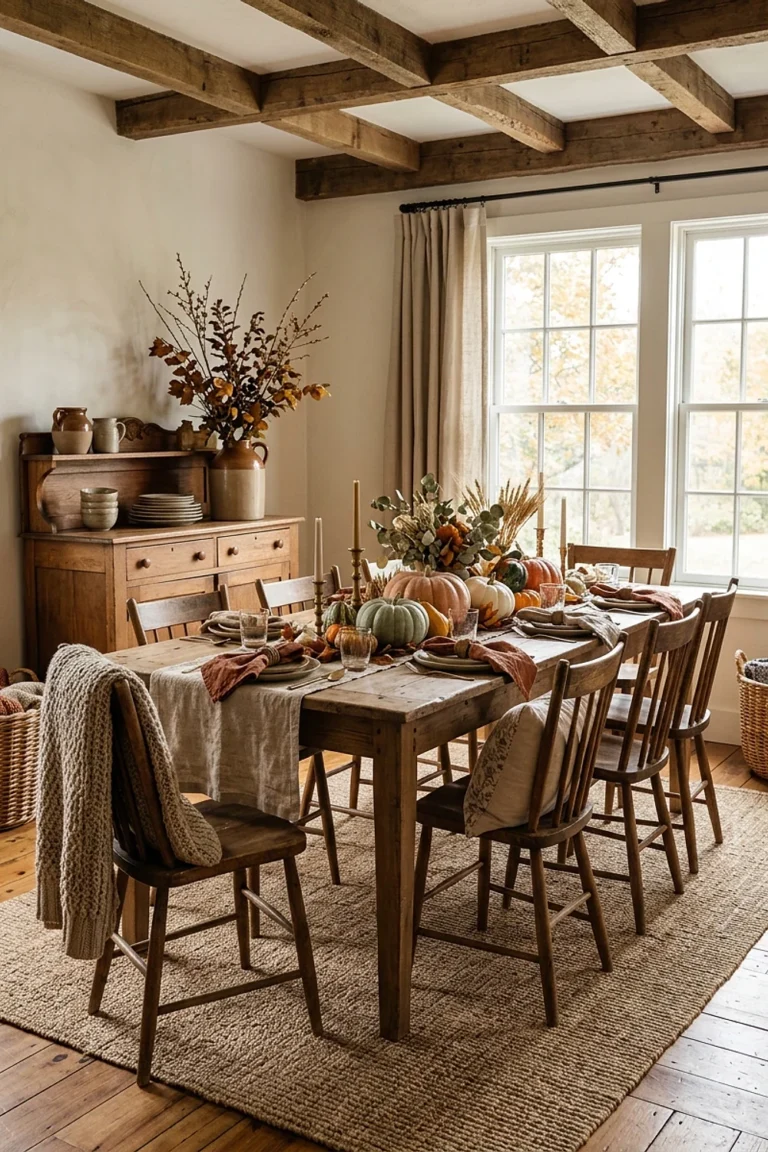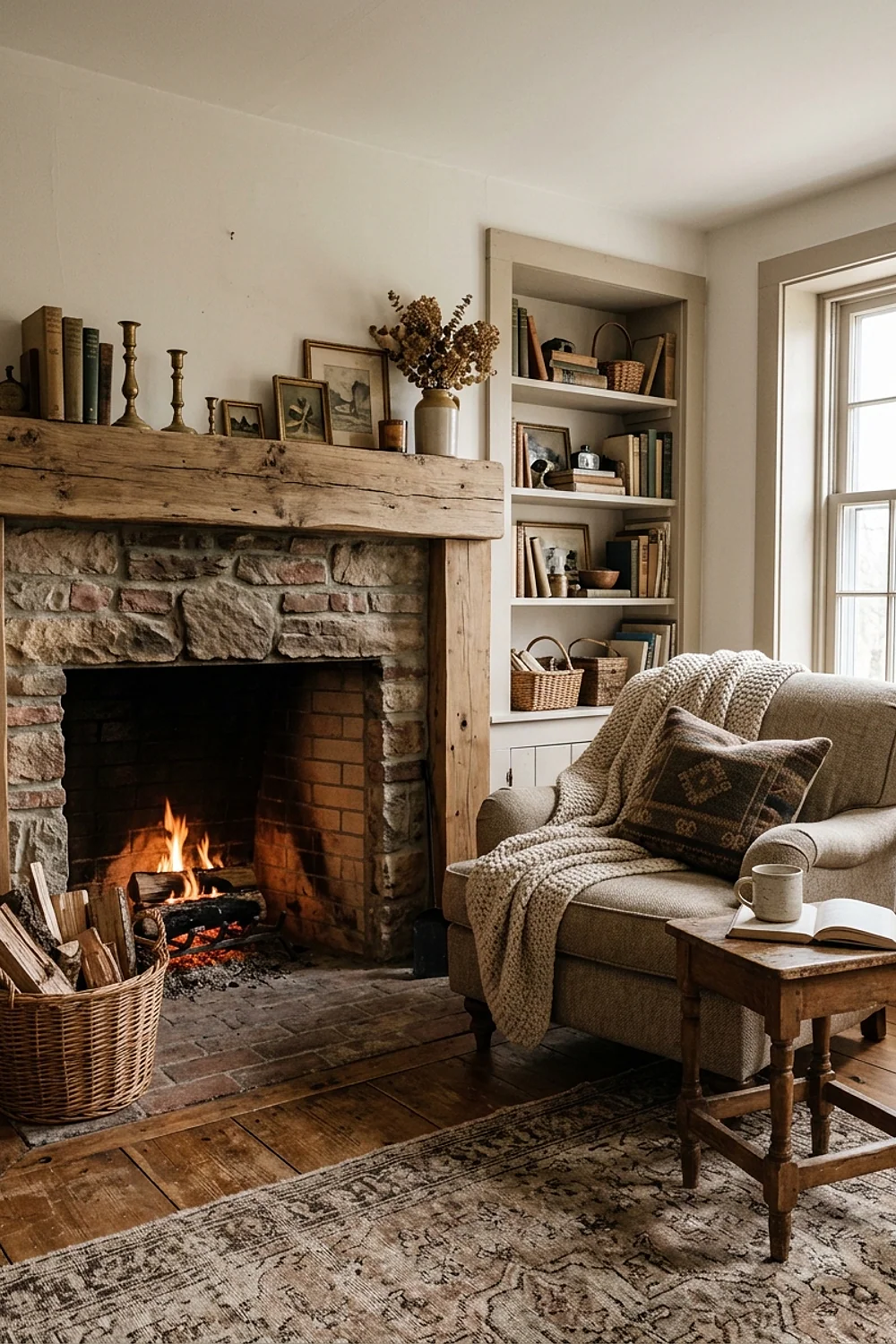
What makes a fireplace corner good enough to sit in for three hours straight? The best cozy fireplace nook ideas answer that with seat depth, reach, and light before they ever mention style.
Below are 35 ideas, each with the reasoning behind it, who it suits, and the one mistake to dodge. Pick two or three, not all of them, and the corner will start getting used instead of just photographed.
Cozy fireplace nook ideas: Where the inspiration comes from
Cozy fireplace nook ideas succeed or fail on one question: will anyone sit there on an ordinary Tuesday night? A nook that photographs well but has no place to set a mug gets abandoned by week two.
Designers run a quick test. Sit down, then check what a hand can reach without standing up.
- A surface for a drink within one arm’s length
- A light that reaches the page without glare
- A seat you can leave and return to without rearranging three cushions
- Fuel, throws, and books stored close enough that the fire never dies from laziness
Everything below is ranked by that logic. Comfort and daily use come first, and looks follow from there.
1. Two lounge chairs angled toward the firebox
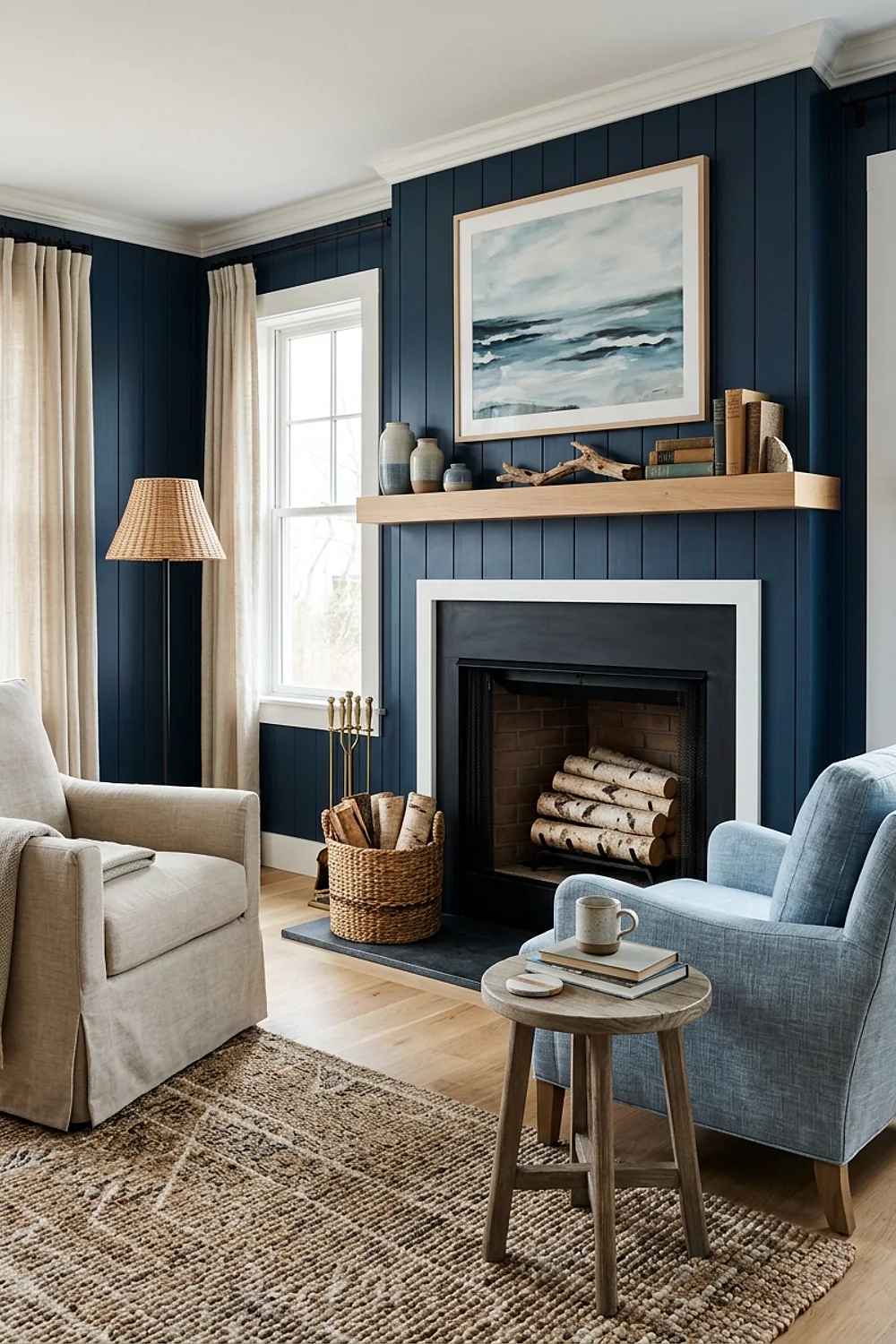
Two lounge chairs turned about 35 degrees toward the firebox make a circle around the fire instead of a waiting room. Chairs set parallel and facing each other across the hearth force people to twist their necks to see the flames.
This layout suits living rooms at least 12 feet wide, where a 30-inch walkway can stay open behind the chairs. Leave 3 to 4 feet between each seat front and the hearth edge, or shins overheat while shoulders stay chilly.
2. A mantel dressed in one tall, one medium, one low object

A mantel with a 24-inch ceramic vase set off-center, two stacked books, and a small brass candlestick reads as collected over time. A row of matching objects at equal gaps looks like a shop display.
Keep it to five items or fewer, and keep wax candles and framed prints away from a firebox that runs hot. Shallow 6-inch mantels need smaller pieces, because anything top-heavy tips when a door slams.
3. A wide log basket at the chair’s arm side
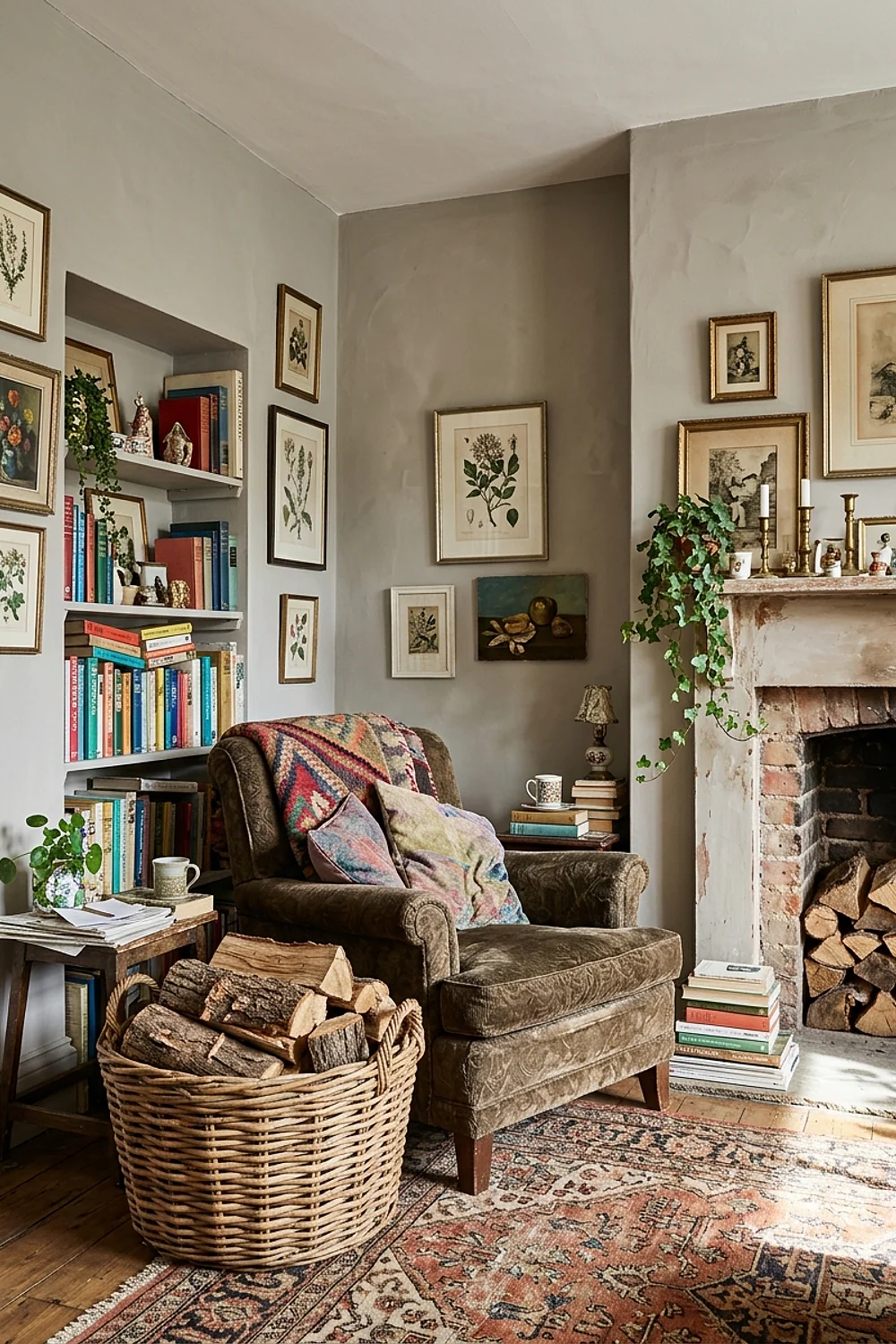
A 20-inch hand-woven willow or black iron log basket parked beside the chair means topping up the fire never requires standing, hunting, and carrying. Fires die when feeding them is a chore.
Wood-burning households get the most from this one, and a decent basket runs about $80 to $150. Line it with a canvas insert, since bark sheds constantly, and keep it 18 inches or more from the firebox opening.
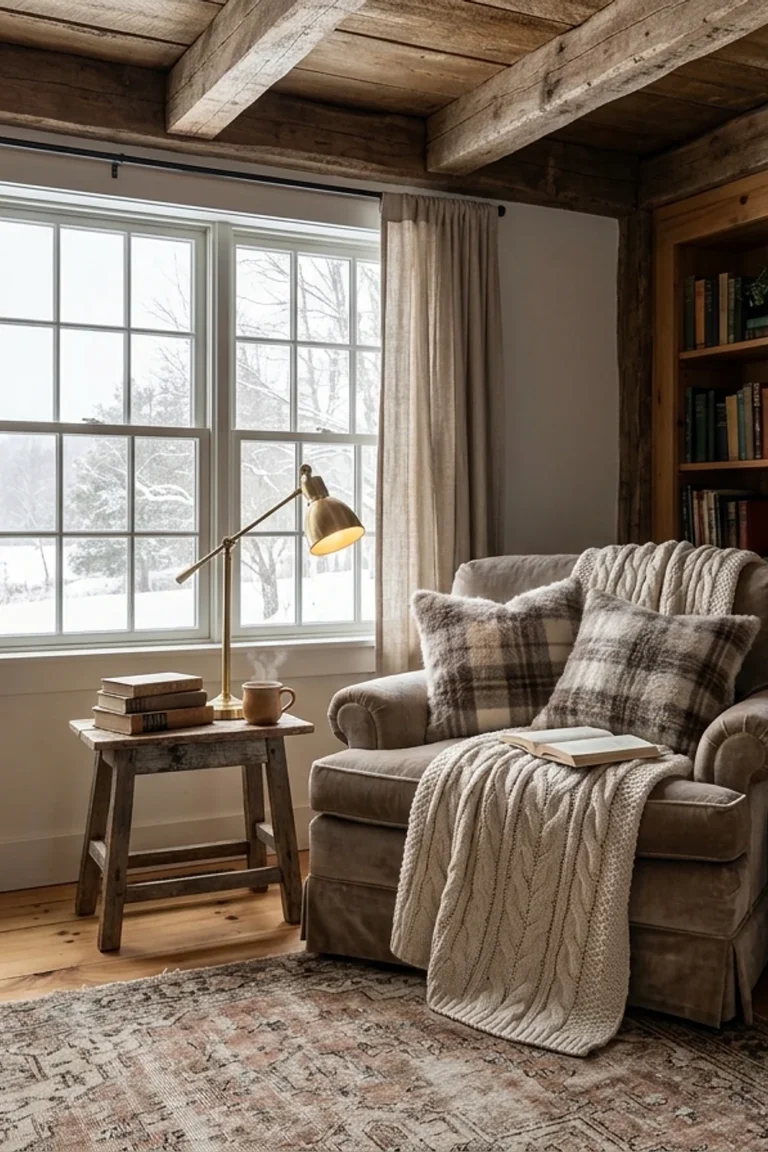
4. A swing-arm sconce at shoulder height

A brass swing-arm sconce mounted so the bulb sits around 40 to 44 inches off the floor throws light over a seated reader’s shoulder. It also frees up the floor space a lamp would eat beside the chair.
Choose a 2700K bulb at roughly 450 to 800 lumens and a fabric shade, because a bare bulb glares against a white page. Renters can use plug-in versions with a paintable cord cover running down the wall.
5. Deep forest green on the chimney wall
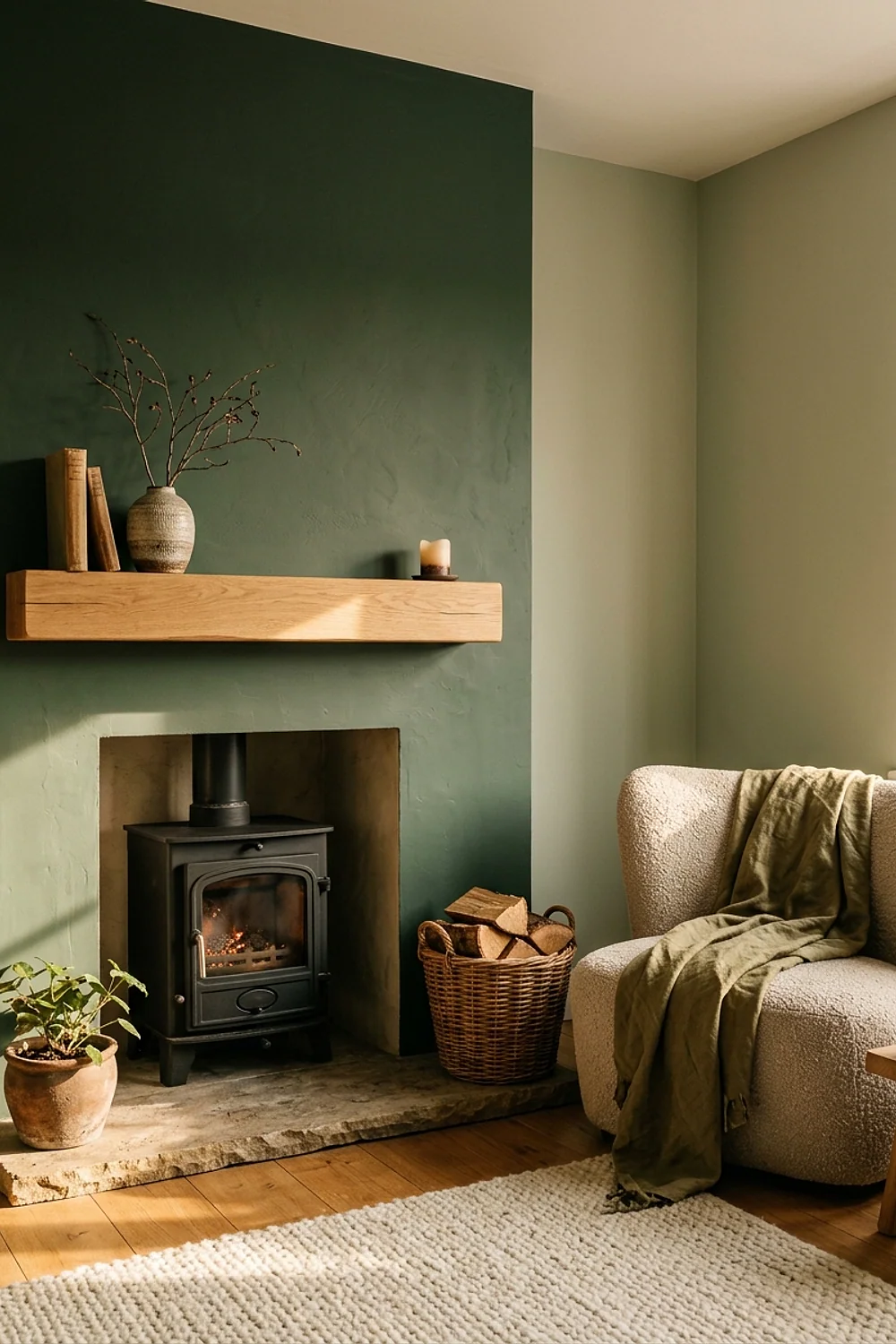
Farrow & Ball Studio Green, or any deep green with a touch of black in it, makes firelight look stronger by darkening everything around it. At 4pm in November, when the window light turns gray, the wall seems to hold the room together.
It suits rooms with limited daylight better than bright ones. Use a matte finish, and test a two-foot swatch on both sides of the chimney breast, because green slides toward blue-gray in north-facing light.
6. A wingback with a back that clears your ears
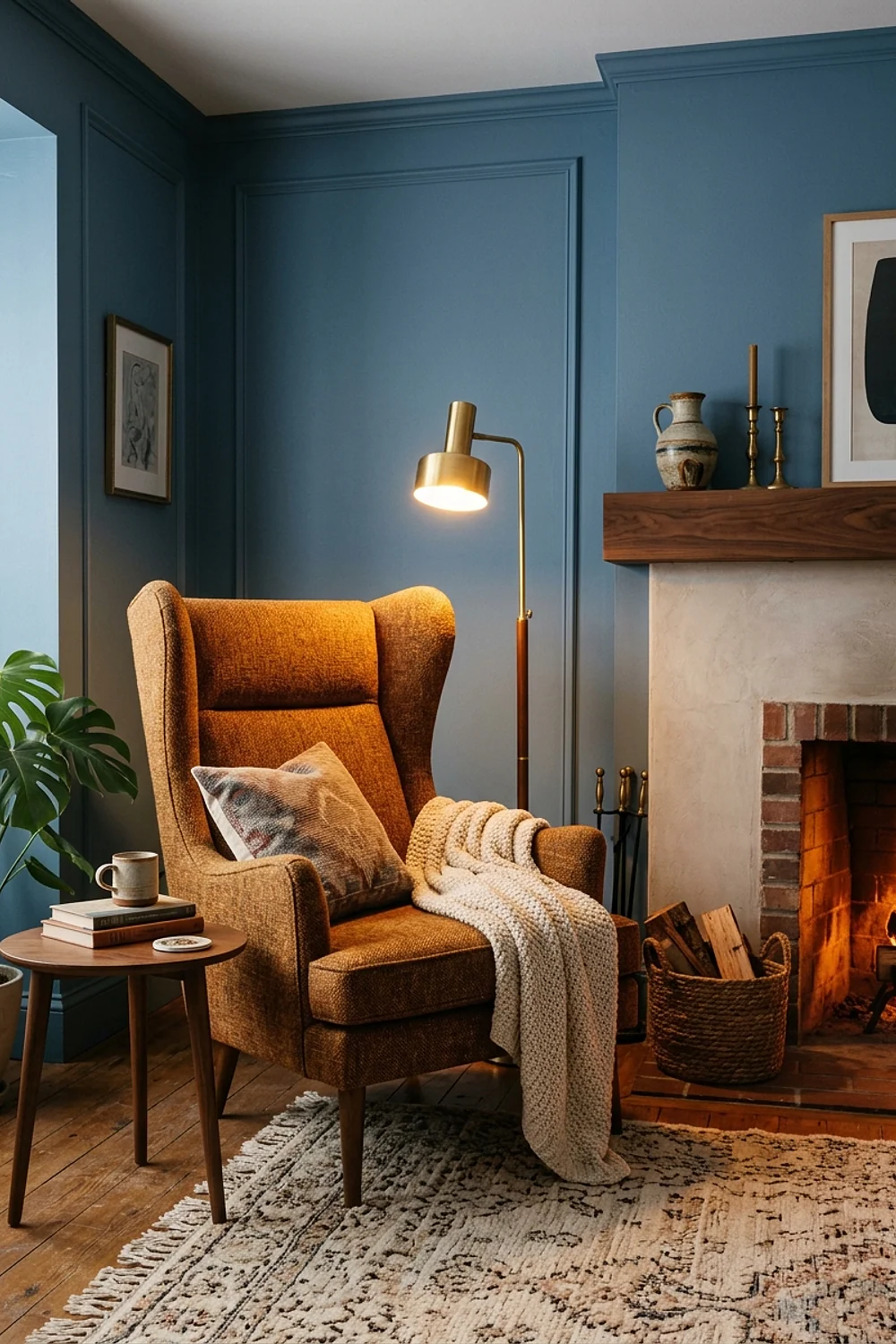
A wingback with a 17-inch seat height and wings that rise above ear level blocks drafts and gives the head somewhere to rest. That matters most for anyone reading longer than an hour, and especially for older readers who tire at the neck.
Check arm height before buying. Arms between 24 and 26 inches off the floor let elbows rest without hiking the shoulders. Skip slick leather that squeaks, and choose wool tweed or a tight performance weave instead.
7. Built-in cabinets flanking the chimney breast
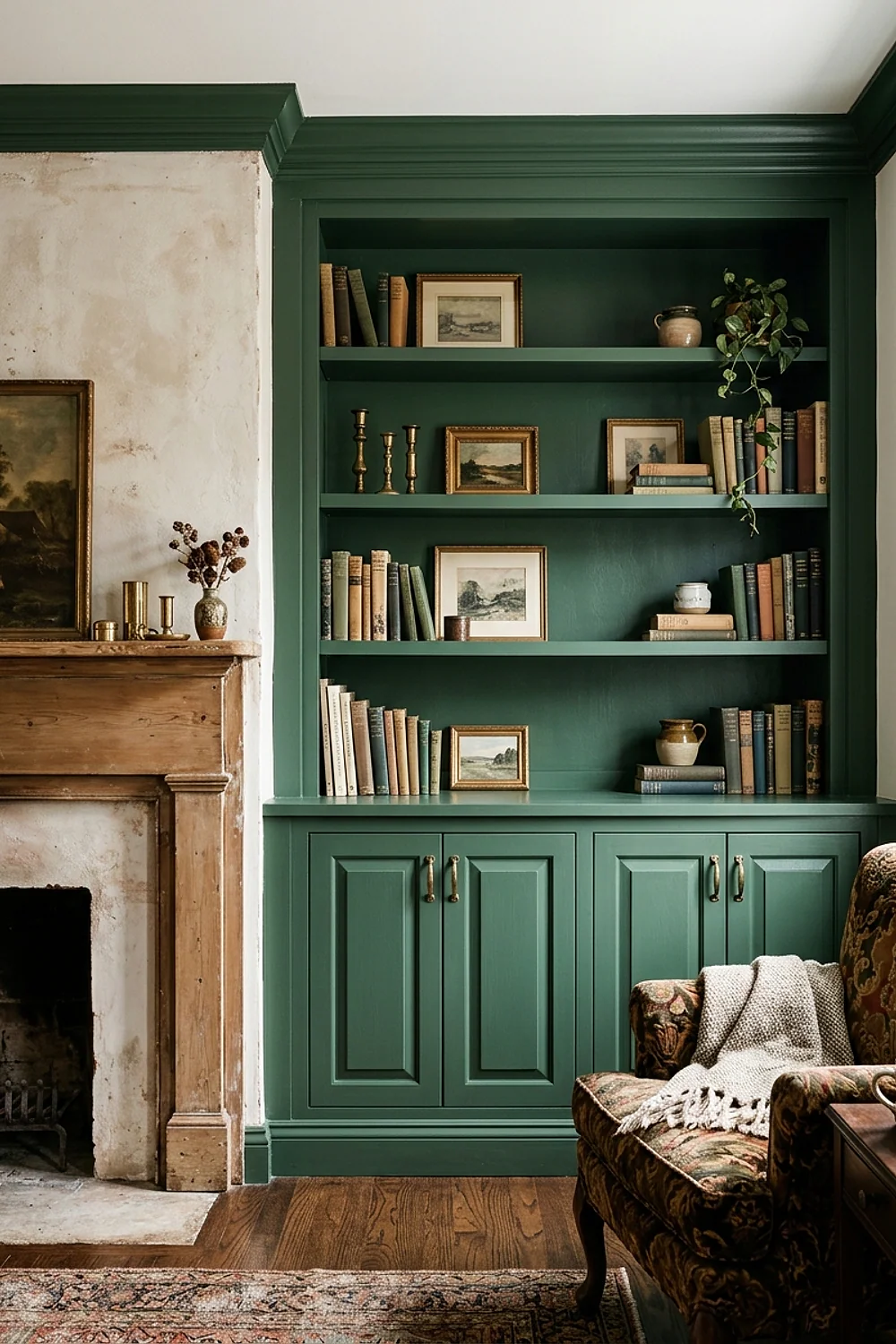
Cabinets on both sides of the chimney breast, with doors below and open shelves above, hide the remote controls, spare blankets, and board games while keeping favorites visible. The symmetry also makes a crooked old fireplace look intentional.
Stock bookcases from IKEA with trim, caulk, and paint can pass for custom work at roughly $700 to $1,000 for both sides. Keep shelf spans under 30 inches or add a center support, because books sag plywood fast.
8. A honed limestone or soapstone hearth

A honed limestone or soapstone hearth soaks up heat and gives bare feet or a resting dog a warm place to land. Honed stone also grips better than polished, which turns slick and shows every scratch from a poker.
Building codes typically require a noncombustible hearth that extends about 16 inches in front of the opening, so plan the seating around that depth. Limestone stains from ash and spilled wine, so seal it before the first fire.
9. A 10-foot ceiling answered with a wide, deep mantel shelf
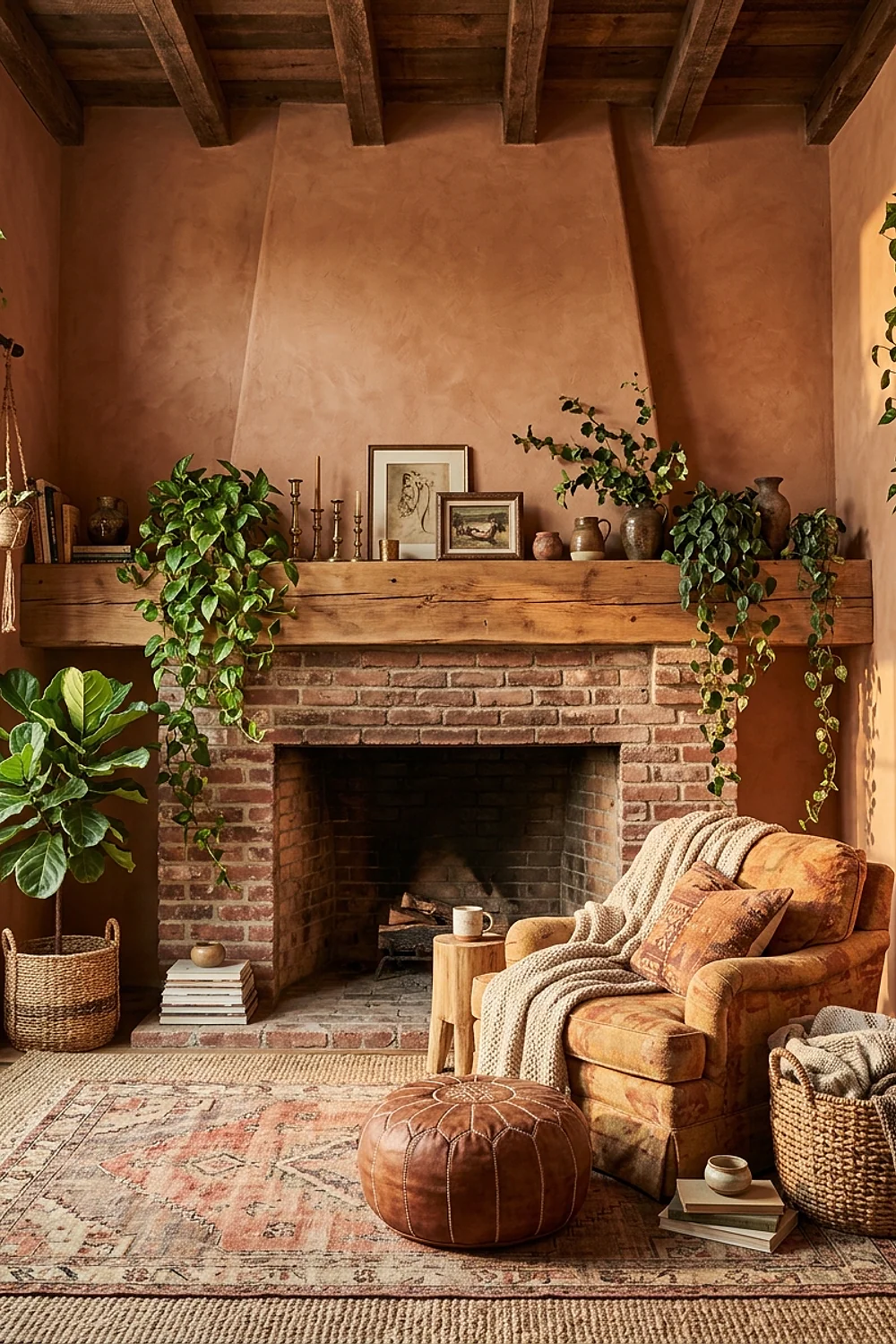
A 10-foot ceiling above a 4-foot firebox leaves a lot of blank wall, and a skinny mantel at 52 inches looks timid. A shelf 8 inches deep, set 12 inches wider than the firebox on each side, gives the eye a horizontal to rest on.
It suits older homes with tall plaster walls and newer builds with oversized chimney breasts. Check the clearance between the mantel and the firebox opening, since local codes limit how close combustible wood can sit.
10. A sofa pulled back to 4 feet from the hearth

A sofa pushed within 24 inches of the fire looks snug and feels miserable. Radiant heat on the shins becomes uncomfortable in about 20 minutes, so the seat nearest the fire ends up empty.
That’s the counterintuitive part: closer seating gets used less. Pull the sofa back to 4 or 5 feet, add a rug underneath, and the warmth spreads over the whole body instead of scorching one leg. Furniture also needs to stay well clear of the firebox opening.
11. A window bench tucked beside the chimney
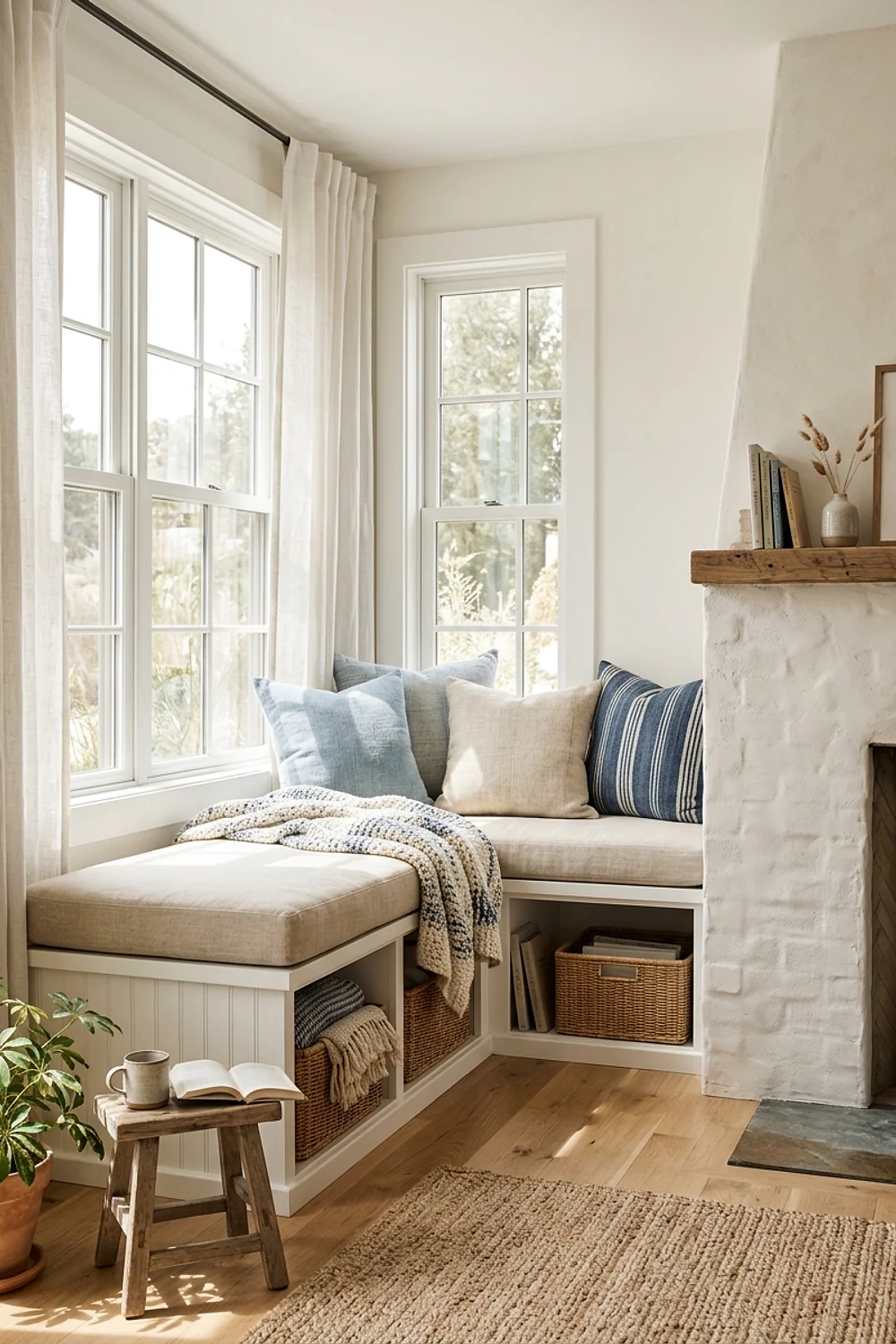
A built-in bench in the window next to the chimney turns a dead strip of wall into a seat. It suits older cottages and colonials, where the chimney is often flanked by a window with nowhere sensible to put furniture.
Aim for an 18-inch seat height, 20 inches of depth, and a 3-inch cushion in high-density foam. The glass leaks cold air, so line the drapes and add a thick cushion, or the bench will be too chilly to use in January.
12. Shelves styled at 60 percent books, 40 percent air

Shelves beside the fire hold up better when books fill about 60 percent and the rest is open space. Stack some horizontally, leave others upright, and set one small object, such as a stone egg or brass bell, on top of a stack.
This is the best answer for anyone who owns too much stuff. Stripping dust jackets off a few hardcovers calms mismatched spines, and a shelf crammed to the edge looks anxious and is annoying to pull from.
13. A C-shaped side table that slides over the seat
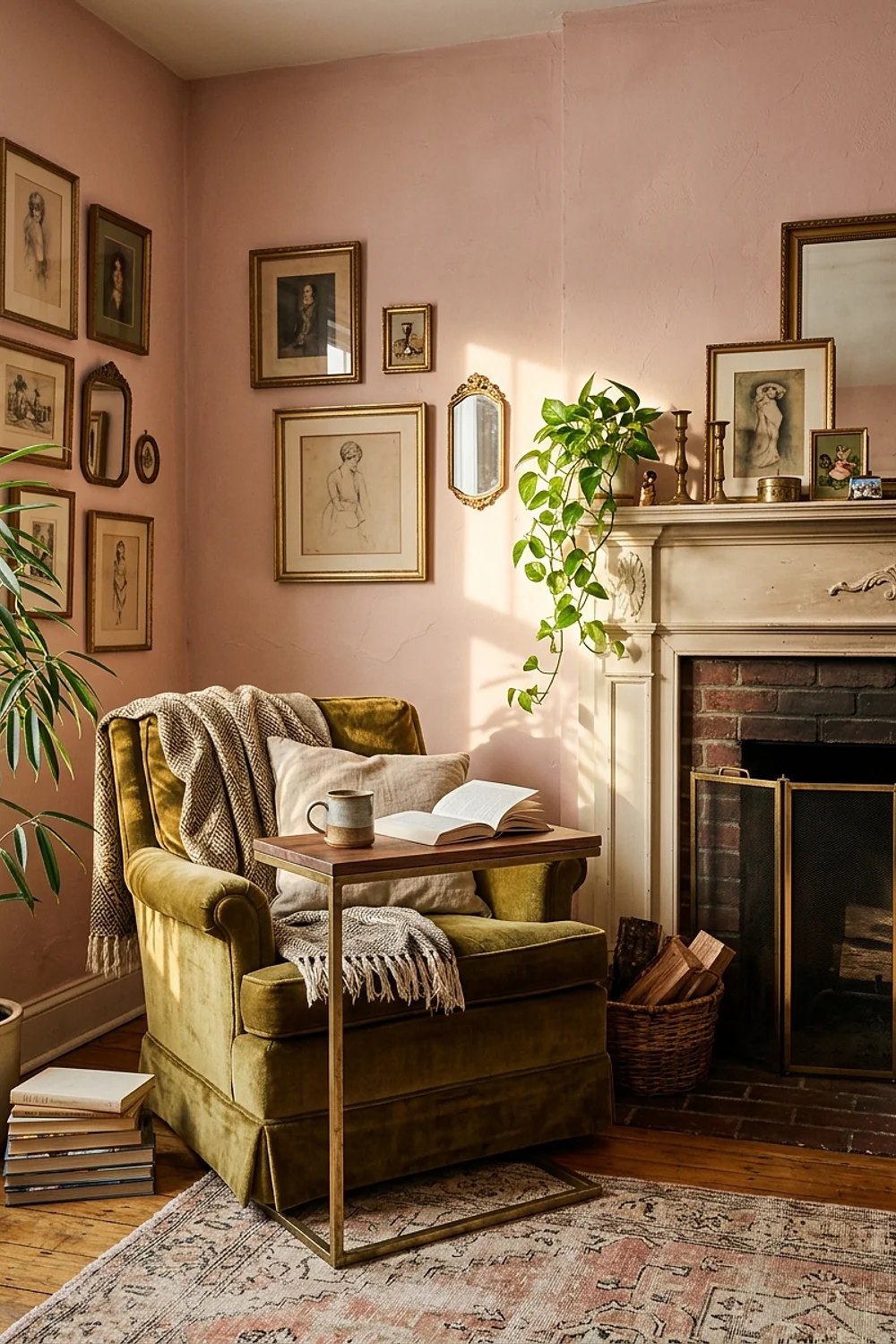
A C-shaped table in walnut, 16 inches wide and 24 inches tall, slides over the edge of a chair or sofa and keeps a mug at lap height. It suits anyone who reads with a drink and hates reaching across a coffee table.
Expect to pay about $120 to $200 for solid wood. Choose a base heavy enough that a cat can’t tip it, and measure so the tabletop sits 1 to 2 inches below the chair arm.
14. A dimmer and real candles that match the flame
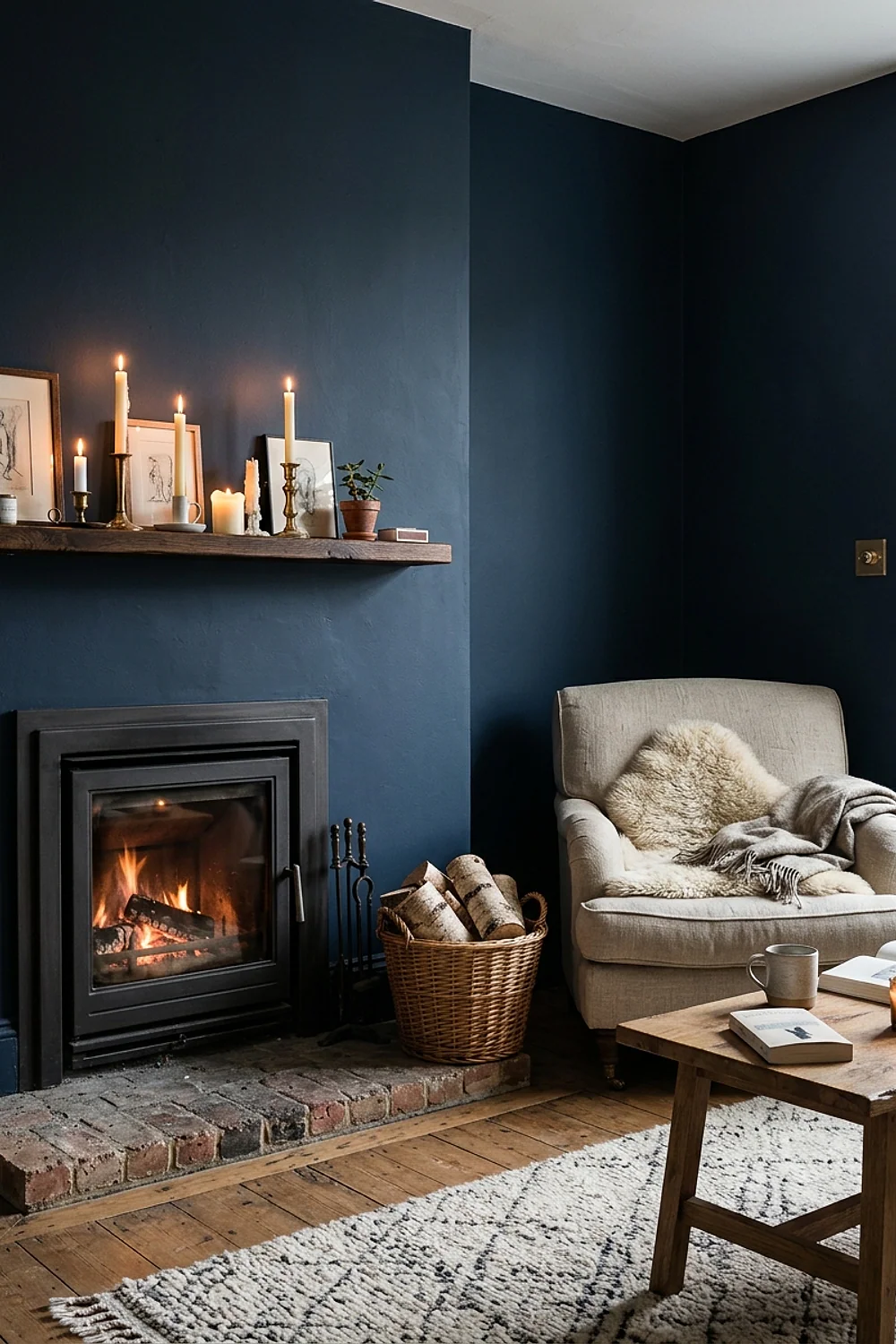
A real fire burns around 1800K, so bulbs in the room should sit between 2200K and 2700K, and the overhead light should be dimmed to 20 or 30 percent. Anything cooler makes the fire look weak and yellow against a bluish room.
Three pillar candles on a tray add the final flicker. LED candles are fine for safety, but the cheap ones pulse unnaturally, so choose ones with a slow random flicker. Never leave real candles lit and unattended near throws.
15. Limewashed brick in a creamy white

A limewash such as Portola Paints in a creamy white softens dated red brick and leaves a mottled, cloudy surface that catches flicker differently than flat paint. It suits 1970s brick fireplaces that read heavy and orange.
Limewash needs a porous surface. Brick that’s already been sealed or glossed needs a mineral primer first, and two to three coats is normal. Brush a test patch low on the wall before committing.
16. A seat 21 to 22 inches deep, not 26

A 26-inch seat depth sounds generous. Actually, no, scratch that. For reading, 21 to 22 inches with a firm back wins, because anyone shorter than about 5’10” ends up perching on the edge or stacking pillows behind them.
Deep seats suit lounging and napping, while shallower ones suit sitting upright with a book. Test by sitting with your back flat against the cushion: the seat edge should stop about two fingers short of the back of the knee.
17. A lidded storage ottoman as footrest and stash

A lidded ottoman about 30 inches wide and 17 inches tall swallows two throws and a few magazines while doubling as a footrest. It works best in small living rooms where each piece has to do two jobs.
Expect $180 to $350 for a sturdy one. Pick a flat or tray-topped lid, because a tufted top won’t hold a mug, and test the hinge, since cheap ones slam shut on fingers.
18. A German schmear surround in lime mortar

A thin coat of white mortar smeared over brick and then wiped back leaves the brick peeking through unevenly. The surface is rough and matte, and it handles heat without trouble, so it suits farmhouses and cottages.
The catch is that it can’t be undone. Try a 12-inch patch in a low corner first, and decide how much brick to expose, because heavy coverage turns the wall plain and light coverage turns it dirty.
19. An 8-by-10 rug that reaches under the front legs

An 8-by-10 rug that slides under the front legs of both chairs ties the seating into one zone. If the rug sits entirely off the furniture, the nook looks like a collection of strays.
Choose low-pile wool, which resists stray sparks and smolders instead of melting. Nylon and polypropylene fibers melt when embers land, so avoid them near a wood fire. Stop the rug edge 12 to 18 inches short of the hearth.
20. A TV mounted above the mantel, reconsidered

A television hung above the mantel puts the screen’s center at roughly 60 to 65 inches, which is a long way above a seated eye line. Over an hour, it strains the neck, and the fire below it gets ignored.
Here’s the deal: a nook built for reading and conversation loses to a screen every time. Put the TV on a side wall or behind cabinet doors, and let the mantel carry art and a mirror instead.
21. A diagonal chair in the corner fireplace

A corner fireplace, common in 1980s houses, seats better with a chair set on the diagonal than with furniture squared to the walls. A round side table or a floating ottoman completes the triangle and breaks up the stiff geometry.
It suits living rooms where the fireplace was shoved into a corner and the layout never made sense. Leave a 3-foot arc of clear floor in front of the firebox, and don’t wedge a big sofa into the angle.
22. A blanket ladder with three folded throws

A 5-foot oak ladder leaned at roughly 15 degrees against the wall holds three throws within arm’s reach of the chair. It suits anyone who currently stashes blankets in a closet down the hall.
Expect about $60 to $110. Keep it at least 3 feet from the firebox, because wool near sparks can singe, and fold throws loosely so they don’t slide off the rungs on a rainy Sunday afternoon.
23. A picture ledge at seated reach

A 4-inch deep picture ledge mounted 30 to 36 inches off the floor keeps a current book, reading glasses, and a small plant where a seated hand can find them. It suits tight nooks where no table will fit.
Pick solid oak or painted pine, and screw into studs instead of drywall anchors, since books are heavier than they look. Mind the plant: avoid anything that drops leaves into the hearth.
24. An arc lamp that leans over the chair

An arc floor lamp, such as the Flos Arco with its marble base, reaches over a chair from behind and drops light onto the page. It suits rooms with no wall near the seat for a sconce.
The base has to be heavy, since cheap imitations tip when a child grabs the arm. Measure the reach: the shade should hang about 18 inches in front of the reader’s shoulder, not directly over the head.
25. Matte charcoal plaster behind the fire
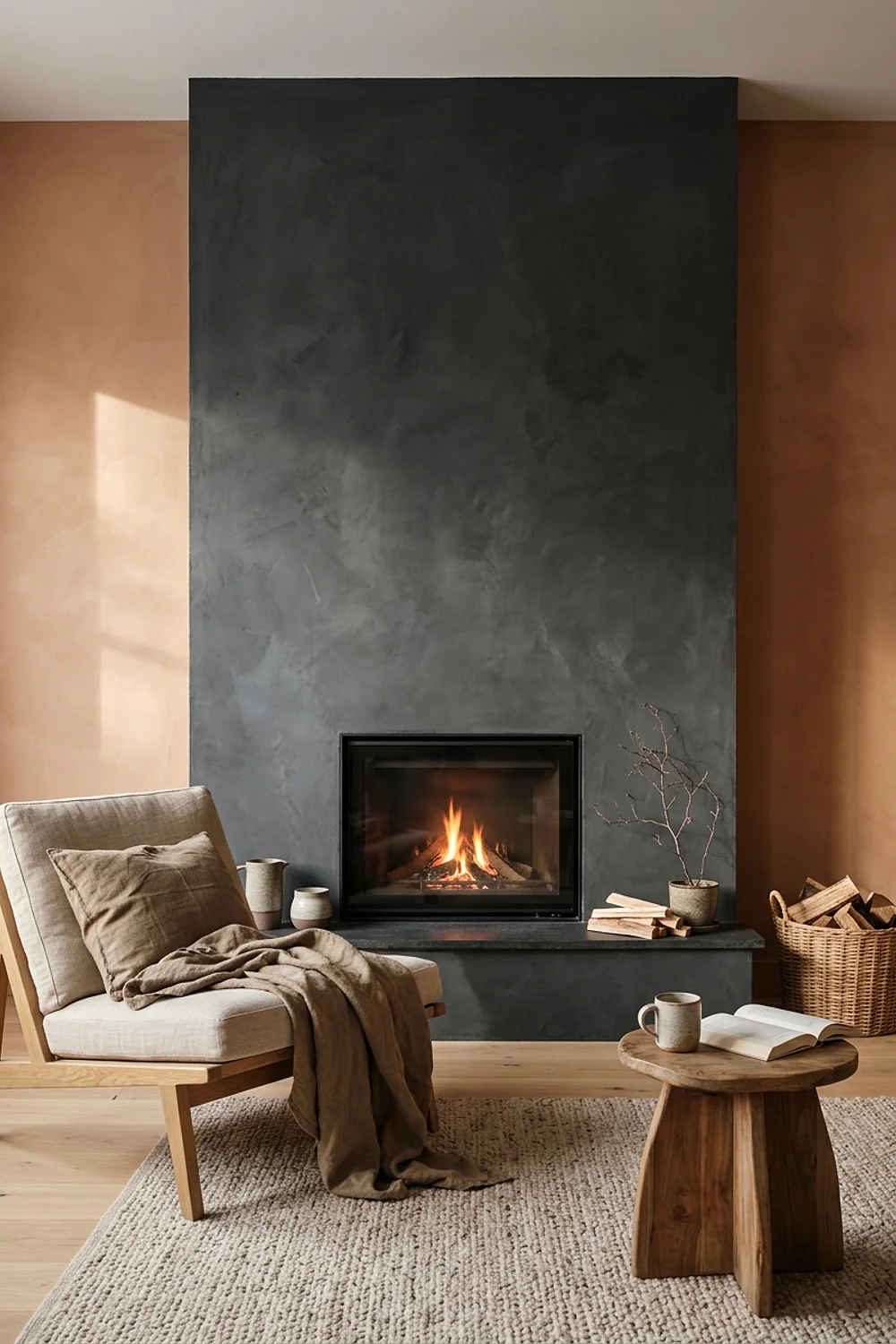
A matte charcoal such as Farrow & Ball Railings makes the walls recede and turns the fire into the focal point. At dusk, the room’s edges blur and the flames do the work.
It suits rooms 12 feet wide or larger, because dark colors shrink tight rooms. Use a scrubbable finish, since chalky matte shows fingerprints, and keep ceilings lighter so the room doesn’t feel like a cave.
26. A short chaise set perpendicular to the fire

A chaise about 62 inches long, set sideways to the fire, lets legs stretch out and takes pressure off the lower back. It suits readers who fall asleep sitting up, and anyone who wants to read for hours.
Expect $900 to $1,800 for a decent one. Check the arm end: it should be at least 24 inches off the floor to support a head. Skip it in rooms under 11 feet wide, where it blocks the walkway.
27. A recessed log niche under the firebox

A log niche about 16 inches tall built into the wall beneath the firebox stacks wood in a clean rectangle and keeps it dry. The geometry looks deliberate, and the wood doubles as decoration.
Keep only a three-day supply indoors, because firewood hosts spiders and beetles that wander when warmed. Store the rest outside off the ground. A niche suits wood-burning homes with a thick masonry surround.
28. A zellige tile surround with uneven glaze

Handmade zellige tile in cream or clay throws light in all directions because each piece has a slightly different glaze and surface. Firelight dances across it in a way flat porcelain never does.
It suits homes where the surround is a cold, flat slab. Hire an installer with experience, since the tiles vary in thickness and need a thin, even grout line. Use heat-rated mortar within a few inches of the opening.
29. A 28-inch swivel chair in a small room
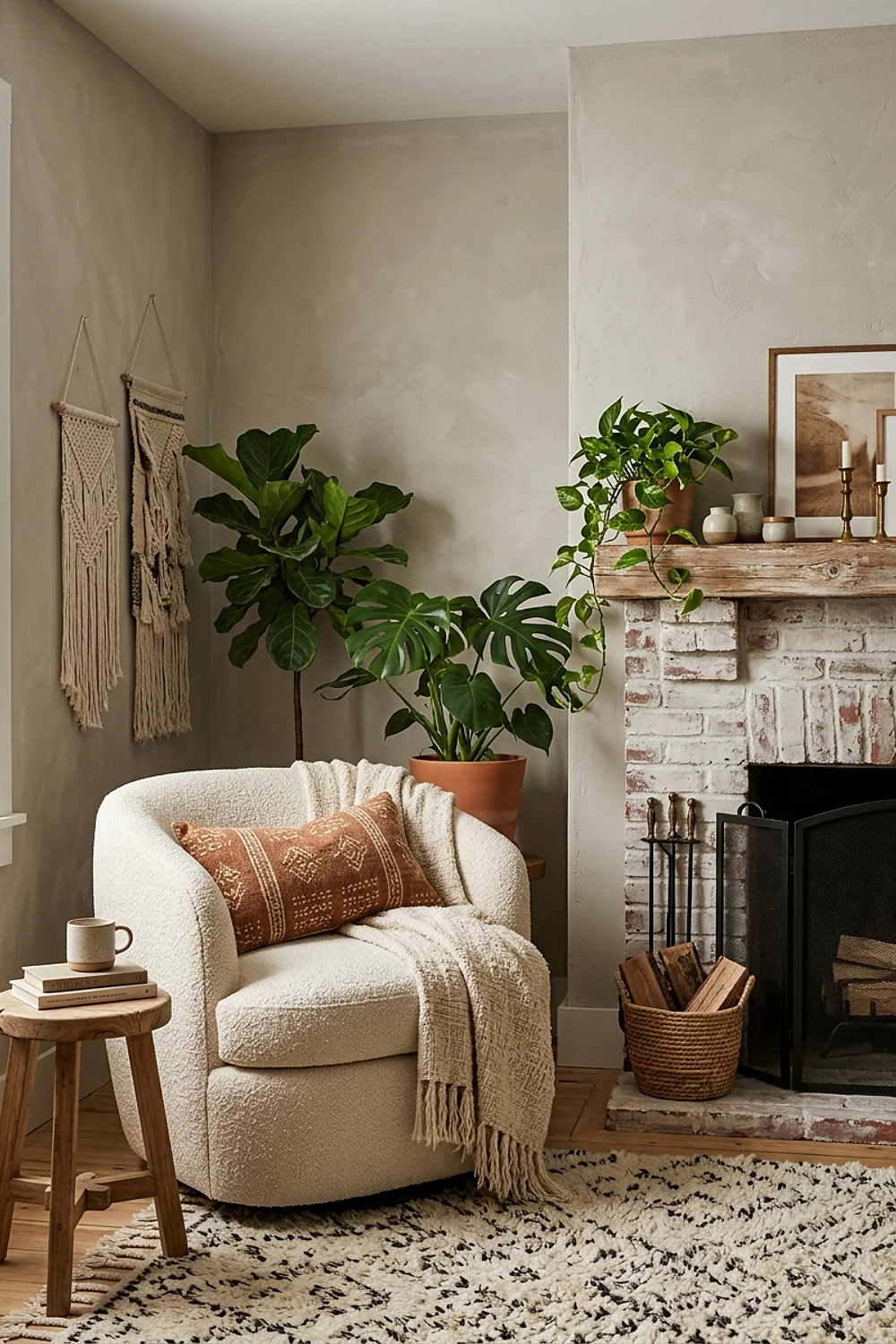
A swivel armchair 28 inches wide turns from the fire to the room in a single movement, so one chair does the work of two. It suits living rooms around 10 by 12 feet, where a pair of club chairs would clog the floor.
Leave a 36-inch radius of clear space so the swivel can spin fully. Check the base: a wide pedestal takes up more floor than four legs, which matters in a narrow nook.
30. Two pillows per seat, no more
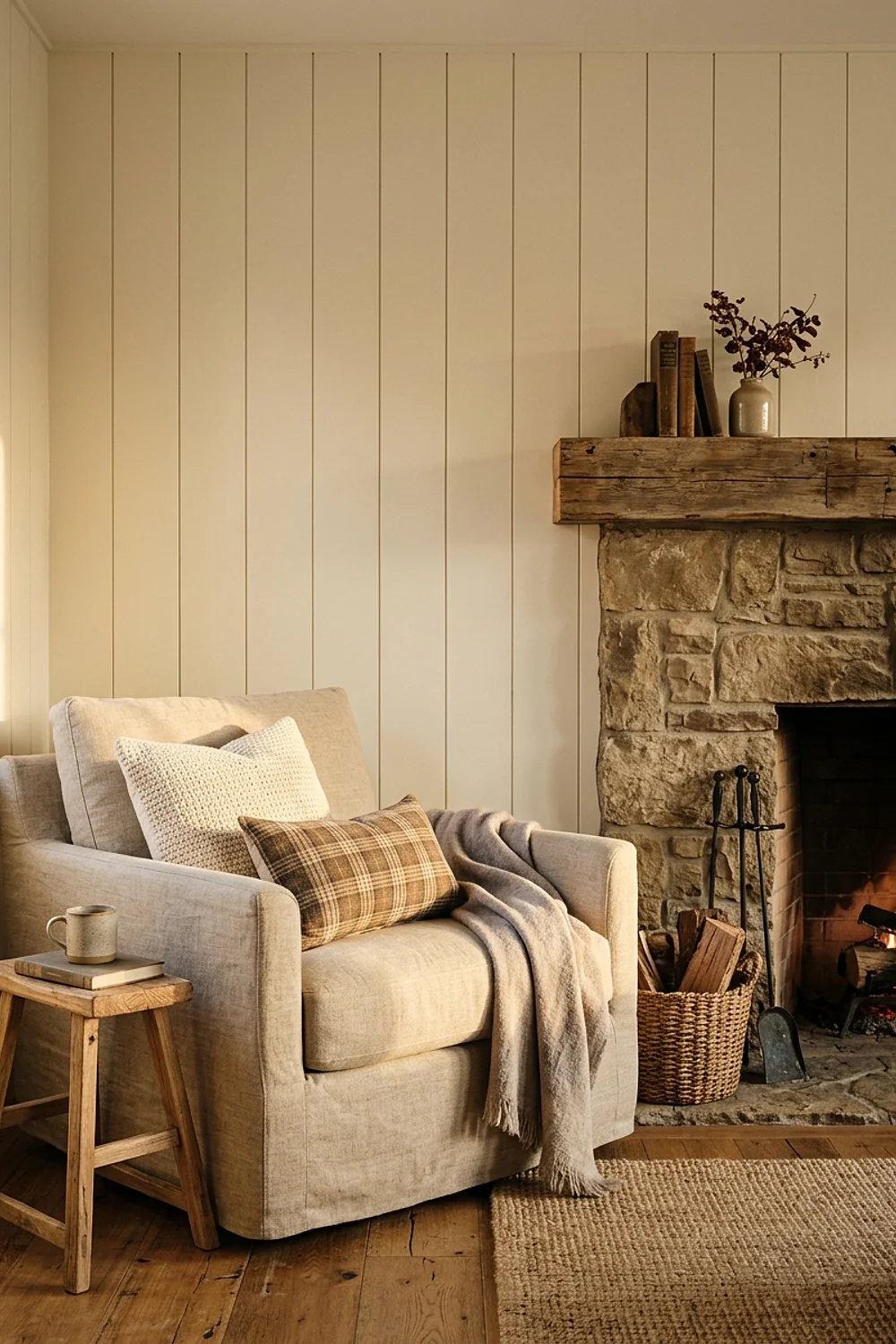
Six throw pillows at $40 each is $240 spent on making a chair smaller. Each pillow eats about two inches of seat depth, so a pile pushes the sitter forward until the back stops touching anything.
Stick to one 12-by-20 lumbar pillow and one square 20-inch pillow per seat. If a pillow gets tossed on the floor every time someone sits down, it’s decoration, not comfort, and it can go.
31. A built-in inglenook bench beside the firebox

A bench built into each side of a wide chimney breast recreates the old inglenook, where people sat inside the fireplace’s edges. It suits chimney breasts 6 feet wide or more, in homes with enough wall to spare.
Make the seat 17 to 18 inches high and 20 inches deep, and tilt the back about 10 degrees. A flat vertical back makes people slump. Cushion the seat in dense foam, and keep heat-sensitive fabric clear of the firebox.
32. A leaning arched mirror above the mantel

A 30-by-48 inch arched mirror leaned against the chimney breast bounces window light into the room at 4pm and doubles the glow of the fire after dark. It suits dim rooms and low-ceilinged ones.
Hang it at least 6 inches above the mantel, and clean it twice a season, because a mirror above a working fire collects soot. Don’t aim it at a TV, where the reflection creates glare.
33. A rolling tea cart on locking casters

Beside the chair, a brass tea cart about 28 inches tall holds a kettle, a mug, and a plate, then rolls away when guests come. It suits hosts and anyone whose nook doubles as an evening gathering spot.
Expect $120 to $250. Buy casters that lock, since a cart that drifts across the floor is worse than no cart at all, and keep the top tray lipped so mugs stay put.
34. A brass picture light over the art

An 18-inch brass picture light washes the art above the mantel in soft light, which makes the fireplace wall glow even with the fire out. It suits nooks that sit empty most of the day.
Choose a 2700K bulb on a dimmer, and hang matte oil or canvas pieces instead of glass, which throws glare. Mind the heat, since a light mounted just above a hot mantel can run warm and fade pigments.
35. Rust and terracotta against brass fire tools
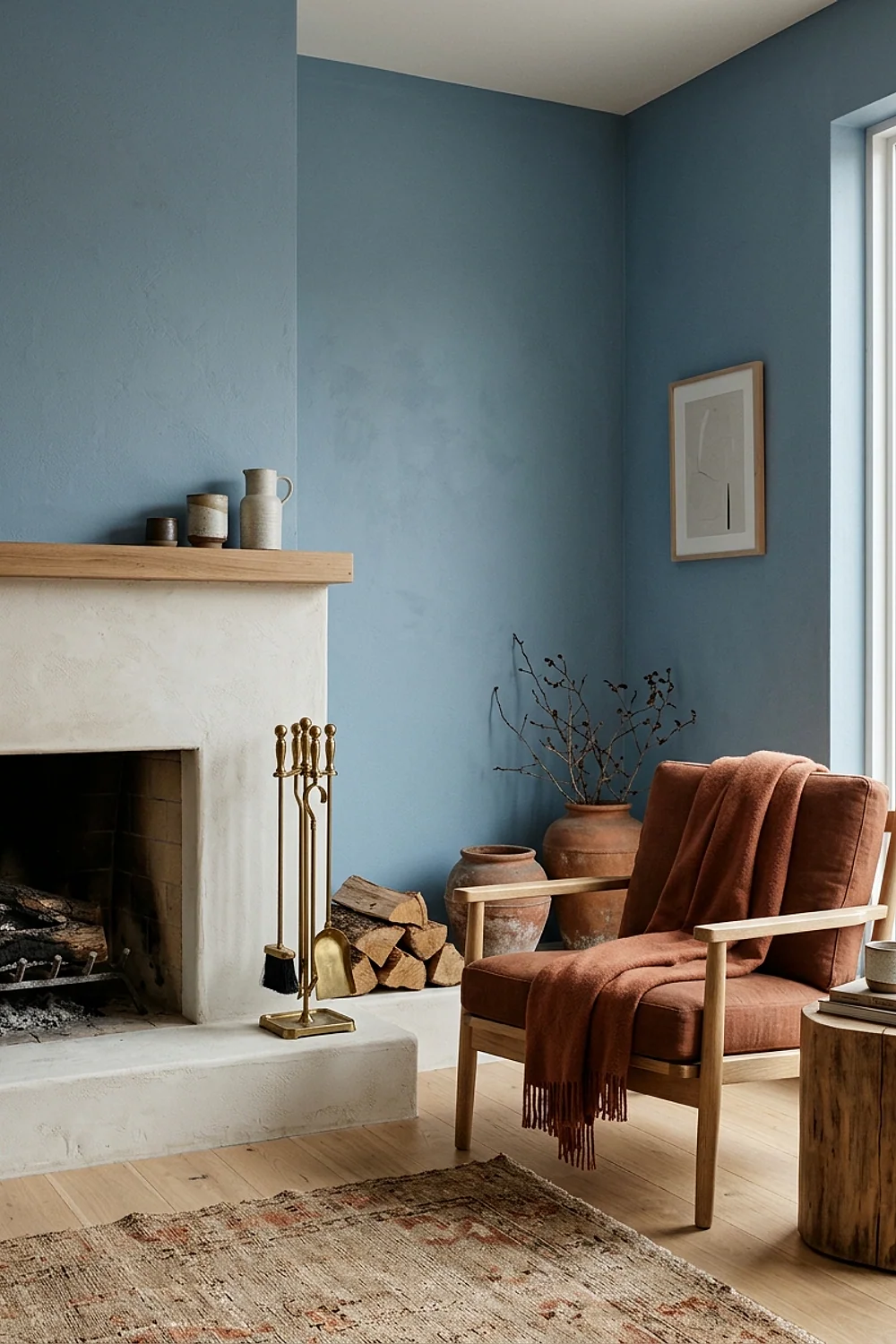
A terracotta-toned wool throw, one rust velvet pillow, and a brass fire tool set pick up the orange and gold already moving in the flames. The palette suits rooms with cool gray walls, where it brings in some heat.
Limit the palette to three tones. Mixing cool blue-gray pillows with orange throws muddies the nook, so check swatches by the window at 4pm, when the room’s light shows undertones that artificial bulbs hide.
Ideas worth borrowing
Cozy fireplace nook ideas work best in small doses. Two lighting ideas, one storage idea, and one color idea outperform ten ideas fighting for the same corner.
Start with the seat, since comfort decides whether the nook gets used. Then work outward in this order:
- Choose the seat, checking depth, back height, and arm height.
- Add one reading light at shoulder height.
- Place a surface within arm’s reach.
- Put fuel and throws within one step of the seat.
- Choose color and texture last, once the function is settled.
Mixing materials is easy when one thing repeats. If the hearth is stone, echo it in a stone lamp base. If the chair is velvet, pair it with a flat-weave rug so the textures don’t compete.
Metal finishes follow the same rule. Pick brass or black iron for the fire tools and let one accent in the other finish show up elsewhere, so the nook looks assembled rather than matched from a catalog.
Investment buys worth making
Fireplace nook ideas split into things worth paying for and things worth renting from a trend. Spend where the body touches or the structure holds. Save on anything that swaps out in a season.
Worth the money:
- The lounge chair or chaise, since frames and cushions decide comfort for ten years
- A wool rug, which resists embers and ages well
- Hearth stone or tile, which is expensive to redo
- Built-in shelving or cabinets
Fine to treat as trends: throw pillows, candle holders, a color-of-the-year throw, and anything shaped like a fad. A $400 chair in a trendy fabric usually sags within three years, while a $1,500 frame with replaceable cushions lasts decades.
Be honest about daily use before buying. A gorgeous cane chair that nobody can sit in for more than twenty minutes is a trend piece at an investment price.
Pick one corner and start
Cozy fireplace nook ideas don’t need a full renovation. A pulled-back sofa, a swing-arm sconce, and a basket of logs within reach change how a room gets used on the first cold evening.
Save or pin this list so it’s ready when the weather turns. Before buying anything, measure the distance from the firebox to the seat and test a reading light at shoulder height.
Frequently Asked Questions
How much room do I need for cozy fireplace nook ideas to work?
A 10-by-12 foot living room can handle one chair, a small side table, and a floor lamp. Keep 3 to 4 feet between the seat and the firebox, plus a 30-inch walkway behind the furniture.
Can I set up a nook around an electric or faux fireplace?
Yes, and the heat rules relax. Electric units can sit closer to seating, often within 2 to 3 feet, though the manufacturer’s clearance guide applies. Cozy fireplace nook ideas such as the angled chairs and the side table still work as-is.
How far should furniture sit from a working fireplace?
Most guidance calls for at least 36 inches between the firebox opening and anything flammable. Comfort usually asks for more, around 4 to 5 feet, because radiant heat gets harsh on the shins within about 20 minutes.
What lighting works best for reading by the fire?
A 2700K bulb at roughly 450 to 800 lumens, positioned over the reader’s shoulder, is the standard answer. A swing-arm sconce or an arc lamp both work. Add a dimmer so the overhead light can drop low enough to let the fire stand out.