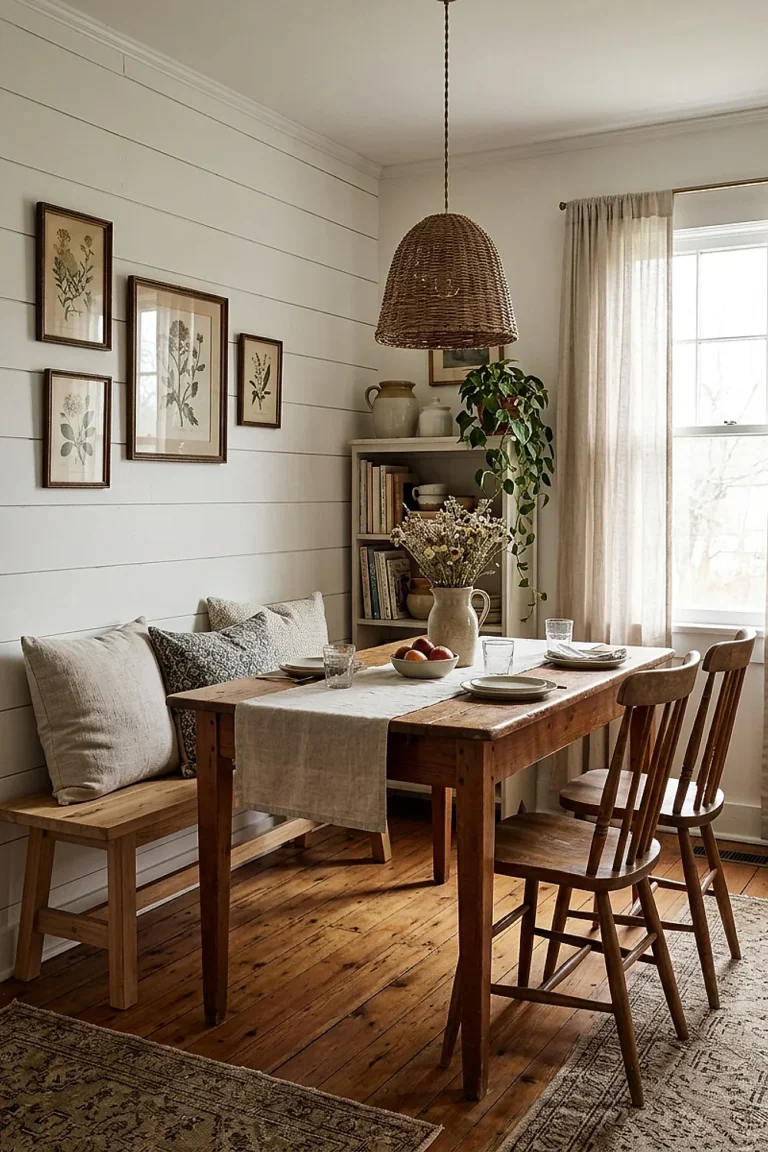
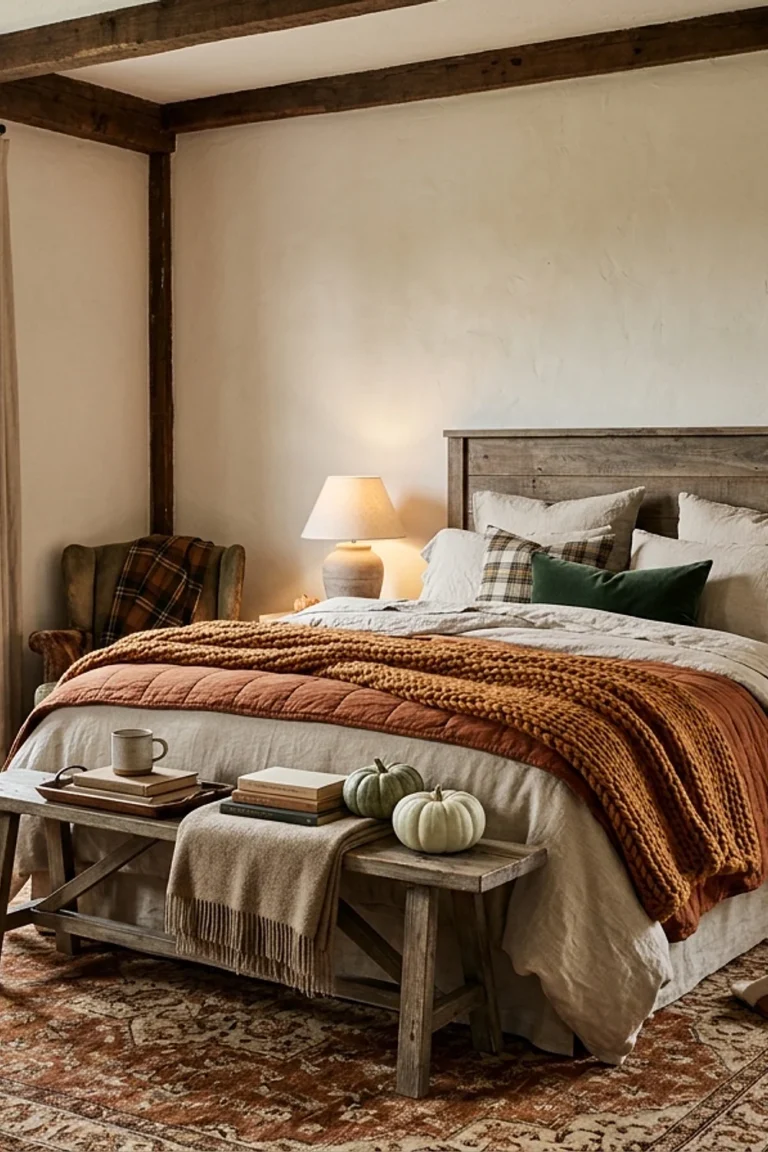
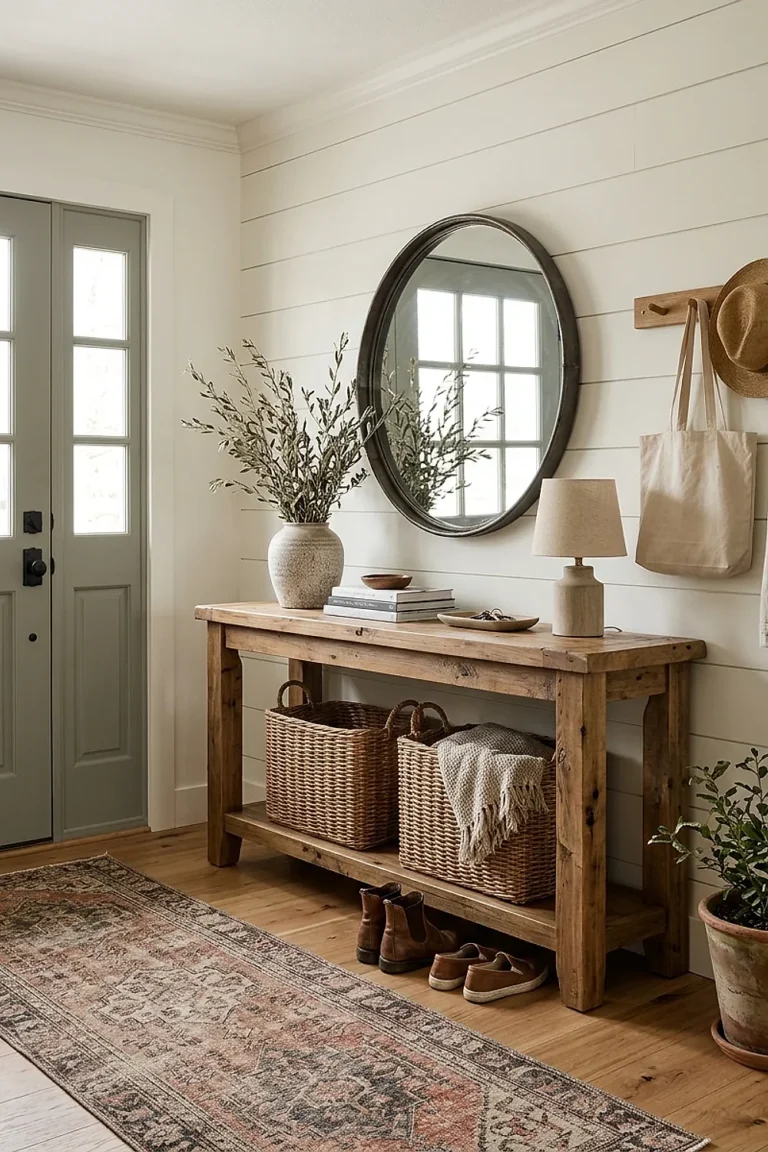
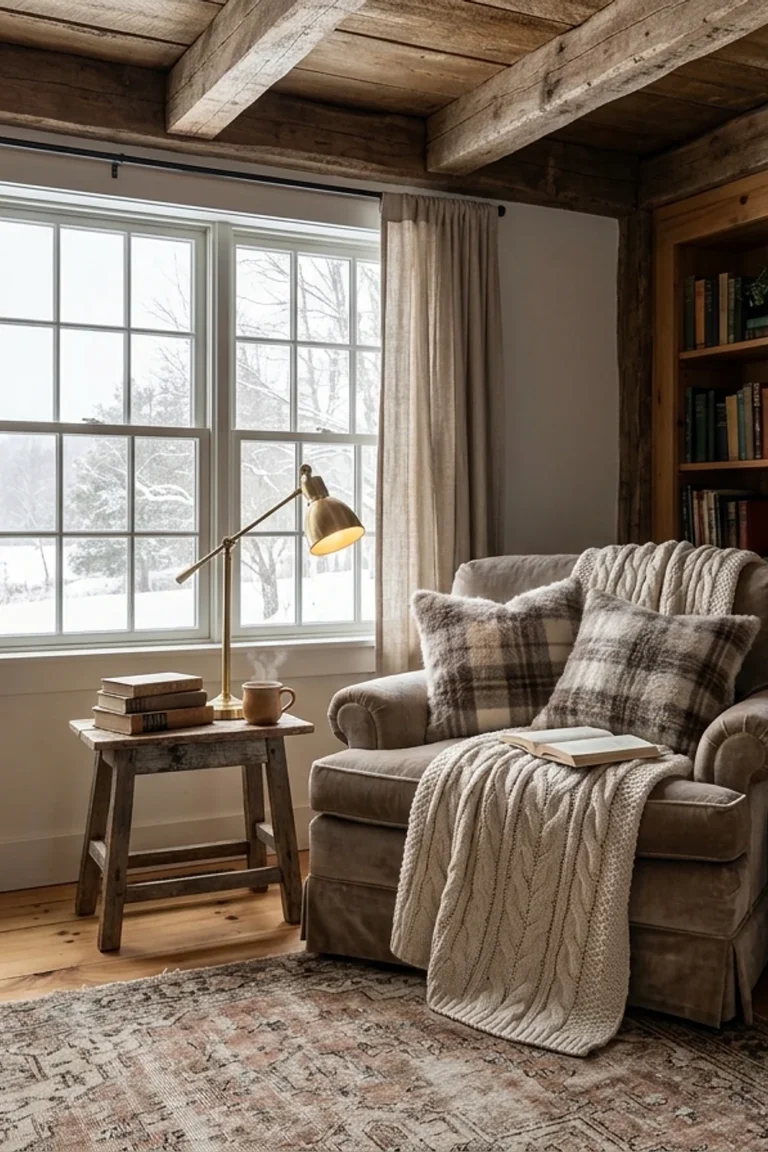
A 12-by-14-foot room takes about 2 gallons of paint, which puts a full color change under $70 before any furniture moves. That math is why an earth tone living room is one of the easiest palettes to build on a small budget.
The 25 ideas below run from $5 pots to a $200 rug, with the reasoning, the room type each one suits, and the mistake to dodge. Pick six or seven and the room changes completely.
Why an earth tone living room doesn’t have to break the bank
Clay, oatmeal, camel, olive and espresso are cheap colors because they’re the most common ones in every store. Thrift shops overflow with wood, wicker and brown ceramic. Nobody fights you for a tan basket.
The other reason is forgiveness. Earth tones come from nature, so mismatched pieces still look related, like stones on a beach.
One rule of thumb keeps the whole palette from going flat: 60 percent quiet, 30 percent mid-tone, 10 percent dark. Walls and big furniture take the 60, textiles and wood take the 30, and one or two deep brown or green objects take the 10. The ratio holds up because the eye needs one dark spot to rest on, and without it a tan room reads like a waiting area.
1. A single clay or camel wall behind the sofa

Two coats of a clay-leaning beige on the longest wall use about one gallon, roughly $40, and cover around 350 square feet. Painting only the wall behind the seating pulls the eye toward the sofa and leaves the other walls light.
This suits rentals with white walls and any room under 150 square feet. Test a 2-by-2-foot swatch first. At 4pm in November, a sandy beige can turn pink, and cardboard is a cheaper place to find that out.
2. Bulbs rated 2700K and 800 lumens in every lamp

Swapping the bulbs changes how brown reads after sunset. Cool 4000K and 5000K bulbs turn tan to gray and rust to dull brick, while 2700K keeps everything honey-toned, because warm light adds back the yellow and red that earth pigments reflect.
It takes four minutes and suits every living room, especially one used mostly in the evening. The 800 lumens rating gives enough light for reading without flattening the walls.
Skip anything labeled “daylight,” however good the multipack deal looks, and read the Kelvin number on the box.
3. A lidded seagrass trunk as a coffee table

A trunk about 36 by 18 inches swallows throw blankets, remotes and game controllers, and still holds a tray on top. Small apartments need surfaces that do two jobs, and this one does.
Check the lid hinge before buying. A heavy lid on thin hardware pinches fingers, and a trunk that’s awkward to open ends up as a stack of clutter.
4. A jute rug in an 8-by-10 size
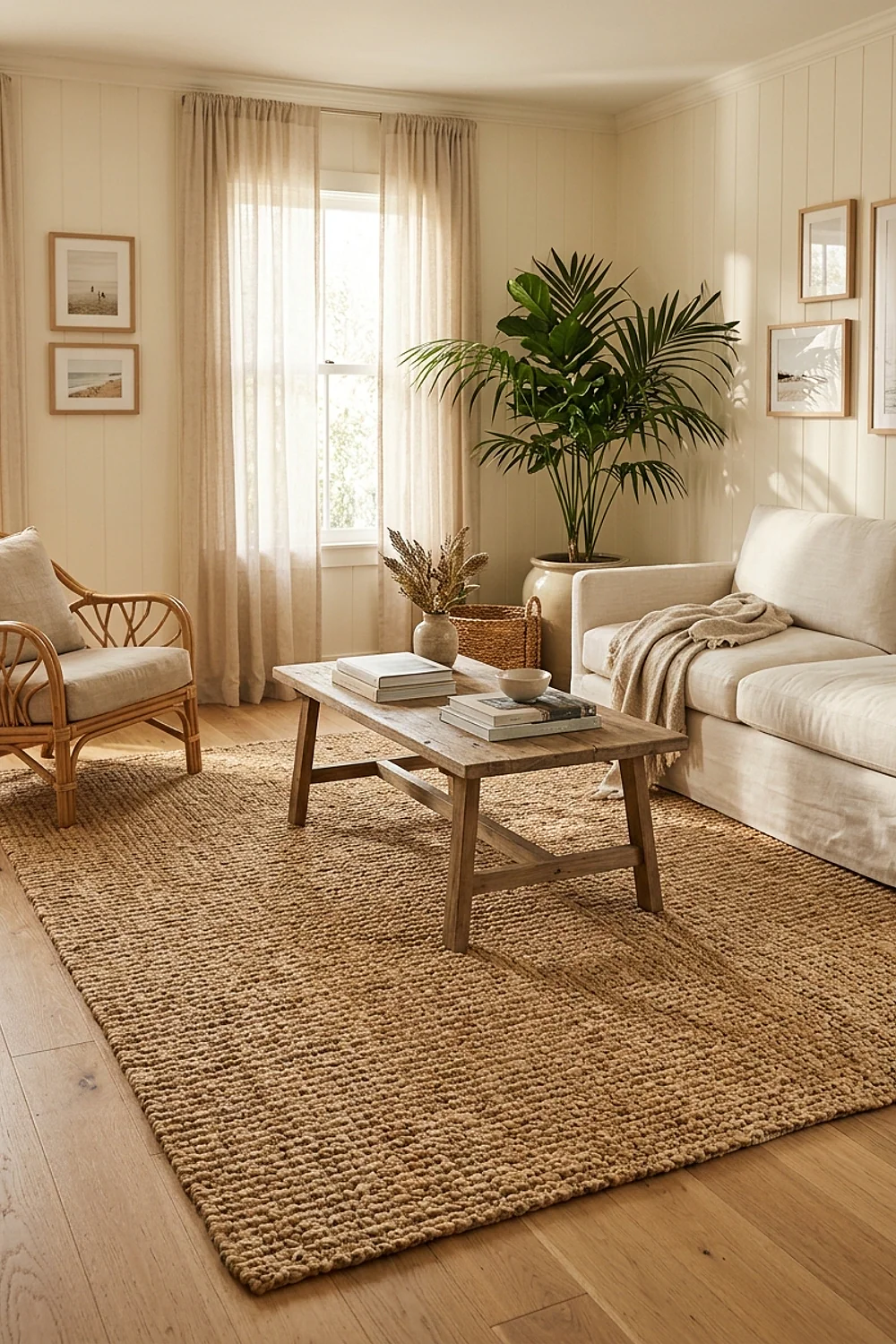
Jute rugs run about $150 to $220 at this size. They have a dry, papery crackle underfoot and a woven pattern that carries beige, tan and sand tones without any dye work.
The natural fiber suits low-traffic rooms and layering. Jute is rough on bare feet and stains when wet, so a 1/4-inch rug pad and a no-drinks-on-the-floor policy extend its life.
5. A rust waffle-weave throw on one sofa arm

Draped over one arm of an oatmeal or cream sofa, a cotton waffle-weave throw gives the room its first strong accent. Rust sits between orange and brown, which makes it the one color that bridges both, and the waffle texture catches light in small shadows so the color looks layered rather than flat.
This suits a neutral room that feels flat and needs color without a big purchase. Avoid true orange or bright terracotta, which pull the room toward a seventies kitchen. Pick a rust with a little gray in it.
6. One 30-by-40-inch frame instead of a gallery of small ones

Three 8-by-10 frames over a 90-inch sofa look like postage stamps. A single large print with a wide white mat, around $45 to $70 at a big-box store, covers about two-thirds of the sofa width and fixes the proportions.
This works best on one big blank wall. Choose a print with a quiet sand or wheat palette, not a busy pattern, because large and busy together is tiring.
7. A matching brown sofa, loveseat and chair set, broken up

Three pieces from the same brown set read like a furniture showroom. The flatness comes from identical color and texture repeated at the same height.
Anyone who inherited a set can fix it with a washable oatmeal cotton slipcover on one piece and a wood-framed chair swapped in for another. Leave at least one piece alone, or the room loses its anchor.
8. Two lidded 16-inch seagrass baskets under a console

Baskets with lids hide chargers, board games and dog toys, and a pair runs about $30 to $45. The woven seagrass also adds the natural material that earth tones need, softening hard wood and painted surfaces with a visible grain.
They suit narrow rooms with no closet nearby, where clutter has nowhere else to go. Measure the gap under the console first, since a 16-inch basket needs about 17 inches of clearance to slide out. Without that extra inch, the baskets jam against the legs.
9. A boucle cushion with a feather-down insert

Boucle feels nubby and slightly springy under your fingers, a loop texture that makes a plain cream cushion read as deliberate. Pair a 20-inch cover with a feather-down insert, and it slumps into a soft shape that polyester fill never reaches.
This fits people who actually lounge on their sofas for hours. Polyester inserts flatten within a season, so buy the down insert and put the savings into the cover.
10. Dried wheat or pampas in a 14-inch ceramic vase

Dry stems add height and a faint papery rustle, and they never need water, so there is nothing to wilt or refill. Odd numbers look natural, so group five or seven stems, not six, and let them fan out unevenly.
This is a good fit for a console or shelf that needs vertical interest, and the weight of a 14-inch ceramic vase keeps tall stems from tipping. Pampas sheds fluff onto whatever sits below, so people with allergies should pick wheat or lagurus grass.
11. Two accent chairs angled 30 degrees toward the sofa

Thrifted wooden-frame chairs run about $60 to $120 each. Turned slightly inward at about 30 degrees with 8 feet between them, they form a conversation circle that makes a flat sofa wall feel like a room, since guests face each other instead of a screen. Mismatched thrifted frames look collected rather than bought as a set, as long as the wood tones stay close.
This works best in living rooms at least 12 feet wide. In anything narrower, the chairs choke the walkway, so use one chair instead of two.
12. A plug-in dimmer on the main lamp

A plug-in dimmer pulls a lamp down to about 40 percent, which gives a low amber glow that makes every earth tone look richer. Warm light at that level softens shadows and lets browns deepen instead of looking flat.
It suits rooms where the overhead light is the only option, and renters can use it with no wiring. Check that the bulbs say “dimmable” on the box. A non-dimmable LED on a dimmer buzzes and flickers.
13. A set of solid oak nesting tables

Two nesting tables slide apart for guests and tuck together when the floor needs space. Solid oak hides rings and scratches better than veneer and holds a medium-brown tone for decades.
The setup suits small rooms that host sometimes but don’t need a permanent surface. Check the table height against the sofa arm, because anything taller than the arm looks awkward.
More earth tone living room upgrades for the second pass
The next dozen ideas fill in the gaps once paint, rug and lighting are done. Most are small, which means they can be bought one at a time as the budget allows.
14. Unglazed terracotta pots, 8 to 10 inches wide

Plain terracotta pots cost $4 to $12 and bring in the exact orange-brown the palette needs. Here’s a counterintuitive fact: unglazed clay is porous, so it pulls moisture out of the soil and forgives overwatering.
That makes it a good fit for pothos and snake plants in anyone’s first plant collection. Use a saucer, because the damp clay leaves white rings on wood.
15. One olive or sage pillow among the browns

A single olive or sage pillow stops a tan room from turning monotone. Green belongs to the same family as brown, since both come from soil and leaves, so it reads as a natural neighbor rather than a new color.
Use it where the sofa and rug are both brown-based, and keep it to one pillow so the green stays an accent, not a second theme. Avoid bright lime or mint, which fight the muted palette.
16. A 48-inch round rattan mirror across from the window

A rattan-framed round mirror runs about $80 to $130. Hung opposite a window, it catches the 4pm light and throws it back across the room, which brightens a dim corner more than another lamp.
This helps north-facing rooms the most. Hang it with the center at about 57 inches from the floor, and don’t aim it at a cluttered view.
17. Swatches in daylight before mixing undertones

Gray furniture beside beige walls is the most common reason an earth tone room looks off. Beige leans yellow or pink, gray leans blue or green, and the two undertones fight.
Tape fabric and paint samples side by side on a gray February afternoon, and judge them by window light. Pick one undertone, warm or cool, and hold to it.
18. A 36-inch oak floating shelf

A 36-inch solid oak shelf runs about $30 to $50 and holds around 25 pounds if screwed into studs. It gives books, candles and a plant a place off the floor, and the visible grain adds warmth above a sofa or beside a window.
It suits tight rooms where a bookcase would eat 12 inches of depth. Drywall anchors alone fail under books, so find the studs with a stud finder and mark them before drilling.
19. Linen curtains hung 4 inches above the window frame
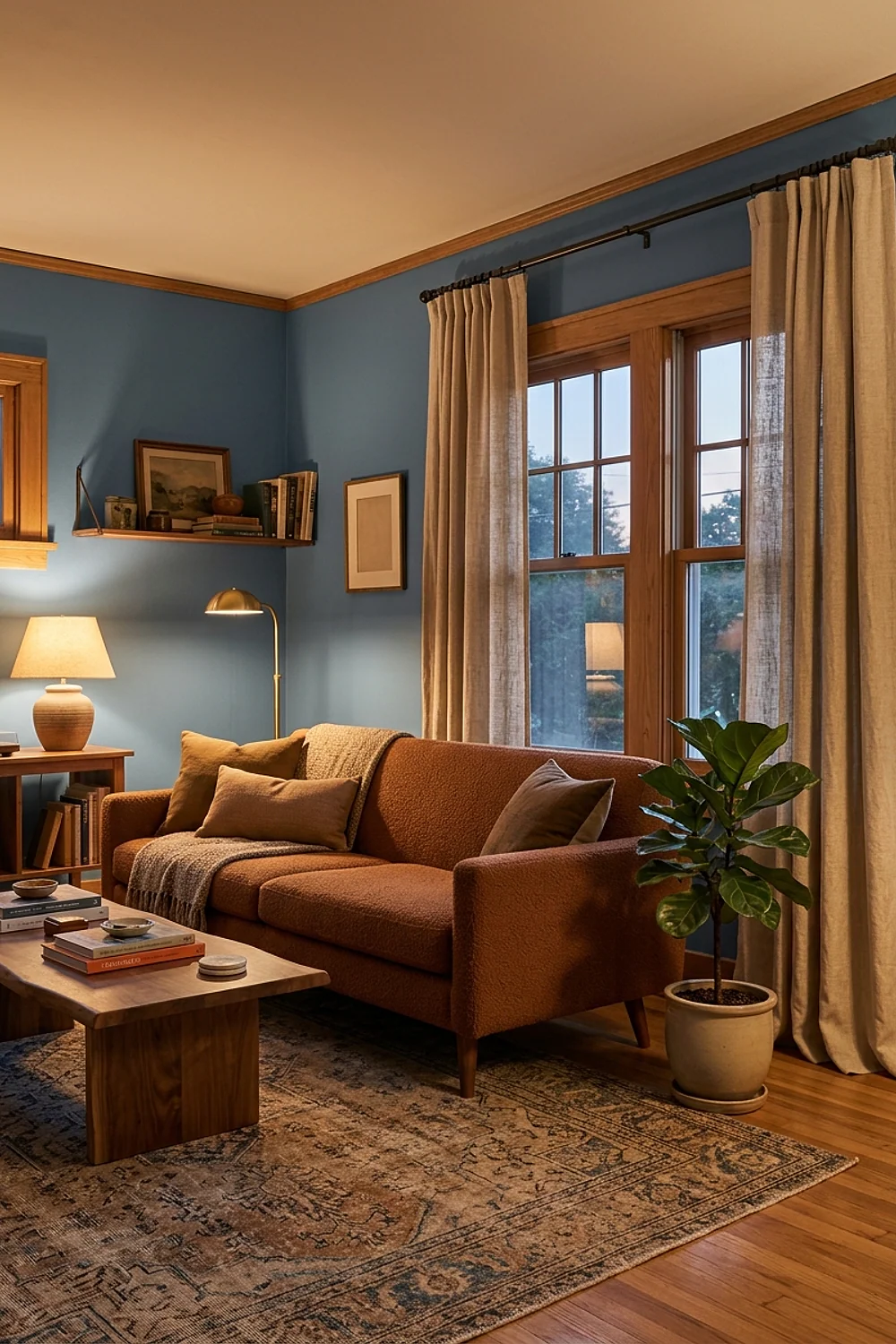
Floor-length linen curtains, hung high and ending 2 inches off the floor, make the ceiling feel taller. Linen has a loose weave that filters afternoon light into a soft glow and has a dry, crisp feel when pulled.
Use them in rooms with short windows. Skip lined blackout versions unless the room is a bedroom, because they turn the light flat and gray.
20. A wooden tray with a beeswax candle and a stack of books
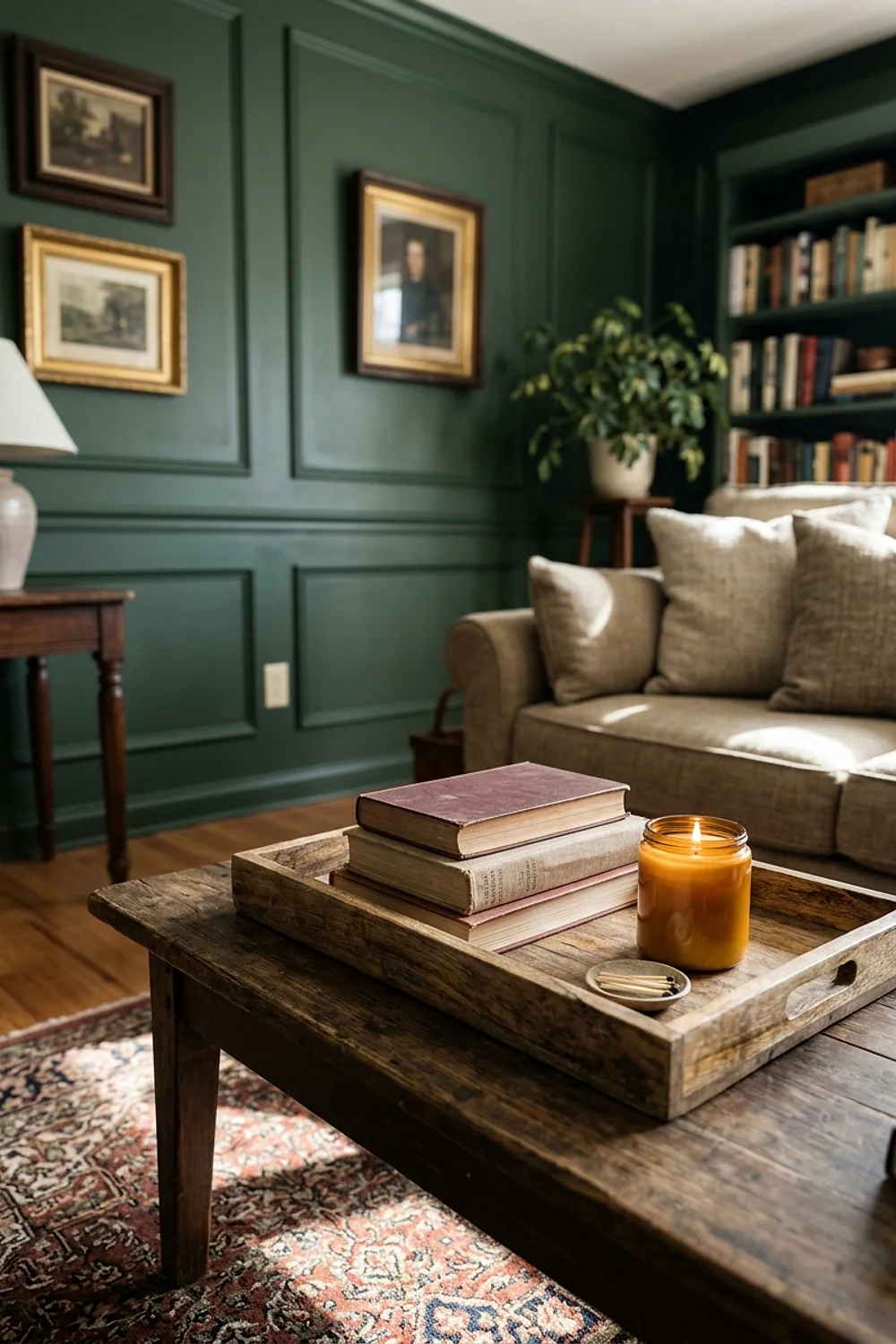
A 16-inch wooden tray on the coffee table corrals objects into one tidy group, so a few items read as a deliberate arrangement instead of scattered clutter. Beeswax candles smell faintly of honey, and the scent suits the palette better than sweet or floral ones.
This works for anyone with a bare coffee table, and the tray lifts easily when the surface is needed. Keep the stack to two or three books, since a tower of five just looks cluttered.
21. The front legs of the sofa on the rug

Rugs that float in the middle of the room make the seating look disconnected. Put at least the front 8 inches of the sofa and chair legs on the rug so the pieces read as one group.
That usually means the 8-by-10 size for a standard living room. A 5-by-7 rug under a full sofa is the most common sizing mistake.
22. A thrifted lamp base with a new linen drum shade

Thrift stores sell ceramic and wood lamp bases for $5 to $10, and a plain linen drum shade runs around $20 to $25. Together they look like a $100 lamp, because the shade is the most visible part and a fresh one makes an old base look deliberate.
This suits anyone furnishing a living room on a budget. Choose a shade about as wide as the base is tall, and check the harp fits the shade. A shade that’s too small leaves the bulb exposed.
23. An 18-inch tan leather pouf

A leather pouf acts as a footrest, an extra seat and a spare table with a tray on top. Leather also scuffs into a worn patina that suits an earth tone palette, so the 18-inch tan pouf looks better with age instead of worse.
It works best for small rooms and renters who can’t fit another chair. Faux leather cracks within a couple of years, so check the seams and read the label for genuine leather.
24. A thrifted teak side table
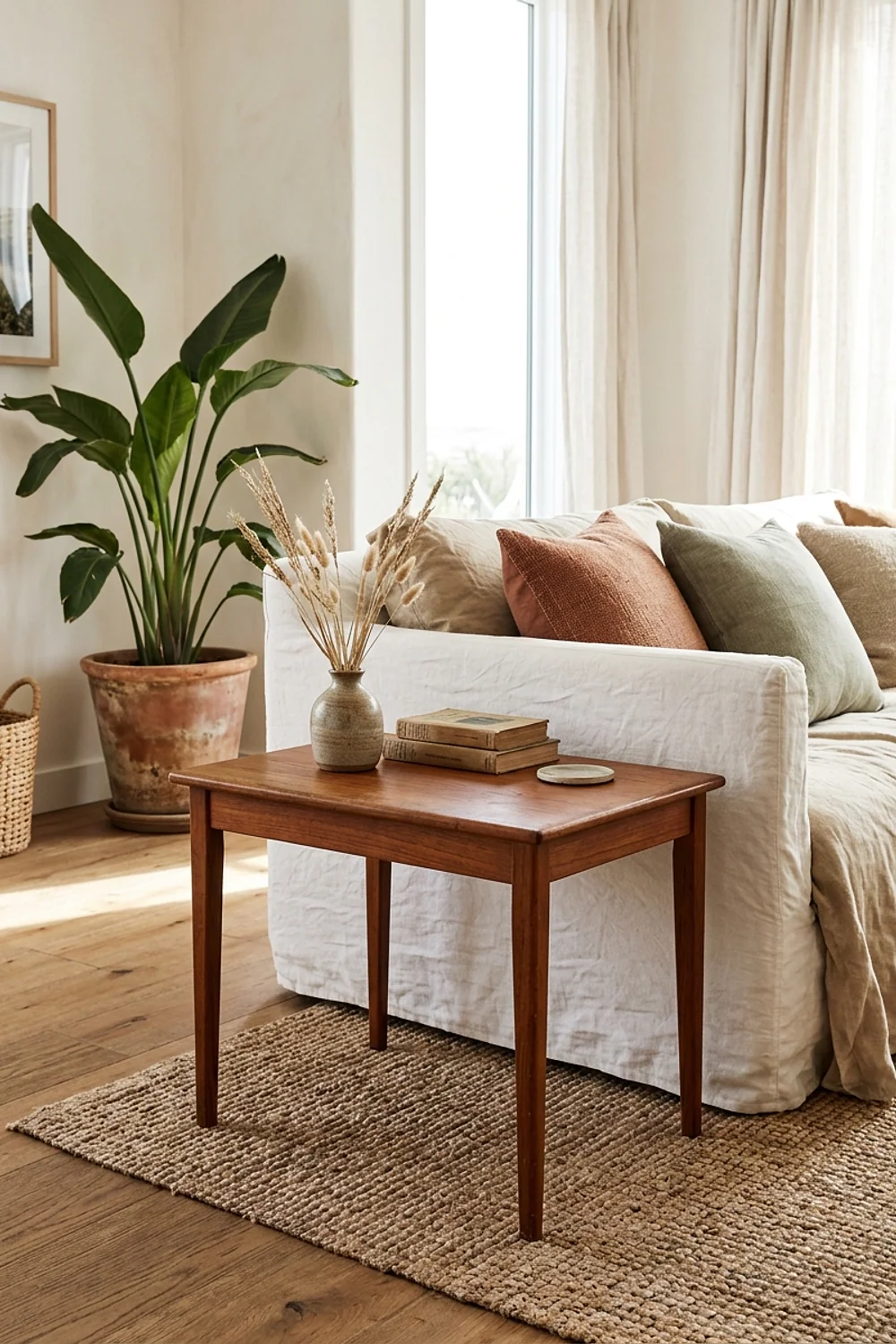
Mid-century teak side tables show up at flea markets for $40 to $80. The grain is visible and straight, and a coat of teak oil on a rainy Sunday brings the color back.
It suits anyone who wants real wood without paying retail. Wiggle the legs before buying, because loose joints are the usual flaw and repairing them takes glue and a clamp.
25. A dark espresso frame or two for the 10 percent
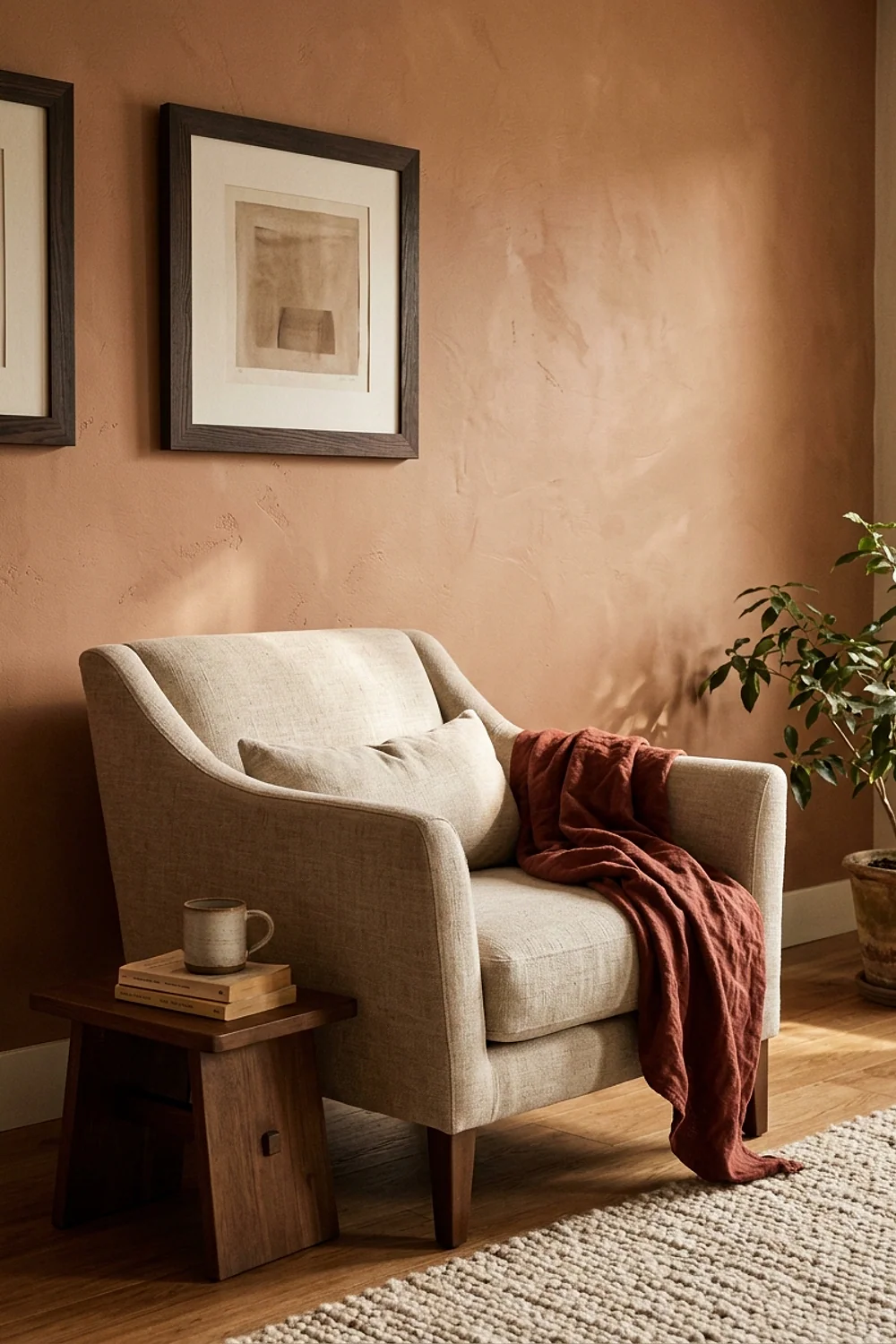
The darkest 10 percent of the room should be the smallest. Two espresso-stained frames or a dark wood bowl give the eye its resting point without making the room feel heavy.
This is the last step, once everything else is placed. Adding it early leads to overcorrecting, and a dark sofa plus dark frames turns the room into a cave.
The pieces that earn their place
Most of the 25 items above come secondhand or on clearance. The best sources, in order of hit rate:
- Thrift stores and estate sales for wood tables, lamps, baskets and chairs
- Facebook Marketplace for rugs and sofas, searched with “neutral,” “jute” or “teak”
- The “oops” paint shelf at the hardware store, where mis-tints go for a fraction of retail
- End-of-season clearance in January for throws, pillows and candles
A rainy Sunday morning is the best time for estate sales, since fewer shoppers show up. Marketplace deals go fast, so message within the hour.
Mis-tinted paint is a gamble, because the color can’t be reordered. Bring a swatch from home and compare under the store lights and outdoors. It’s not foolproof. But it works.
DIY vs store-bought: honest comparison
An earth tone living room rewards DIY more than most palettes, because the colors are forgiving of small flaws. Still, some items aren’t worth making.
- DIY wins on art, pillow covers (sewn from $12 of linen), lamp shades and painted frames.
- Store-bought wins on sofas, rugs and lighting wiring. Safety and sag matter more than savings.
- Thrift wins on wood furniture, where a $60 solid piece beats a $60 particleboard one.
Time is the hidden cost. A hand-painted canvas saves $40 but takes an afternoon, and a skipped primer coat shows within a year.
Putting the space together
An earth tone living room goes muddy when everything is the same value, meaning the same lightness. Run through this order to avoid it:
- Paint first, so every other color is judged against the wall.
- Swap bulbs to 2700K before shopping for anything else.
- Lay the rug, then place furniture on it.
- Add textiles in two or three textures, such as linen, boucle and wool.
- Finish with the dark 10 percent and one green plant.
Stop at 80 percent finished. Leaving a few gaps lets the room fill in slowly with finds, which is cheaper and looks less staged.
Final thoughts before the first coat of paint
A good earth tone living room comes down to warm bulbs, layered texture and one dark accent, not a big budget. Under $500 covers paint, a jute rug, lamps, textiles and a few thrifted pieces.
Save or pin this list so it’s handy when the budget frees up, then start with idea 2: swap the bulbs and measure the longest wall before buying paint.
Frequently asked questions
How much does a full earth tone living room cost?
A full makeover runs $350 to $500 when most pieces come secondhand. Paint ($70), a jute rug ($150 to $220), lamps and bulbs ($60) and textiles ($50) account for most of it.
Can I create an earth tone living room in a rental?
Yes, with textiles, rugs, lamps and baskets, none of which touch the walls. Peel-and-stick wallpaper in a clay or sand tone or a landlord-approved accent wall adds more color without risking the deposit.
What colors go with an earth tone living room?
Stay inside the family: cream, tan, rust, olive, terracotta and deep brown. A small amount of black in frames or hardware sharpens the look, but cool blues and grays clash with the warm undertones.
Why does my earth tone living room look dull?
The cause is usually cool bulbs or all the pieces being one shade. Switch to 2700K bulbs, add one dark accent and mix at least two textures, and the room will read richer within a day.