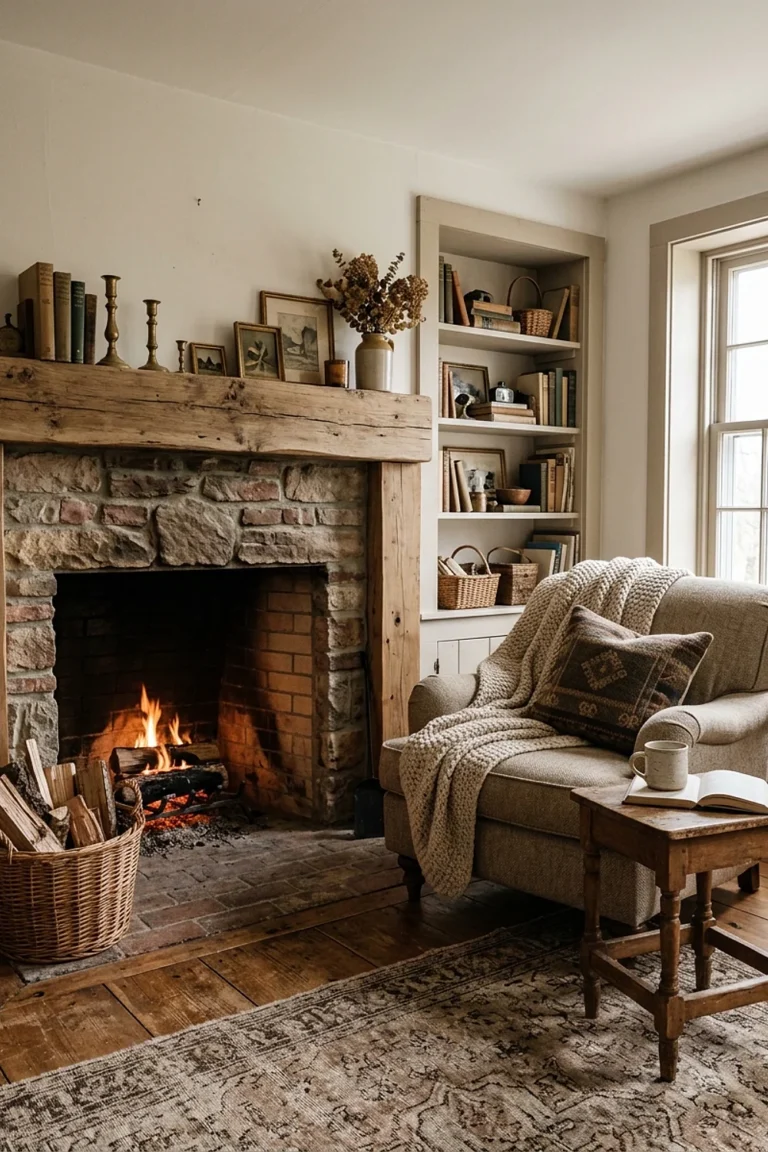
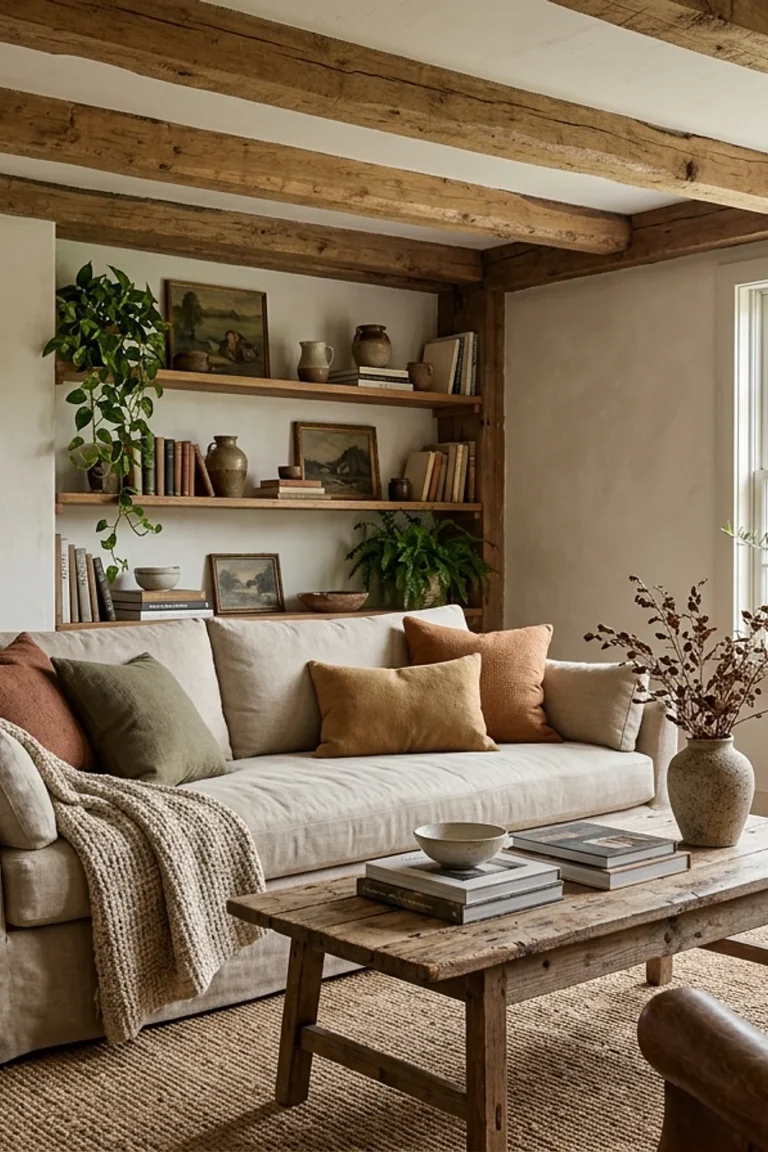
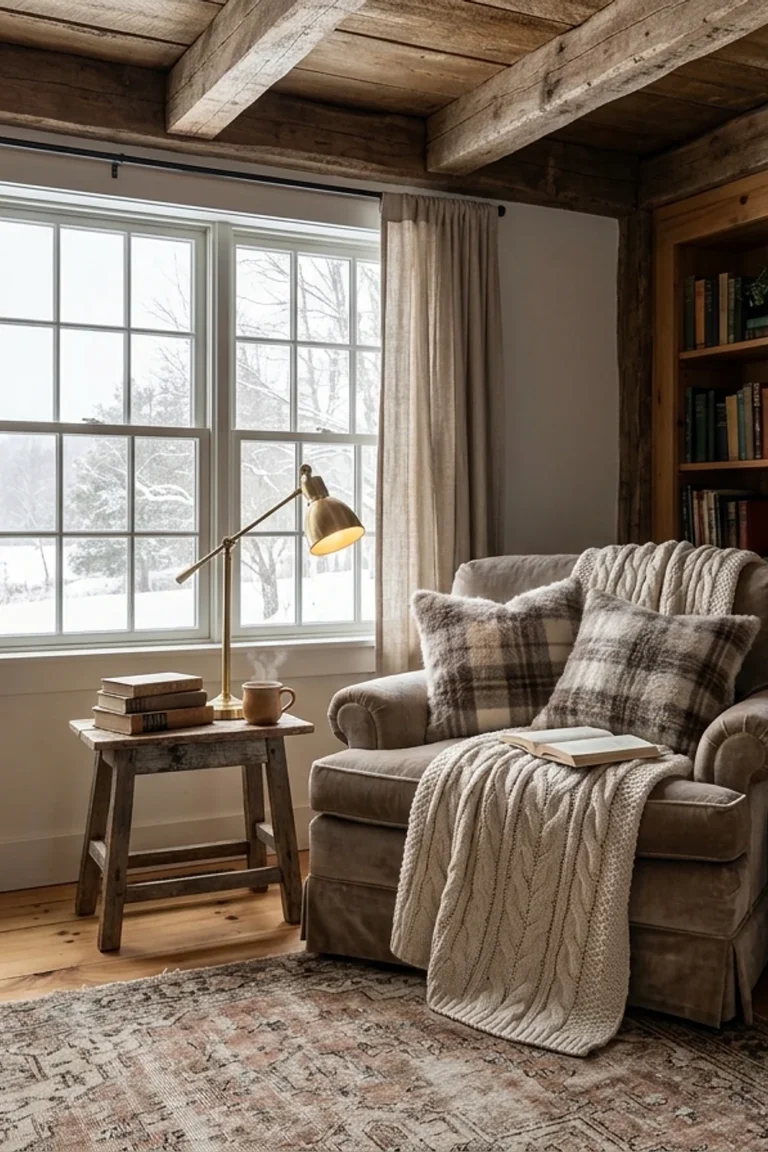
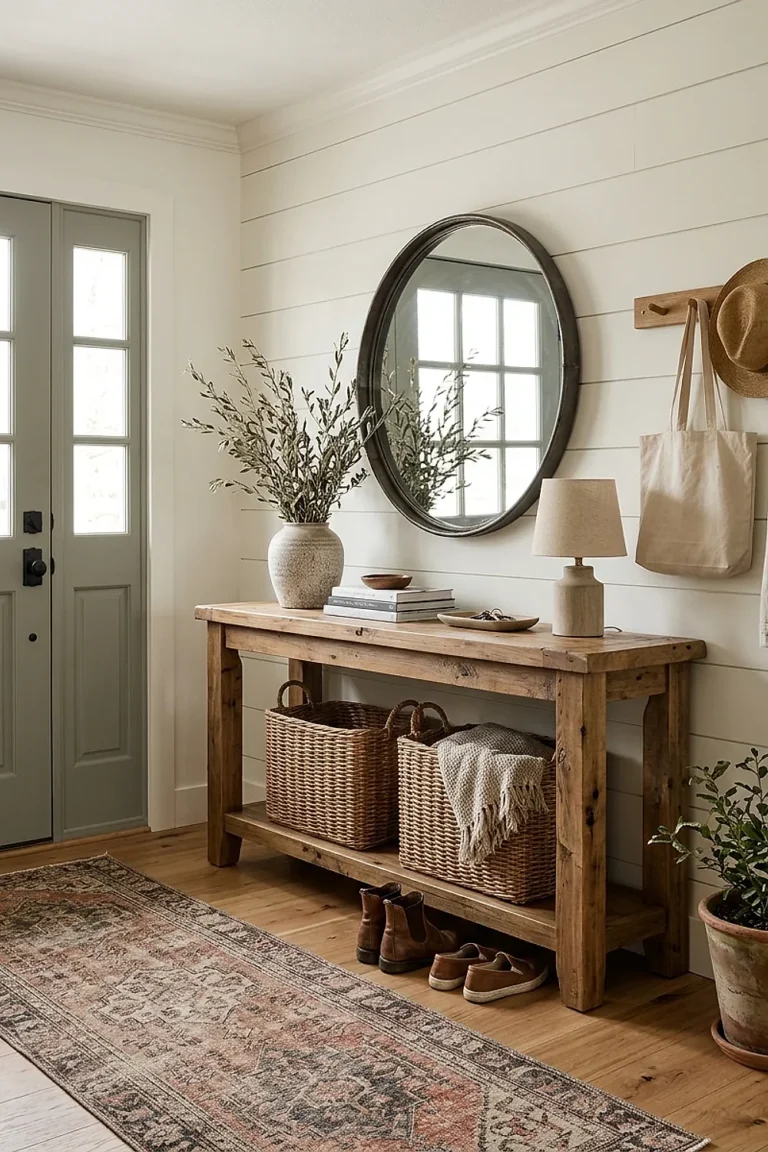
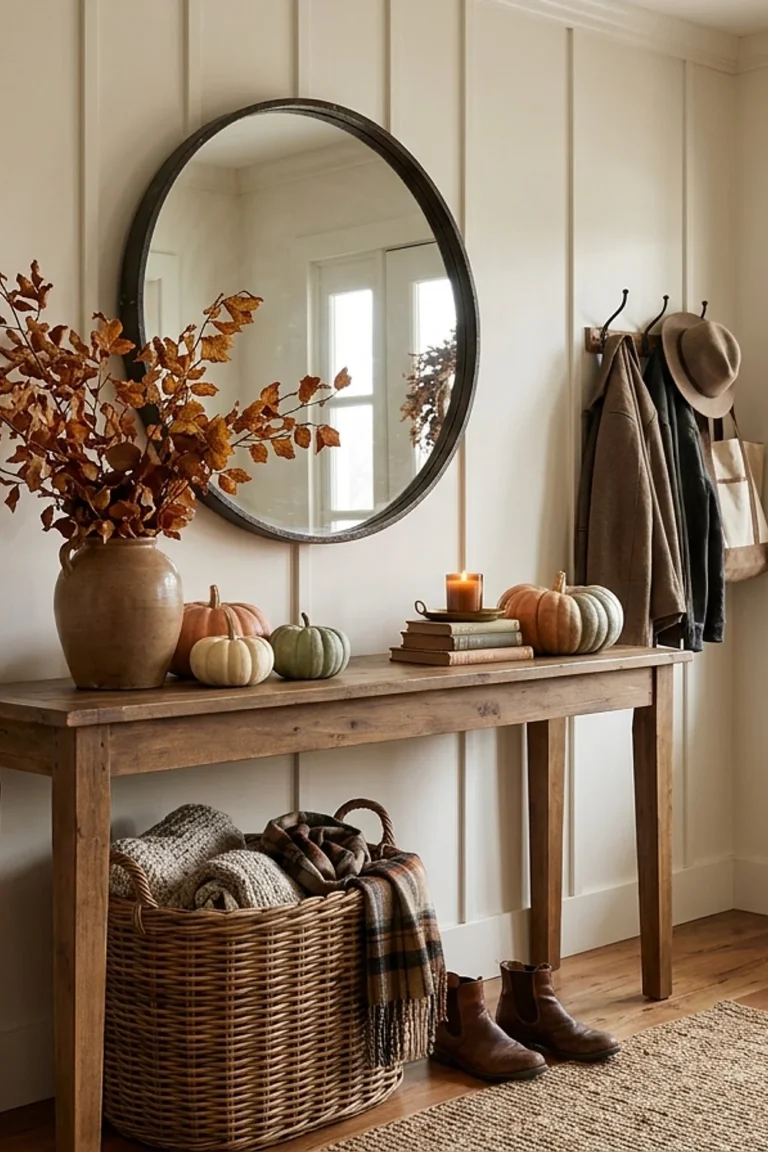
Can a 10-by-11 bedroom go dark and moody without feeling like a cave? Yes, and moody fall bedroom ideas work better in small rooms than most people expect, because deep color blurs corners and makes walls hard to read.
The 22 ideas below cover paint, bedding, lamps, and storage, and each one carries a space-saving angle. Picture a flat white box on a gray October afternoon, then the same box with a charcoal-green wall, amber light, and a wool throw. That’s the before and after in every item.
Moody fall bedroom ideas: Starting points for your space
The short answer: go deep on color, keep light sources low, and layer textures instead of piling on objects. Slim furniture does the rest.
One rule of thumb holds up in nearly every small room. Paint deep, light low, and keep the floor visible. Dark walls recede, low lamps pull the eye sideways, and an exposed strip of floor tells the brain the room keeps going.
1. Slim 16-inch nightstands in dark walnut

A nightstand only 16 inches wide gives back about 8 inches of walking room compared with a standard 24-inch one. In a bedroom where the bed sits 18 inches from the wall, that difference decides whether you turn sideways to pass.
Dark walnut or black-stained oak disappears against a deep wall, so the piece reads as shadow instead of bulk. Expect to pay around $90 for a solid two-drawer version. Skip glass tops, which show every fingerprint under lamplight.
2. Bedding layered in rust, ochre, and oatmeal
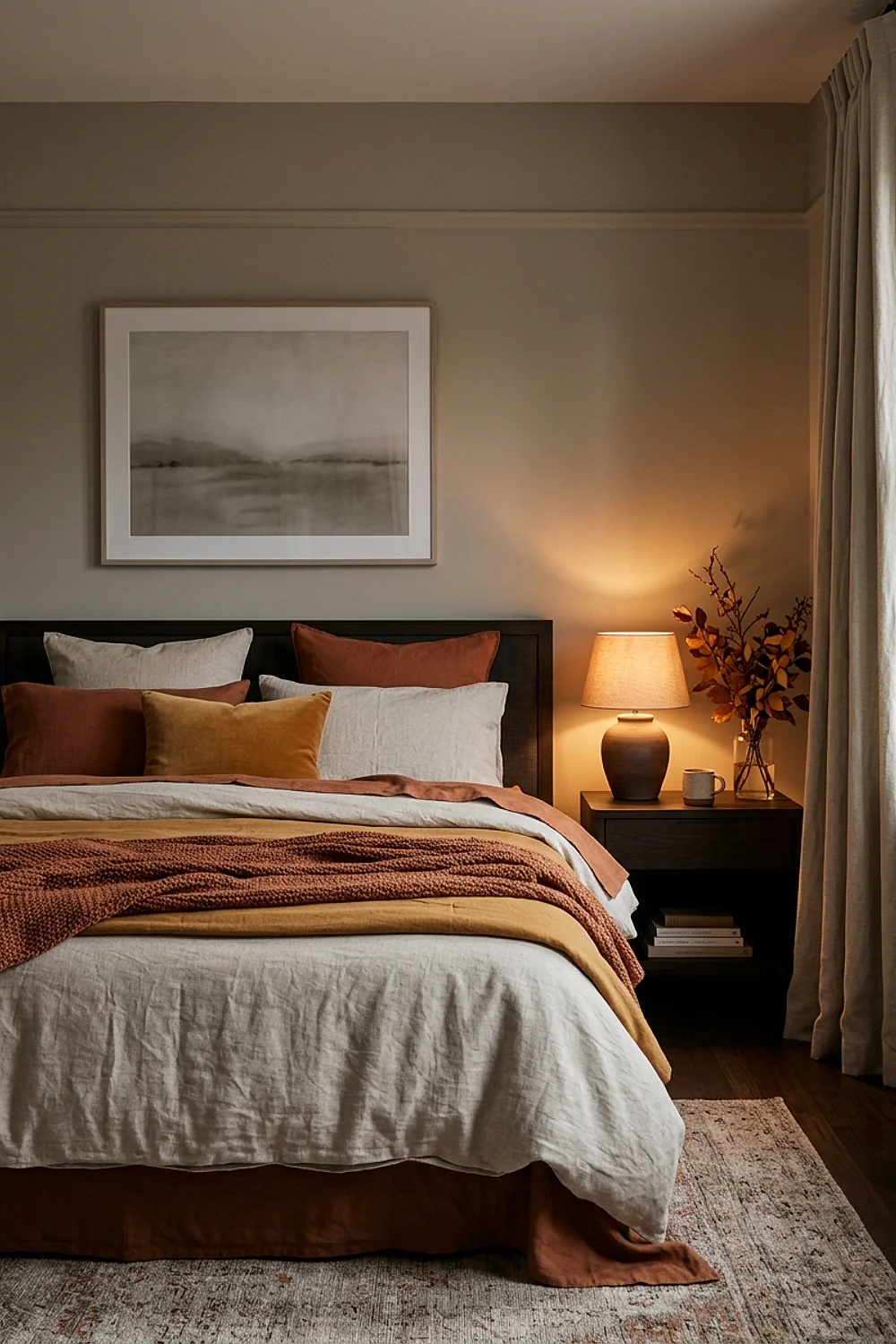
Three layers, a flat sheet, a quilt, and a chunky throw folded at the foot, give a bed that lived-in autumn depth. Stick to two or three related tones so the pile looks planned rather than random.
This suits renters who can’t paint, since the bed is the largest color field in the room. The common slip is using five pillows in five patterns. Three pillows, two solids and one subtle stripe, keep the surface calm.
3. Bed pushed into the corner on the short wall
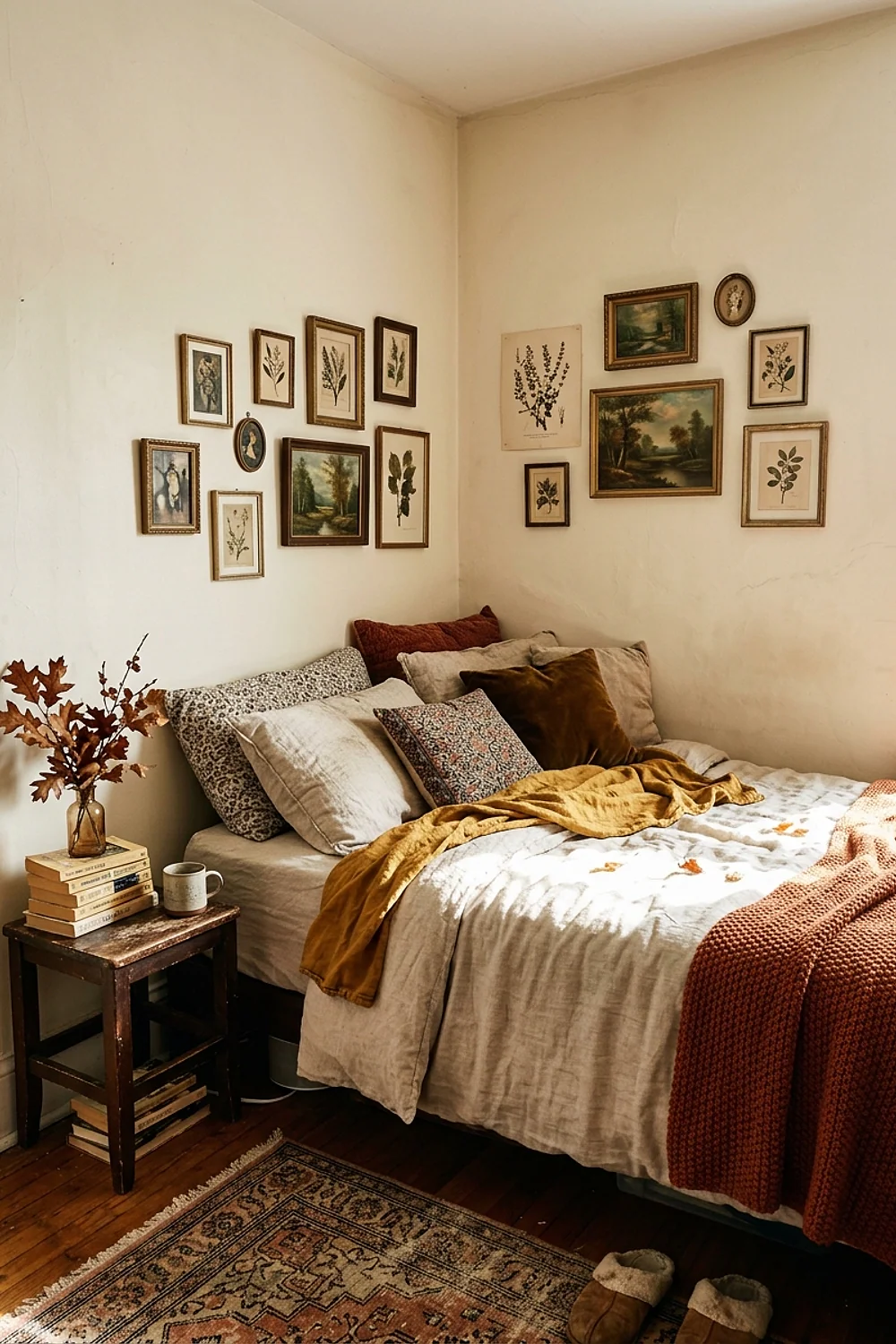
Sliding a full-size bed (54 by 75 inches) into a corner frees a clear 30-inch path along one side. It feels a little odd at first, like the bed is hiding, but the open floor reads as roominess within a day.
This works best in rooms under 120 square feet. The trade-off is making the bed from only one side, so choose a fitted quilt over a heavy duvet that needs tucking on both sides.
4. Under-bed drawers instead of a dresser

Rolling drawers 6 to 8 inches tall hold a full season of sweaters and turn the bed frame into the dresser. A pair of lidded fabric bins runs about $35, and the lids keep dust off wool.
Pick a bed frame at least 14 inches off the floor, or nothing fits. And choose bins in charcoal or deep brown so the gap under the bed looks like a shadow, not a storage zone.
5. A velvet headboard in deep plum or forest green
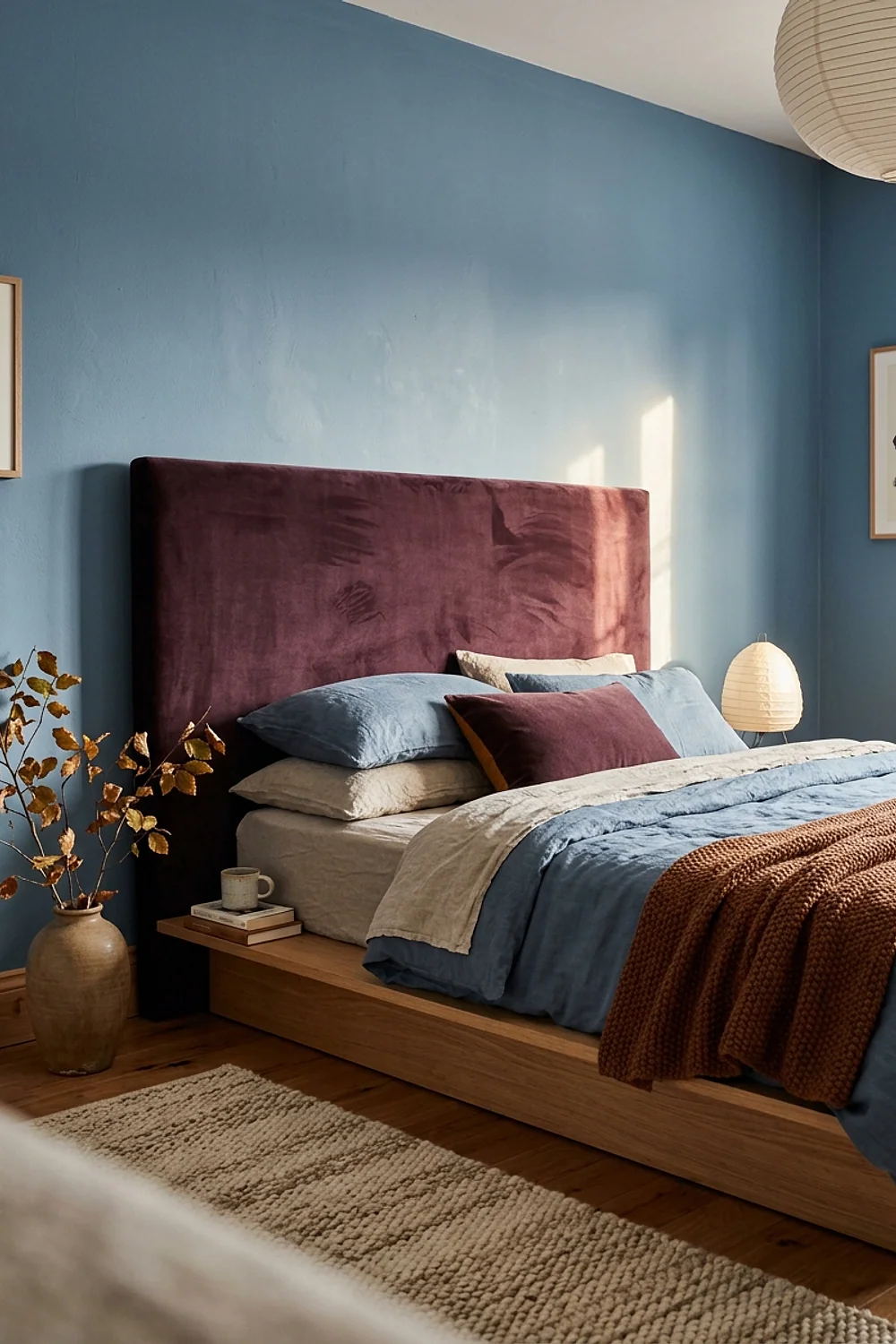
Run a palm across good cotton velvet and the pile shifts from dark to slightly lighter, which makes the surface look alive in lamplight. A 2-inch-thick upholstered headboard costs around $150 and adds almost no depth to the room.
It suits anyone replacing a bulky wooden frame. Avoid polyester velvet that shines like a cheap costume, because the sheen flattens the mood instead of deepening it.
6. One wall in a smoky green such as Farrow & Ball Studio Green
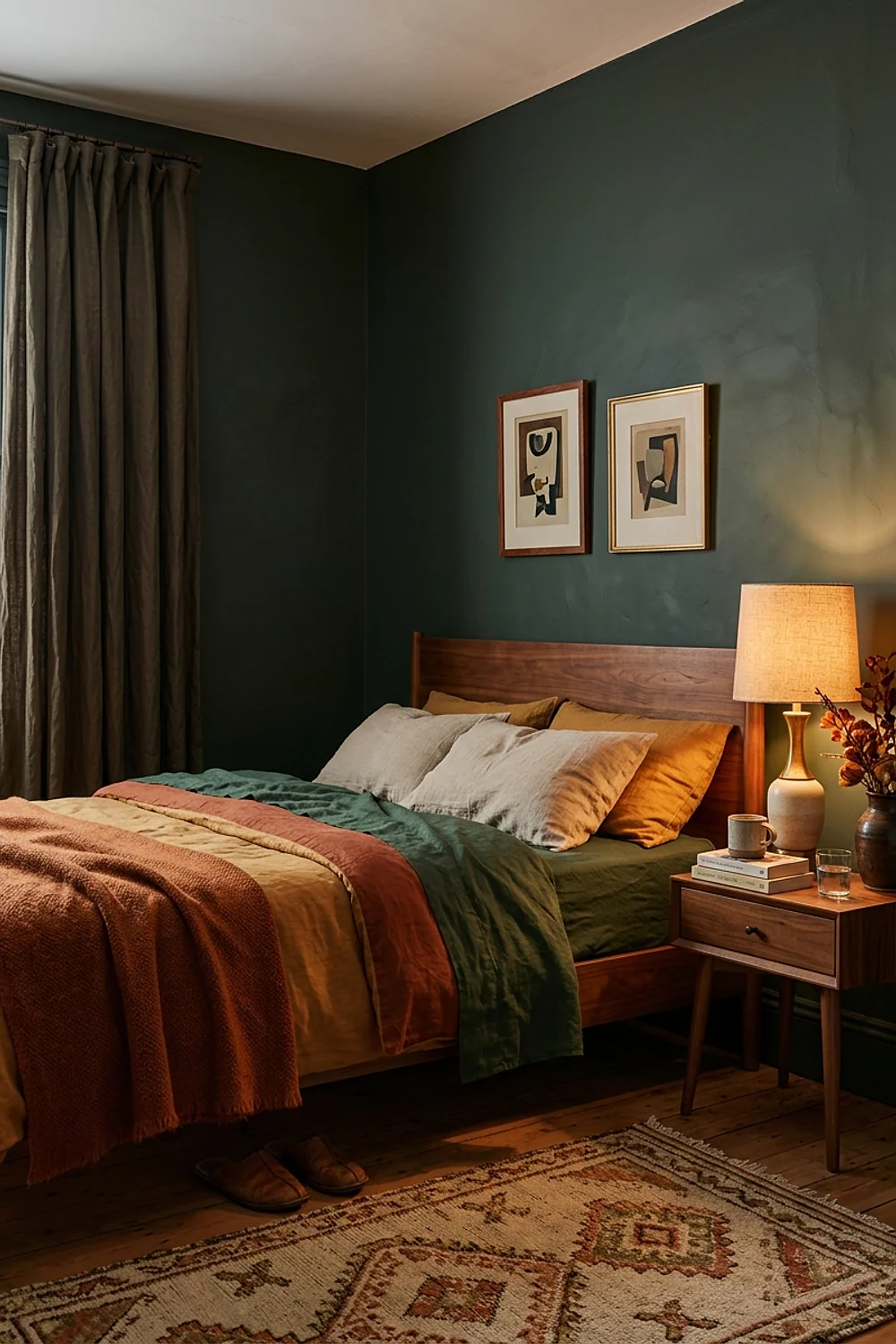
A green with a gray undertone looks black at 4pm and turns inky green once a lamp is on. That shift keeps a small room from feeling static across a single evening.
Paint the wall behind the bed only, or all four if the room is under 100 square feet, where full color wraps the corners and erases the boxy outline. Use an eggshell finish rather than flat so a little light slides across the surface.
7. Black walls with no texture to break them up
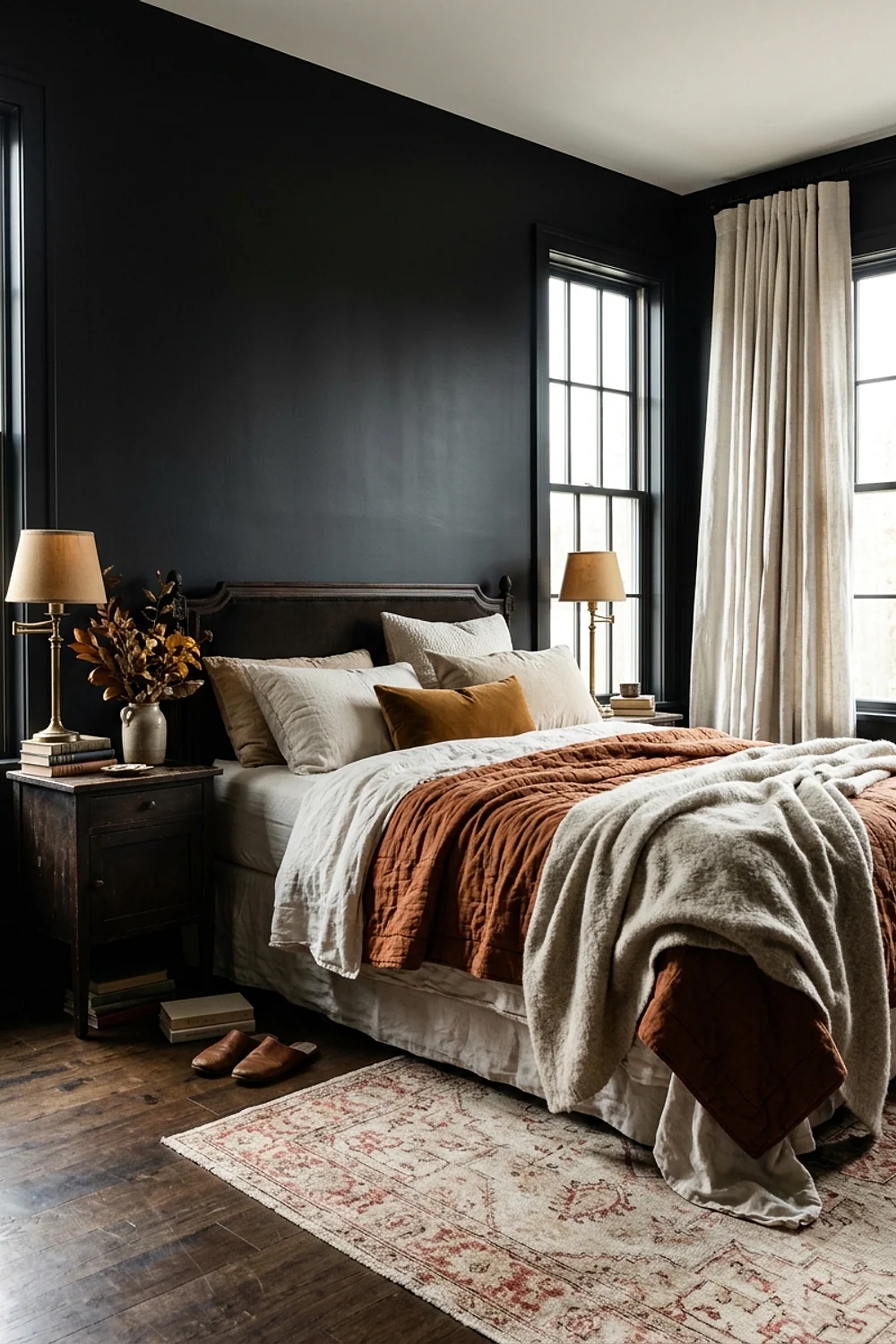
Flat black paint with a bare white bed is the classic mistake. Without a woven headboard, a nubby rug, or a linen curtain, the walls look like a hole and the room feels smaller, not moodier.
If black is the goal, pick a charcoal with a hint of brown and balance it with at least three textured surfaces. This backfires most in north-facing rooms, which already get only dim, bluish daylight.
8. Plug-in swing-arm sconces beside the bed

A swing-arm sconce on a hook-and-cord setup frees the nightstand surface entirely. Mounted 52 inches off the floor, it lights a book at pillow height and costs roughly $40 without an electrician.
This is the move for rentals, since the cord tucks behind a cord cover painted to match the wall. Choose a metal shade in aged brass or black, because white shades throw a hard glare that undoes the darkness.
9. Amber bulbs at 2200K in every lamp
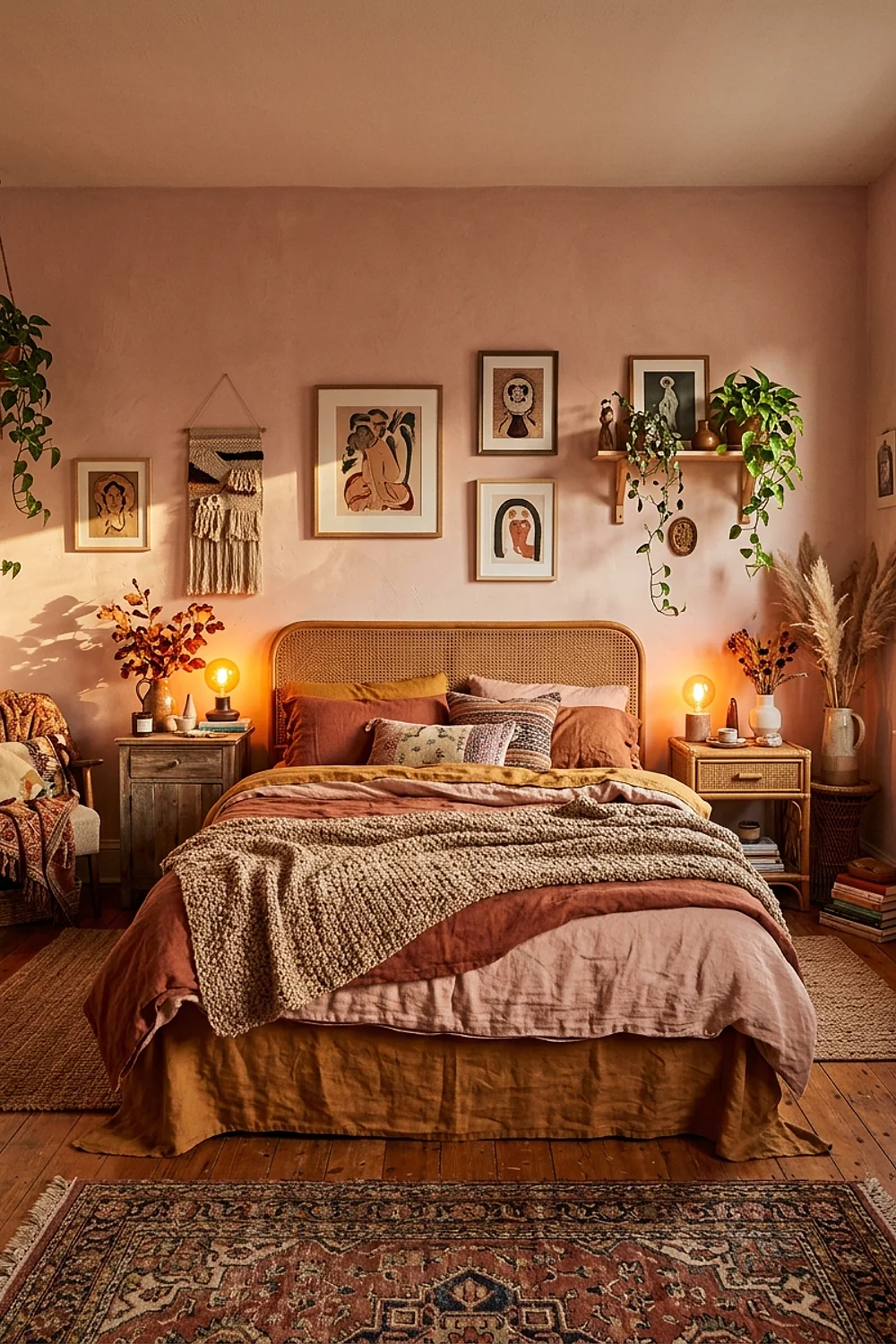
Bulbs rated 2200K to 2700K give the glow of a low fire, while anything above 3000K turns a deep wall gray and tired. A four-pack of amber-tinted LEDs costs about $14, and swapping them is a thirty-second job.
And here’s the counterintuitive part: a dark room with four small lamps feels larger than a bright room with one overhead fixture. Lamps give each corner an edge, and edges tell the eye where the room ends.
10. Floor-to-ceiling wool or velvet curtains

Hang the rod 4 inches below the ceiling line and let the fabric pool slightly. The vertical stripe of cloth stretches a low ceiling, and a lined heavy curtain blocks street noise and the glare of a neighbor’s porch light.
Choose curtains in a color one shade darker than the wall, such as deep teal over blue-green paint. This suits any apartment with a single window, where the curtain is the only chance at drama.
11. One oversized painting instead of a gallery wall

A single canvas around 30 by 40 inches above the bed does more than twelve small frames, which read as clutter at close range. Pick a moody landscape or abstract in forest, ink, and burnt orange.
The common mistake is hanging it too high. The bottom edge should sit 6 to 8 inches above the headboard, so the art and the bed read as one unit.
12. Dried branches or oak leaves in a tall vase

Three stems of dried eucalyptus, bare birch, or oak leaves in a ceramic vase 12 inches tall bring autumn indoors with no water and no upkeep. They also hold a vertical line without covering the nightstand.
Stay with one vase on the nightstand and one on the dresser. Skip fake berries and plastic pumpkins, which look dollar-store next to velvet and wool.
13. A narrow floating shelf above the headboard
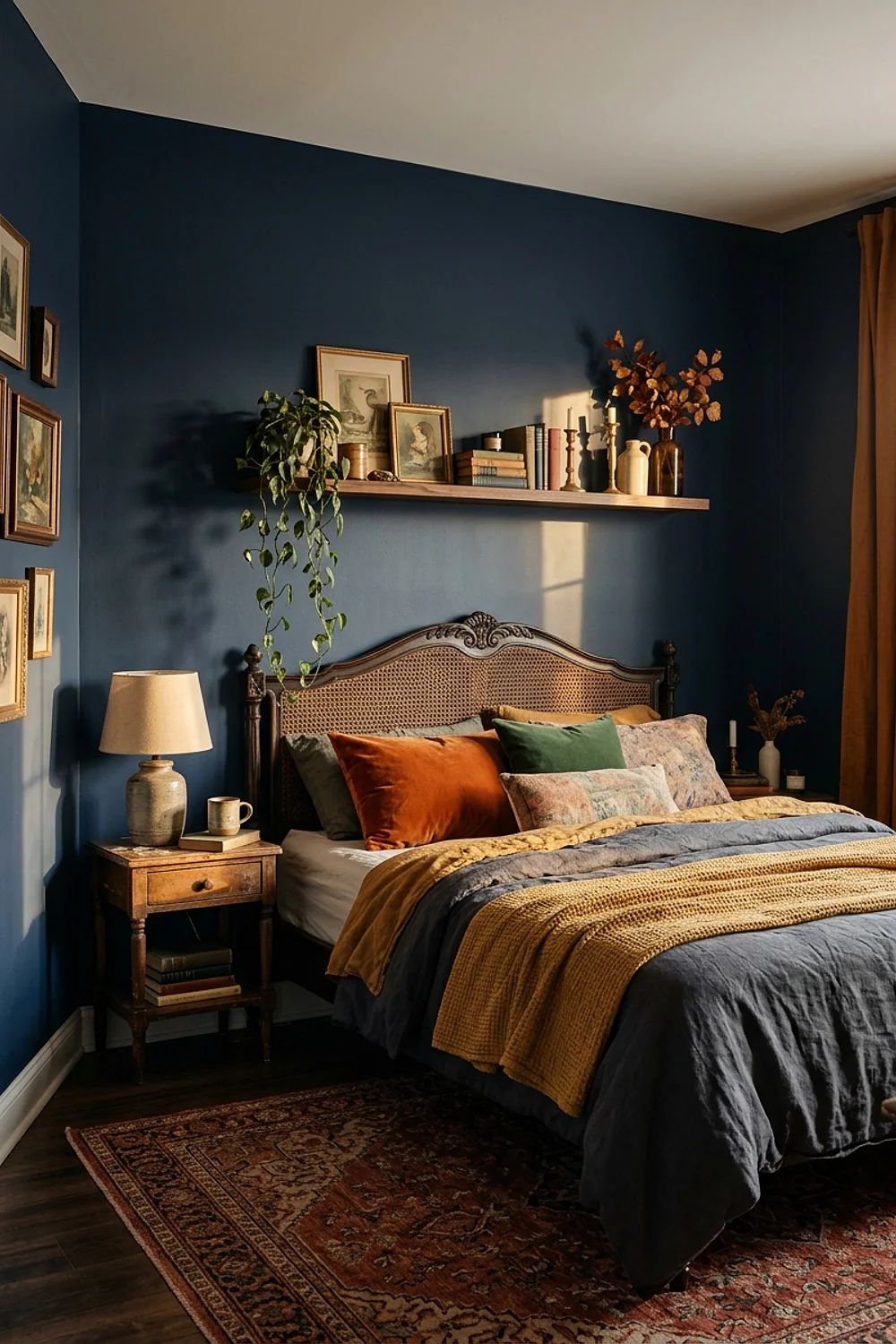
A 5-inch-deep oak shelf mounted 12 inches above the headboard holds a lamp, two books, and a small frame without eating a single inch of floor. It replaces a side table in rooms where only one fits.
Stain the wood dark so it blends with the wall. But keep the load under about 15 pounds unless the brackets hit a stud, because a shelf over a sleeper’s head should never be a gamble.
14. A storage ottoman at the foot of the bed

A bench ottoman 40 inches long and 16 inches deep stores spare blankets and gives you somewhere to sit for socks. A model in dark leather or velvet runs around $110.
Check that the lid opens without hitting the bed frame. This suits small rooms that lack a closet, but it narrows the walkway by 16 inches, so keep at least 24 inches clear on the open side.
15. A flatweave wool rug in charcoal and rust
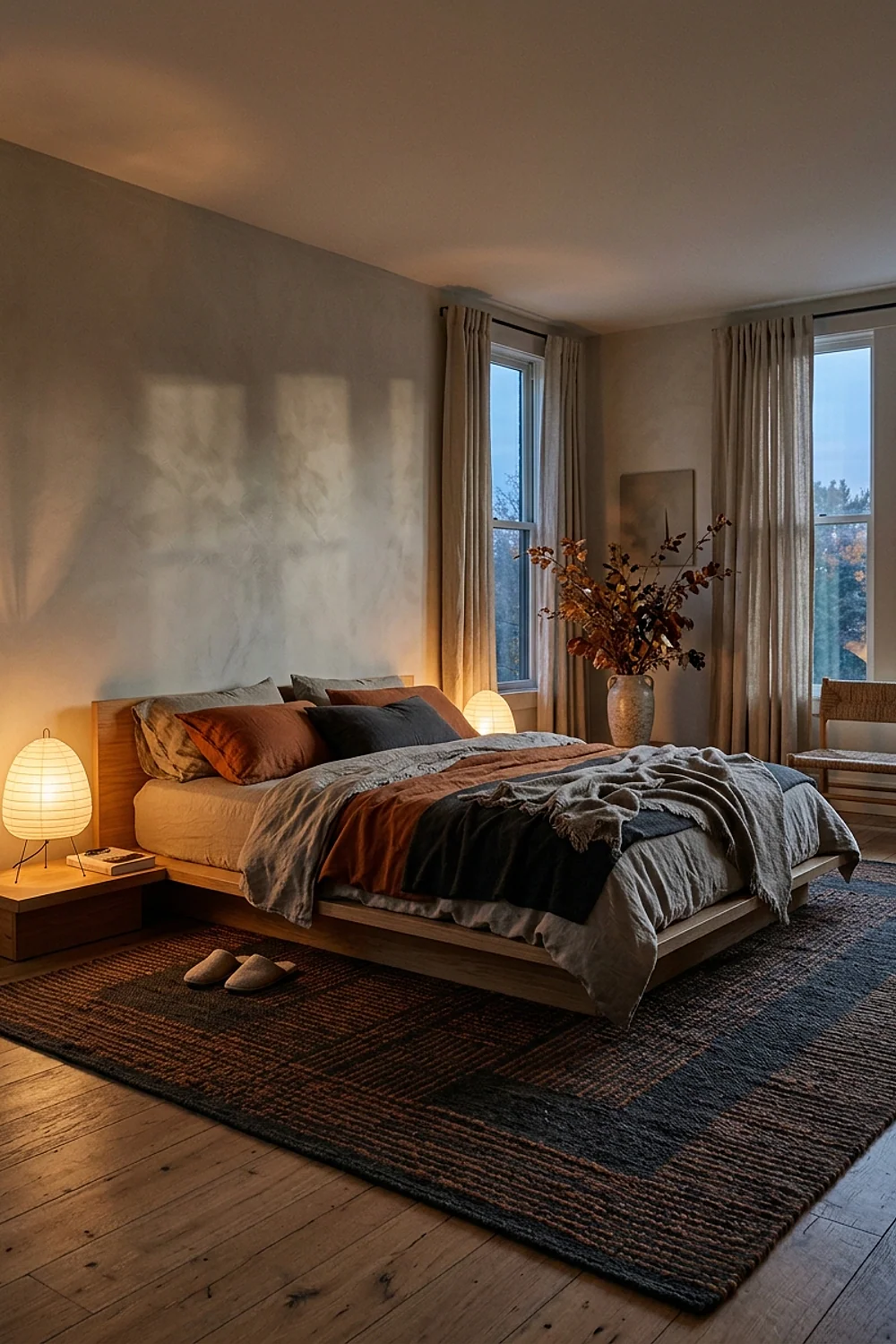
A 5-by-8 flatweave wool rug under the lower two-thirds of the bed frames the sleeping area and leaves a visible border of floor. Wool feels dense and slightly scratchy underfoot, which is the right texture for fall.
Pick a low pile under half an inch so doors still swing. Avoid shaggy synthetic rugs, which trap dust and make a small floor look crowded.
16. Oxblood or burgundy in small doses

One oxblood pillow, one burgundy lampshade, and a wine-colored throw are enough to bring in red without shrinking the room. Red advances toward the eye, so restraint matters in a bedroom under 120 square feet.
The ideal reader here is someone with olive or navy walls who finds them a bit cold. Limit the red to about 10 percent of the visible surfaces.
17. Mismatched nightstands instead of a matched bedroom set
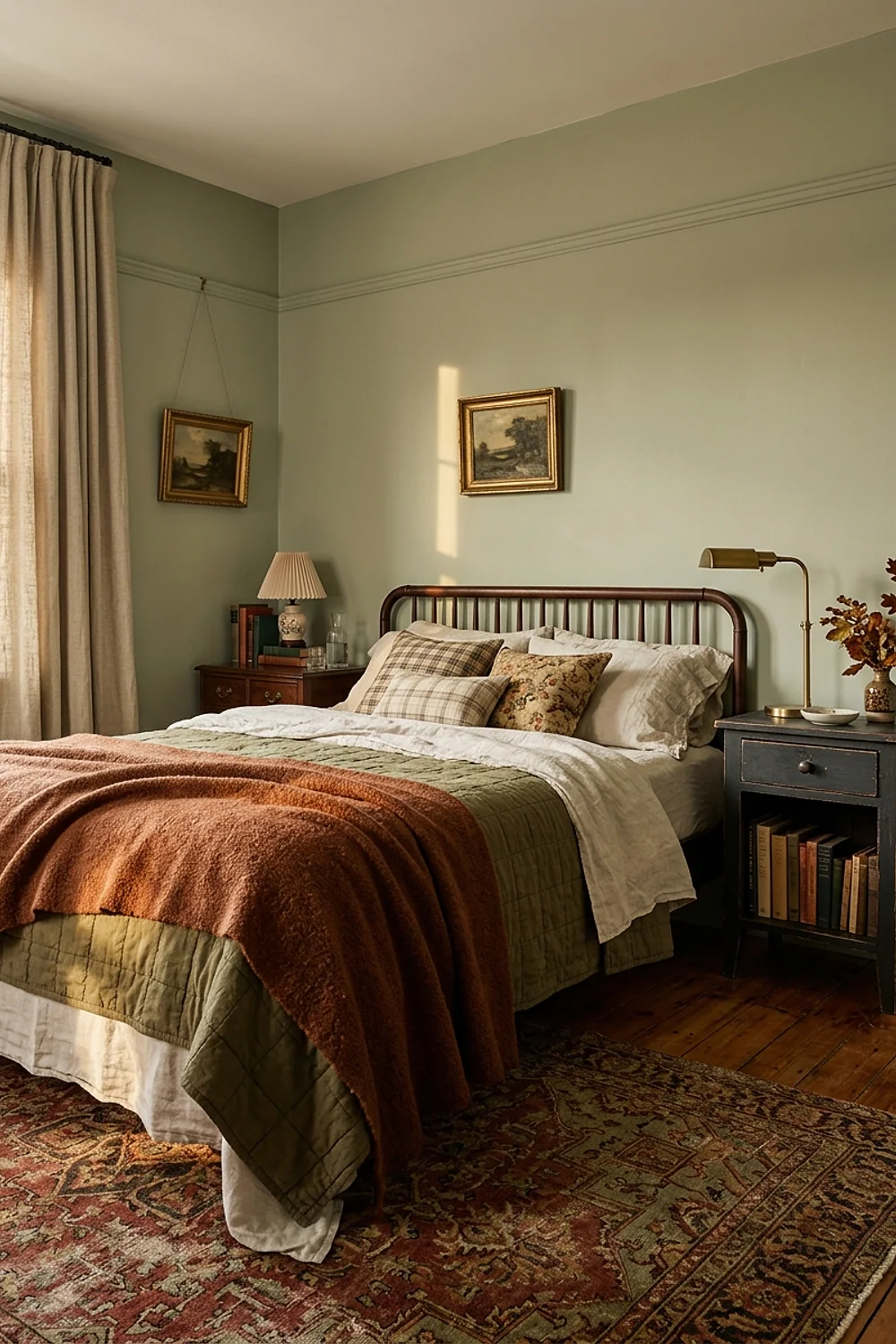
A matched set pushes heavy matching pieces against every wall, which makes a small room look like a furniture showroom. A walnut stool on one side and a slim metal table on the other looks collected and takes less floor.
The mistake is mismatching everything. Keep the wood tone or the metal finish consistent, and let height and shape vary.
18. A fold-down wall desk in black steel and oak
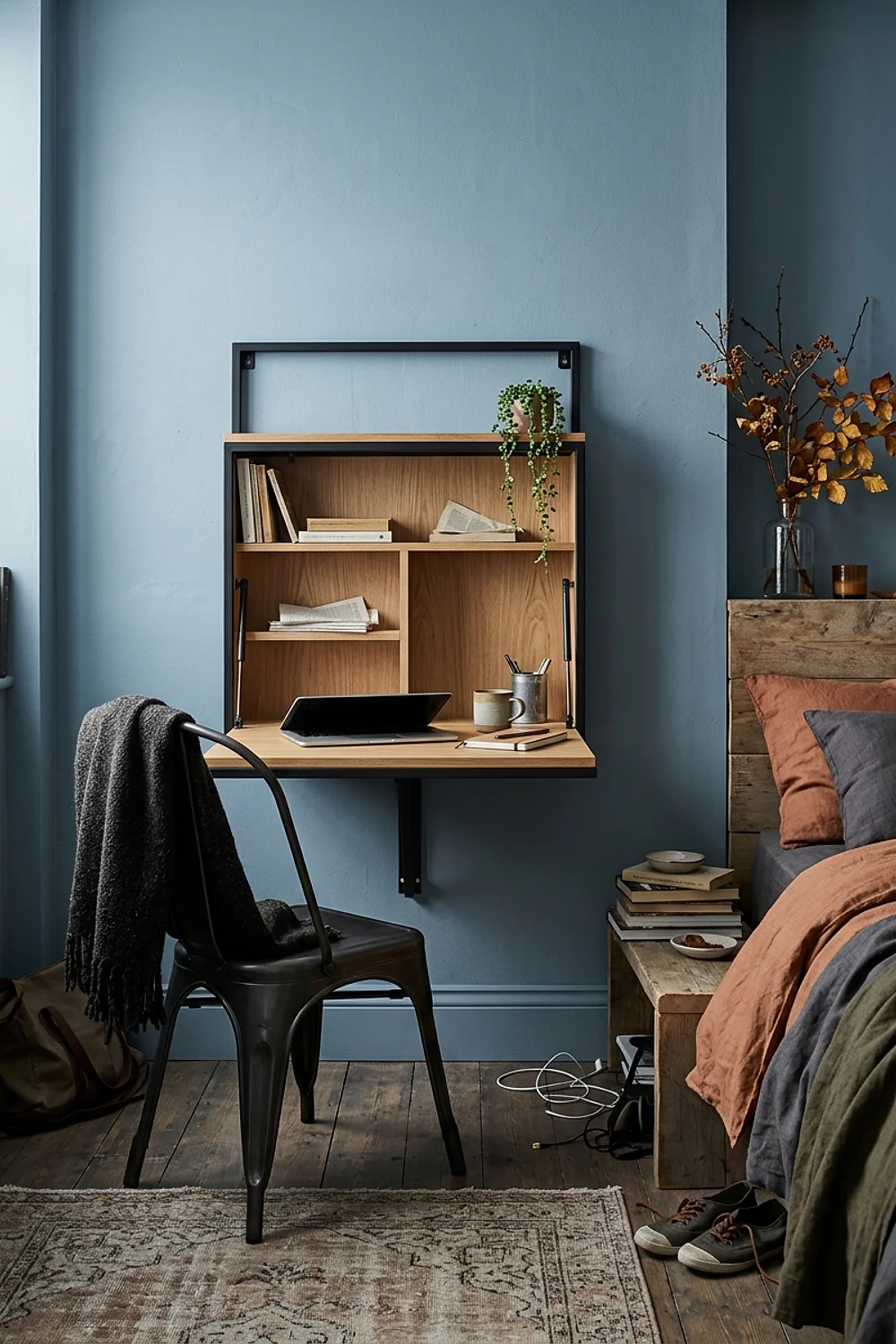
A wall-mounted drop-leaf desk, around 28 inches wide, folds flat to 3 inches deep when it isn’t in use. A basic version costs about $75, and it turns a dead wall into a workspace.
This suits anyone who works from the bedroom and hates seeing a laptop at night. Mount it at 29 inches high, and fold it up before bed so the room goes back to sleep mode.
19. Dimmers on every lamp, plus a few pillar candles
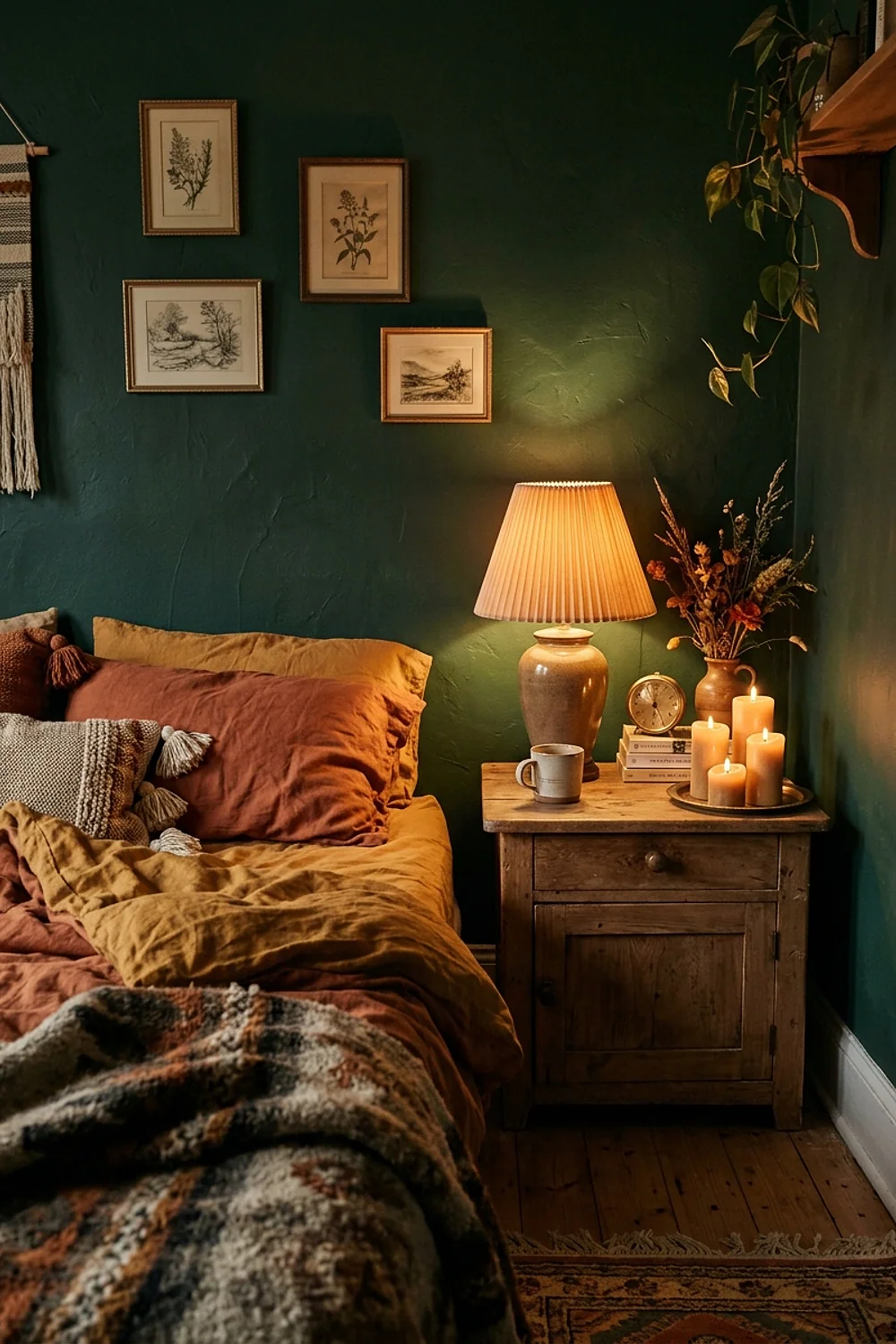
A plug-in dimmer for a few dollars lets one lamp hold at 20 percent brightness in the 4pm gloom of a rainy Sunday. Add two flameless pillar candles in a tray, and the room gets a flicker with no wax or soot.
The dim level matters more than the lamp itself. Too bright and the paint looks muddy, too low and the room becomes hard to move through.
20. A 3-inch wool mattress topper and two weights of blanket

Moody rooms fail when they look dramatic but feel stiff. A wool topper adds 3 inches of loft and regulates temperature, so the bed stays comfortable as the radiators start up in October.
Use a thin cotton blanket under a heavier knit one so sleepers can peel off layers at 2am. Wool breathes, whereas polyester fleece traps heat and leaves people clammy.
21. A leaning floor mirror, 65 inches tall, in a black frame
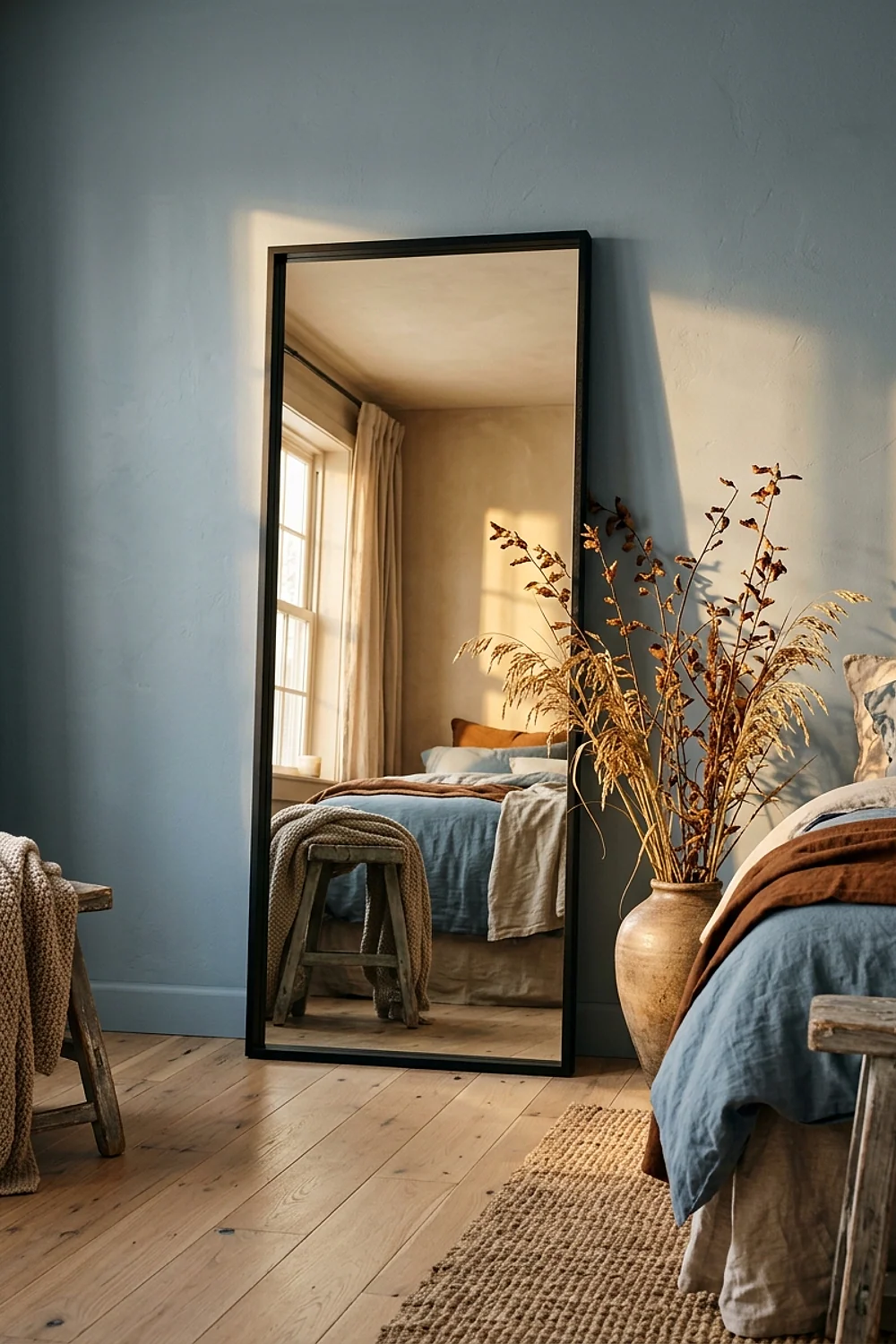
A tall mirror opposite the window bounces the light of a lamp across the room and doubles the visible depth. A 65-by-22-inch frame costs about $120 and leans without drilling, which suits renters.
Angle it so it reflects a lamp or curtain, never the pile of laundry on a chair. Thin black metal frames take up barely 1 inch of floor depth.
22. Smoky candles and a wooden diffuser tray

One candle on a small wooden tray 8 inches across keeps wax and matches contained, and sandalwood, cedar, and amber smell the way a moody room looks, so a dark bedroom feels finished rather than merely painted.
This suits small rooms and tight budgets. Keep the scent light, because a 150-square-foot room fills quickly and heavy amber turns stuffy.
Burn it for an hour before bed, then snuff it out, and never leave the flame near curtains.
Small details, big impact
Dark rooms feel bigger when the eye can’t find the edges. The rules below apply to nearly every idea above.
- Paint the ceiling one shade lighter than the walls, not white, so the join softens.
- Keep at least one strip of bare floor visible, ideally 24 inches wide.
- Put a lamp in every corner, at eye level or below.
- Repeat two or three colors across bedding, curtains, and art.
Mirrors help, but only when they reflect something worth doubling. Placed across from the window, a mirror pulls in whatever gray daylight arrives and spreads it deeper.
The ceiling trick surprises people. A white ceiling over deep walls cuts the room into a harsh box, while a tinted one makes the walls and ceiling read as a single envelope.
Eye-level lamps matter most. A ceiling light flattens everything in sight, but a pool of amber at knee height gives the room layers. It’s not foolproof. But it works.
Where the inspiration comes from
Moody fall bedroom ideas depend on fewer, better pieces, because every extra object adds visual noise in a dark room. Spend where one item replaces two.
A storage bed with hydraulic lift tops the list. A frame with a lifting base holds about 20 cubic feet of off-season bedding and replaces a dresser, though it costs two to three times more than a basic platform.
Next comes the bench ottoman, followed by a wall-mounted desk and plug-in sconces. Each one frees floor area, and floor area is the one thing a small bedroom can’t make more of.
Skip anything with a single purpose and a big footprint. A decorative accent chair that nobody sits in is the usual culprit, since it takes 2 square feet and gives back nothing but a place to drop jackets.
Start with one dark wall
Moody fall bedroom ideas don’t need a full renovation. Paint one wall, swap three bulbs, and add a wool throw, and the room already reads differently by evening.
Save or pin this list so it’s ready when the first cold week arrives. Then measure the space beside your bed and pick one idea from the first ten to try this weekend.