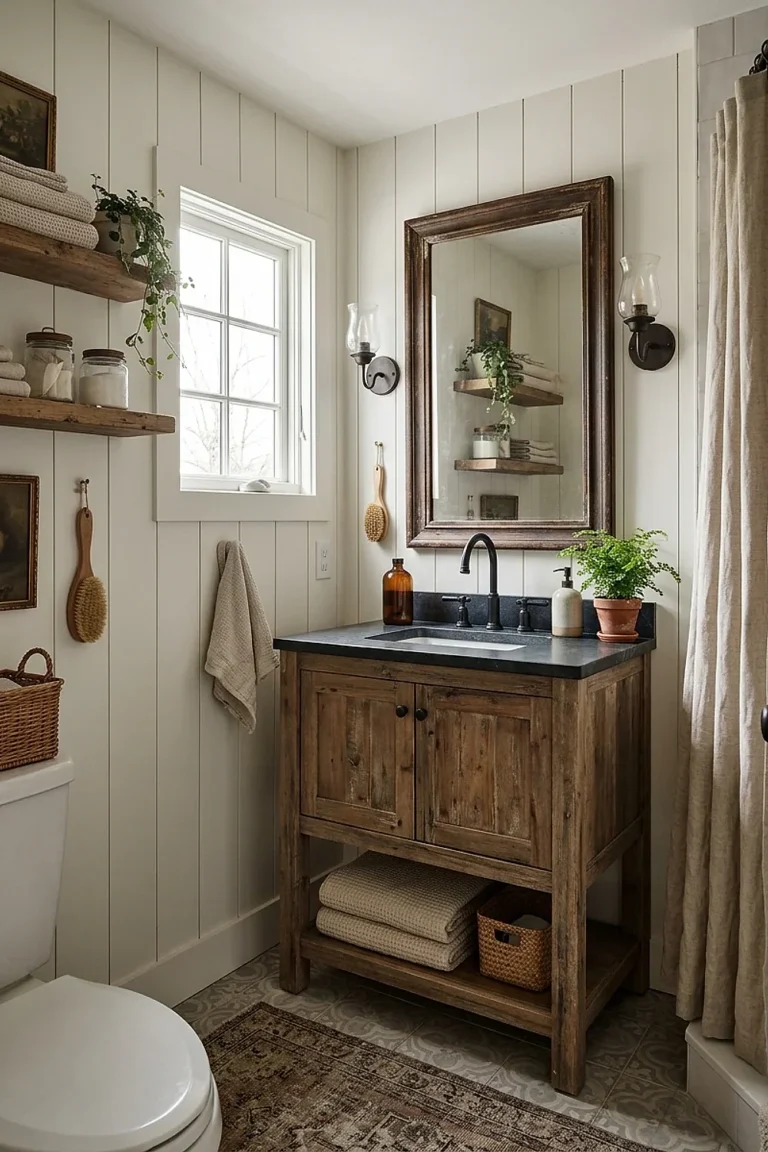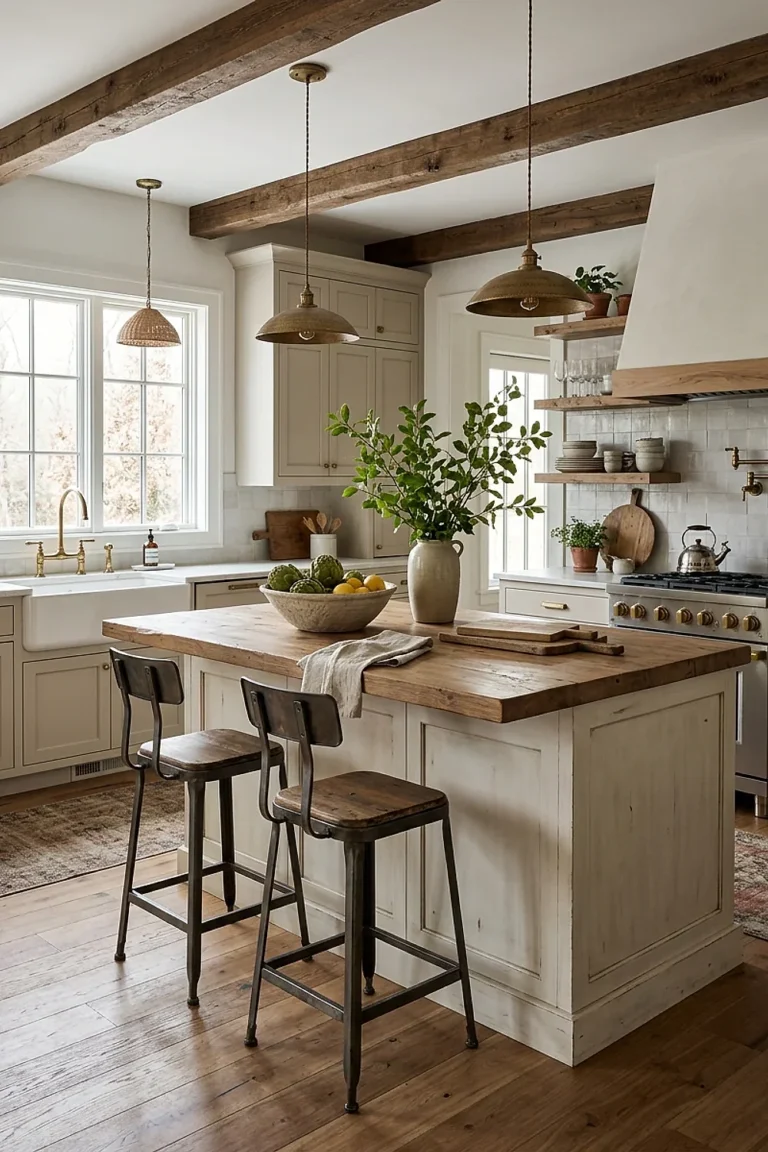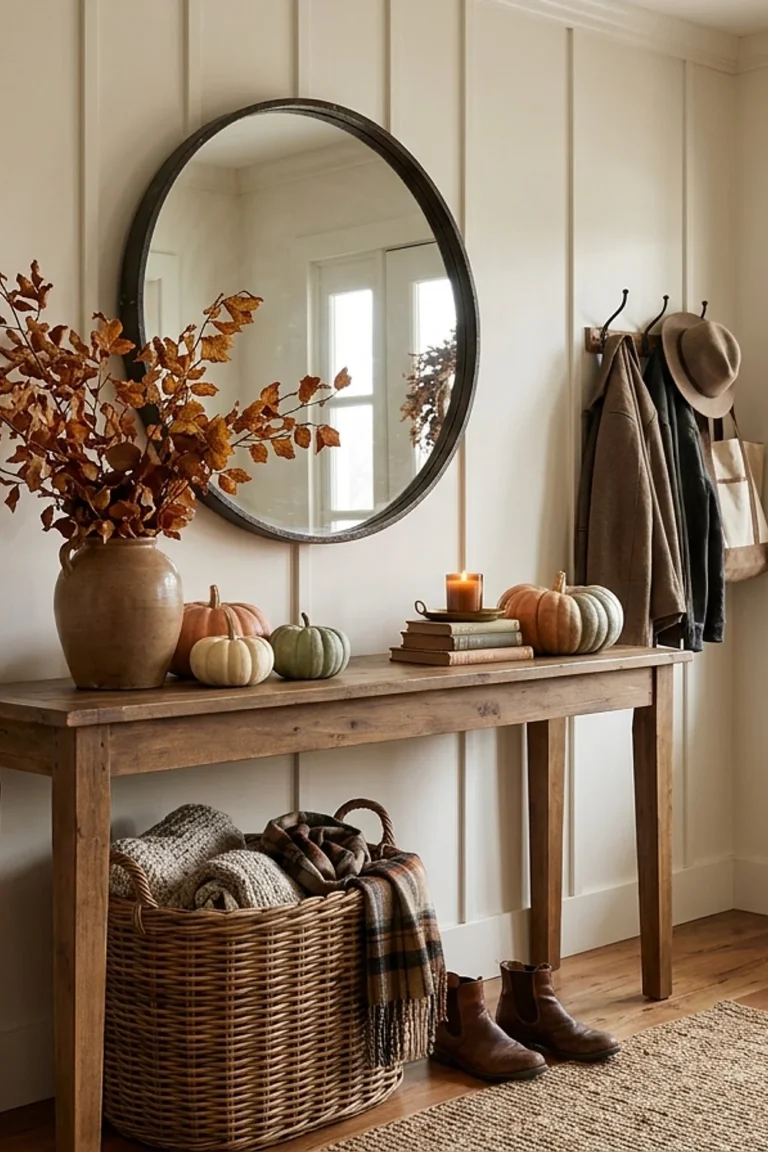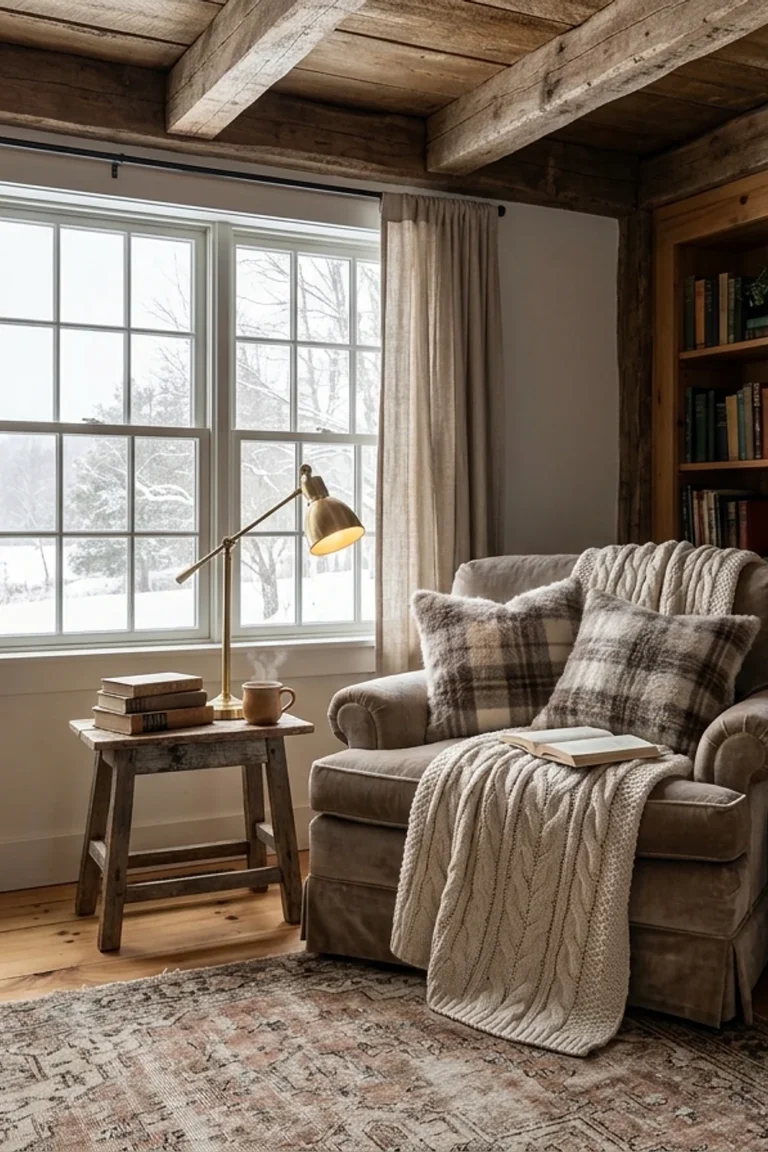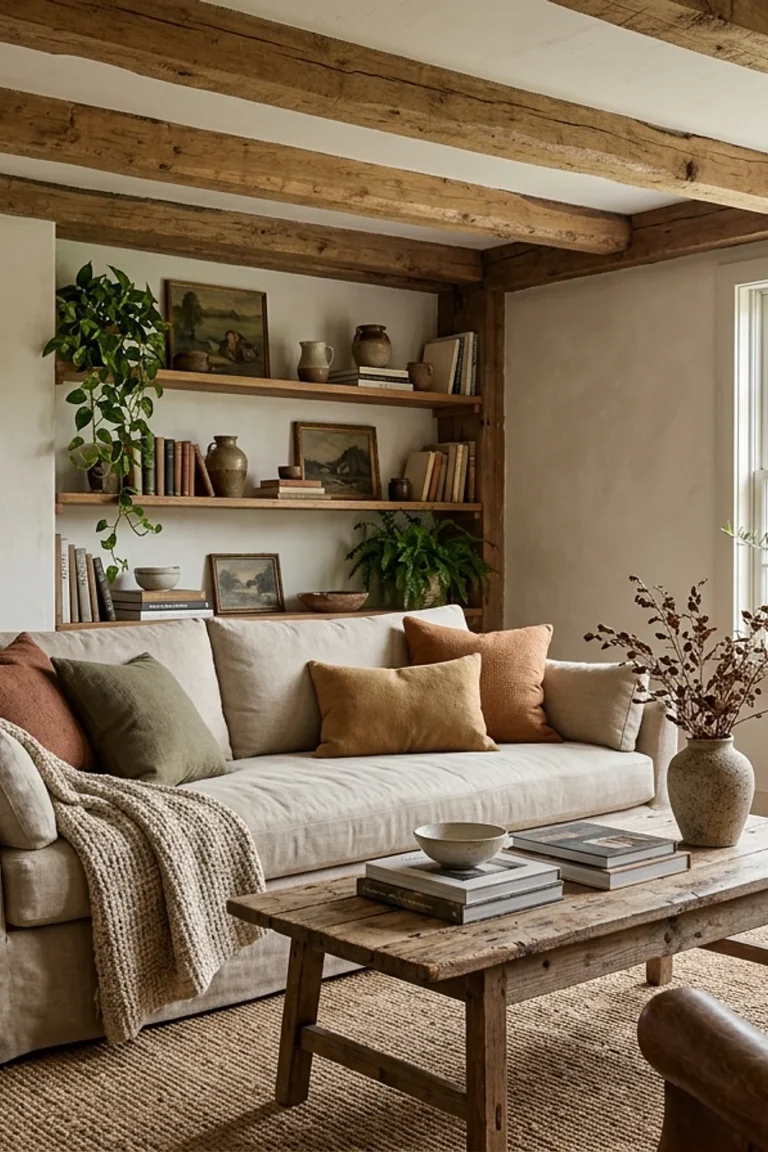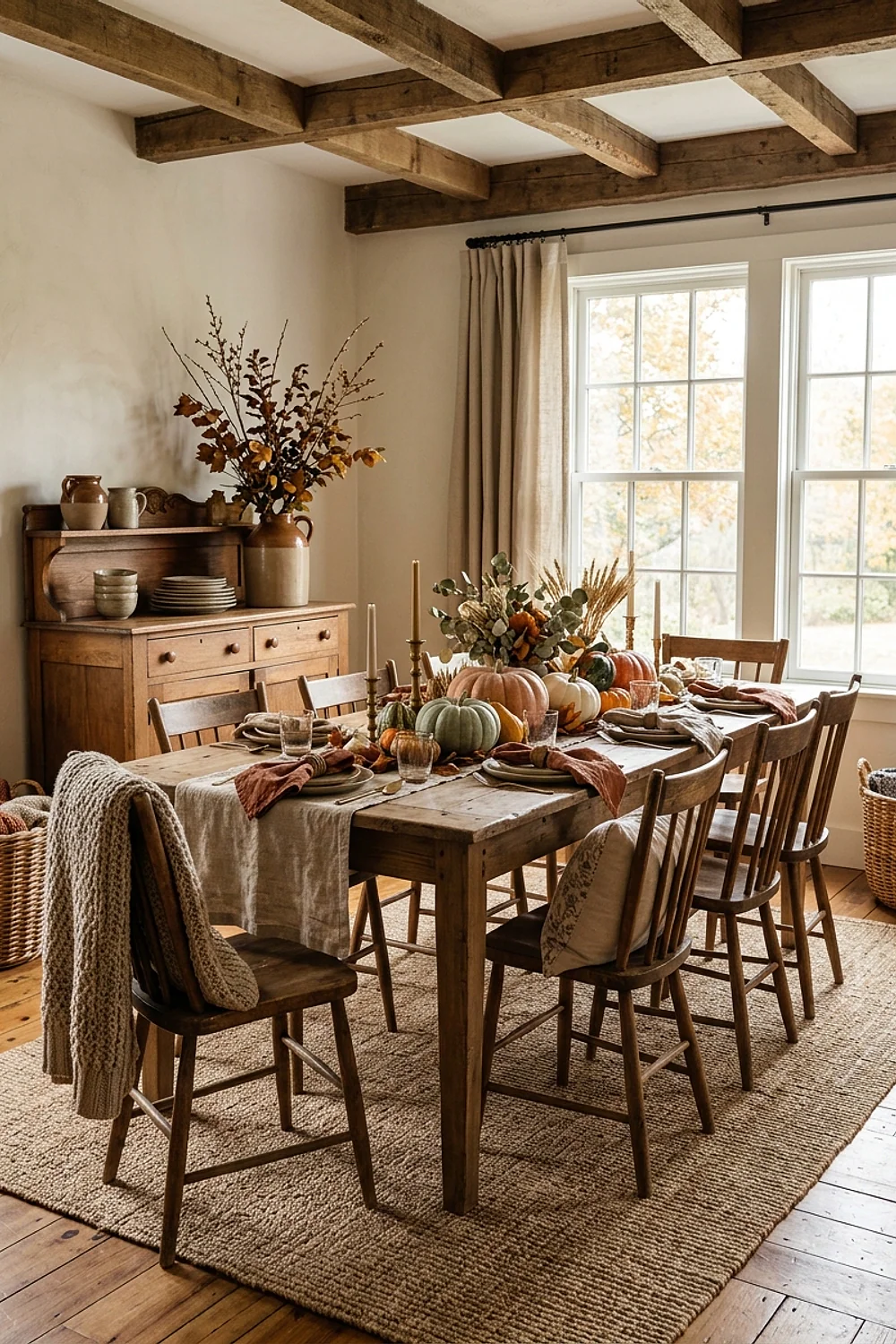
Three hundred dollars, a 10-by-12 dining room and one free weekend leave no room for impulse buys. That’s the exact setup this guide is built for, and the fall dining room decor ideas below come with measurements, materials and honest trade-offs so nothing ends up in a donation bag by December.
Picture the before: a bare oak table, a flat white ceiling bulb and one bowl of shiny fake apples. The after is a room that smells faintly of beeswax, glows amber by 5 pm and feels finished. Here’s how to get there.
Why fall dining room decor doesn’t have to break the bank
A dining room is the easiest room in the house to restyle, because the table does most of the work. One surface, one light source, one sideboard. Fix those three and the room reads as done.
The biggest lesson from a makeover like this is that expensive-looking rooms rely on restraint and texture, not on volume. A $20 linen runner beats a $60 pile of seasonal knickknacks every time.
The 36 ideas below run from the table outward to the walls, lights and floor. Pick eight or ten. Skipping the rest is part of the strategy.
1. A rust, mustard and cream palette pulled from what’s already in the house
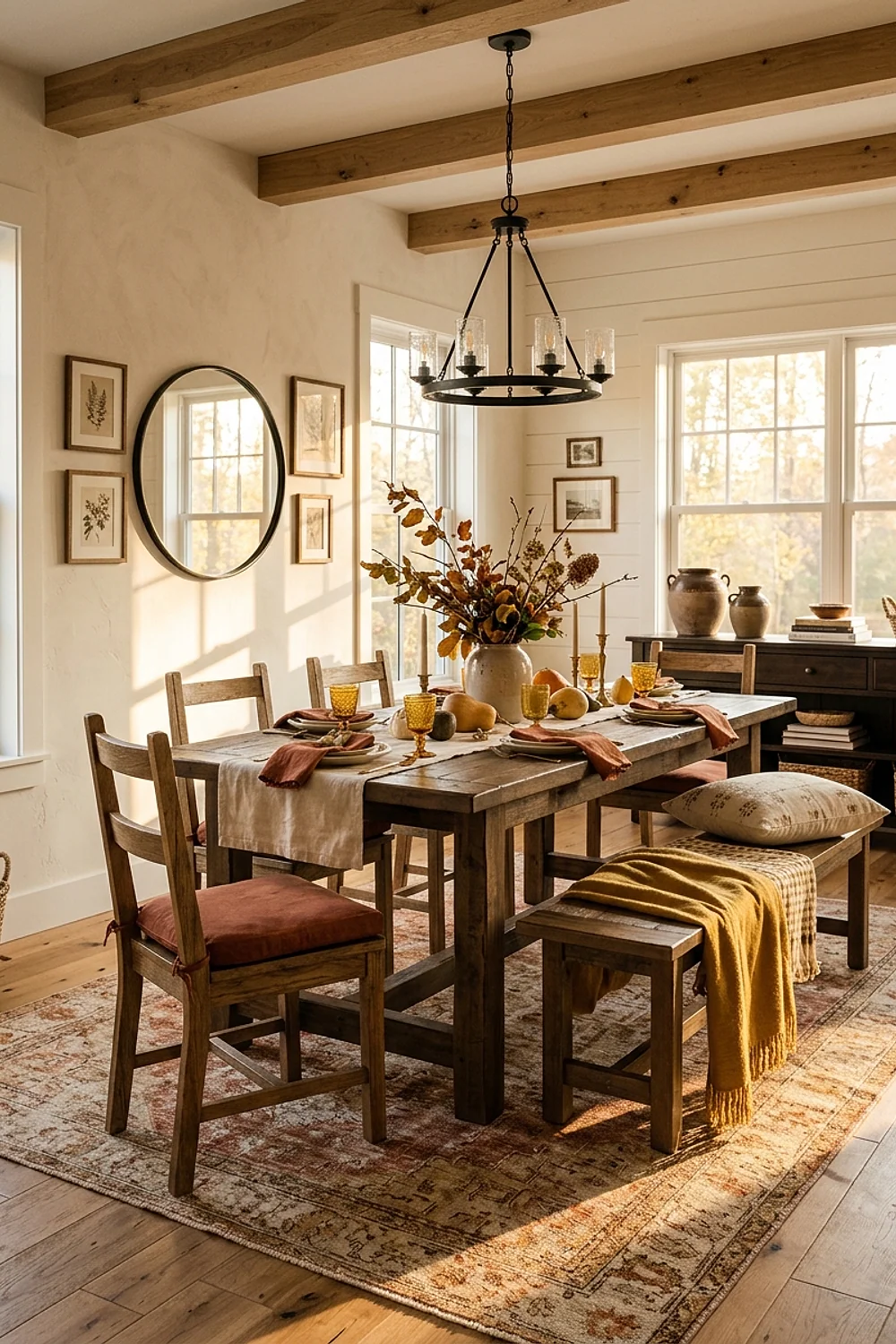
Start by shopping the closet: a cream tablecloth, a rust throw, a mustard sweater turned pillow cover. Aim for roughly 60 percent cream, 30 percent rust and 10 percent mustard.
This works because three colors limit what you buy and keep the room from tipping into costume-shop orange. It suits beige or white dining rooms best. Lean toward brick and clay rather than traffic-cone pumpkin, or the whole table will look like a Halloween aisle.
2. A 14-inch clear lane down the middle of a 72-inch table
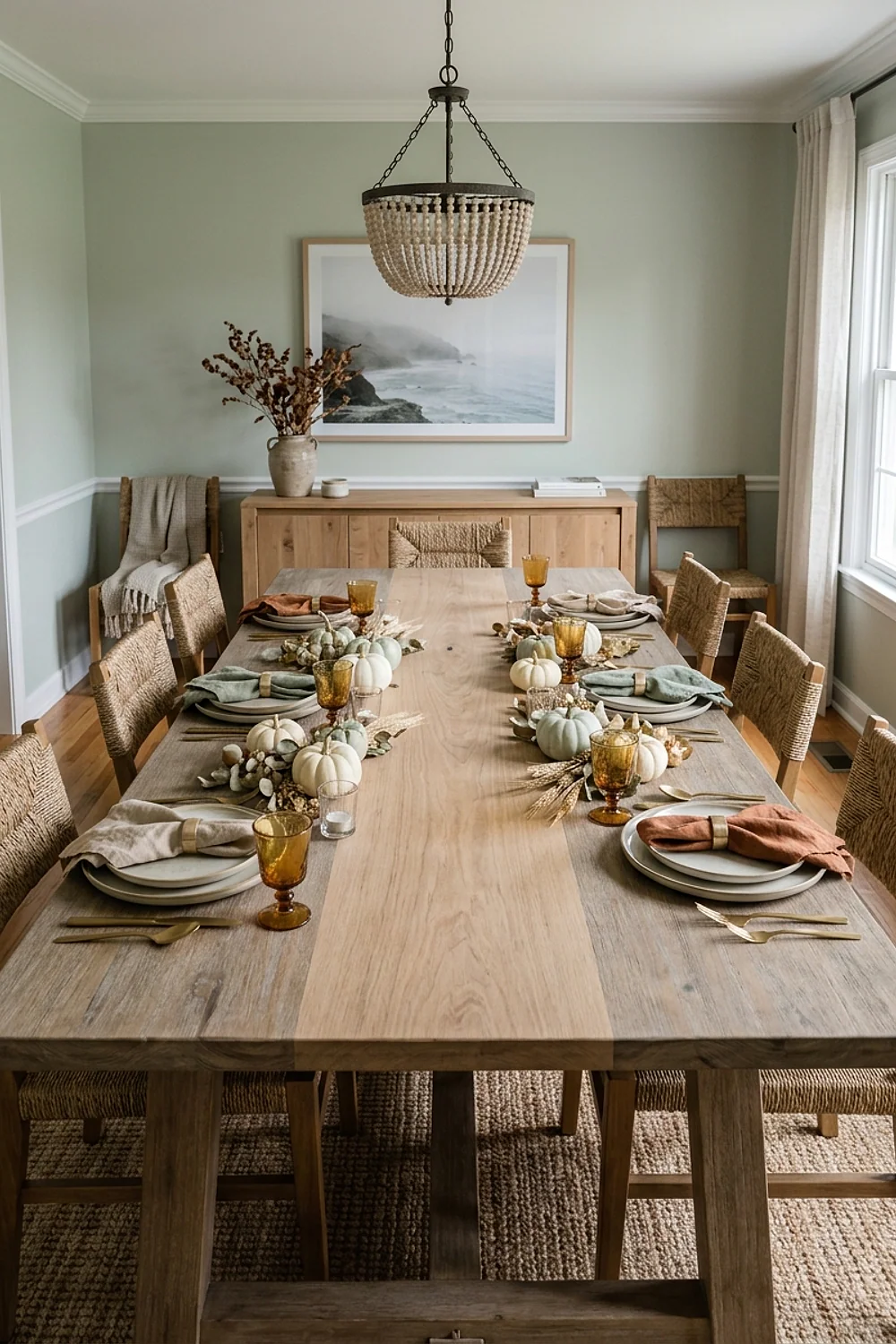
Decor should live in a strip down the center, about 14 inches wide, and leave the rest of the table free for plates and platters. On a 72 to 84 inch table that strip holds a runner, candles and a few small objects without crowding anyone’s elbows.
This layout suits anyone who actually eats at the table, not just photographs it. The trap is covering every inch. If a guest has to move a gourd to set down a glass, the arrangement has failed.
3. A stonewashed linen runner, 14 by 90 inches, for $18-30
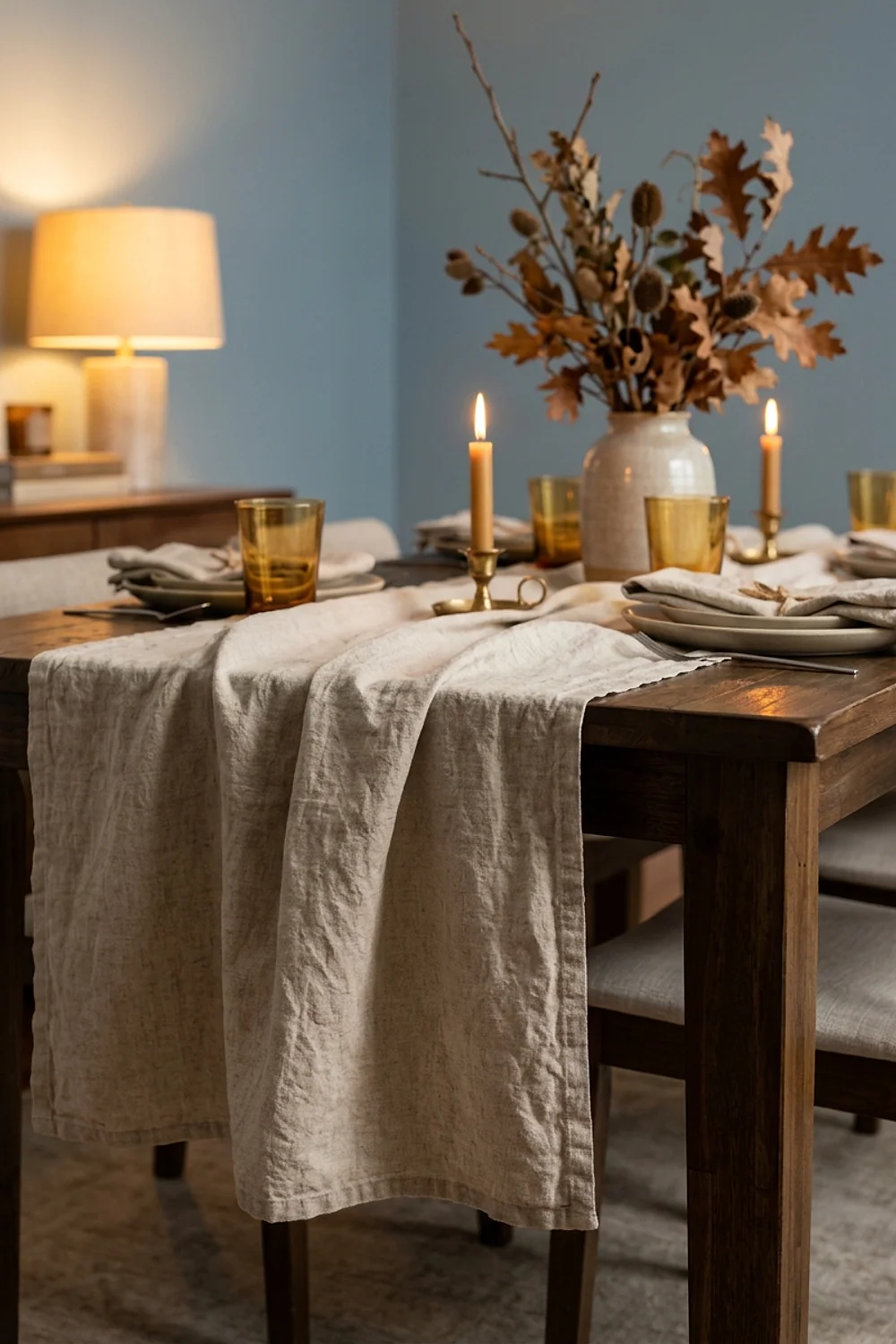
Run a thumb across stonewashed linen and you’ll feel the nubby, slightly uneven weave that makes a table look layered. Wrinkles are part of the appeal, so skip the iron.
Choose a linen-cotton blend over polyester, which shines under candlelight in a cheap way. A 90-inch runner on a 72-inch table drops about 9 inches at each end, which is the right proportion. Anything narrower than 12 inches looks like gift ribbon.
4. A lidded seagrass basket, 18 inches wide, tucked beside the sideboard
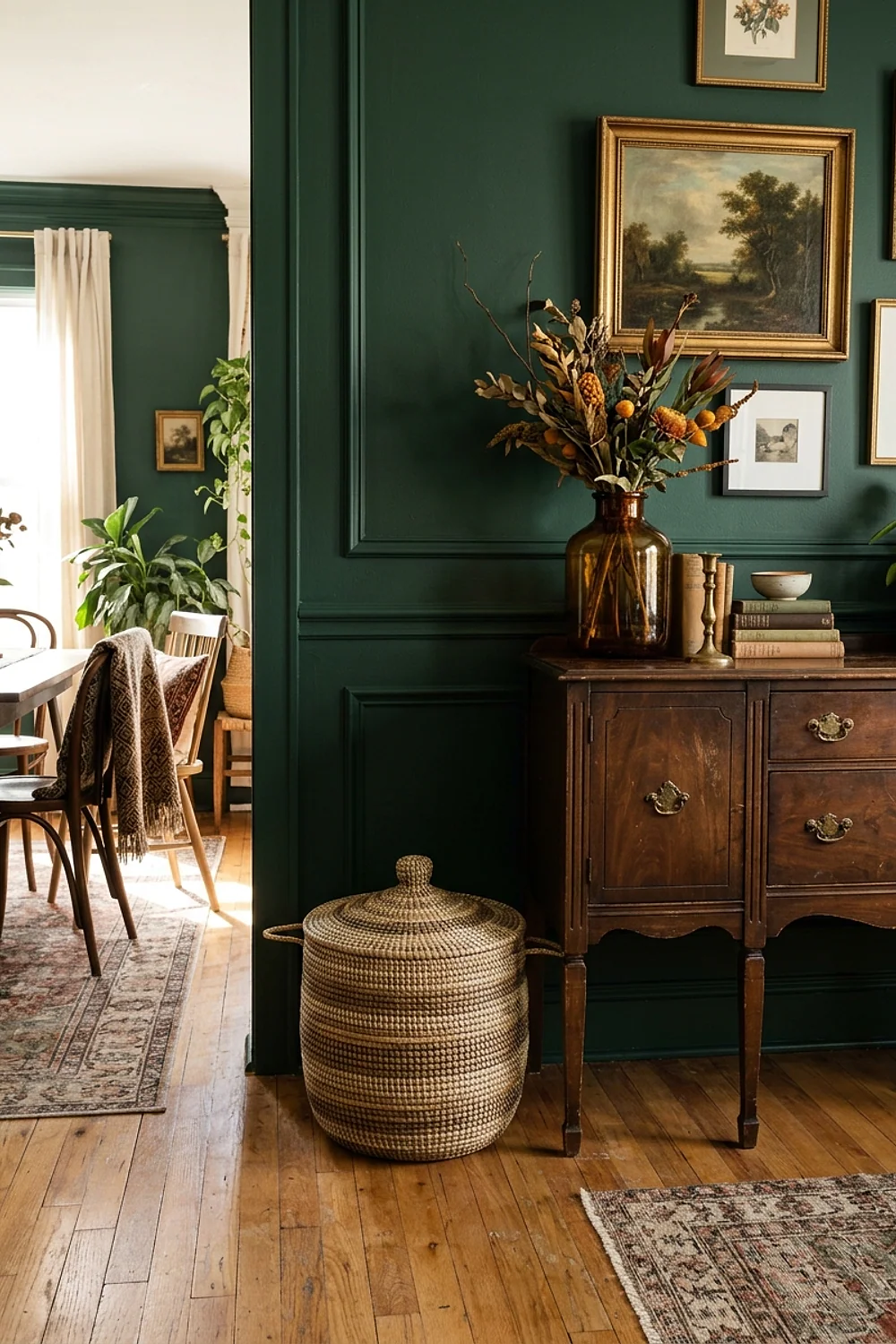
Extra seat cushions, a spare throw and cloth napkins need a home that doesn’t involve a closet. A lidded seagrass basket on the floor beside the sideboard holds all of it and adds a woven texture the room usually lacks.
This is the move for small homes without hall storage. Pick one with a lid, because open baskets collect dust and look messy within a week.
5. Mini pumpkins on a wooden tray, grouped in odd numbers, $1-3 each
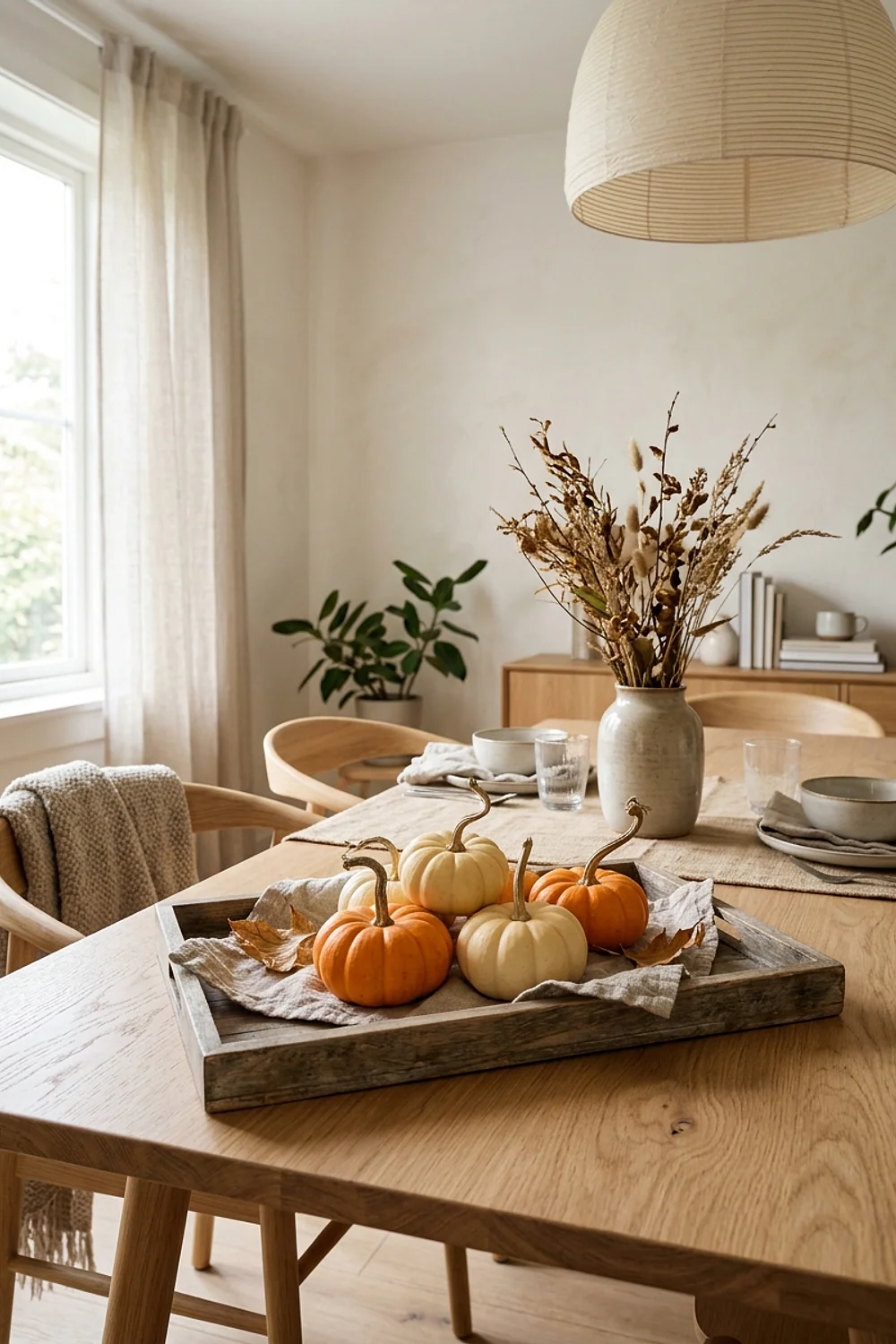
Set three or five mini pumpkins on a thrifted wooden tray (about $5 to $8) and vary the heights and finishes. A matte blue-gray Jarrahdale next to a glossy cream one looks collected instead of bought in a bag.
Odd numbers read as natural and even ones look staged. The tray matters because real pumpkins leave pale rings on bare wood. Felt dots on the tray bottom protect the table.
6. A low centerpiece, because tall ones block the conversation
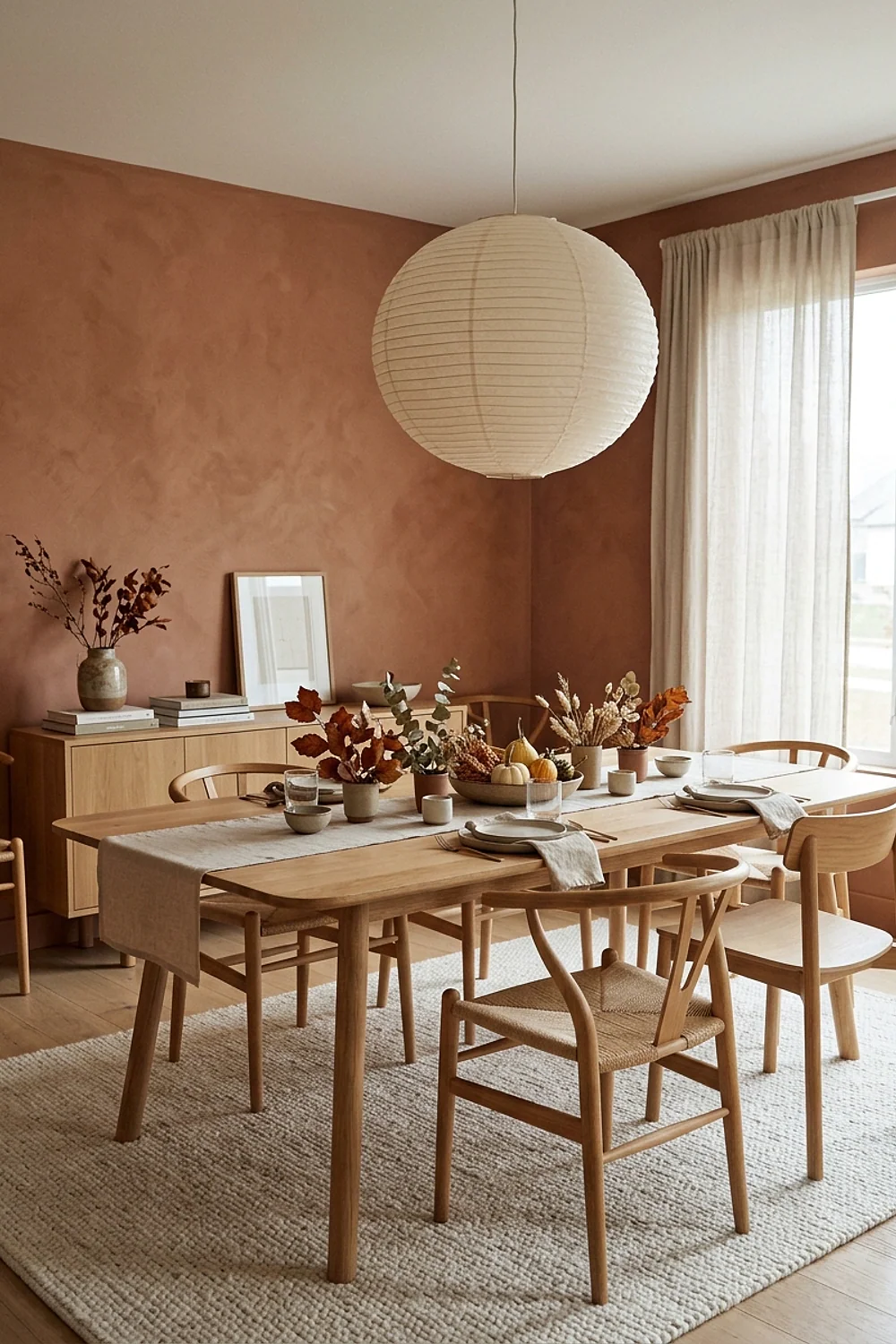
Here’s the mistake people make constantly: they stack tall candlesticks, a giant branch arrangement and a pumpkin tower in the center, then wonder why nobody can see across the table. Anything over 12 inches in the sightline turns dinner into two separate conversations.
Keep seated-height pieces under 12 inches, or hang the drama overhead instead. A low, long arrangement looks more deliberate and leaves everyone’s face visible.
7. A 28-inch grapevine wreath hung over the sideboard, $15-25
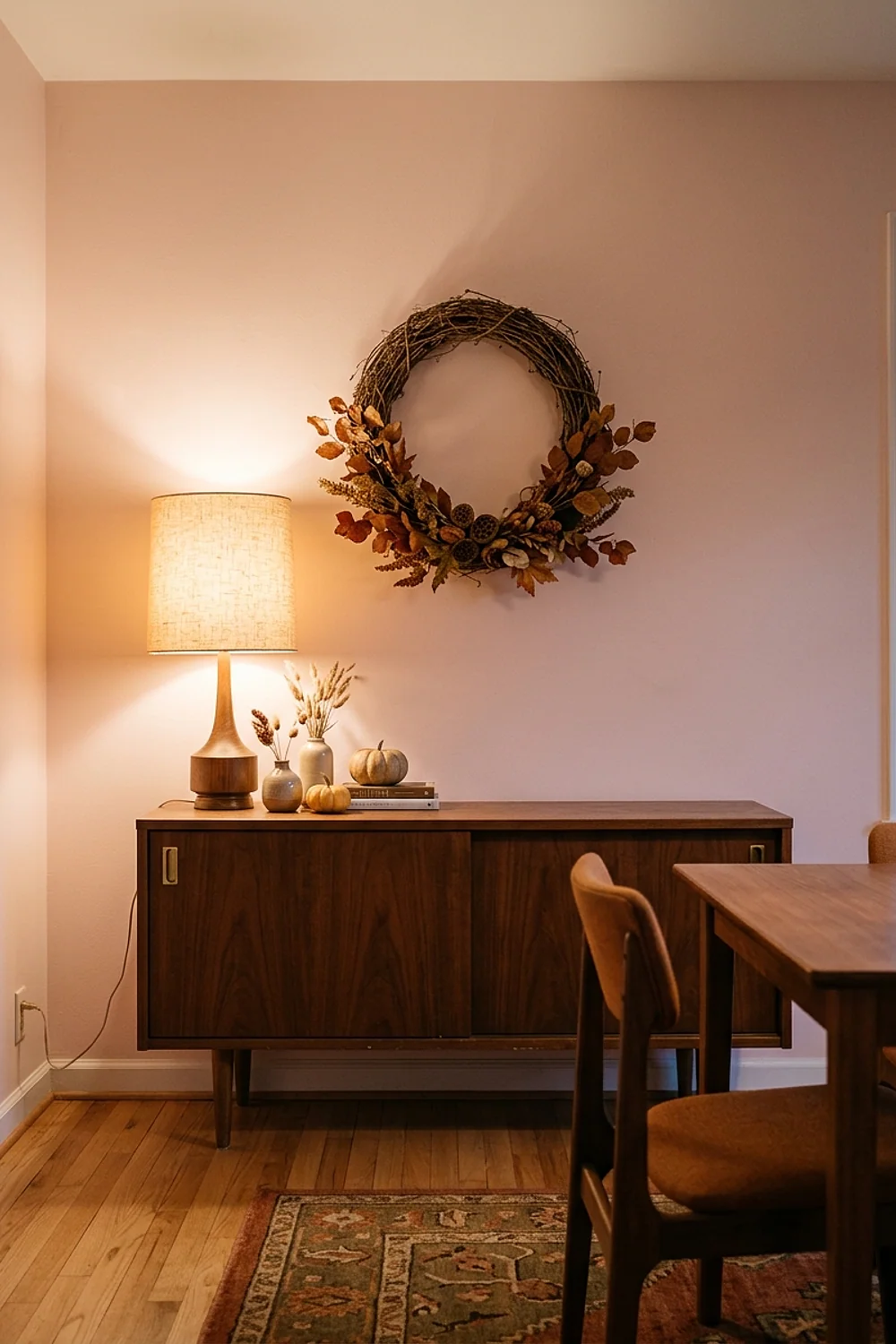
A 14-inch wreath over a 60-inch sideboard looks lost. A 28-inch grapevine wreath, hung from a satin ribbon looped around a nail, fills about half the width and feels intentional.
Craft stores run 40 percent off coupons nearly every week in September. Pass on wreaths with glossy plastic leaves, because they catch the light in a way that gives them away across the room.
8. Two-inch seat pads with ties on every chair
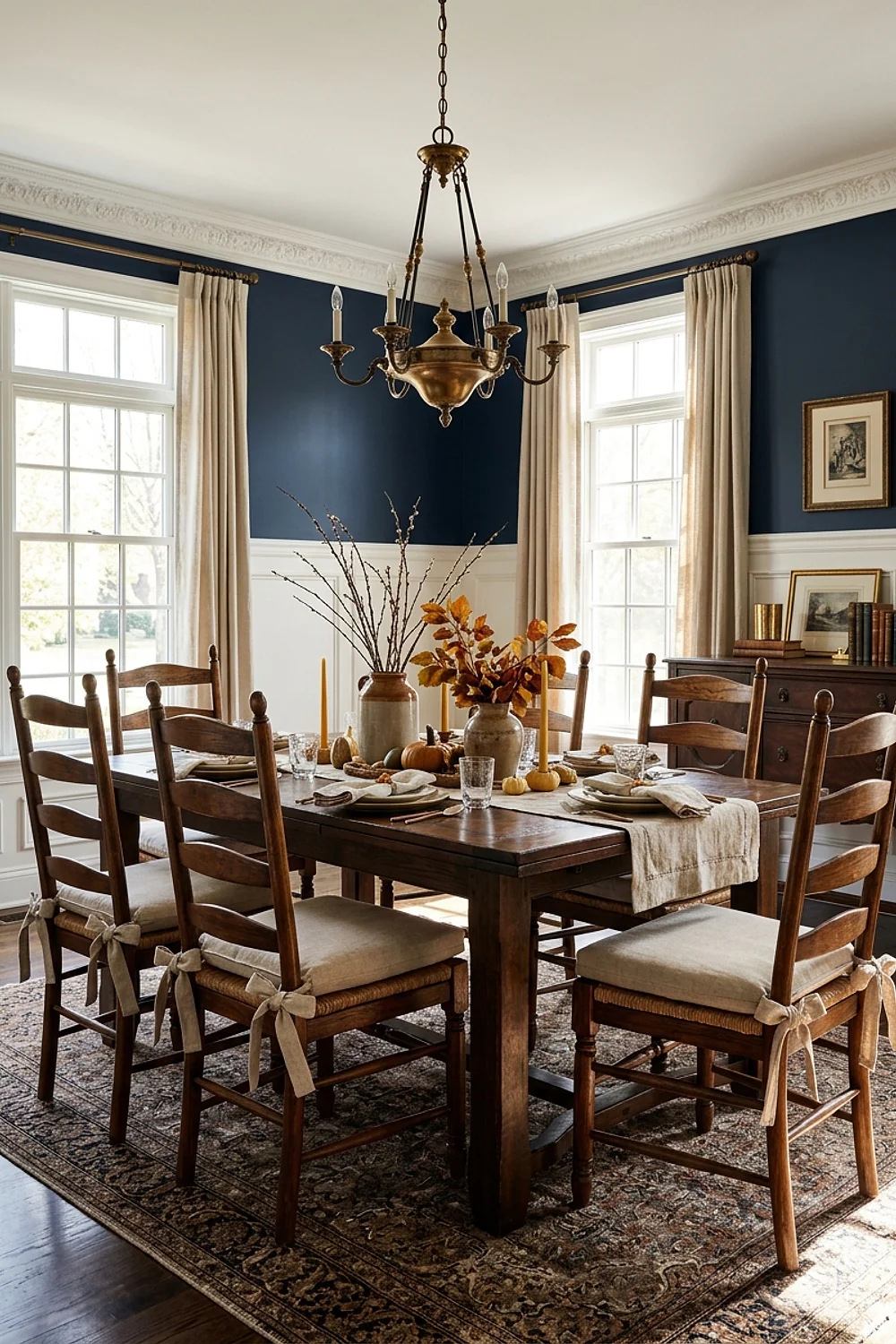
Hard wooden chairs make guests leave the table early, so a 2-inch seat pad in flax or soft plaid keeps people sitting through second coffees. Ties at the back stop the pad from creeping forward.
Measure the knee clearance first. A thick pad raises a seated adult about 2 inches, and tables with a low apron (under 7 inches of space) can start to feel cramped.
9. A 16-inch wooden lazy Susan under the centerpiece, $15-25
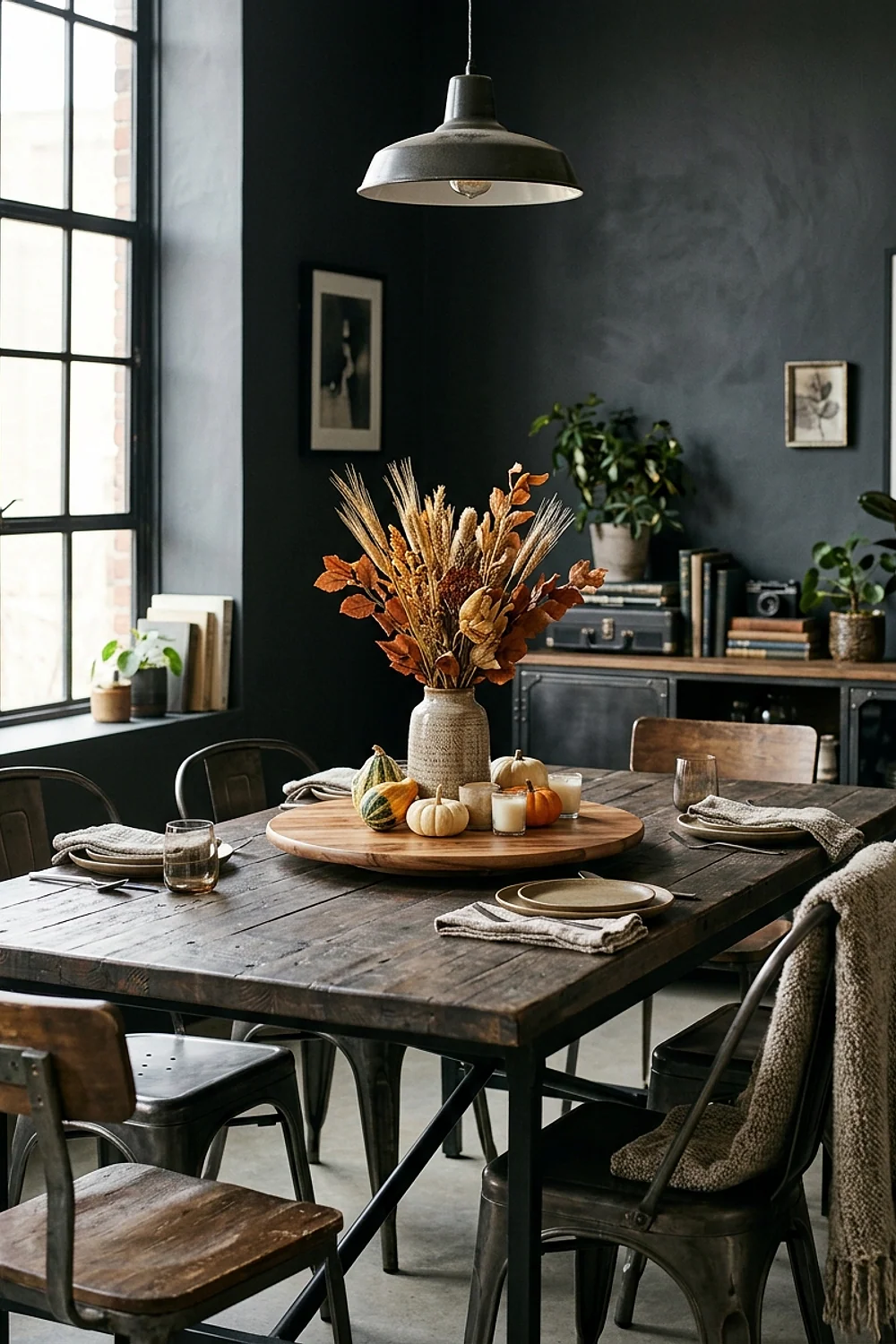
A turntable lets a centerpiece double as a way to pass gravy, butter and cranberry sauce without anyone reaching. Set the pumpkins and candles on top, and the whole arrangement earns its spot.
Thrift stores often have them in the housewares aisle. Check the table width first, because a 16-inch disc on a 36-inch table leaves only 10 inches per side for plates.
Where the inspiration comes from
Once the table is settled, the surfaces around it carry the rest of the story. This is where a room starts to feel layered rather than decorated.
10. Ten-inch taper candles in brass holders for the 4 pm to 6 pm window
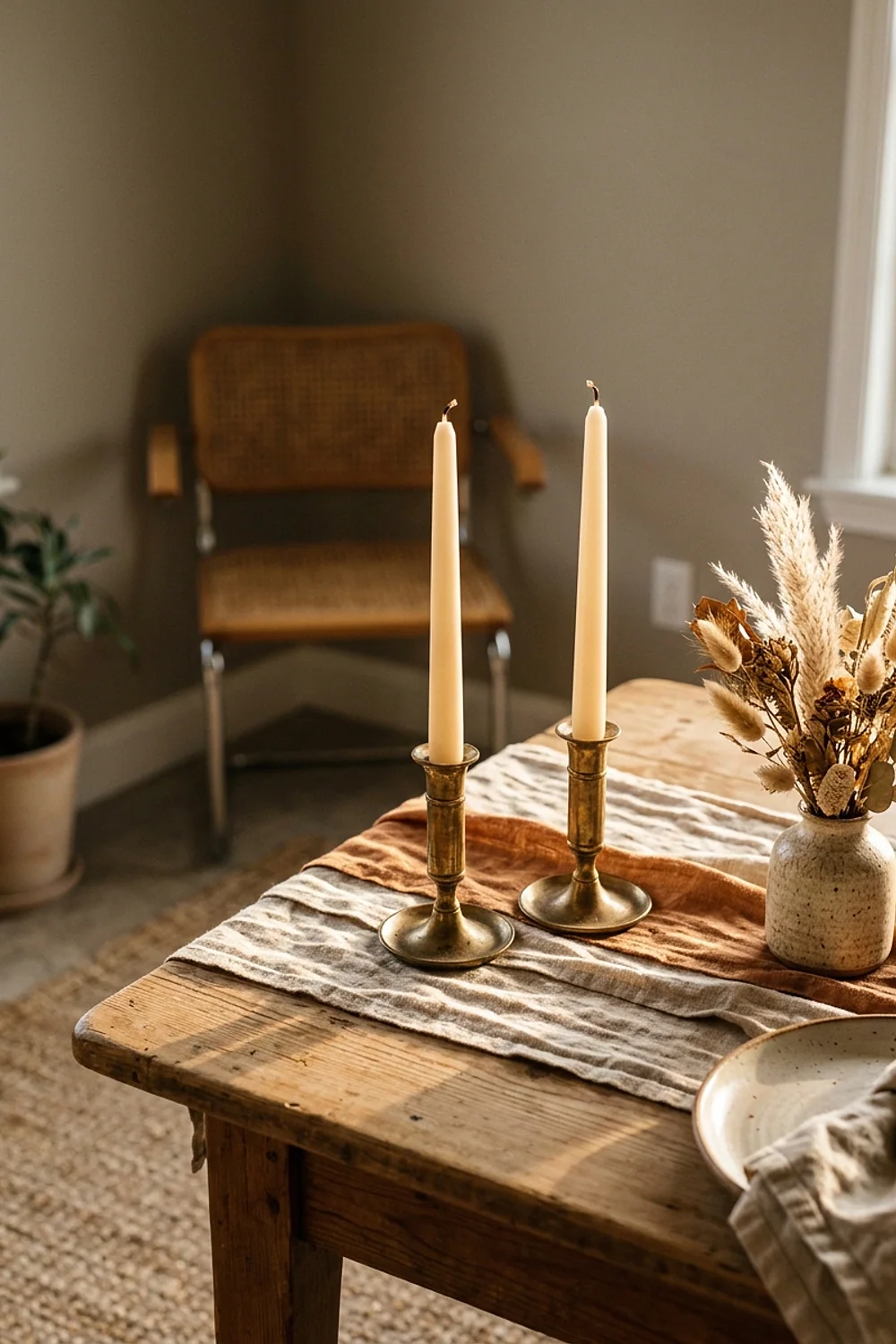
In October the sun slants low through a west window around 4 pm and turns the table honey-colored. Light the tapers right as that glow fades, and the room never feels like it dimmed.
Dripless tapers burn roughly 7 to 8 hours. Keep flames at least 8 inches from dried branches or wheat, and use hurricane glass if the room has a draft.
11. Olive green cotton napkins against a rust runner, about $10-16 a set
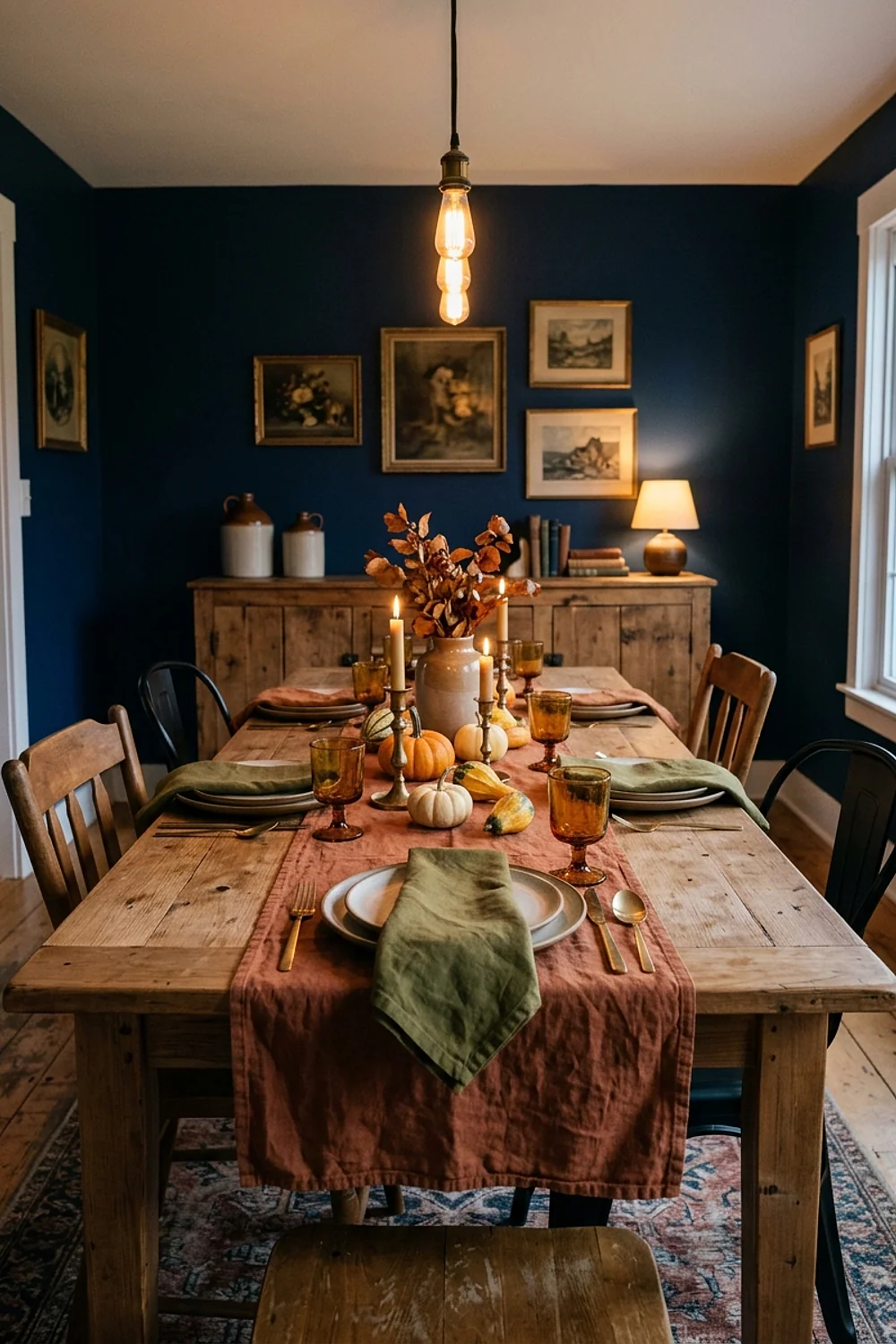
Olive sits near rust on the color wheel without matching it, which gives the table depth that a single-color scheme can’t. The slight difference in undertone makes the warm runner look richer and the green look less drab. A set of four cotton-linen napkins costs about $10 to $16, so the effect suits a modest budget.
Wash them once before using, since new fabric holds stiff sizing. Avoid buying napkins that match the runner exactly, because the table goes flat.
12. A triangle arrangement on the sideboard with 30 percent left bare
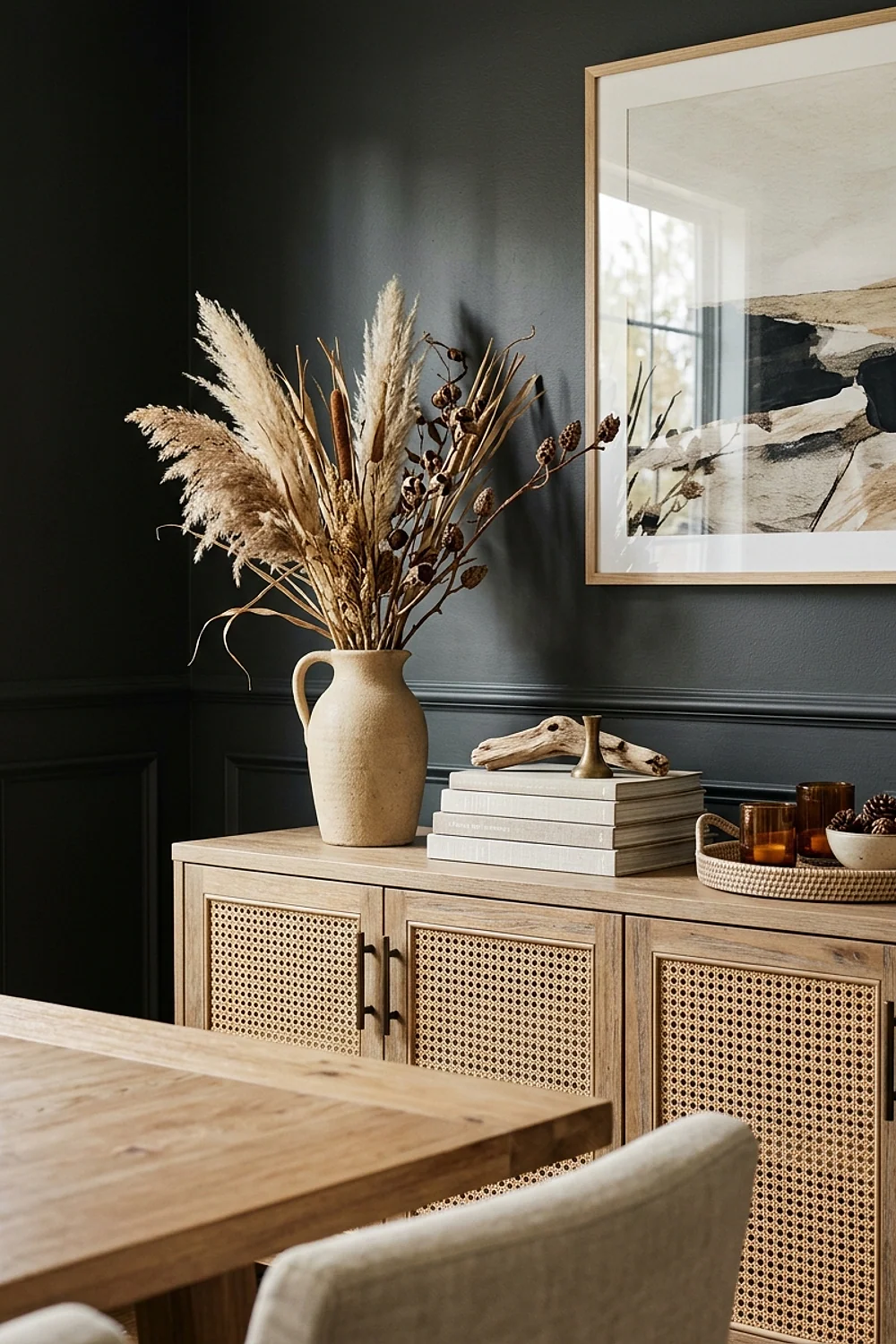
Place the tallest object (18 to 24 inches) at one back corner, a medium piece beside it and a low bowl in front. The eye travels down the triangle in one smooth line.
This is ideal for narrow sideboards, 14 to 18 inches deep. Leave about a third of the surface empty, or the arrangement reads as clutter instead of a display.
13. Thrifted brass candlesticks in mismatched heights, $4-12 each
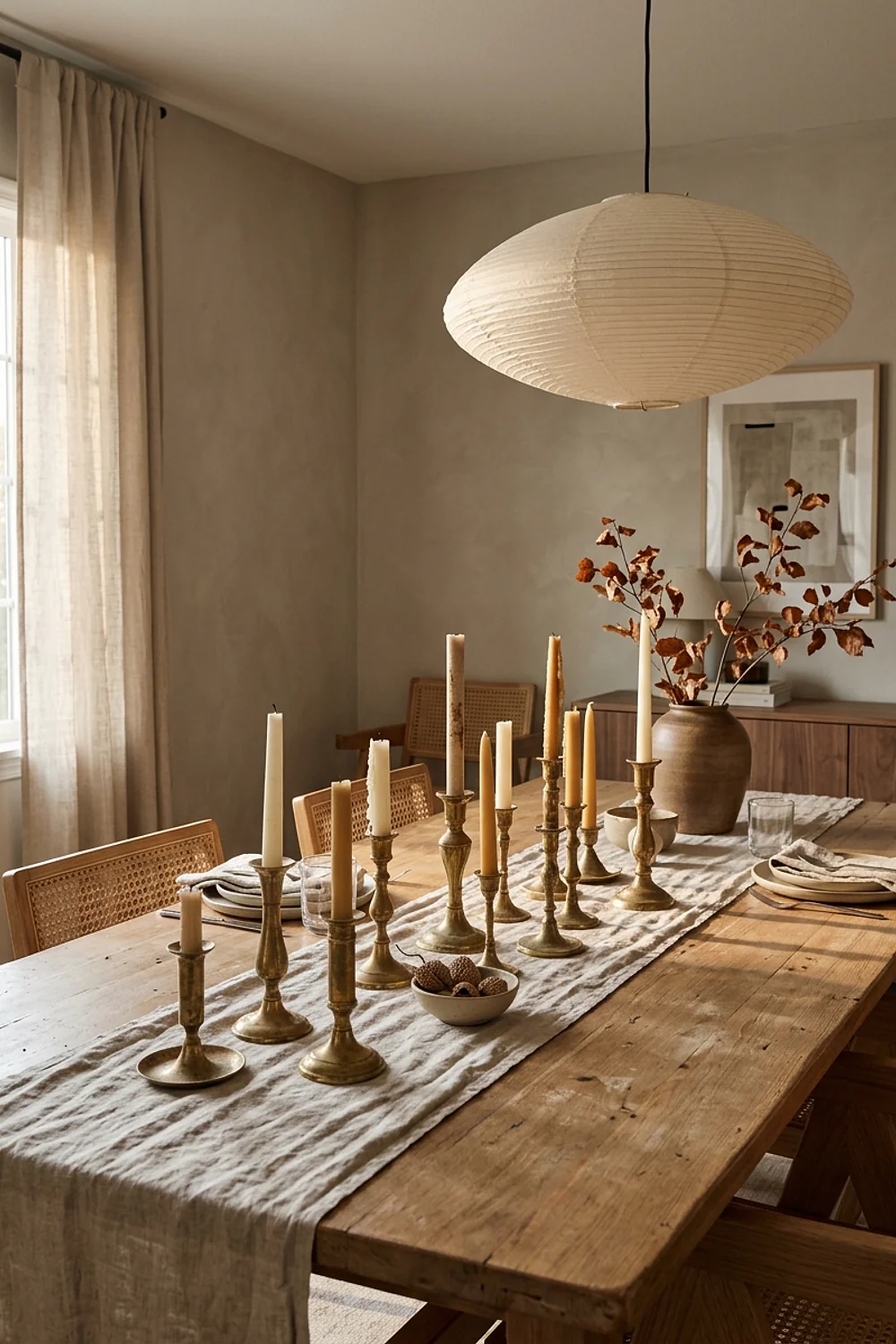
Here’s a counterintuitive one: mismatched candlesticks look more expensive than a matching set, because they suggest a collection built over time. Mix heights between 4 and 10 inches.
Do the magnet test first. A magnet won’t stick to solid brass. Lacquered pieces won’t polish at all, but a paste of baking soda and lemon juice brings dull solid brass back in about 10 minutes.
14. A 24-inch floating shelf for ironstone pitchers and tureens
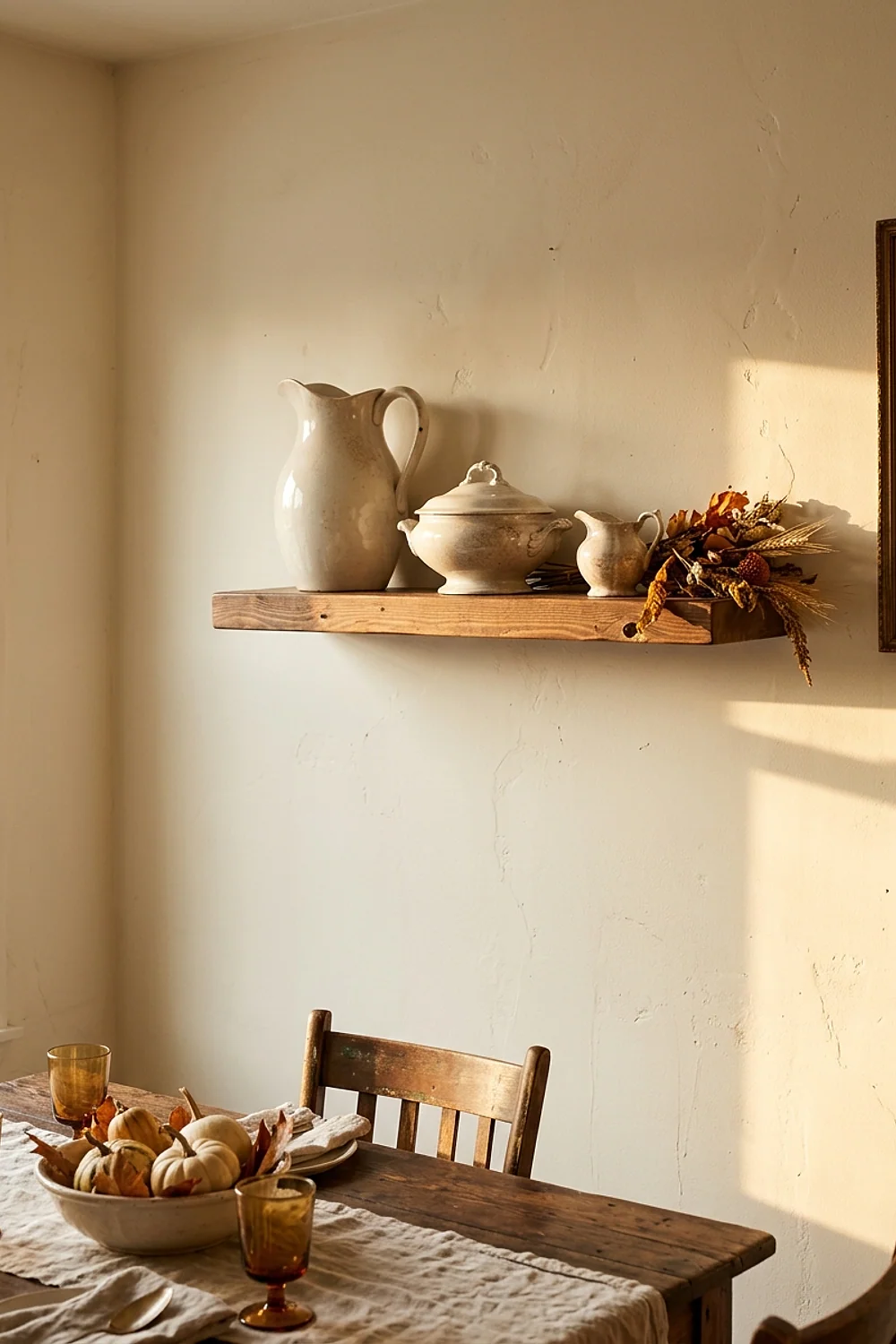
A 1×8 pine board, stained walnut and mounted into studs, turns a blank wall into display space that also stores serving pieces. It holds around 25 pounds when screwed into studs. The dark stain makes cream ironstone stand out, and pieces used only for holidays stay within reach instead of buried in a cabinet.
This suits dining rooms with no built-ins. Don’t rely on drywall anchors alone for heavy ceramics, because one shift and the whole shelf drops.
15. Dried wheat stems in a stoneware pitcher, $6-10 a bundle
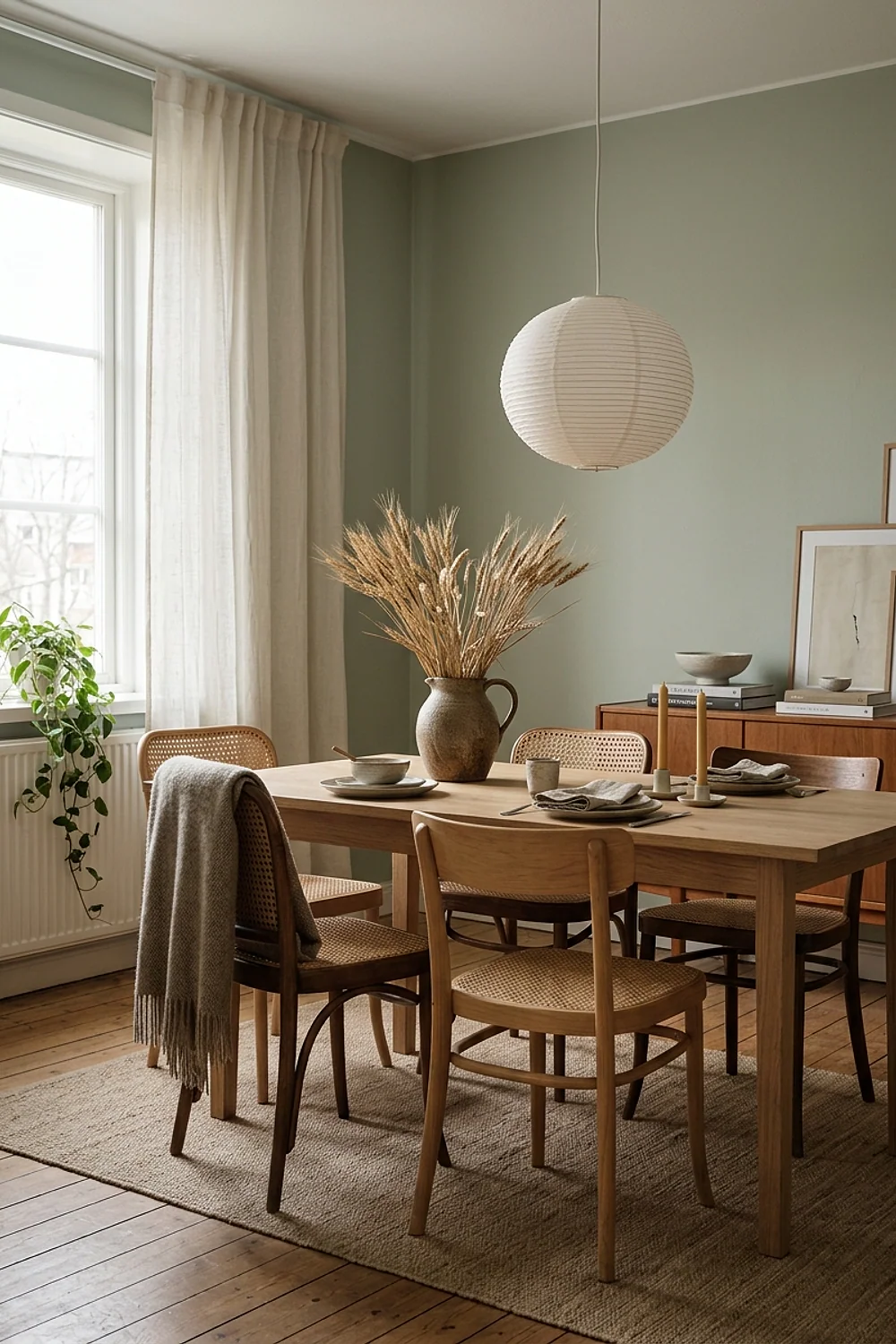
Trim the stems to 18 inches and let them fan loosely in a stoneware pitcher. The dry rustle when someone brushes past is half the charm of the arrangement.
A light mist of unscented hairspray keeps the heads from shedding on the floor. Resist packing the stems tightly, since a loose, uneven spray looks natural and a tight bunch looks like a broom.
16. Plaid napkins only if the pattern scale differs from the plates
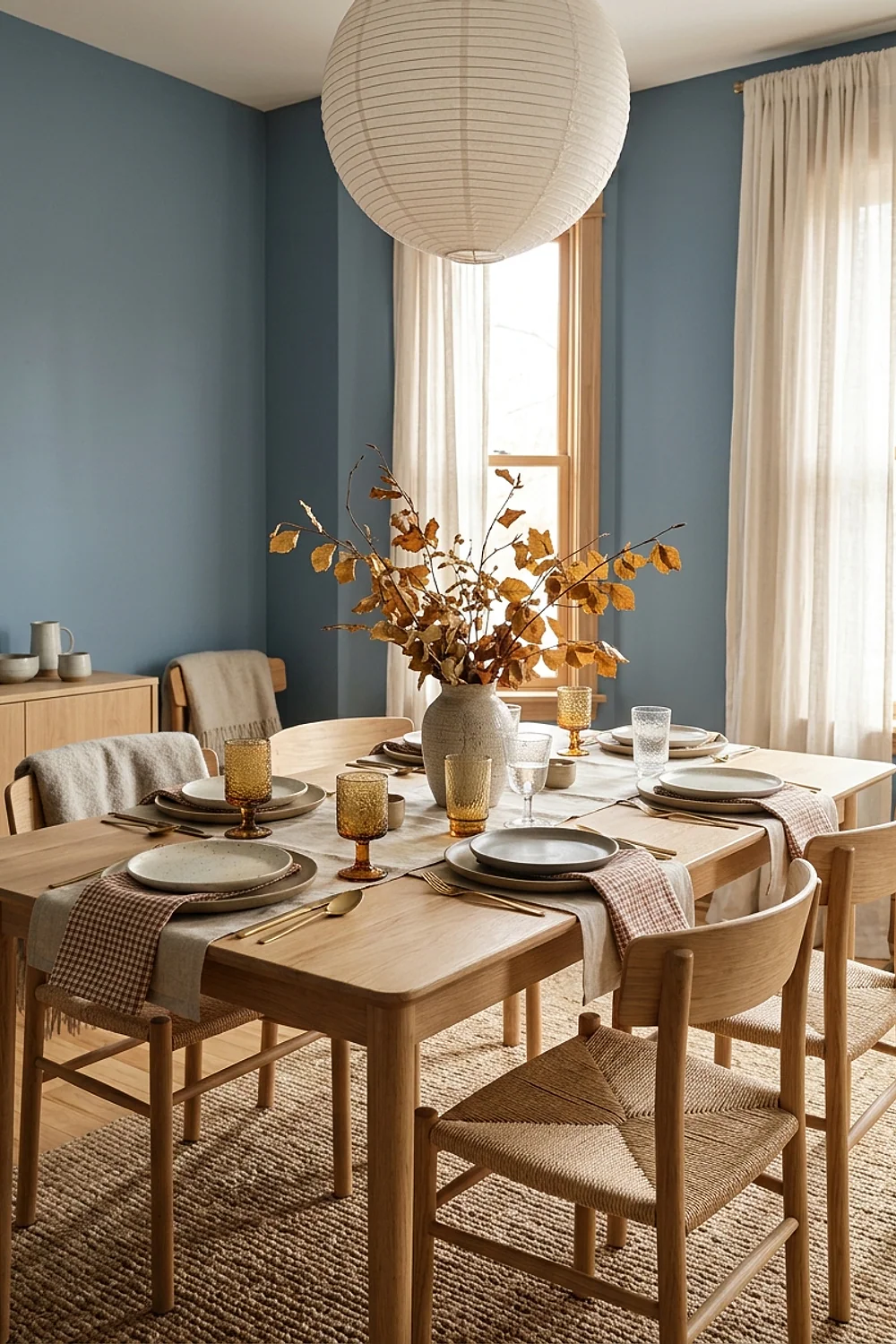
Two patterns at the same scale fight each other, so pair a bold buffalo check napkin with a plain or tiny-print plate. One loud element per setting keeps the table readable, and the eye knows where to land instead of bouncing between competing prints.
This is worth considering when mixing thrifted dinnerware, which is often patterned. Fix it by letting a solid ironstone plate sit between the plaid and any floral rim. Avoid stacking large check over a wide floral border, since that is where the clash is loudest.
17. An 8-by-10 flatweave rug under a 72-inch table, $90-160
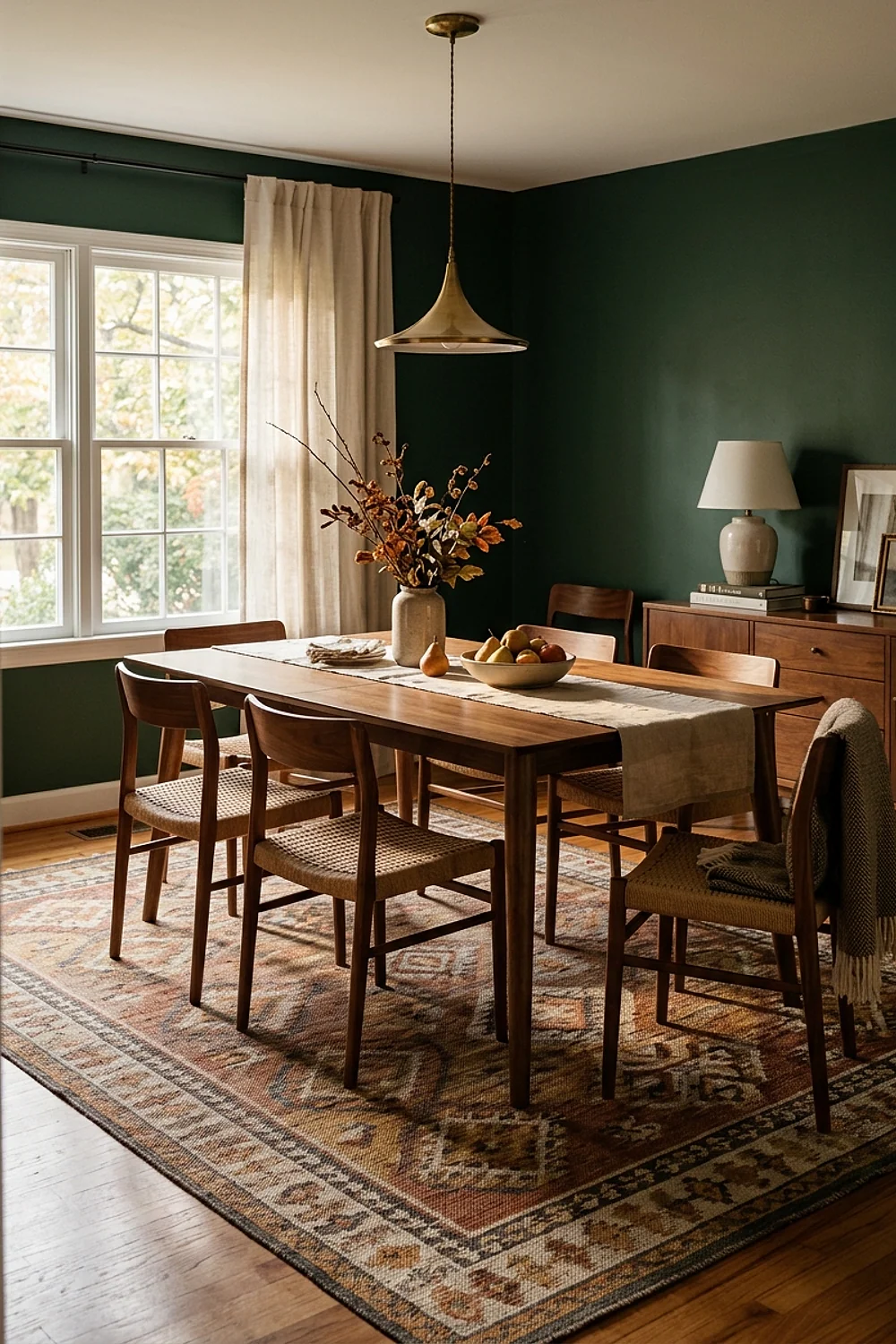
A rug under the table should extend at least 24 inches past each edge, so chairs stay on it when pulled out. For a 72-by-40 inch table, an 8-by-10 is the minimum. Choose a low-pile jute or wool blend, because high pile snags chair legs. At $90-160, it also anchors the table visually in an open-plan room.
Rug tape on the corners prevents the curling that trips guests. Avoid a smaller rug, since back chair legs that drop off the edge can tip a seated guest.
18. A chunky knit throw over the host chair, 50 by 60 inches
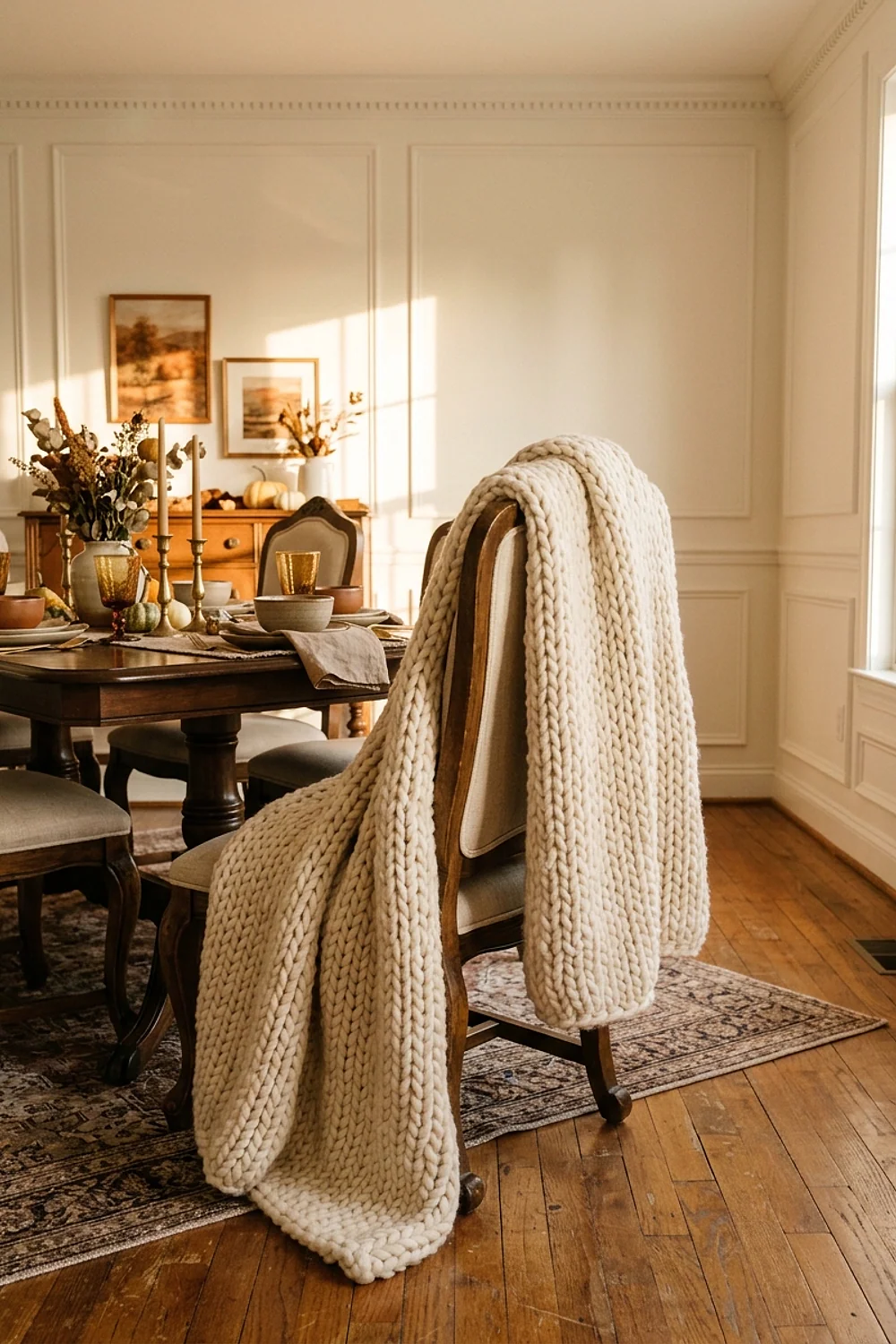
A knit throw draped over one chair back adds softness without a purchase for every seat. Run your hand over a cable knit and the texture alone makes the table feel less formal.
Keep it to the head chairs only, since a throw on all six becomes a blanket fort. Fold it so the pattern shows and the fringe hangs free.
Light, linens and small upgrades
The cheapest changes in this stretch of the room often produce the biggest shift in mood. Bulbs and mirrors do more than most people expect.
19. Cork-backed woven placemats that wipe clean, about $20 a set
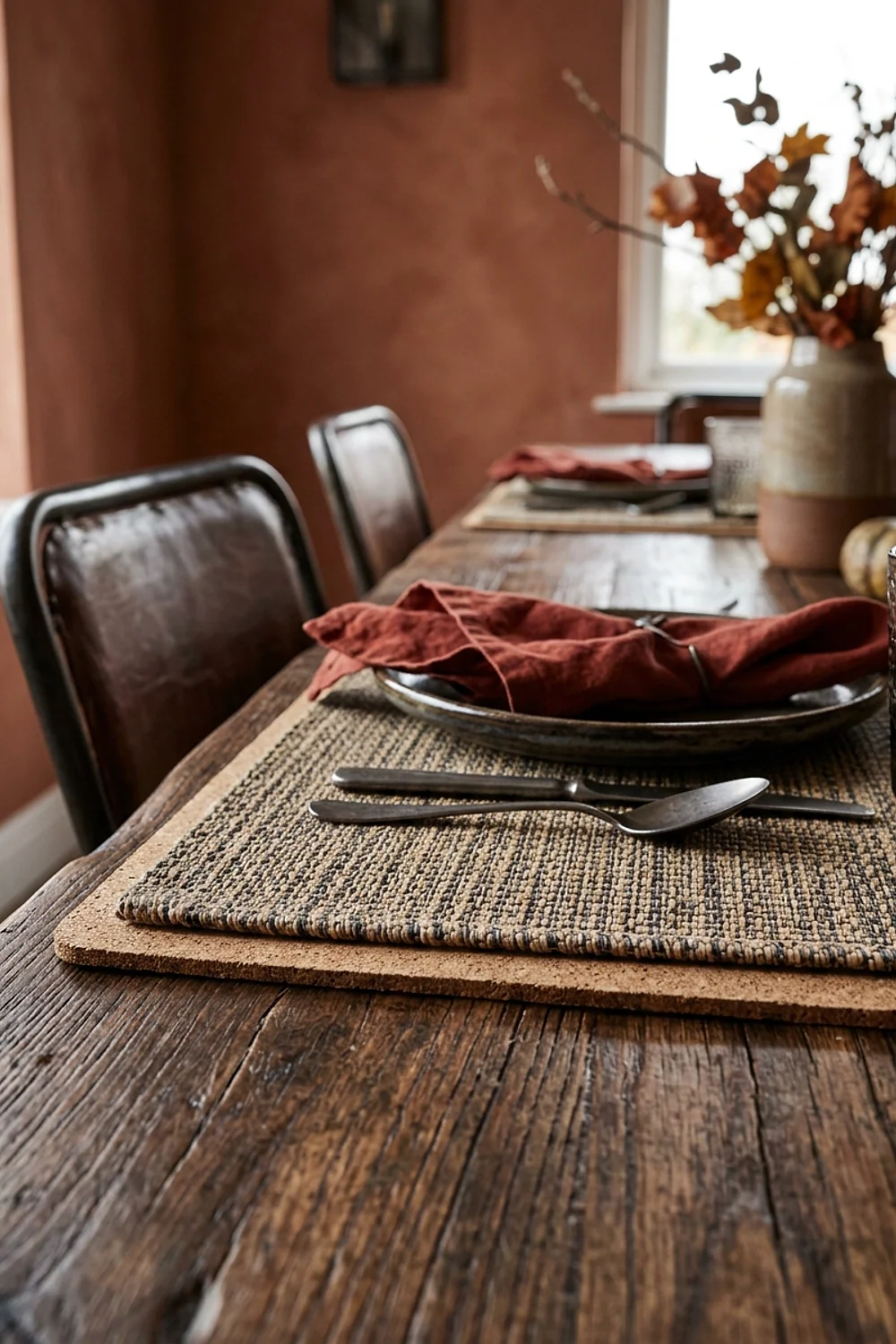
Woven vinyl placemats with cork backing protect wood from hot plates and wipe clean with a damp cloth. The cork grips the table so mats don’t slide, and the vinyl weave doesn’t stain. A set of four runs around $20.
They suit families with kids or anyone who hosts messy dinners. Skip fabric placemats for these gatherings, because one spilled cider means a trip to the washing machine. Keep pots straight off the stove on trivets, since placemats only handle warm plates.
20. A 2200K filament bulb on a dimmer plug
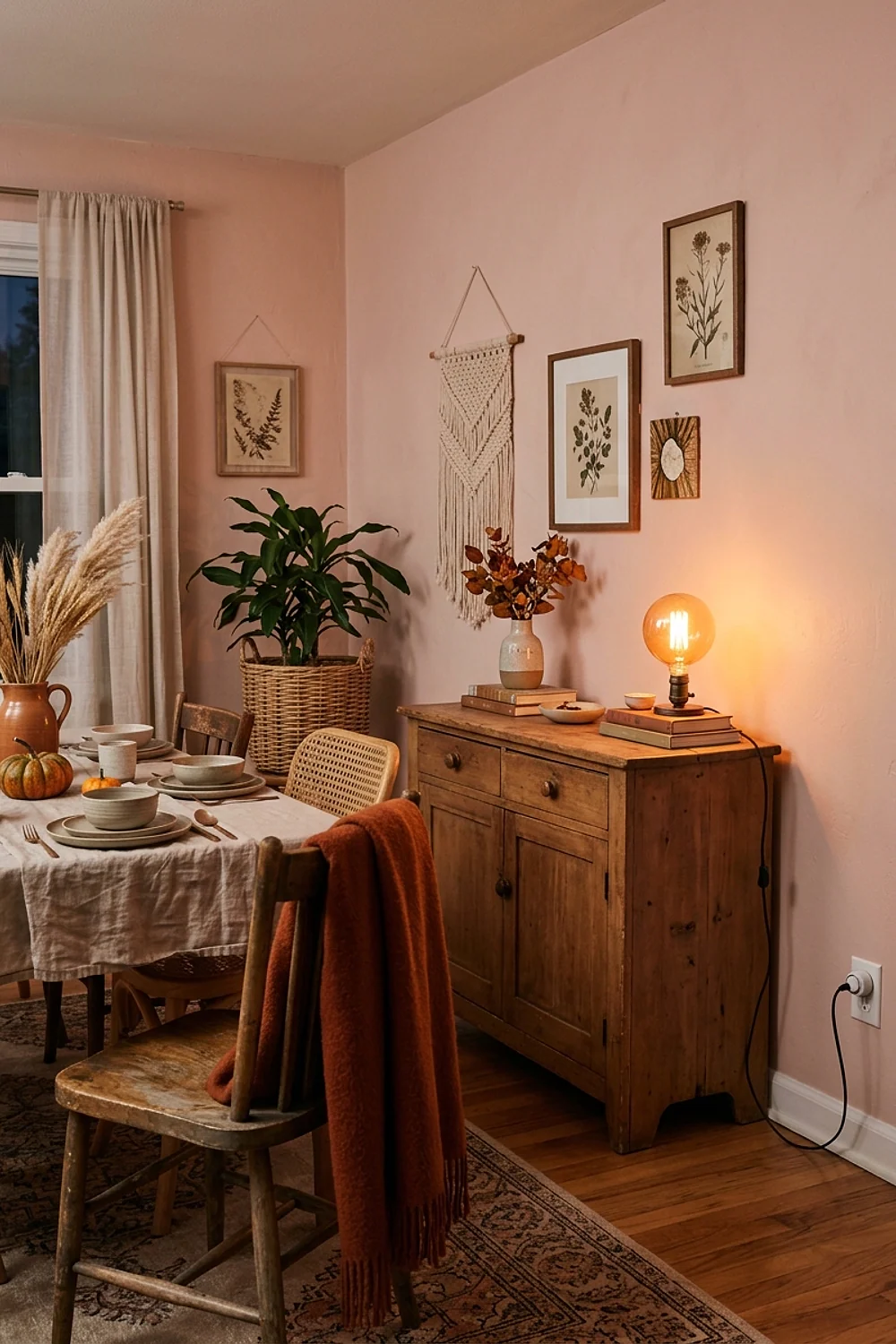
Swap the flat white bulb above the table for a 2200 to 2700 Kelvin filament bulb, and the entire room shifts to amber. A plug-in dimmer lets you drop the light further once dinner starts.
Avoid anything labeled “daylight,” since cool light turns pumpkins gray and makes wood look dull. This change suits rooms with a single overhead fixture and nothing else.
21. Blue-and-white platters against rust tones, $3-8 thrifted
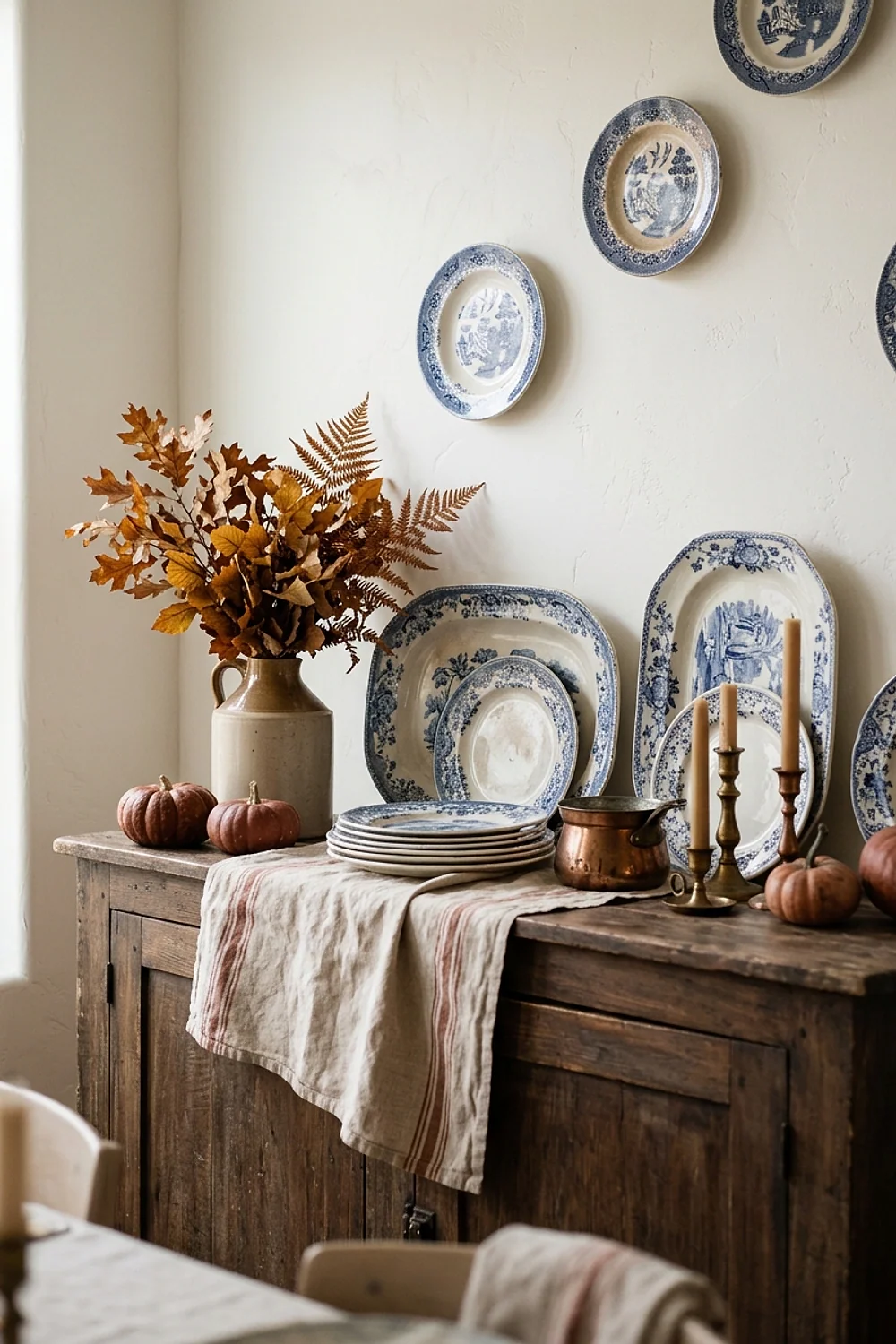
Blue sits opposite orange on the color wheel, so a thrifted blue-and-white platter makes rust and mustard look deeper. A single platter on the sideboard does the job, which suits small budgets at $3-8 and rooms with limited surface space.
Look in thrift stores for transferware with soft, slightly faded blue. Check for chips along the rim, since cracked pieces can’t hold food safely. Very dark cobalt can overpower a quiet autumn palette, so the faded pieces are the better pick.
22. A 48-inch bench replacing two side chairs
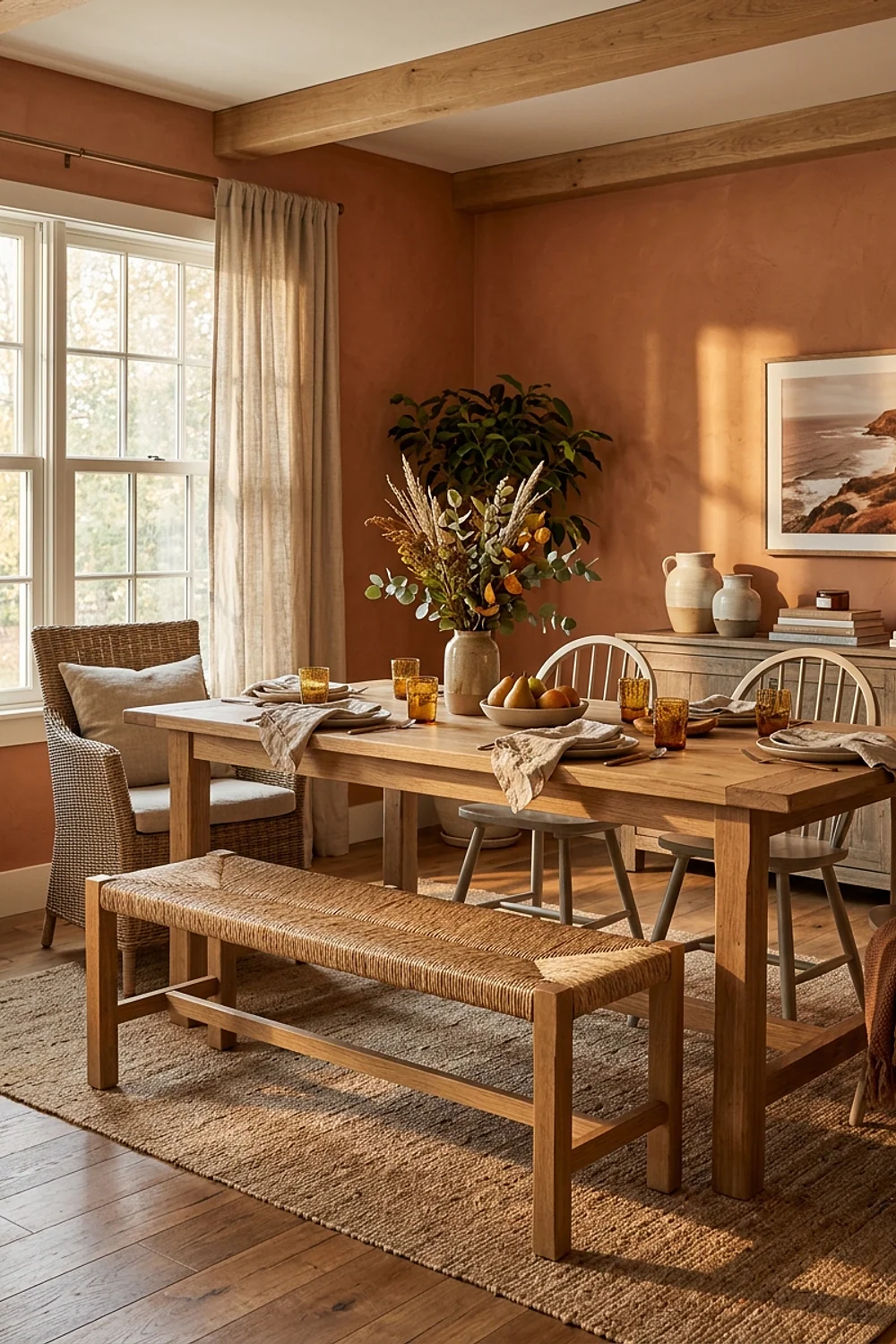
A bench seats three adults in the footprint of two chairs and tucks fully under the table when not in use. It also breaks up a row of matching chairs.
This layout works best for rectangular tables and families with kids, who like the extra wiggle room. Check that the bench is 17 to 19 inches high to match the chair seats.
23. An acacia or walnut bowl filled with pears, $12-30
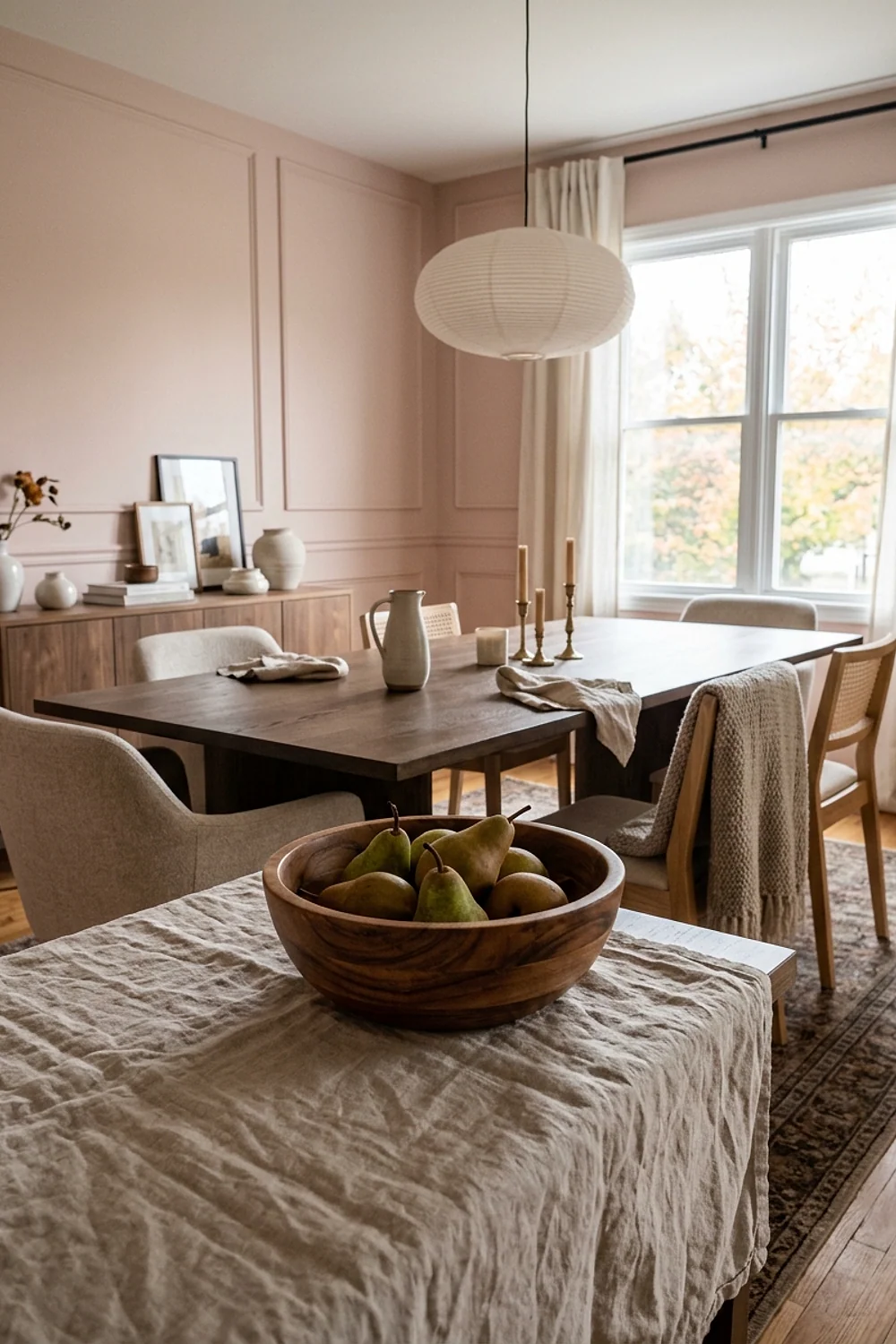
A wooden bowl is a centerpiece that doubles as a snack. Fill it with pears and apples in yellow-green and red, and the colors do the styling for you. At $12-30 in acacia or walnut, it suits small tables where one object must do the work of several.
Rub the wood with food-safe mineral oil once a month to keep it from drying. Don’t leave a wet bowl on a bare table, because water rings are permanent.
24. A flat under-bed bin, 28 by 16 by 6 inches, for post-season storage
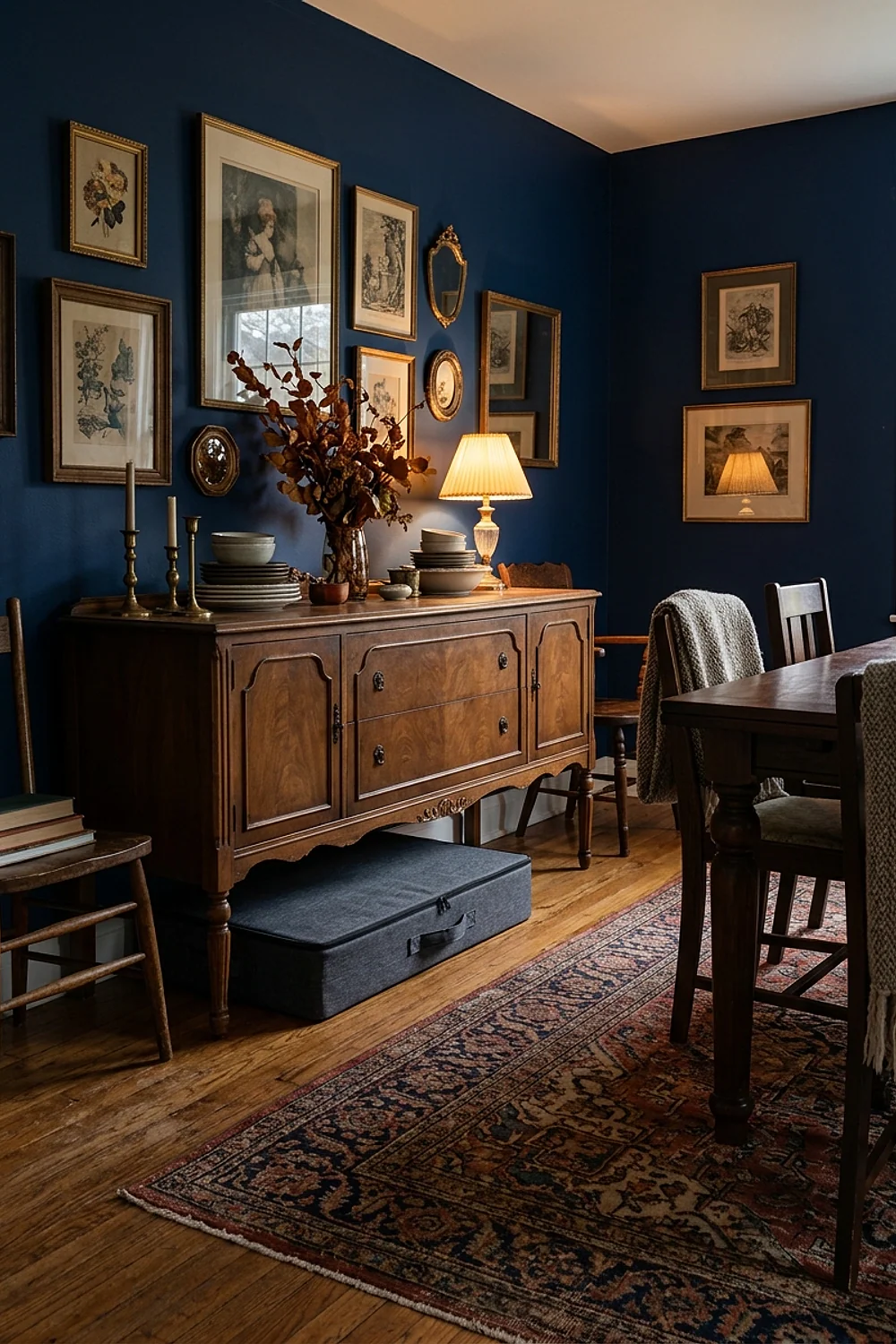
A shallow bin under a bed, 28 by 16 by 6 inches, answers the question every good decor plan needs to answer: where it goes in December. It holds candles, runners and napkins, wrapped in the tissue they came in. The flat shape slides under the frame.
Label the lid with the contents and the date. This suits apartments without attic space, and it means next September’s setup takes 15 minutes instead of a search party. Avoid stashing it in a damp garage or corner, since moisture spots linen.
25. A rattan charger, dinner plate and salad plate stack, about $3-5 per charger
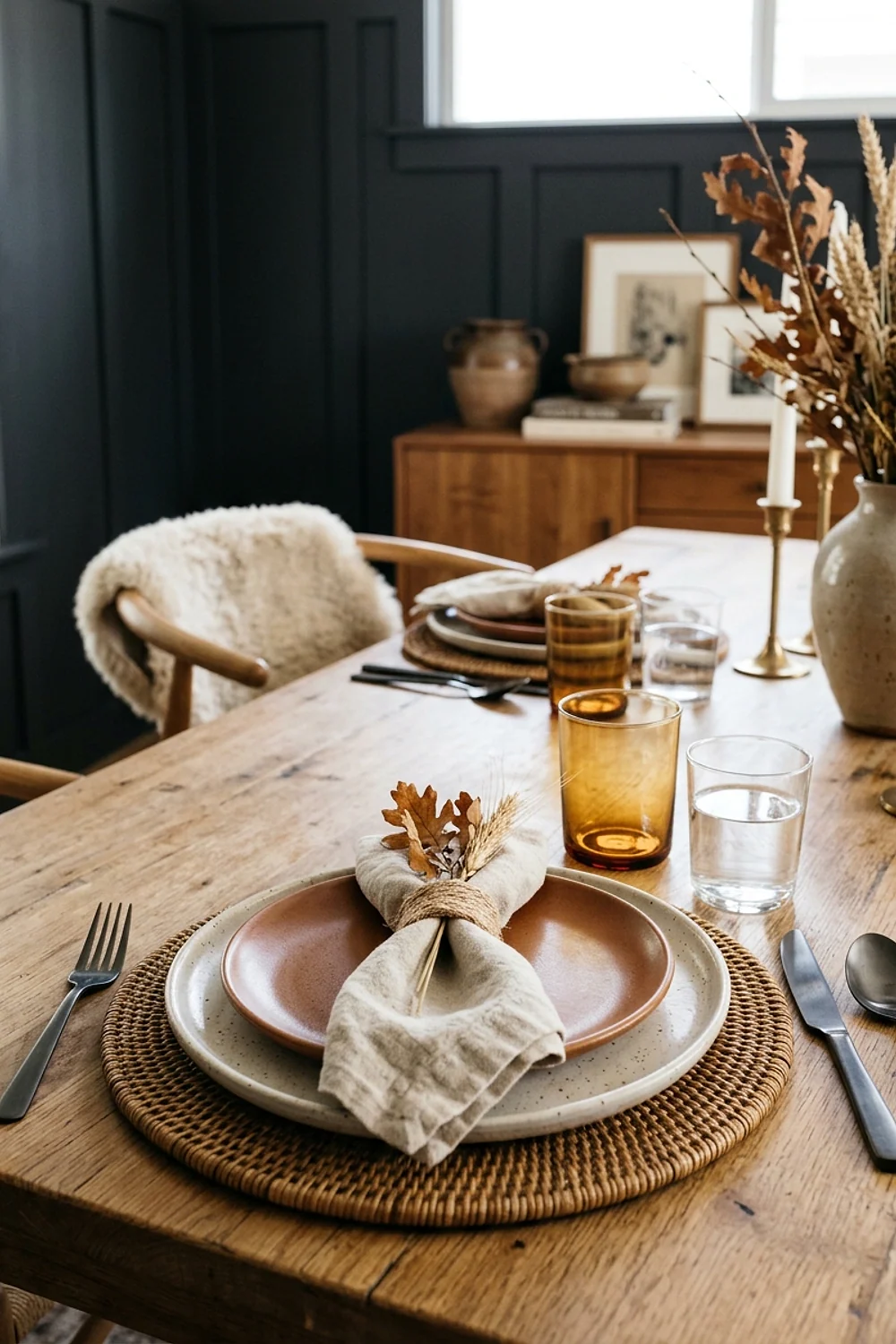
Layer a 13-inch rattan charger, a 10.5-inch dinner plate and an 8-inch salad plate. Each ring adds a different texture, and the table looks fuller without extra objects. The price of about $3-5 per charger makes a set of six easy to afford.
Skip shiny gold chargers, which look dated next to natural materials. Do this for hosted dinners, but pull the extras when it’s an ordinary Tuesday, since the stack crowds small tables and adds dishes to wash.
26. Beeswax candles instead of heavy pumpkin spice
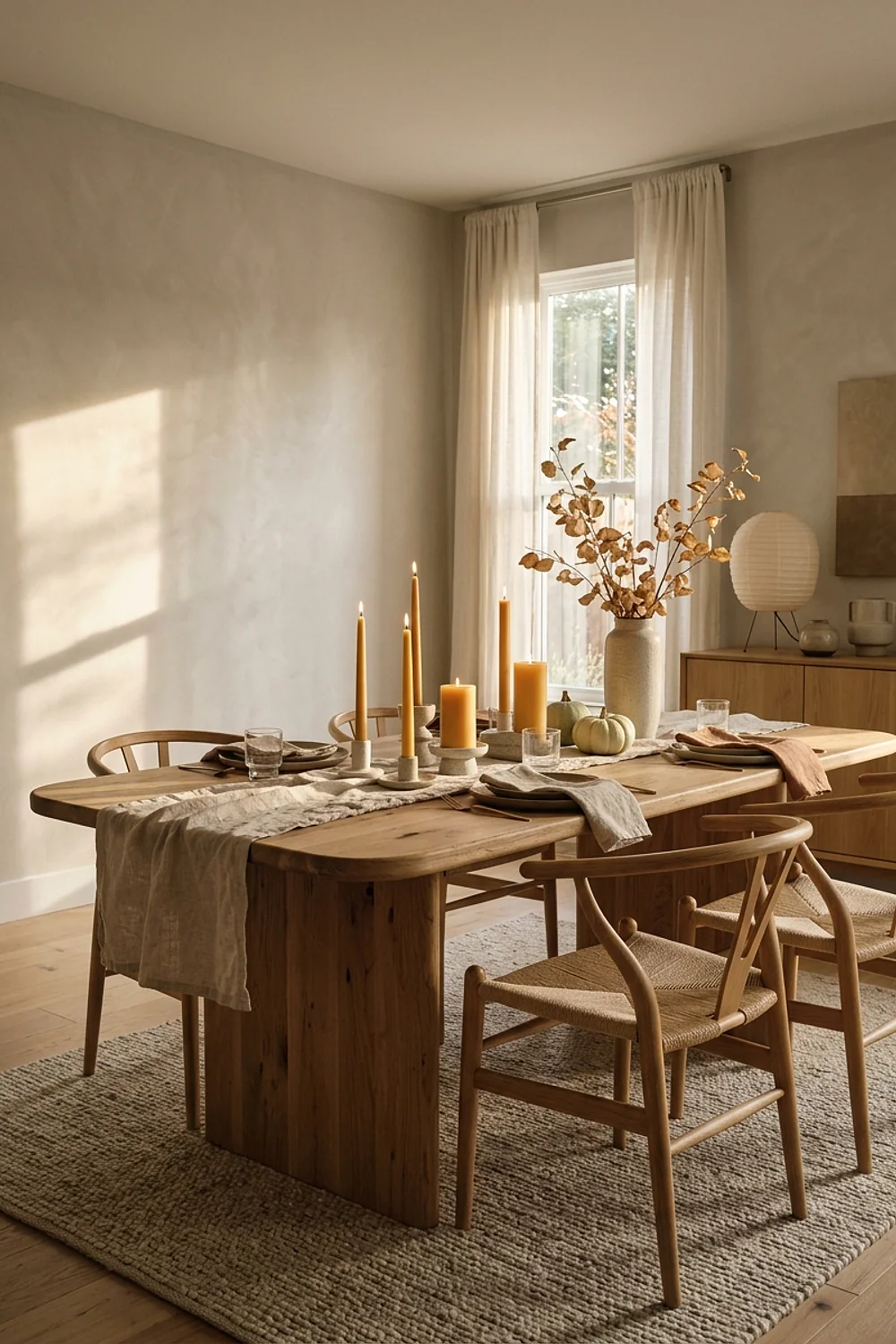
A dining table is where the smell of dinner should win. Beeswax gives off a faint honey scent that sits underneath food instead of fighting it.
If scented candles are a must, burn them an hour before guests arrive and snuff them before plates go out. Strong vanilla and cinnamon blends flatten the aroma of roast vegetables and fresh bread.
27. A 24-by-36 inch framed autumn print above the sideboard, $15-40
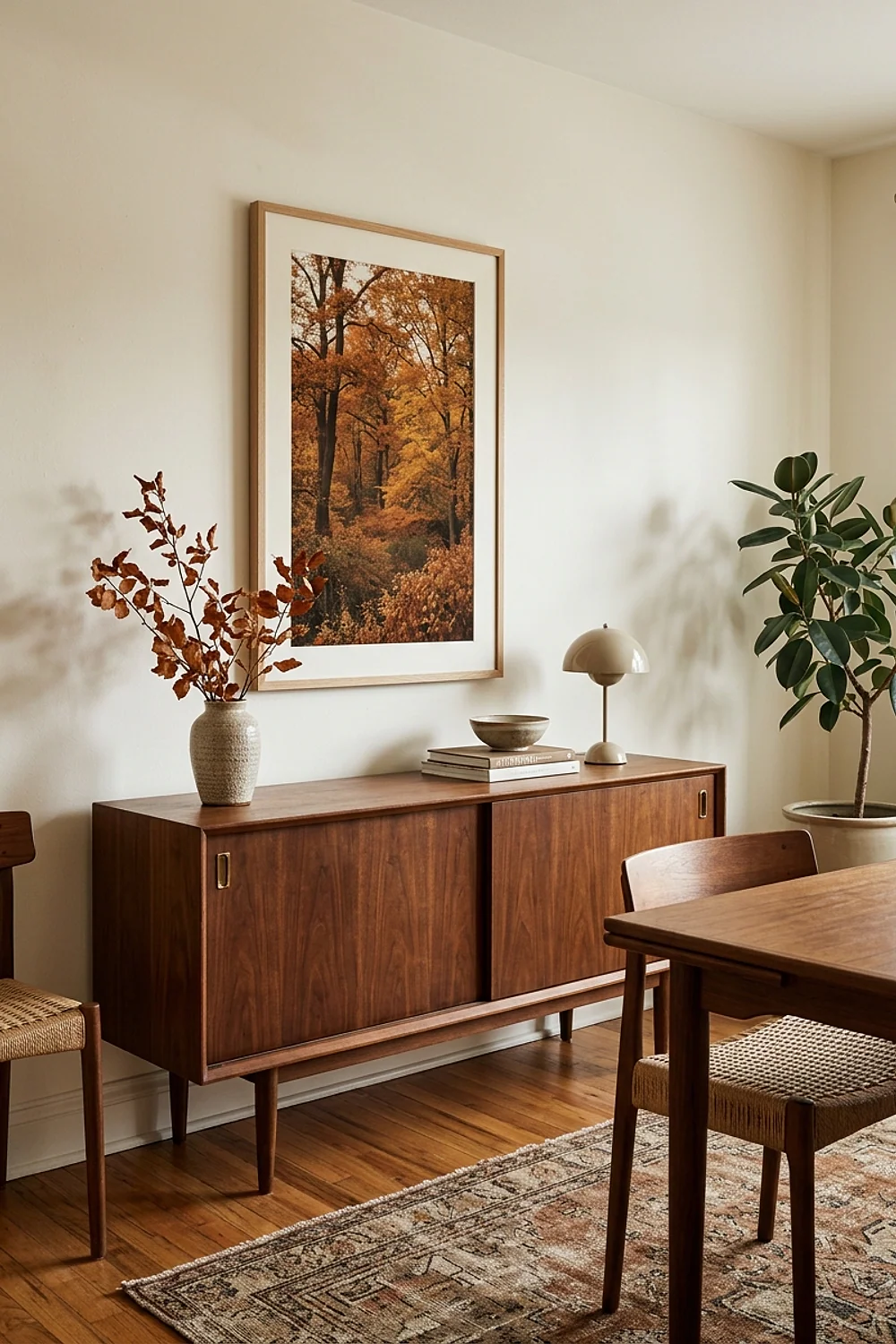
Print a public-domain landscape painting at an office-supply store, add a white mat and a $15 frame. A 24-by-36 inch piece fills about two-thirds of a 48-inch sideboard, which is the proportion that looks right.
Hang the center at about 57 inches from the floor. A small print on a big wall reads as an afterthought, so go larger than feels natural.
Notes from real rooms
The last stretch is about polish. These are the details that stop a table from looking assembled and make it look lived in.
28. Felt pads on every chair leg, to stop the scrape
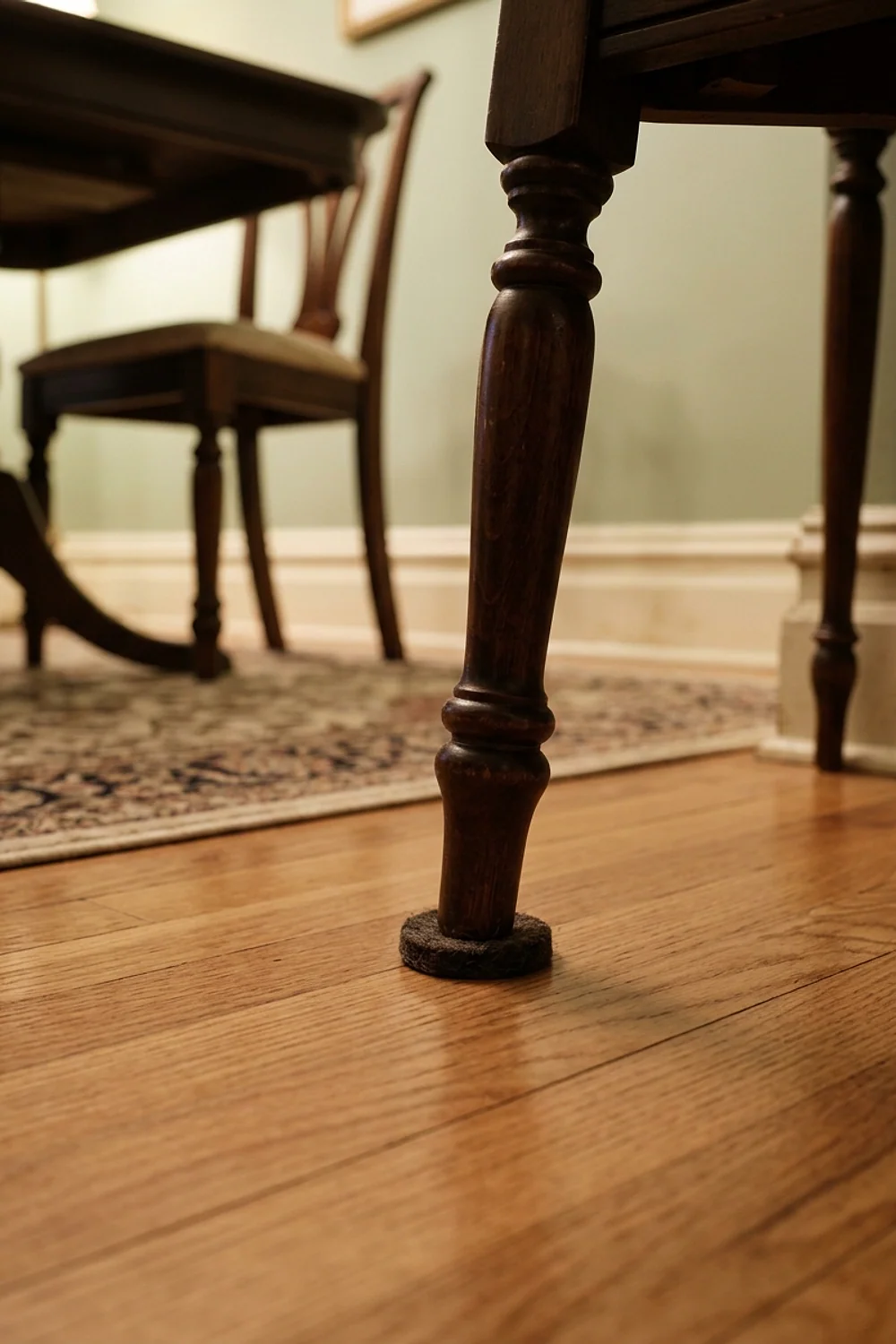
The screech of wood chairs on a hard floor is a mood killer, and thick adhesive felt pads fix it. Press 1-inch rounds onto each leg and the room goes quiet. The felt also stops legs from scratching the finish, which protects the floor too.
Replace them every six months, since grit wears them down. Doing this is especially helpful in a room with hardwood or tile and no rug. Wipe legs clean before pressing pads on, since dust weakens the adhesive.
29. A thrifted drinks cart beside the table, $25-60
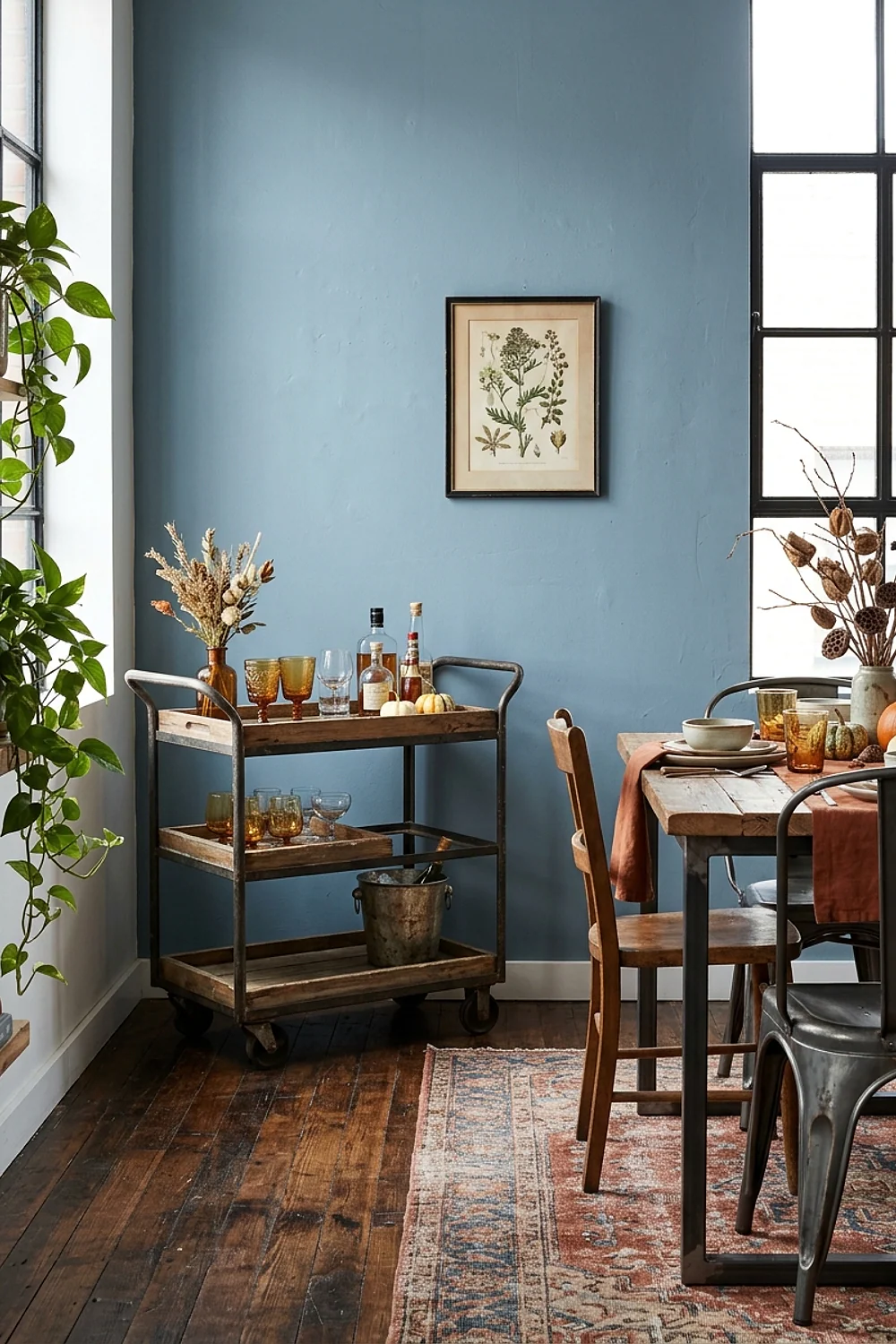
A small cart holds the coffee pot, cream, mugs and a bottle of cider, which frees the table for the actual dinner. It also adds a second level to style, with a plant or lantern on top.
Look for one that’s about 30 inches high with a lower shelf. Check that the wheels roll straight before buying, since a wobbly one rattles every cup.
30. A 30-by-40 inch mirror leaning across from the window
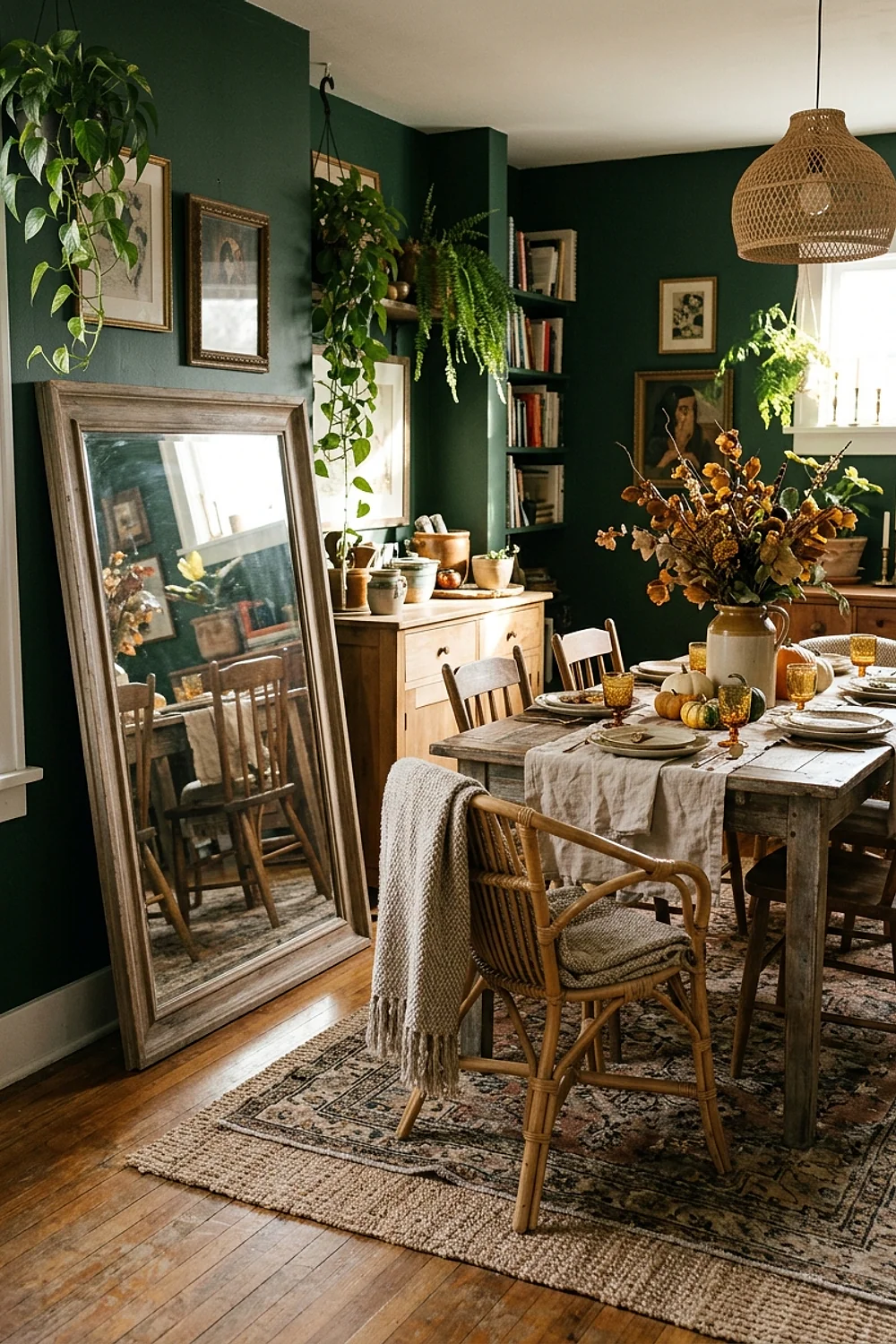
A mirror opposite a window throws daylight into the far corners and makes a small dining room feel about a third larger. At 30 by 40 inches, it is big enough to catch a real view of the window without overwhelming the wall. Lean it against the wall on the sideboard for a casual look.
Point it away from cluttered surfaces, or the room doubles the mess. This is a good fix for north-facing rooms that stay dim all afternoon.
31. Tea-dyed muslin curtain panels, $15-30 each
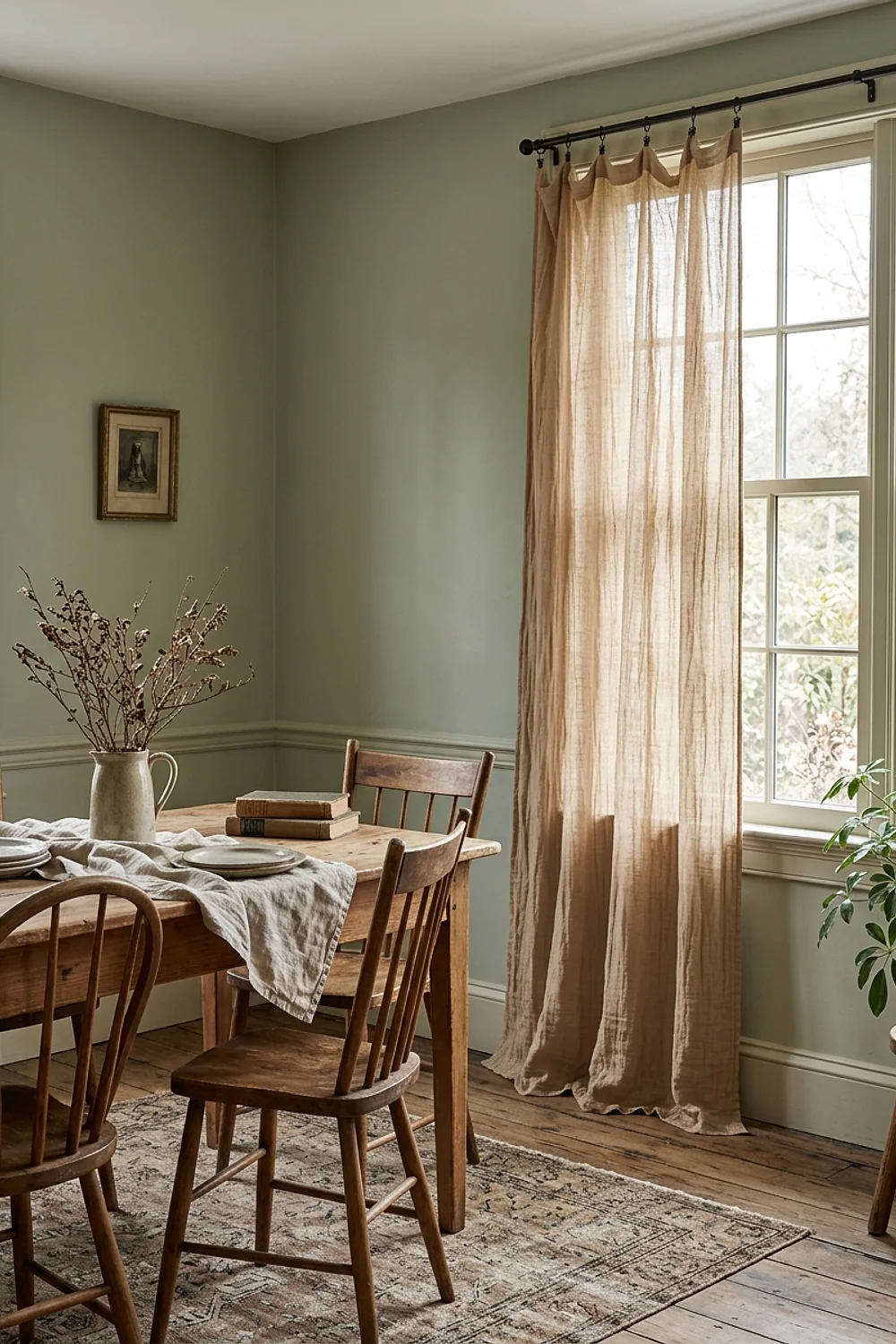
Soak muslin panels in about 8 black tea bags per gallon of hot water for 30 minutes. The result is a soft tan that glows when light comes through, and at $15-30 each the panels suit a modest budget. Wet the fabric first so the color takes evenly, and expect slight variation.
It’s not foolproof, but uneven dye still looks like vintage linen, which is the point. Avoid this plan if a perfectly matched pair of panels is needed beside one window.
32. A pendant hung 30-36 inches above the table
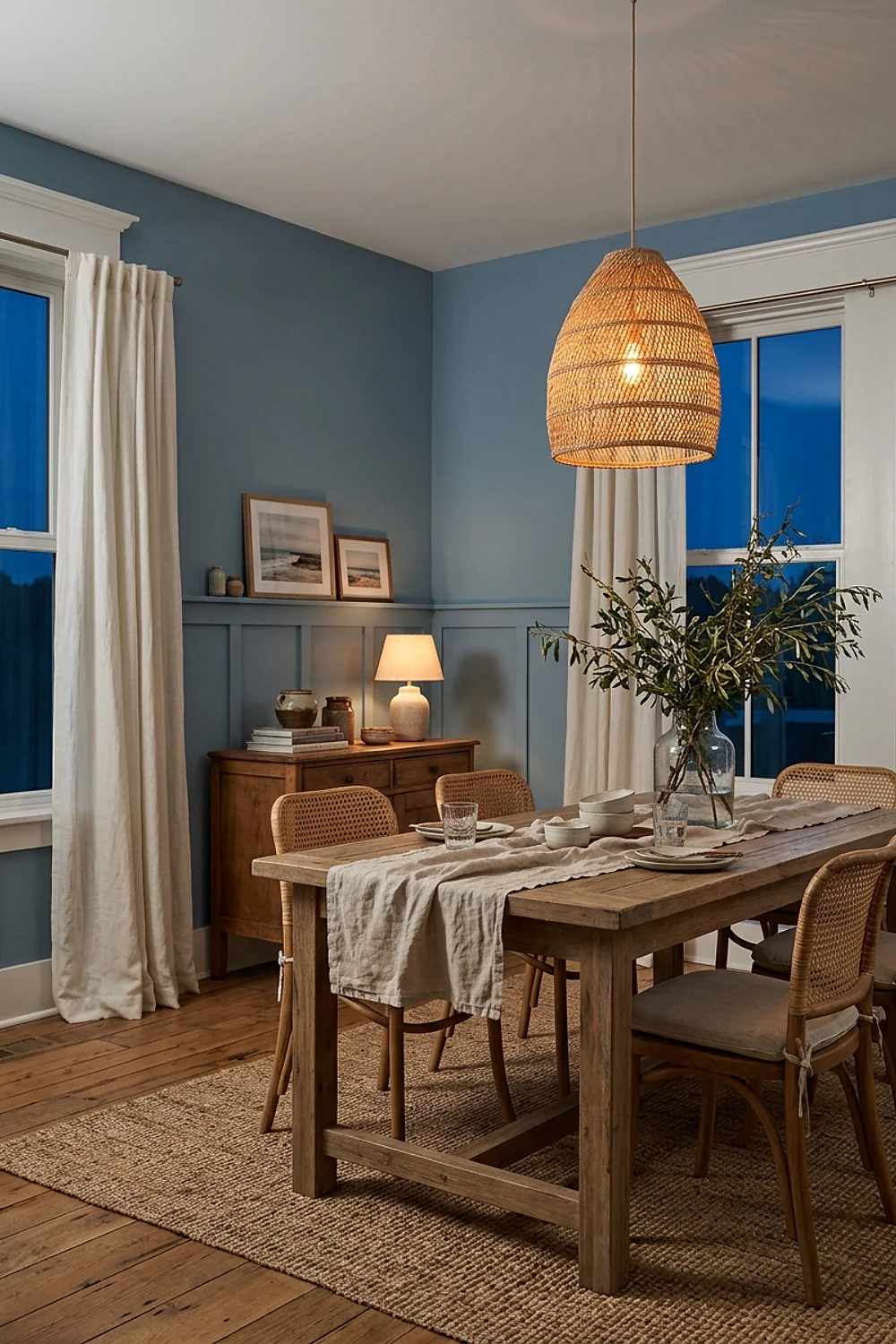
Pendant height changes how the table feels. At 30 to 36 inches above the surface, light pools over the plates and the surrounding walls fall into soft shadow.
Hang it too high and the table looks washed out, too low and guests can’t see each other. This suits any ceiling height up to 9 feet, and the chain can be shortened with a few extra links.
33. Vintage ironstone and stoneware plates, $2-6 each
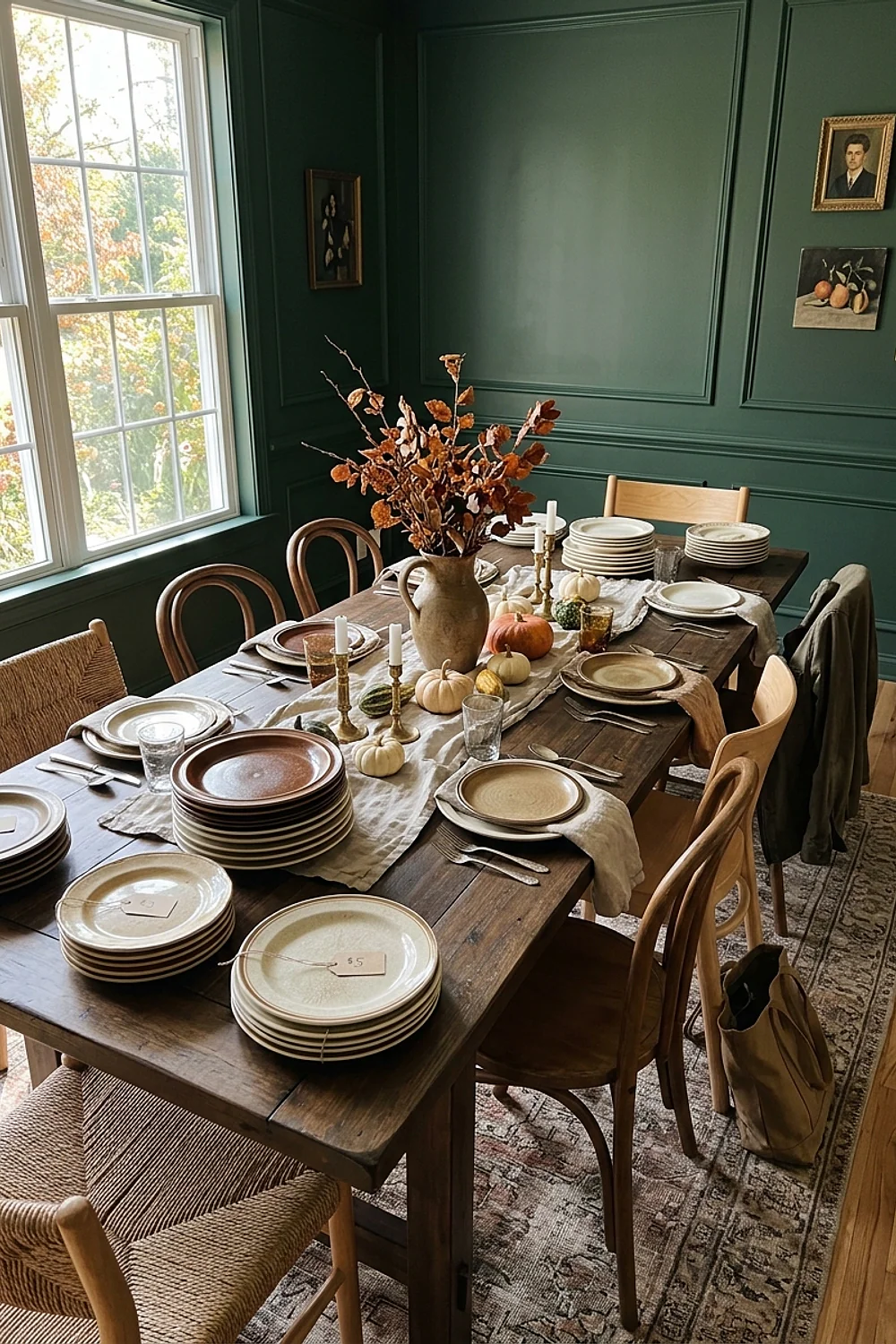
Thrifted ironstone has a heavy, creamy glaze and slight crazing that new dinnerware tries to copy. At $2-6 each, a mismatched stack suits anyone building a table on a small budget. Tap the rim and listen for a solid, low ring rather than a tinny one.
Skip anything with deep cracks or worn glaze, which can hold bacteria. For older pieces, use them as display or for dry foods, not acidic ones such as tomato sauce or citrus.
34. Foraged branches in a tall floor vase
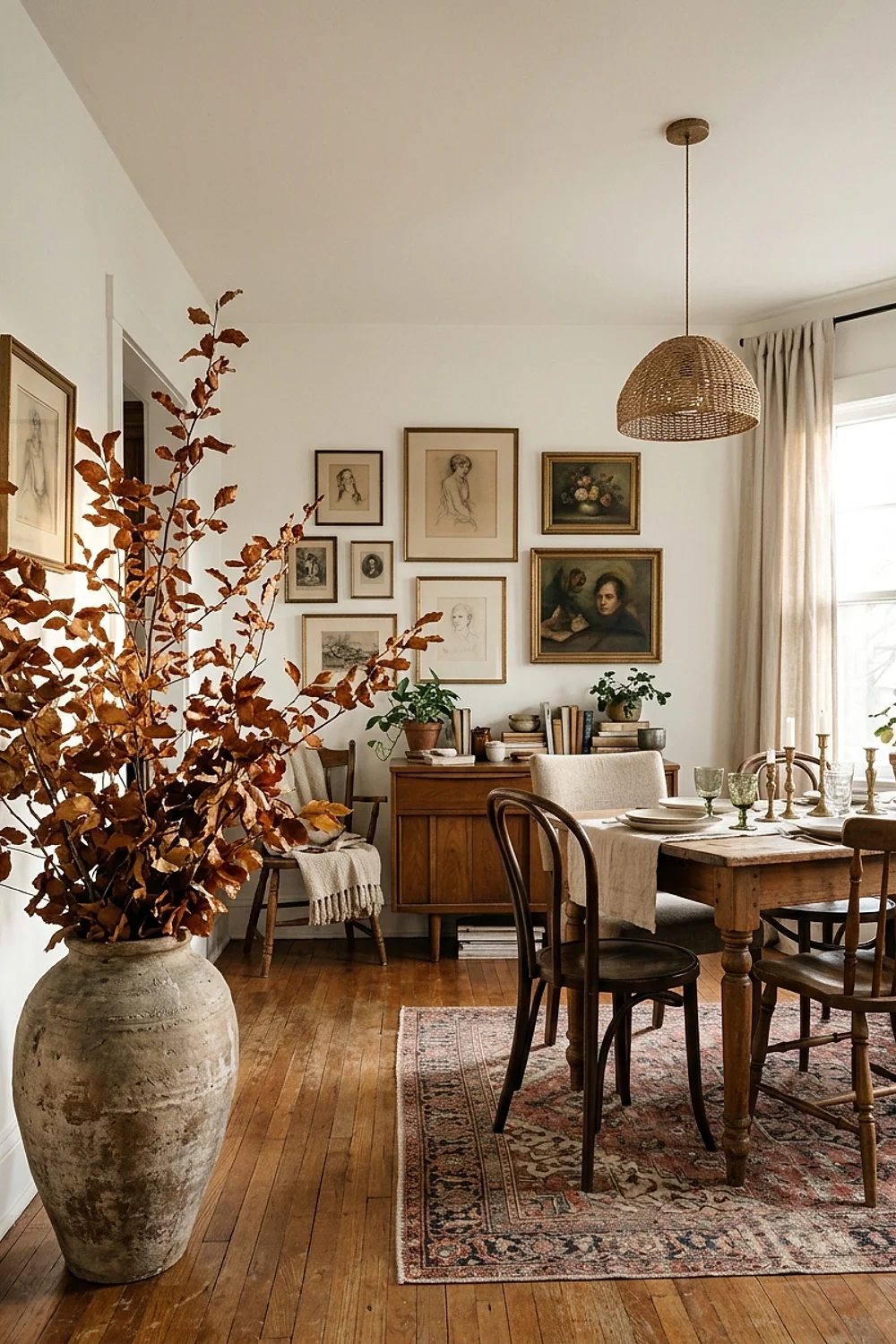
Cut three or four oak or maple branches around 4 feet long and set them in a floor vase in the corner. They give the room height for free and drop leaves in an organic way.
Cut on a dry day and check for insects before bringing them in. Don’t forage from parks or private land where it isn’t allowed.
35. An 18-inch wooden dough bowl as a single big centerpiece, $20-35
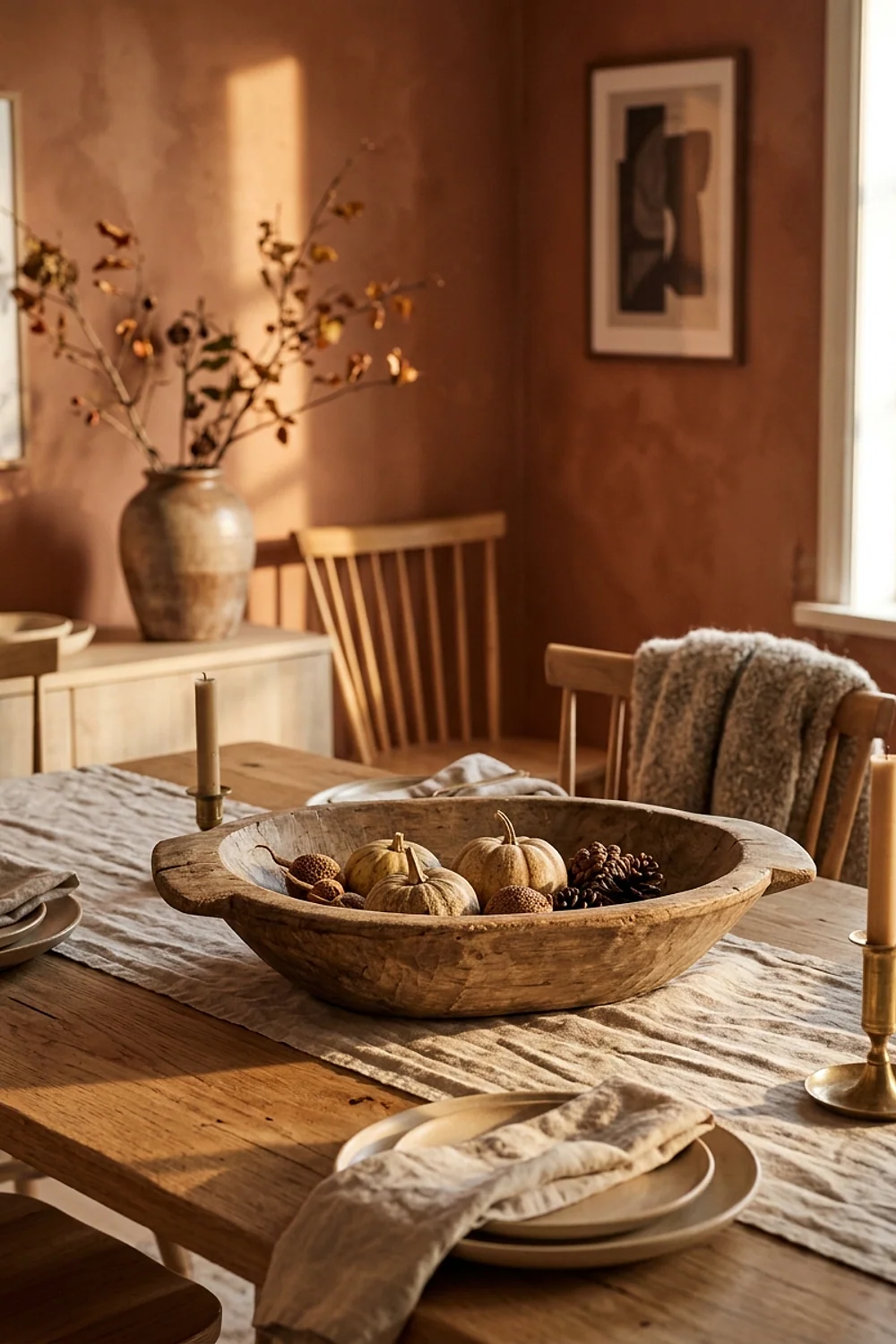
An 18-inch dough bowl holds gourds, pinecones or a plain cluster of candles. Its long, low silhouette follows the 12-inch height rule automatically, so guests can still see across the table. At $20-35, it suits one big statement on a rectangular table. Thrift stores and flea markets carry them often, though prices vary.
Check for splits along the bottom, since a crack that runs through will keep growing, and oil will not stop it.
36. One last edit: remove one item before guests arrive
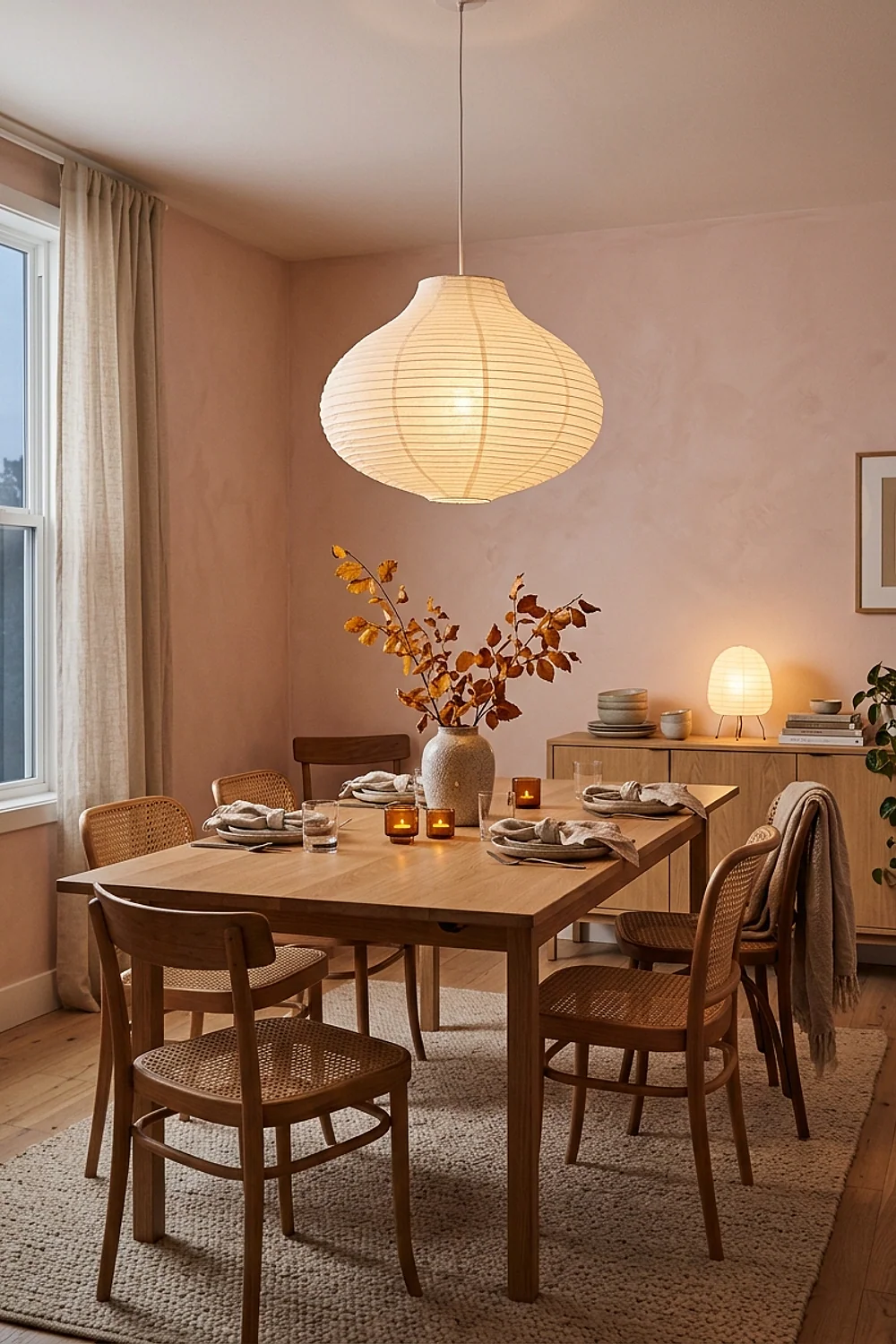
Stand at the doorway and scan the room, then take away the one object that feels like effort. The table should look calm, not busy. A fresh view from where guests enter shows what actually reads as clutter, which is hard to notice from the chair where everything was arranged.
This works for any room, but especially small ones where every piece competes. Editing costs nothing and is often the single best move. Avoid swapping in a replacement, which defeats the purpose.
The pieces that changed everything
Smart sourcing matters as much as taste for fall dining room decor, because the same brass candlestick can cost $4 at a thrift store or $40 at a chain. Timing and location decide the difference.
- Thrift stores and estate sales for brass, ironstone and wooden bowls, best on a drizzly October Sunday when crowds are thin.
- Craft-store coupons for wreaths, ribbon and faux stems, which run 40 percent off almost weekly.
- Grocery stores for mini pumpkins, gourds and apples, which cost far less than craft-store versions.
- Your own yard for branches, leaves and pinecones.
Buy the large, visible items secondhand and the small consumables new. Candles, napkins and bulbs should come from stores, because used ones can’t be cleaned well.
Don’t buy anything in the first week of September at full price. Prices drop, and the best pieces last longer than you’d think. It’s not foolproof. But it works.
DIY vs store-bought: honest comparison
The fall dining room decor worth making yourself is anything where the material does the work: tea-dyed curtains, a framed print, wheat bundles and branches. Anything with moving parts or safety concerns is better bought.
Here’s the quick breakdown:
- Make it: curtains, framed art, dried arrangements, napkin dyeing.
- Buy it: candles, lighting, rugs and anything electrical.
- Thrift it: brass, ceramics, wood bowls and trays.
Homemade pieces take 30 minutes to a weekend, while store-bought ones are faster but often look generic. A rug is the exception to DIY, since a poorly made one curls and wears out.
The honest splurge is lighting: a good dimmer and bulb outperform any pile of objects. Spend there first, then make or thrift the rest.
The after: what changed and what to try first
The finished room doesn’t look decorated so much as settled. Amber light, a low centerpiece, textured linen and a few thrifted pieces do more than a shopping cart of seasonal stuff ever could. Fall dining room decor works best when it’s edited down to a handful of well-chosen moves.
Save or pin this list so you can come back when you’re ready to start. Begin with the lighting swap in idea 20 and measure your table before buying anything else.
Frequently asked questions
How much should fall dining room decor cost?
A convincing setup for fall dining room decor typically runs $100 to $300 if you thrift the big pieces and buy only candles, napkins and a bulb new. Spend on lighting first and the rest can be cheap.
What colors work best for fall dining room decor?
Rust, mustard, olive and cream give fall dining room decor depth without looking like Halloween. Add one contrast color, such as navy or deep blue, to keep it from feeling flat.
Can I decorate a rental dining room without drilling?
Yes. Lean mirrors and prints against walls, use plug-in dimmers and rely on table-level decor, since none of it needs nails. Adhesive hooks hold wreaths up to about 5 pounds.
How do I store fall decor so it lasts?
Wrap candles and ceramics in tissue and keep everything in a flat bin under a bed or on a closet shelf. Label the lid and keep dried wheat in a box away from moisture.