Brushed linen has a dry, slightly nubby grain under your palm, and in a 10-by-12 room that single texture can do more than a shelf of knickknacks. The 30 Small Living Room Ideas That Maximize Space below are the moves designers reach for when every square foot has to earn its place.
Each idea comes with the reasoning, the kind of room it suits, and one pitfall to dodge. Skim the headings if you’re in a hurry, or read straight through if you’re planning a full reset.
30 Small Living Room Ideas That Maximize Space: Starting points for your space
A small room fails for three reasons: too little visible floor, too much stuff at eye level, and flat, single-source light. Every idea below fixes at least one of those.
When a designer sizes up a cramped living room, the checklist is short:
- Can you see at least 30 percent of the floor?
- Does anything use the wall space above 48 inches?
- Is there light coming from at least three heights?
1. Raise the sofa onto 7-inch legs
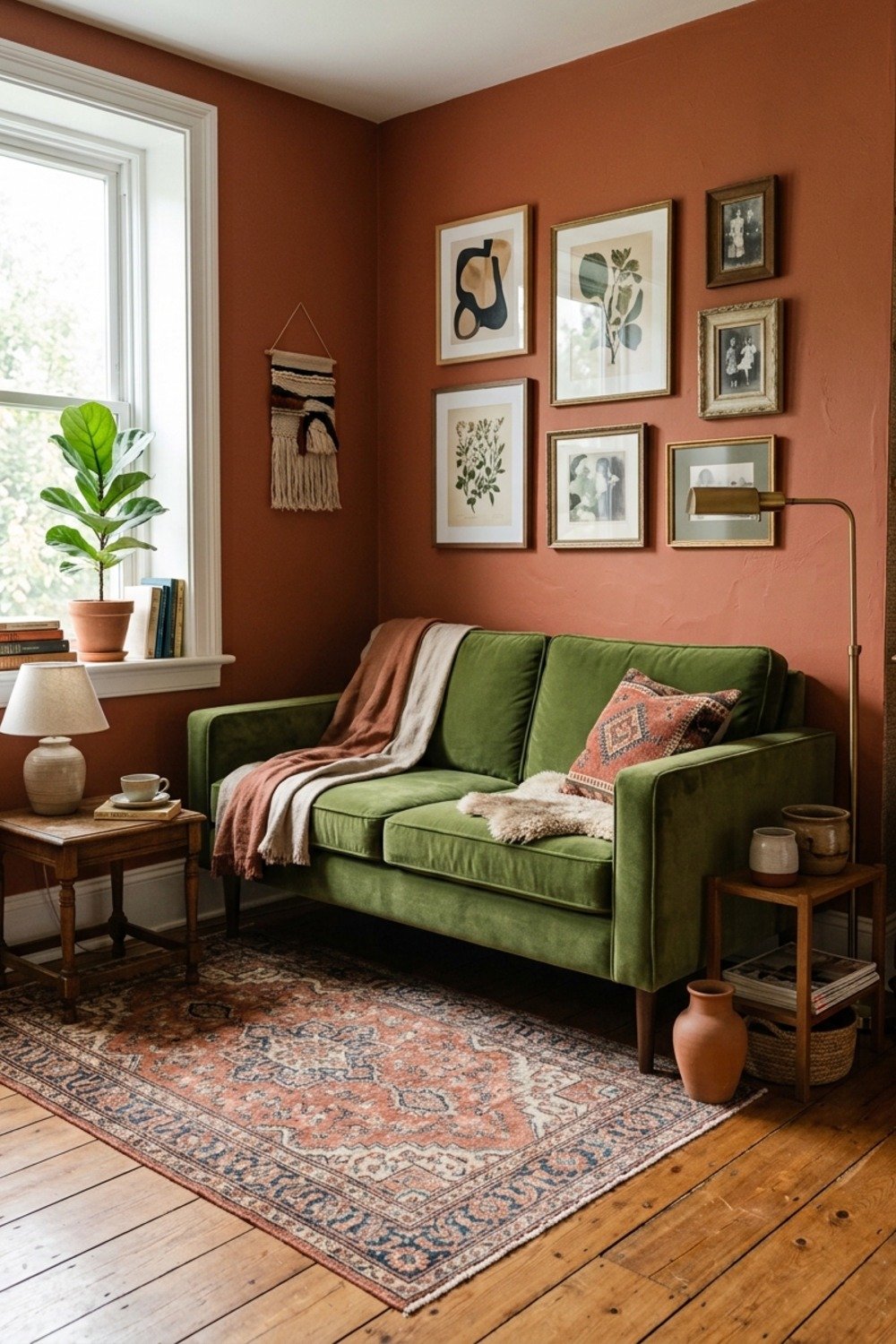
A sofa on exposed legs about 7 inches tall lets a strip of floor show underneath, and that visible floor makes the room read larger. Skirted and plinth bases sit like solid blocks and swallow the footprint.
This suits living rooms under 150 square feet, where a heavy base eats the sightline. Watch the clearance, though. Under 5 inches collects dust you can’t reach with a vacuum, and over 9 looks spindly.
2. Swap the coffee table for two $30 side tables
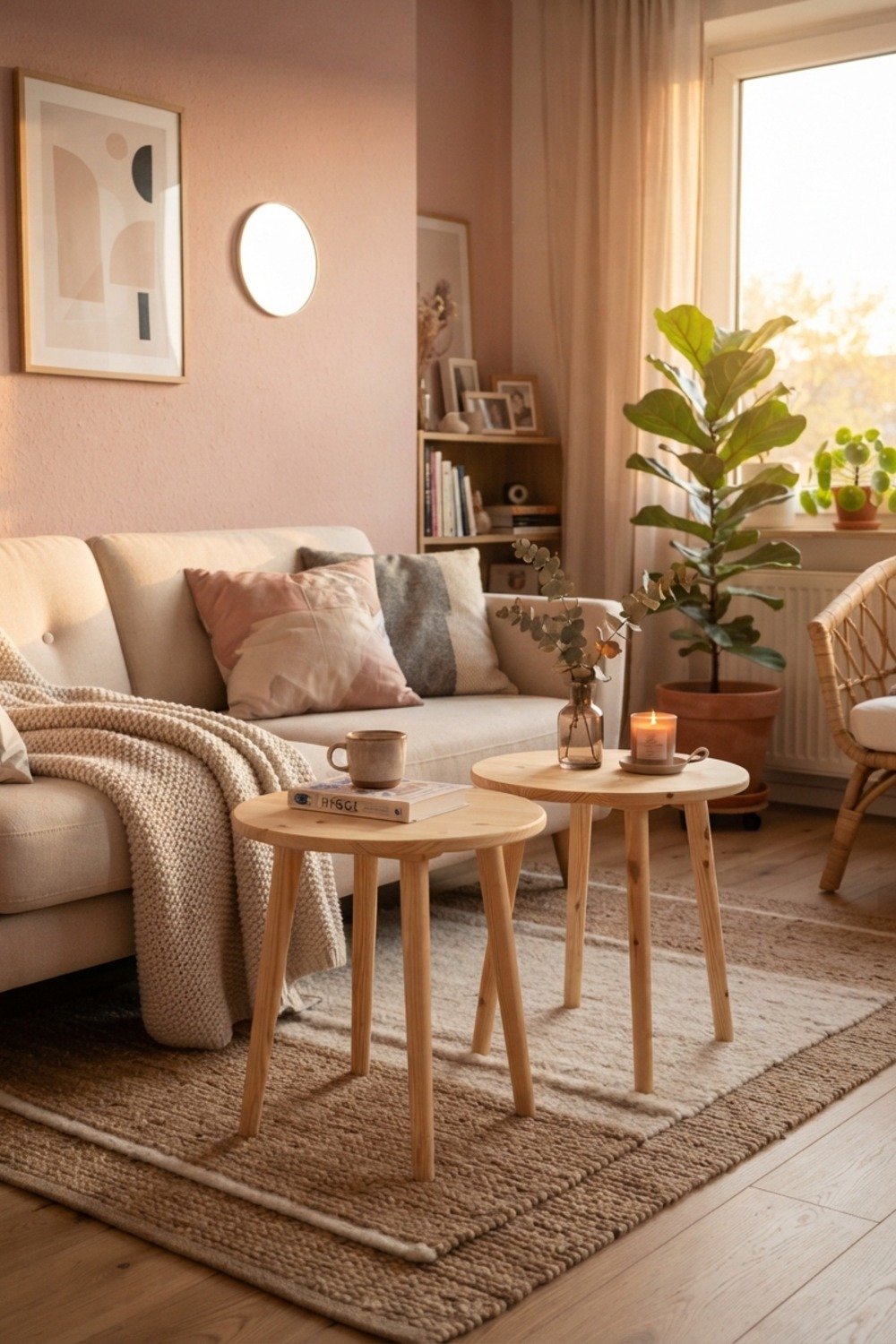
Two IKEA Lack tables (around $10-30 each, depending on the year) can sit apart or push together, which a single fixed coffee table never allows. Budget pieces make sense here because the job is flexibility, not heirloom quality.
This works for renters and for anyone who hosts occasionally. The mistake is buying matching tables in a heavy finish. Keep them white or pale wood so they fade into the floor.
3. Choose a 72 to 80 inch sofa, not an 88 inch one
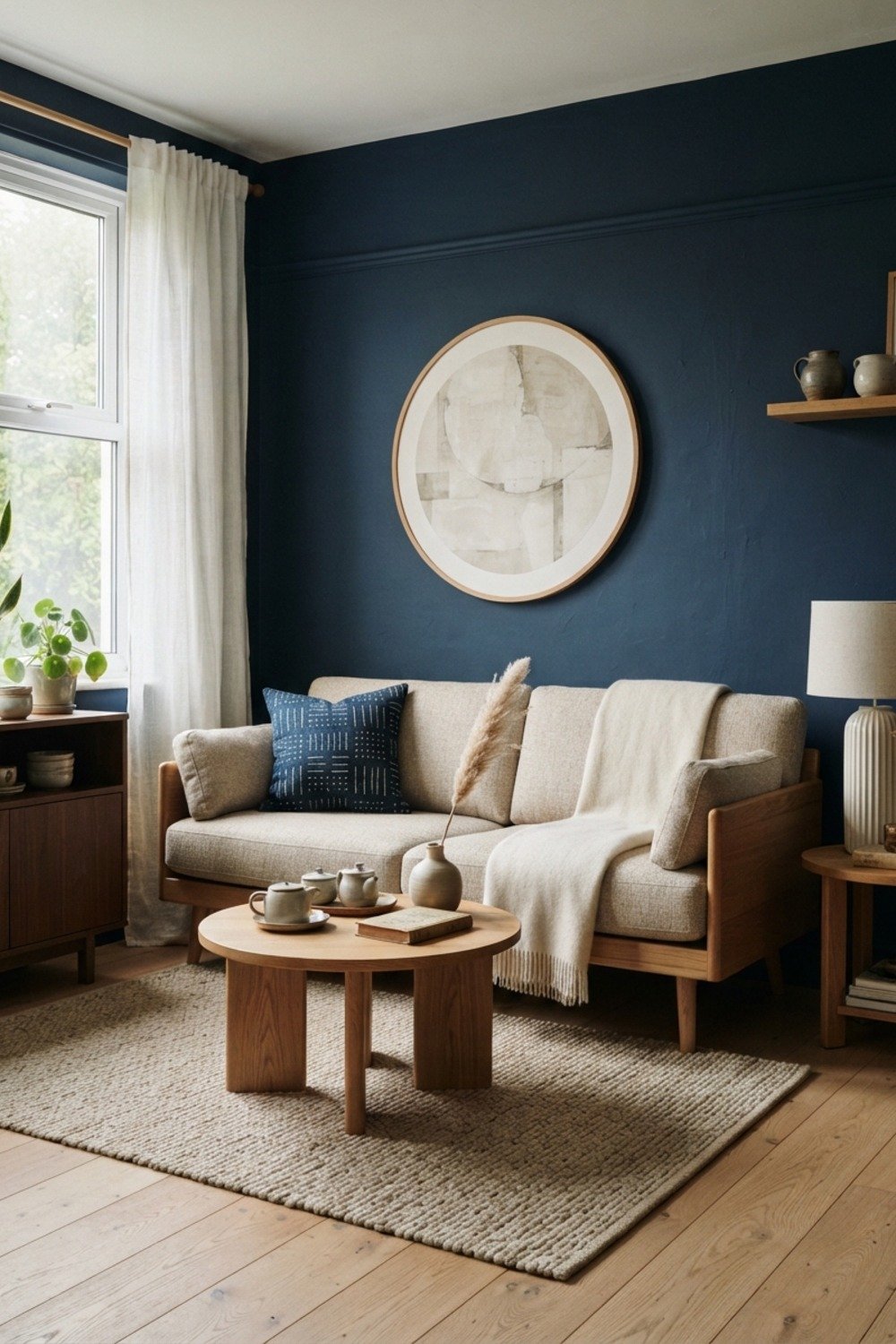
An 84-inch sofa in a 10-foot-wide room leaves barely 36 inches for walking, which is the bare minimum for a path. Dropping to 76 inches returns a full foot of breathing room.
Apartment-depth models around 33 to 36 inches deep sit better than the 40-inch lounge sizes in showrooms. Measure the room, then tape the sofa’s outline on the floor for a day. The tape never lies.
4. Float the sofa to split a long, narrow room
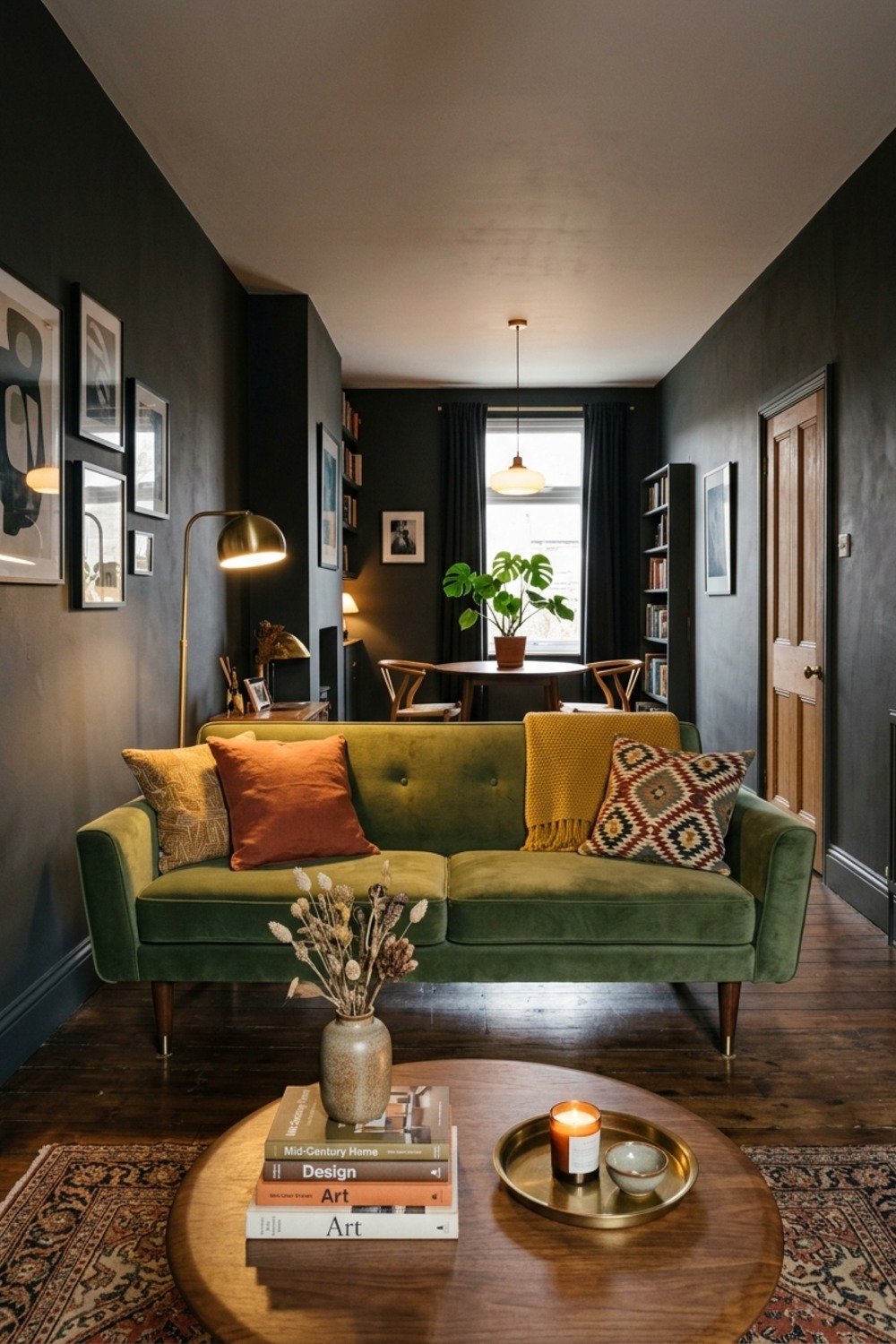
In a 9-by-16 rectangle, pulling the sofa 18 inches off the short wall and angling it slightly creates a seating zone and a walkway without a single partition. A narrow console behind it catches keys and a lamp.
This is the move for open-plan studios, where the living area needs a visual edge. Floating only works if the back of the sofa looks finished, so skip anything with a rough, unupholstered rear.
5. Plug-in sconces beside the sofa
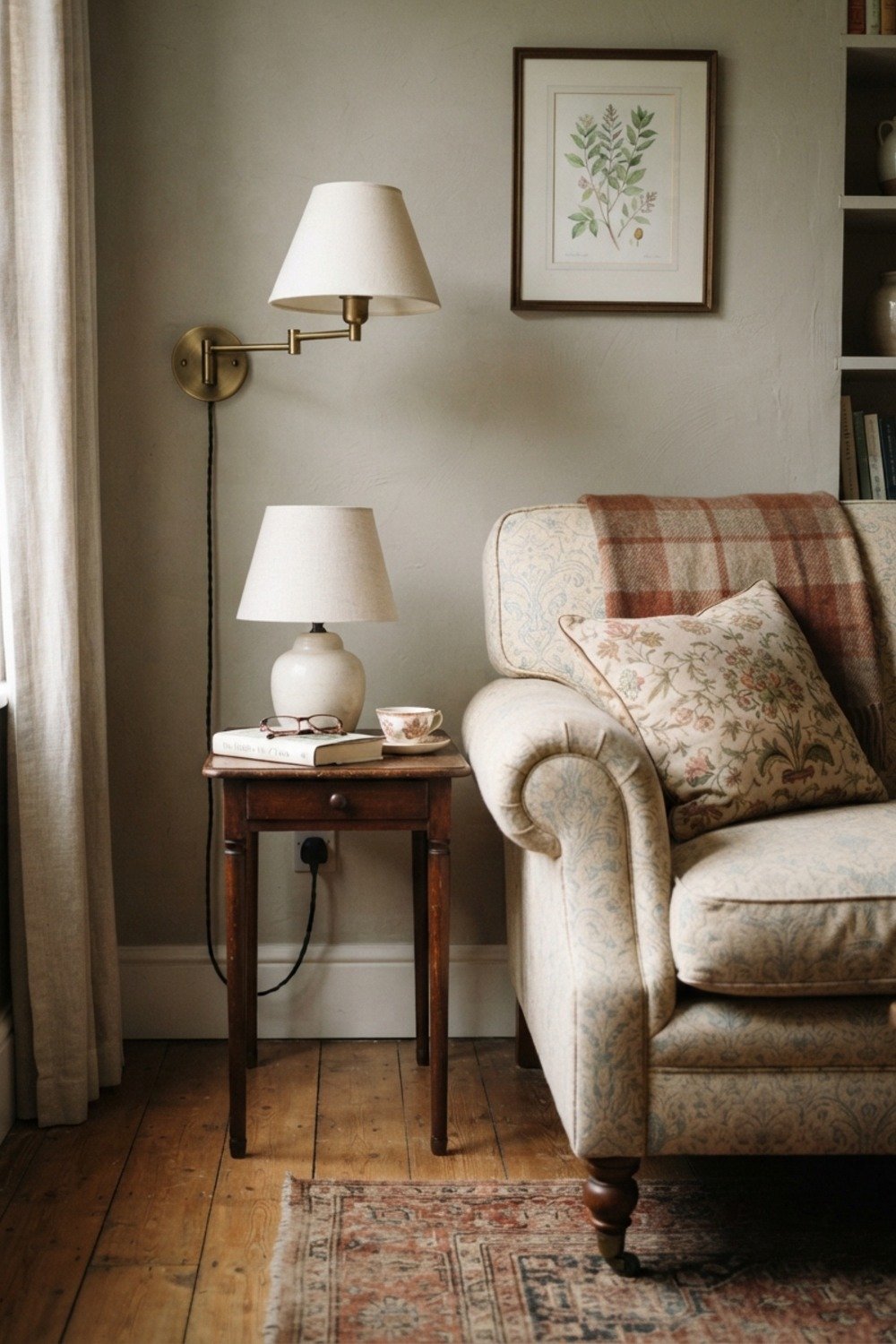
A pair of plug-in wall sconces with fabric cord covers frees both side tables for something else and puts light at 60 inches, right where a reading eye needs it. Expect to pay $40-90 each for decent ones.
Renters love them because the only hardware is a single screw. Hide the cord with a paintable cord channel, or the dangling wire will undercut the whole effect.
6. A glass or acrylic coffee table
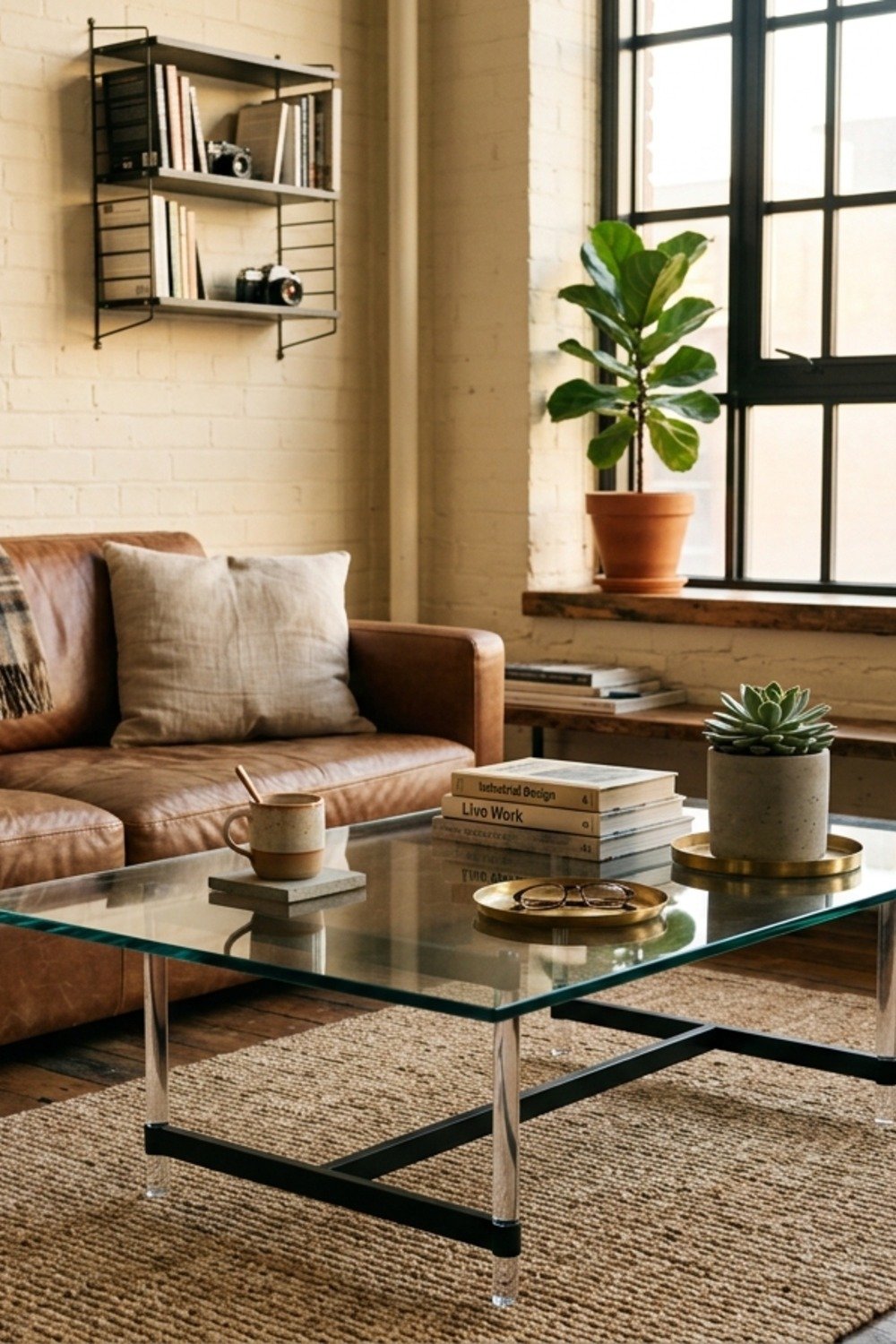
Tempered glass lets the rug pattern show through, so the table takes up floor space without taking up visual space. It’s the one place a see-through material genuinely beats wood.
Choose it for tight, high-traffic rooms. The downside is fingerprints and a faint clink when a mug lands. Felt dots on the corners cut that noise, and a microfiber cloth in a drawer handles the smudges.
7. A rug that’s 5 by 8 or bigger
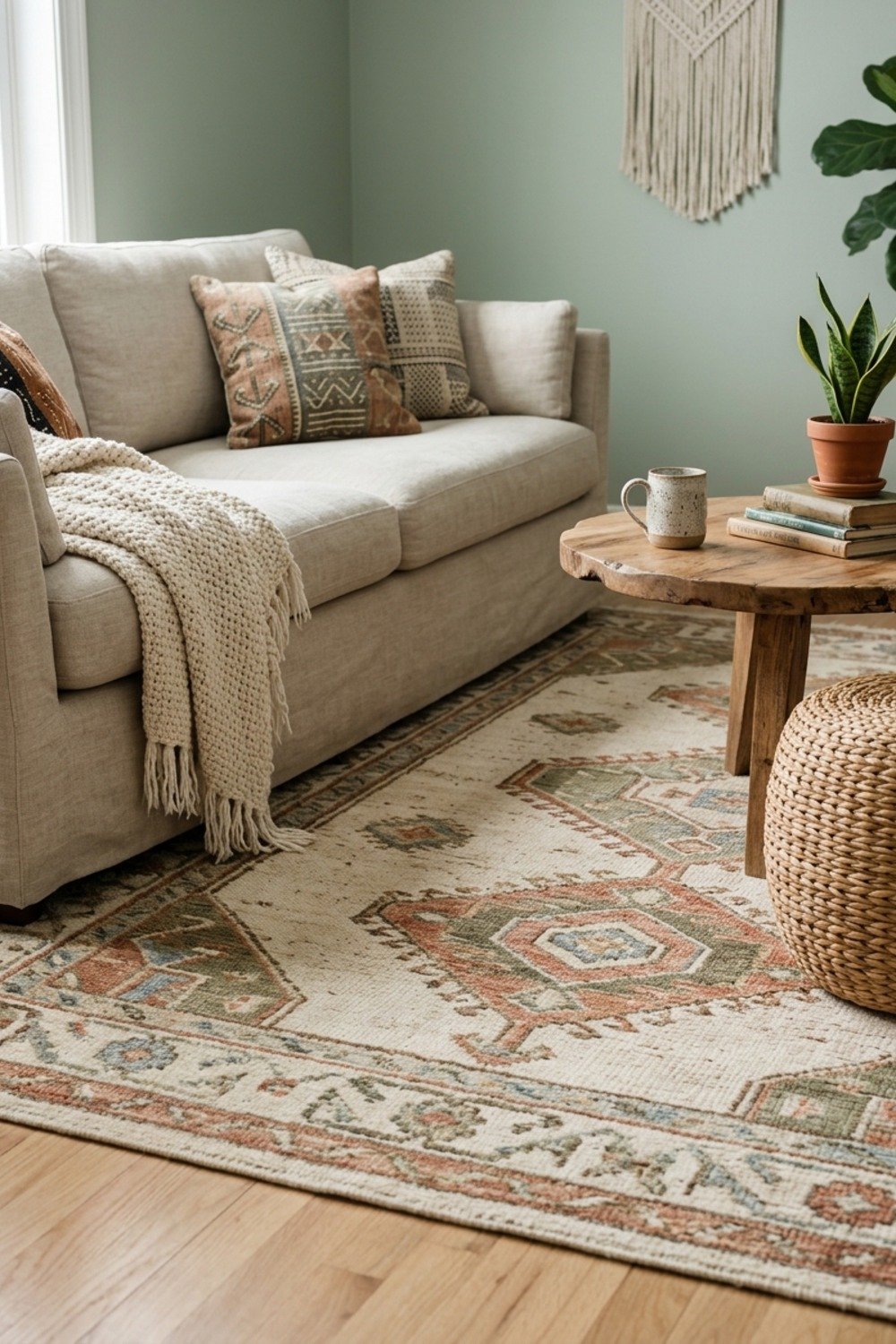
Here’s the counterintuitive bit: a larger rug makes a small room look bigger. A 4-by-6 floating in the middle chops the floor into a postage stamp with a border, and the eye registers every cut.
Aim for the front legs of the sofa and chairs resting on the rug. A flatweave such as a wool-blend from Ruggable or Loloi (roughly $200-450 at 5 by 8) wears well and doesn’t catch the door.
8. Paint the walls, trim, and ceiling one color
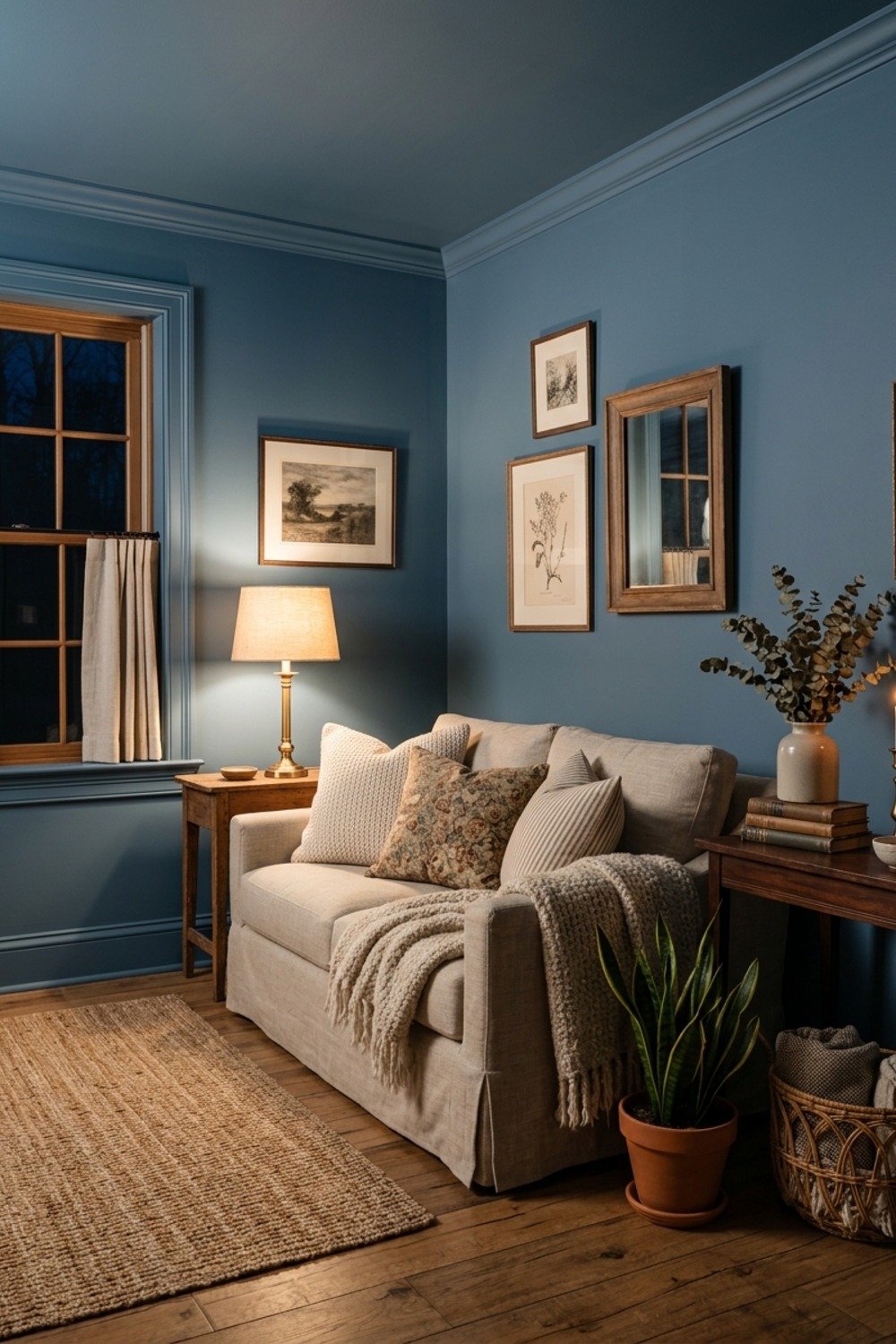
Color drenching removes the hard lines where wall meets trim, so the edges of the room soften and the ceiling seems to float higher. A warm white like Sherwin-Williams Alabaster handles this well in north-facing rooms.
Use satin on the trim and flat on the walls so the sheen shifts subtly. Skip stark bright white in a dim room, since it turns gray by late afternoon and looks like a mistake.
9. Cube shelving mounted vertically
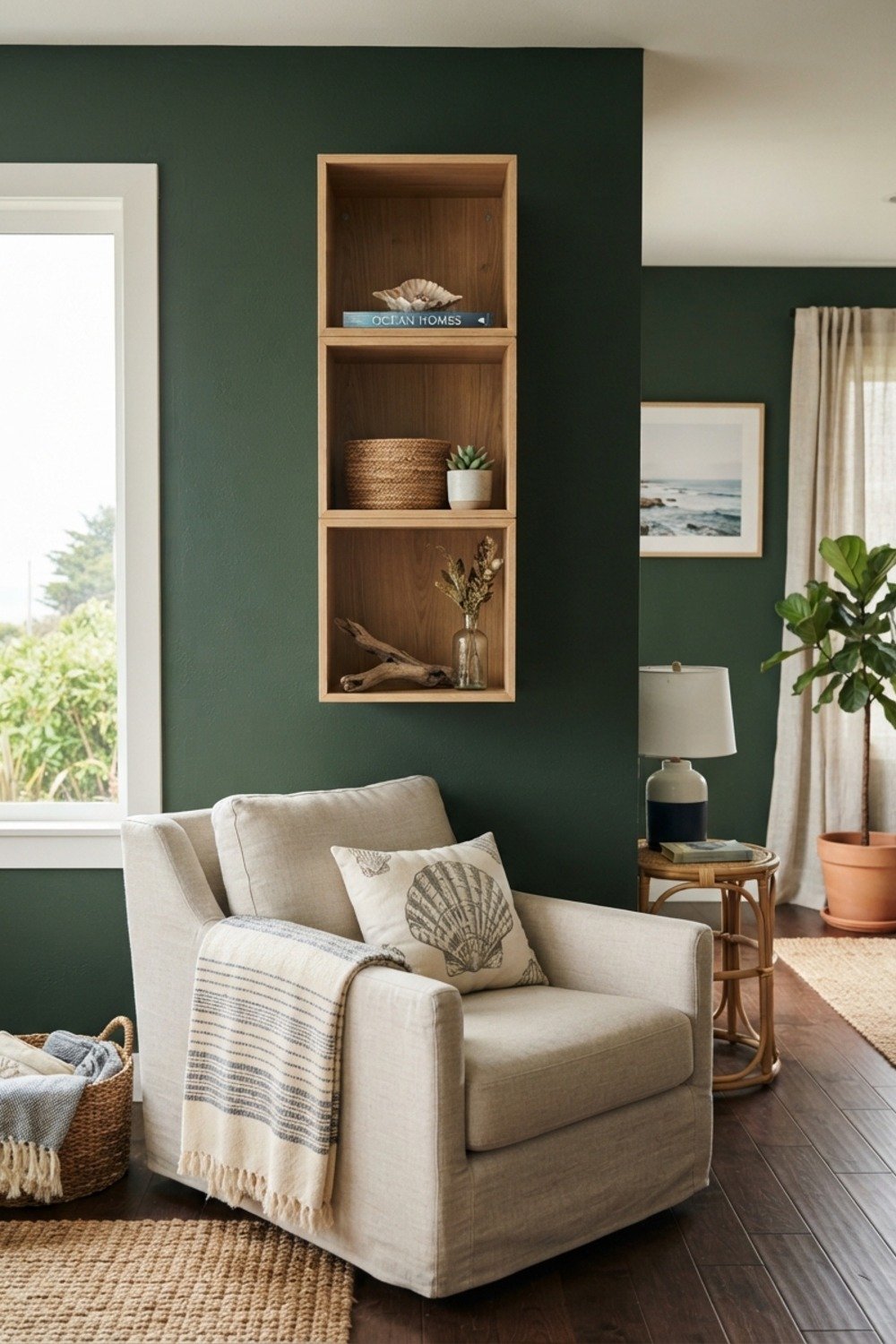
An IKEA Kallax stood on its end, or a 2-by-4 cube grid bolted to the wall, stores about 80 books or a dozen baskets in a 15-inch footprint. Wall-mounting it keeps the floor clear.
It suits renters who need hidden storage fast. Anchor it to a stud, because a loaded cube unit tips forward, and fill at least half the cubes with closed baskets so the wall doesn’t look busy.
10. Lean one oversized mirror opposite the window
A 30-by-70-inch floor mirror leaned against the wall that faces the window doubles the daylight and pushes the sightline back, because the glass bounces light deep into the room and makes the far wall seem to dissolve. Slim black or brass frames stay quiet.
It suits rooms with just one window, which describes most apartments, and rentals where drilling is off limits since leaning needs no hardware. Never place it where it reflects a cluttered corner or the back of a TV, because that flips the whole benefit.
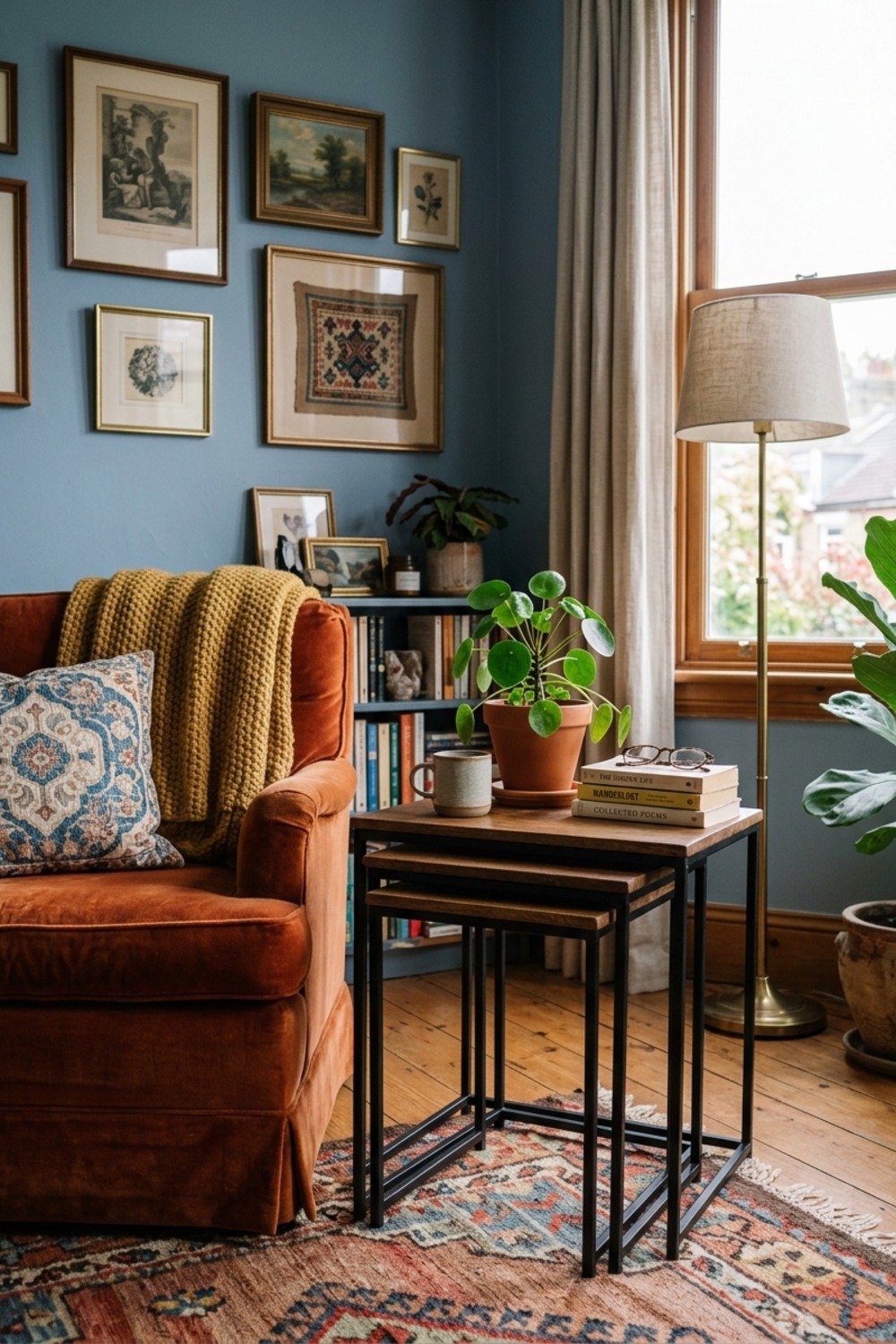
11. Nesting tables that disappear
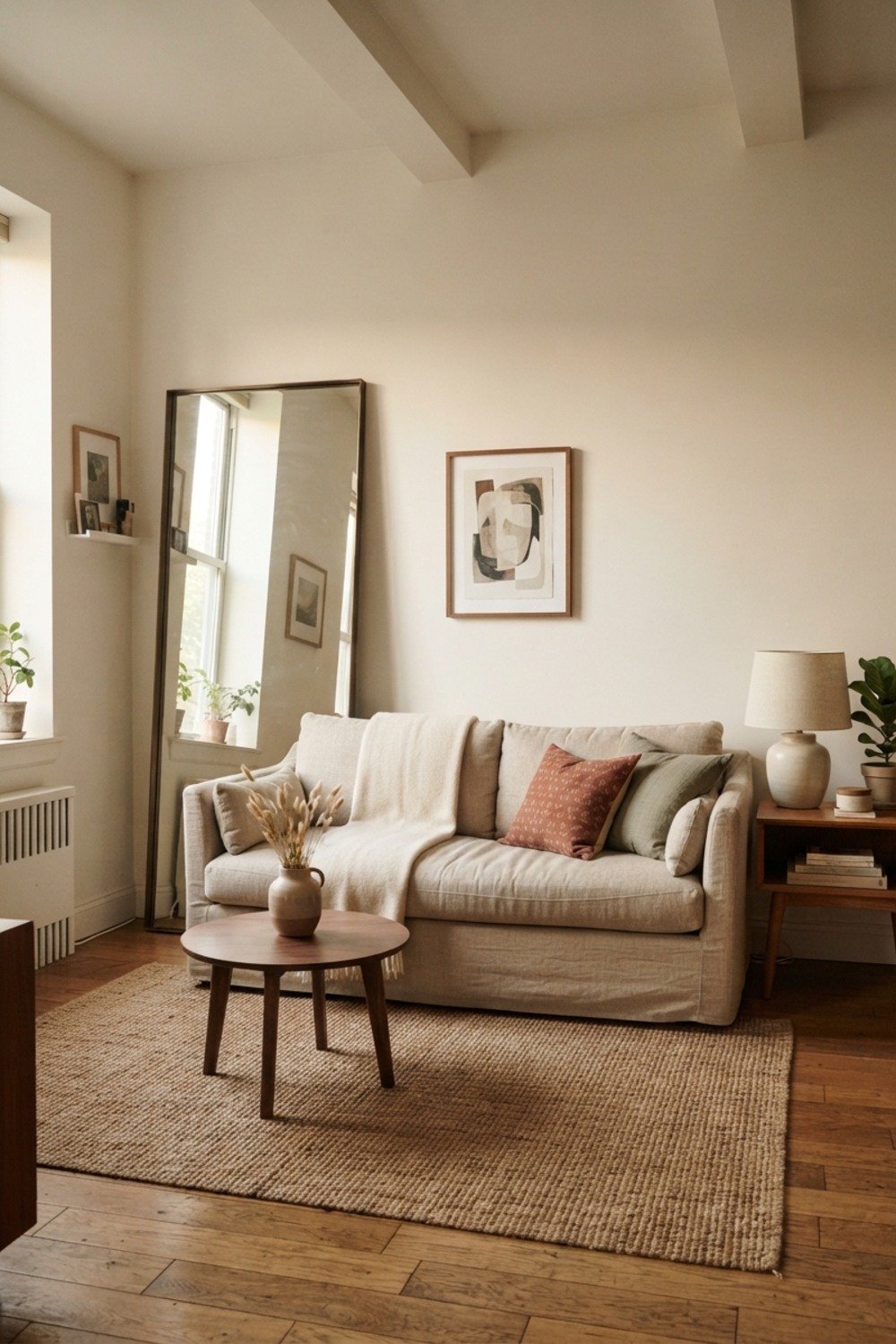
A set of two or three nesting tables parks flush against the sofa arm most days. When four friends arrive on a Friday night, they slide out and handle drinks without anyone balancing a glass on a knee.
Pick sets where the largest is 20 inches or less across, such as the Hay or Blu Dot styles. Cheap ones wobble. Press down on the tabletop before buying, and walk away if it rocks.
12. Curtains hung 4 inches below the ceiling
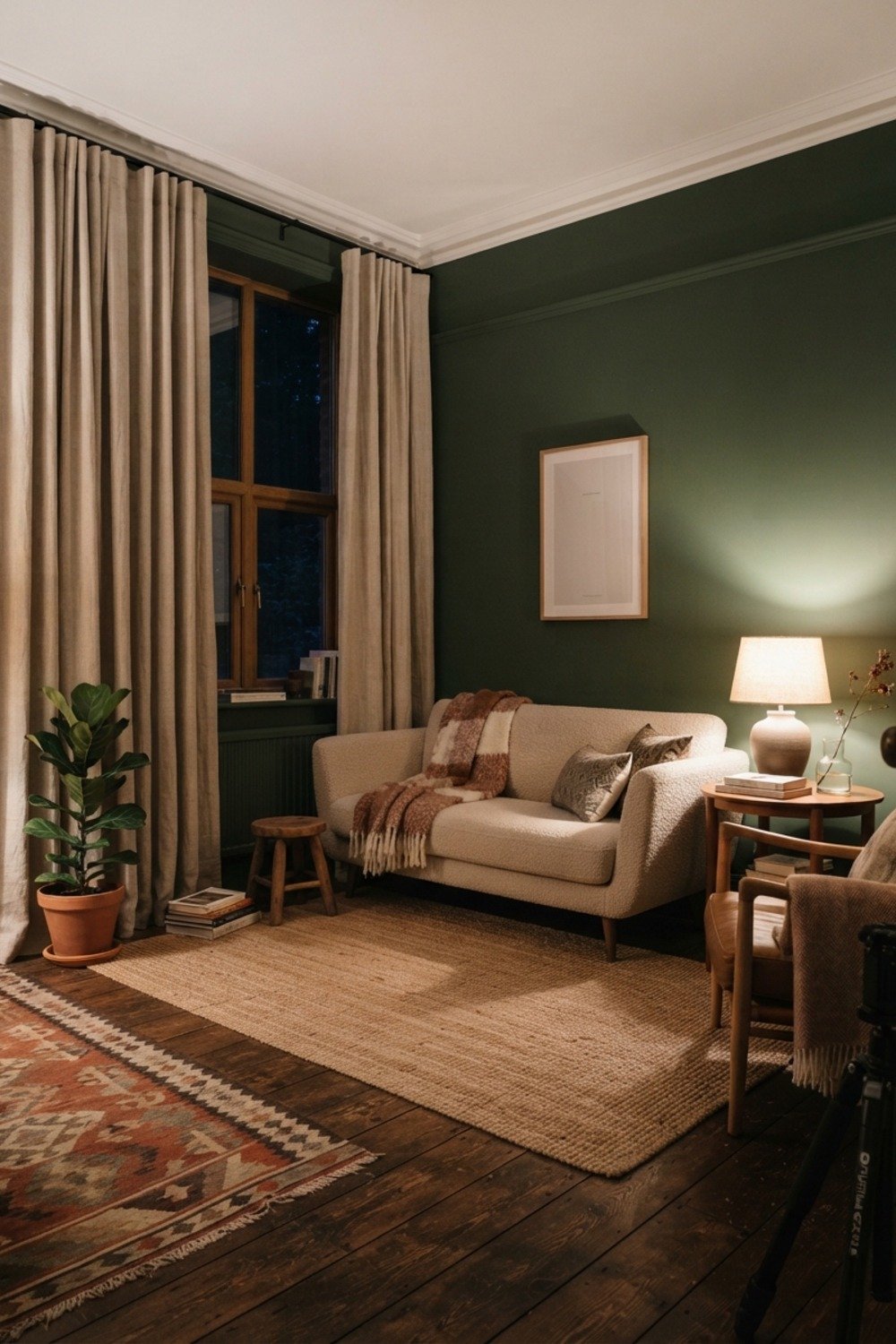
Mounting the rod near the ceiling and letting the panels graze the floor adds visual height for the price of a $25 rod and a couple of $30-40 panels. The window suddenly looks taller than it is.
This is a high-return fix for low ceilings of 8 feet or less. Extend the rod 8 to 12 inches beyond each side of the frame so the open curtains don’t block any glass.
13. A 10-inch-deep console
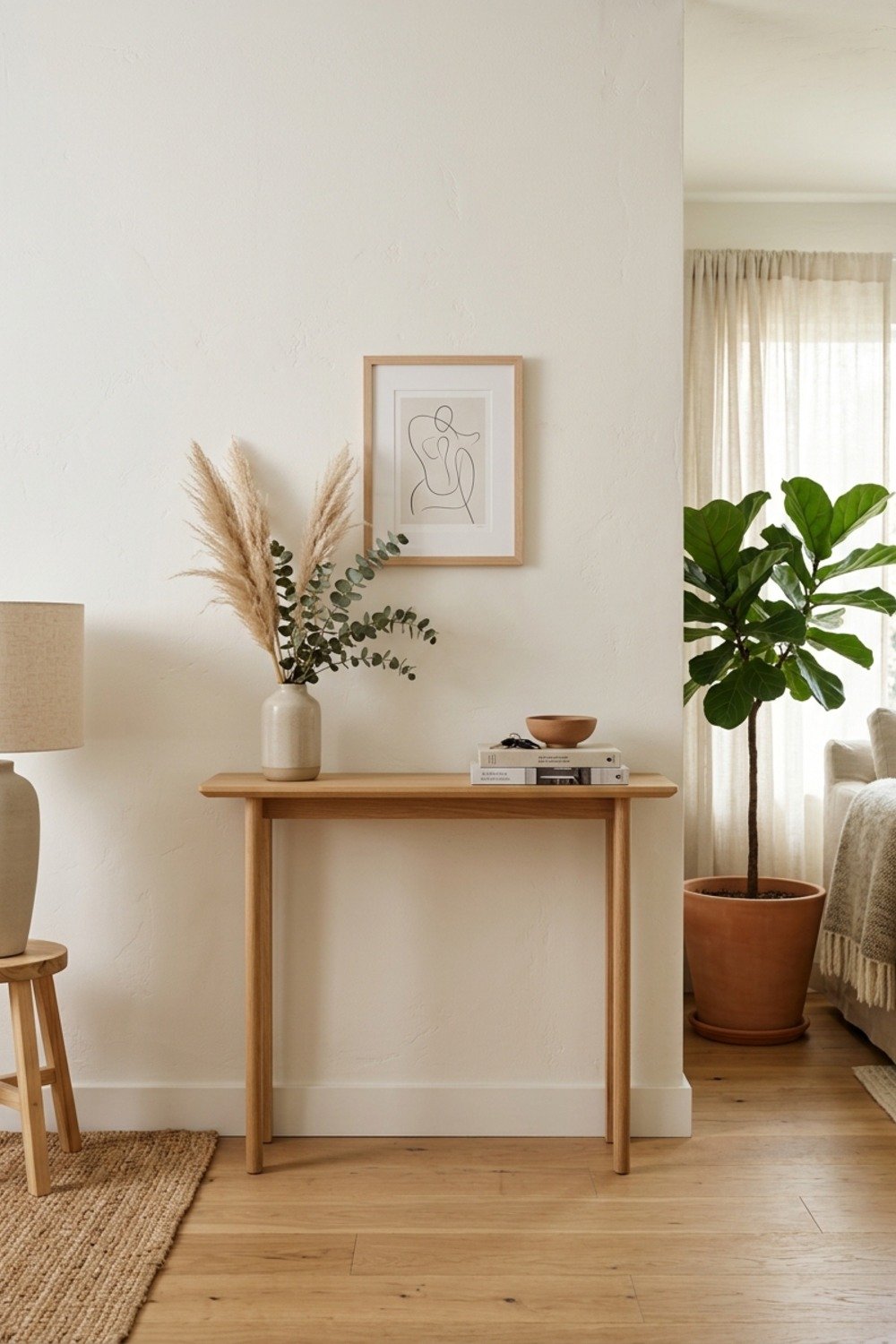
A console only 10 to 12 inches deep fits behind a floating sofa or along a hallway wall without stealing walking room. Standard 16-inch consoles jut into a path you need.
It suits entry-adjacent living rooms where there’s nowhere to drop mail. Look for a lower shelf, and leave it holding baskets. Open clutter on a shelf that narrow looks like an accident.
14. Two swivel chairs in place of a loveseat
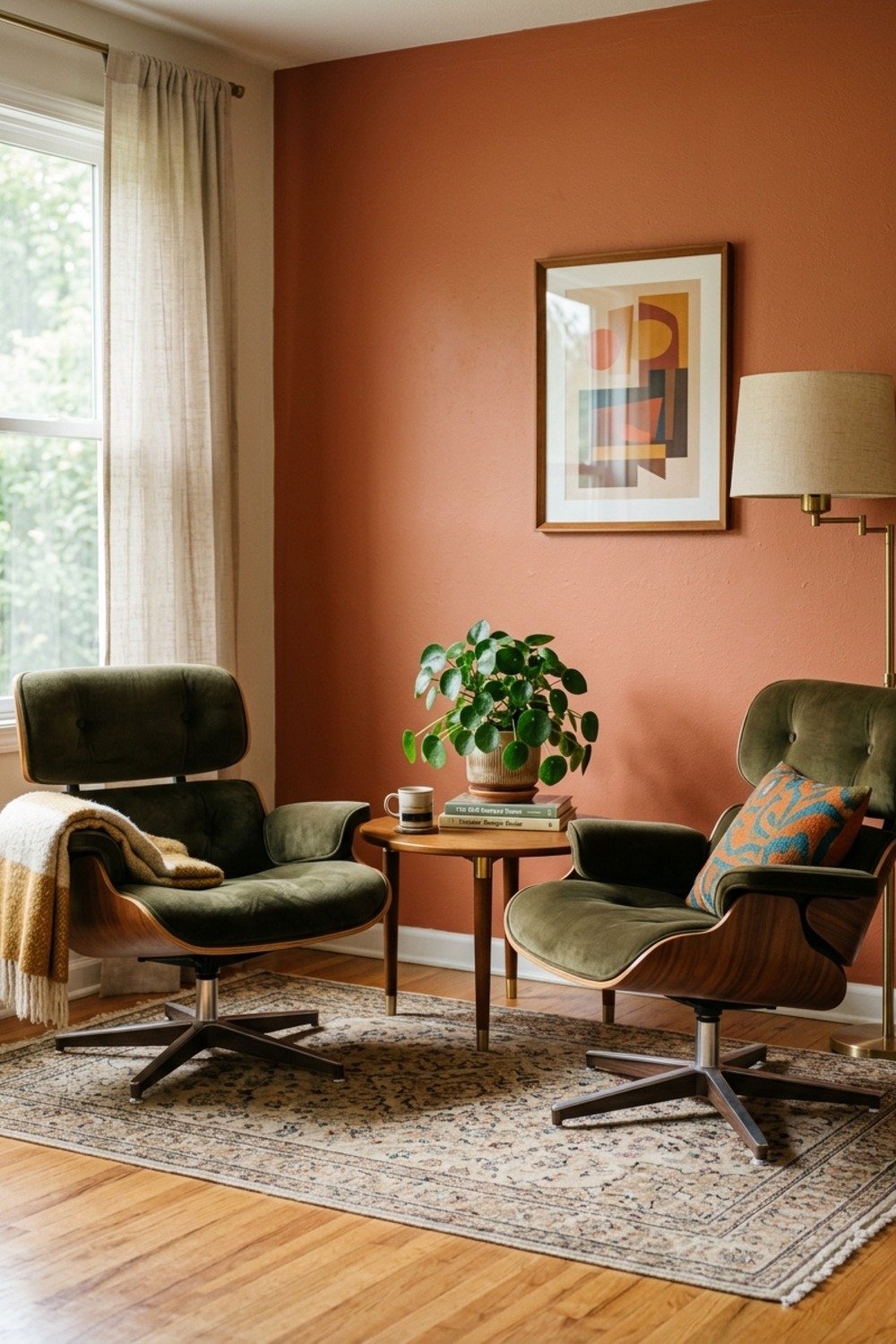
Swivel chairs turn toward the TV, the window, or each other, so one pair does the work of three layouts. A loveseat locks you into one direction forever.
This helps when the room doubles as a work area or a conversation spot. Choose a base under 28 inches wide, and avoid fully upholstered round bases on dark floors, where they leave scuff marks.
15. An arc floor lamp over the seating
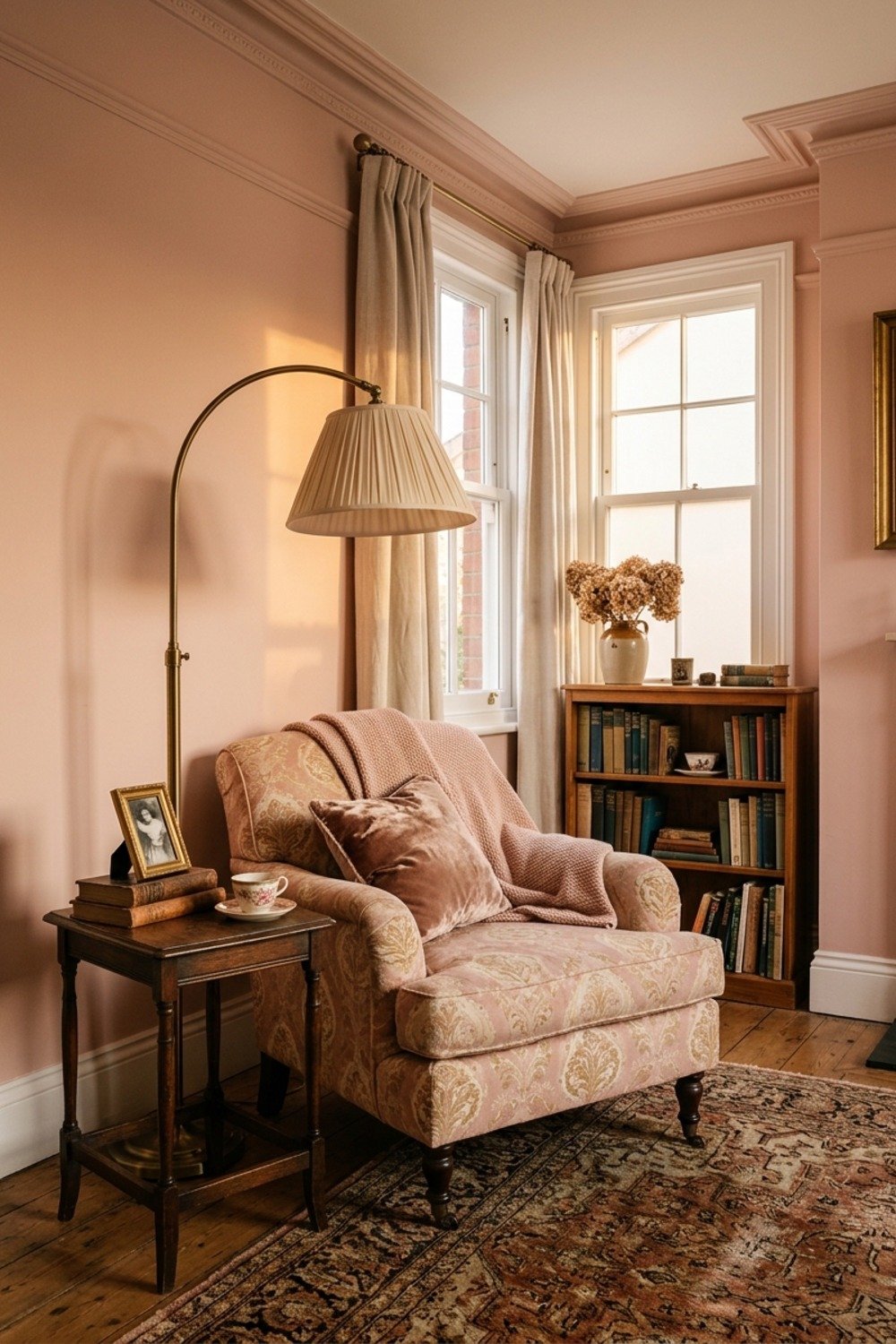
An arc lamp rises from behind the sofa and hangs its shade over the middle of the room, so no table has to hold a lamp base at all. Wayfair and CB2 sell good ones from about $120.
On a gray February afternoon, one warm 2700K bulb at that height can rescue the room by 4 p.m. Check the weighted base, since a cheap arc will tip when guests brush it.
16. Rattan and cane for lightness
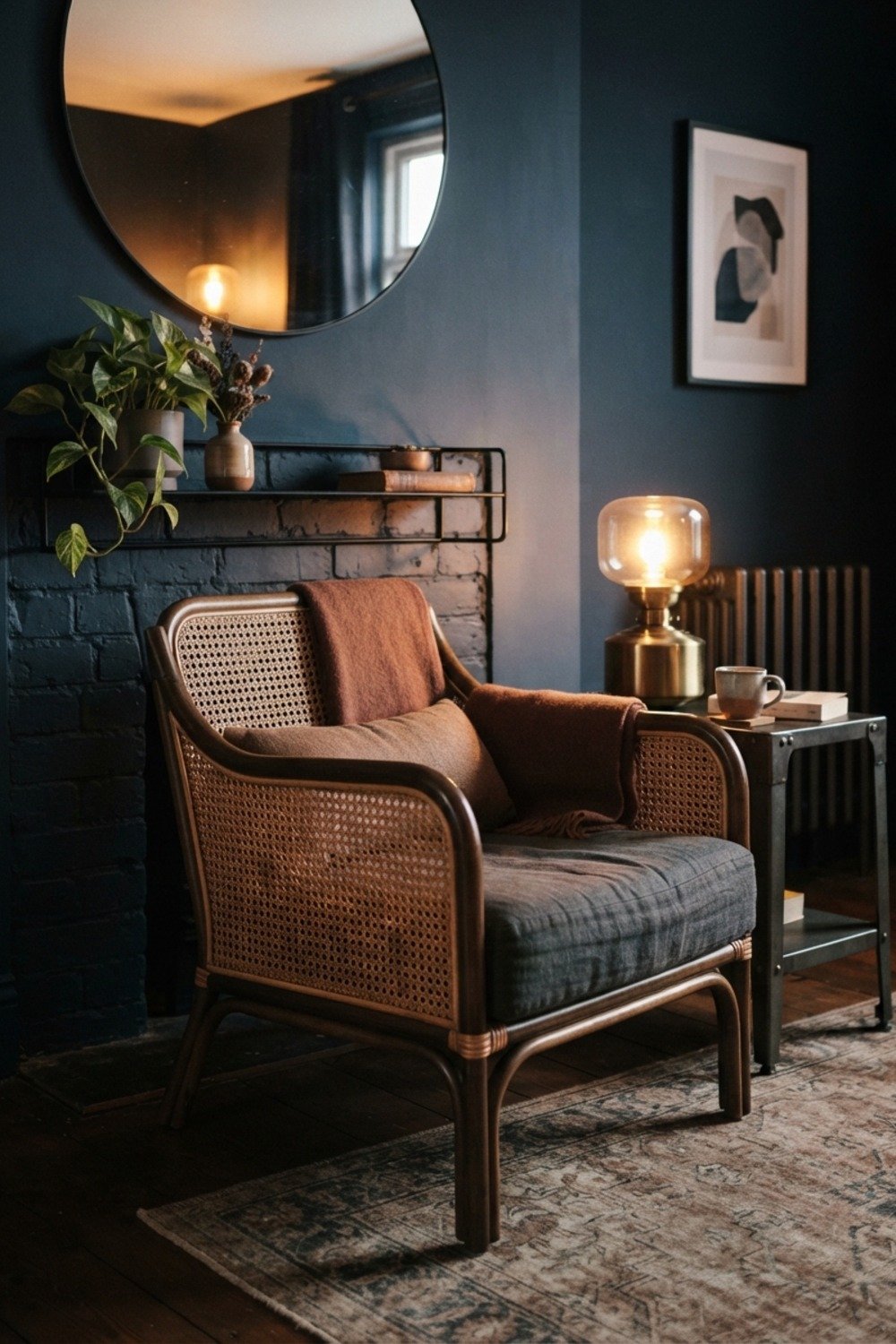
An open-weave cane chair lets you see through it, which is why it takes up less room visually than a solid armchair of the same size. Natural fiber also makes a faint dry creak when someone sits, a sound that reads as lived-in.
Great for sunny rooms and anyone who dislikes plastic. Skip it next to a radiator, because heat dries the weave and causes cracking.
17. Cut the small accessories by two thirds
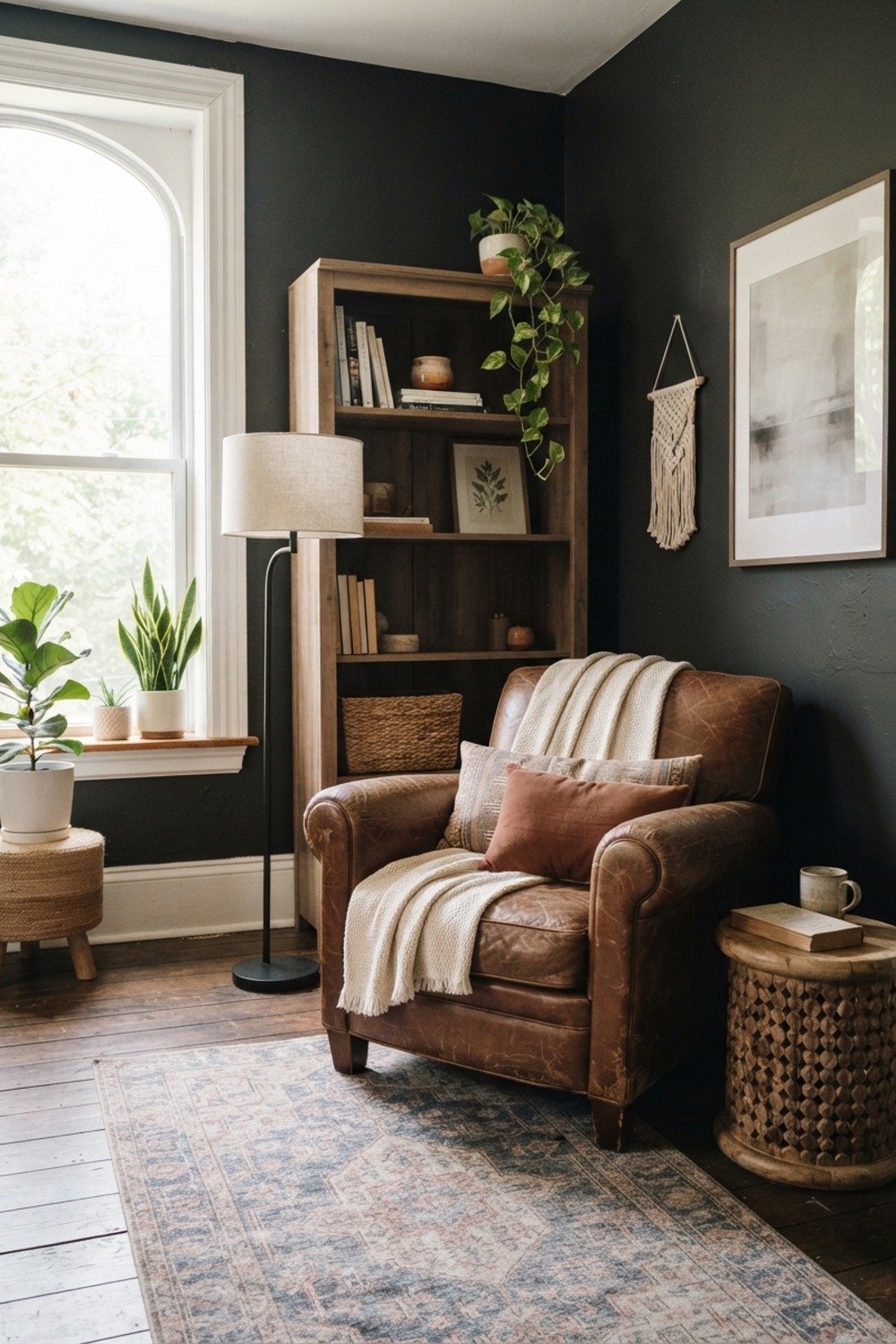
Fifteen little objects on a shelf read as noise, and noise shrinks a room faster than a bulky chair does. Three larger items at differing heights read as intention.
This applies to anyone whose shelves look busy but don’t feel finished. Gather the extras into a single lidded box and give the surfaces a month to settle. If nothing’s missed, donate the box.
18. A pale, warm neutral on every wall
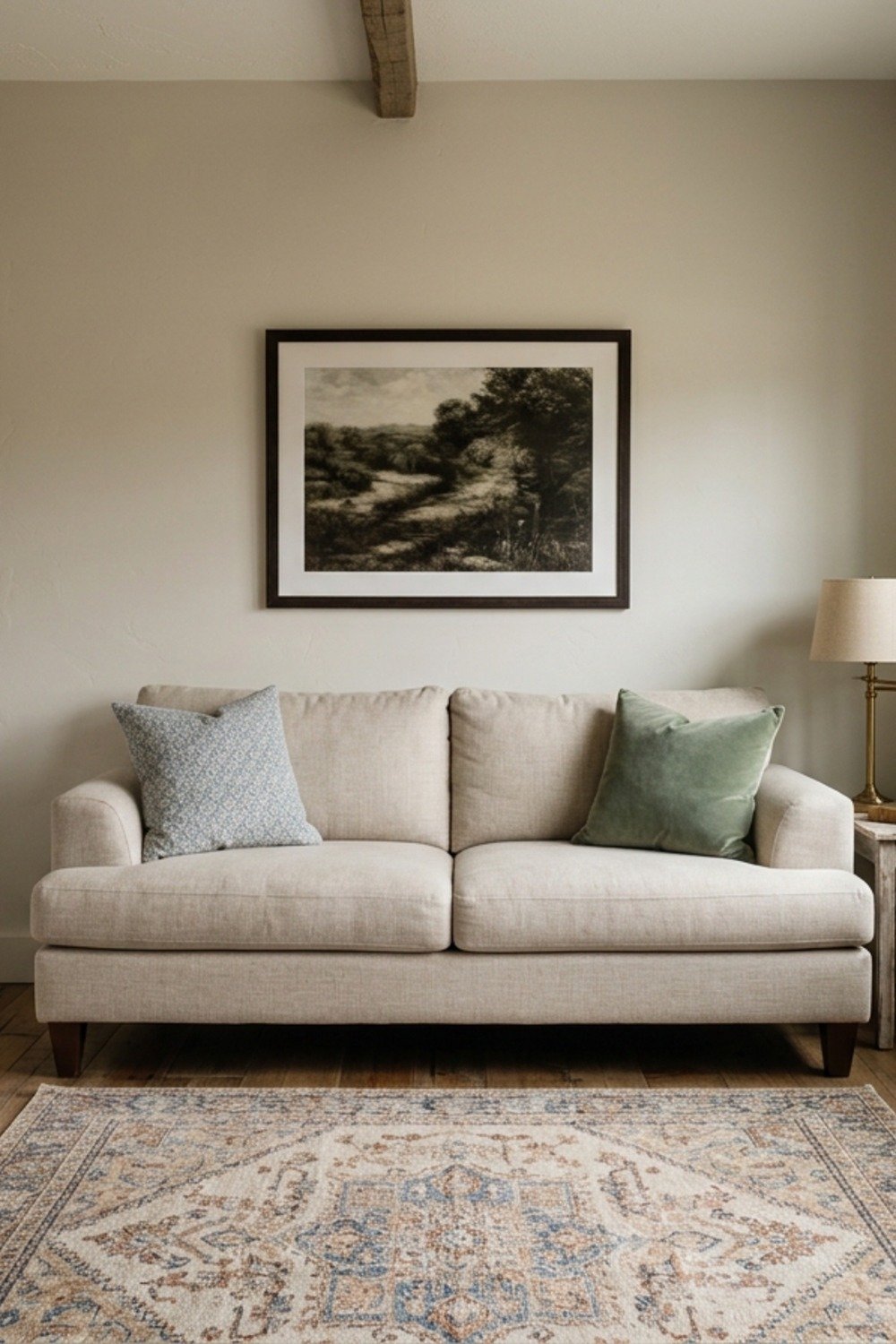
Honestly, “paint it white” is advice repeated so often it’s wallpaper. The detail that matters is undertone: a creamy white with a touch of yellow, like Benjamin Moore White Dove, glows in low light, while a blue-based white feels like a hospital corridor.
Test a sample 2 feet square at 4 p.m. and again after dark. It suits north-facing rooms best, and it fails if your floors are strongly orange, which fights the cream.
19. A storage ottoman in place of a bench or pouf
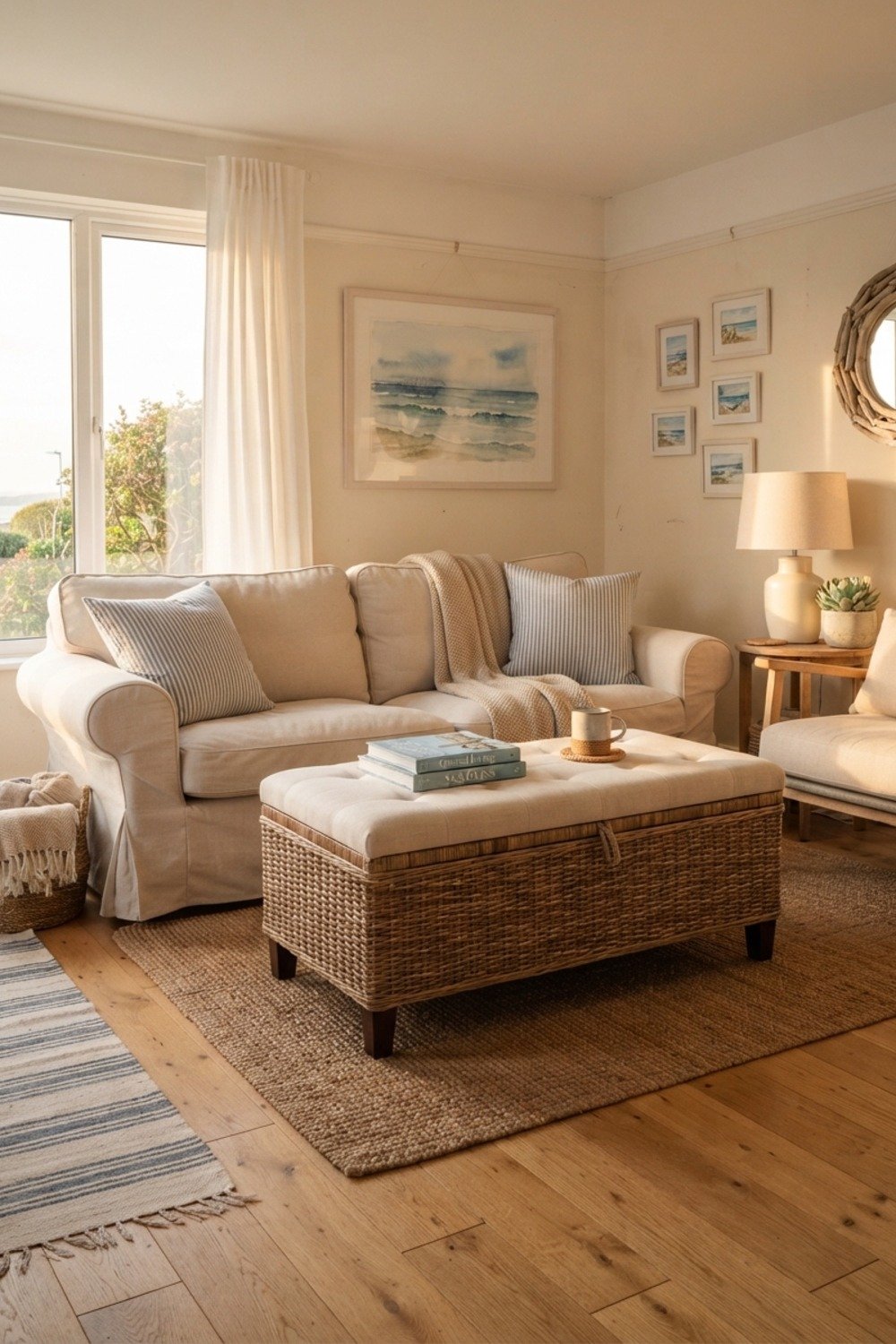
A 36-inch storage ottoman holds blankets, game controllers, and remotes inside, and doubles as a footrest or extra seat. A plain pouf offers none of that and still takes up the same floor.
Choose one with a hinged, slow-close lid so fingers stay safe. Upholstered tops are comfortable, but a tray on top is essential if anyone plans to set drinks on it.
20. Hang art taller than it is wide
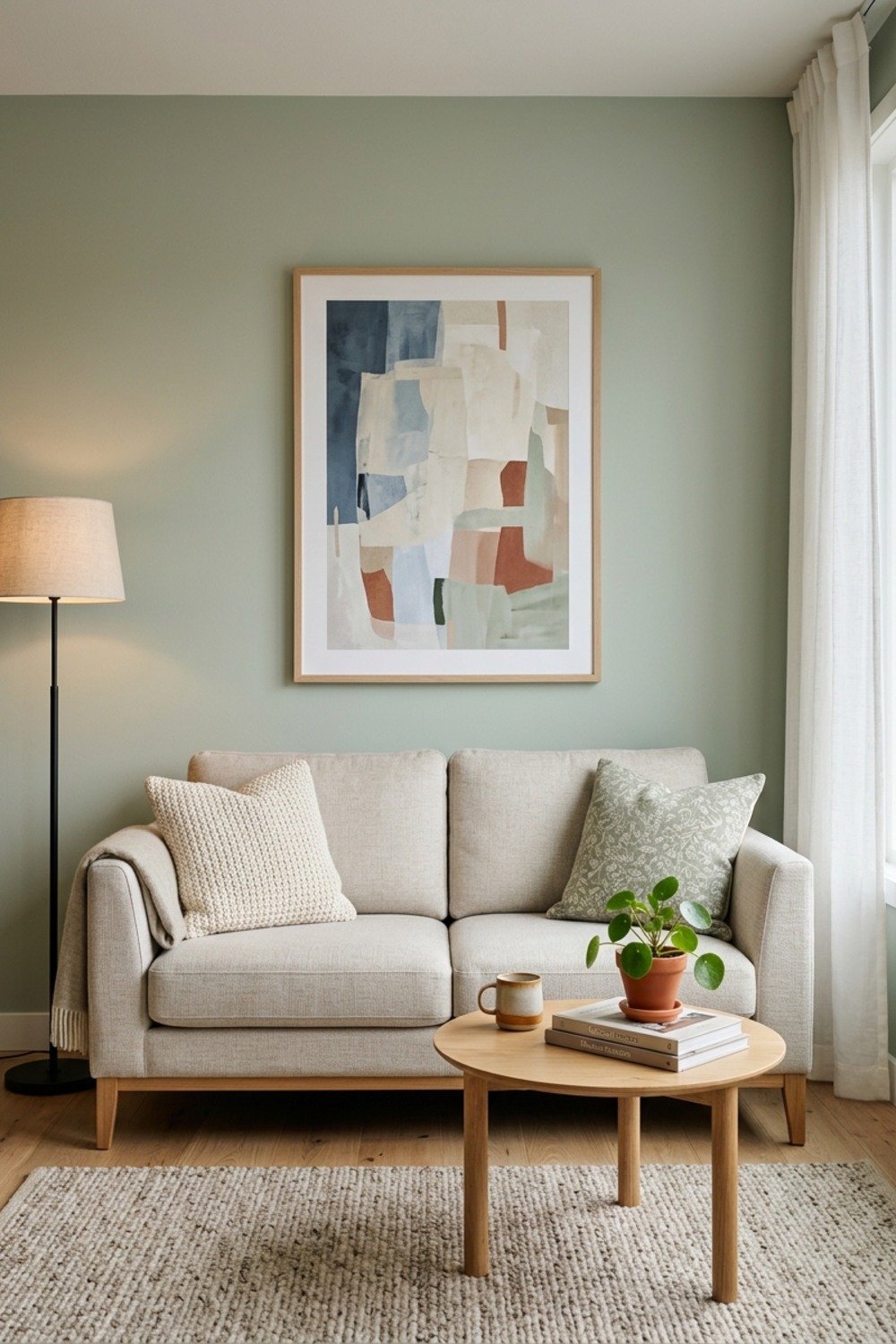
A vertical piece, such as a 24-by-36 print, draws the eye up and makes an 8-foot ceiling feel closer to 9. Landscape frames do the reverse by stretching the wall sideways.
It’s a good answer for narrow walls between windows. Hang the center at about 57 inches from the floor, and keep a hand’s width of margin above the sofa so the two don’t collide.
21. A drop-leaf table instead of a fixed dining set
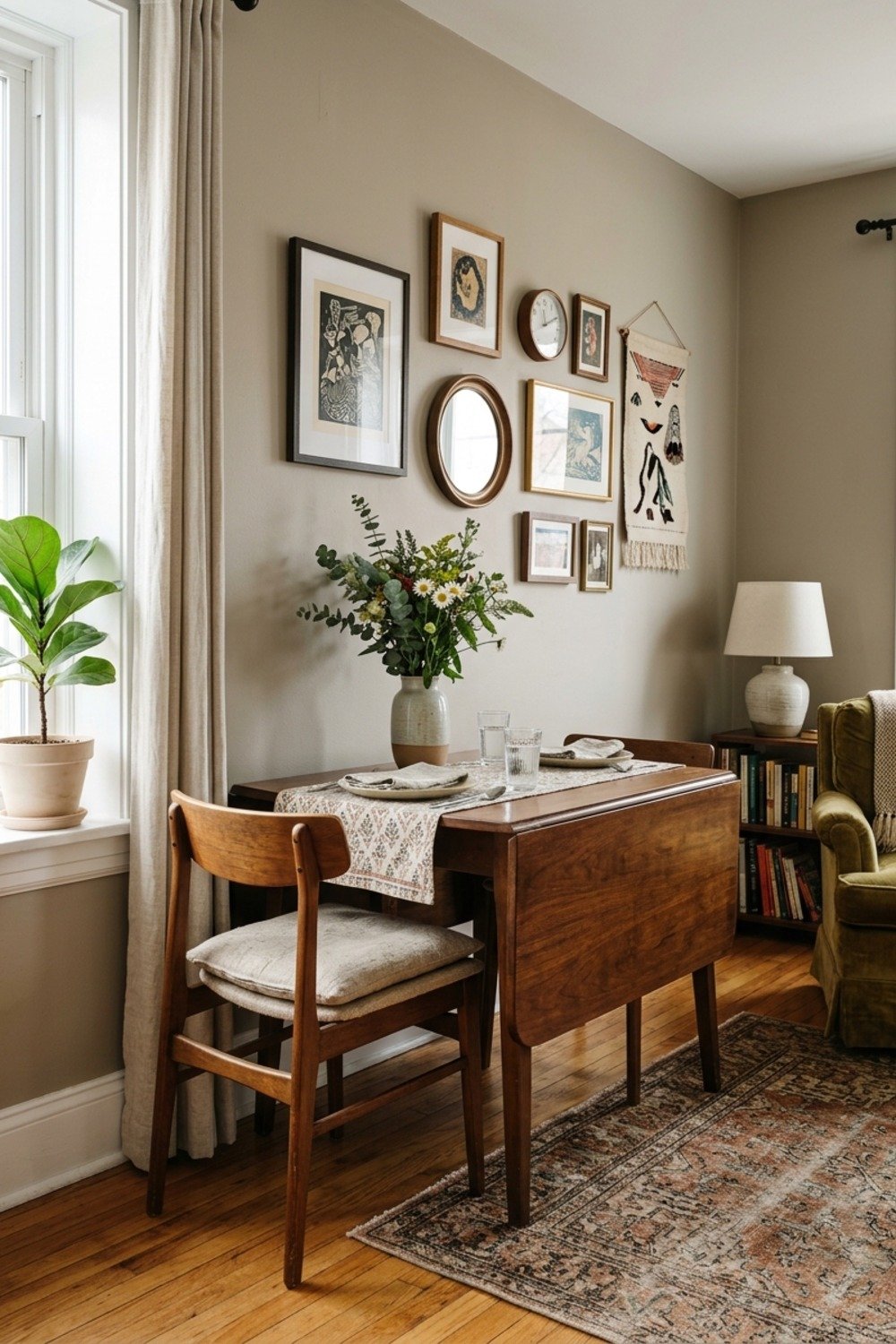
When folded, a drop-leaf table is 10 to 12 inches wide and lives against the wall as a console. With both leaves up it seats four.
It’s most useful in studios where the living room is also the dining room. Test the hinge mechanism, since cheap versions sag after a year. A solid-wood gate-leg style from a secondhand shop often outlasts new flat-pack.
22. Secondhand pieces with slim profiles
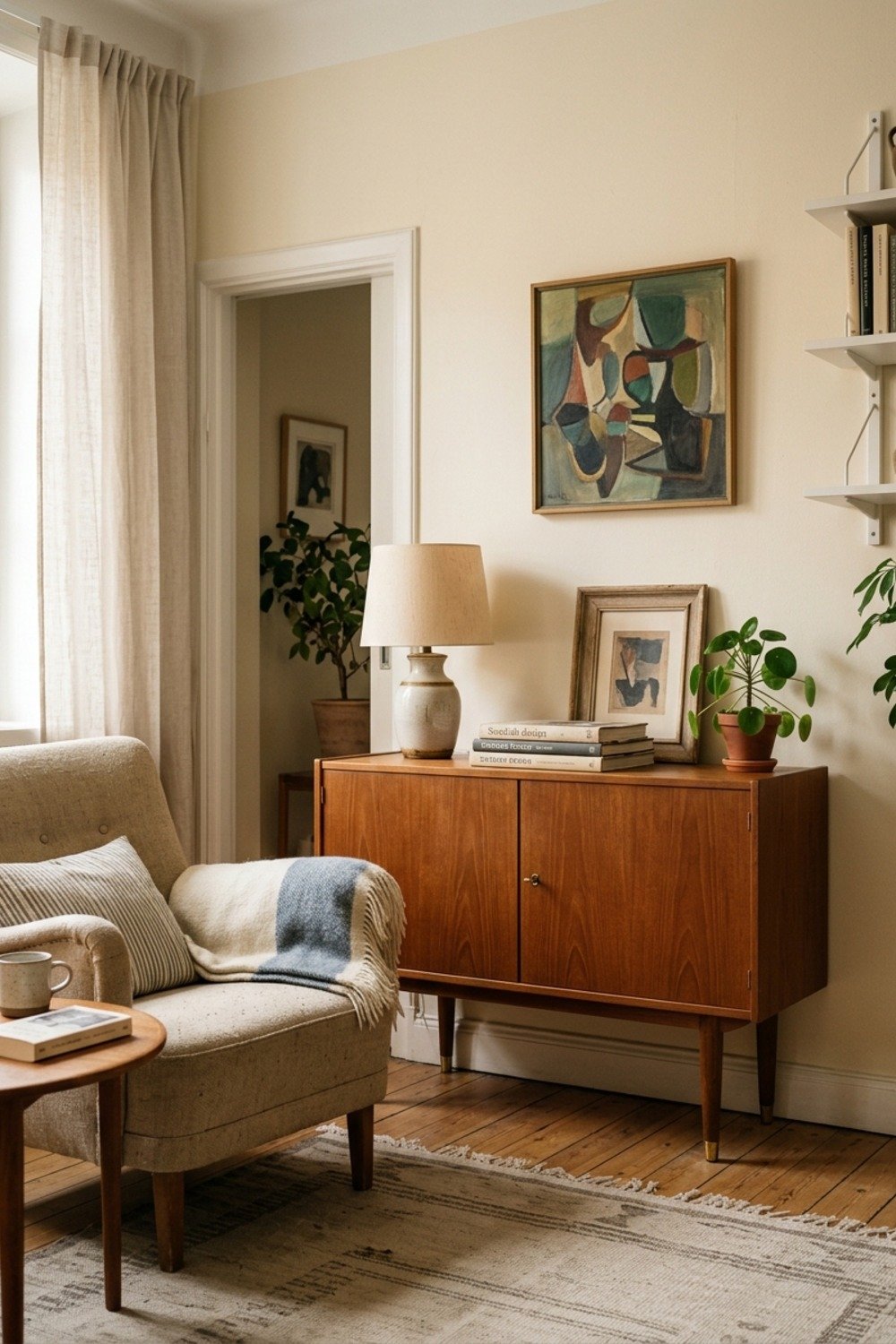
A vintage chair from a flea market, often $60-150, usually has thin arms and exposed wood, which suits a small room better than overstuffed new designs. The proportions were made for smaller homes.
It’s a smart route for tight budgets, with one catch: sniff the cushion before buying. Smoke or damp is nearly impossible to remove, and reupholstering a chair costs $400 or more.
23. A round coffee table
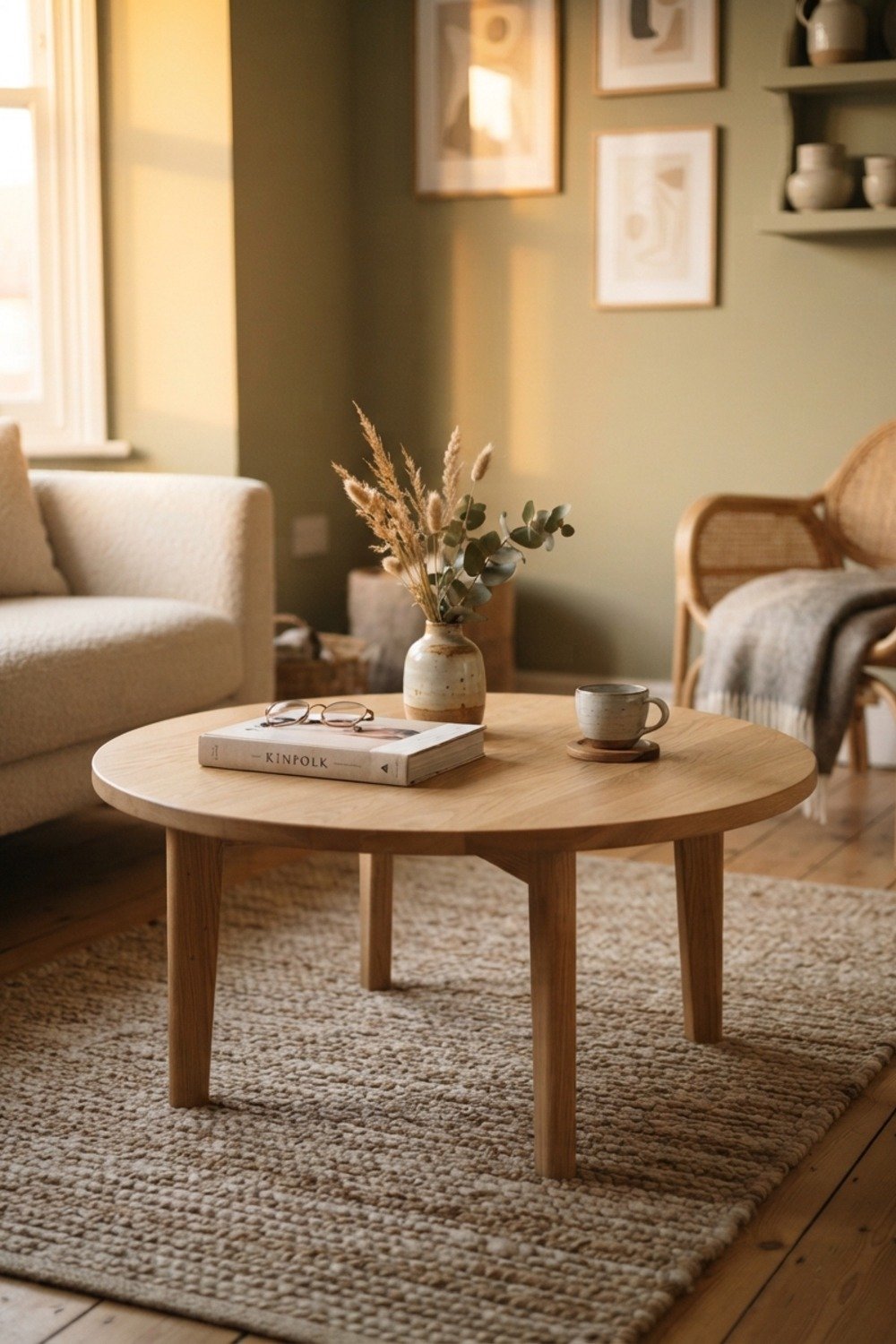
Round tables have no corners to bump, so people can walk past at a 24-inch gap without turning sideways, and traffic flows around the curve instead of snagging on an edge. A 30-inch round suits most small seating areas. Measure that 24-inch gap before buying.
Households with toddlers benefit most, since sharp edges sit at head height for small children. Marble tops look luxurious but weigh over 40 pounds, so a wood or travertine-look composite is easier to move when the room gets rearranged.
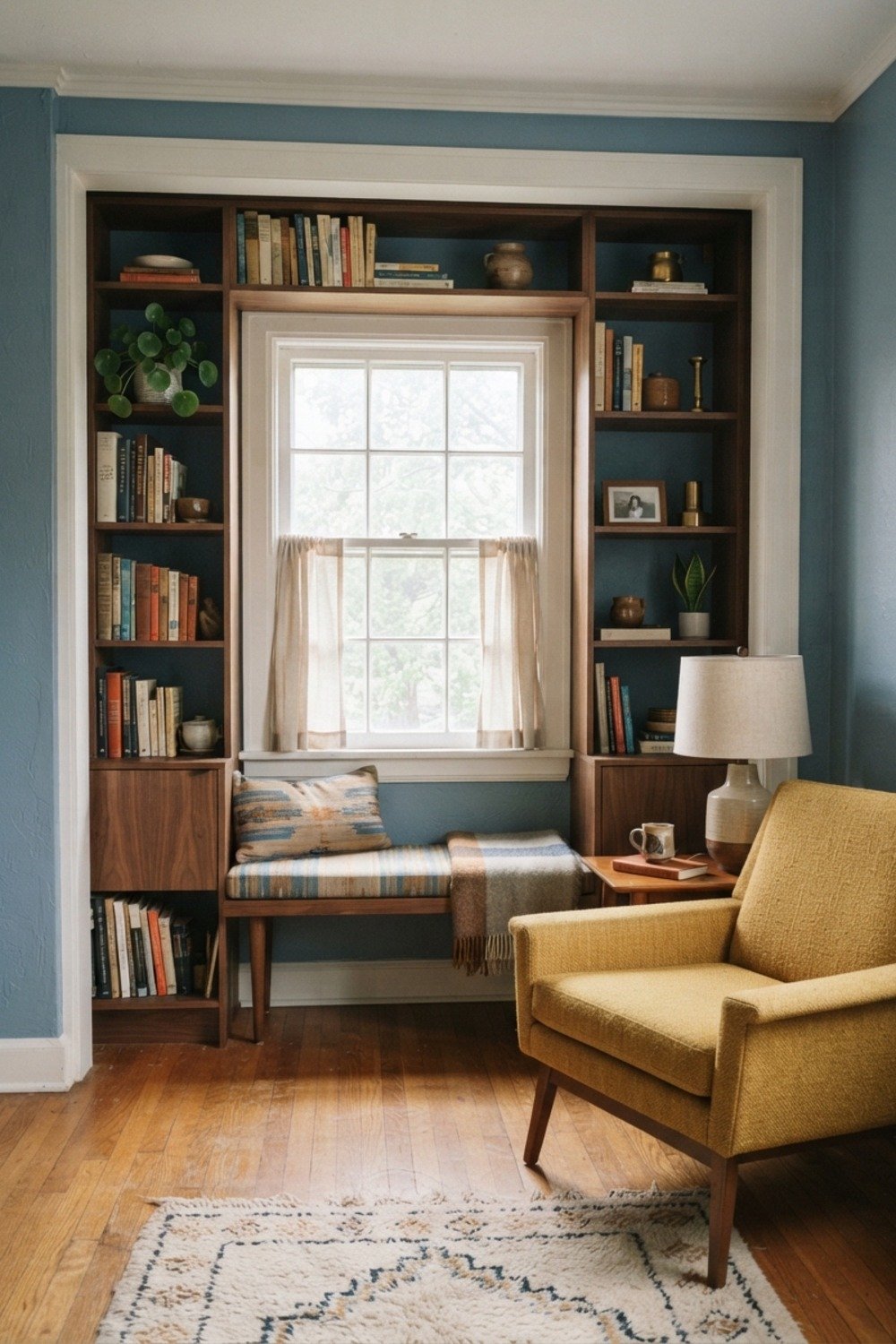
24. Fill a window alcove with built-in shelves
Shelves at 12 inches deep fitted around a window frame add storage without pushing into the room, and the window becomes a feature instead of a dead zone. Custom carpentry costs $1,200 and up, but IKEA Billy units with trim can do a similar job for about $300.
This suits homes with a recessed wall. Leave 2 inches of gap at the top for crown or filler, and paint the shelves the same color as the wall so they blend.
25. Sheer linen panels for daylight
Sheer linen panels soften afternoon sun, hide the view of the building opposite, and still let about 70 percent of the light through, while heavy drapes can cut that to under 20. The weave diffuses glare instead of blocking it, so the room stays bright without a harsh patch on the floor.
They suit ground-floor apartments where privacy matters during the day. Choose a weight that moves when someone walks past. Stiff polyester sheers hang like plastic and spoil the airy feeling.
26. Limit wood tones to two
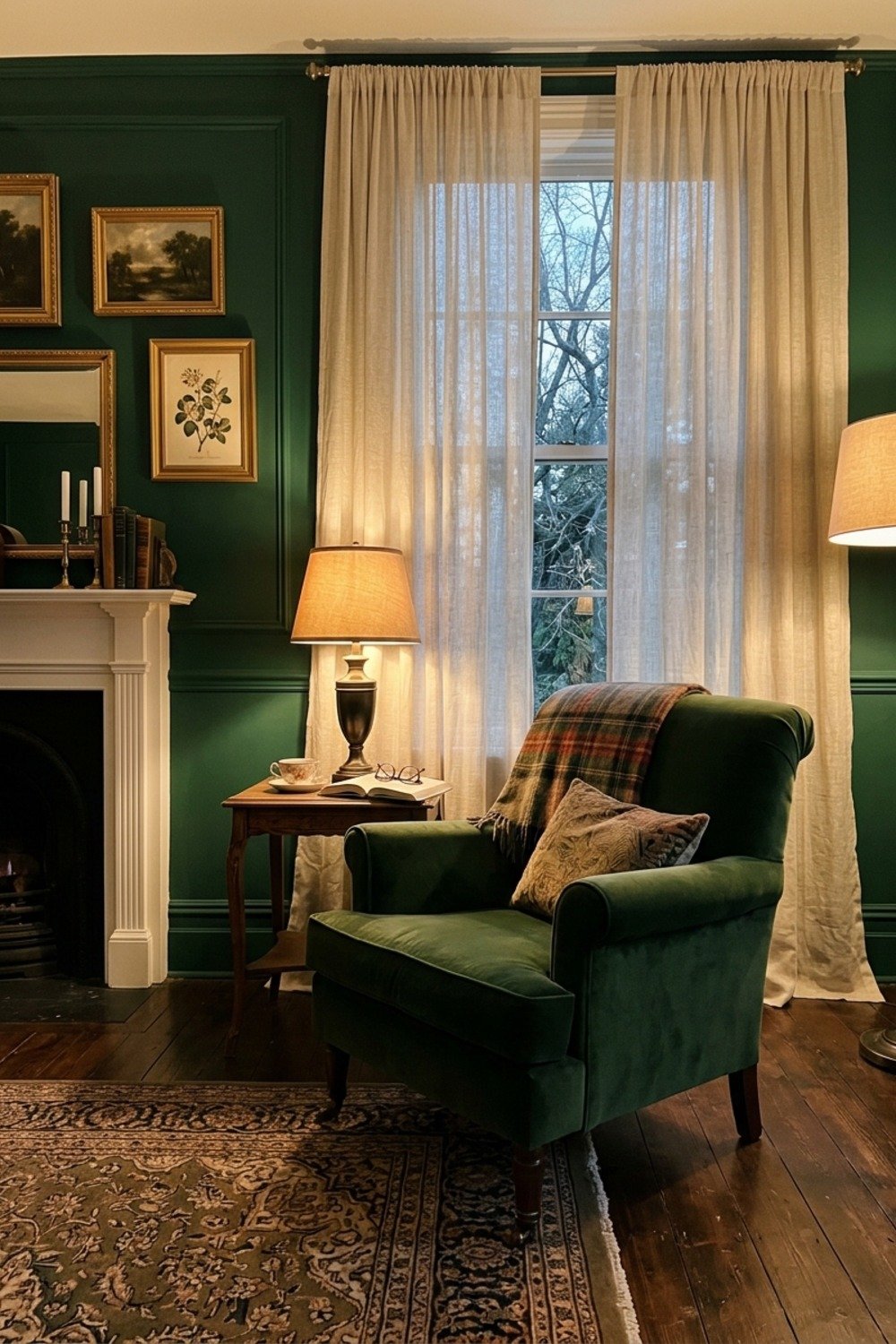
Oak floor, walnut table, cherry shelf, and a pine frame all fight each other. Two tones, such as light oak and a darker accent, give the eye a place to rest.
The rule helps when mixing inherited pieces with new ones. A quick fix is to unify finishes with a similar stain on the smaller items, or to paint one offending piece matte black.
27. Pull furniture off the walls
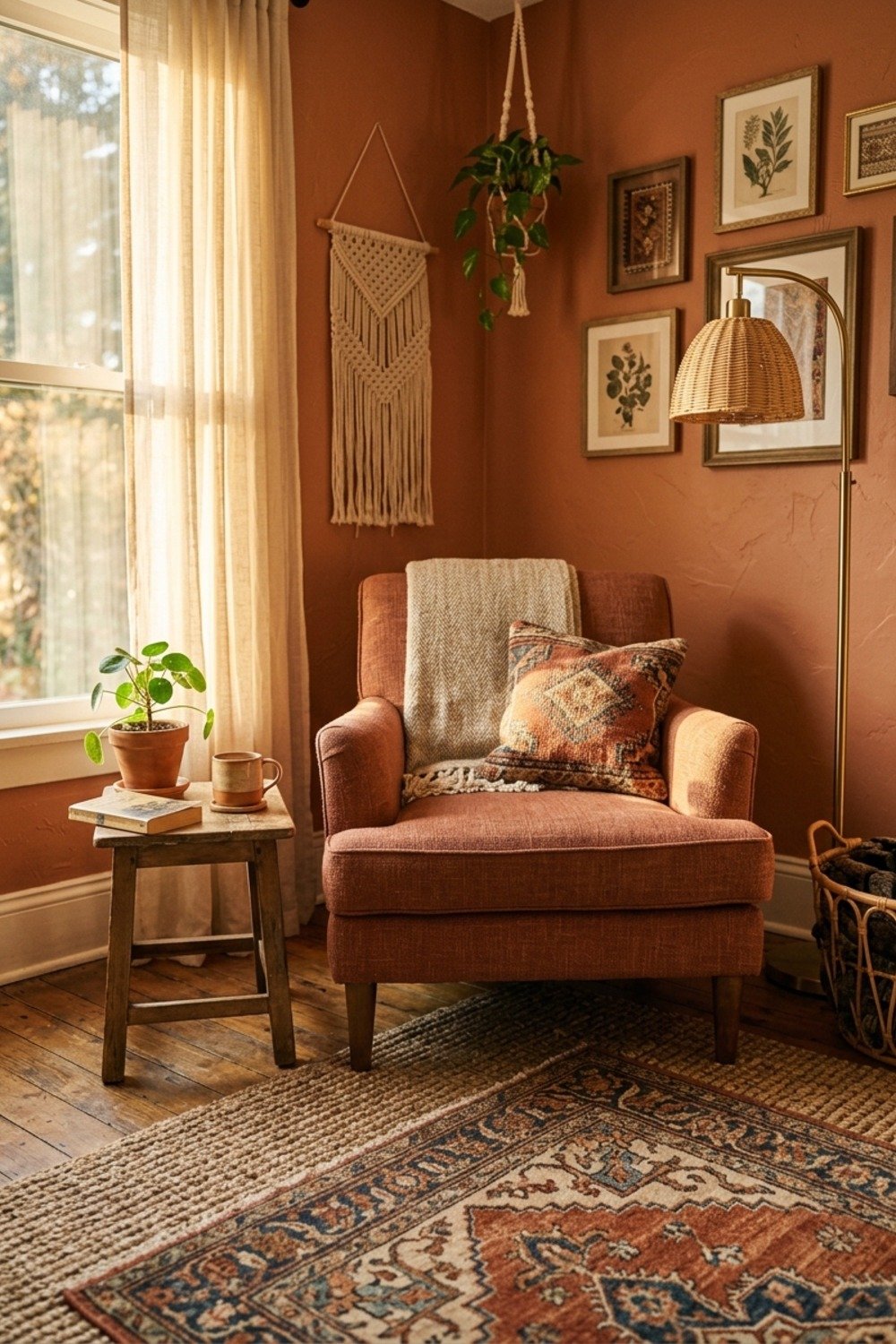
Pushing everything against the perimeter leaves an empty hole in the middle and a room that feels like a waiting area. Moving a chair 6 inches from the wall creates a shadow line and some depth.
This is the reverse of what instinct says. It works best in rooms wider than 11 feet; below that, floating is only worth doing with one piece, such as an accent chair.
28. A deep color on one wall
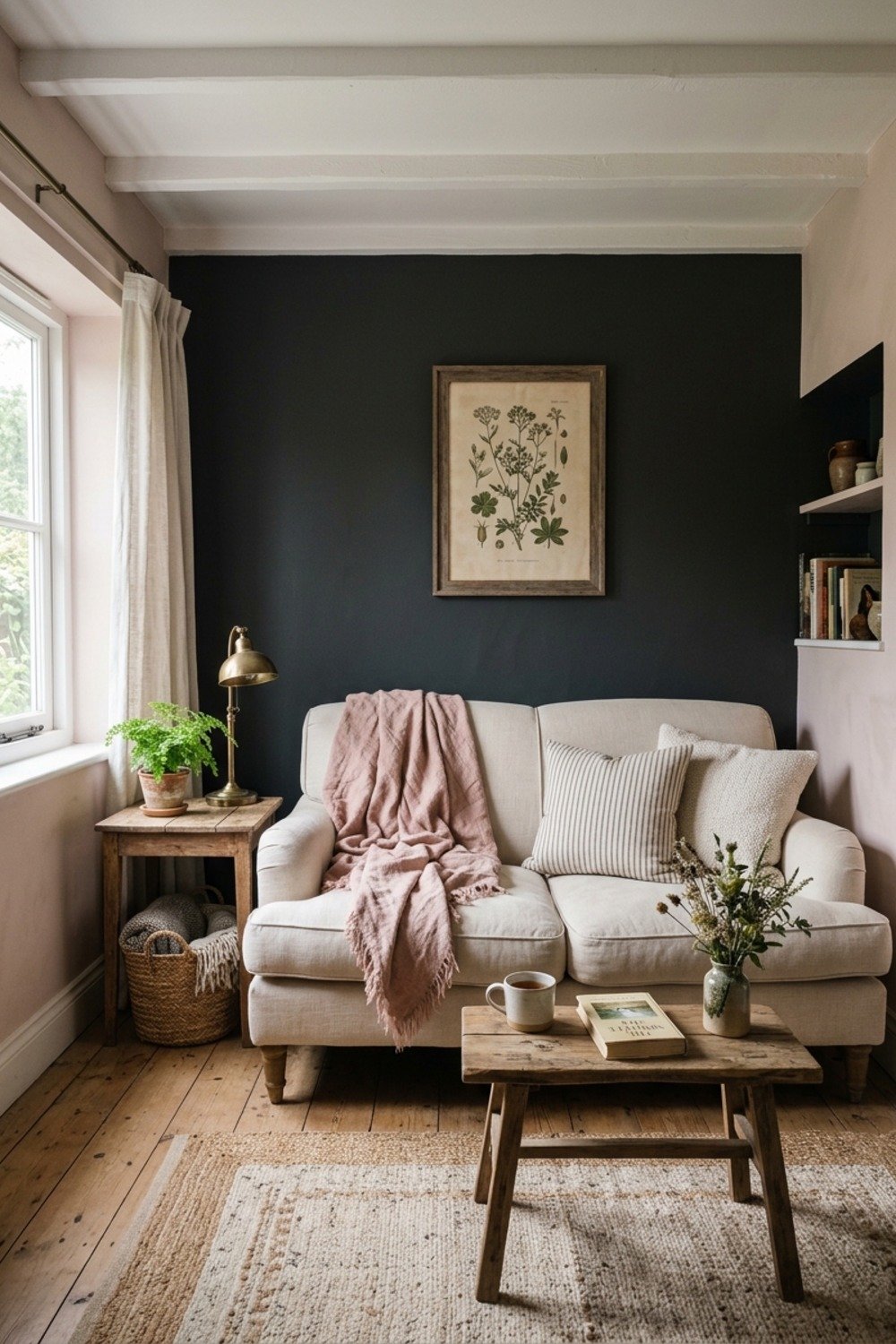
Dark paint, like Farrow & Ball’s Studio Green or a deep navy, blurs corners and makes a wall recede, so the room seems to go further back. It’s the opposite of the standard “go light” advice.
Choose the short wall opposite the entry. It needs good evening lamps to look rich, and it can feel gloomy in a basement without any natural light.
29. A window bench with drawers
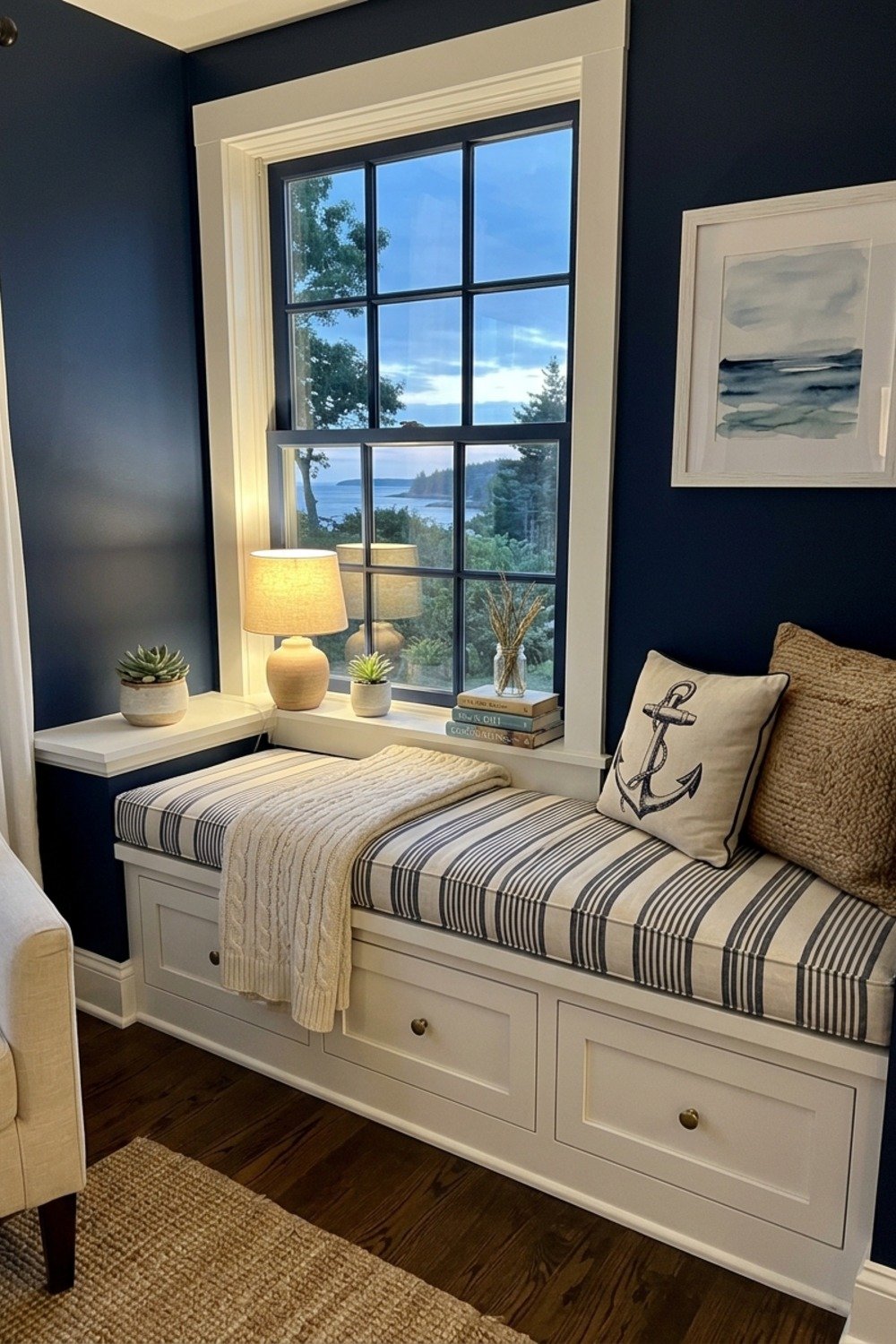
A 16-inch-deep bench under the window adds seating plus about 10 cubic feet of drawer storage for throws and board games. It also keeps the floor clear of extra chairs.
It suits living rooms with a wide window and no radiator beneath. Make the seat cushion 3 inches thick and removable so you can wash the cover, because that spot catches the most sun and the most spills.
30. One tall plant and one trailing plant
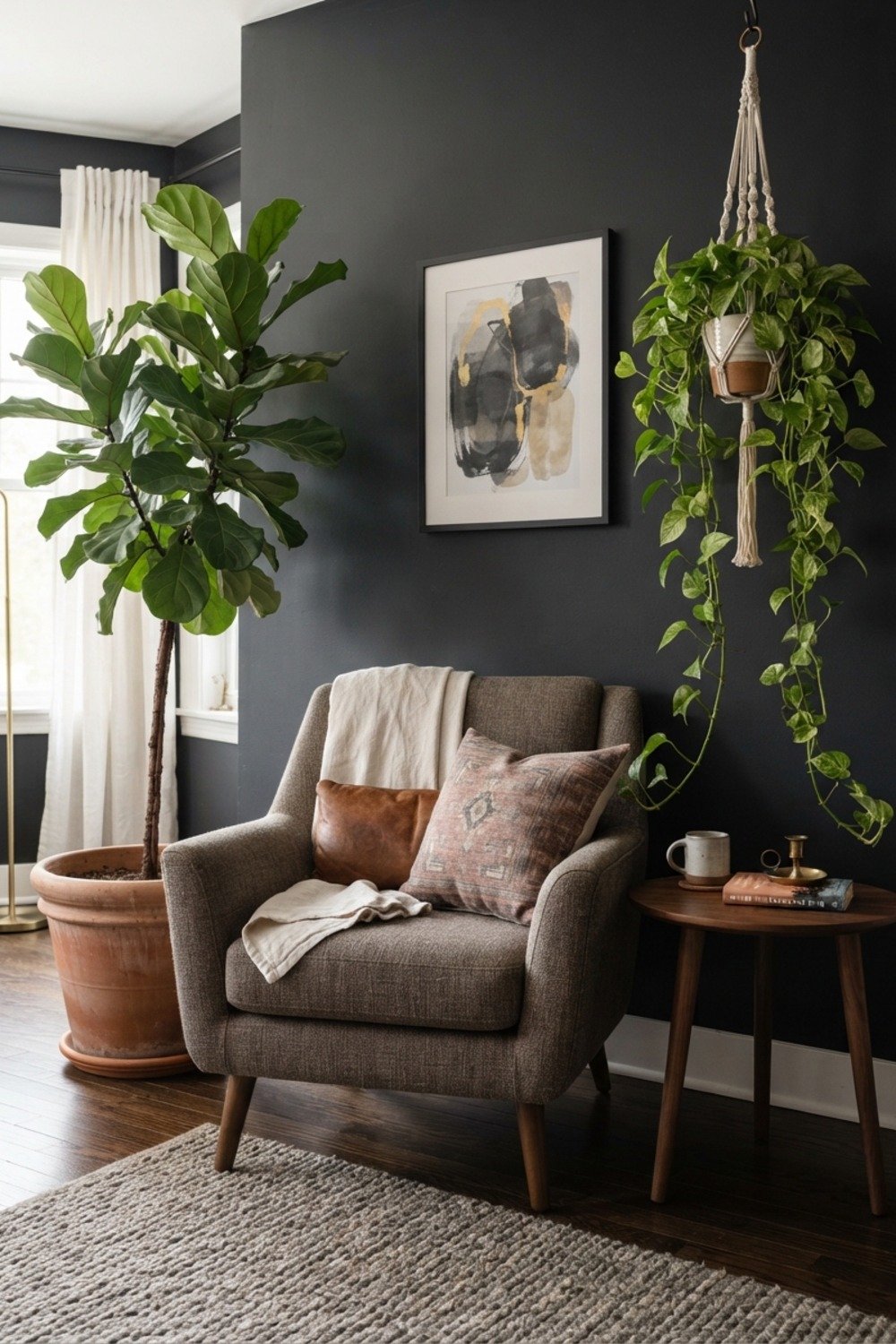
A 5-foot olive tree or fiddle-leaf fig in a corner draws the eye up, and a pothos spilling from a high shelf softens a hard line. Two plants at two heights beat six small pots on a sill.
Good for rooms with a south or east window. Check for drainage before buying a glazed pot, because a plant sitting in water rots within weeks and leaves a ring on hardwood.
Putting the space together
Thirty ideas in one room would be chaos. Pick five or six that attack your room’s biggest problem, then let the rest go.
A simple filter keeps the combination coherent:
- One dominant color on the walls and large pieces.
- Two materials that repeat, such as wood and linen.
- One contrast piece, like a black lamp or a deep green chair.
Mix heights as well as colors. A low sofa, a mid-height console, and a tall lamp give the eye a staircase to follow instead of a flat line.
Check the room at both noon and 8 p.m. Daylight hides clutter that lamplight exposes, and the reverse is also true.
It’s not foolproof. But it works.
Shopping guide
Spend where your body touches the furniture daily and where replacement is a hassle. Save where fashion moves fast.
- Invest: the sofa ($900-2,000), a good rug ($250-500), and lighting fixtures that are wired in.
- Mid-range: the coffee table, shelving, and curtains.
- Trend money: pillows, throws, vases, and art prints. Swap them each season at $10-40 apiece.
Bouclé and curvy sofas are a good example. They photograph beautifully, but a neutral linen or tight-weave sofa will still look right in ten years, and the loop texture catches on pet claws.
Bringing it together
The best 30 Small Living Room Ideas That Maximize Space share one trait: they give you back floor, wall, or light. Start with whichever problem bothers you most when you walk in at the end of the day.
Save or pin this list so it’s ready when you start shopping. Before buying anything, measure your room and tape the sofa outline on the floor, then try idea 1 or idea 7 first.
Frequently Asked Questions
How much does it cost to refresh a small living room?
A focused refresh runs about $300-800 if you handle paint, a larger rug, curtains, and lighting. Replacing the sofa pushes the total to $1,500 or more. Start with the cheapest changes, since rug size and curtain height often change a room more than a new sofa.
Which of these small living room ideas work in a rental?
Plug-in sconces, floor mirrors, large rugs, arc lamps, nesting tables, and curtains hung higher all leave walls untouched. Paint and built-ins usually need landlord approval. Leaning art and shelving on a floor-standing unit also keep the deposit safe.
How many furniture pieces fit in a 10-by-12 living room?
Four to six large pieces is the ceiling: a sofa, one or two chairs, a coffee or side table, and a media or storage unit. Keep 30-36 inches clear for main walking paths. More than that and the small living room ideas that maximize space stop working.
Should a small living room use light or dark colors?
Light, warm neutrals are the safe choice and reflect the most daylight. A single deep wall can work in a well-lit room, because dark colors blur corners. Avoid mixing several mid-tones, which makes the walls look muddy.