By the end of this guide, any bare wall in the house can hold a shelf that looks arranged instead of dumped on. Floating shelves styling is a repeatable method, and it changes with the room, the light and the wall behind it.
Below are 17 specific setups, organized by room, with measurements, materials and the mistakes that quietly ruin each one.
Floating shelves styling: Pro moves
1. A pair of 48-inch shelves above the sofa

Hang two shelves stacked 12 inches apart, with the lower one 8-10 inches above the sofa back. Any closer and heads bump it. Any higher and the wall reads as two disconnected pieces.
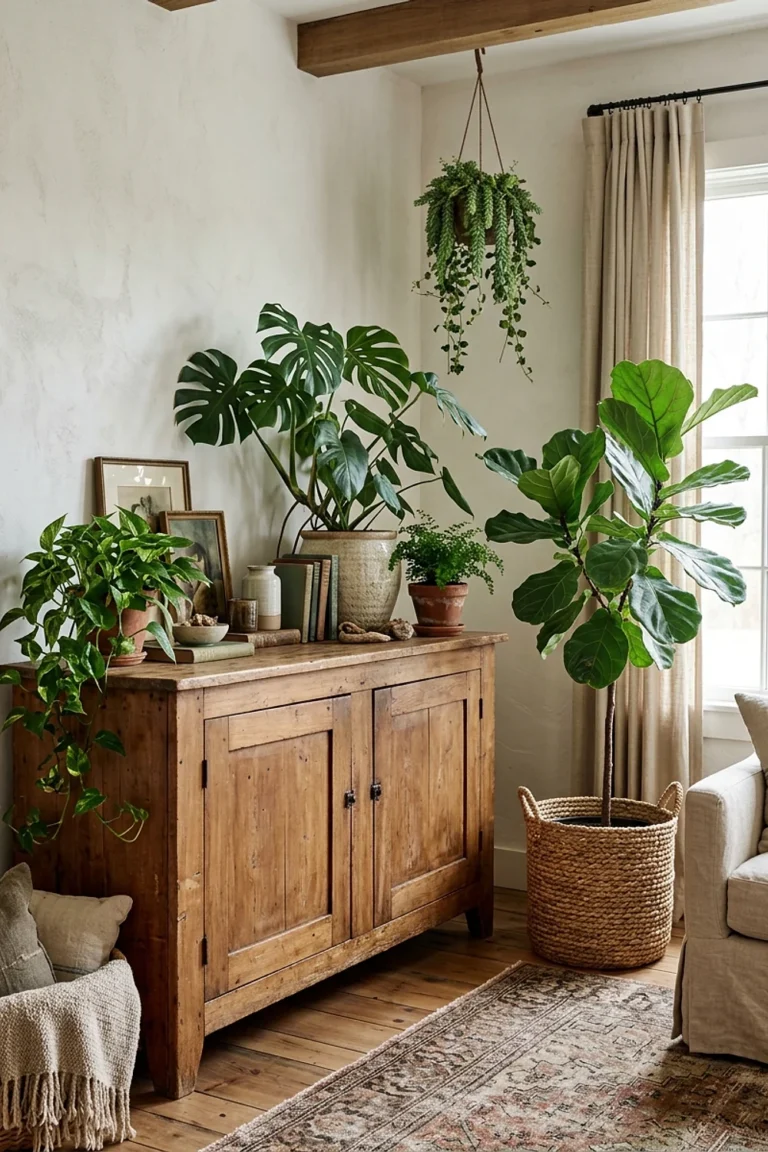
This suits a standard 84-inch sofa, since the shelf should run about two thirds of its width. Keep the heavy ceramics on the lower board and the airy items, like a trailing pothos, up top.
2. A 10-inch-deep shelf beside the TV
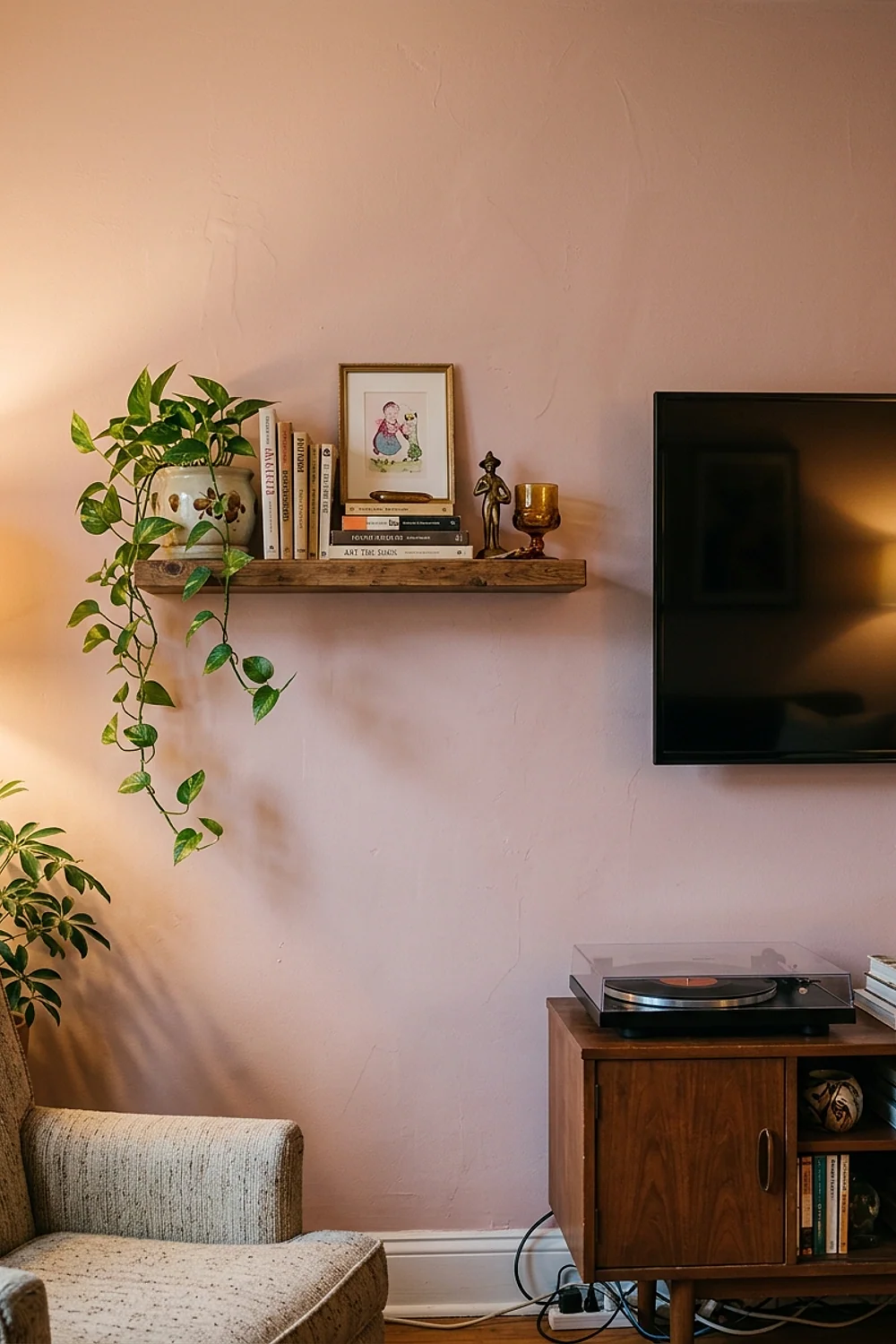
Media walls need shelves that hide clutter in plain sight. Put lidded baskets or low boxes on the bottom board for remotes and chargers, then a few books and one object above.
A TV wall works best when the shelf sits level with the screen’s midpoint, so the eye travels across instead of up. And don’t let the shelf end flush with the TV edge. Leave 6 inches of breathing room or it looks like the set is crowding it.
3. A single thick oak plank in a fireplace alcove
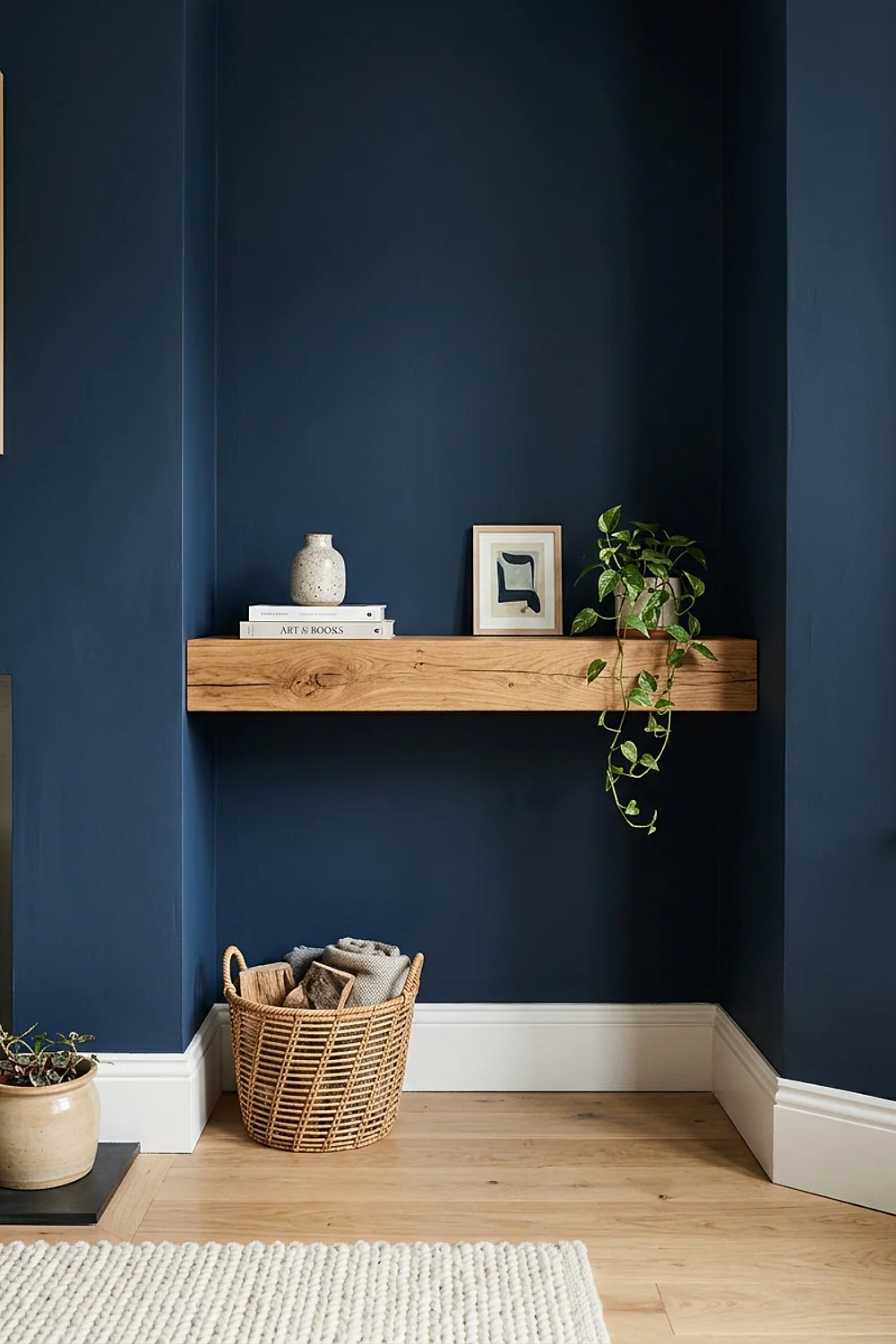
Alcoves look best with solid wood, 1.5 to 2 inches thick, which gives a chunky edge that matches the depth of the recess. Expect around $90 for a 36-inch oak board with hidden brackets. Thin veneered boards sag in a span that wide.
Oak grain catches the afternoon light beautifully, and it holds a stack of three or four hardbacks without bowing. Skip it if the alcove is narrower than 24 inches, because the proportions turn spindly.
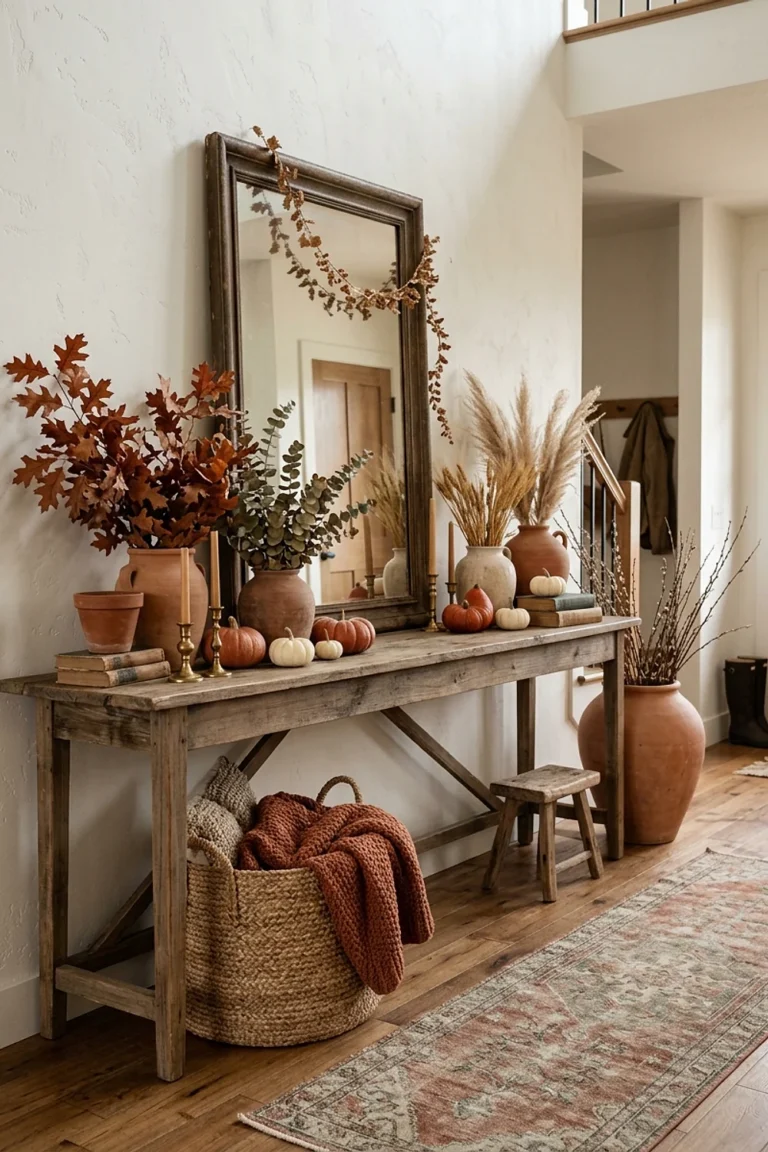
4. A 36-inch shelf over the entry console
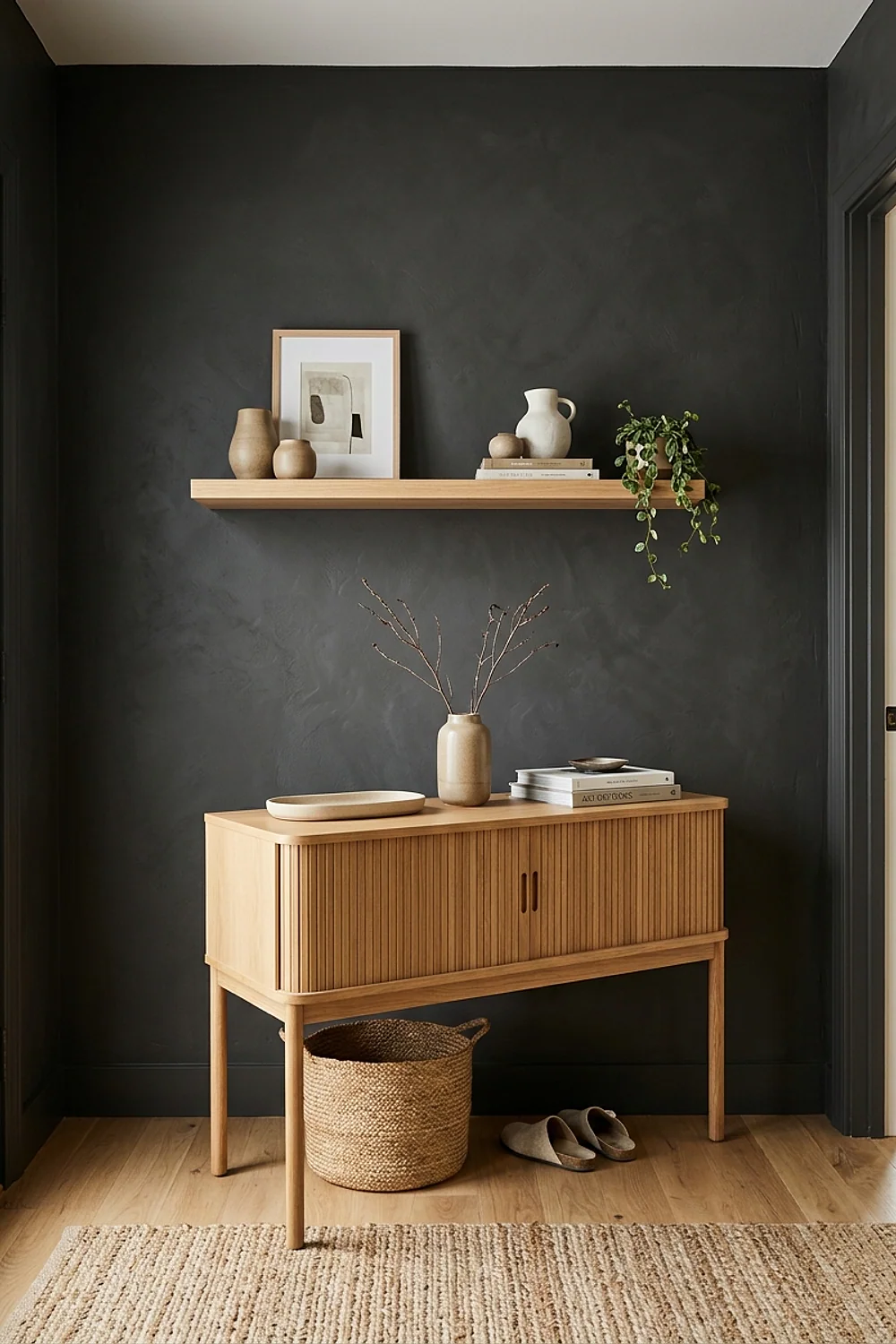
A short entryway needs a shelf that reads in two seconds. Choose one 36-inch board, hung 15-18 inches above the console, with a mirror leaning on it or a framed print behind.
Narrow halls under 36 inches wide want a shallow 6-inch depth so nobody catches a hip on it. The common mistake here is hanging it too high, which leaves a dead gap above the console.
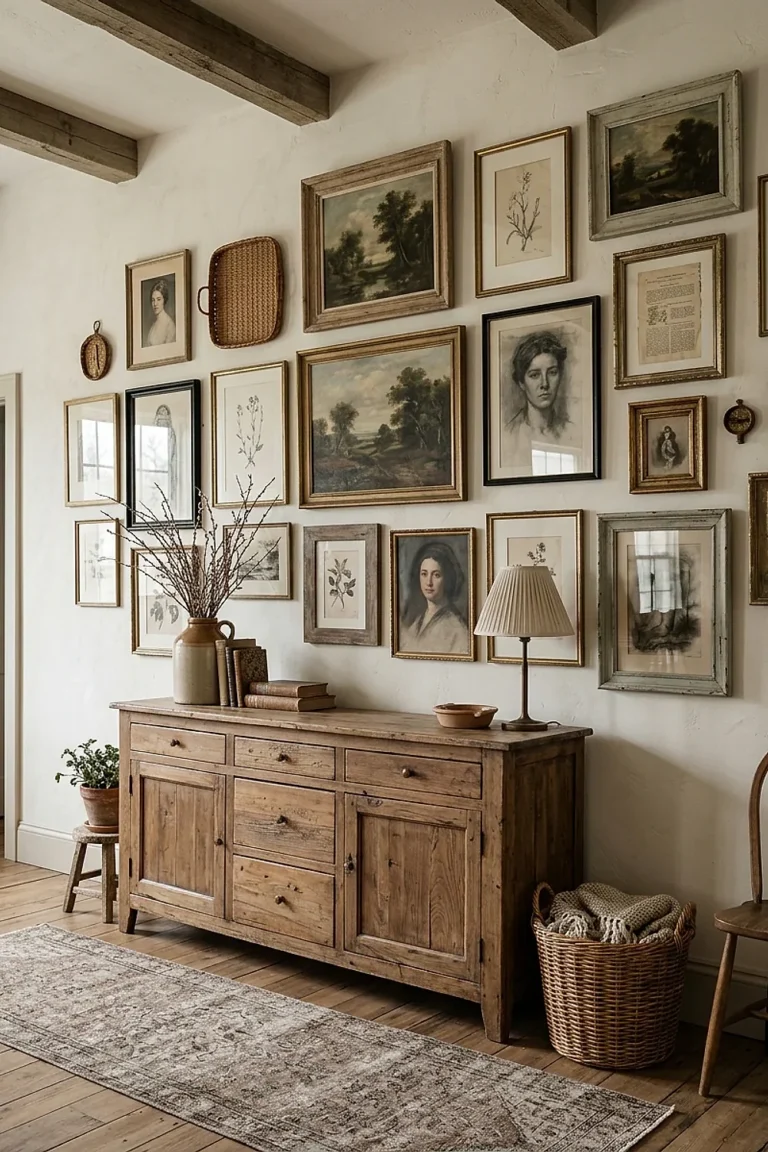
5. A picture ledge running the length of a hallway
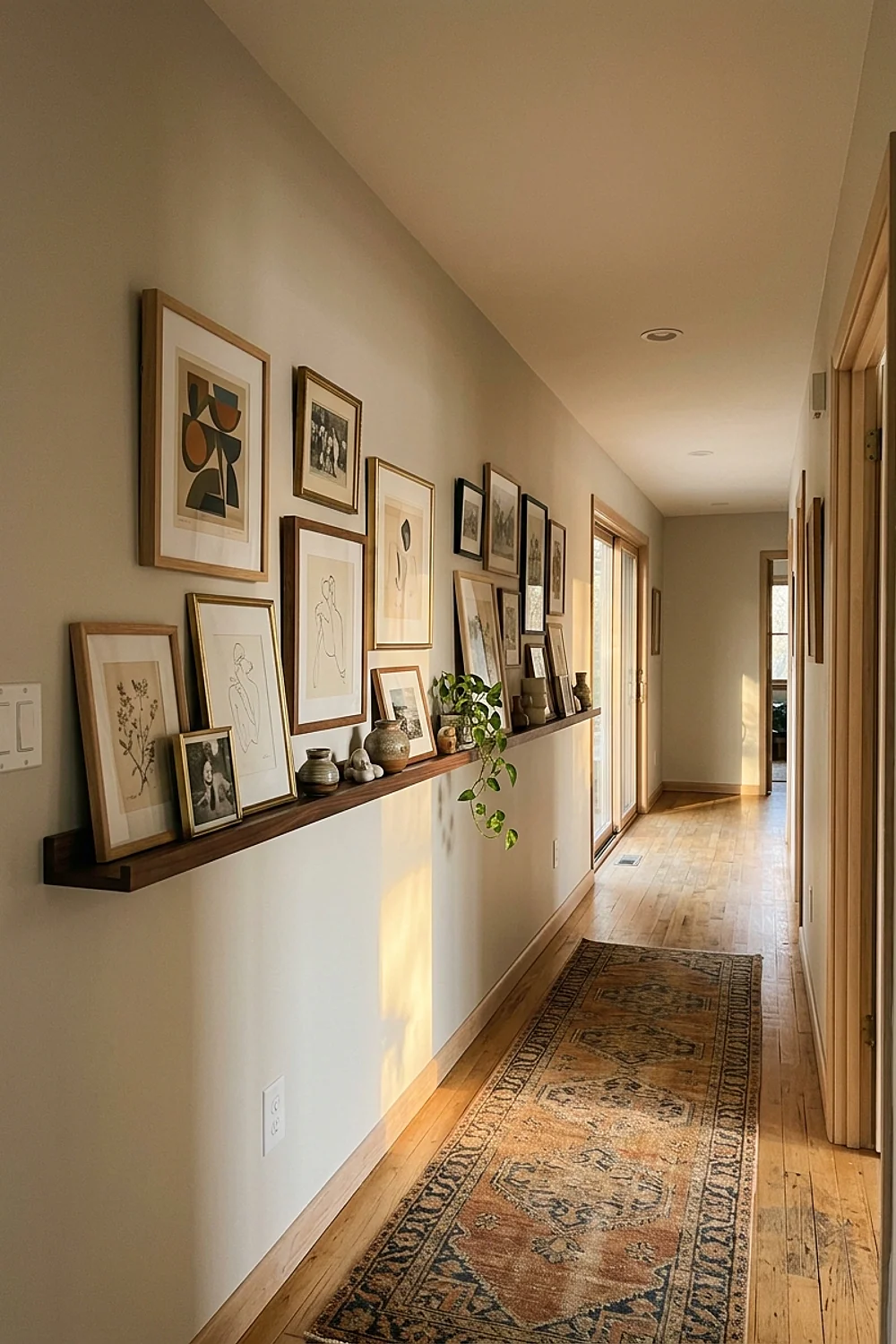
Ledges 3-4 inches deep let frames lean instead of hang, so swapping art takes ten seconds and zero drilling. Mix a 16×20 frame with two 8x10s and overlap them slightly, because an even row looks like a dentist’s waiting room.
This is the move for renters who change their minds often. Just keep the lowest edge at 54-60 inches off the floor, roughly eye level for most adults.
Small details, big impact
6. A long shelf behind the bed, 12 inches above the headboard
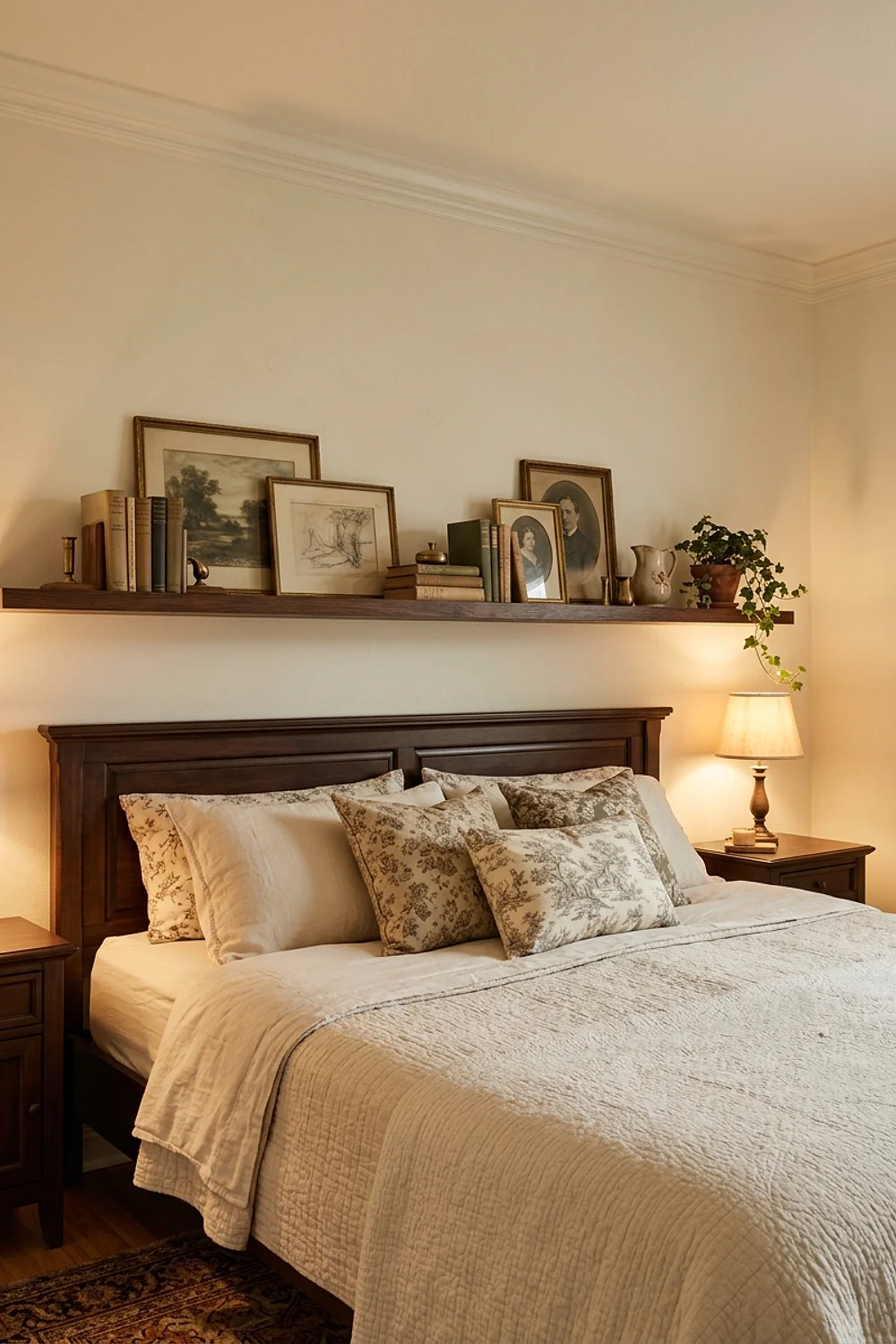
A shelf that skims over the headboard makes the bed feel anchored and the wall feel finished. Use a 60-inch board for a queen, and keep everything on it soft in weight and sound: small frames, a linen-wrapped candle, a single stem in a vase.
Nobody wants to wonder whether a heavy object might fall at 2 a.m. So stay away from glass and anything over a couple of pounds directly above a sleeping head.
7. Wall-mounted nightstand shelves in a deep green
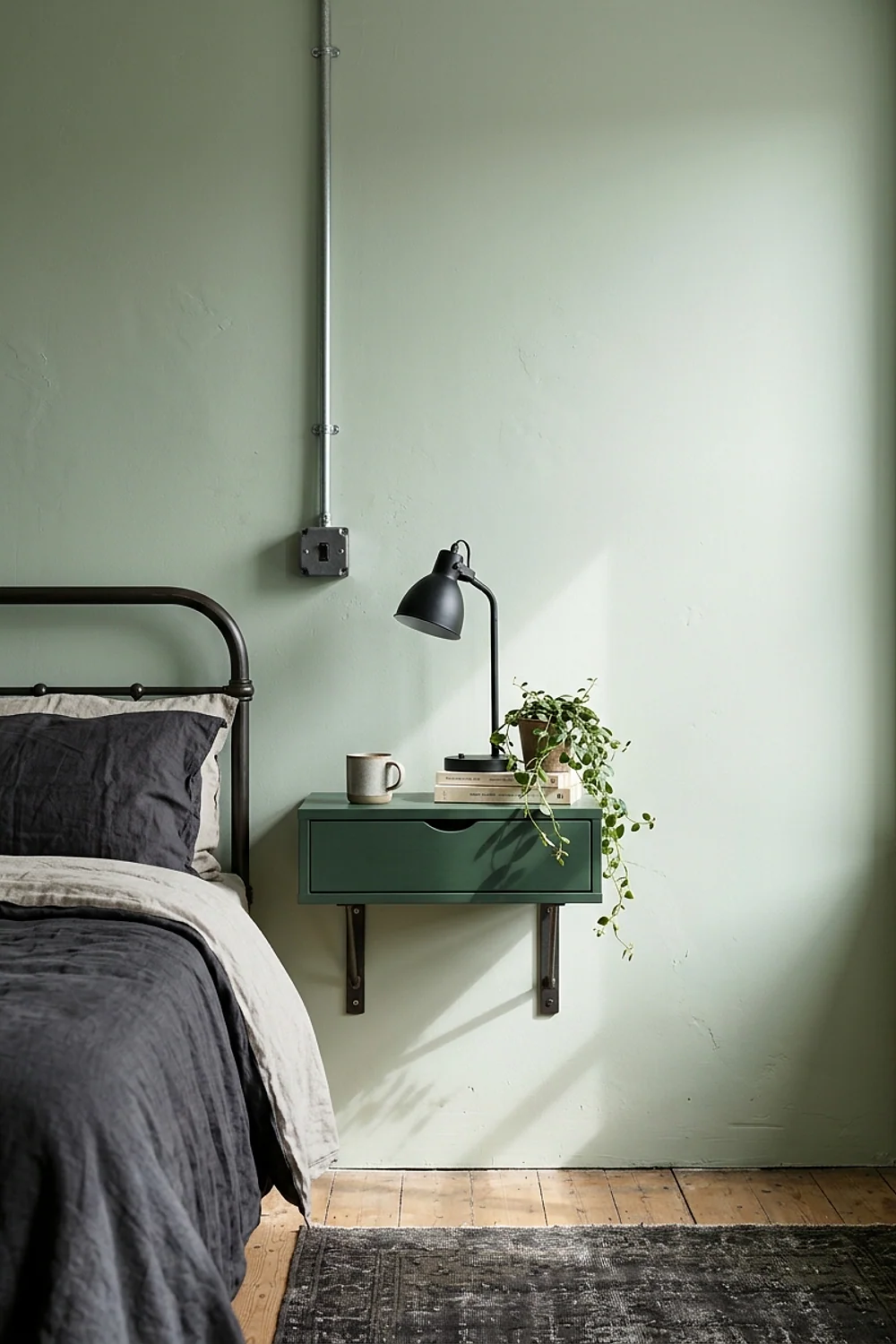
Two 18-inch shelves hung at mattress height free up the floor and make a small bedroom look larger. Painting them to match a deep wall color, such as a forest green, lets the shelf nearly disappear so the objects do the talking.
The depth should be 8-9 inches, enough for a lamp base and a phone. Add a small cable clip behind the shelf, and the cord won’t dangle in view.
8. The shelf above the toilet, hung higher than feels natural
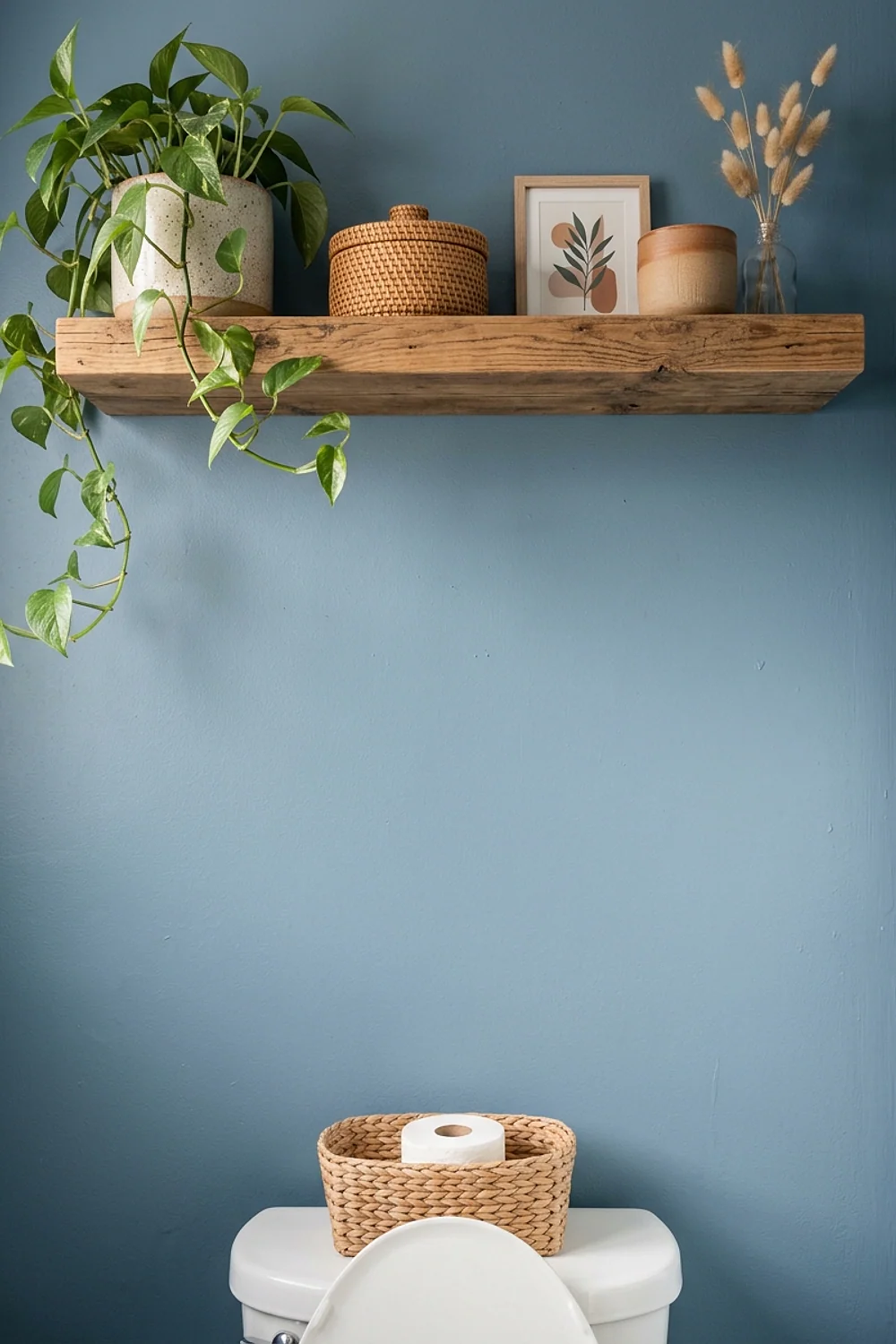
Most people hang this one too low, which makes the shelf feel like it’s leaning over you. Set the bottom edge 24-28 inches above the tank, and stack only items that are light and forgiving, like rolled hand towels and a small plant.
A bathroom shelf deeper than 7 inches also cramps the person sitting underneath. If the wall is tiled, drill with a masonry bit and use a proper anchor, not a plastic plug.
9. A glass-and-brass shelf beside the vanity mirror
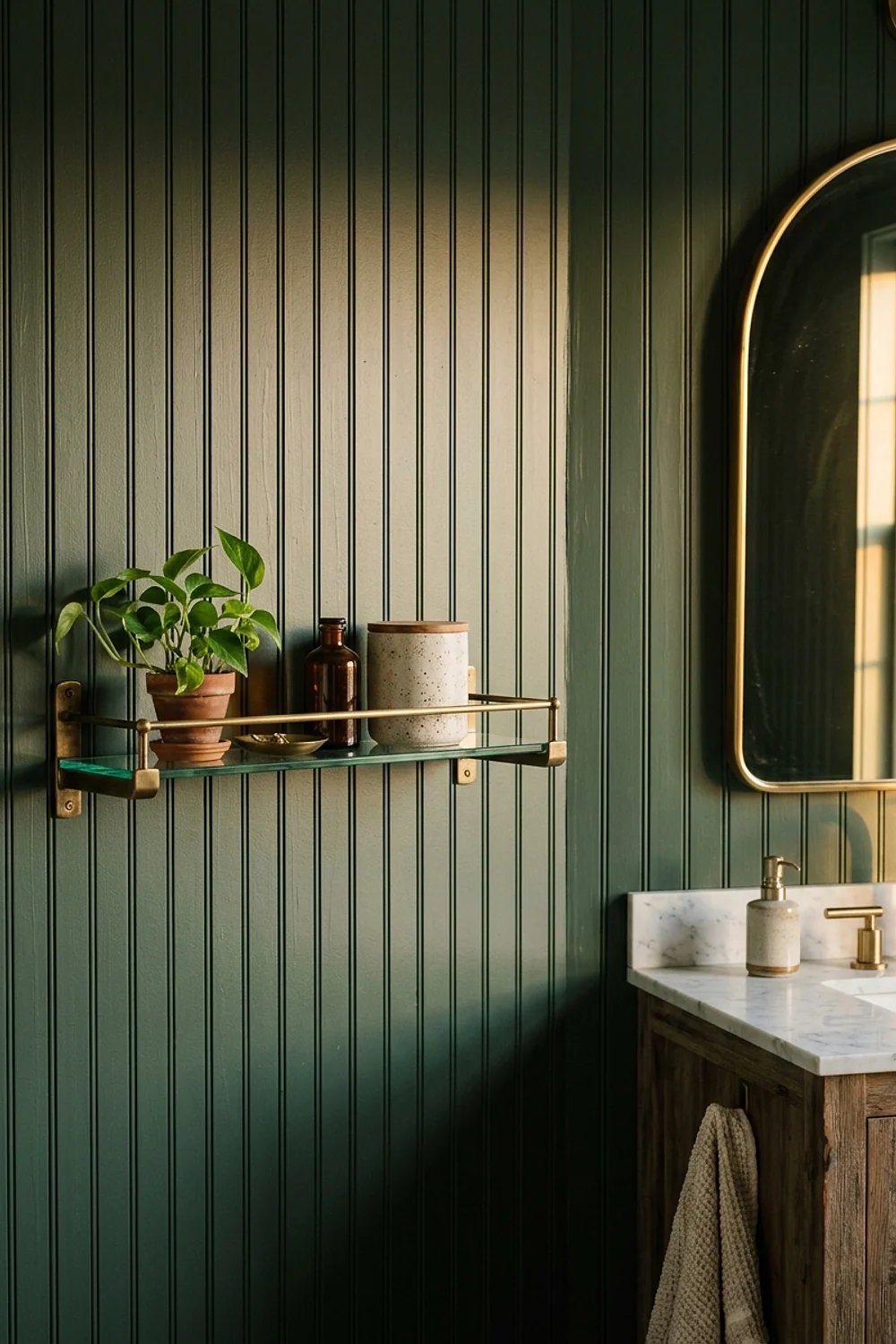
On a gray November afternoon around 4 p.m., a bathroom’s overhead bulb does little for the face. A narrow 5-inch shelf next to the mirror, holding a small lamp or battery-operated light, softens that glare right where it’s needed.
Moisture matters here, so pick sealed wood, metal or glass over raw pine. Keep the objects waterproof, with glass jars and ceramic trays beating anything cardboard or paper.
10. Open shelving with rolled towels near the tub

A 30-inch shelf at shoulder height turns towel storage into a feature. Roll bath towels tightly and stack them in a pyramid of three, with a basket of washcloths beside them.
This works best in bathrooms with at least 36 inches of clear wall near the tub. Wet hands should reach the stack without stretching, so keep the shelf within arm’s length of the shower door.
Styling tips
11. A shelf spanning the kitchen window
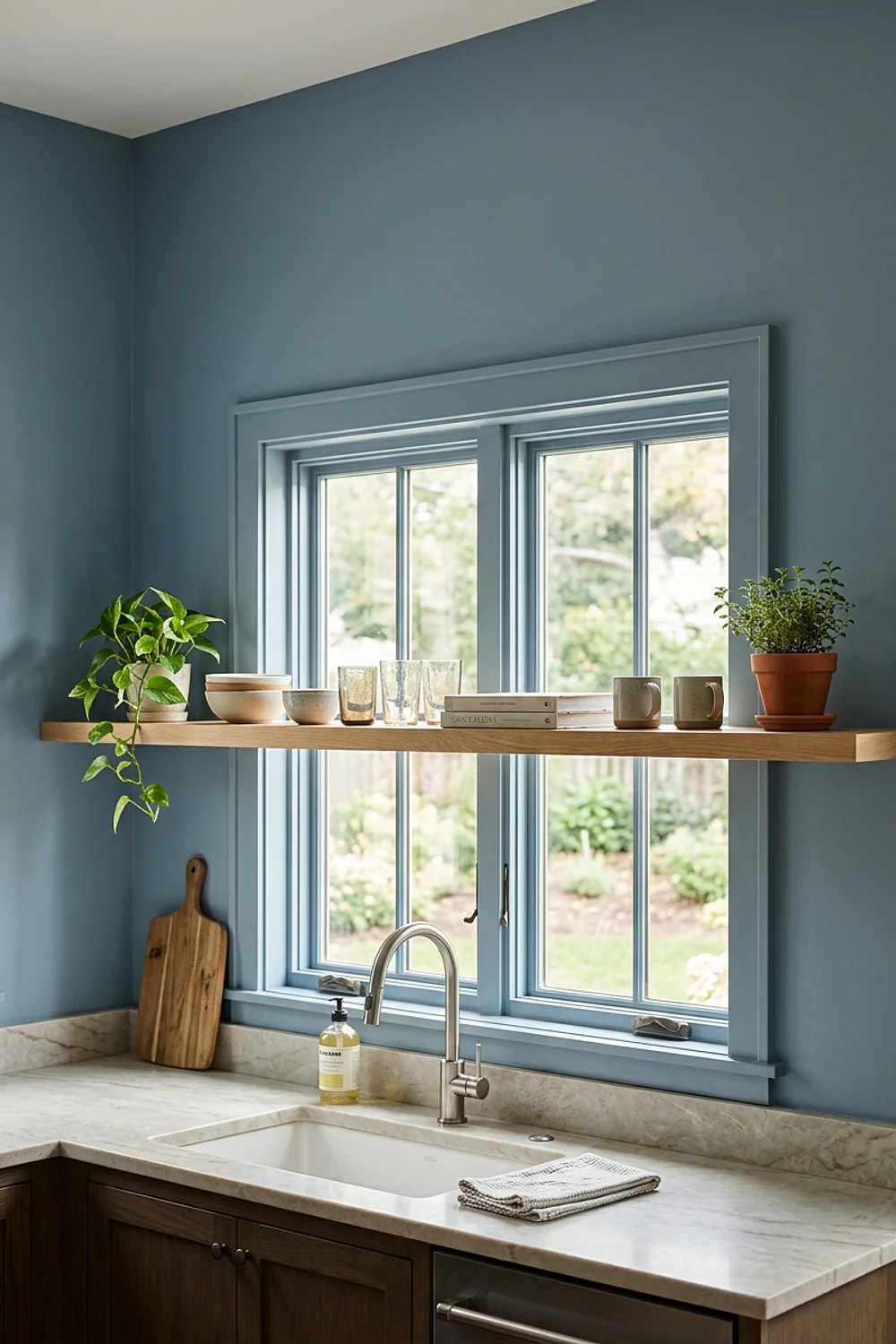
Hang one 10-inch board 4 inches above the window frame, or inside the opening if the casing is deep. Herbs in small terracotta pots catch the morning light and make the sill feel like part of the room.
The layout works in galley kitchens where upper cabinets feel heavy. Keep the span within the width of the sink so it reads as one deliberate unit.
12. Two shelves beside the range, stocked with daily use items
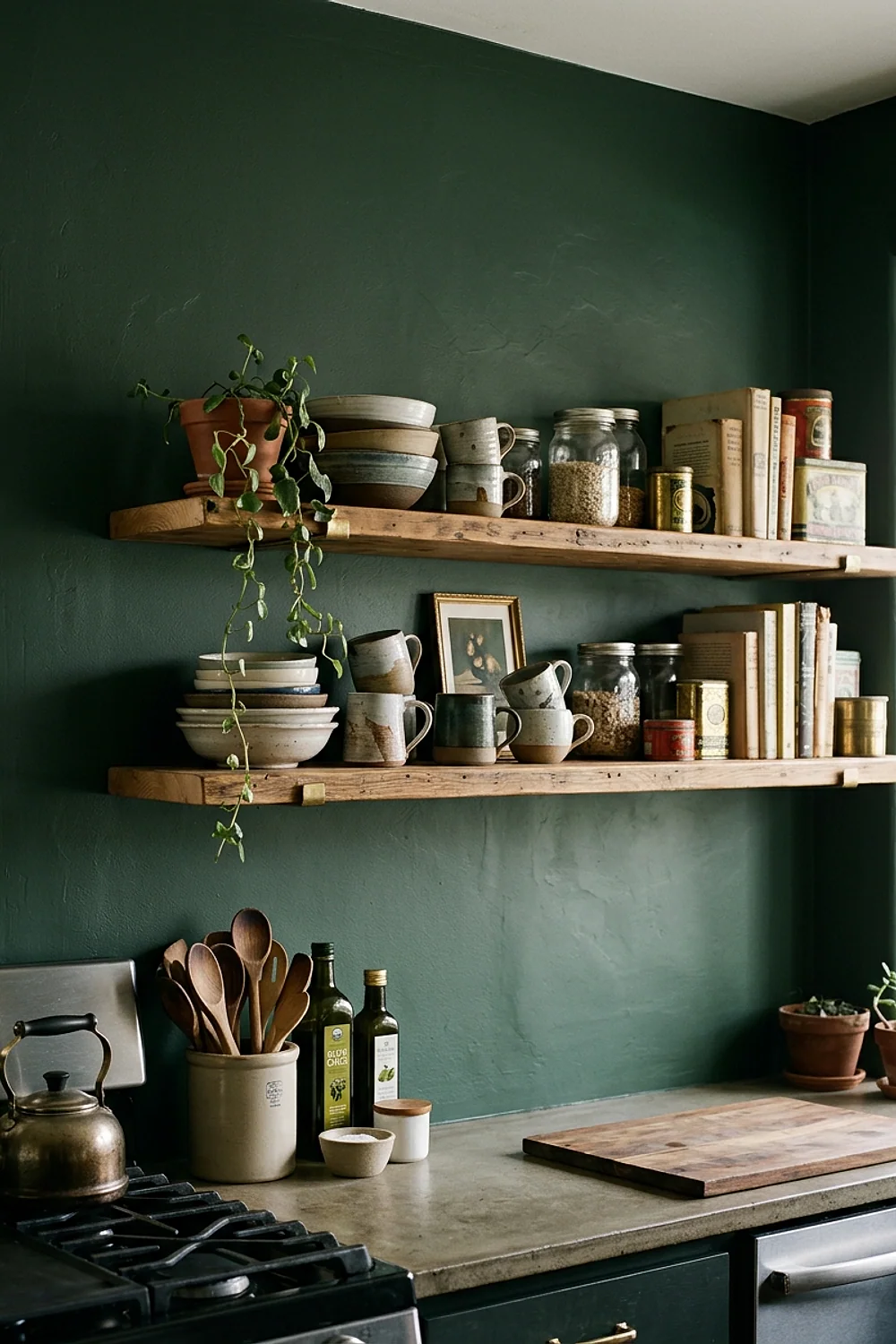
Grease travels farther than people expect, so hang open shelving at least 24 inches to the side of the burners, not above them. Store only what gets washed often: everyday plates, a few mugs, a stack of bowls.
Around $60 buys a 36-inch painted-steel shelf that wipes clean in seconds. Wood with a matte finish will stain, so a hardwearing satin finish is worth the upgrade.
13. A walnut desk shelf, 9 inches deep and bracket-free

Hidden-bracket walnut at 1.75 inches thick looks like it’s growing out of the wall, and it carries a monitor riser or a row of reference books. Pricey at about $140 for 48 inches, but it lasts decades.
Hang it 14-16 inches above the desktop so the lowest items are reachable without standing. Plywood with a walnut veneer saves money, though the exposed edge is always visible.
14. A low 24-inch shelf in a child’s room
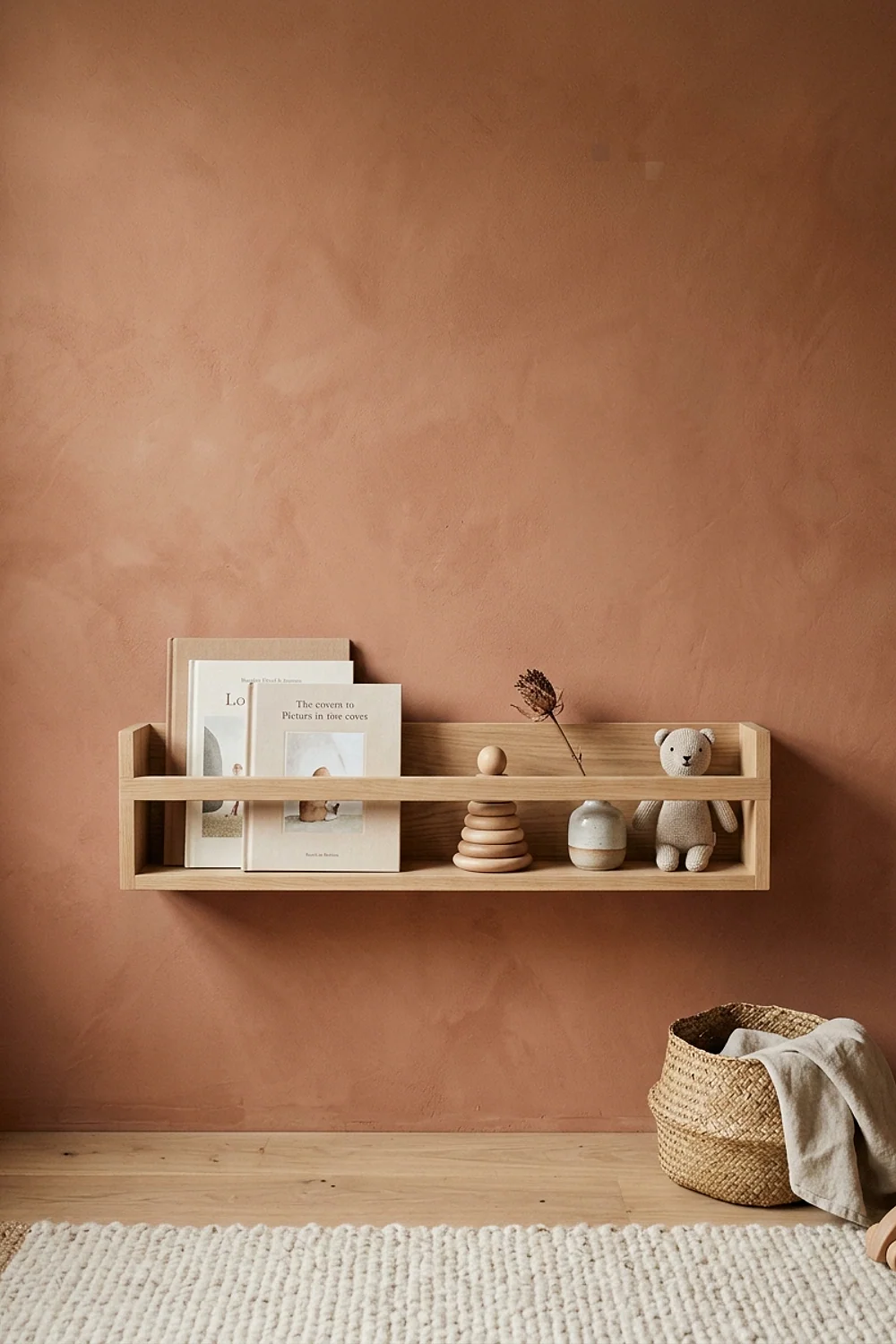
Place the board 36-40 inches off the floor for a preschooler, with the spines of picture books facing out so covers are visible. Kids choose what they can see, and a cover beats a spine every time.
Round the corners and anchor into studs, not drywall alone. Rooms change fast, so pick a shelf that can move up 12 inches in two years.
15. A dining-room shelf styled with a tall-low-medium rhythm
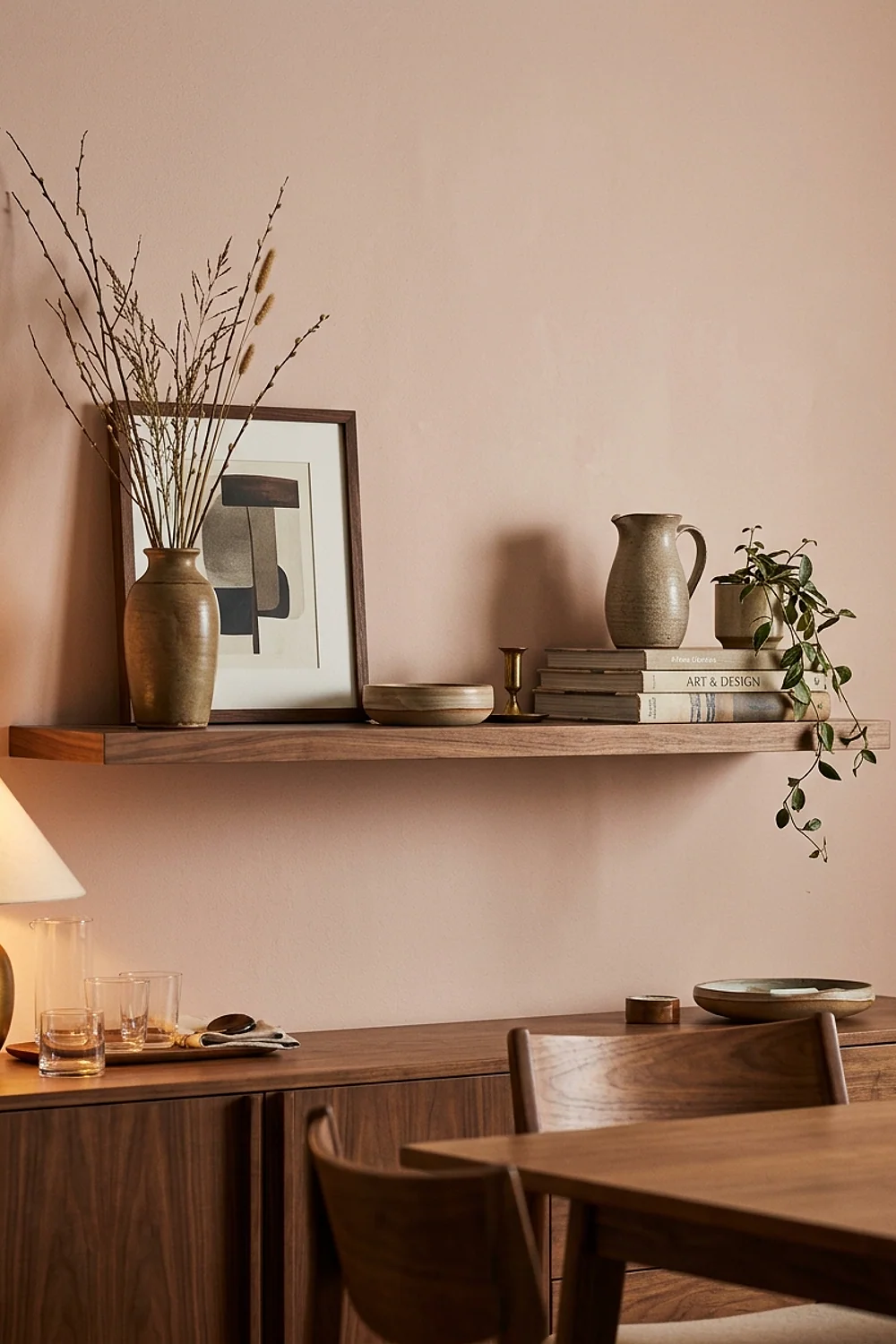
Above a sideboard, a single 60-inch shelf can carry three groupings: a tall vase on the left, a stack of plates in the center, and a low bowl on the right. Offset them so the eye zigzags instead of reading symmetry.
Honestly, the rule of three still beats everything else written about shelves, and it’s old advice for a reason. Pair a glossy surface, like a ceramic, with a matte one, like unglazed stoneware.
16. A reading-nook shelf angled beside an armchair
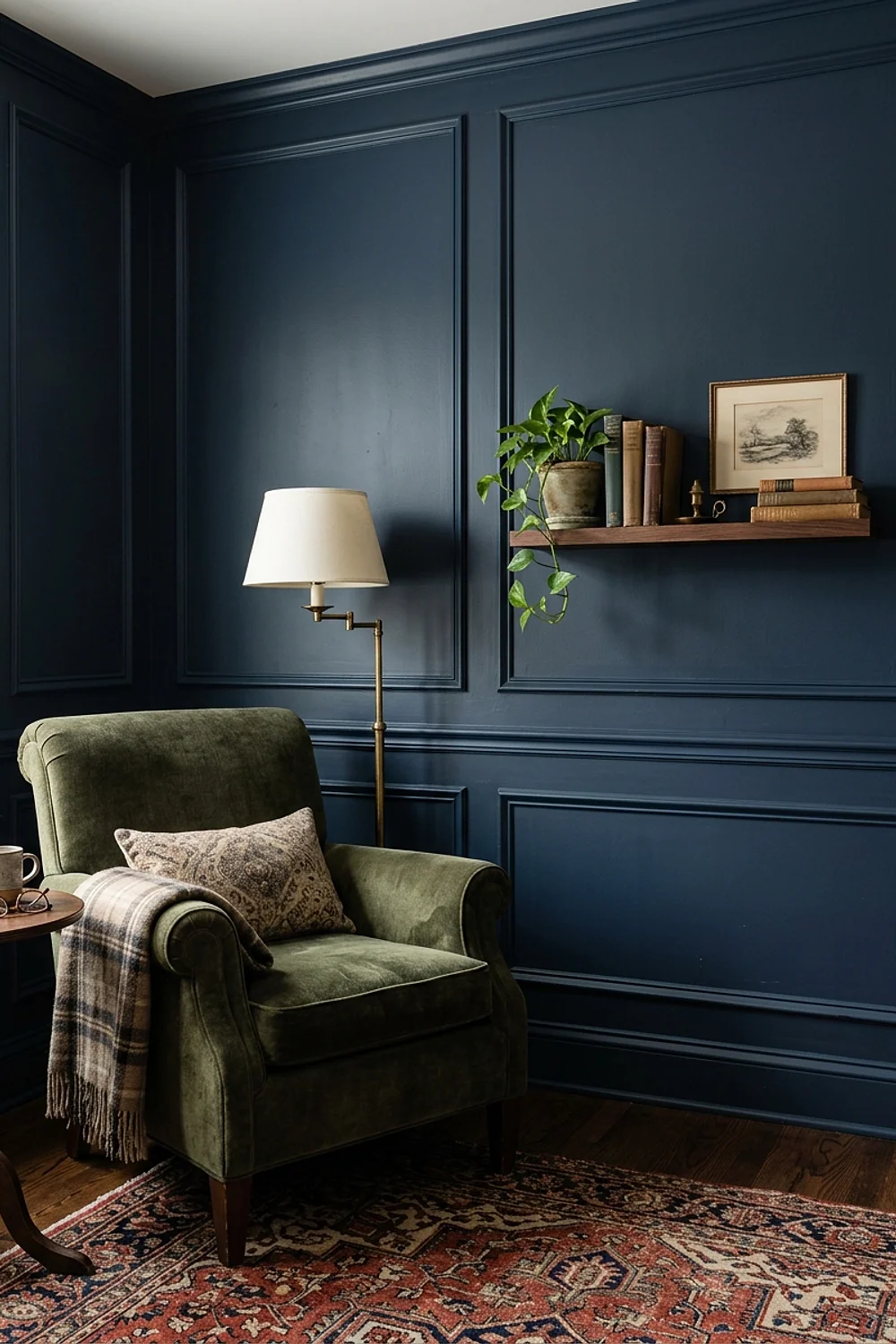
A 20-inch shelf hung at seated shoulder height keeps tea, a lamp and the next book within reach without needing a side table. The right depth is 7-8 inches, enough for a mug and a paperback without feeling bulky.
Soft materials make the corner feel inviting, so layer a small knit throw on the chair and keep the shelf objects tactile, like a wooden bowl or a smooth stone.
17. A painted shelf in the laundry or mudroom
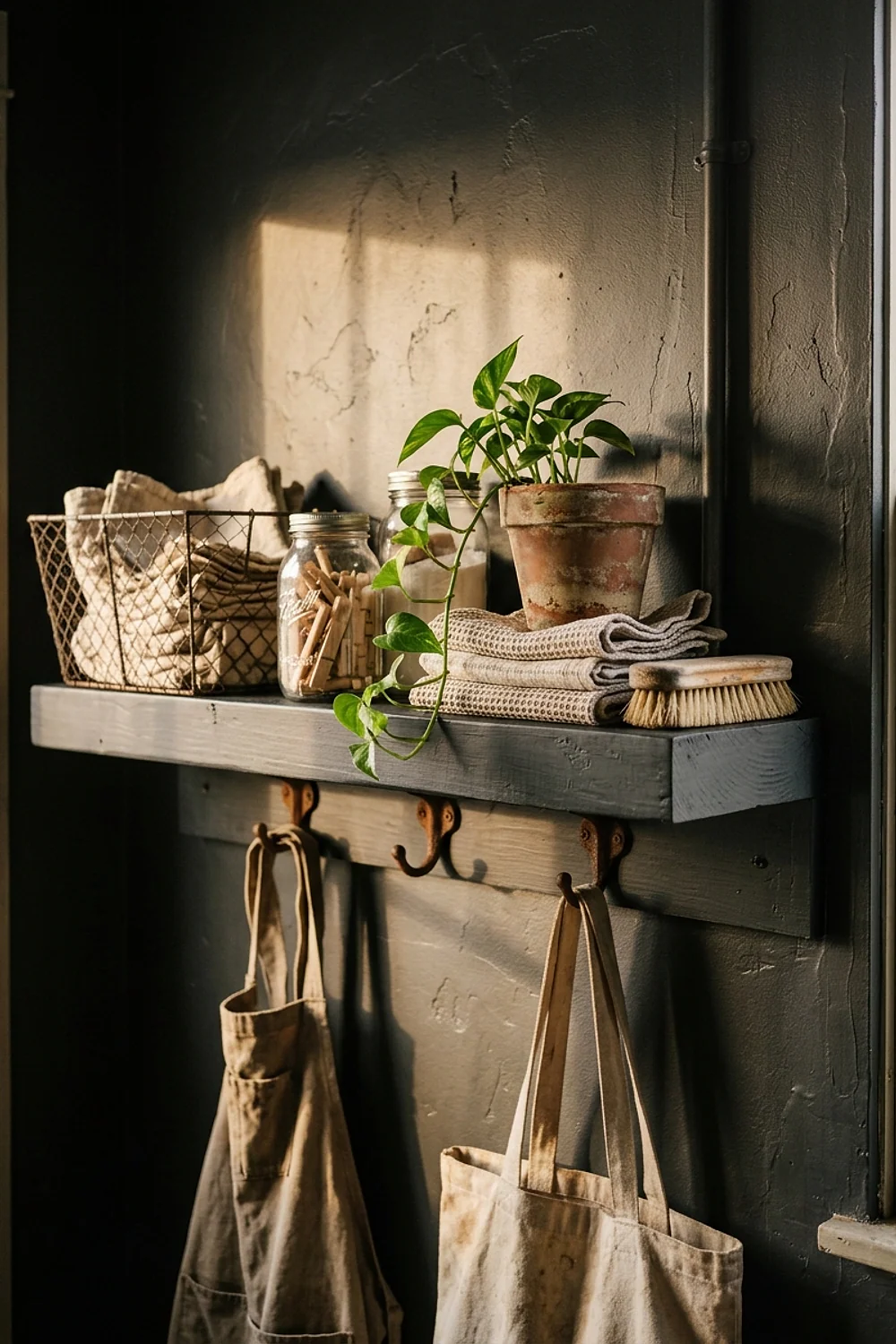
A deep navy or terracotta shelf against a pale wall gives a utility room some personality for the price of a sample pot. Use a 48-inch board at 10 inches deep for baskets, detergent in decanted jars and a small plant.
Choose semi-gloss paint so the surface survives damp hands and spilled soap. Keep the jars matching in height to avoid a cluttered row.
More pro moves
Floating shelves styling goes wrong most often at the tape measure, not the decor. These numbers cover most situations:
- Shelf length should be two thirds the width of the furniture beneath it.
- Leave 10-12 inches of vertical clearance between stacked shelves.
- Display depth of 8-10 inches beats 12, because objects get lost at the back.
- Anchor into studs, spaced 16 inches apart in most walls.
Is a shelf that’s 70 percent full better than one that’s 100 percent full? Exactly. Empty space around each group is what lets the objects read as chosen.
Use painter’s tape to mark the outline on the wall for a full day before drilling. Walk past it a few times and the wrong height becomes obvious.
Making it flow between rooms
Floating shelves styling feels cohesive when two or three elements repeat from room to room. Pick one wood tone, one metal finish and one color accent, then carry them through every shelf in the house.
Look, matching everything isn’t the goal. A walnut shelf in the office and an oak one in the living room clash only when the undertones fight, so keep warm woods with warm woods.
Repeat object types too. A small trailing plant, a stack of books and one ceramic piece show up in every room, but in a different arrangement each time.
What went wrong
Floating shelves styling falls apart when every board gets the same treatment. Watch for these:
- Lining objects up in a row like a shop display.
- Using only small items, which read as visual noise from across a room.
- Ignoring weight limits, since drywall anchors alone hold only about 25 pounds.
- Hanging shelves at different heights on the same wall without a reason.
Counterintuitively, a deeper shelf is rarely better for display, because depth swallows the smaller pieces. Stay under 10 inches and the styling gets easier.
Bring it all together
Floating shelves styling rewards patience: measure, mock up with tape, hang, then edit down to the objects that earn their spot. Every room above uses the same logic, with the dimensions changing to suit the wall.
Save or pin this list so it’s ready when the drill comes out, and start with one shelf, the sofa wall or the entry, after measuring the width of the furniture beneath it.
Frequently Asked Questions
How high should floating shelves be hung?
Above furniture, hang them 8-12 inches higher than the top edge. On an open wall, center the display zone around 57-60 inches off the floor, which is eye level for most adults. Floating shelves styling looks best when the lowest board is easy to reach.
How much weight can floating shelves hold?
Into studs with solid steel hardware, a 36-inch shelf can hold 30-50 pounds. Into drywall with plastic anchors, plan for no more than 15-25 pounds. Heavy books and ceramics belong near a stud, and lighter pieces can go at the ends.
Can floating shelves work in a rental?
Yes, with a few small screw holes that fill easily with spackle when the lease ends. Picture ledges and lightweight shelves are the most forgiving. For renters, floating shelves styling still works with minimal drilling and no damage to the wall.
How many items should go on one shelf?
Three to five groupings per 48-inch shelf is plenty. Mix heights, with one tall piece, one medium and one low, and leave a few inches of empty board between groups.