A single linear foot of hardcover books weighs roughly 20 pounds, which is why drilled-in brackets are the usual answer and a renter’s headache. These 33 Small Home Library Ideas skip the drill entirely and still hold a few hundred books without a hint of sag.
On a rainy Sunday in October, a corner with a lamp, a chair, and a leaning shelf can feel like a reading room in a country house. Everything below lifts off, peels away, or rolls out the door on move-out day.
33 Small Home Library Ideas: Design inspiration and ideas
Books need a home before anything else does, so the first seven ideas are all about shelving that stands on its own two feet.
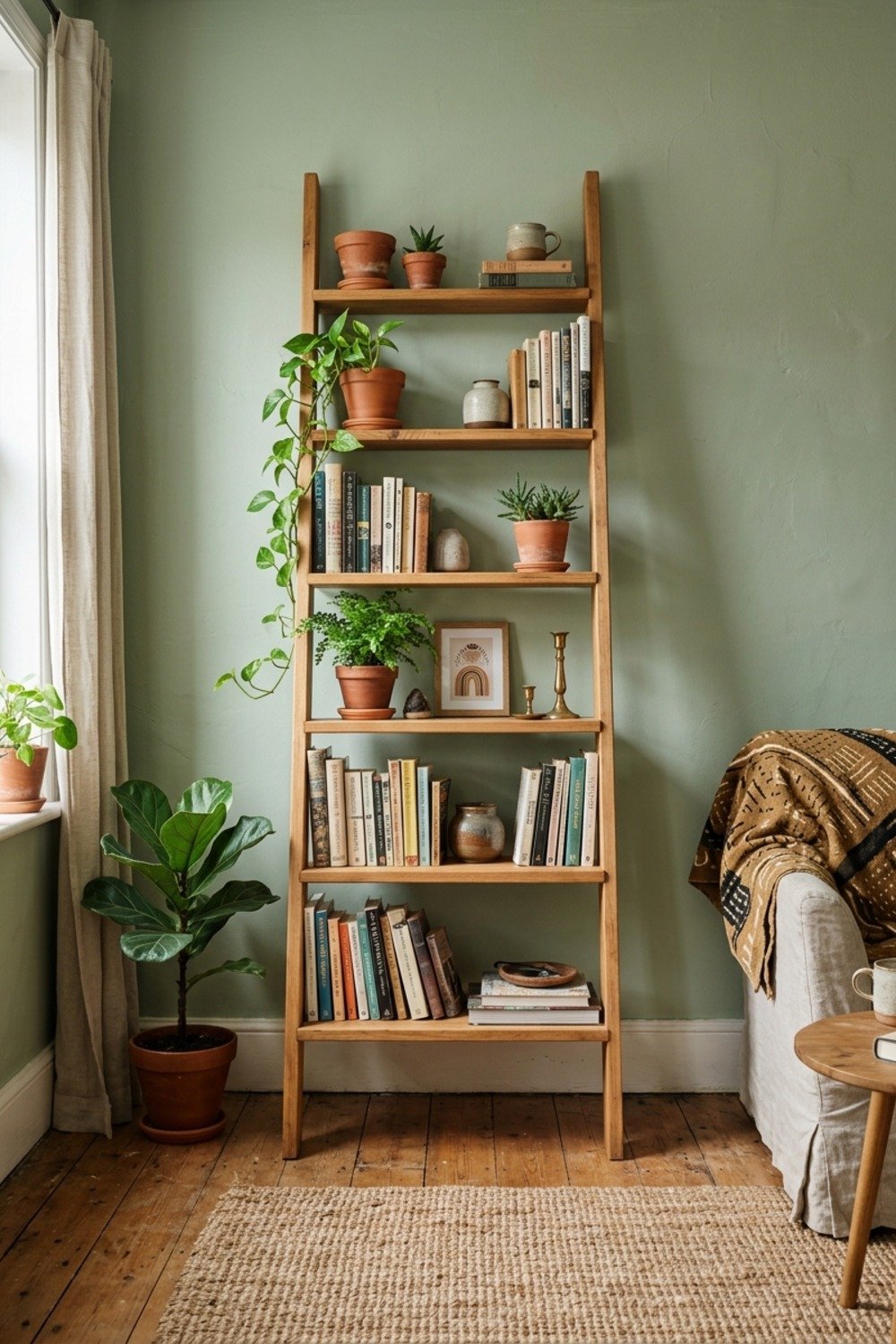
1. Lean a ladder shelf against the wall
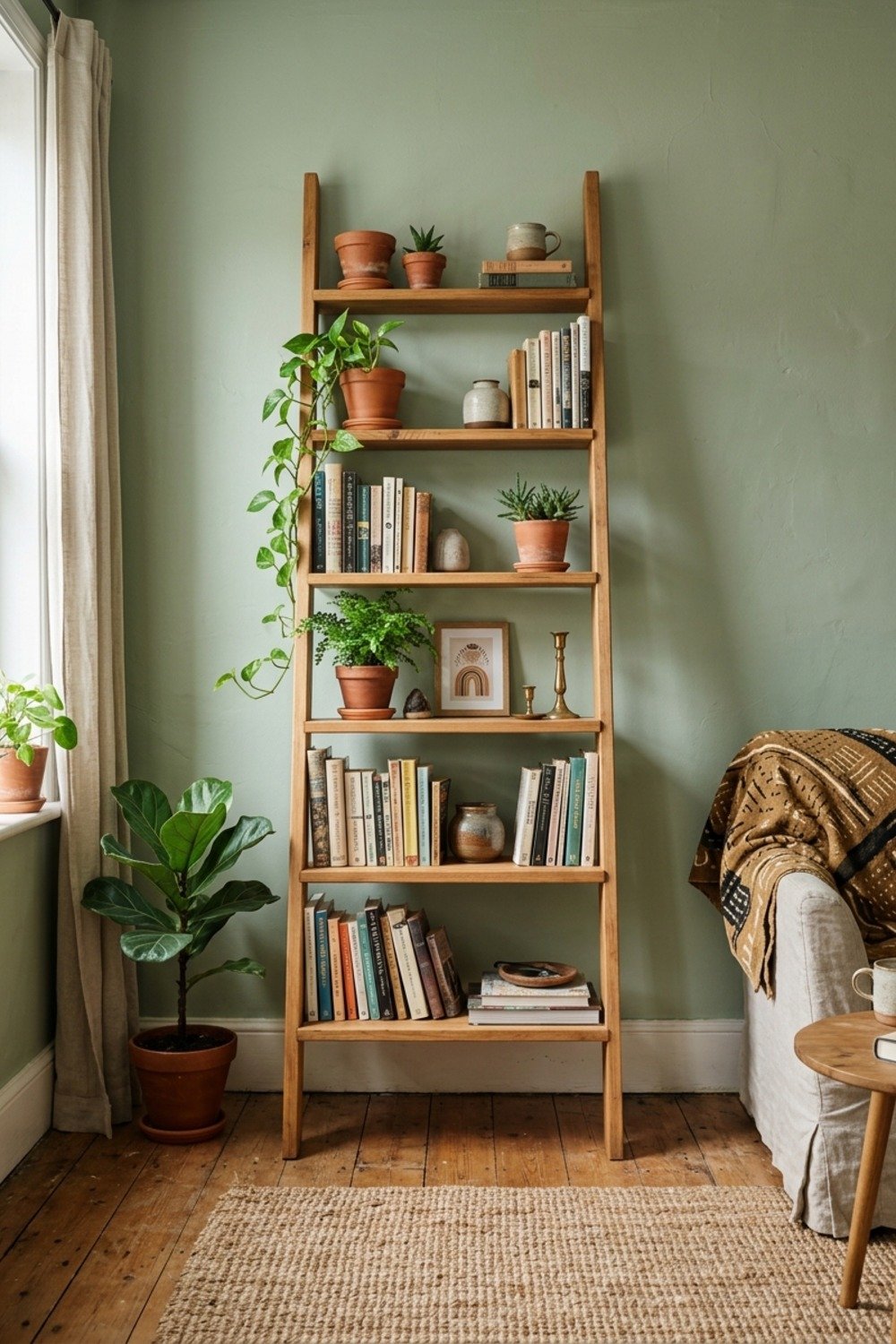
Scale is the reason a ladder shelf works in a small room. A 72-inch unit is about 14 inches deep at the base and tapers to almost nothing at the top, so it holds books without swallowing floor.
It suits studios and narrow hallways best. Keep the heaviest hardcovers on the bottom two tiers, or the whole frame leans harder than intended and creeps away from the wall.
2. Stack two cube units into one tower
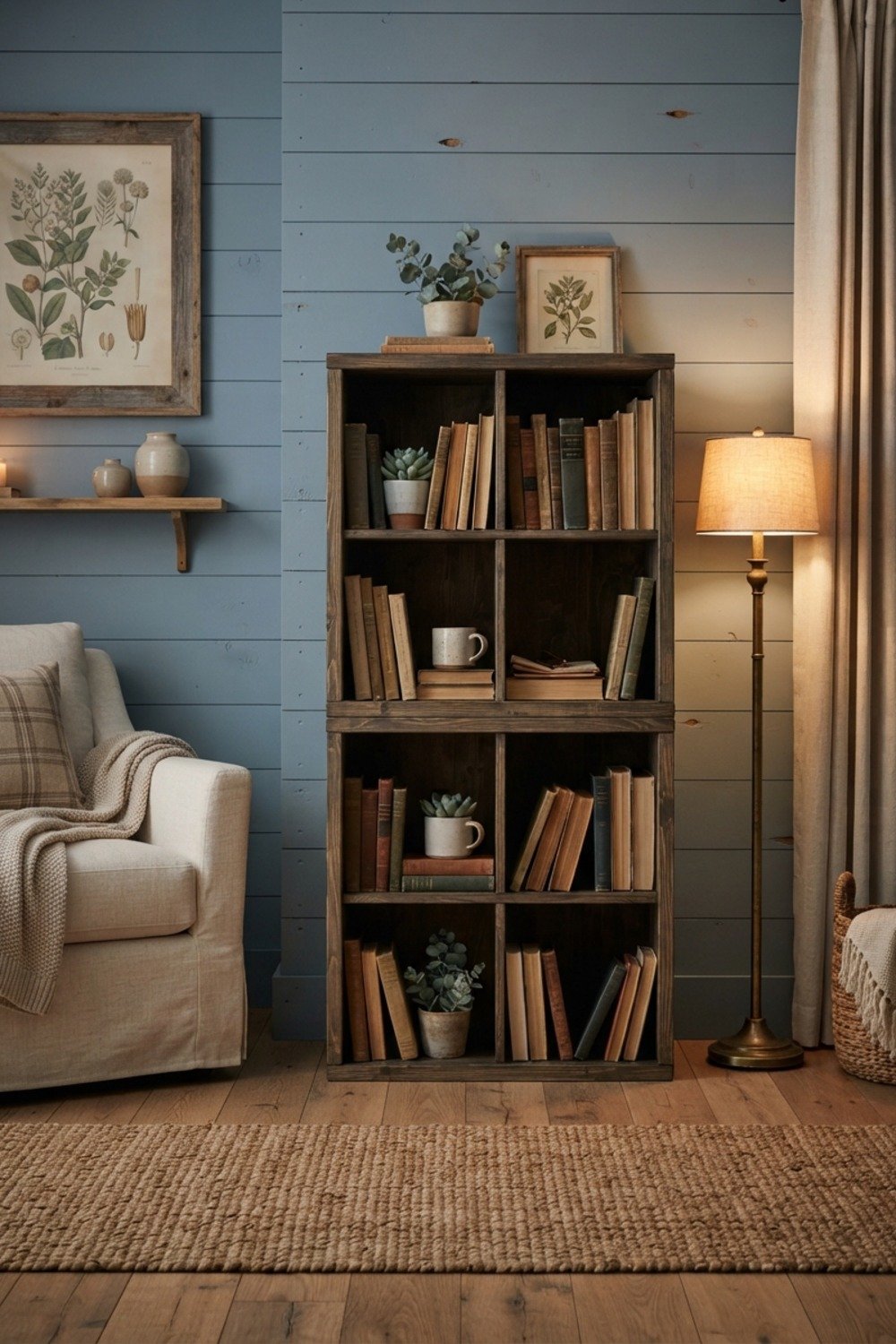
Color is where cube units win. A 2×2 IKEA Kallax runs around $60 in white or black-brown, and two stacked make a 60-inch column in one flat hue that reads as a single calm block instead of a pile of furniture.
This works for renters who move often because the units flat-pack apart in minutes. Stop at two high, since a third cube makes the tower top-heavy with nothing screwed into a stud.
3. Choose a low bookcase under 36 inches
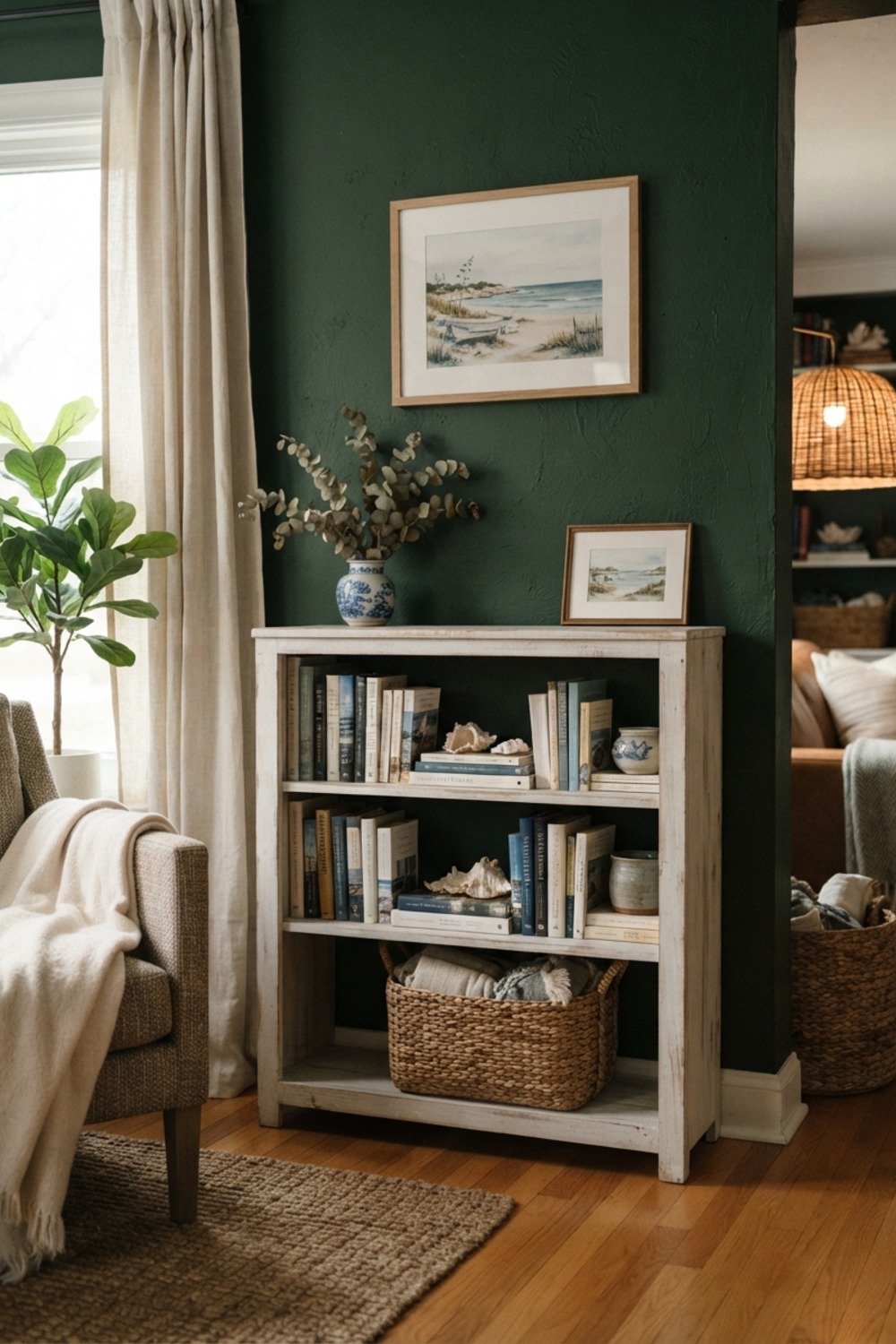
Anyone with toddlers, cats, or a clumsy Labrador should treat height as a safety call. A bookcase under 36 inches is very hard to tip, so it needs no anti-tip screws, and that is a real advantage when the lease forbids drilling.
The top becomes a display ledge for lamps and plants. The trade-off is capacity, so expect about 3 shelves of paperbacks per 30 inches of width.
4. Use a bookcase as a room divider
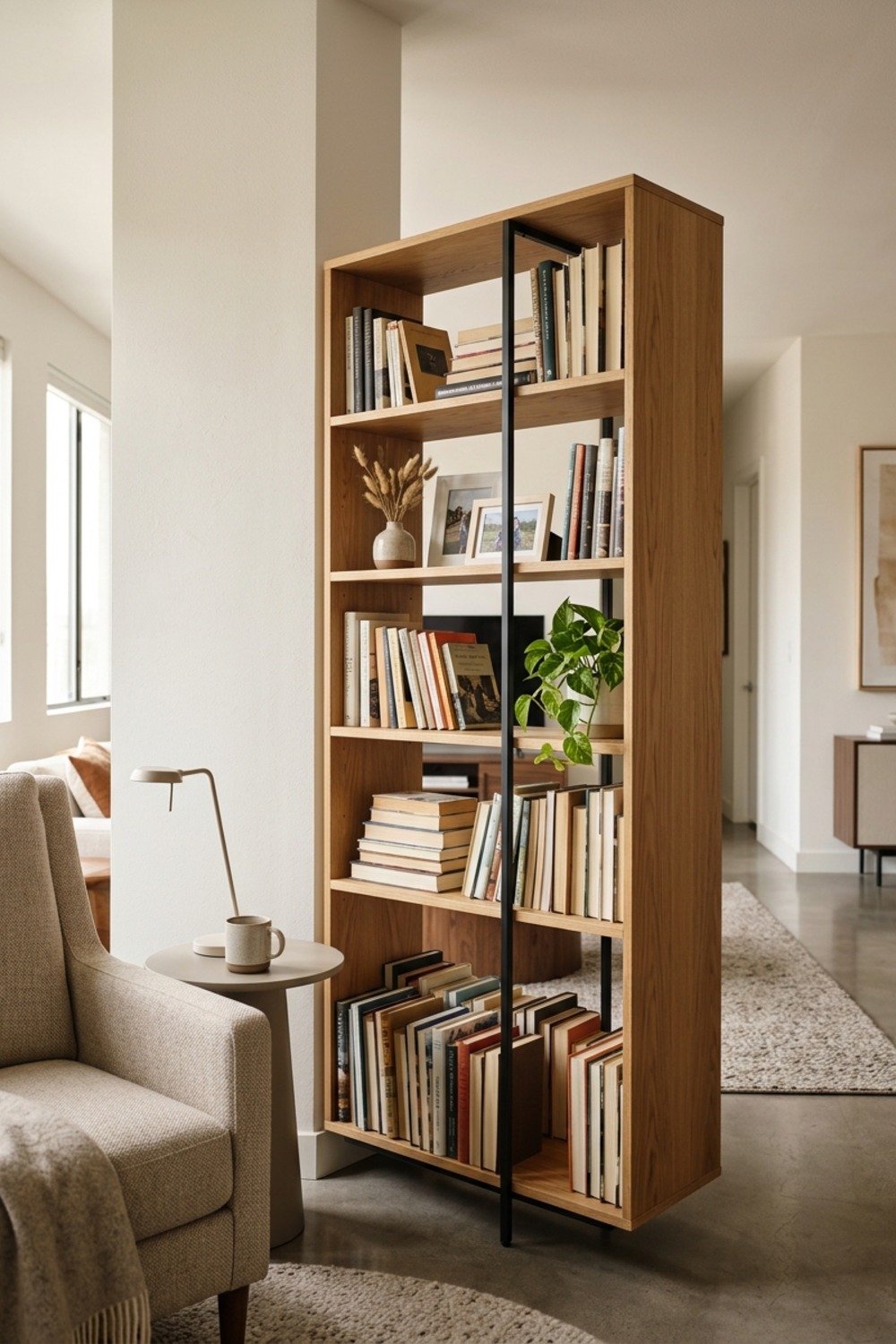
Layout is the best trick for studios. Set an open-backed shelf perpendicular to the wall and it carves out a reading zone while the books face outward like a tiny shop window.
Choose a unit with no back panel, or both sides look unfinished. Leave at least 30 inches of walkway beside it so the room doesn’t turn into a corridor.
5. Try tension-pole shelving
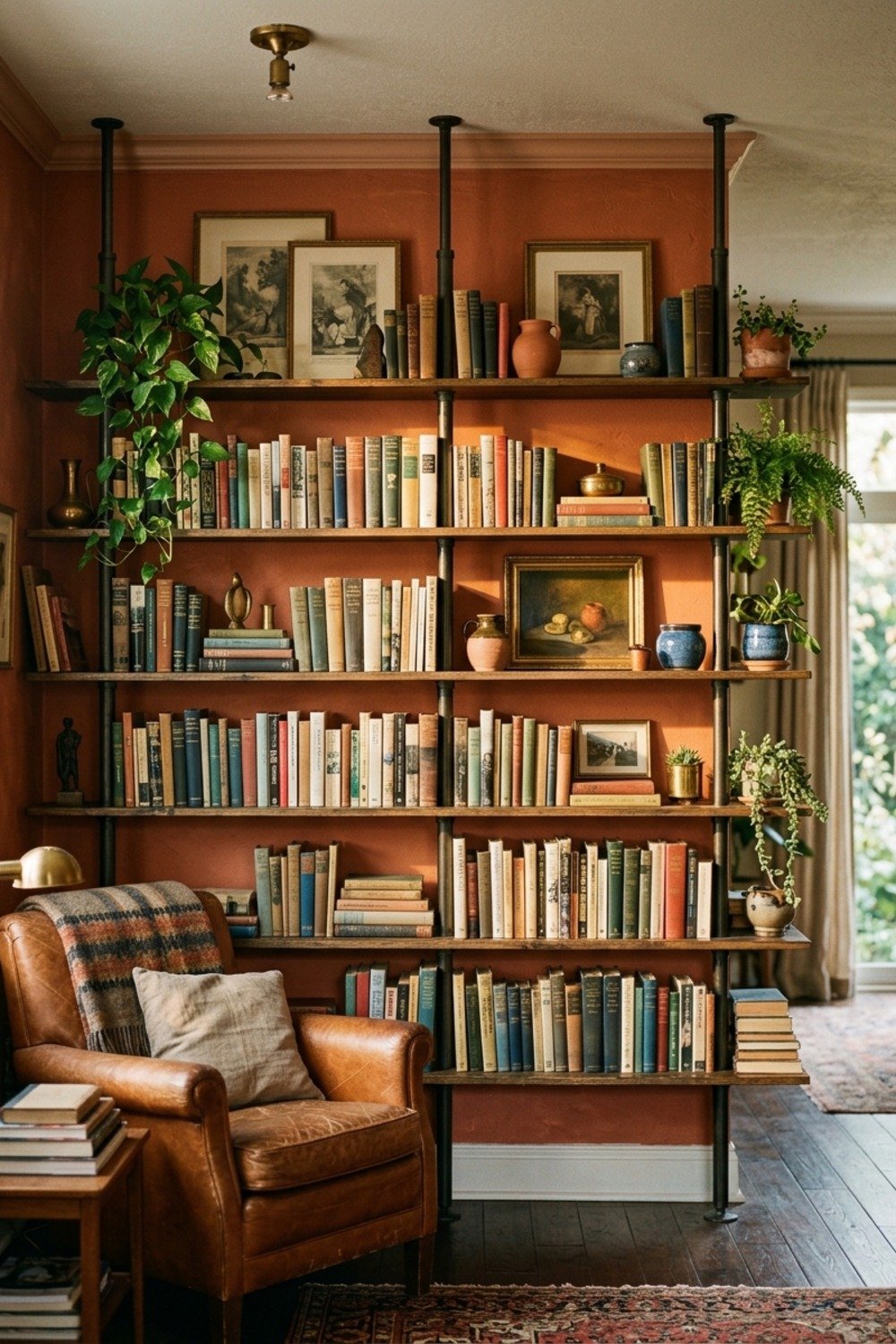
Floor-to-ceiling tension poles use pressure instead of screws, which makes them a quiet loophole in many leases. Look for models rated for at least 15 pounds per shelf if paperbacks are the plan.
Ceilings matter here. Textured popcorn ceilings crumble under pressure, so test with a rubber foot pad first, and skip this idea entirely if the ceiling feels chalky.
6. Roll in a three-tier cart
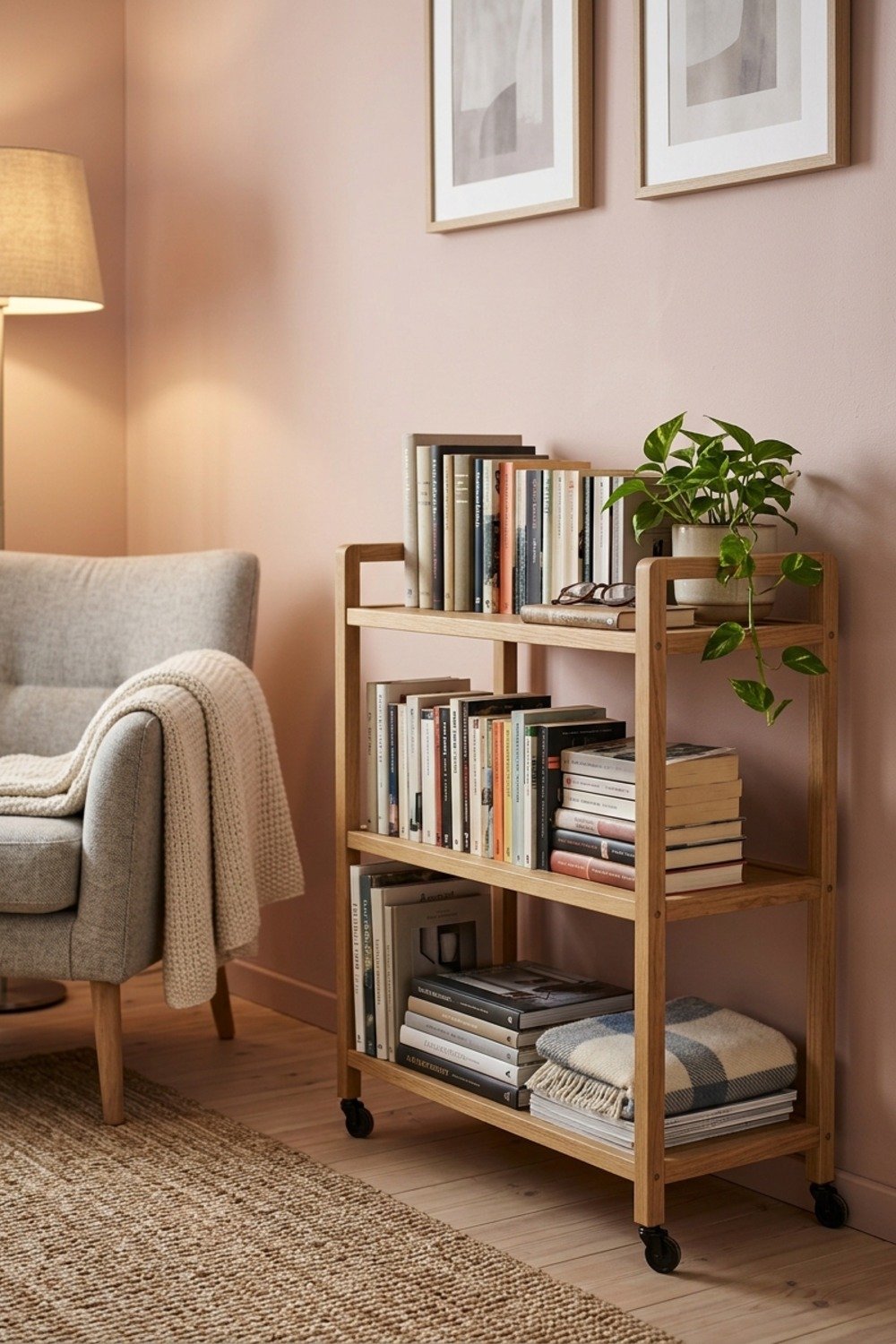
Function beats permanence in a tiny home. A rolling cart like the IKEA Raskog, around $35, parks beside the sofa for evening reading and tucks into a closet when guests arrive.
Pick metal over plastic if the cart will see daily wheeling, because cheap casters crack. Load the bottom tier with the heaviest volumes to keep the whole thing steady in motion.
7. Sort shelves by color
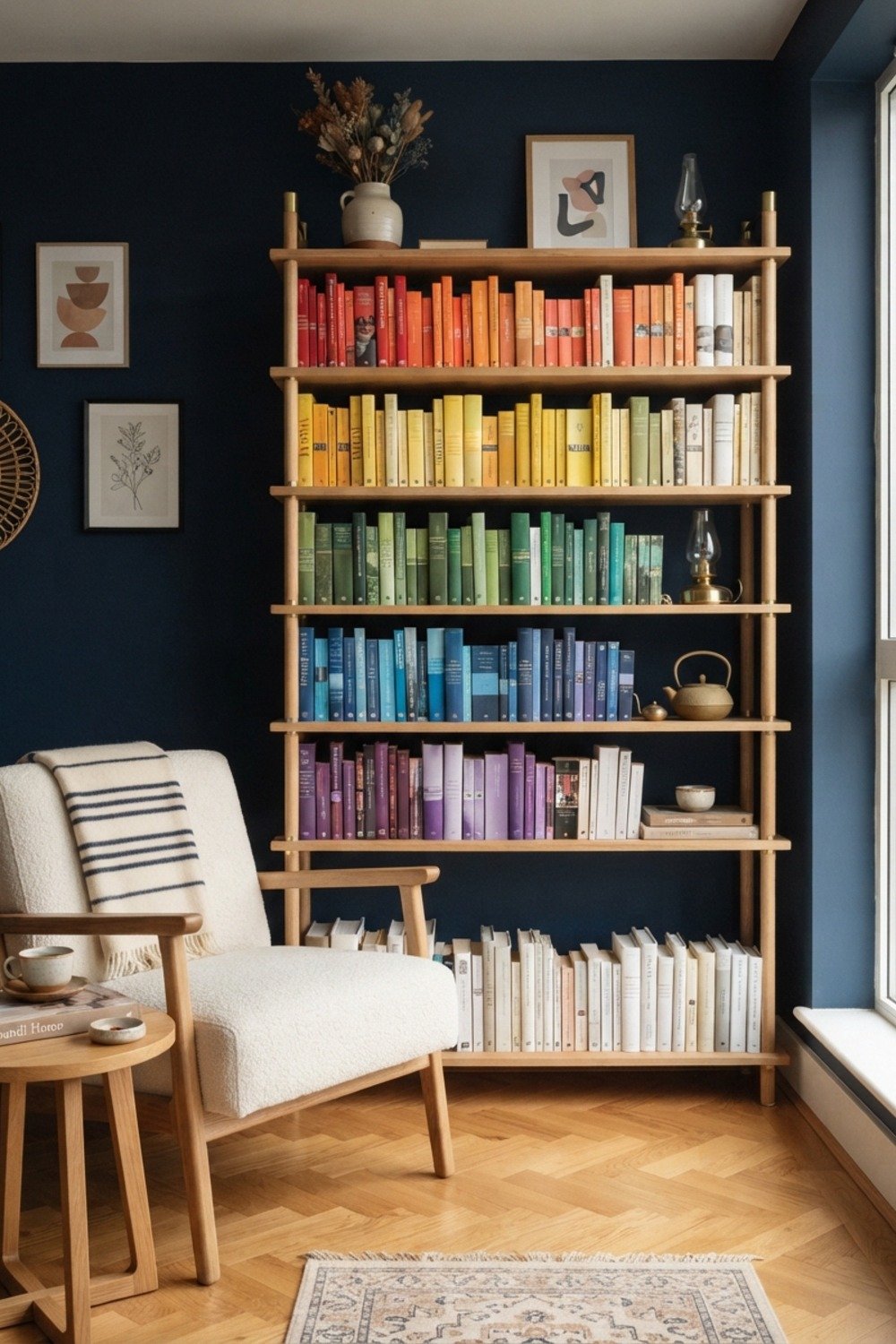
Rainbow order is a polarizing idea, and honestly, a tonal gradient from white to deep navy looks calmer than a full spectrum. It also hides mismatched paperback spines, which is a bonus when the collection came from five different secondhand sales.
The downside is finding a title by memory. Keep reference books and cookbooks sorted by subject, and color-code only the novels.
Ideas worth borrowing
A library without a place to sit is just storage. These seven ideas give the reader somewhere to land.
8. Anchor the corner with a durable armchair
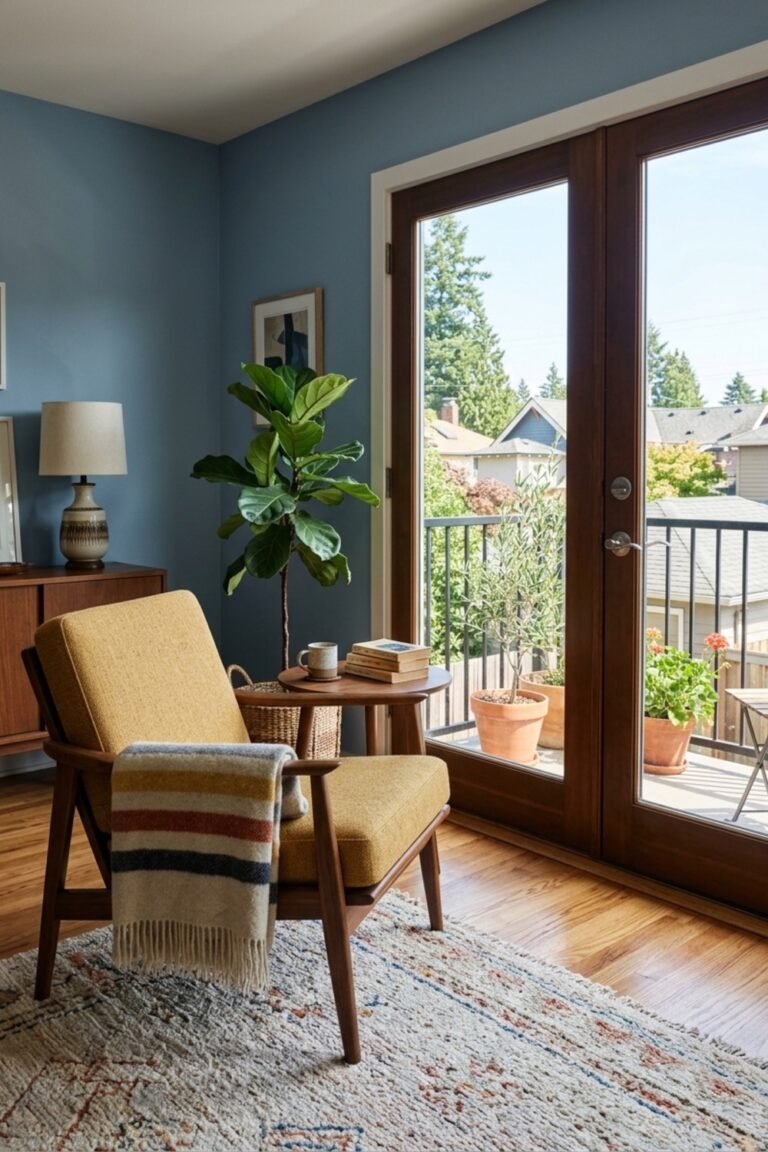
Materials decide how long a reading chair survives. Performance fabrics, tight-weave polyester, and leather-look vinyl shrug off claws and juice spills, because a dense weave gives claws nothing to hook. Loose-weave linen snags within a month in a pet household.
A chair around 30 inches wide fits a corner without crowding the shelf beside it, which suits small rooms and families with kids or cats. Budget about $150-$300 for something with a solid frame, and avoid bargain chairs with thin particleboard frames that loosen and creak within a year.
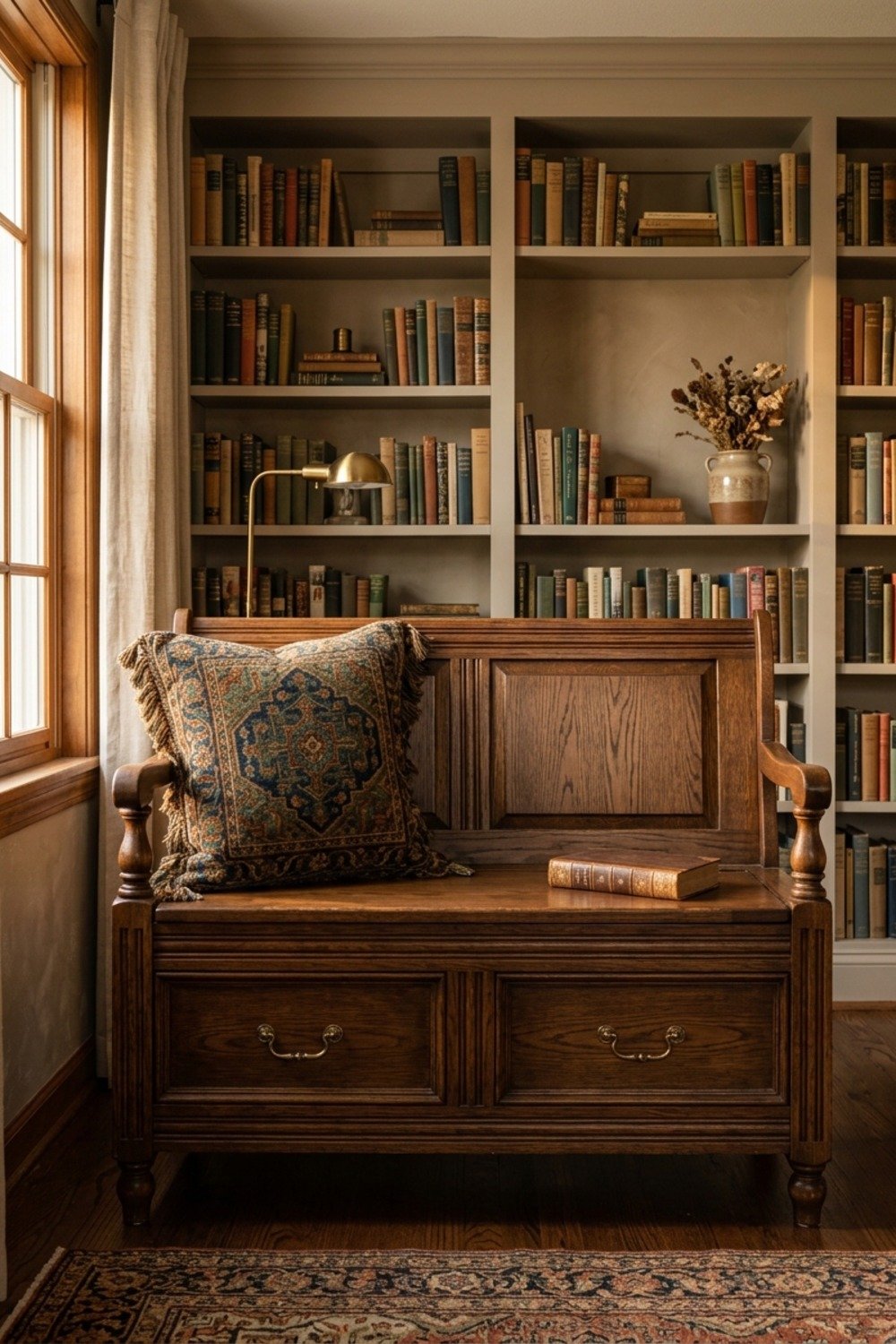
9. Add a cushion to a storage bench
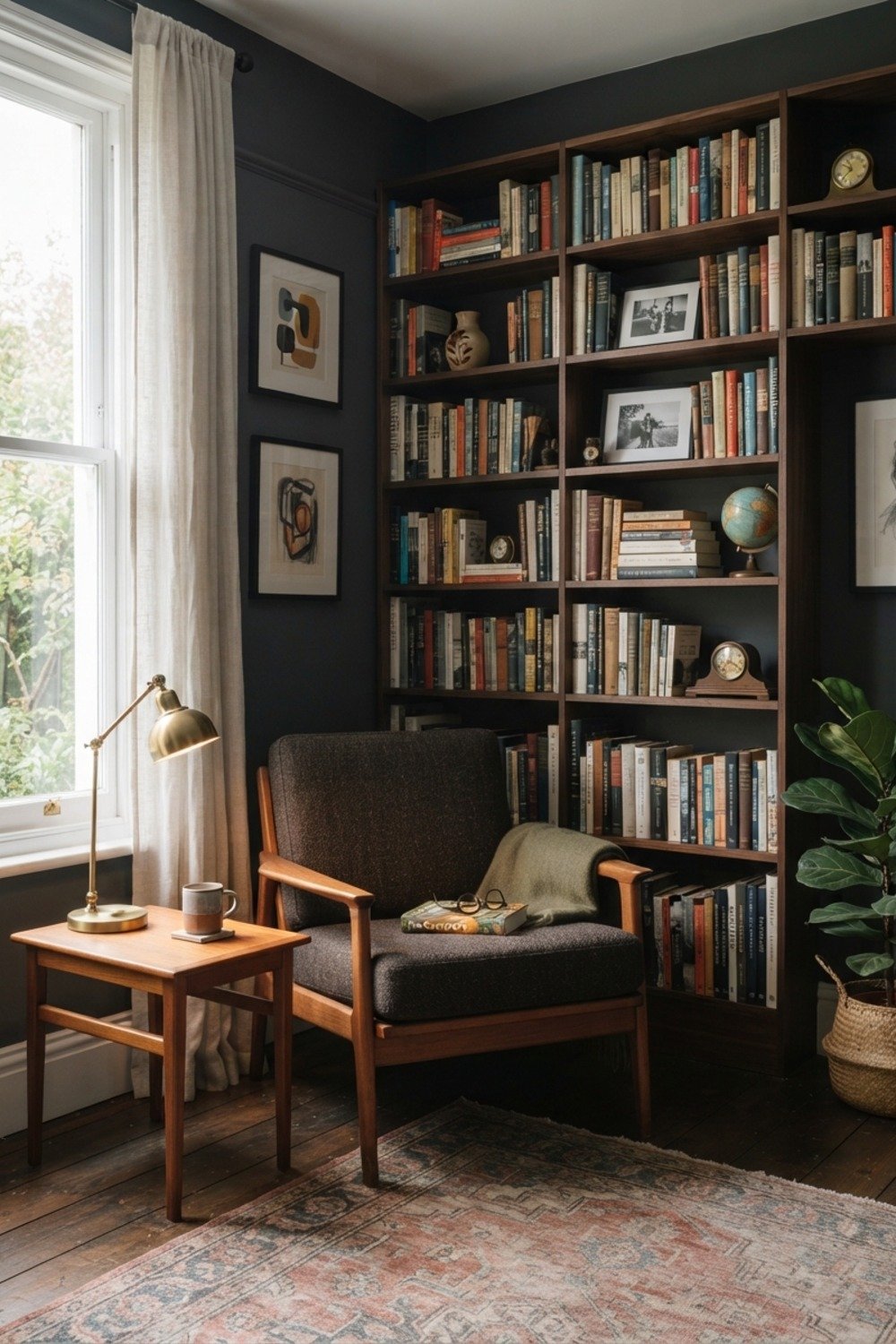
A 36-inch storage bench under a window does double duty, with a seat on top and a bin for blankets and extra books beneath. At 4pm, low light slides across the cushion and makes it the warmest spot in the apartment.
Pick a cushion at least 3 inches thick, or the bench turns punishing after twenty pages. Velvet is lovely under the hand but shows pet hair, so a boucle weave is the safer pick.
10. Pile up floor cushions and a pouf
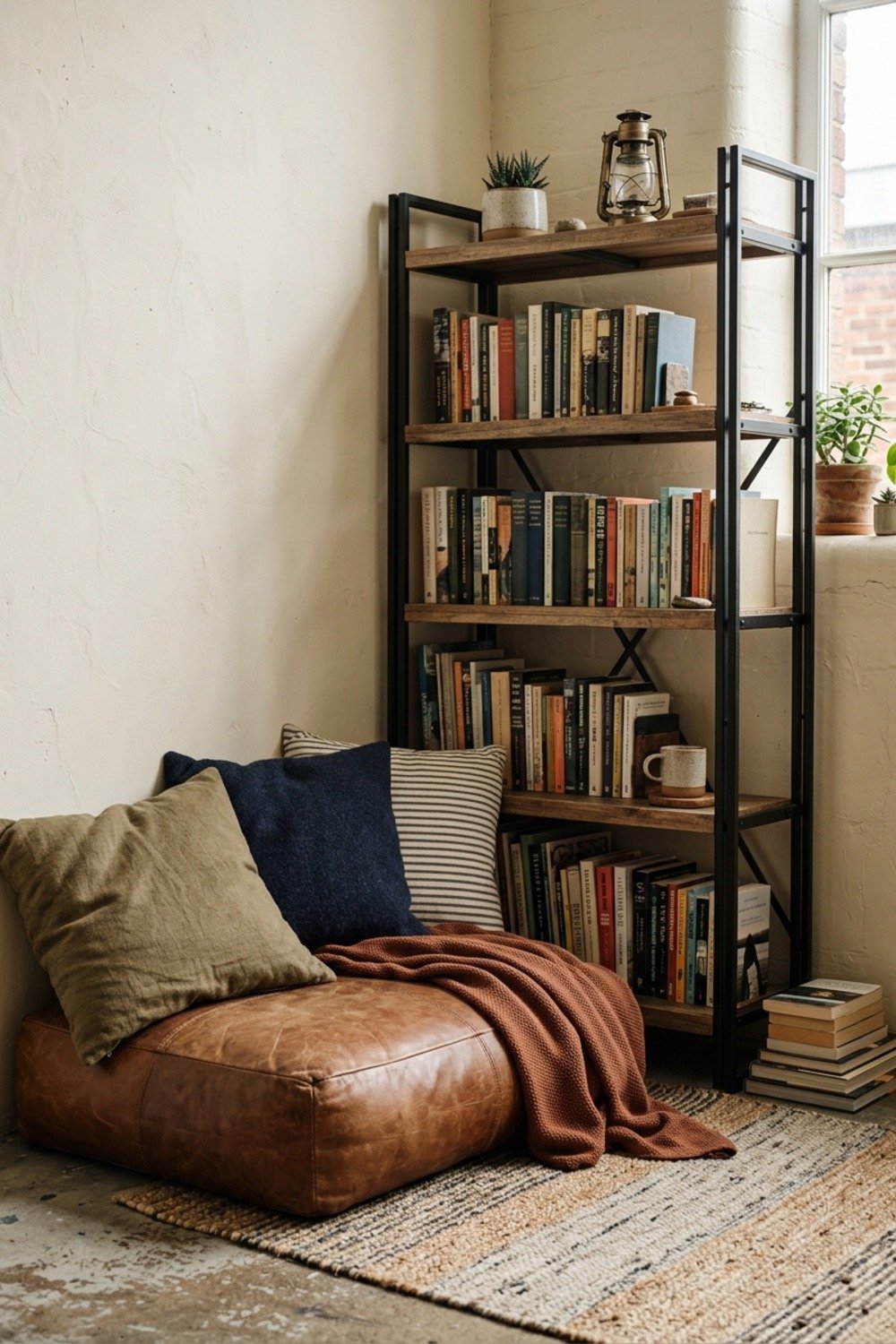
Floor seating is the cheapest answer for renters short on square footage. A 20-inch leather pouf runs about $60 and doubles as a footrest, a side seat, or a spare table with a tray on top.
This suits kids’ reading corners especially, since there are no legs to tip. Avoid bean-style fill if the cushion gets heavy use, because the beads flatten and need constant topping up.
11. Define the nook with a rug
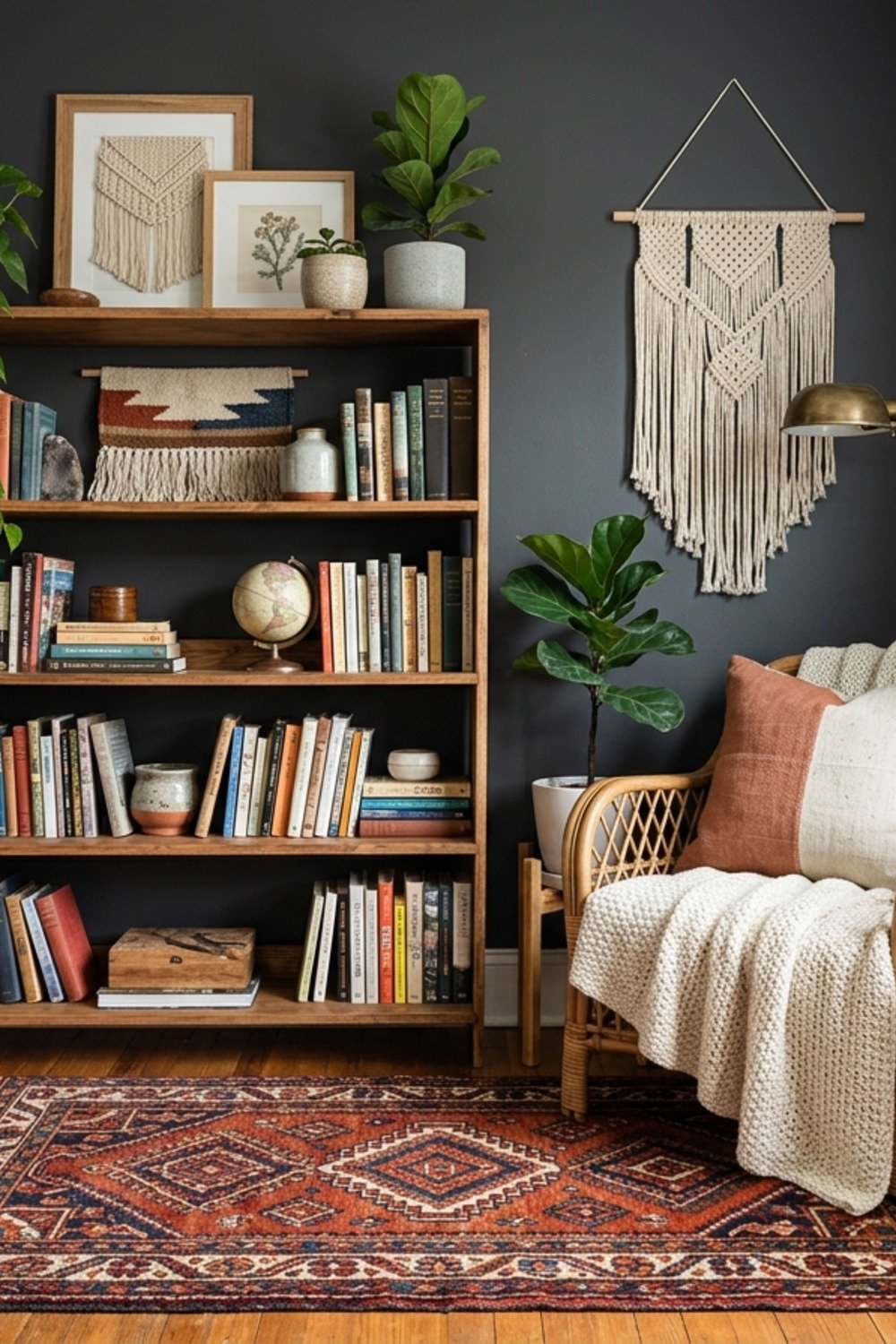
A 5×8 rug is the fastest way to draw a boundary around a reading corner. It tells the eye that this patch of floor belongs to the chair, the lamp, and the shelf.
Always add a rug pad, around $25, so the corners don’t curl and trip anyone. Flatweave wool or a washable polyester blend holds up better than shaggy pile under a rolling cart.
12. Keep a blanket basket within reach
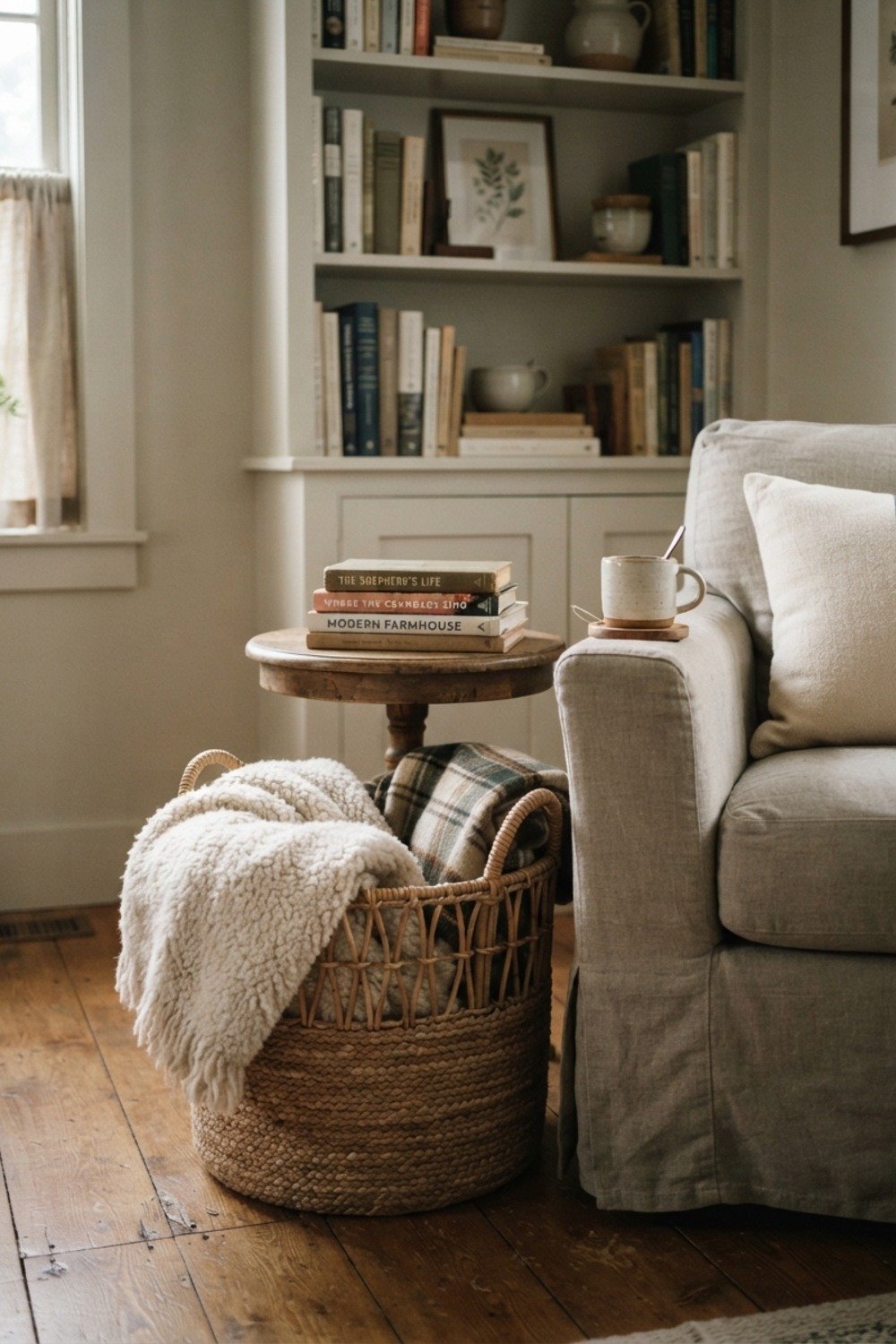
Styling is partly about reaching for comfort without getting up. A woven basket about 18 inches across holds two throws and keeps them off the arm of the chair, where they tend to slide to the floor.
Choose a wide, sturdy rim so the basket doesn’t slump when half empty. Chunky knit throws look great but shed on dark upholstery, so wool or cotton waffle is tidier.
13. Place a slim side table within arm’s reach
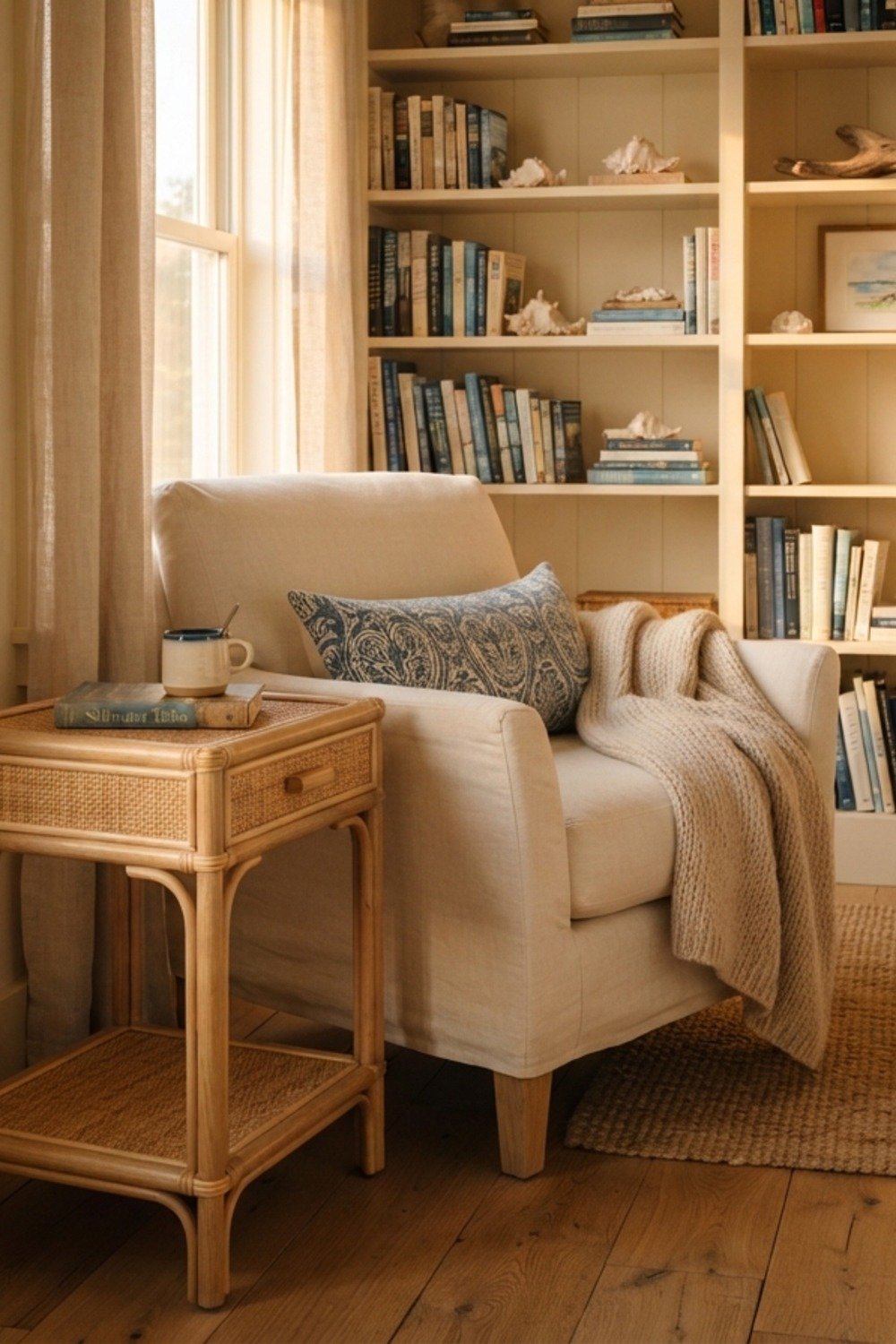
A side table 14-16 inches wide holds a mug, a lamp, and one stack of next reads. Anything wider eats the walkway in a small room.
The common mistake is picking a table lower than the chair arm, which forces an awkward reach with every sip. Measure the arm height first and aim for a tabletop within 2 inches of it.
14. Turn the back of the sofa into a ledge
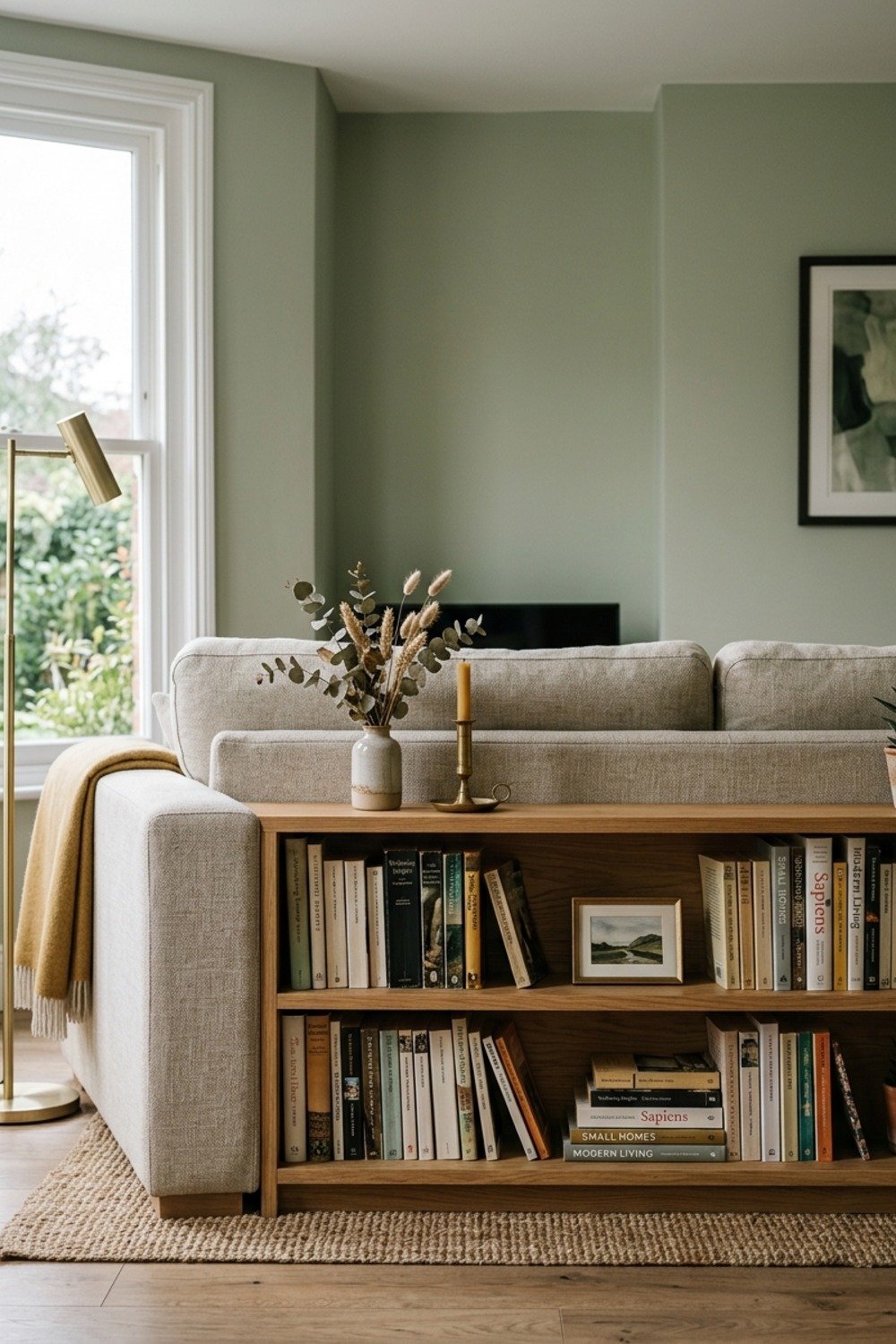
A narrow console, around 10 inches deep, behind the sofa gives a hallway-thin spot for a row of books, a lamp, and a small plant. It also pushes the sofa back from the wall slightly, which is better for air circulation.
This suits open-plan rentals where the sofa floats. Keep decorative objects light, since sofa cushions get shoved back and hit the console constantly.
Lighting That Makes a Small Library Feel Intentional
Overhead rental lighting is flat and a bit harsh. Layered lamps change the whole mood of a reading corner.
15. Plug in a wall sconce with a cord cover
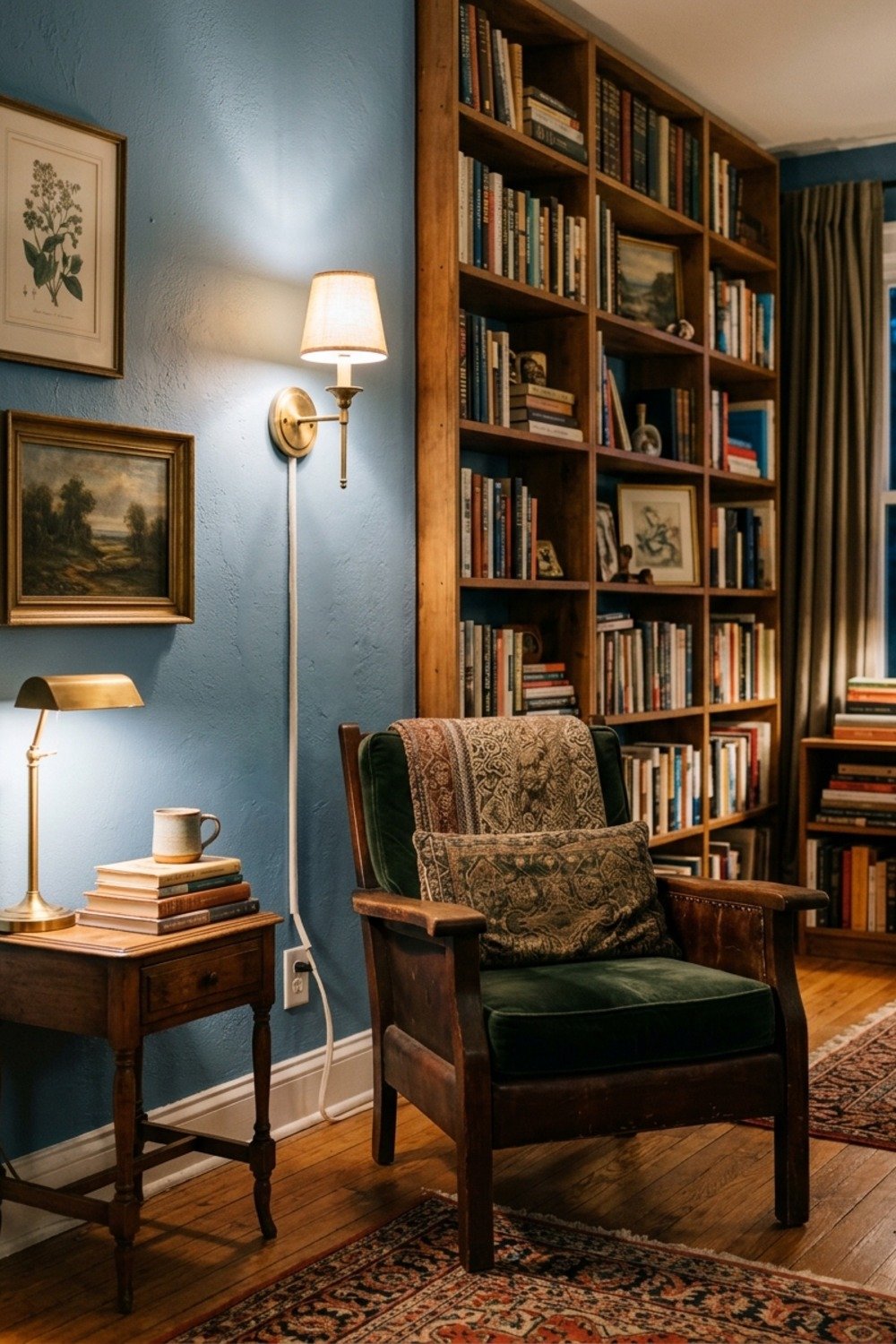
Plug-in sconces look hardwired, but they hang from a single removable adhesive hook and a cord runs down to the outlet. A paintable cord cover in the wall color hides the wire.
Use them where no outlet sits near a chair. The weight limit matters, so pick a lightweight model under 2 pounds and check the hook rating before hanging.
16. Clip a reading lamp onto the shelf
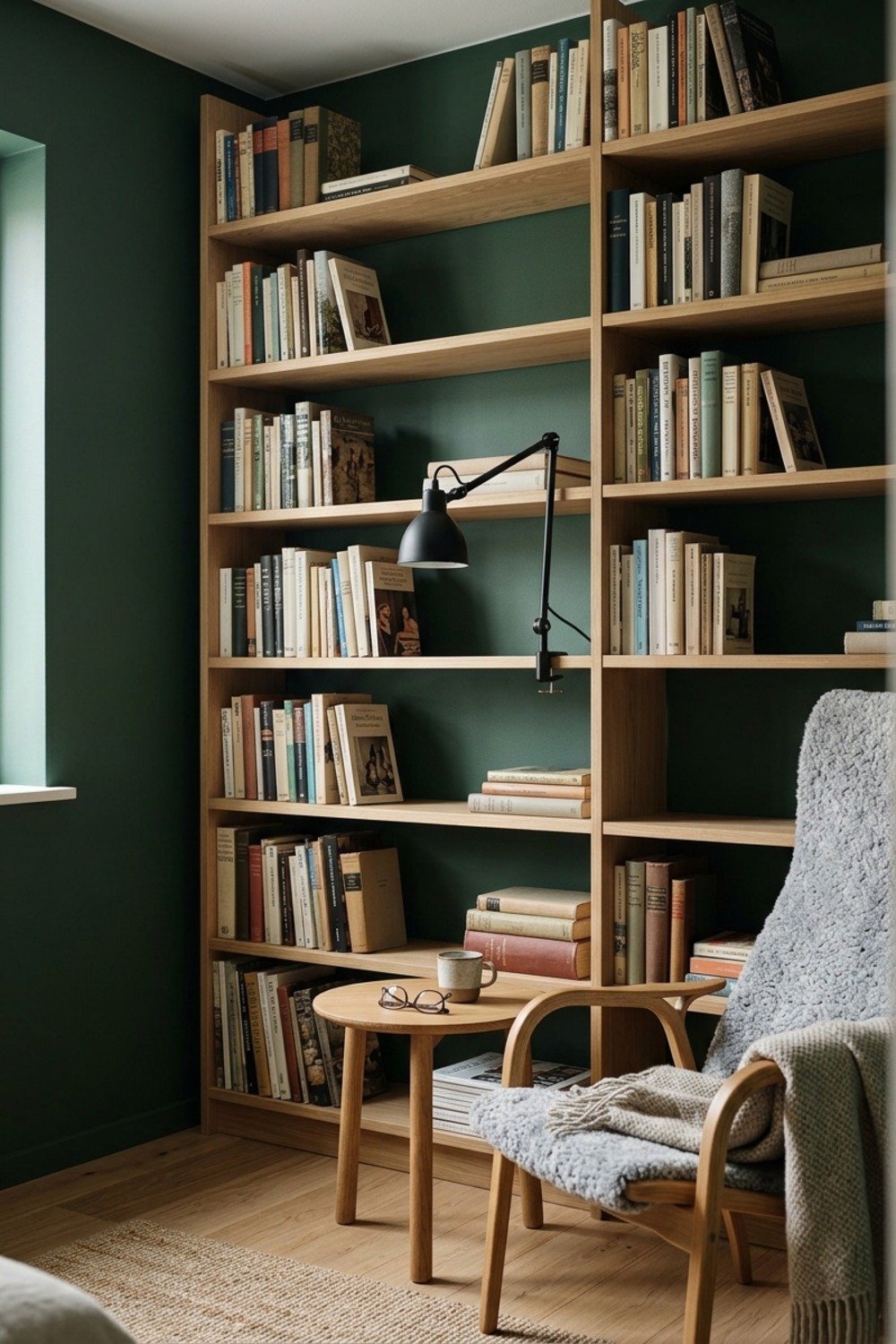
A clip-on lamp, about $20-$30, turns any shelf edge into a reading station without a table. Adjustable necks let the beam sit right on the page and leave the rest of the room dim.
Check shelf thickness before ordering, since most clamps top out around 2 inches. A felt pad on the clamp face prevents scratches on a painted shelf edge.
17. Swap bulbs to 2700K warm white
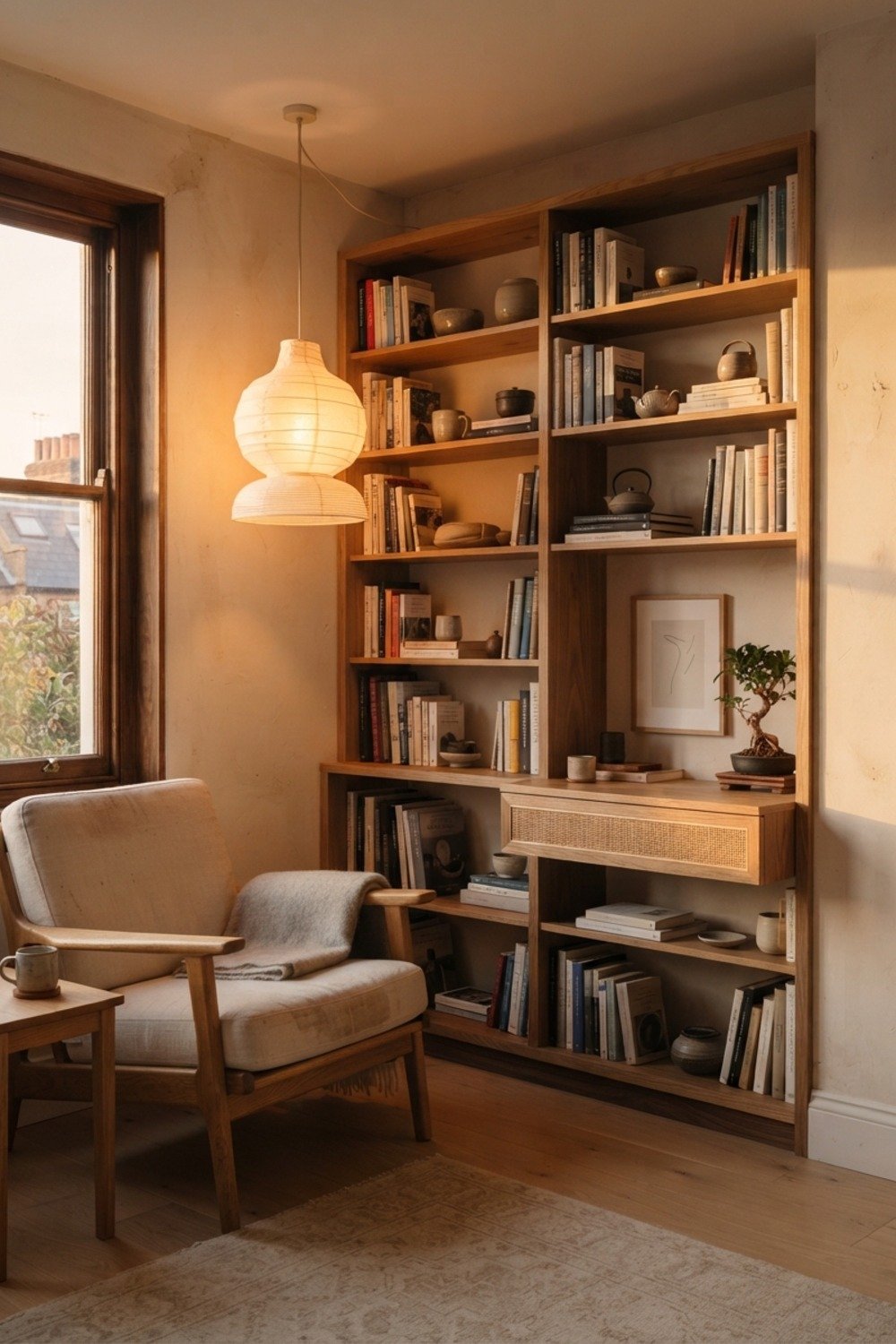
Color temperature is the cheapest lighting upgrade there is. Bulbs rated 2700K give a honey glow that flatters paper and wood, while 4000K or higher reads like a dentist’s office.
Use 800 lumens for a reading lamp, which is about a 60-watt equivalent. Smart bulbs are nice for dimming, but, actually, no, scratch that: a plain dimmer-compatible bulb on a $12 plug-in dimmer does the same thing with less fuss.
18. Stick battery puck lights under the shelf
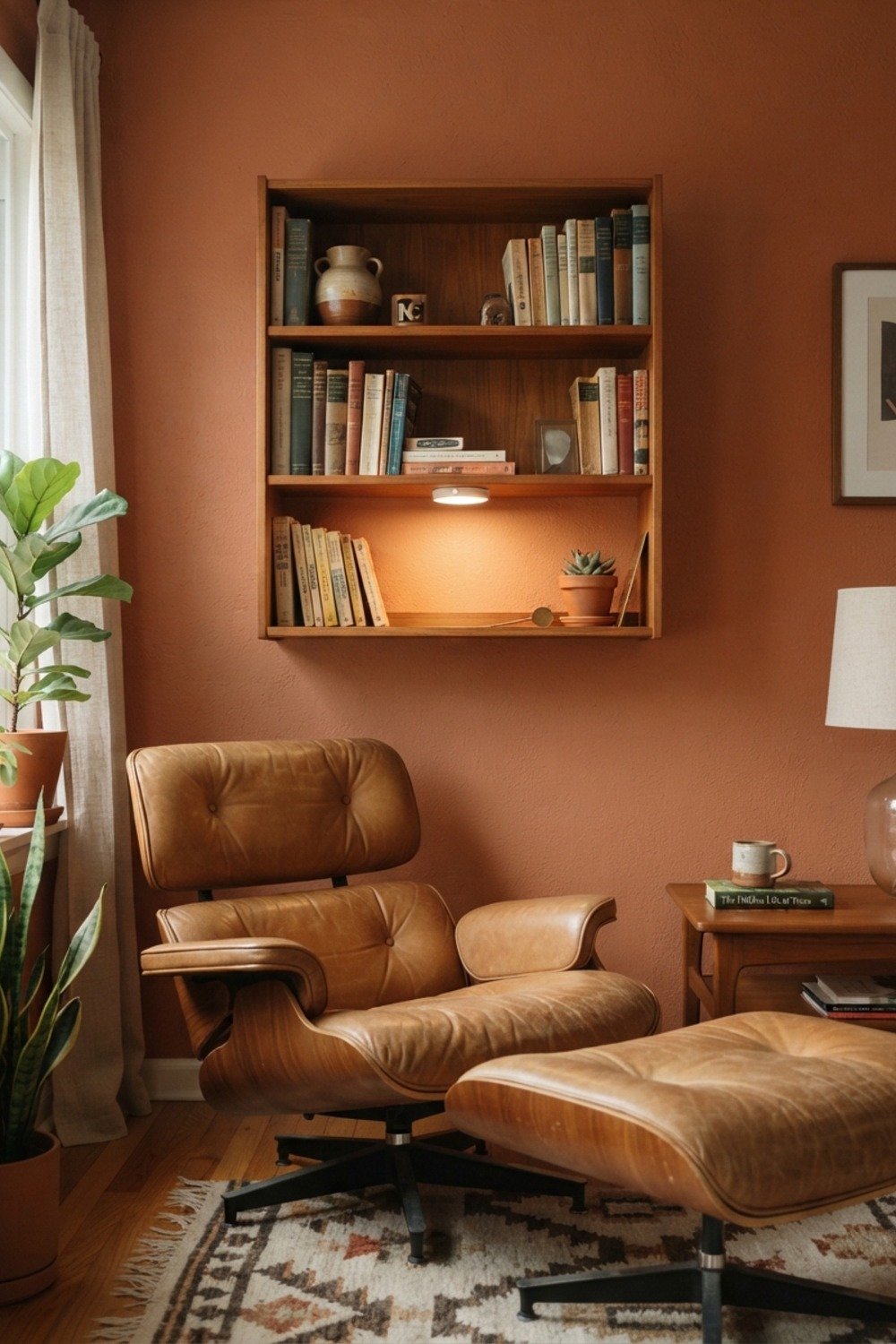
Adhesive LED puck lights light the shelf from above and make spines glow. Each one runs on three AAA batteries and peels off with a hairdryer and a little patience.
Go for remote-controlled sets with timers, because forgetting to switch them off drains batteries in a week. Position them toward the front edge so the beam falls on the books rather than the back wall.
19. Arc a floor lamp over the chair
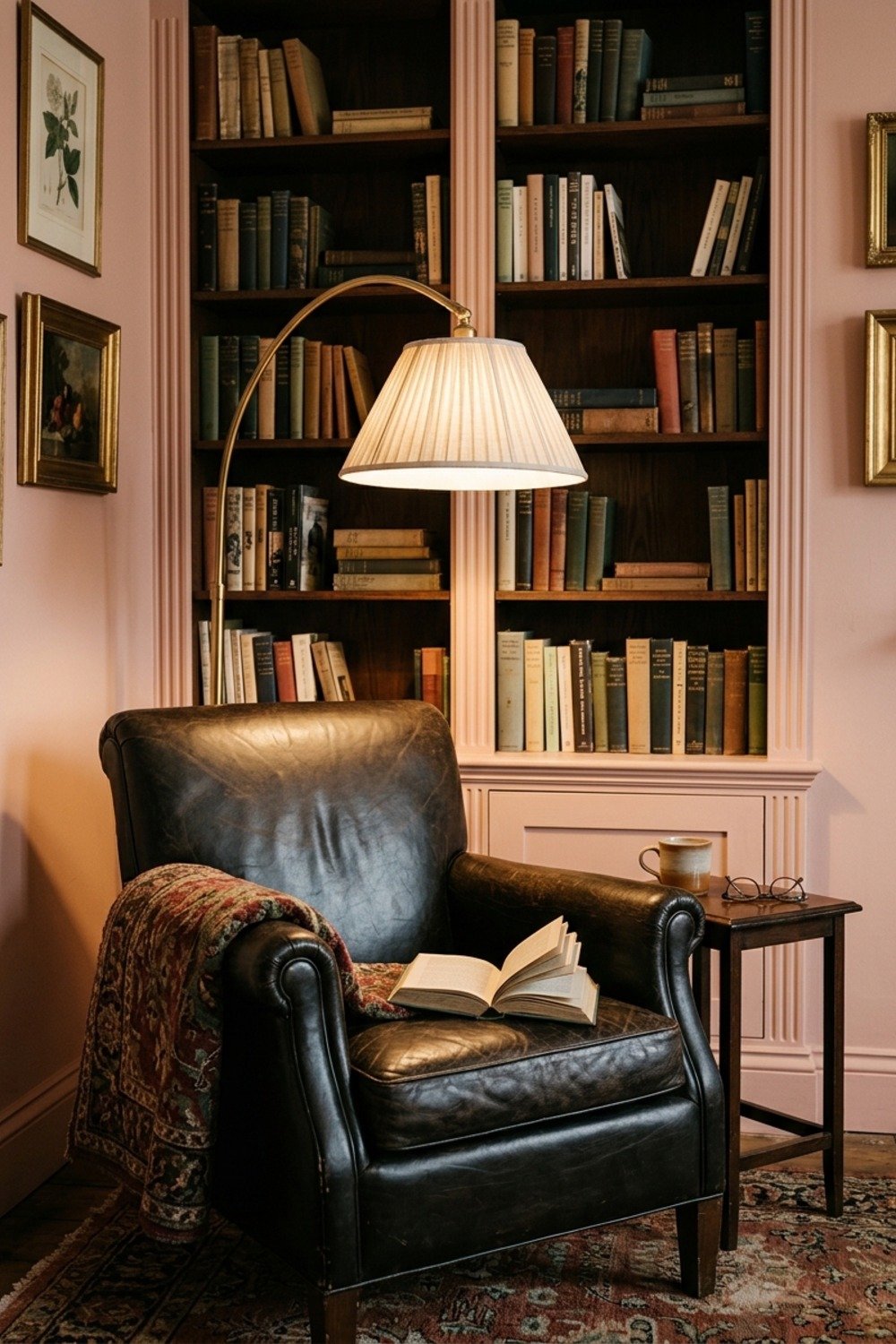
An arc lamp swings its light over the reader’s shoulder from a base that sits well to the side. It replaces both a table lamp and the need for a nearby outlet.
Look for a weighted base of at least 8 pounds, so a passing dog doesn’t send it over. A fabric shade diffuses glare better than a metal dome.
20. Hang sheer curtains on a tension rod
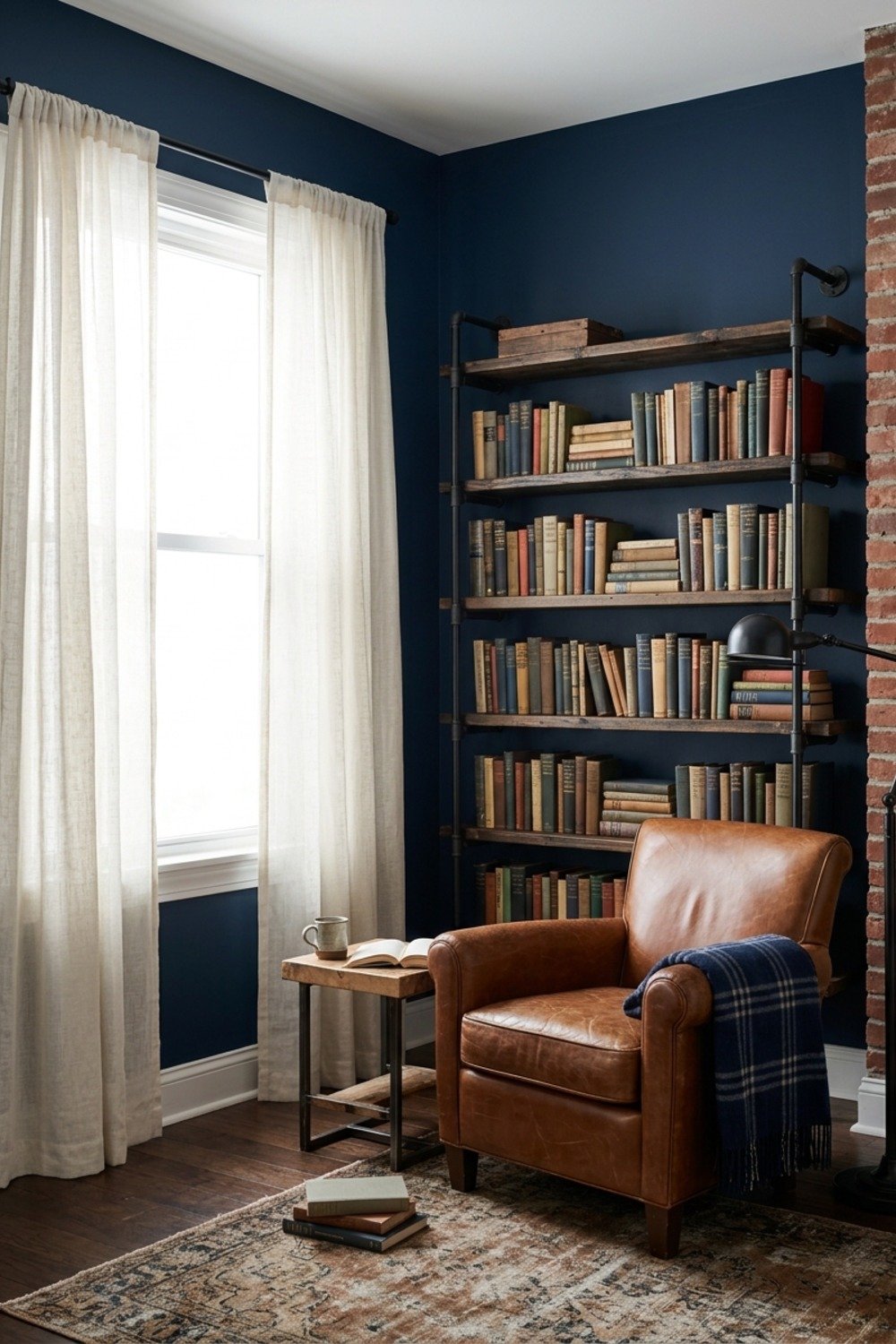
Reading near a window fights glare, and sheers soften it without blocking daylight, so pages stay readable while the room still feels bright. A tension rod holds them with zero hardware, perfect inside a window frame, which makes the setup ideal for renters who cannot drill.
Skip blackout fabric for a reading corner, because the room turns gloomy by 3pm in winter. A linen-look sheer at roughly 55 inches wide per panel gives enough gather to look full. Measure the frame first, because a loosely fitted rod slips.
Shopping guide
Collections outgrow their shelves quickly. These seven ideas stretch the capacity without a single screw.
21. Corral paperbacks in magazine files
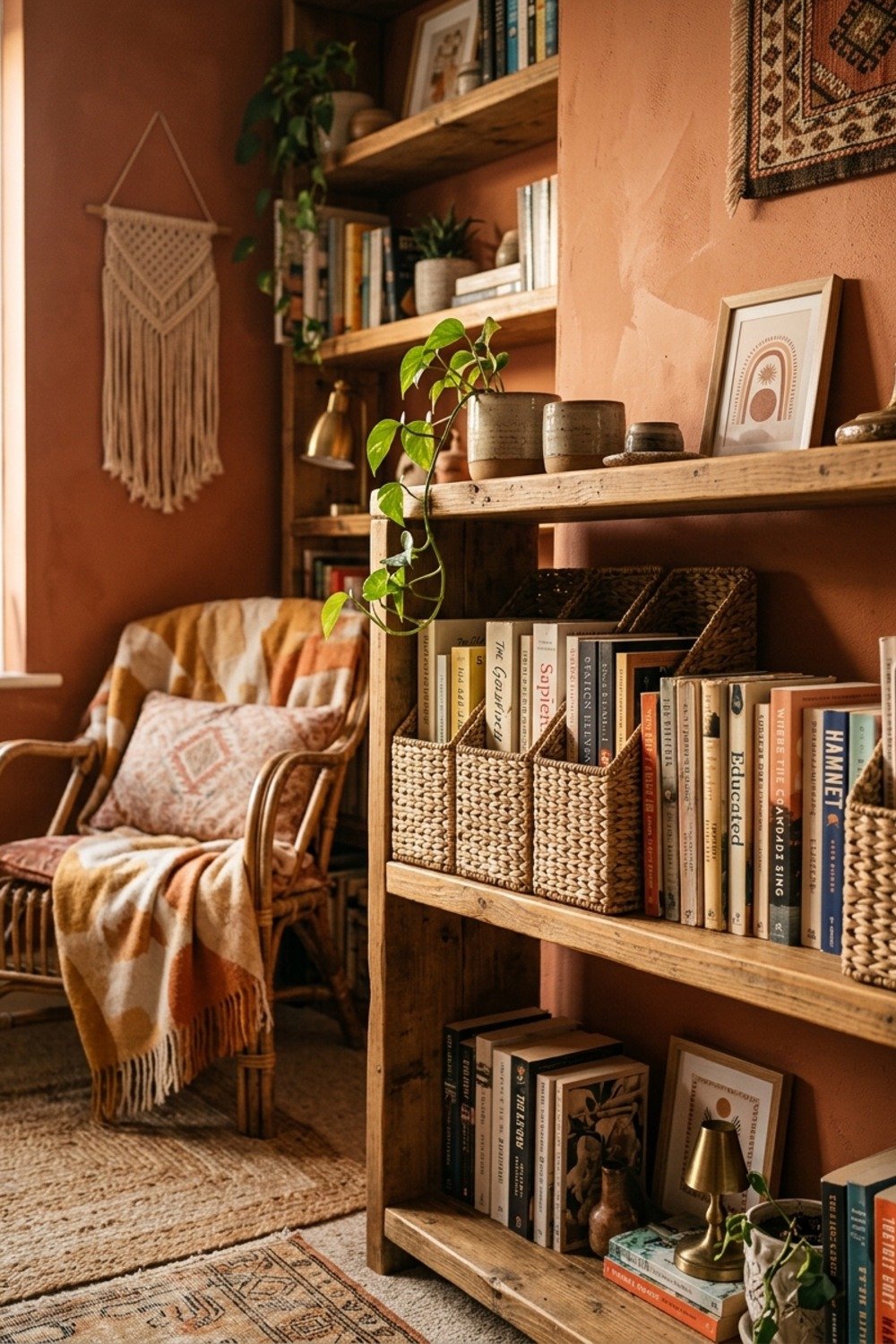
Magazine files hold floppy paperbacks upright, which keeps spines from curling under their own weight. A set of six costs about $20 and turns a messy pile into a tidy row.
They suit anyone with trade paperbacks or kids’ picture books, especially on a desk or a low shelf where loose stacks slump. Choose cardboard with a laminate finish for durability. Laminate also wipes clean after sticky fingers. Avoid thin plastic that cracks after a year.
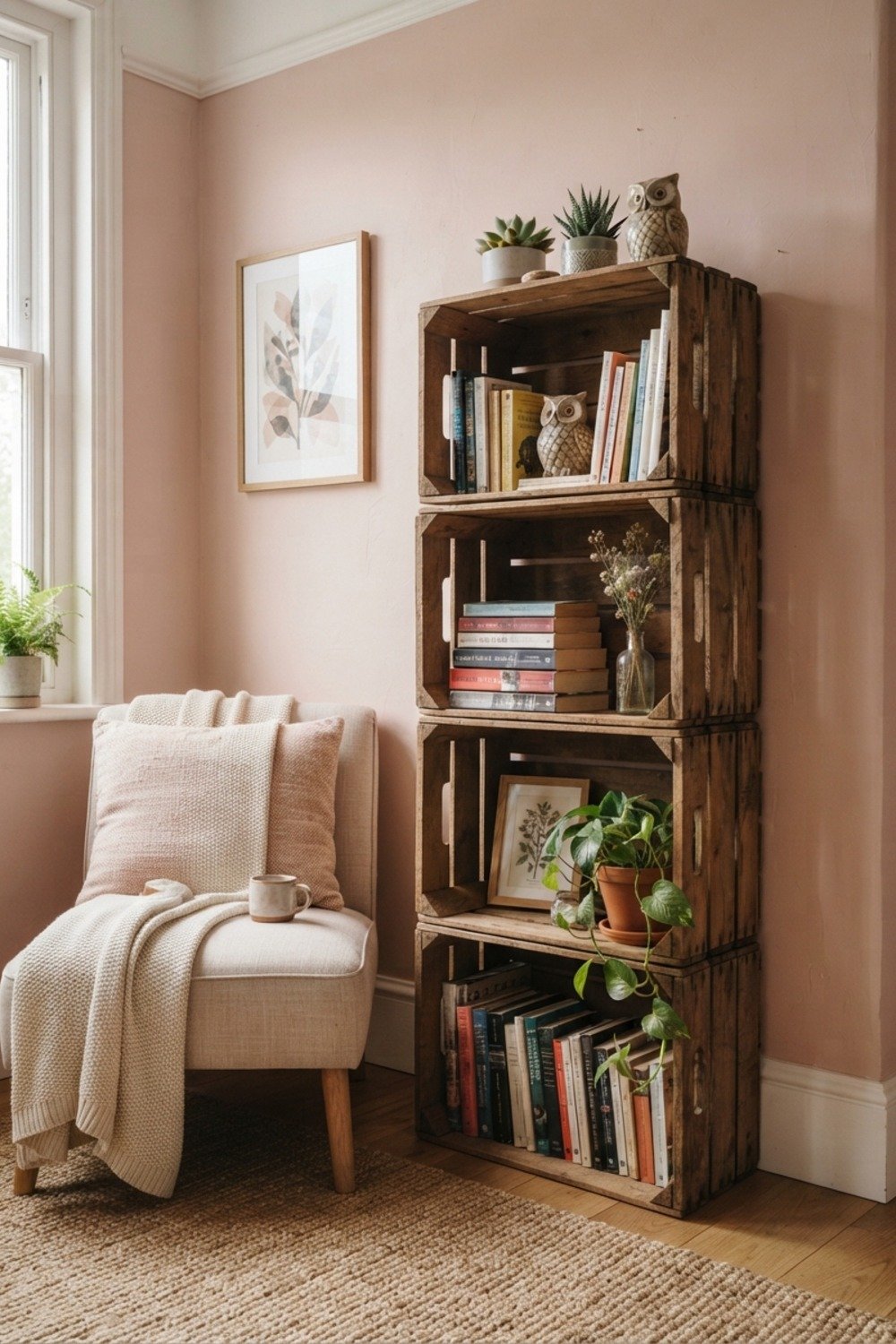
22. Stack wooden crates on their sides
Crates give the flea-market look with a lot of strength, since solid slats carry weight that flimsy cube shelves cannot. Two 16×12-inch crates, stacked and sanded smooth, hold about 25 paperbacks each.
That makes a budget bookcase for a dorm, rental, or kid’s room. The common mistake is skipping the sanding, which snags sweaters and pages. Check that the stack sits level too, since uneven floors in older rentals make wobbly towers. Slide a folded cardboard shim under the low corner if it rocks.
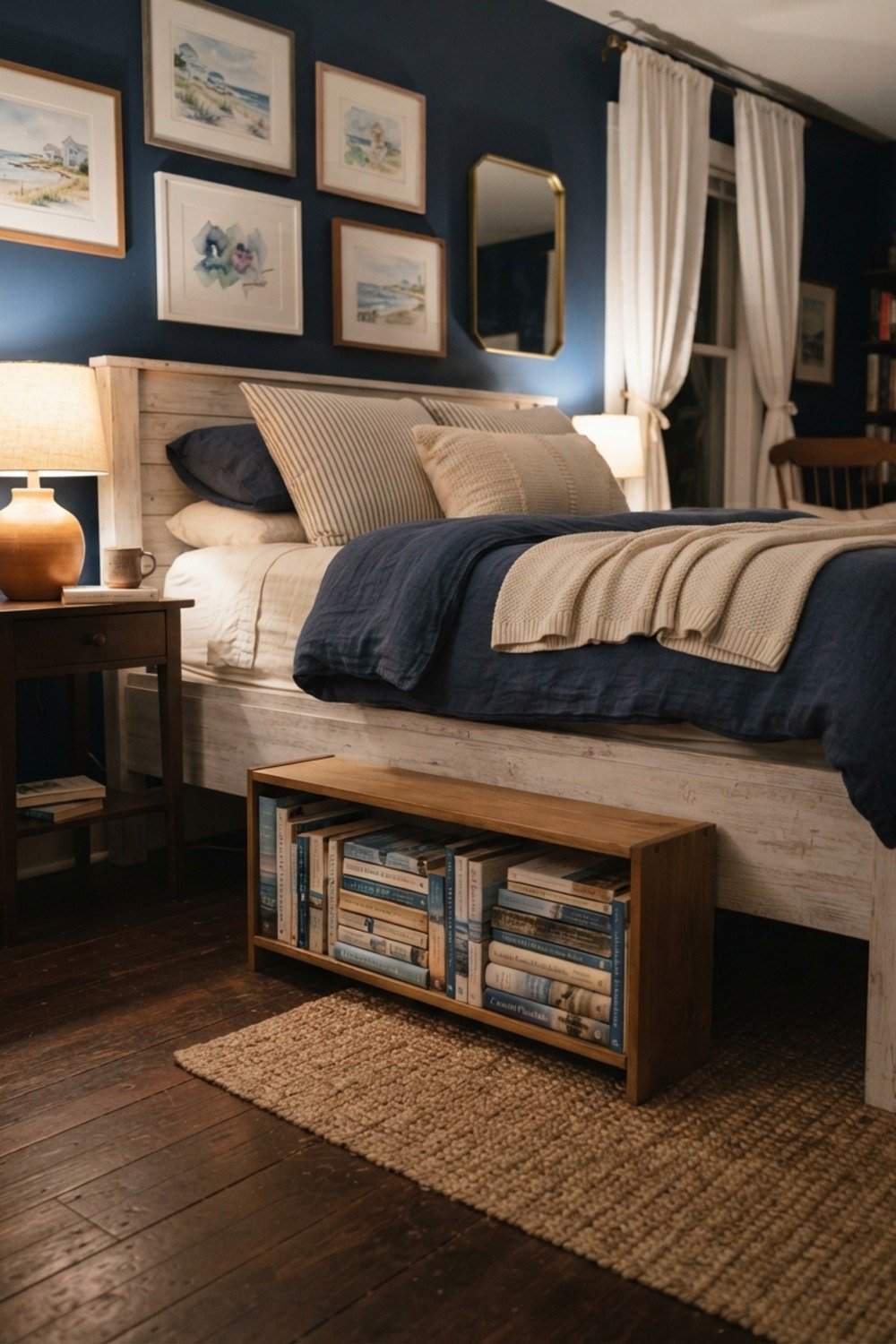
23. Slide books under the bed
Under-bed bins with wheels free up shelf space for the books worth looking at daily, so the shelves hold favorites while the overflow stays out of sight. A 6-inch-tall bin holds about 20 paperbacks and rolls out in one pull.
It suits studio apartments and kids’ rooms with little wall space. Measure your bed clearance first, since many frames sit lower than 7 inches. Pick lidded bins with a rigid base so dust stays out and the load doesn’t bow.
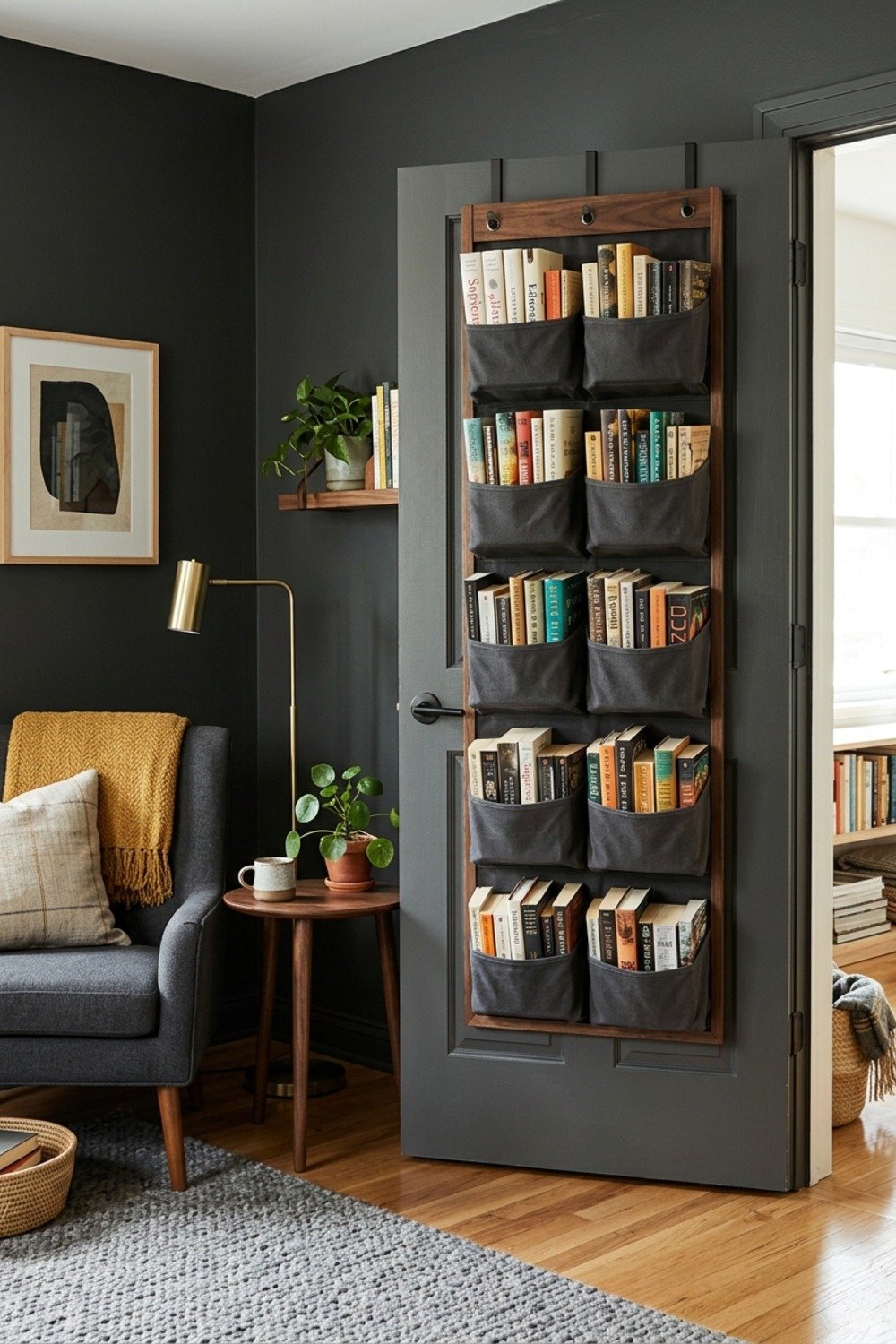
24. Hang an over-the-door organizer
Over-door hooks grab the top edge of a door with no screws, and a fabric pocket organizer turns the back of a closet door into extra shelving. That makes it a good fit for renters and dorm rooms where drilling is off limits.
Slim books and children’s titles fit best. Skip hardcovers, which sag the pockets. Check the door clearance, since thick organizers stop the door from closing. Metal-framed versions last longer than all-fabric ones under heavy loads.
25. Use heavy bookends that actually grip
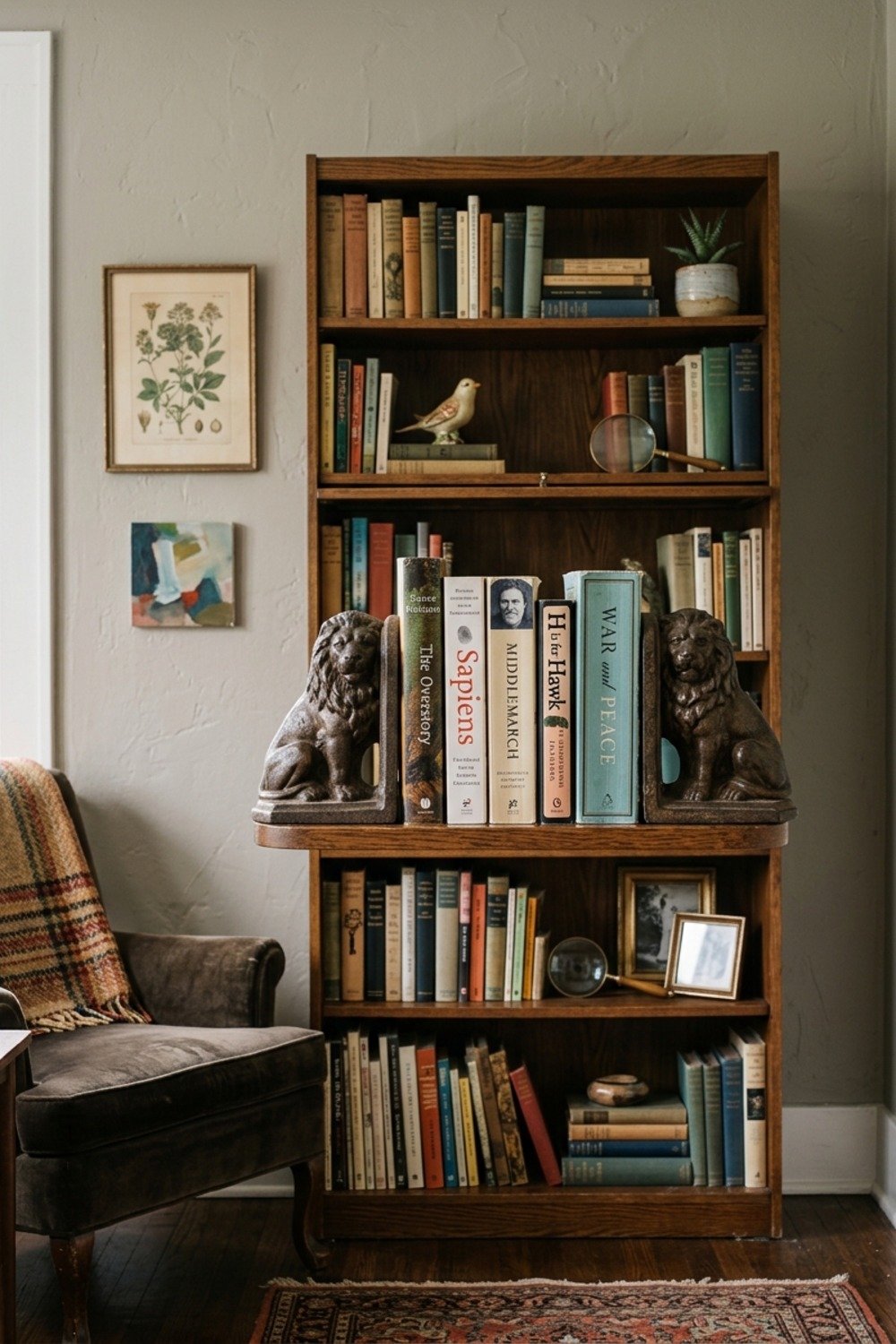
Bookends fail when they slide, and cheap tin ones slide the moment a stack tips. Cast-iron or solid marble pairs weigh 2-3 pounds each and hold half-full shelves upright, because the weight resists the sideways push of leaning books.
For a pet household, rubber-footed bases keep them from skating across a smooth shelf. A matched pair costs $20-$40, and they outlast every lighter style. Watch the shelf itself, though, since heavy ends can scratch varnish without felt pads.
26. Open a storage ottoman
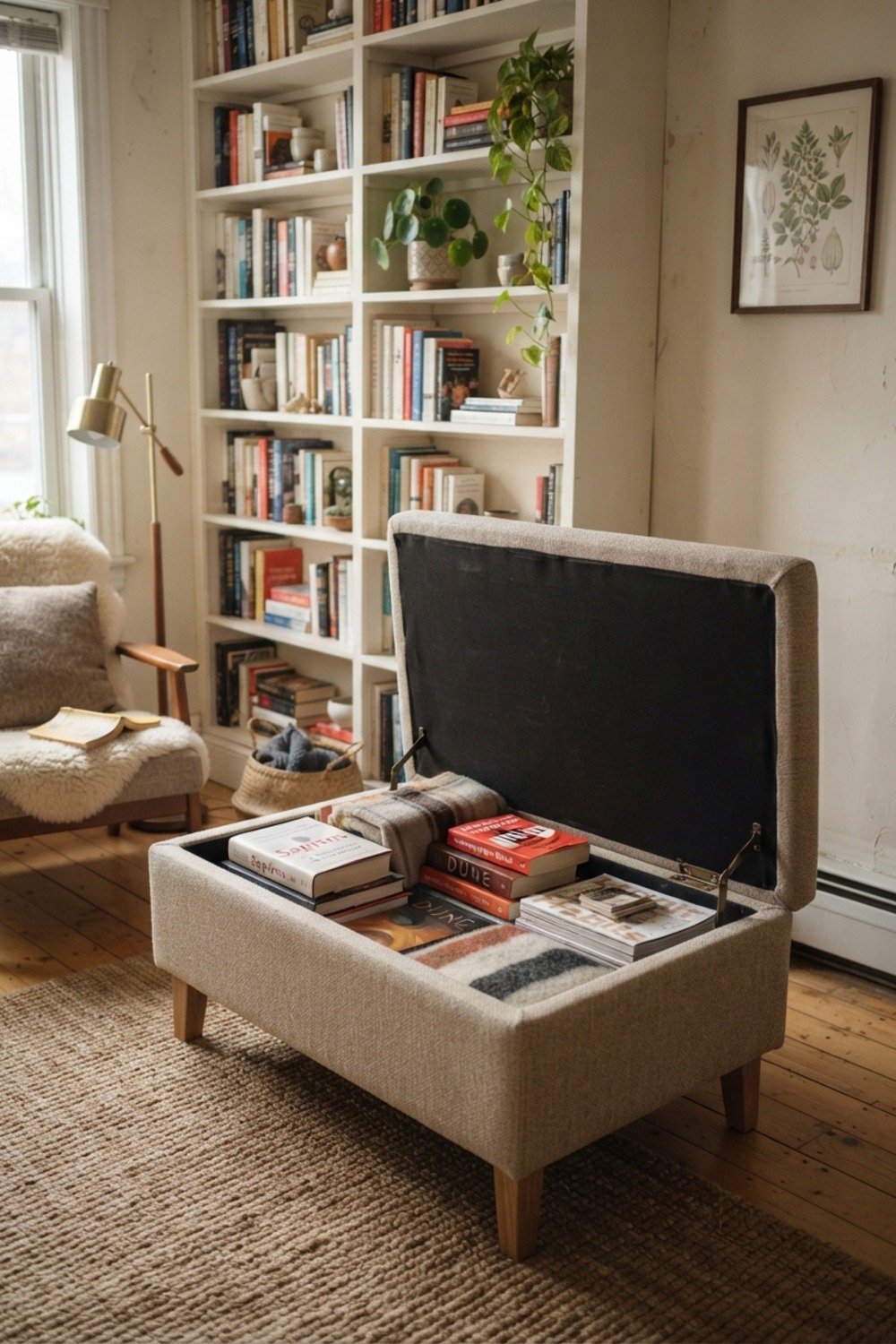
An ottoman roughly 30 inches wide is a footrest, a coffee table with a tray, and a hidden stash for oversized art books. Pick one with a lid that doesn’t slam, since kids’ fingers and hinges make a bad pair.
Check the interior depth before buying, because many ottomans have shallow bins. Faux leather wipes clean and survives daily use better than woven fabric.
27. Display half your books and rotate the rest
Rotation is a seasonal storage trick that keeps shelves breathing, so each book gets room to be seen and the wall looks curated instead of crammed. Put out about 50 percent of the collection and swap in new titles every few months.
This helps anyone with a tiny wall of shelves and a growing library. Store the rested books in lidded bins away from heaters, since paper warps near heat. Label each bin so swaps take minutes.
Walls and Surfaces: Making It Look Built In Without Touching the Paint
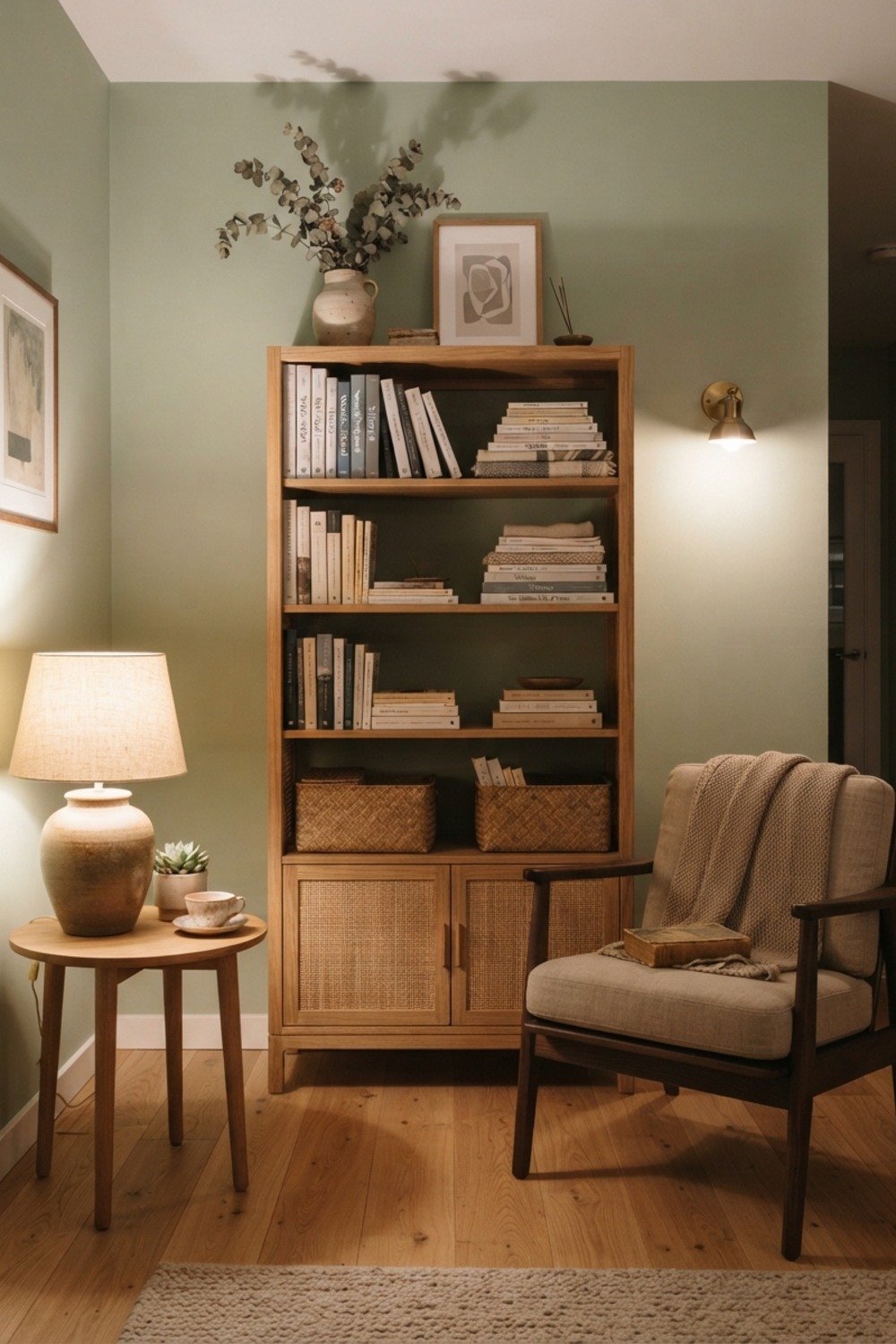
Walls are where renters get nervous, and for good reason. Nothing in this group needs a drill or a paint roller.
28. Line the back of a shelf with peel-and-stick wallpaper
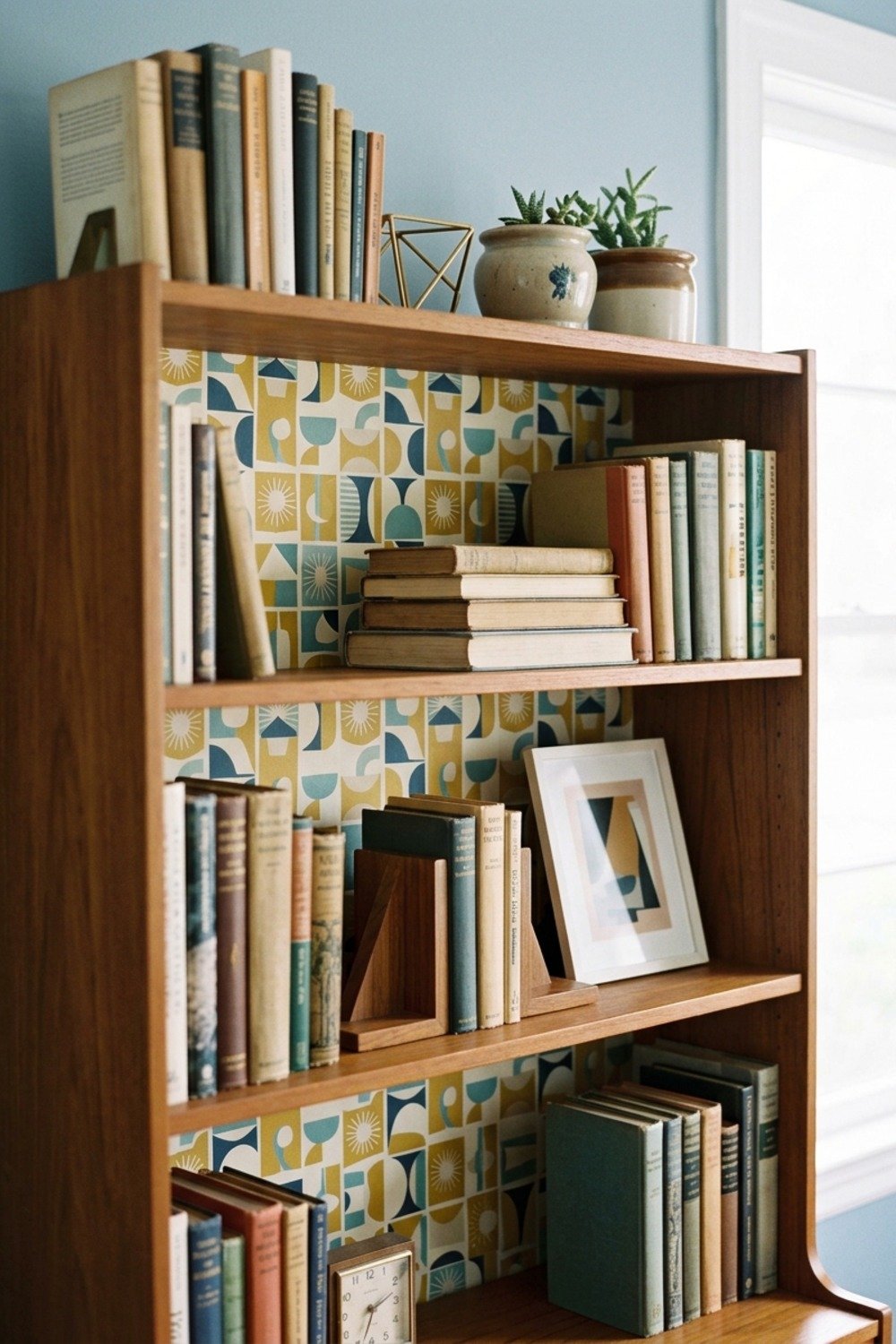
Peel-and-stick paper cut to the back panel of a bookcase gives a deep color or botanical pattern without touching the wall. A 20-inch-wide roll, about $25-$40 from brands like Tempaper, covers a standard unit.
Apply it to the shelf’s back panel, not the wall, and it leaves no residue. Smooth it with a squeegee to avoid bubbles that show once books are removed.
29. Hang light frames with adhesive strips
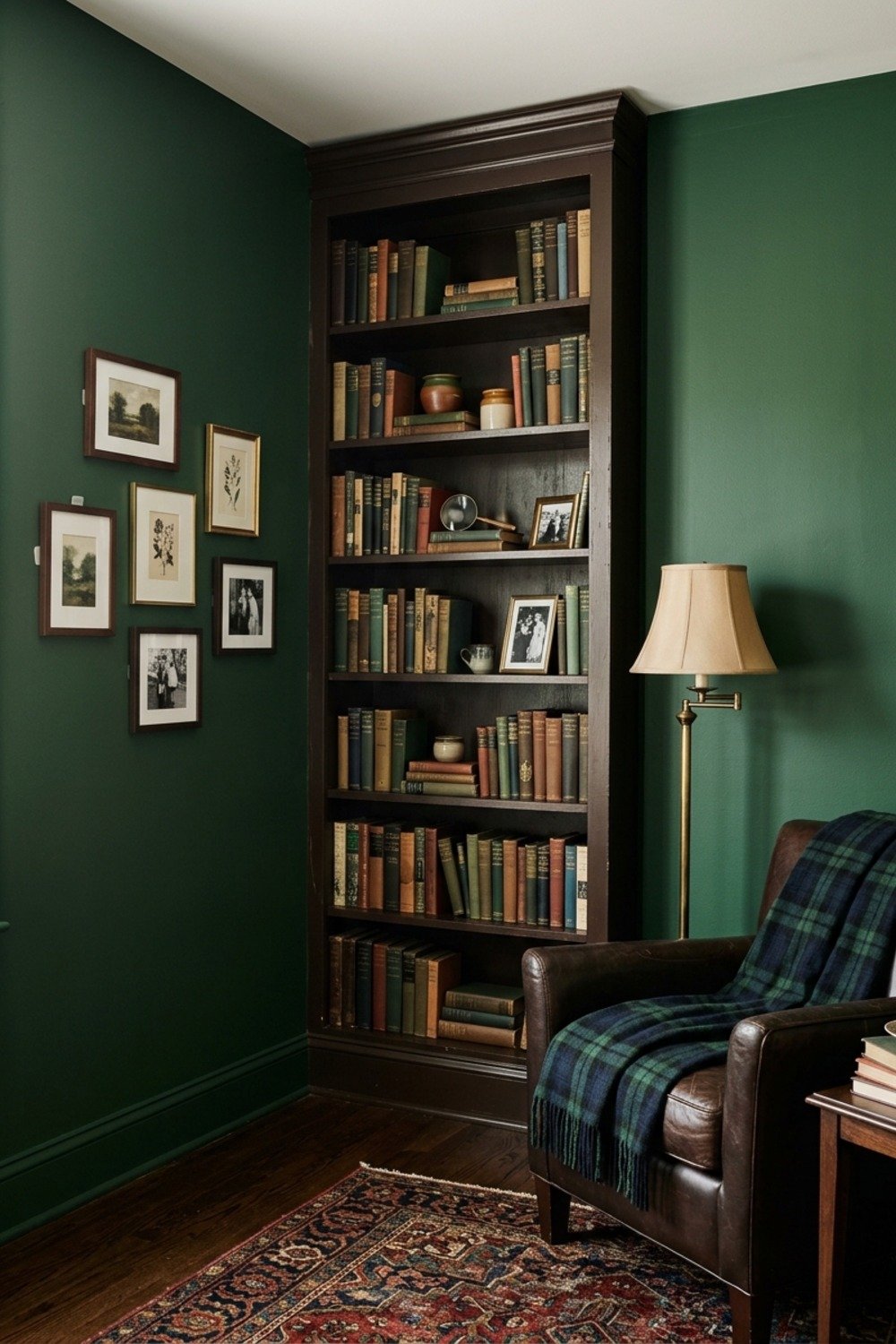
Adhesive strips such as Command picture strips hold lightweight frames, and a set of four rated strips grips up to 16 pounds when used as directed. Keep prints under glass-free acrylic for lower weight.
Clean the wall with rubbing alcohol first so the strip bonds well. Pull the tab straight down, parallel to the wall, to release it without ripping paint.
30. Lean framed art on the shelves
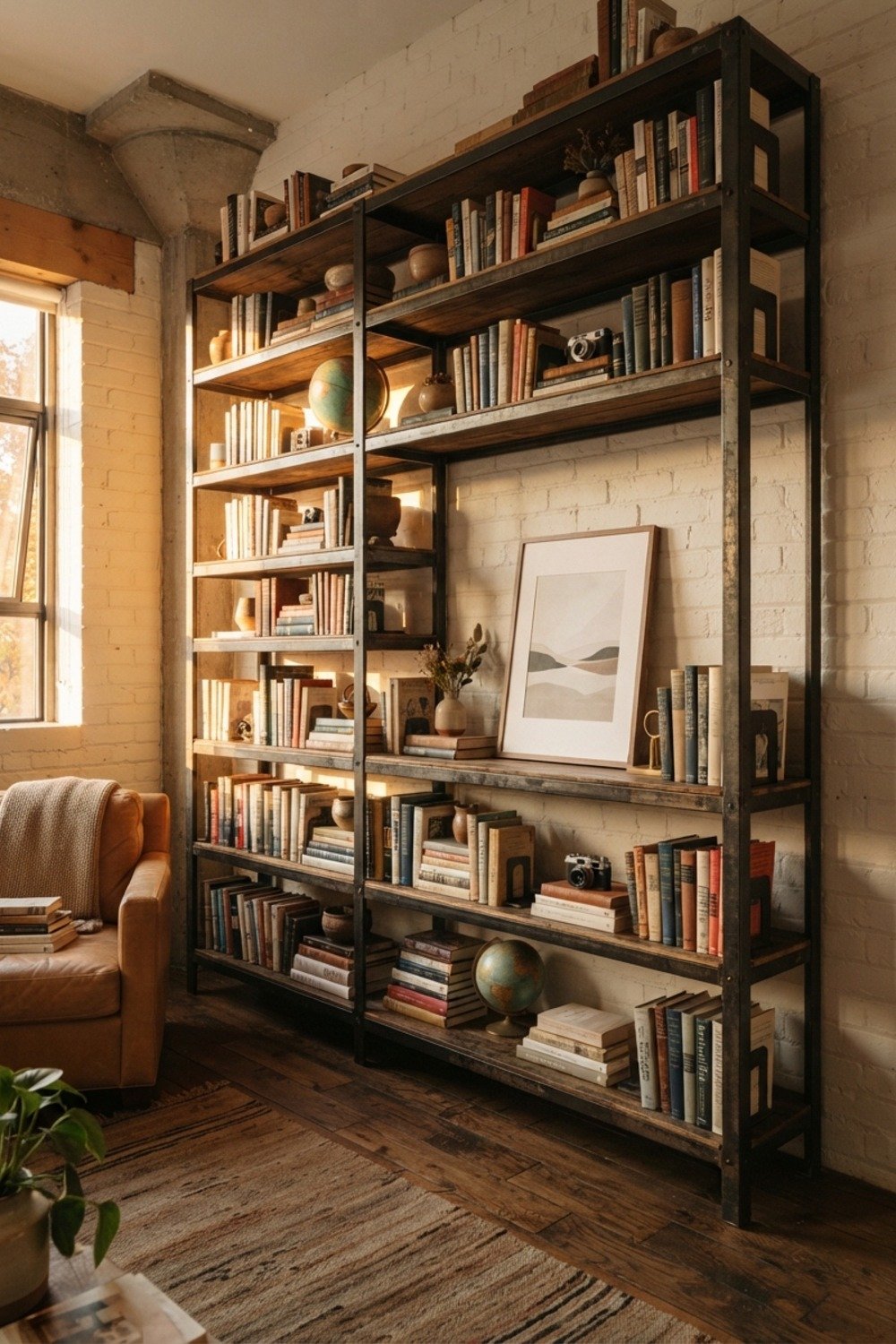
Layering frames on a shelf in front of books breaks up the rows and adds depth. Lean a 12×16 print against the spines and let it overlap by an inch or so.
It suits shelves that feel too busy. The trade-off is dust, so wipe the glass every couple of weeks, since books and frames collect it in equal measure.
31. Lean a tall mirror nearby
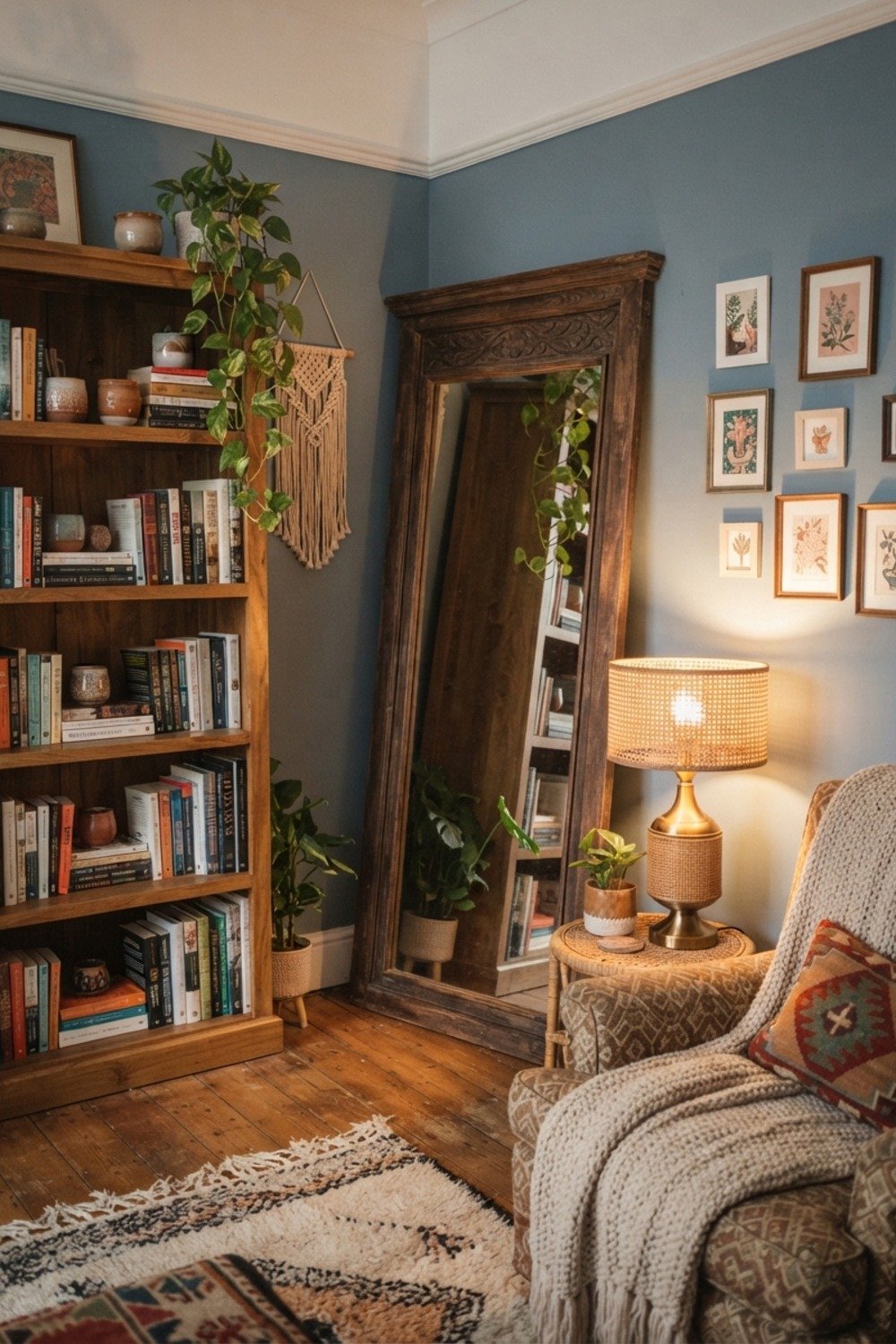
A floor mirror, around 60 inches tall, bounces window light deeper into a dark corner and makes a small library read larger. It also doubles the glow of a lamp placed beside it.
Place it at an angle to the window rather than directly opposite, which just reflects glare. Use rubber stoppers under the frame so it doesn’t slip on hardwood.
32. Label baskets with library-style card holders
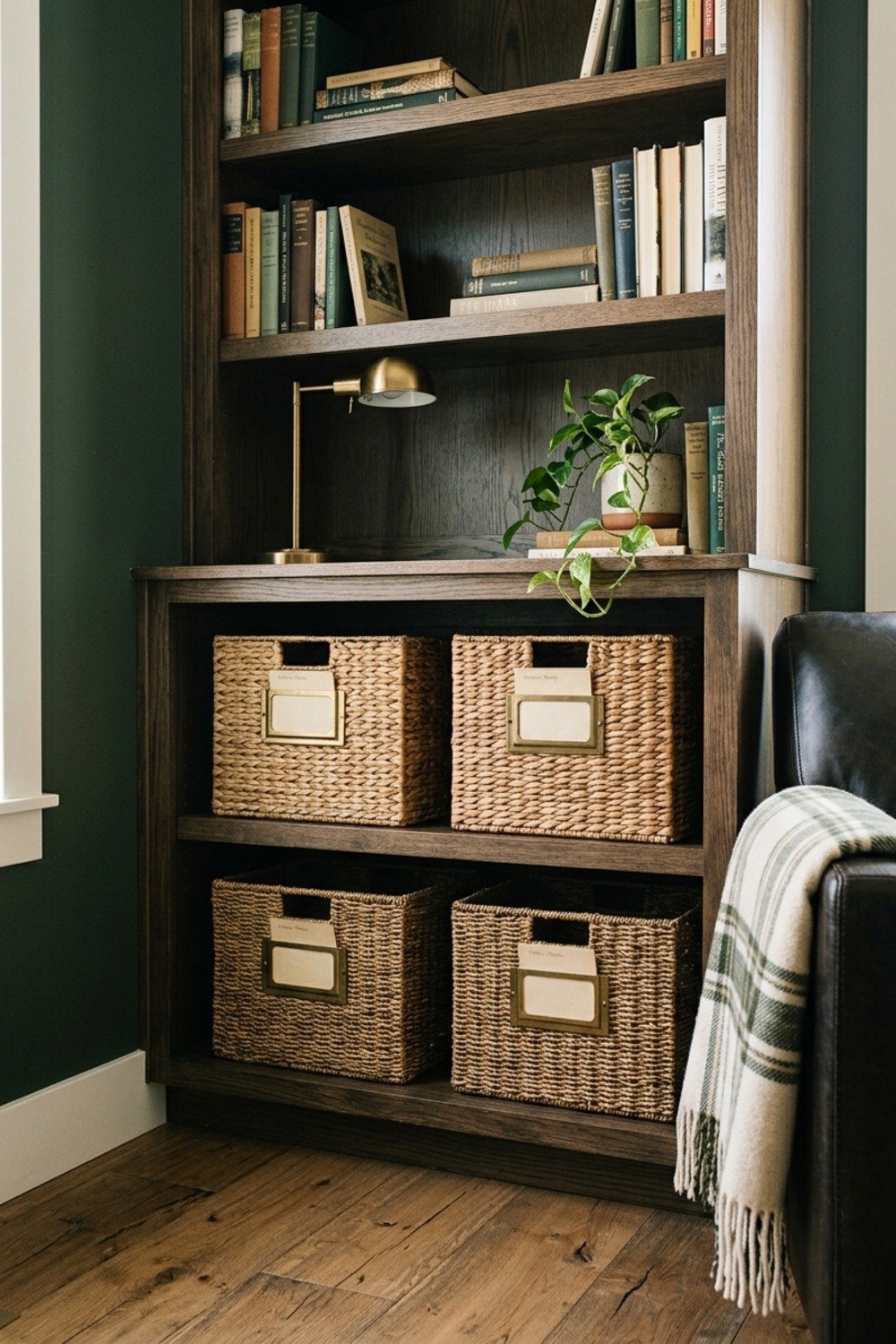
Stick-on brass label holders, about $8 for a set, give baskets a vintage library air. Slide in handwritten cards for travel, poetry, or kids’ books, so everyone can find a category without tipping out the contents. Pencil cards make resorting easy as collections change.
They work best on woven or wooden bins with a flat face. Use a removable adhesive and test it on the underside first, because some strong glues leave a mark on varnish.
33. Hide the mess behind a folding screen
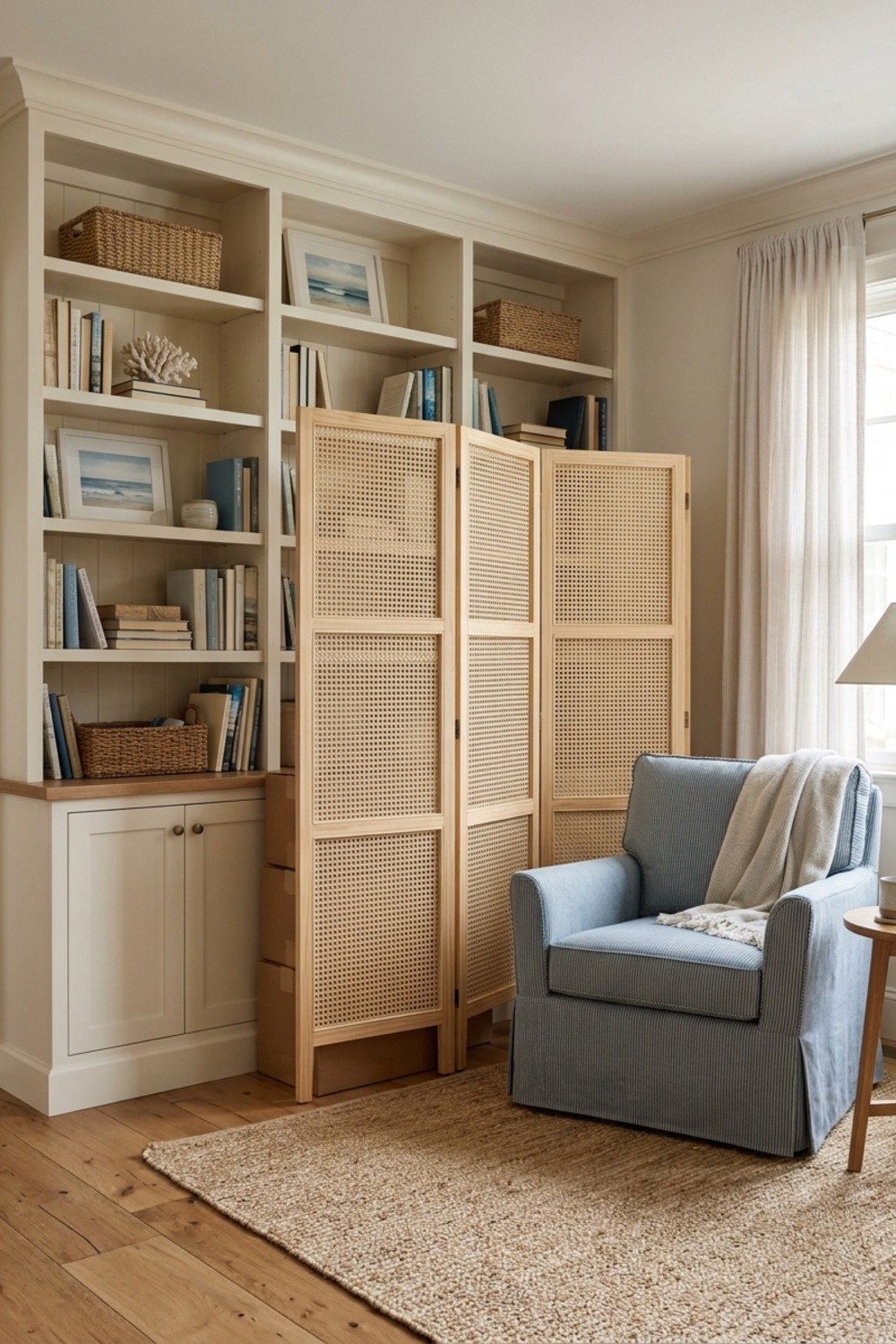
A three-panel screen, roughly 5 feet tall, stands behind the reading chair and encloses the nook like a booth. It also hides a cluttered wall or an ugly radiator, which suits open-plan rooms and shared spaces with no door to close.
Pick a solid frame with a wide footprint so it doesn’t tip when someone brushes past. Fabric panels dampen sound too, which makes a reading corner feel quieter. Keep it a few inches clear of a hot radiator, since fabric and heat do not mix.
What Landlords Actually Allow
Ask before assuming. Lease language varies a lot, and the same adhesive hook that one landlord shrugs at can be a deduction with another.
Most of these 33 Small Home Library Ideas fall into the freestanding category, which almost never triggers a lease issue. Here is how the rest sort out.
- Usually fine: freestanding shelves, rugs, lamps, baskets, tension rods, and over-door hooks.
- Ask first: adhesive strips, peel-and-stick wallpaper on walls, and tension-pole shelves against ceilings.
- Best to avoid: anything that needs a screw, a nail, or tall furniture without anti-tip hardware in a home with young kids.
Get permission in writing, even by email. A two-line message with photos of the product often settles it in a day and protects the deposit later.
Undoing Everything on Move-Out Day
Reversibility is the whole point of renting well, and a little planning makes the final cleanup quick. Start the process a week ahead rather than the morning of the walkthrough.
- Remove adhesive strips by pulling the tab slowly, parallel to the wall, for about 10 seconds.
- Warm any stubborn residue with a hairdryer on low for 30 seconds, then peel.
- Take down peel-and-stick paper from the top corner downward, at a low angle.
- Wipe the wall with a damp microfiber cloth and a drop of dish soap.
- Lift rugs and shelves to check for scuffs or dents in the floor, and rub out scuffs with a pencil eraser.
Take dated photos of each wall before and after. Those pictures are the simplest proof that the apartment is exactly as it was handed over.
Frequently Asked Questions
Can adhesive strips hold a shelf full of books?
No. Adhesive strips are rated for lightweight frames and small decor, usually 16 pounds or less per set. Books are far heavier, so use freestanding units and keep the strips for art.
How many books fit on a ladder shelf?
A typical 5-tier, 72-inch ladder shelf holds about 100-120 paperbacks or 50-60 hardcovers. Weight is the limit, so stack heavier books on the lowest two tiers and lighter ones above.
Do I need to anchor a tall bookcase in a rental?
Anything over 36 inches should be anchored, and that usually means a screw into a stud. If the lease forbids it, choose low units, strapless cube stacks, or ask the landlord for permission to use a single anti-tip kit.
How much do 33 Small Home Library Ideas cost to pull off?
You won’t need all 33, and a solid starter nook costs about $200-$400. A cube unit, a chair, a rug, and a lamp cover most of it, and the rest of the 33 Small Home Library Ideas are cheap add-ons worth layering over time.
Start Your Library This Weekend
The best small library is built in layers, one freestanding shelf and one warm lamp at a time. These 33 Small Home Library Ideas prove a renter can have a reading room worth envying and still get the full deposit back.
Save or pin this list so it’s waiting when the urge to rearrange hits. Then pick one corner, measure its width and height, and start with a single shelf before buying anything else.