It’s 4:15 on an October afternoon, the light is coming in low and amber across the bed, and the crisp white summer duvet suddenly looks a little chilly. That’s the moment cozy fall bedroom decor stops being a nice idea and becomes a to-do.
Below are 18 swaps, each doable in under an hour, with the reasoning behind them and the mistakes that sink them. Pick five and finish them properly rather than dabbling in fifteen.
Refreshing your cozy fall bedroom decor this season
Cozy fall bedroom decor works best when the heavy hitters change first: bedding, light, and the floor. Start at the top of this list and the room shifts fast. The later items are for polish.
1. A brushed cotton flannel duvet cover in place of percale

A flannel duvet cover in 5-6 ounce brushed cotton is the fastest single change you can make. Percale feels crisp and cool, which is exactly why it’s wrong once nights dip under 60°F. The napped surface traps a thin layer of air, so the bed feels warmer before anyone climbs in.
Check the weave anyway, because loose flannel pills within one season. Heavier isn’t always better either, since anything past about 6 ounces gets bulky inside the duvet and shifts around. This one suits anyone who runs cold or sleeps with the window cracked.
2. A lidded basket at the foot of the bed for the swapped-in throws

A lidded seagrass or rattan basket about 20 inches across and 16 inches tall gives the throws a home, so they stop migrating to the armchair. Expect to pay around $40-60 for one that doesn’t shed on your socks. It’s ideal for small rooms, where a full bench would never fit.
Skip open, wide-weave baskets if your throws are fine knits, because snags are the price. And keep the lid on. A lid turns a pile of fabric into furniture.
3. A three-layer bed with a quilt folded in thirds
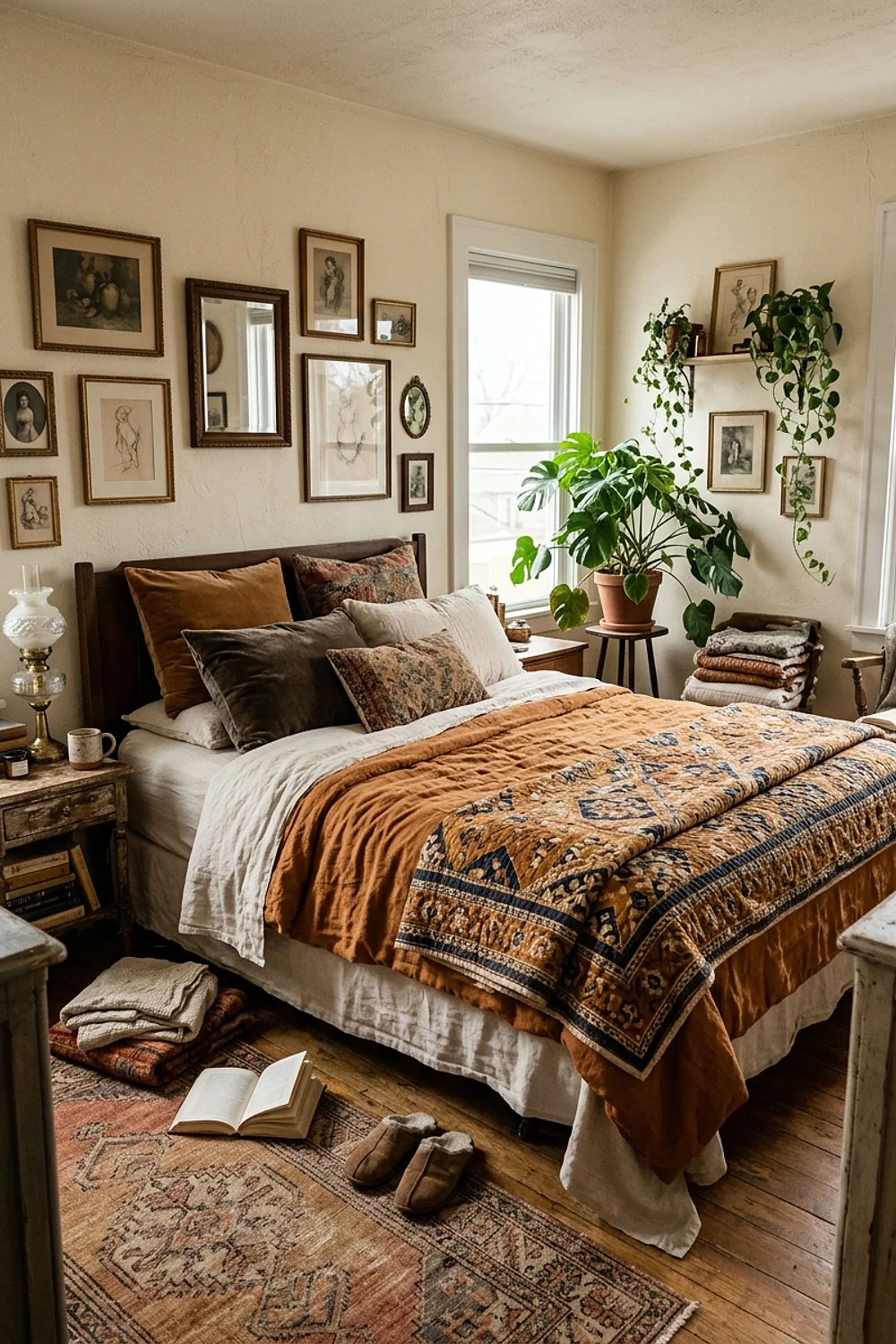
Fold a quilt into thirds across the lower third of the bed, then drape a chunky throw diagonally over one corner. The horizontal band gives the eye a stripe to rest on, and the diagonal keeps that stripe from looking like a hotel.
Pick three throws for the pile. …actually, no, scratch that. Two is the ceiling, because a third turns the foot of the bed into a laundry heap. Anyone who makes the bed in under a minute should favor this version, since it holds its shape.
4. A wool rug that sits under the bottom two-thirds of the bed
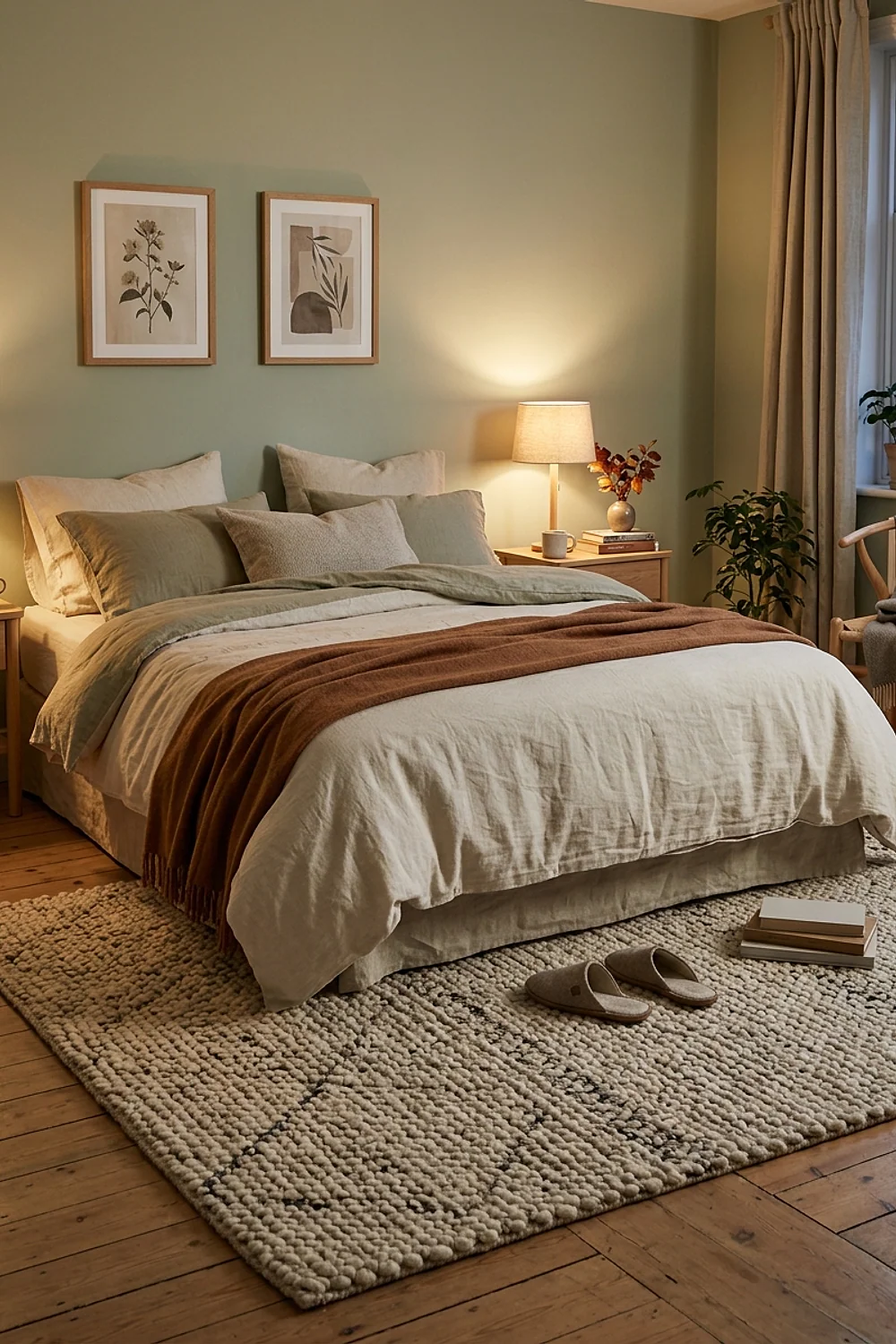
For a queen bed, an 8×10 wool or wool-blend rug placed under the lower two-thirds of the frame should poke out roughly 24 inches on each side and at the foot. That’s the spot where bare feet land at 6:30 a.m. in November, and wool at that moment is a small kindness.
The common mistake is a rug that stops at the edge of the bed, which reads like a bath mat. In a narrow room, two 2.5×8 runners flanking the bed work better than one rug that’s too small.
5. A single tall vase of dried stems on the dresser
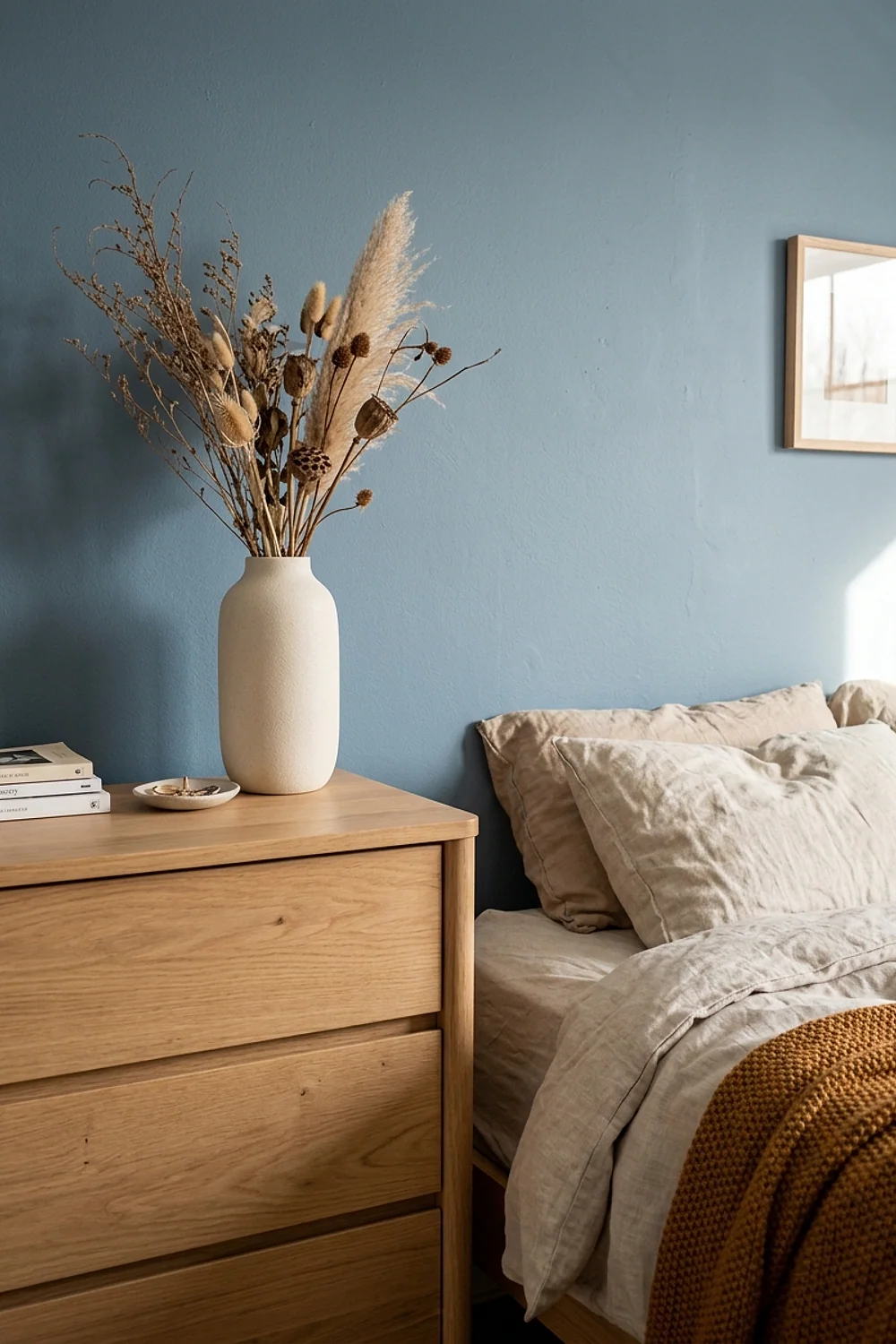
One tall vase holding four or five dried oak, wheat, or eucalyptus stems does more than a pumpkin on every surface. A bedroom with six orange accents reads like a toaster with six slots: lots of hardware, one job. Give each surface one seasonal motif and stop.
Glossy faux foliage is the thing to avoid, because the shine gives it away at ten feet. Real dried stems are matte and a little brittle, and a light mist of hairspray keeps the leaves from dropping.
6. Two 26-inch Euro shams stacked behind the standard pillows

A queen bed is 60 inches wide, so two 26-inch Euro shams standing at the back give the headboard wall a proper backdrop. Add two standard 20×26 pillows in front and one 14×20 on top. Velvet or linen covers run about $25-35 each, and the inserts can stay.
Pillows that are too small are the usual problem. They sink into the bed and make it look undersized. In a twin or a daybed, drop to two 24-inch squares and skip the full stack.
7. A rust, oatmeal, and olive palette with only one loud color
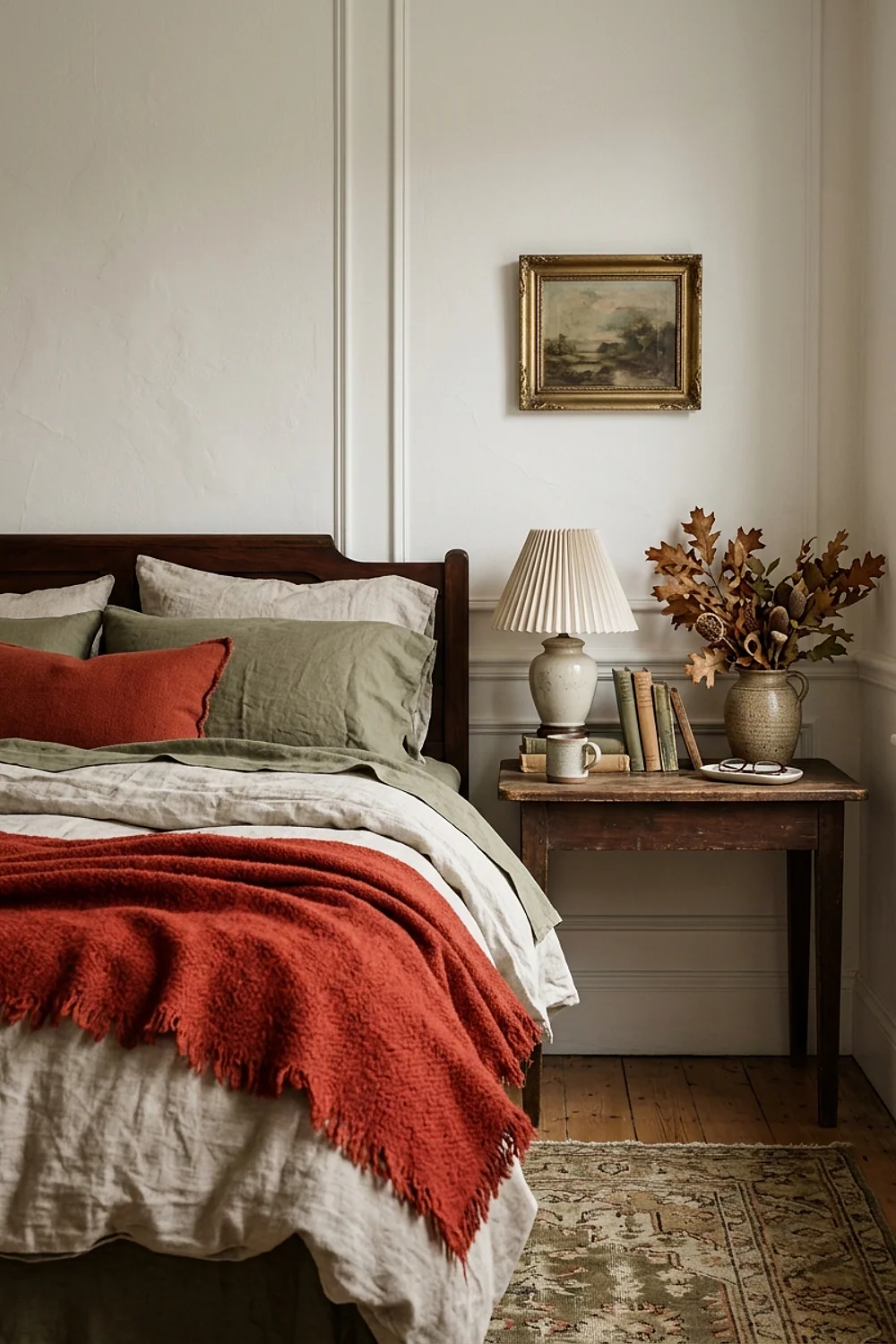
Use one saturated color and two muted ones. Rust leads, oatmeal and olive back it up, and the rust should cover maybe a tenth of what you can see from the doorway. That ratio is what keeps fall from tipping into a harvest festival.
Hold the fabric against the wall at 4 p.m. and again under lamplight before committing, since rust drifts toward brown after dark. Cool gray walls fight orange tones, so in those rooms lean on clay or terracotta with a hint of gray in it.
8. A 3-pound wool blanket across the foot of the bed

A wool-blend blanket in the 3-pound range feels substantial the second you pick it up, and that weight is the comfort. Here’s the counterintuitive bit: wool can absorb up to roughly 30 percent of its weight in moisture before it feels damp, so it stays warm on a clammy night where cotton wouldn’t.
It suits hot sleepers who still want a blanket, since wool regulates instead of trapping. Check the label for itch, though. Merino and lambswool are fine, but a scratchy blend ends up folded in a closet by December.
9. A small wooden tray on the nightstand
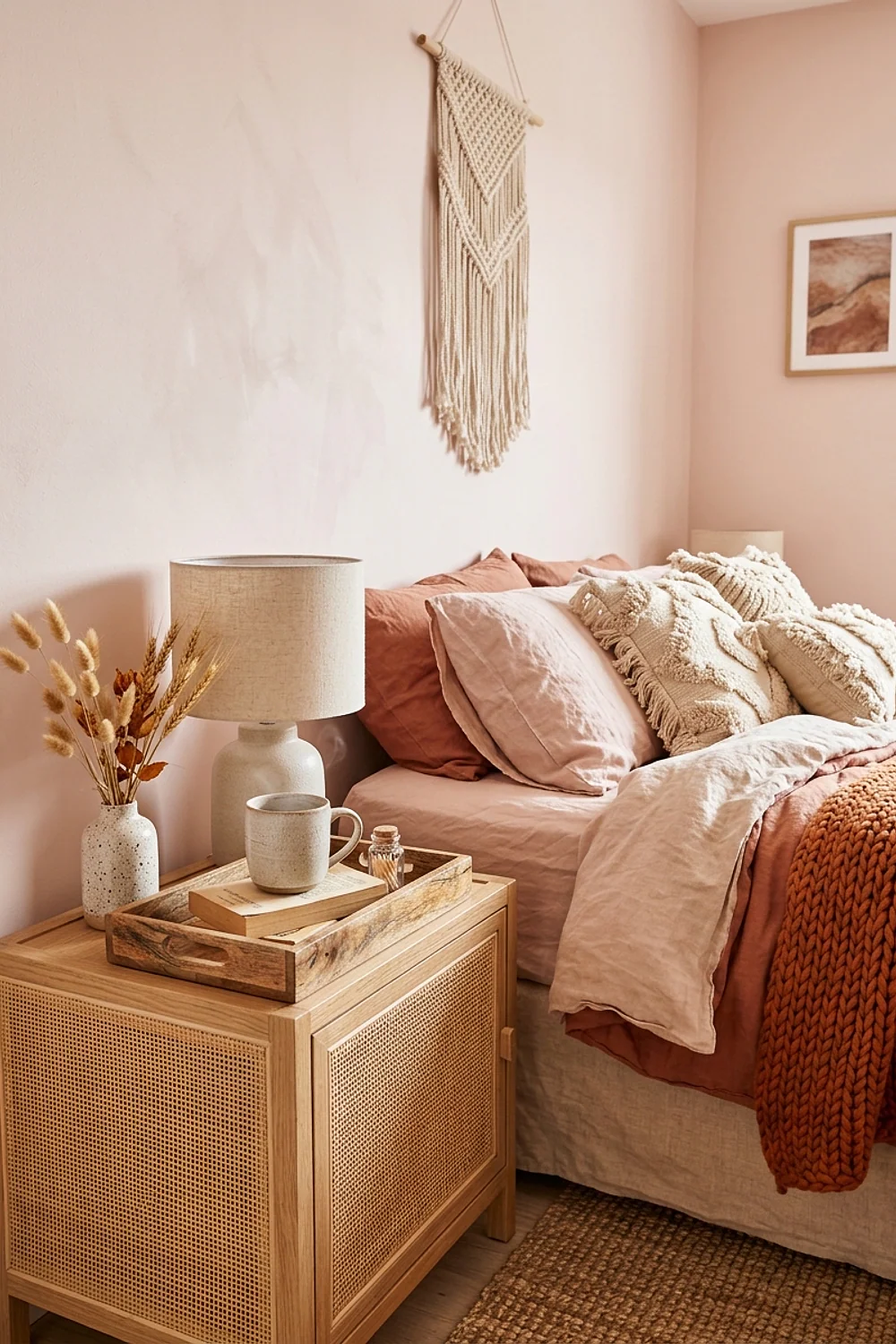
A 12×8 inch tray with a raised lip of at least an inch corrals the mug, lip balm, and current book into one lift-and-go unit. The nightstand stops looking like a pocket dump. It’s the right call for anyone who reads in bed with tea, which is most people from October on.
Measure first, because a 24-inch nightstand has to hold the lamp and the tray. If both don’t fit, the tray loses. Walnut and acacia hold up better than painted pine, which chips at the corners within a few months.
10. Amber bulbs at 2200K-2700K in every bedroom lamp

Swap the bulbs in every bedside and corner lamp for filament-style LEDs rated 2200K-2700K. By 5 p.m. in late October the sun is gone and the bulbs run the room, so lower color temperature pushes everything toward amber and makes rust fabrics glow instead of dulling.
Avoid anything marked 4000K or “daylight” in a bedroom, which flattens every texture you just bought. A dimmer plug at around $12 lets you drop the lamp to a low glow at 9 p.m. without rewiring anything.
11. Lined velvet or heavy linen curtains in place of sheers

Summer sheers give way to lined panels in velvet or heavy linen, hung 4-6 inches above the window frame and brushing the floor. Panels run around $80 each at mid-range retailers. The lining blocks drafts and early sun, and the weight gives the wall behind the bed a soft frame.
Unlined panels are the mistake, because they look thin and let the light through at a sad angle. For velvet, plan on spot cleaning or a professional job, since a home wash can crush the pile.
12. A leaning blanket ladder for the spare throws
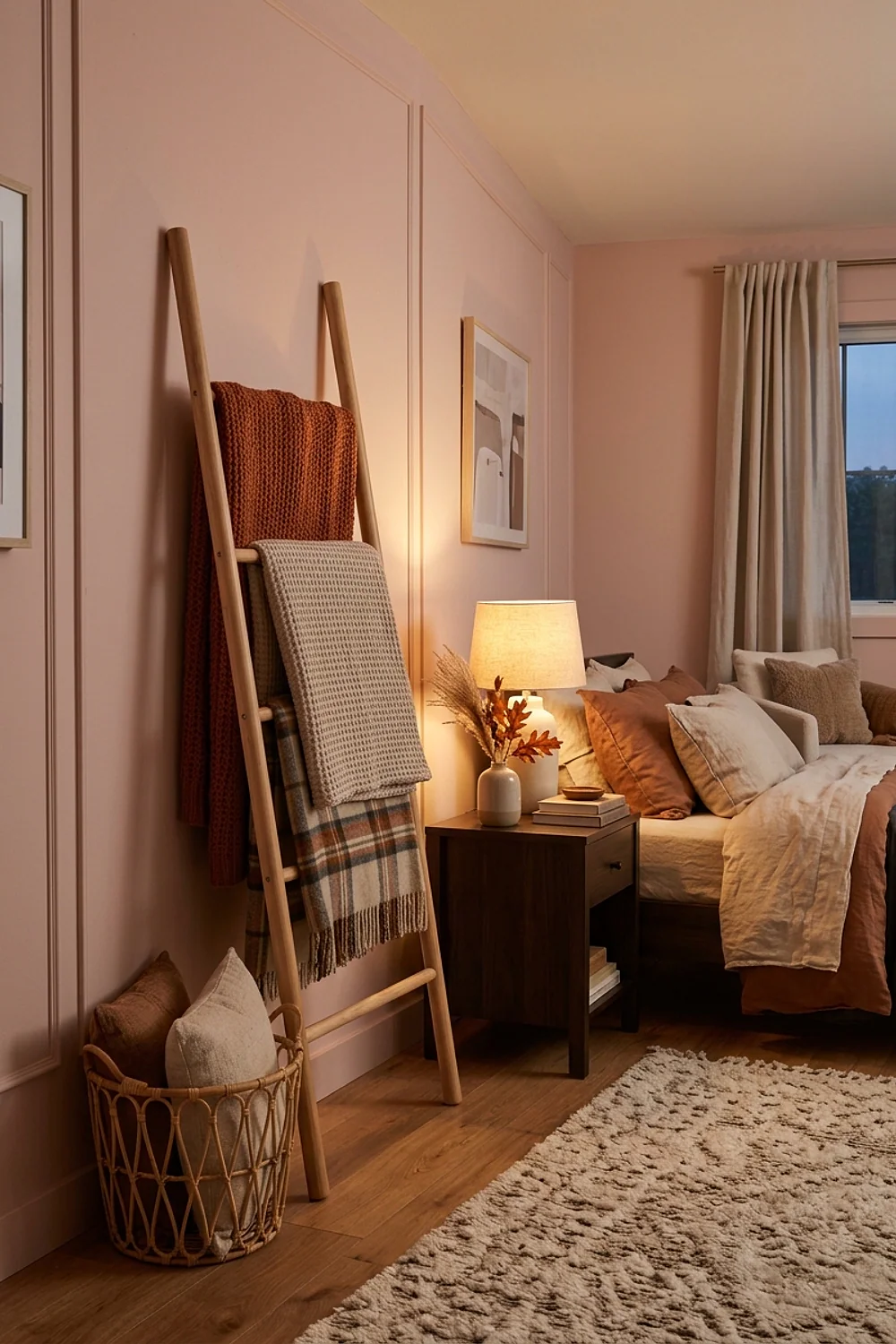
A 5-foot wooden ladder, leaned about 16 inches off the wall, holds three throws and turns storage into display. It suits rooms with roughly a foot of spare wall beside a dresser or window, and it doubles as vertical interest where there’s nothing else.
Stack no more than four layers, because a heavy load tips the ladder. Rubber feet or a bit of non-slip tape on the base keeps it from skating across hardwood. And skip it entirely if a toddler or a determined cat lives there.
13. A dresser vignette built from three objects at different heights

Pair a thrifted wooden bowl, a taper candle holder, and a framed print leaning against the wall, with the tallest piece around 14-16 inches. The varied heights make the eye travel, and the bowl is the one place for keys or earrings to hide.
Lining objects up in a row like a gift shop shelf is the typical error. Odd numbers feel looser than even ones. If the dresser is under 36 inches wide, two objects and a plant may be plenty.
14. A reading chair angled 30 degrees into the corner
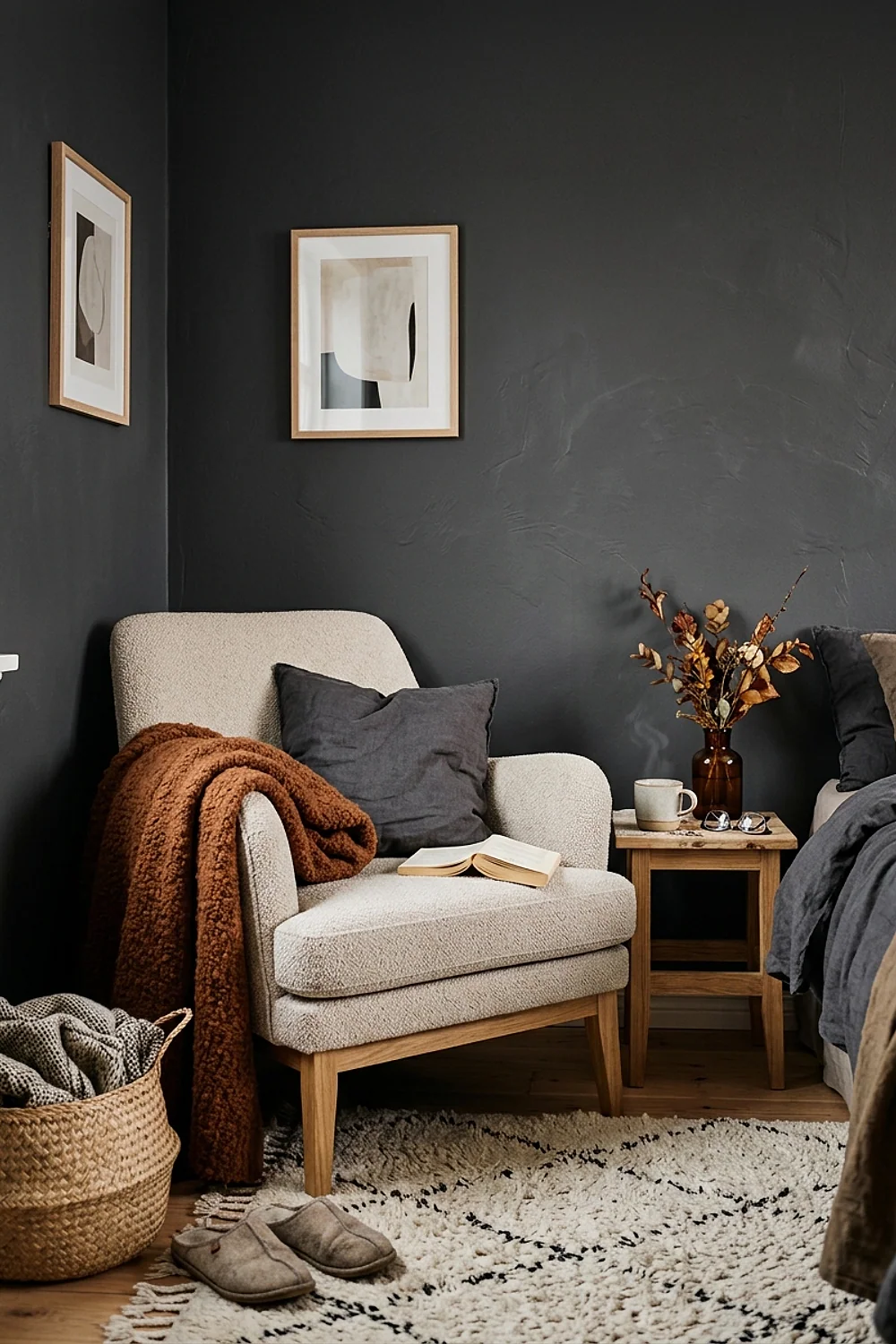
Angle the chair about 30 degrees toward the room and leave 36 inches clear in front of it. The diagonal breaks up the boxy corner, and a floor lamp behind one shoulder makes a reading spot in the dim half-hour after sunset. It needs roughly a 5×5 foot patch of floor.
Pushing the chair flat against both walls wastes the corner and makes it feel like storage. In a room narrower than 10 feet, skip the chair and use a bedside perch instead.
15. One candle scent, kept to the same family

Choose one scent family such as cedar, amber, or clove, and let it run through a single 8-ounce candle, priced around $28 for a clean-burning soy blend. One scent reads as intentional. Two or three scents compete and leave the room smelling like a shopping mall at closing time.
Trim the wick to a quarter inch before each burn, and keep the flame at least 12 inches from curtains. Blow it out before sleep, always. Anyone sensitive to fragrance should switch to beeswax tapers, which smell faintly of honey and little else.
16. A table lamp sized so the shade sits at chin level
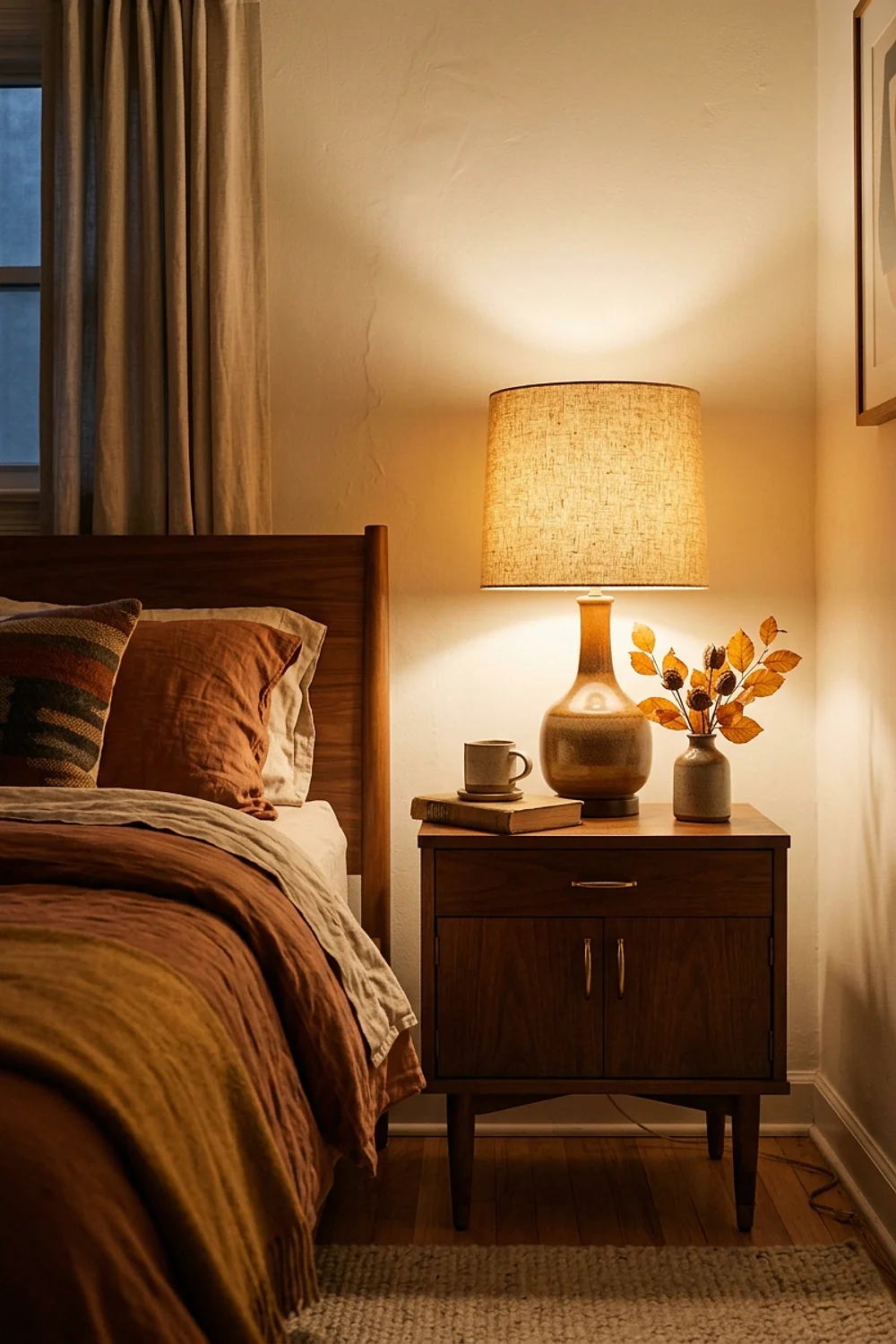
A bedside lamp should stand about 24-28 inches tall overall, so the bottom of the shade lands near your chin when you’re sitting up against the pillows. That keeps the bulb out of your eyes and the light on the page. A drum shade 14-16 inches wide in oatmeal linen fits most nightstands.
A tiny lamp on a big nightstand looks lost, and the opposite makes the table look crowded. Measure the nightstand first. The lamp’s shade shouldn’t be wider than two-thirds of the tabletop.
17. One deep forest green or plum velvet lumbar pillow

A single 14×36 lumbar pillow in forest green or plum velvet is the darkest note on the bed, and it’s the place where a hand lands without thinking. Velvet has a pile that changes shade as you stroke it, so it looks richer under lamplight than any printed fabric.
Use it where walls are white or greige and the rest of the bedding is neutral. If the room already has a rust accent, don’t add a second loud color. One contrast is plenty.
18. A heated mattress pad set to preheat for 15 minutes
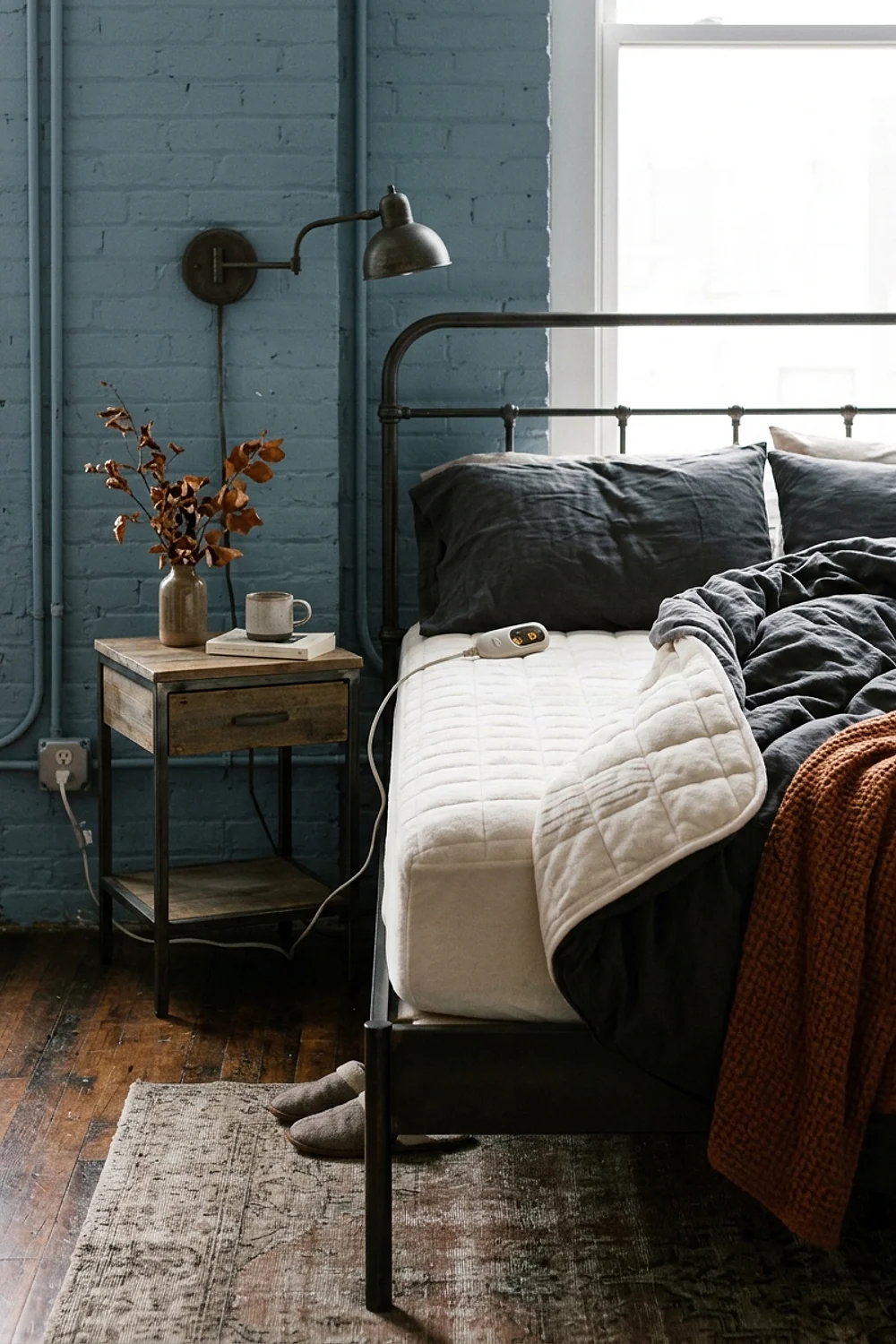
A heated mattress pad on low for 15-20 minutes before bed lets the bedroom sit at 62-65°F, which is the range most sleep researchers favor, while the bed itself stays toasty. Dual controls matter for couples with different thermostats, and an 8-10 foot cord keeps the plug from being an acrobatic stretch.
Sit it under the fitted sheet and keep the cord from kinking at the mattress corner. Never fold it sharply for storage. This is for anyone who dreads the first minute of getting in.
The order that makes the swap take one afternoon
Half-measures are tempting. One throw draped over an unchanged summer bed is the decorating version of wearing a scarf with flip-flops. Do the whole bed in one go and it takes about two hours.
On a rainy Sunday, this sequence keeps things moving without backtracking:
- Strip the bed and wash the new flannel duvet cover once before it touches the mattress.
- Swap the rug and drag the nightstand lamps into place while the floor is clear.
- Hang the lined curtains, then change the bulbs.
- Make the bed from the bottom up: sheets, duvet, quilt, throw, then pillows.
- Place the dresser vignette, the tray, and the candle last.
Finish each step before starting the next. A bed half-dressed with a rug half-rolled is how a two-hour job drifts into three weeks.
Storing the off-season pieces
Cozy fall bedroom decor deserves a real exit plan once the first week of December arrives, and so does the summer bedding it replaced. The goal is to keep fabric fresh, flat, and moth-free until it’s needed again.
- Wash everything first. Body oils and invisible spills attract pests and yellow in storage.
- Use breathable cotton storage bags for wool and down. Vacuum bags crush the loft and can trap moisture.
- Tuck a cedar block into each bag, and sand it lightly once a year to refresh the scent.
- Store linens flat on a closet shelf or under the bed in a lidded box, never in a damp basement.
- Label each bag with the season and the room, so nobody opens the wrong one in July.
Plastic bins are fine for candles and dried stems, but not for wool. Wool needs air, and a sealed bin turns into a damp shoebox with a lid.
Year-round foundations that keep cozy fall bedroom decor grounded
A seasonal refresh looks better and takes half the effort when a few pieces never change. These basics carry the room through all four seasons:
- A neutral, high-quality set of fitted sheets in white or oatmeal.
- A mattress topper with at least a 2-inch cushion, so the bed feels good no matter what’s on top.
- Two matching bedside lamps with linen shades, which hold up through every palette.
- A wool-blend rug base that works as a neutral floor year-round.
- Blackout curtain liners that let you swap the outer panels without losing darkness.
The common mistake is replacing the foundations too. When the base stays steady, the seasonal layer reads as a deliberate change, not a full bedroom overhaul. It also keeps the swap short.
Settling in for the season
Cozy fall bedroom decor comes down to a handful of decisions: warmer fabric, lower light, a heavier floor, and a restrained set of accents. Do those four properly and the rest is detail.
Save or pin this list so it’s waiting when the first cold evening arrives, then start with item 1: measure the duvet insert before ordering a flannel cover.
Frequently asked questions
How do I make cozy fall bedroom decor work in a rental?
Stick to anything that sits on top of the room: bedding, rugs, plug-in lamps, tension-rod curtains, and a leaning ladder. None of it needs a drill. Command strips rated for the weight handle lightweight framed prints without damaging paint.
When should the fall swap start?
Start when nighttime temperatures begin dipping under about 60°F, often late September or early October. That’s when flannel and wool start feeling right instead of premature. Swapping a week early costs nothing, since linens are easy to reverse.
How do I keep a small bedroom from feeling cluttered with extra layers?
Cap the bed at two throws, one quilt, and four pillows, and store everything else in a lidded basket. Pick one accent color rather than three. A small room reads as crowded long before it reads as full.
Can I keep fall decor up through winter?
Cozy fall bedroom decor carries into winter if the palette stays muted: oatmeal, olive, and deep green work in both seasons. Swap out only the explicitly autumn pieces, like dried stems and rust accents, and keep the flannel and wool in place.