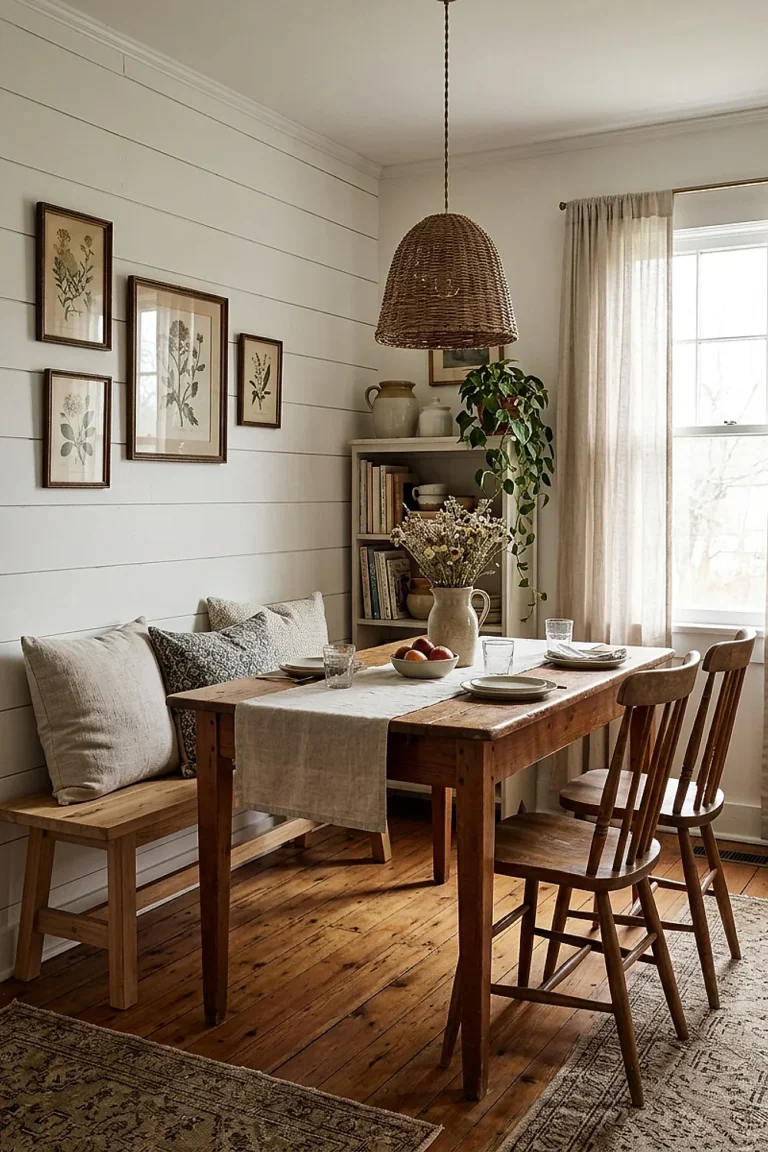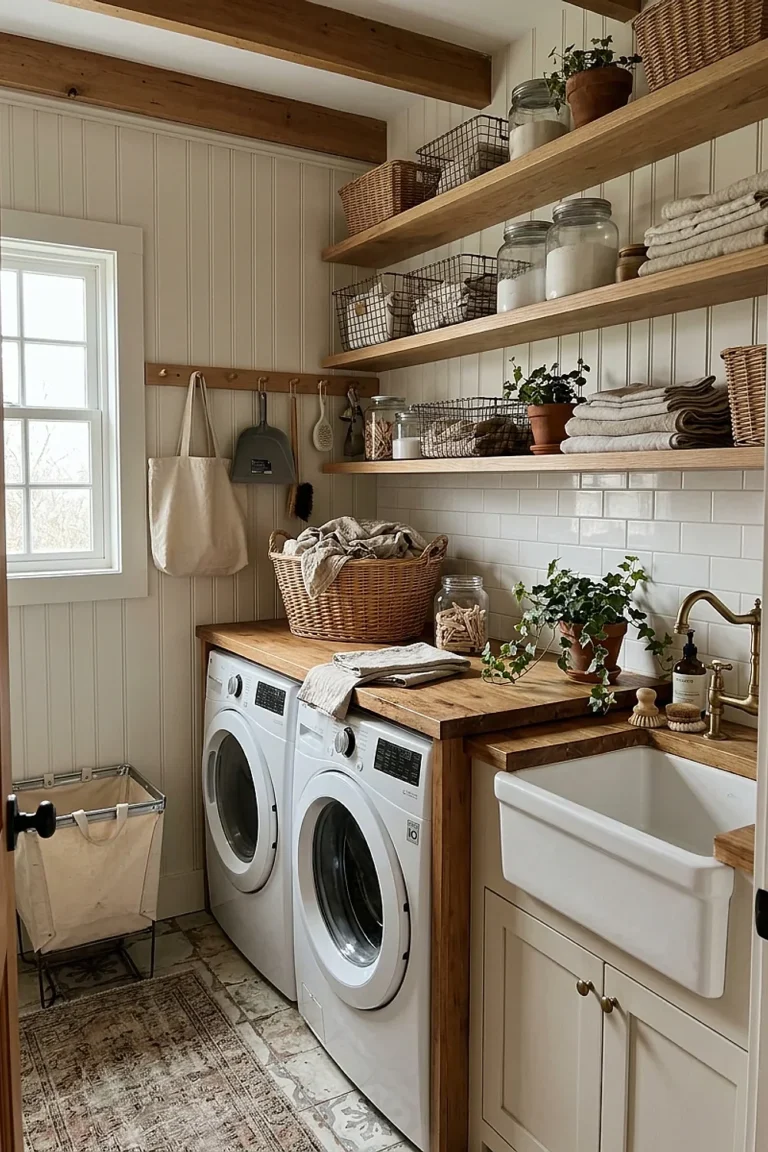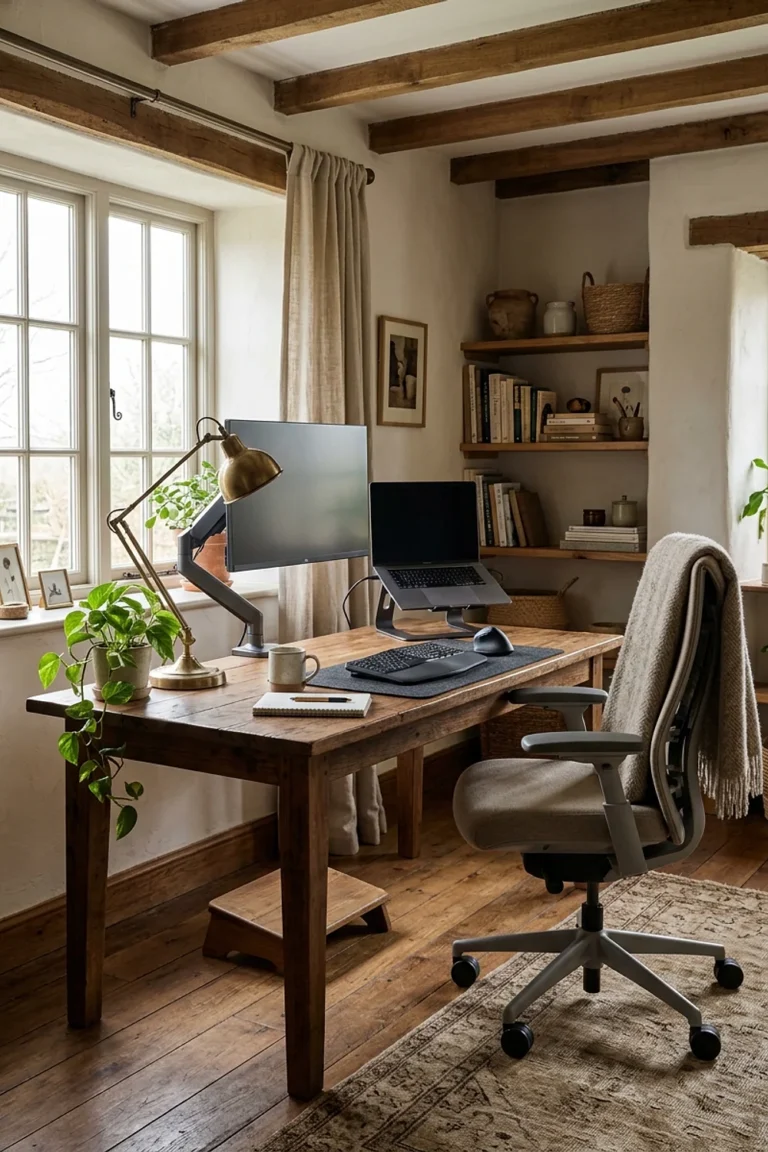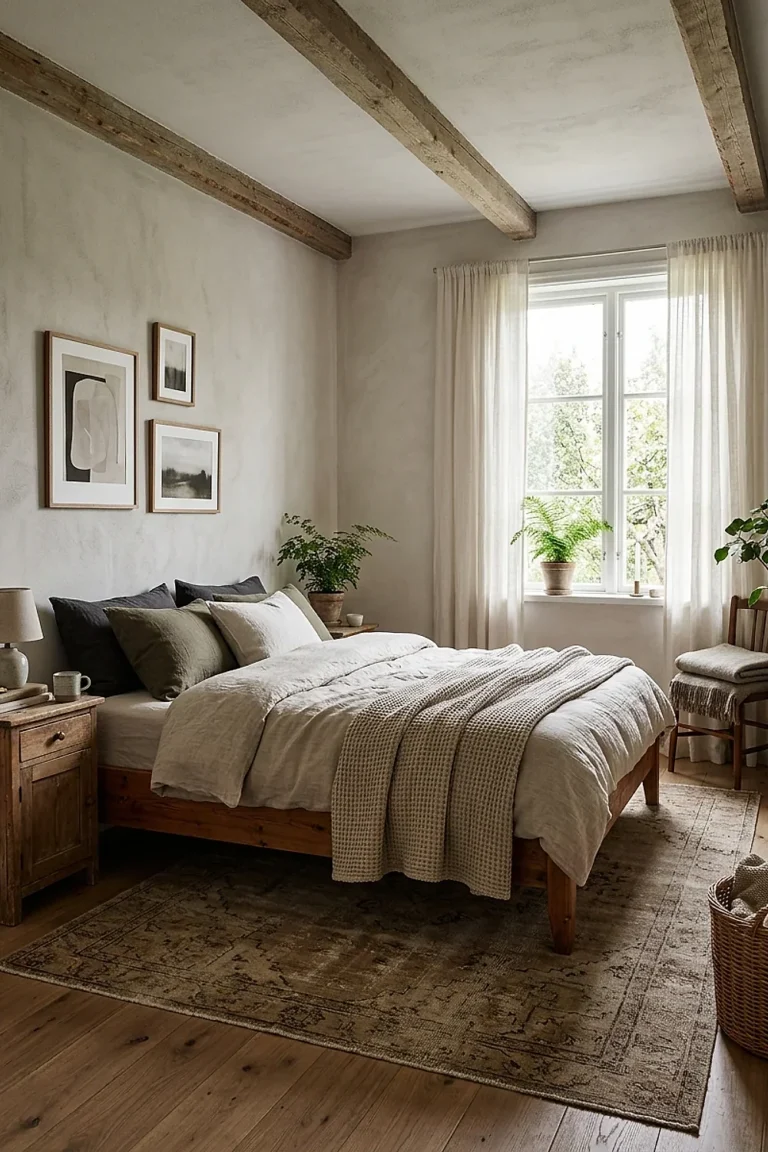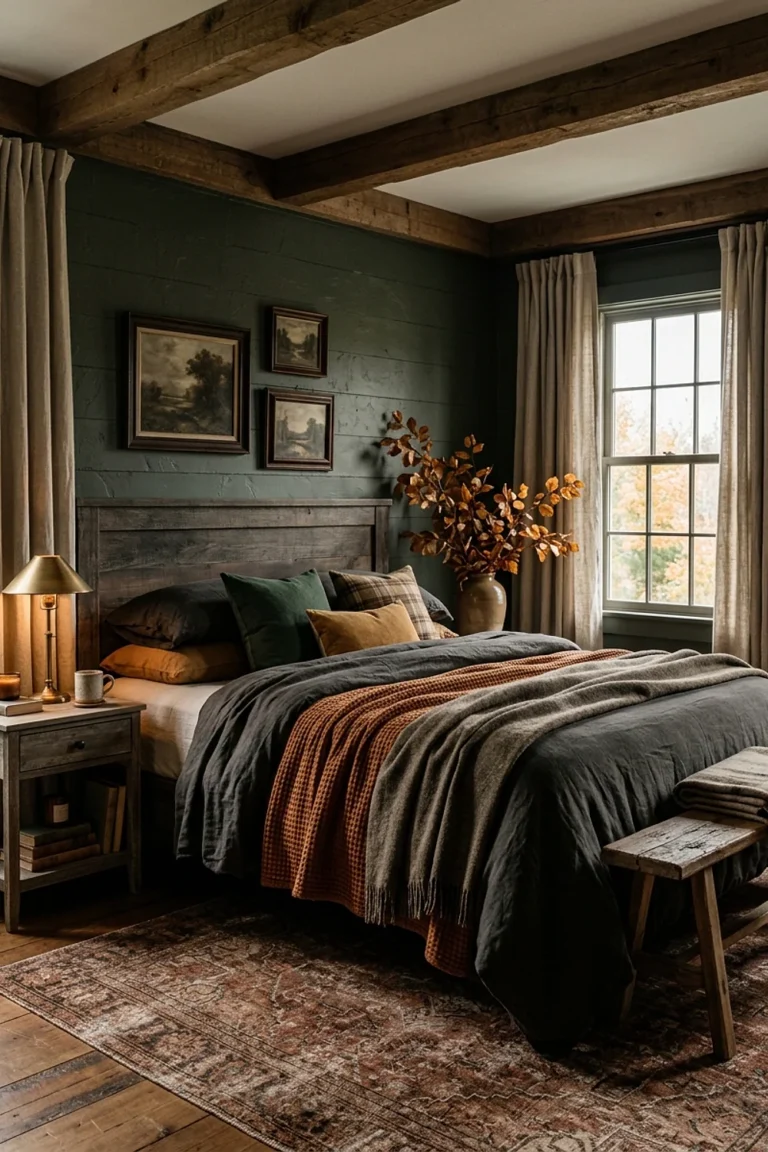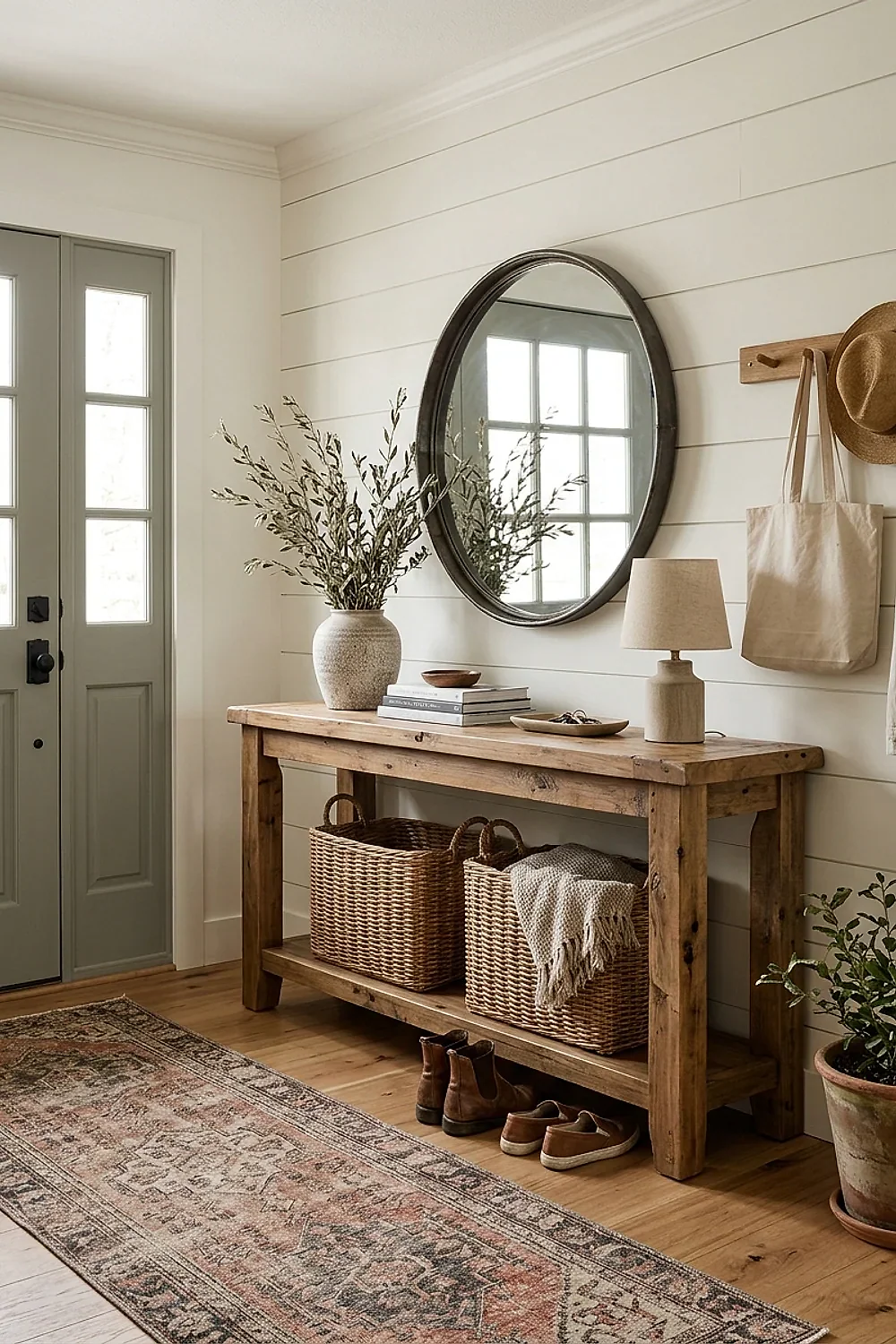
A small entryway fails the moment it tries to do everything at once. The 25 entryway decor ideas for Small Spaces below fix that by giving every inch one clear job, from the wall beside the door to the ceiling above it.
Each idea is tied to a specific zone, with real measurements and price ranges, so you can check your own hallway against the numbers before buying anything.
25 entryway decor ideas for Small Spaces: Starting points for your space
1. A 9-inch floating shelf above the hooks
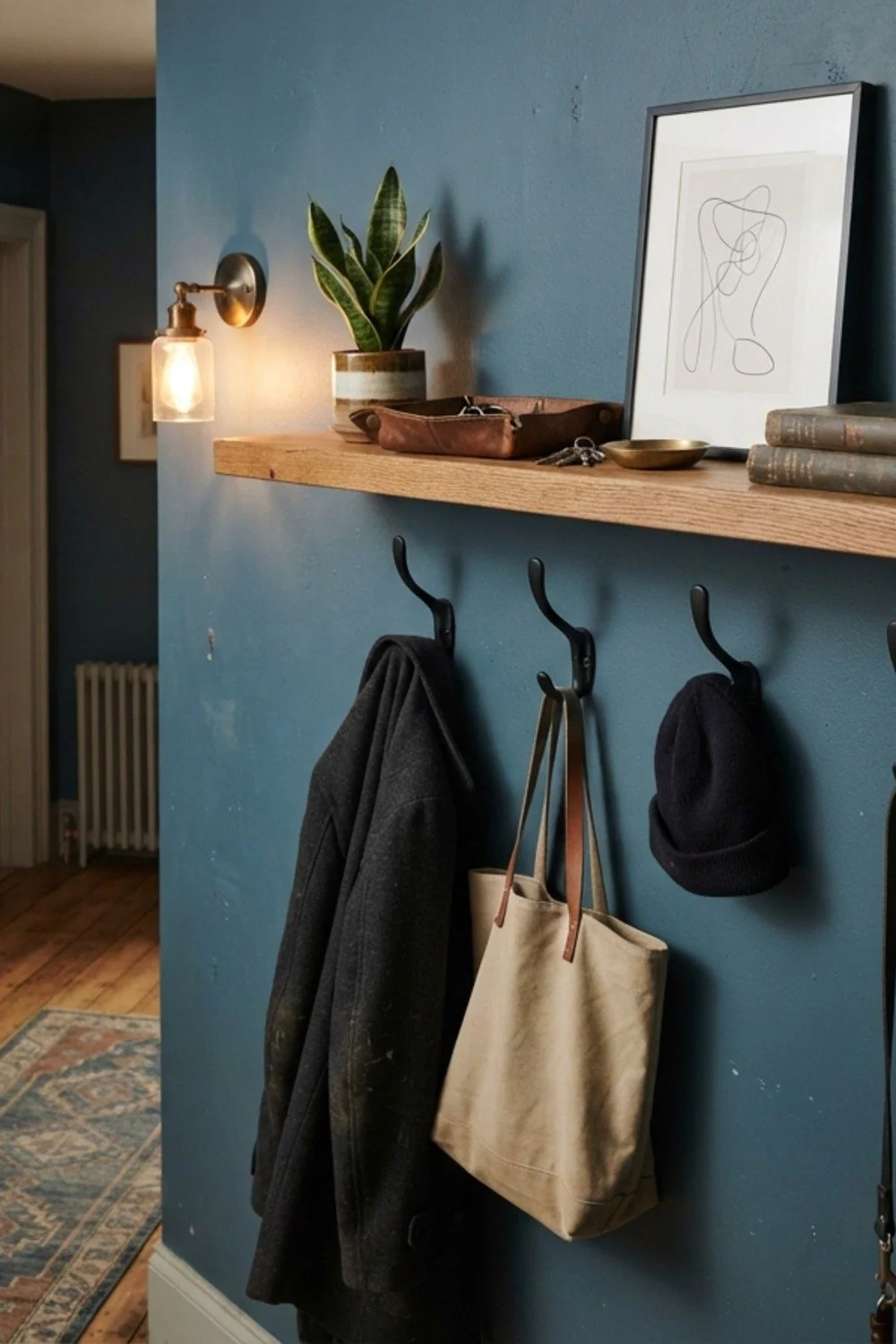
A floating shelf 9 inches deep and about 36 inches wide, hung roughly 60 inches off the floor, holds keys, a tray and one small plant without touching the floor. It suits entries as narrow as 36 inches.
Go deeper than 10 inches and shoulders start catching it. Mind the fixings too (floating shelves only hold real weight if the screws land in studs or rated anchors).
2. A console pushed flush to the longest wall
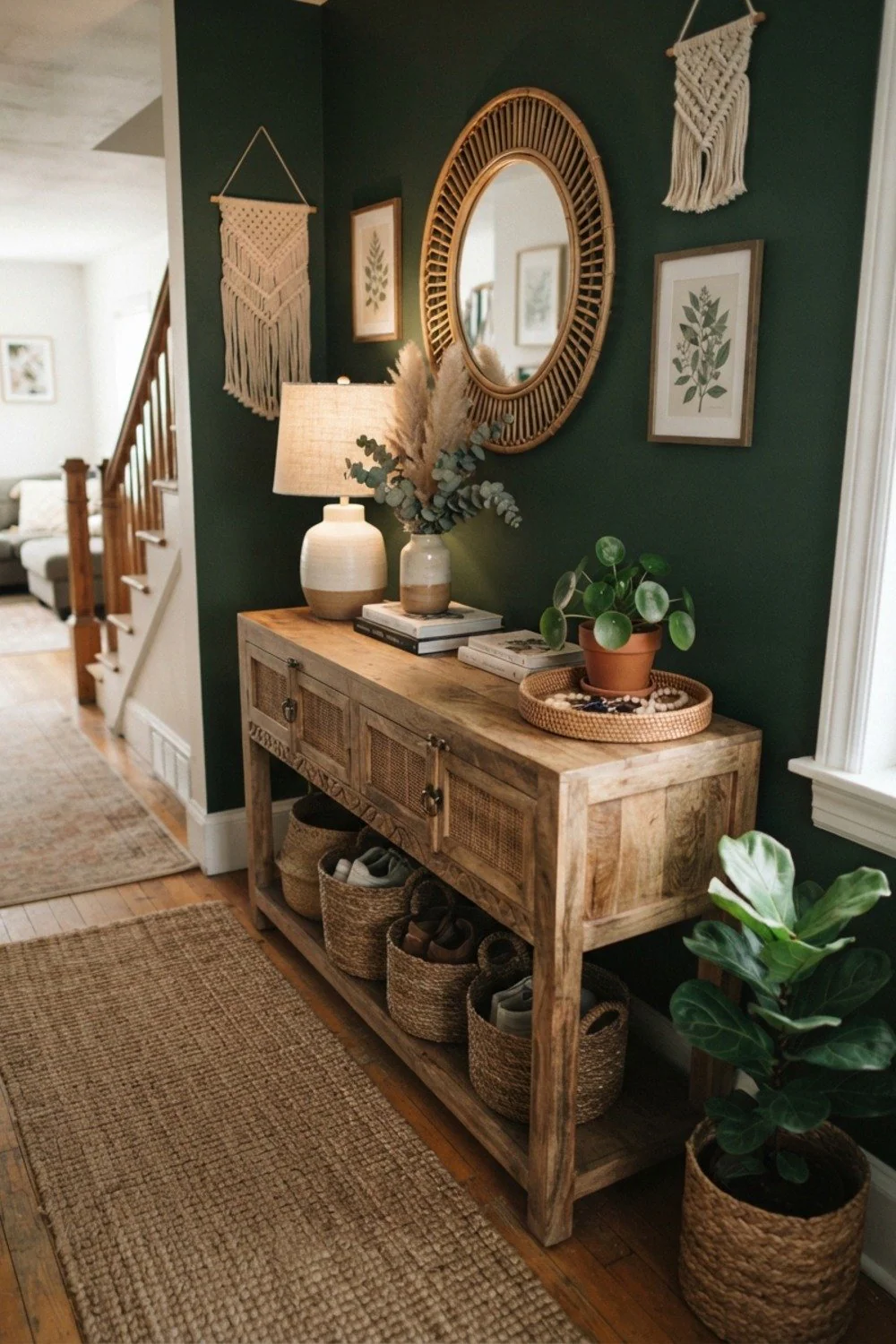
Pushing a slim console against the longest wall keeps a clear 30-inch walking lane, the minimum most people need to pass without turning sideways. A model 10-12 inches deep fits where a standard 16-inch one would pinch the path.
Check the door swing before buying. A console that stops the door opening past 90 degrees becomes an irritation within a week.
3. A thrifted stool doing console duty
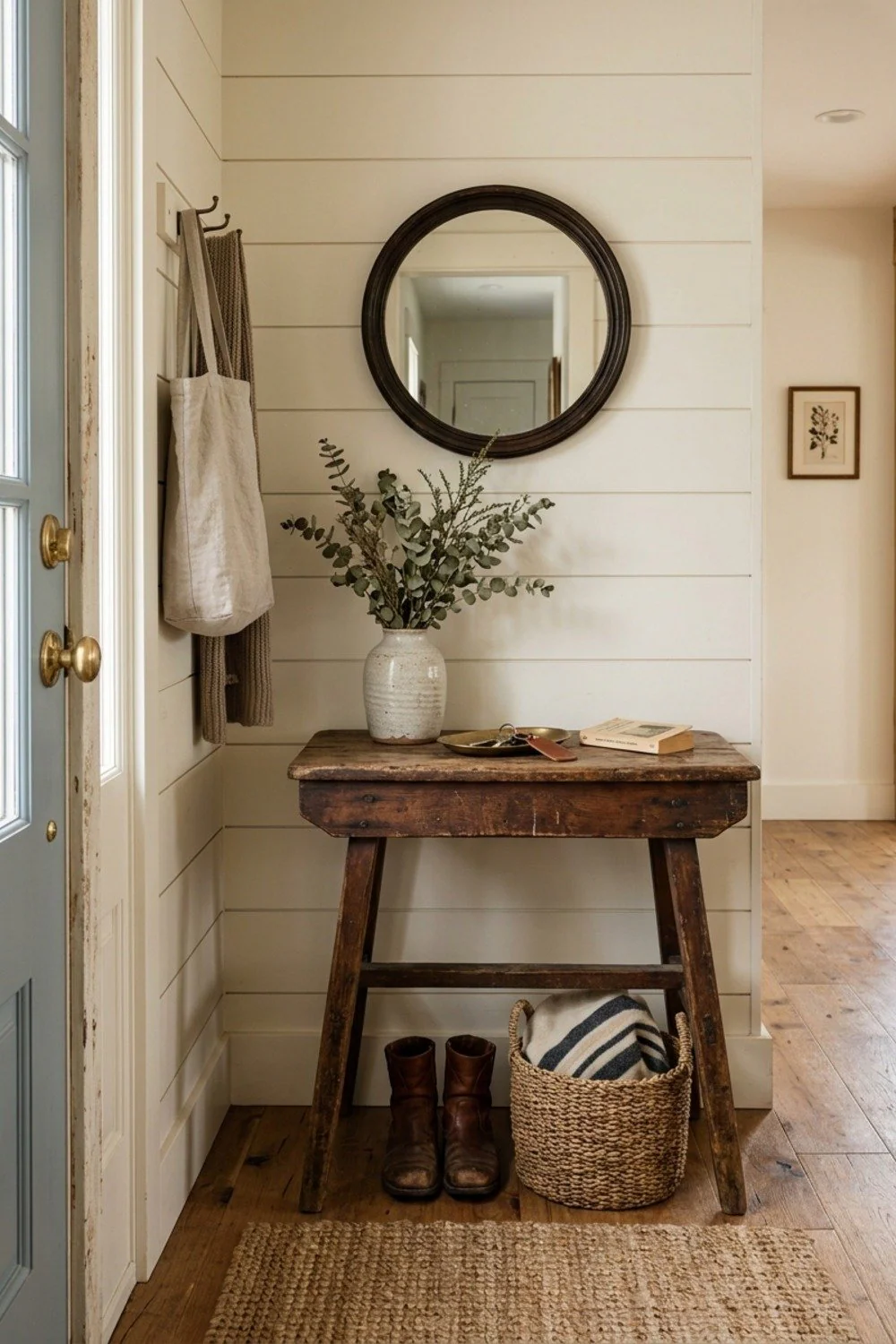
Flea markets and thrift shops sell sturdy wooden stools for $15-35, and one makes a landing spot for a bag or a stack of mail at a fraction of a $200 console. Look for a seat height of 18-24 inches so a basket sits within easy reach.
Renters and tiny entries get the most from this. Wobble is the dealbreaker, so rock it on a flat floor before paying.
4. Five pegs on a rail instead of one lone hook
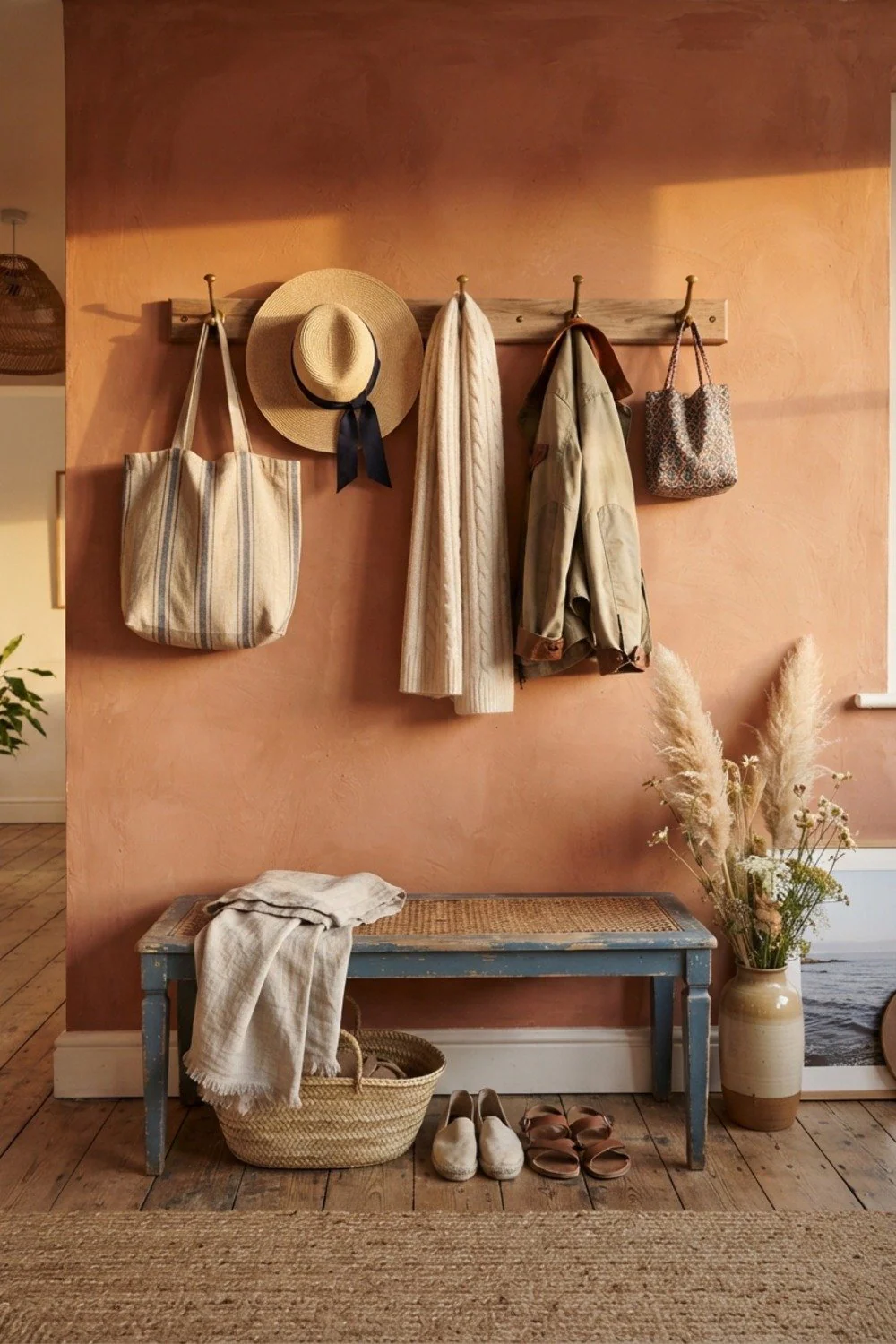
A 30-inch Shaker-style peg rail takes five coats and bags at once, which ends the pile on the floor that a single hook creates. Mount it 60-64 inches up so long coats clear the ground.
Households with kids can drop a second, shorter rail at 40 inches. Pegs spaced under 5 inches apart make coats overlap and crease, so give each one room.
5. Deep navy on all four walls
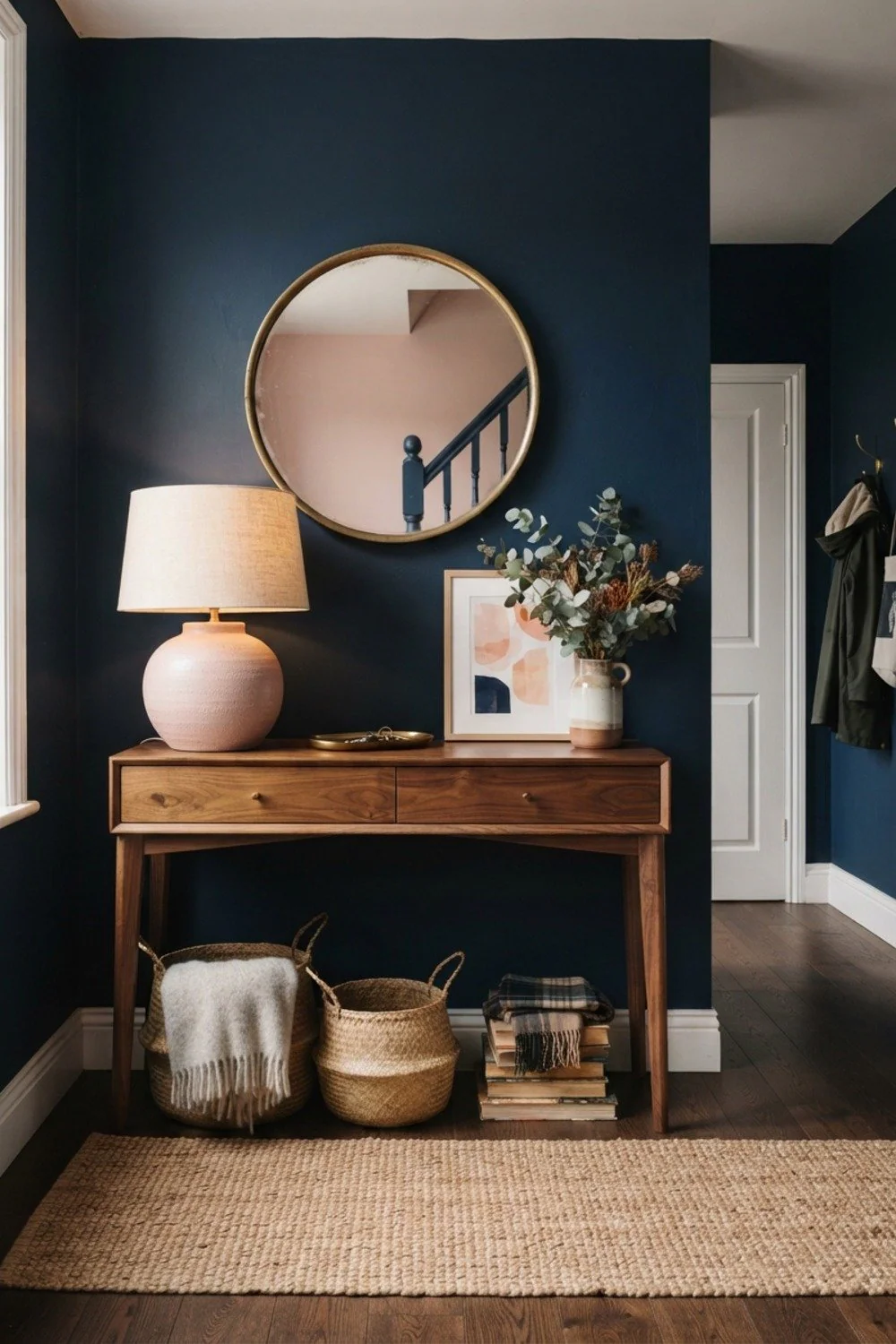
Painting a tiny entry a deep navy such as Benjamin Moore Hale Navy sounds backwards, but dark color blurs the corners and makes walls recede, so the room often reads bigger than it does in stark white. That effect is strongest in a windowless entry, where white would only look gray and flat anyway.
Choose matte or eggshell. Gloss shows every scuff from bags and elbows, and these walls take a beating. Matte also hides small wall imperfections, though touch-up paint should be kept on hand for scrapes.
6. A bench sized for the hall, not the showroom
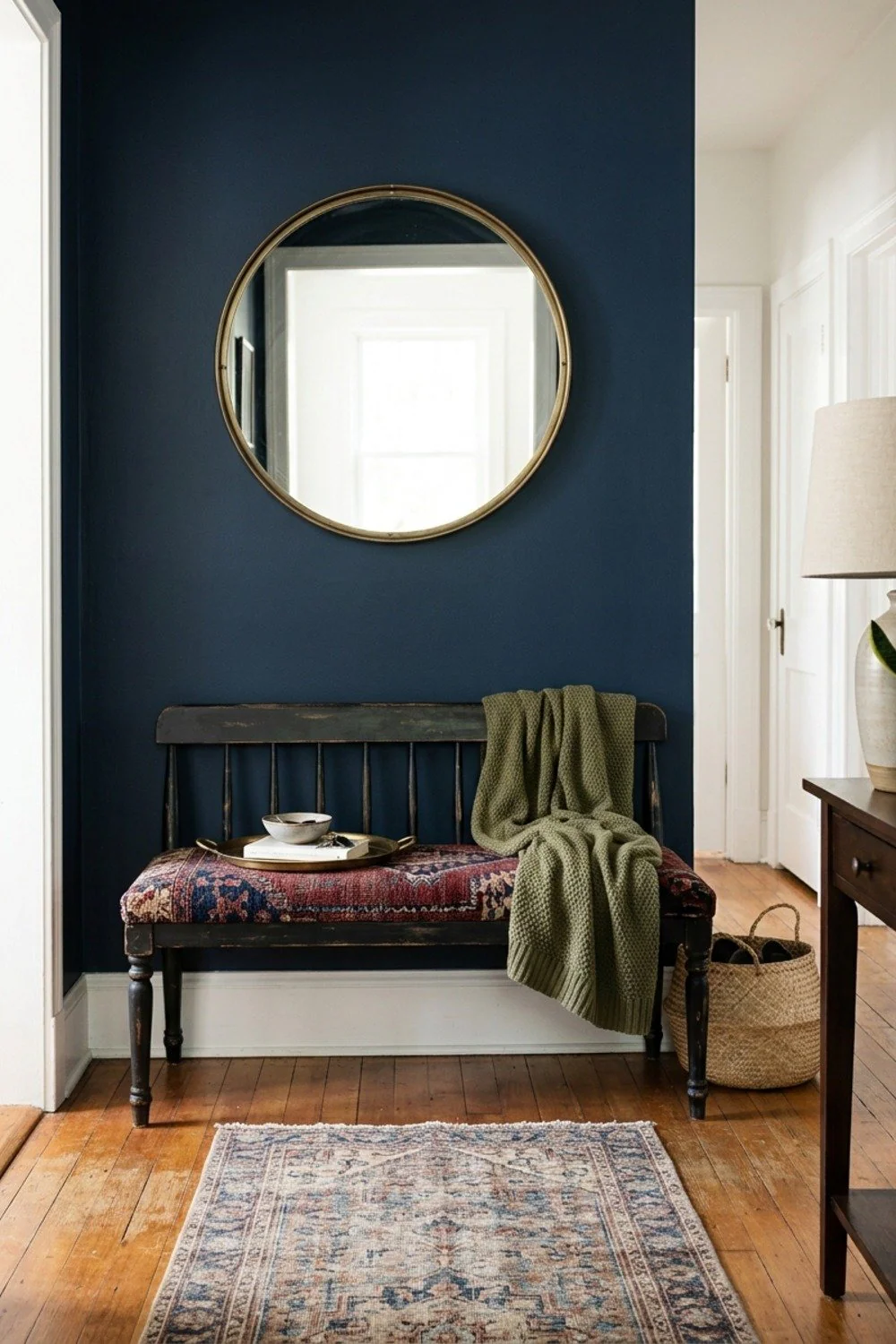
A 20-inch-deep bench in a hall under 40 inches wide leaves 20 inches to walk, and everyone ends up sidestepping it. Look for 12-14 inches deep, 36-42 inches long and a seat height near 18 inches, which still works for pulling on boots in a narrow apartment hall.
Tape the footprint on the floor with painter’s tape first. Living with the outline for a day shows whether the traffic path survives, including with a stroller or an armful of groceries. Showroom photos hide depth, so check the listed dimensions, not the look.
7. A plug-in sconce beside the mirror
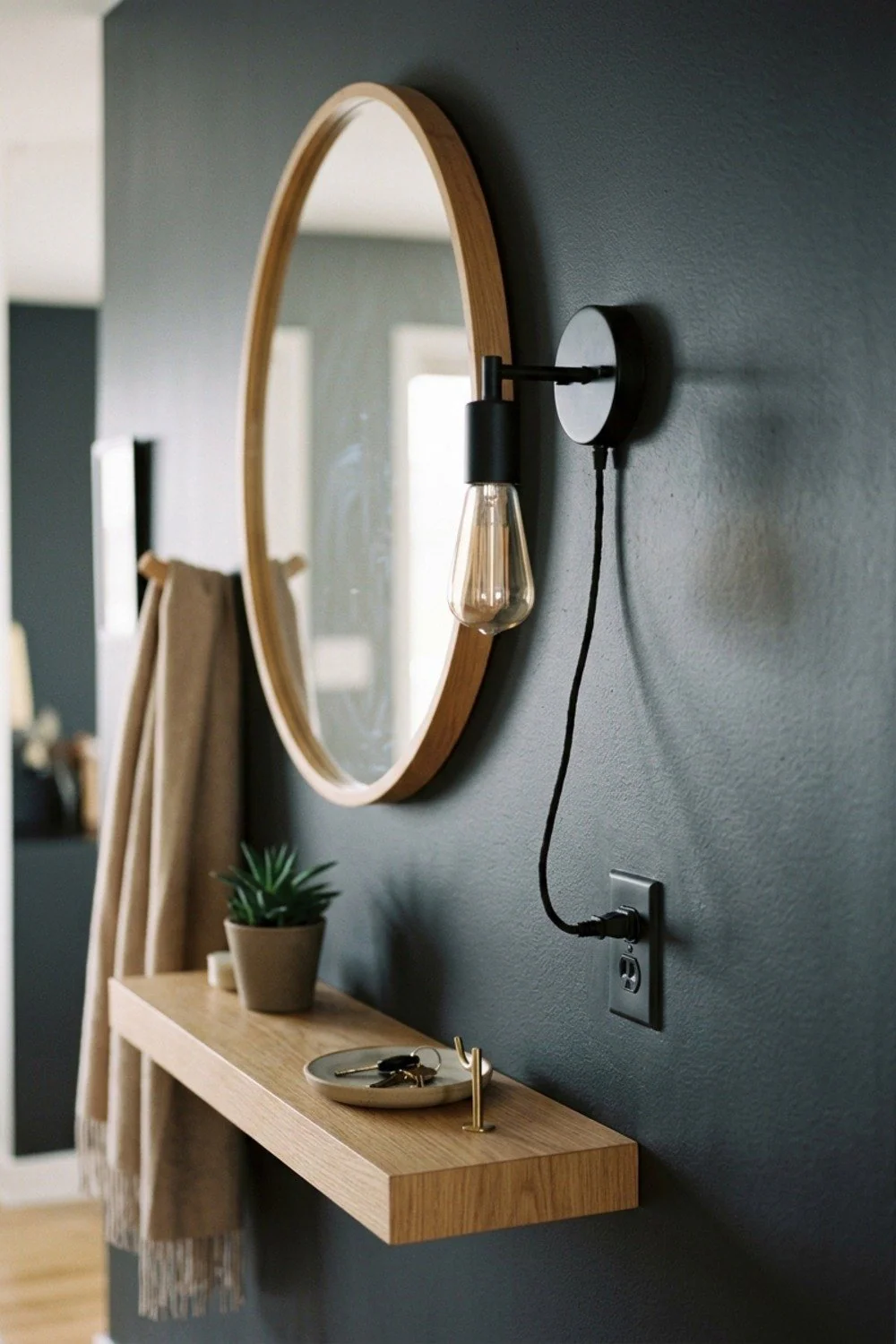
Plug-in wall sconces with a cord cover need no electrician, so a renter can light an entry that goes dim by 4pm in November for about $40-70 each. Pairing them on either side of the mirror lights the face evenly instead of from above. Hang them 60-66 inches up, just outside the mirror edges.
Use a 2700K bulb. Anything cooler turns skin gray in the reflection, and nobody wants to leave the house looking ill. Warm bulbs also make the entry feel welcoming after dark.
8. A boot tray filled with river stones
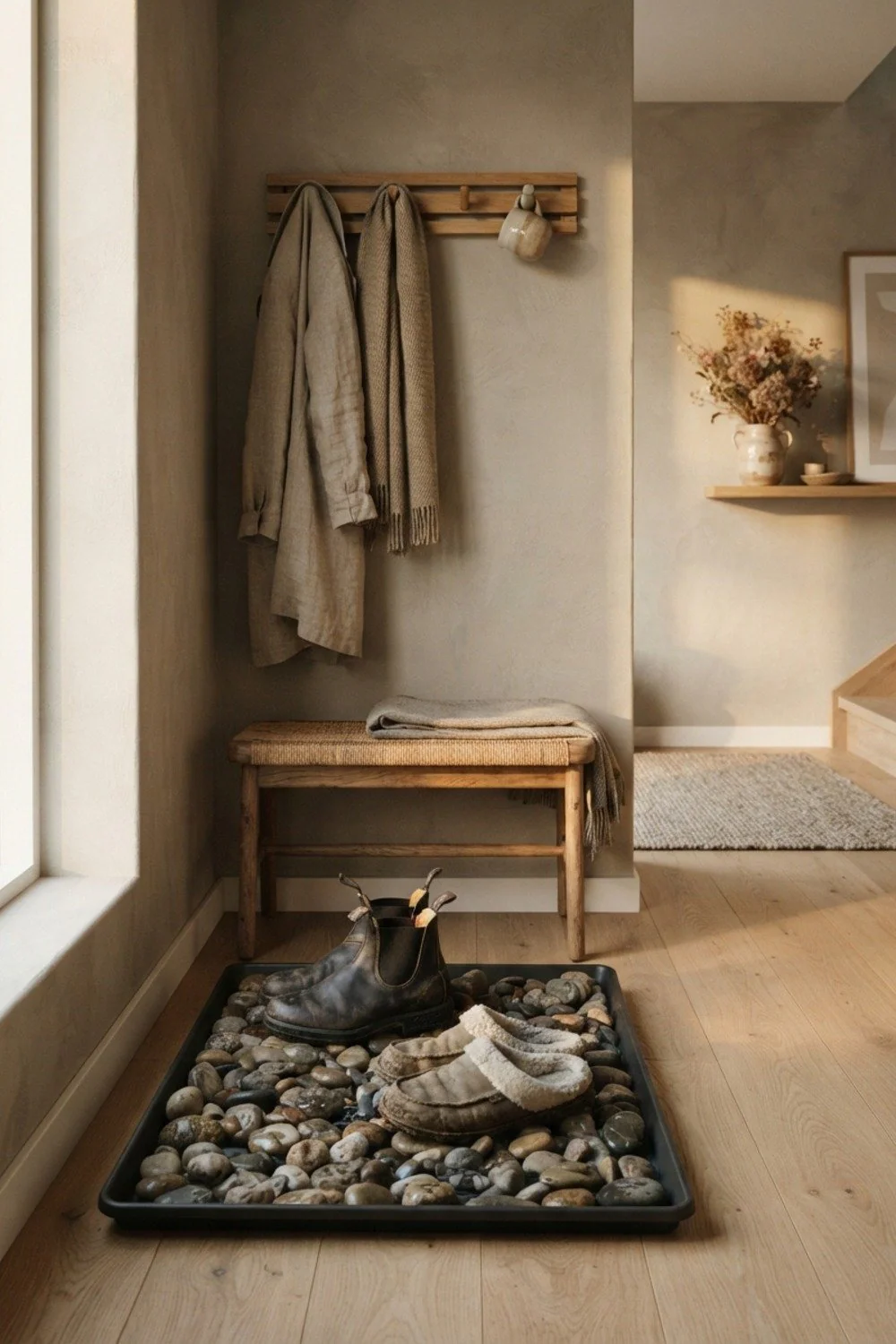
River stones in a 30-inch rubber or powder-coated steel tray let slush drain beneath the soles instead of pooling on the floor. After a rainy November week, the difference between this and a flat mat is obvious, since boots stay out of the water. It suits any entry with snow or rain traffic and a hard floor to protect.
Rubber rinses clean in the shower. Cardboard and untreated wood warp within a season, so skip them here.
9. One ceramic bowl and a single branch
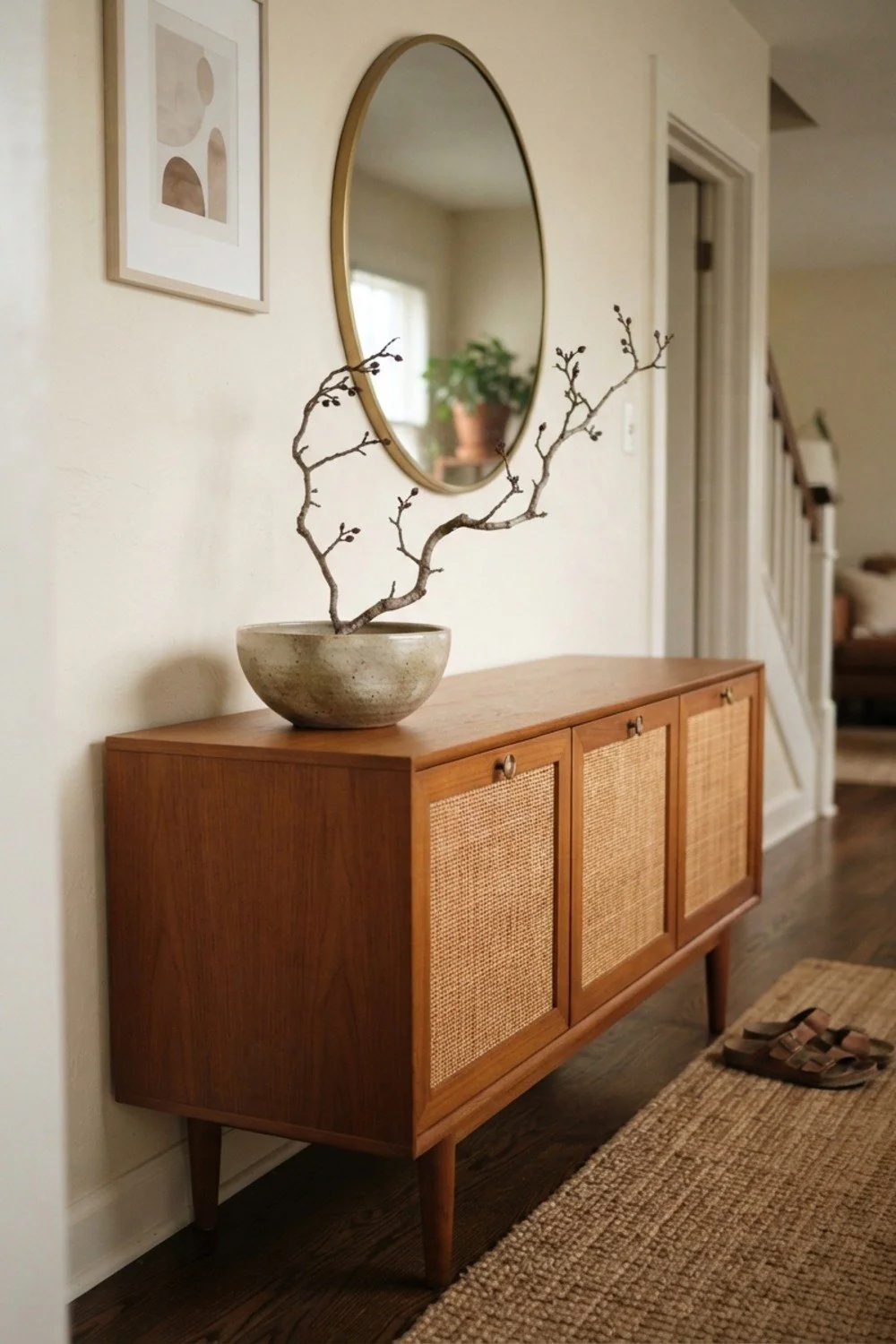
Stop at three objects on a console: a ceramic bowl for keys, one tall branch in a vase and one item with sentiment. Olive or eucalyptus stems last about three weeks in water and cost under $10 a bunch, which suits a tight budget. The bowl corrals small things so they do not scatter, and an odd number of three looks deliberate.
On a surface 10 inches deep, four or more objects read as clutter. Edit before adding.
10. One 24×36 print instead of six little frames

A single 24×36 print over a 30-inch console reads calm, while six 5×7 frames in the same spot look like a cluttered noticeboard. Large art also makes the wall seem to stretch, because the eye has one big shape to follow instead of many small ones. It suits renters who want fewer nail holes too.
The frame should span about two-thirds of the console width. Wider than that crowds the doorframe, and narrower floats awkwardly.
11. A lift-lid bench for winter gear
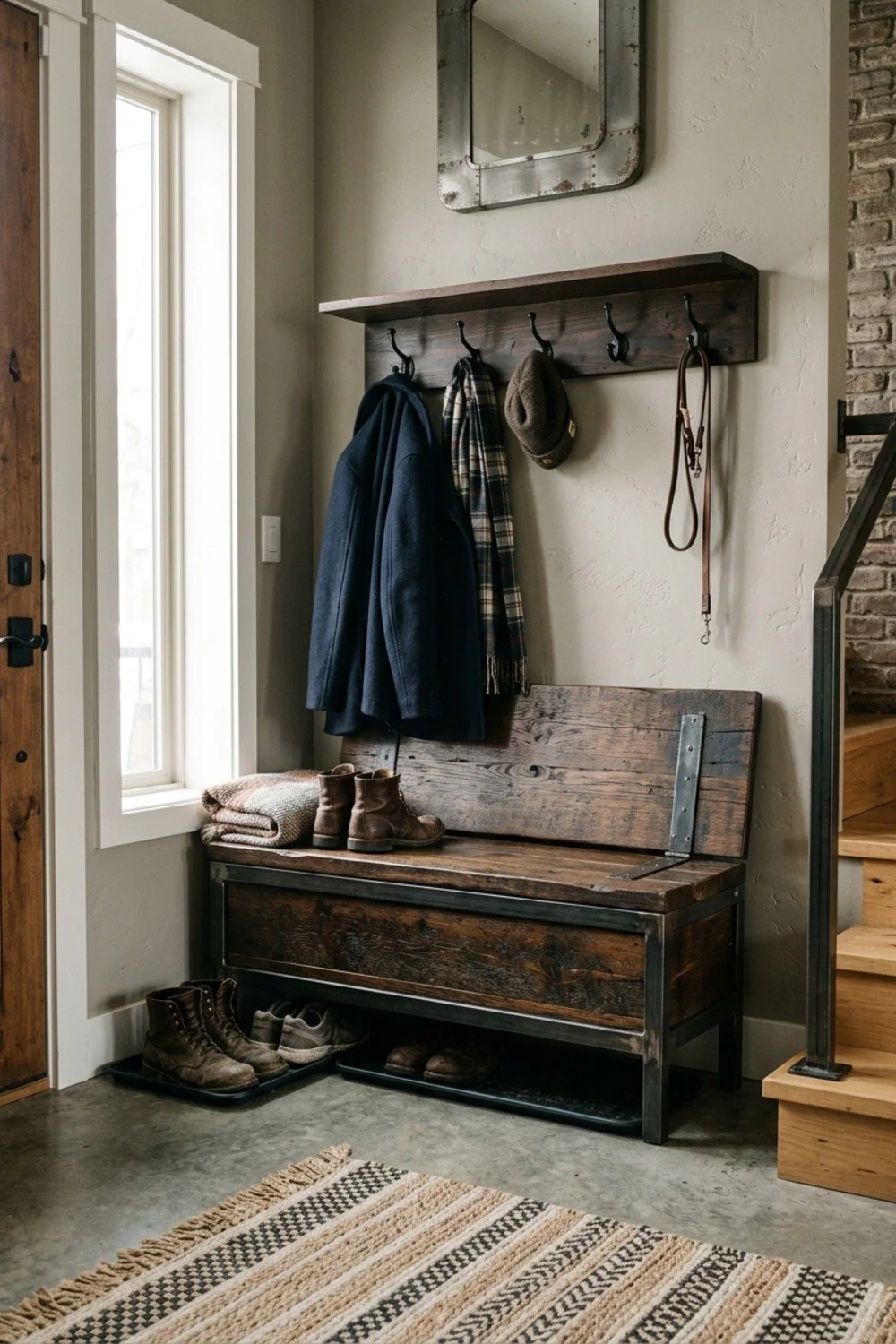
A lift-top bench hides a cavity about 12 inches deep, enough for hats, gloves, a dog leash and a spare umbrella. Because the clutter goes inside, the entry looks tidy even in January. Families with several coats in play get the most from it, and it doubles as the seat for pulling on boots.
Pick soft-close hinges or add a lid support. A heavy lid dropping on small fingers is the usual complaint. Let wet items dry first, since a closed cavity traps damp.
12. A round pedestal table tucked in the corner
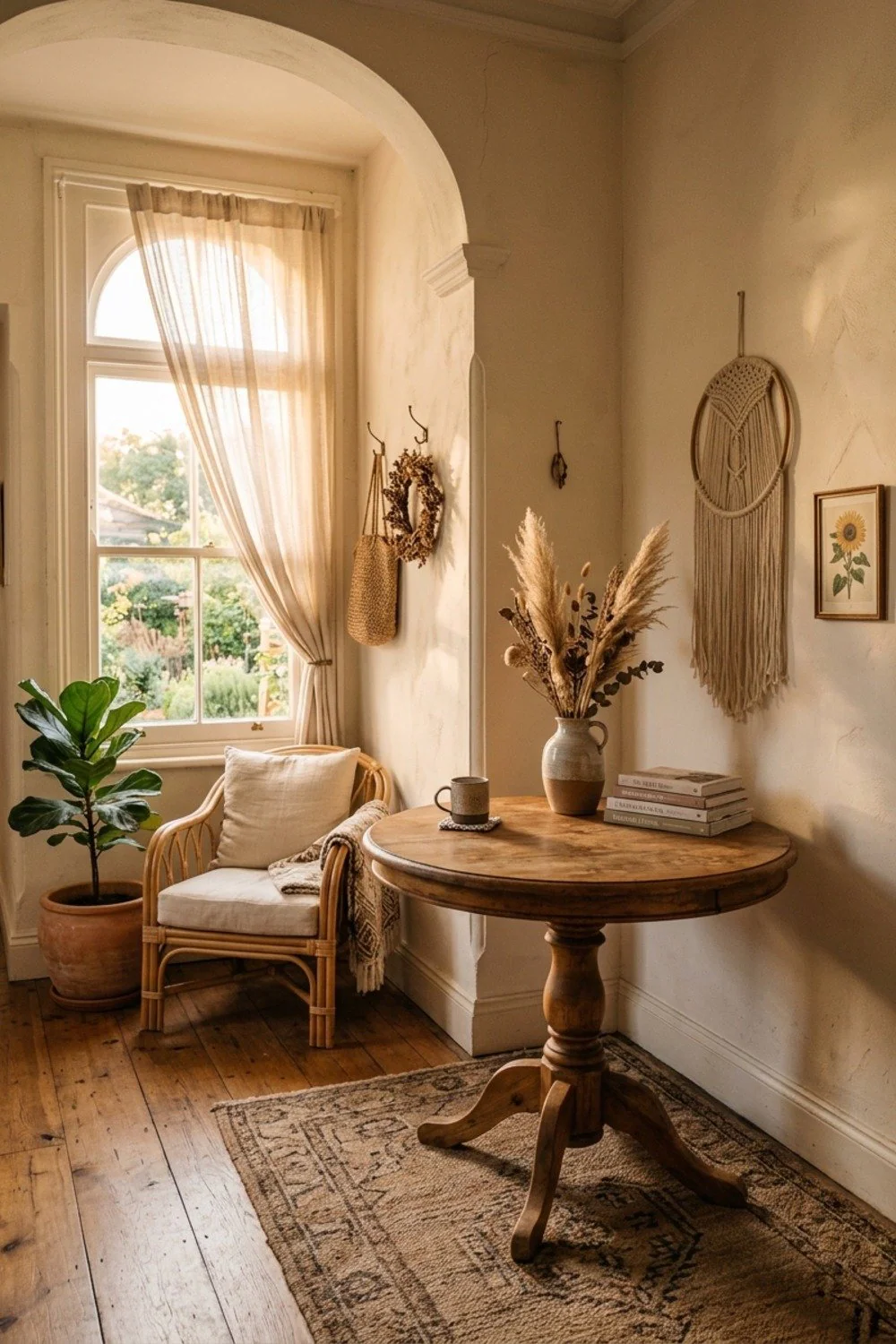
A 24-inch round table in the corner leaves no sharp edge to clip with a hip, and traffic swings around its curve. It suits entries where the hall makes a turn and a rectangle would block the path. A pedestal base also frees knee room underneath, so shoes or a small basket can tuck beneath.
Keep the top clear apart from a lamp or a bowl. A crowded round top quickly looks fussy in a tight corner.
13. Adhesive hooks for rental walls
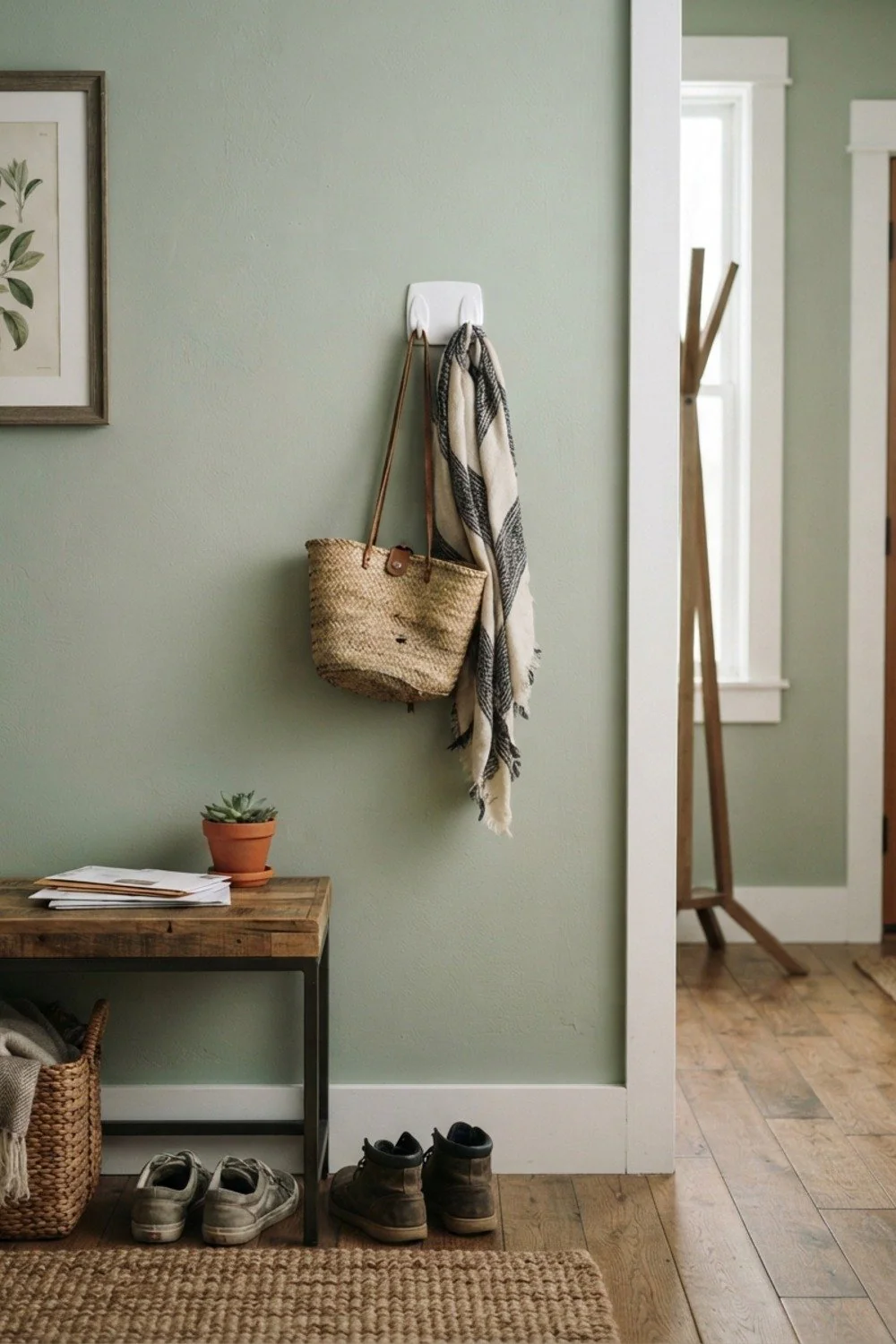
Adhesive hooks rated for 5 pounds cost about $10 for a six-pack and peel off clean when the lease ends. They handle scarves, light jackets and tote bags without a single drill hole.
A heavy wool coat will pull them down, so reserve them for light loads. Wipe the wall with rubbing alcohol first, because dust is why most of them fail.
14. A tilt-out shoe cabinet
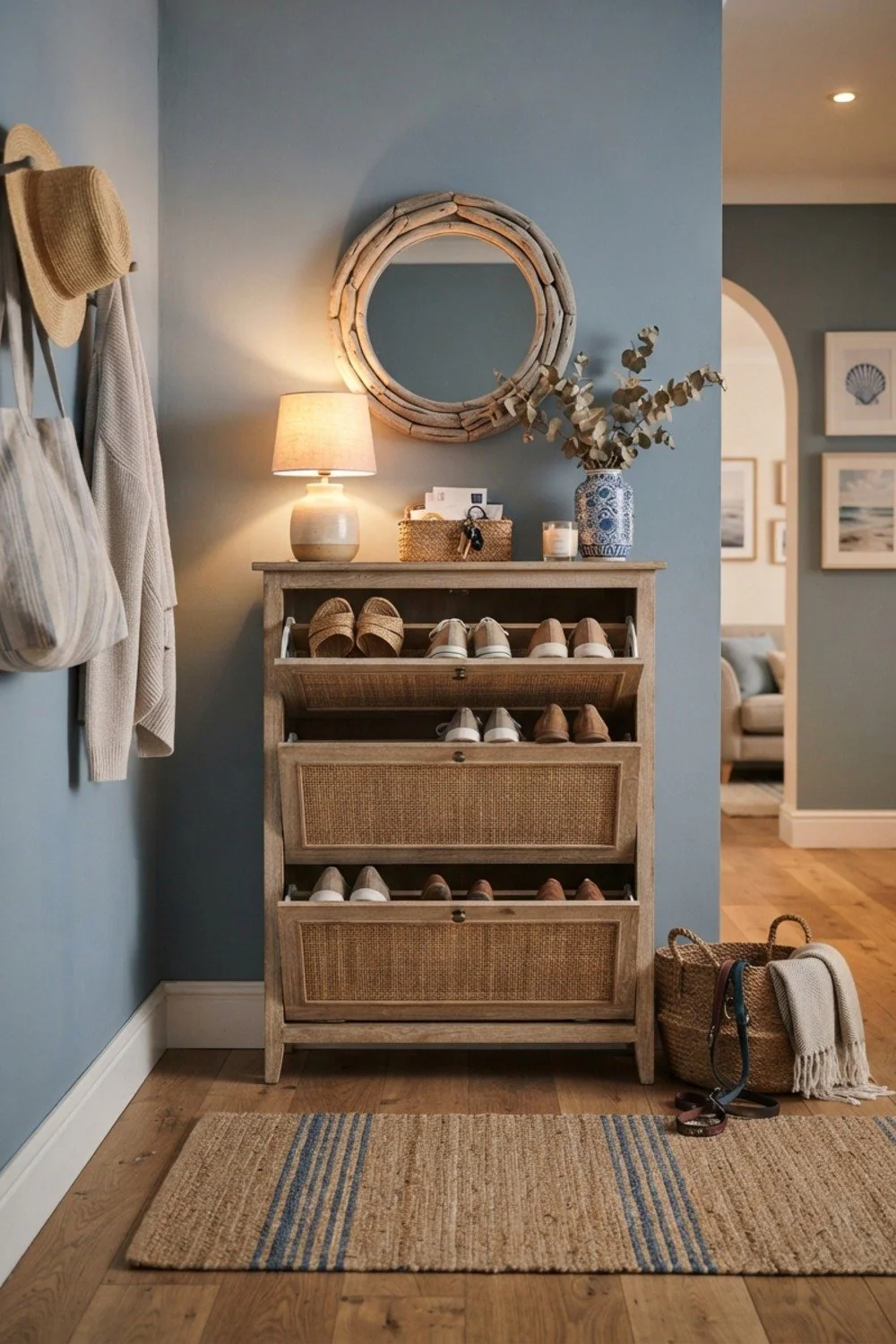
Tilt-out shoe cabinets run only 7-9 inches deep and hold roughly 8-12 pairs behind flat doors. In a hall that can’t spare 16 inches, they replace the heap by the door, and the closed fronts hide the mess completely. They suit narrow apartment halls and households with mostly everyday shoes.
Men’s size 12s may not tilt cleanly, so check the stated shoe size before ordering. Expect to pay $90-200. Tall boots will not fit inside either.
15. Two-tone walls split at 36 inches
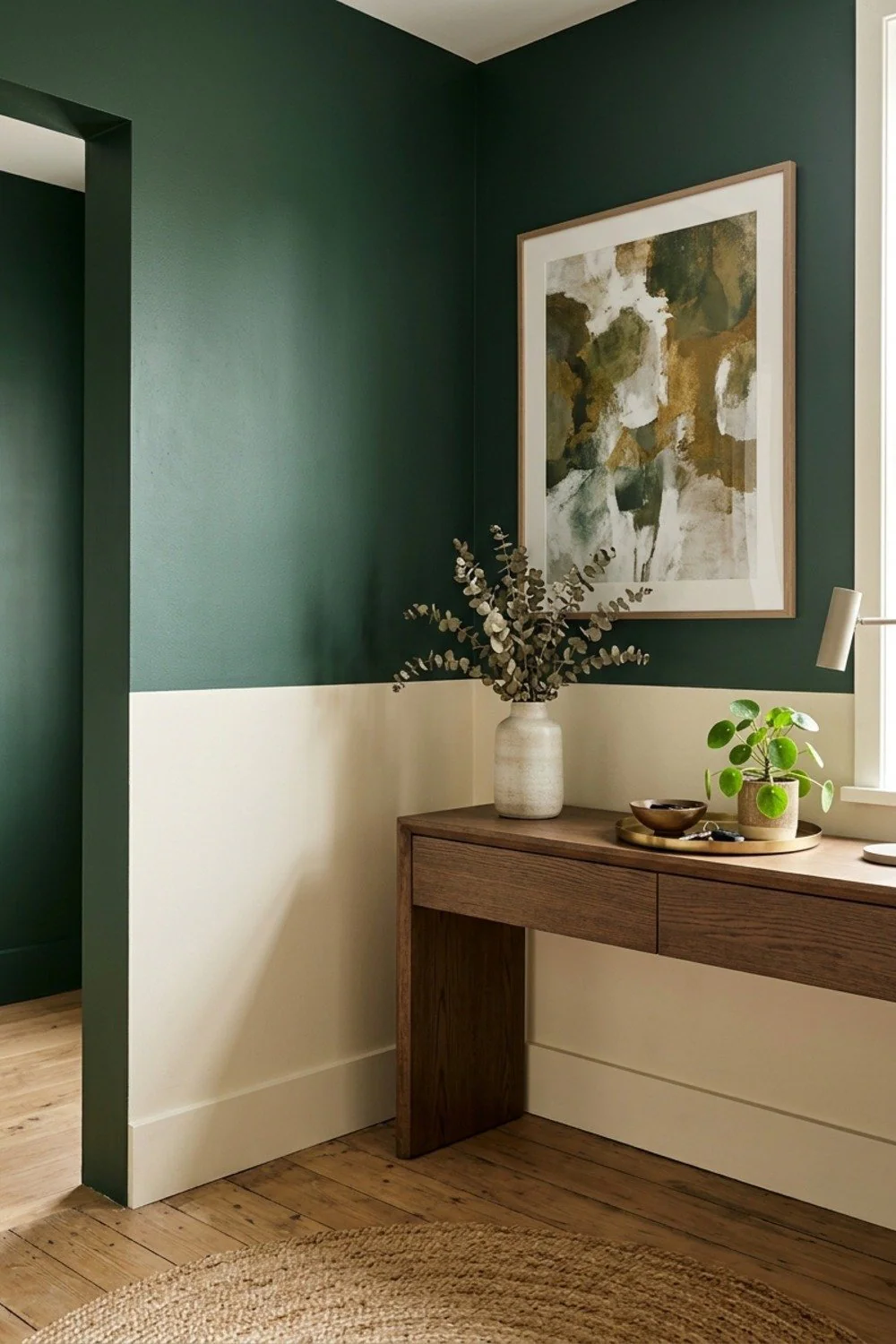
Painting the lower 36 inches in a scuff-hiding olive or charcoal and the upper walls in a pale neutral gives the hall a built-in wainscot look for the cost of two quarts of paint. It protects the zone where bags and shoes actually hit.
Use a level and painter’s tape for the dividing line. A wobbly horizontal is the first thing every visitor will spot.
16. Art hung at 57 inches, not 70
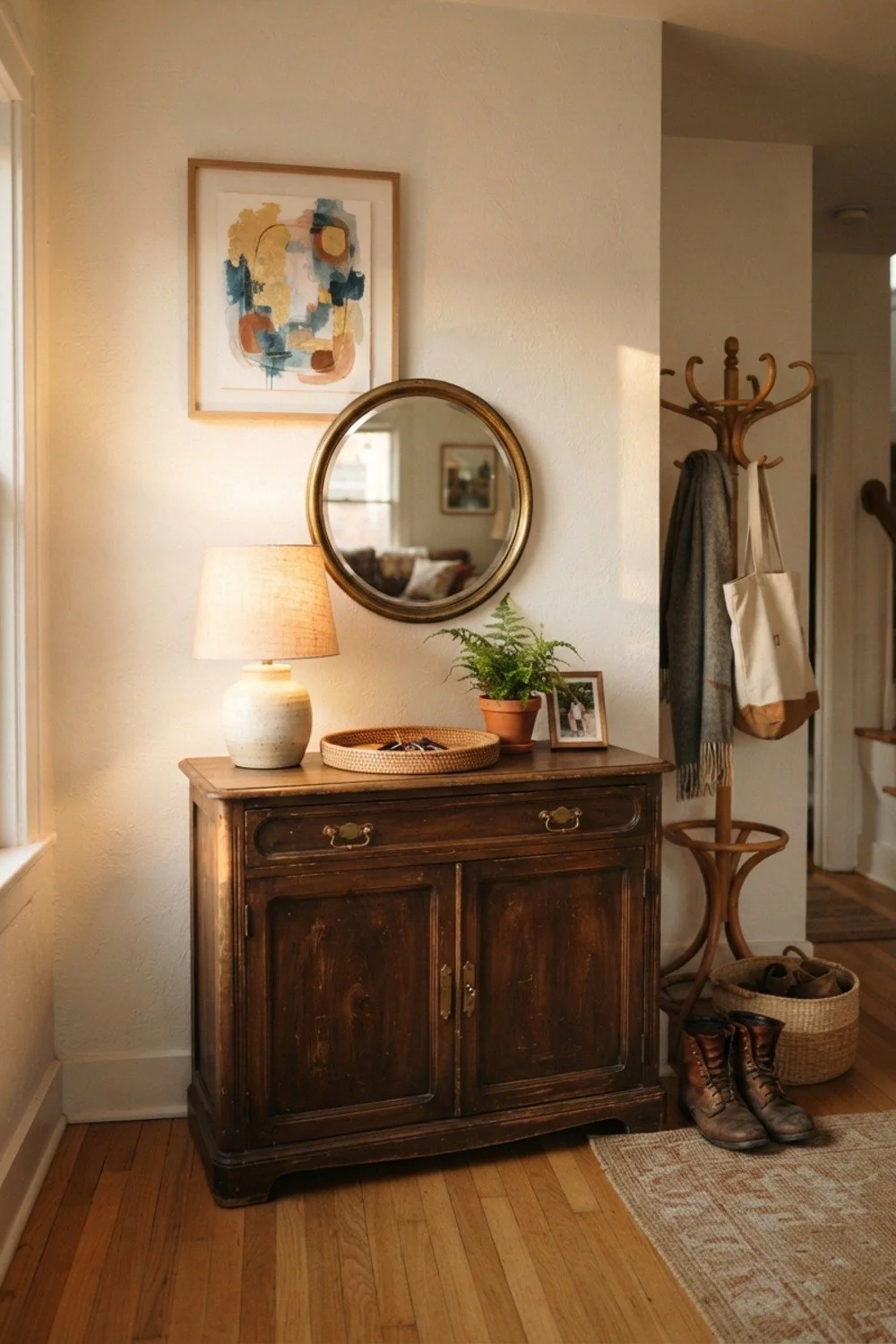
Most entry art hangs too high, floating near the ceiling. Center the piece at 57-60 inches from the floor, roughly eye level, so people actually look at it. Over a console leave 6-8 inches between frame and tabletop so the two read as one group.
Low ceilings make the mistake worse. When in doubt, drop it another inch. Mark the spot with pencil first, because extra nail holes in a rental can cost deposit money.
17. A flush-mount glass globe on a low ceiling
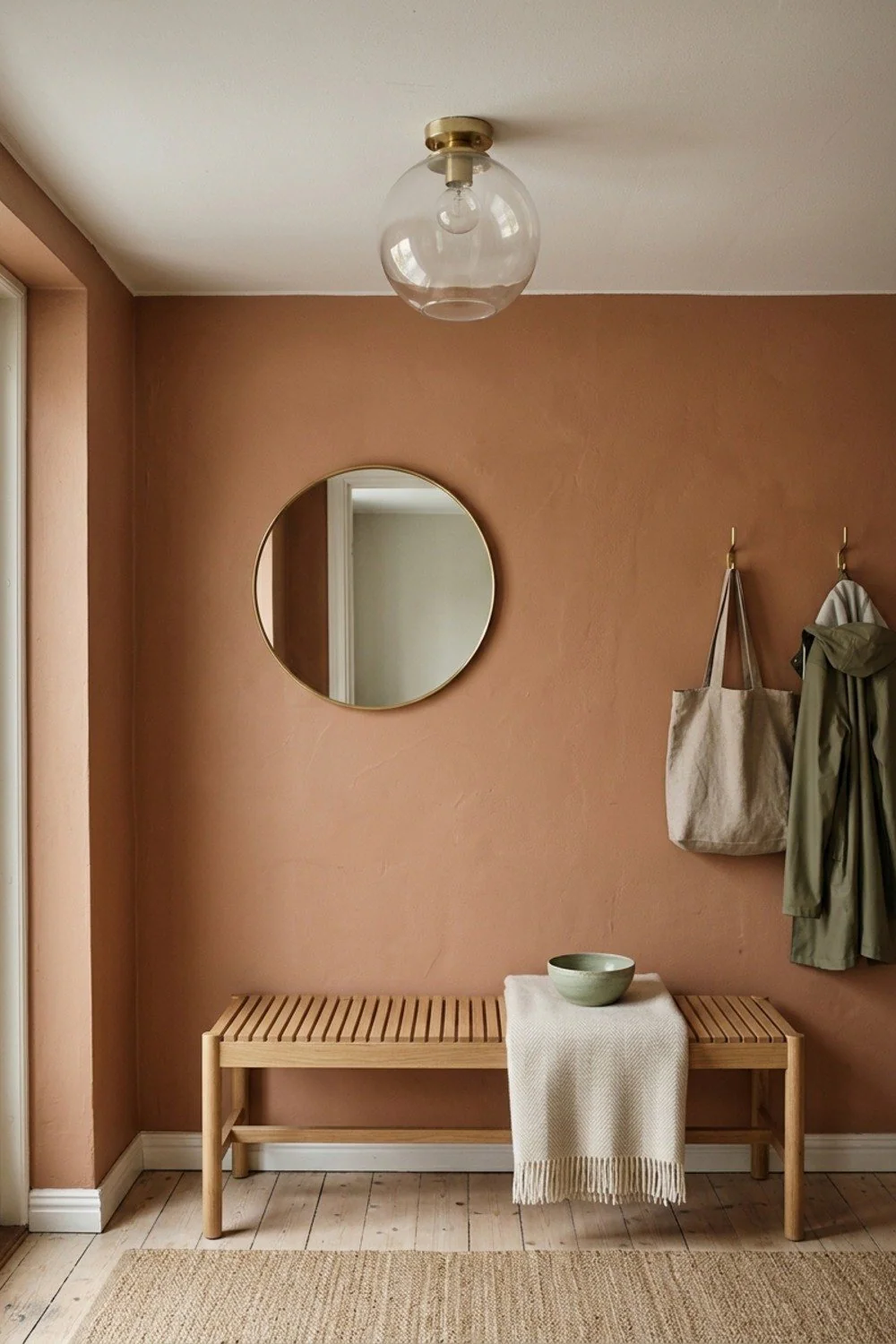
Ceilings at 8 feet or lower need fixtures that sit within 8-10 inches of the plaster. A frosted glass globe spreads light evenly with no shadow pools in the corners, which suits a small entry with one central fixture. The frosting also hides the bulb, so there is no glare for anyone looking up.
A pendant with a long drop will clip tall guests. If it must hang, keep the bottom edge above 7 feet.
18. A low-pile wool runner
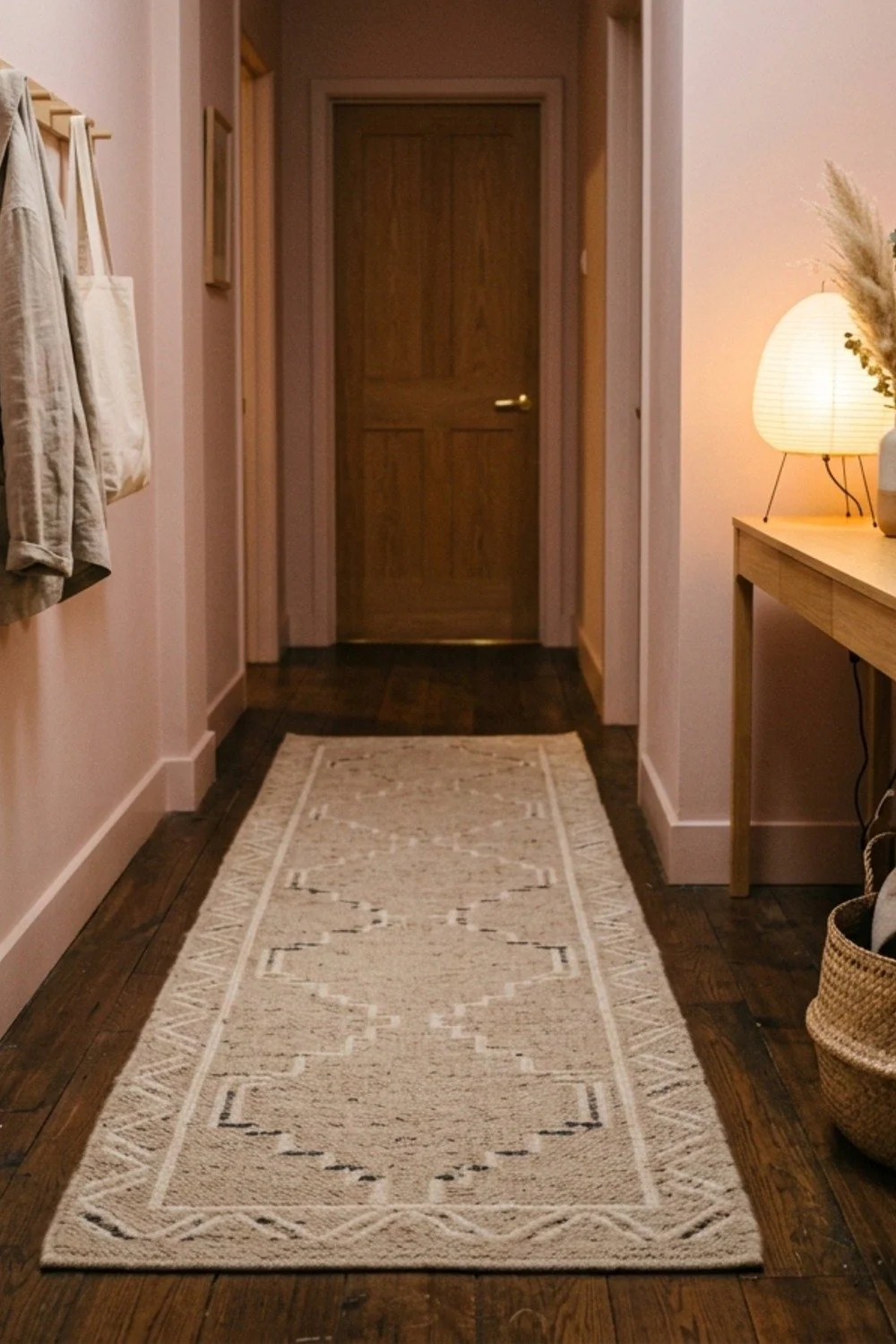
A 2.5×8-foot wool runner hides dirt, resists crushing and feels dense underfoot, so it suits a hallway that sees daily foot traffic. Polypropylene costs less, around $40-90, and survives a hosing outdoors, while jute sheds and stains when wet. Wool is the better pick for indoor halls that stay dry.
Keep the pile under half an inch so the door clears it. A thin rug pad stops the runner creeping and keeps a corner from catching a heel.
19. A leather tote and a straw hat left out on purpose
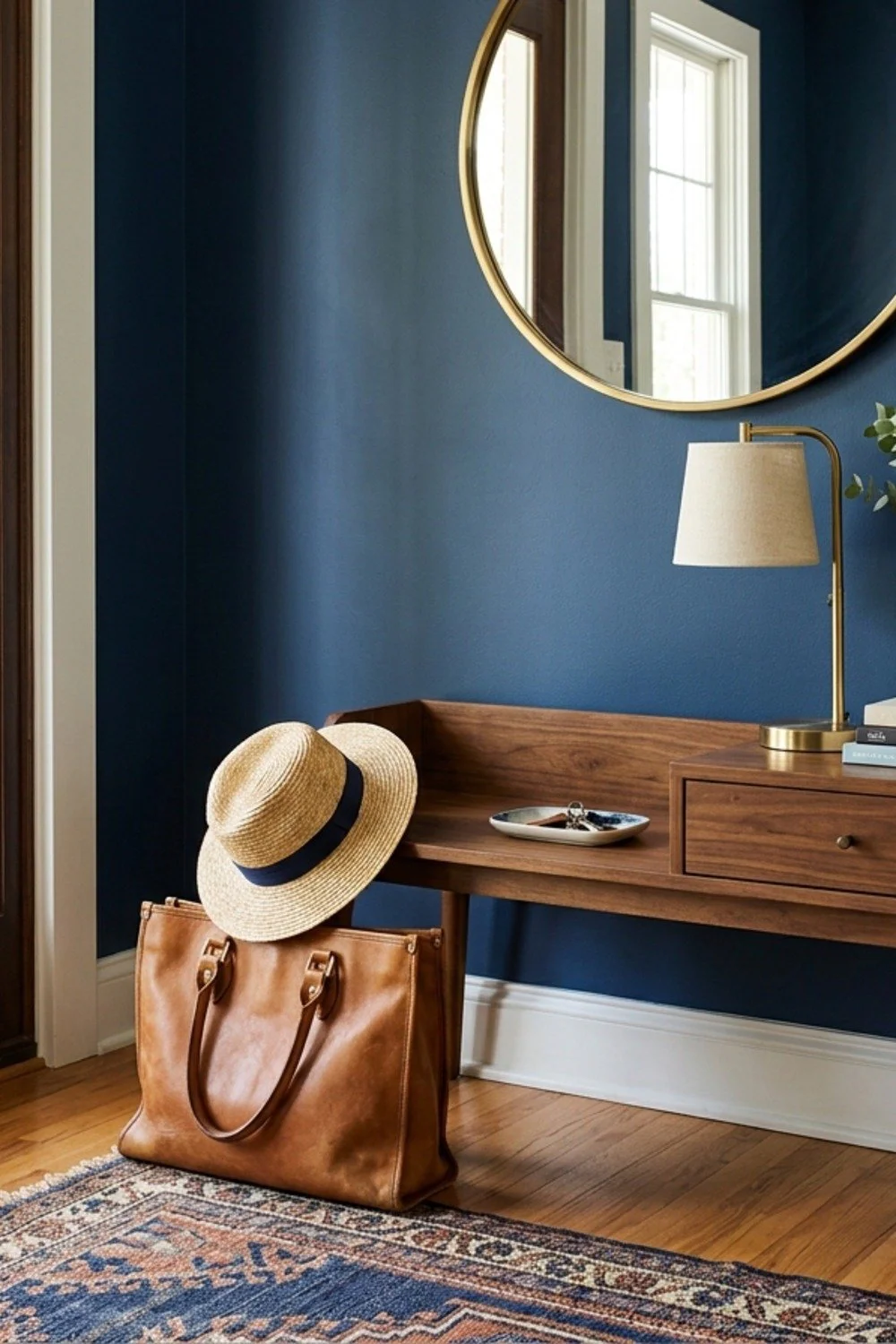
Hooks look finished when they hold something worth seeing, such as a leather tote and a straw hat swapped for a wool beanie when the weather turns. Good-looking objects turn a utility rail into decor, which suits a small entry with one rail and no room for a gallery wall. Two or three items per rail is the ceiling.
Anything beyond that turns display into a coat pile. Rotate the objects each season so the wall never goes stale.
20. A 22×65-inch leaning mirror
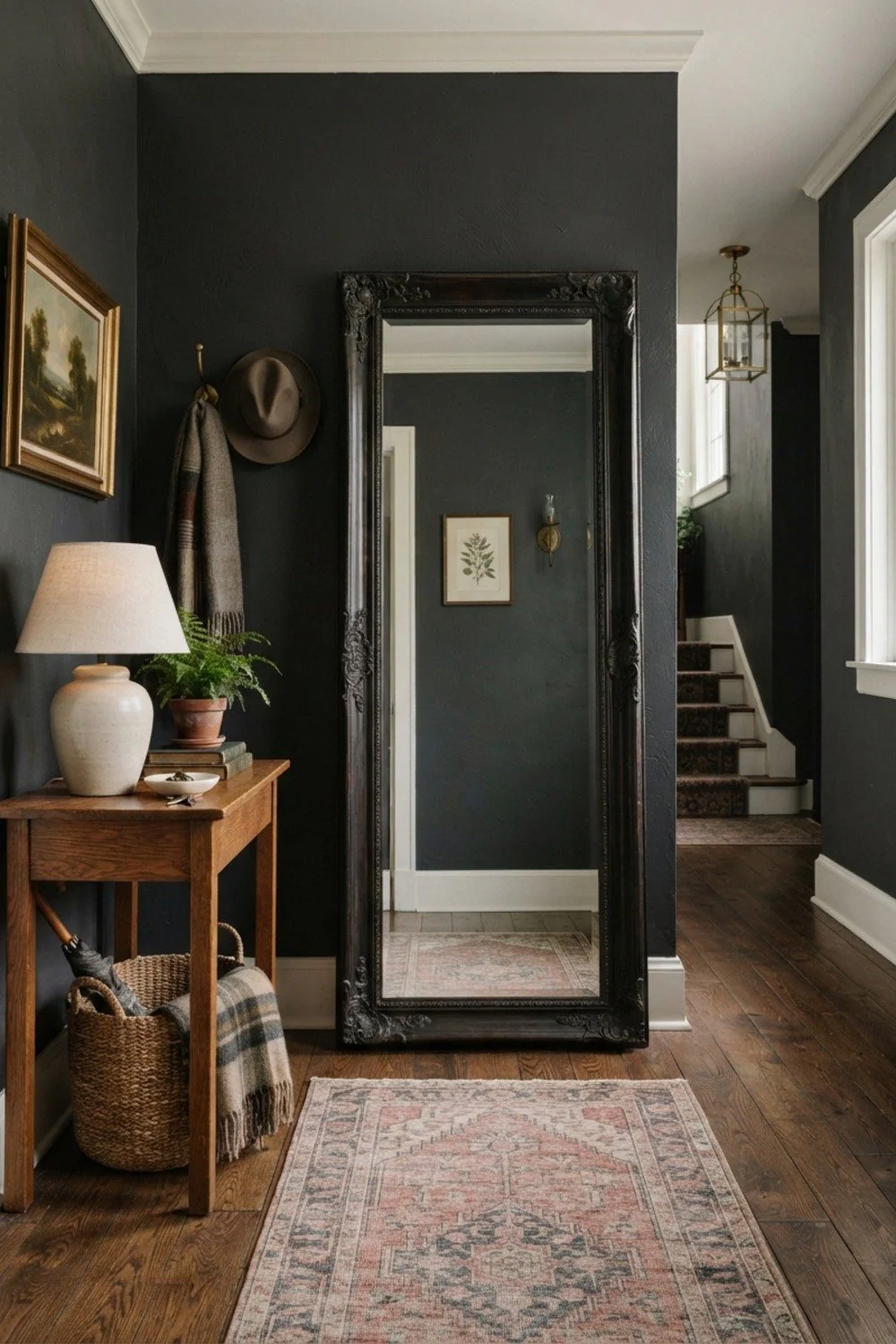
A full-length mirror leaned beside the door bounces daylight deeper into a narrow hall and doubles the sense of depth. Leaning suits renters, since the mirror needs no heavy hanging hardware and can move with them. Expect $80-160 for a decent frame, or less secondhand.
Fasten an anti-tip strap to the wall. Pets and children make this more urgent. Glass this tall will fall on the first stumble, and a rental deposit will not cover a cracked mirror.
21. Lidded baskets under the console
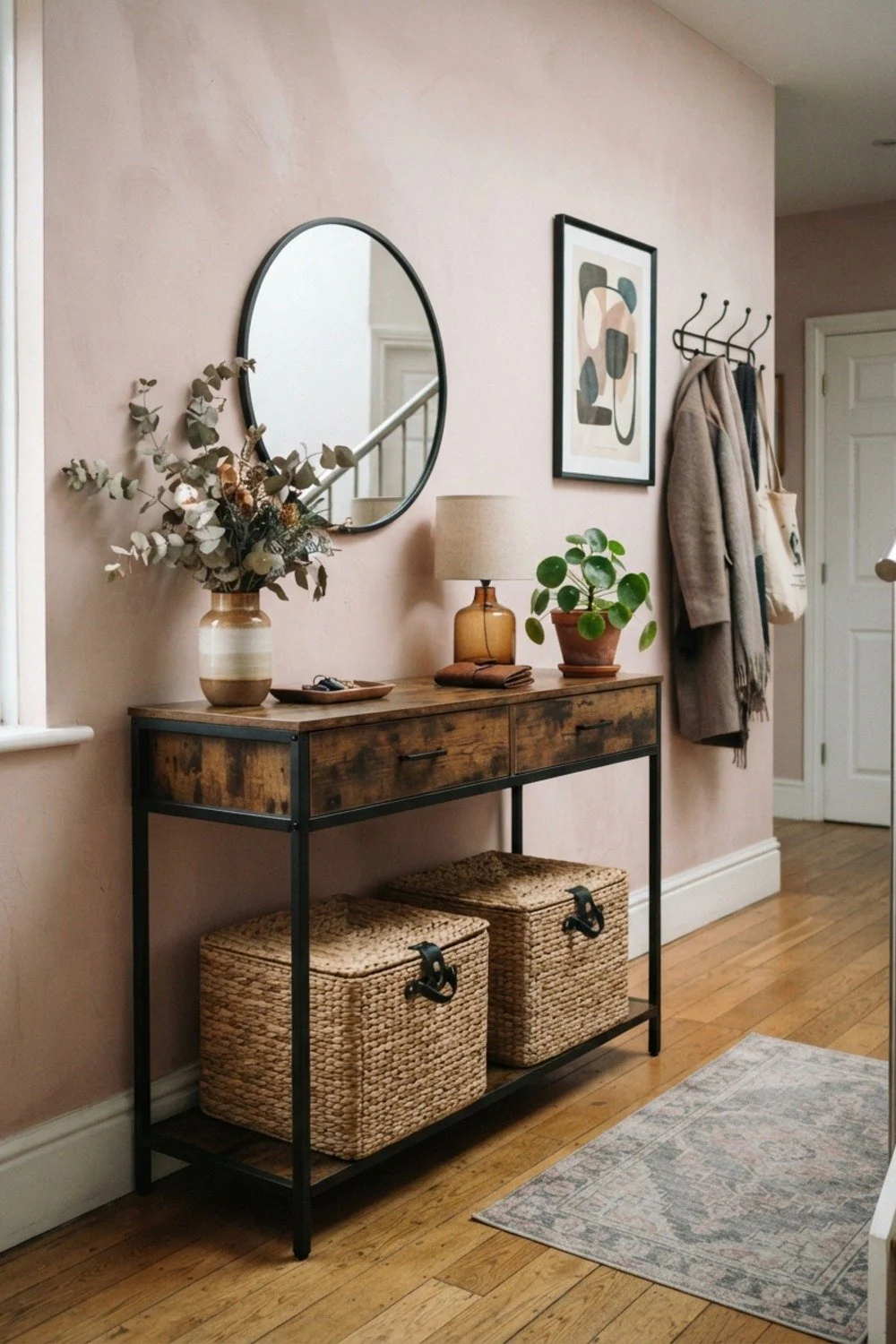
Two 12-inch lidded seagrass baskets slide under a console and hide umbrellas, dog gear and spare bags. The lids keep the clutter out of sight, which matters more than the weave, and they suit households that need hidden storage without a closet. Open baskets simply show the mess in a different container.
The console needs at least 14 inches of clearance beneath it, so measure the gap first. Add small tags so everyone knows which basket holds what.
22. An open-back bookcase as a wall that isn’t
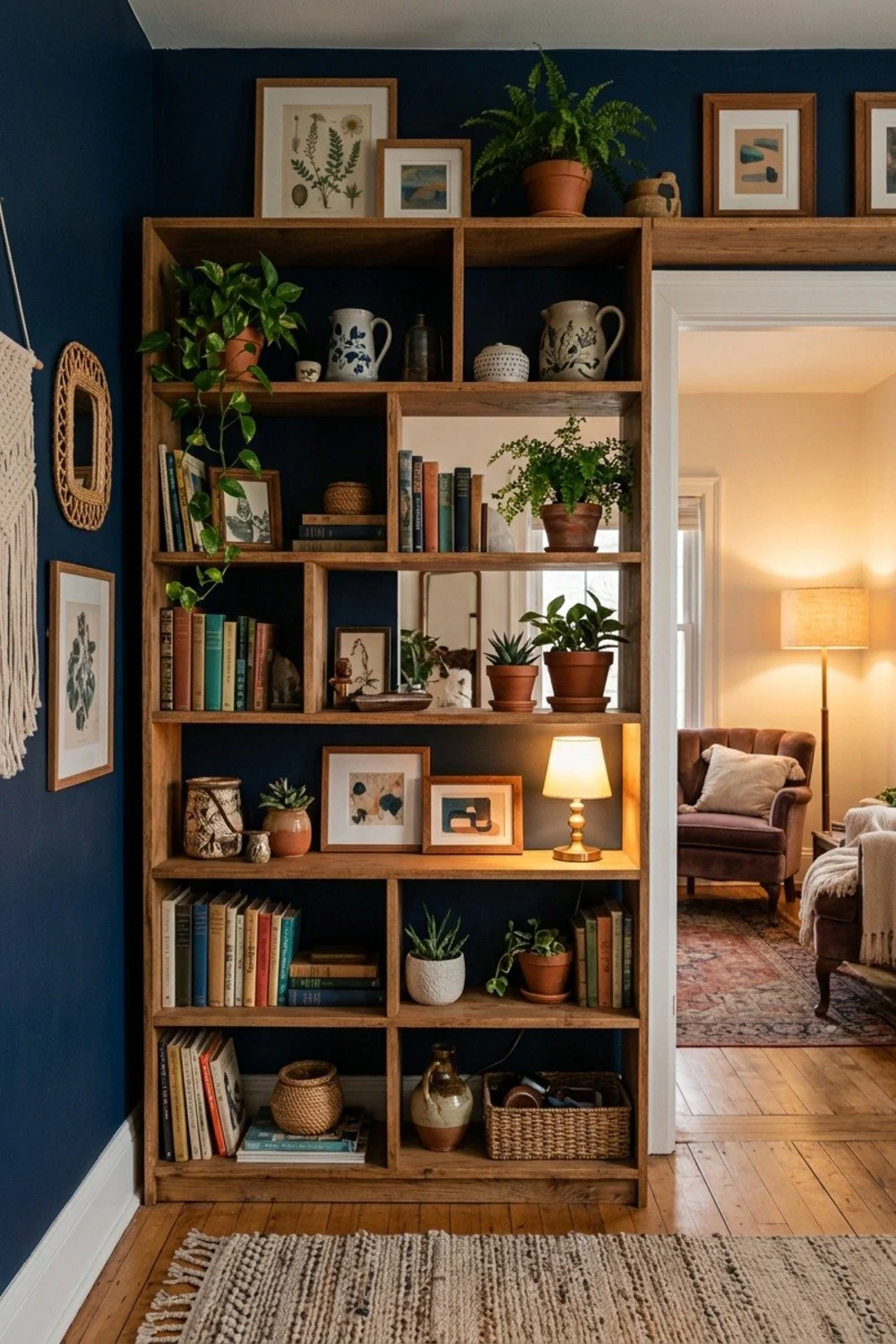
When the front door opens straight into the living room, a 30-36 inch tall open-back shelf marks the entry boundary without blocking light. Sightlines stay open, so the room still feels like one space. It suits open-plan apartments with no foyer at all. Baskets and a few books fill the lower tiers, which keeps weight low.
Anchor it to the wall, since top-heavy units tip. And skip anything with a solid back, which turns the boundary into a barrier.
23. Peel-and-stick floor tiles
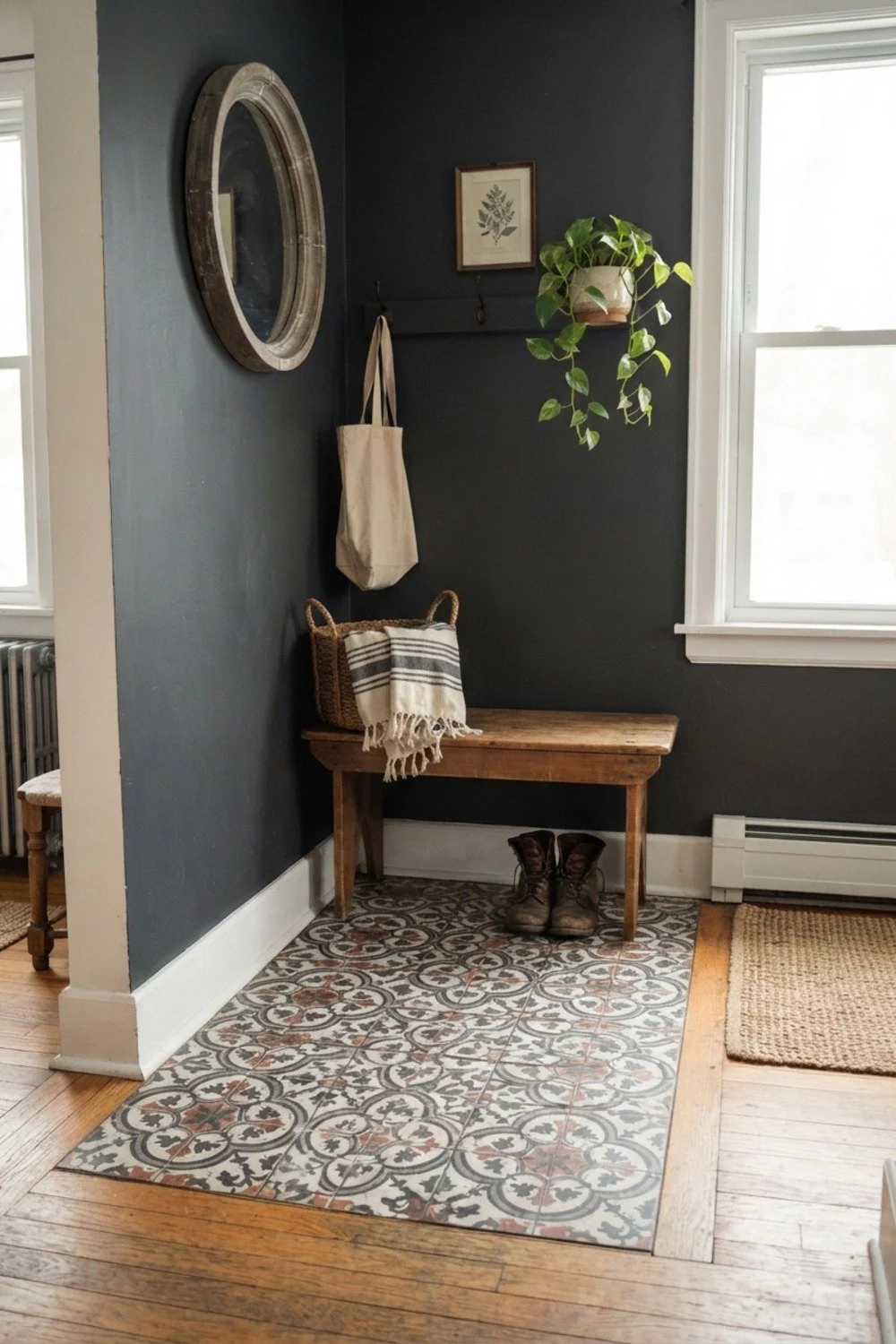
Peel-and-stick vinyl tiles cost about $1-3 per square foot, so a 3×5-foot entry runs roughly $15-45. They give a rental a patterned floor that lifts off with a hair dryer’s warmth, so the deposit stays safe. A bold pattern also draws the eye down and makes a small entry feel intentional.
The subfloor must be clean and flat. Textured floors make the edges curl within months. Wipe away dust and grease before pressing each tile down.
24. A magnetic board as the command center

An 11×14 magnetic board next to a row of three key hooks keeps appointment cards, mail and spare keys in one place. Everything needed on the way out sits at eye level by the door, and magnets mean no pins punching holes in the wall. It suits households where someone always asks where something went.
Limit it to one board. A second one doubles the paper without doubling the use, and old notices pile up fast. Clear it weekly.
25. A pale blue ceiling
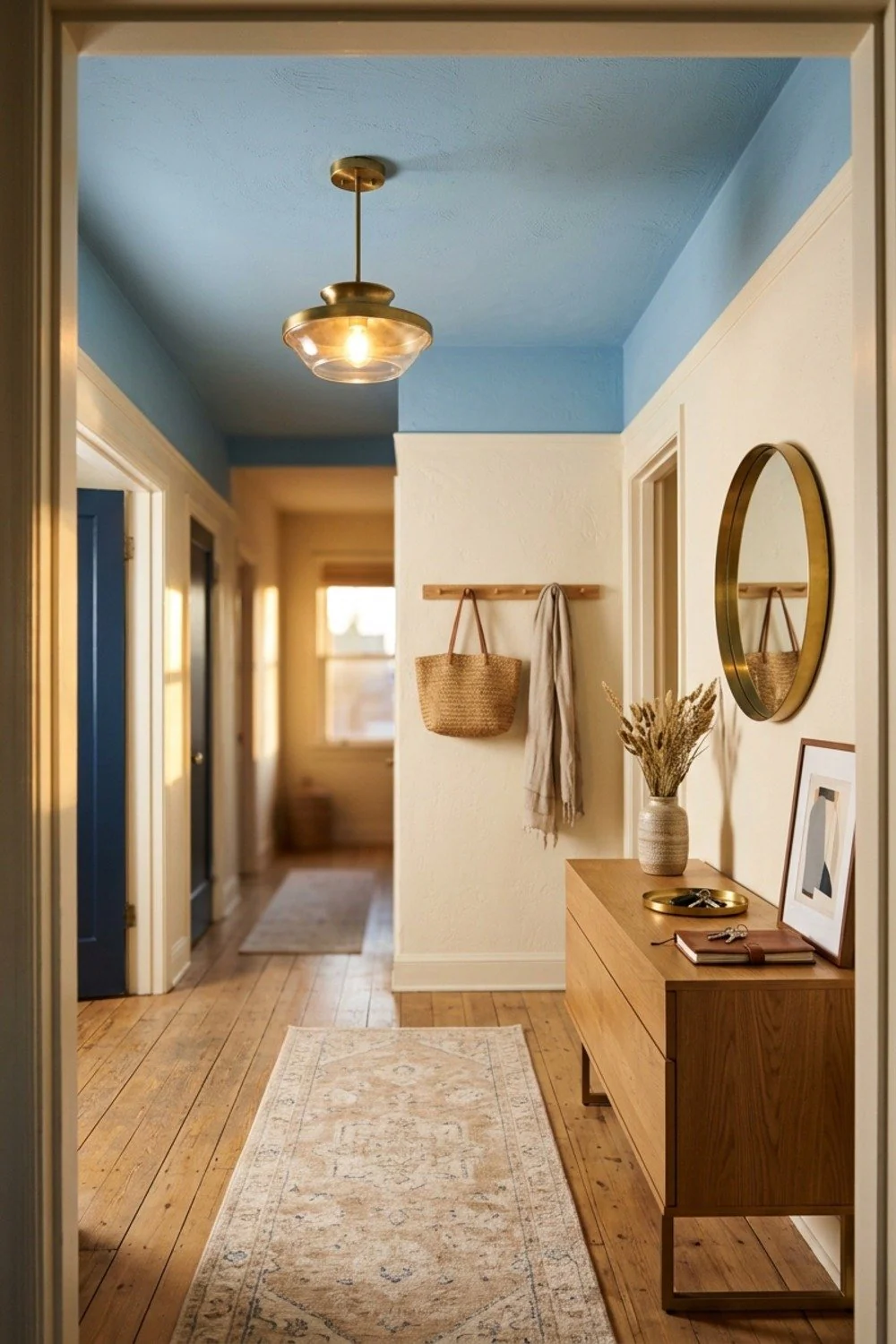
Soft sky blue overhead, a shade Southern porches have used for generations as haint blue, bounces daylight around and makes a low entry ceiling read higher. A quart covers about 90 square feet, plenty for most entries, so it suits a small budget and an entry with neutral walls.
Two coats are needed over white. Cut in the edges slowly, because a ceiling line is hard to hide. A tape line pressed down firmly helps keep the edge crisp.
Small details, big impact
The 25 entryway decor ideas for Small Spaces above all depend on a handful of numbers. Check these before buying anything.
- Walking lane: at least 30 inches clear from door to the next room.
- Console depth: 10-12 inches in halls under 40 inches wide.
- Hook height: 60-64 inches for adults, 40 inches for kids.
- Art center: 57-60 inches from the floor.
- Mirror top: at least 6 inches above the tallest regular user’s head.
Half-measures are tempting here. One hook where a rail should be, a box “for now” that’s still there three winters later.
Do it properly once. A rail, a shelf and a tray take one afternoon and don’t need revisiting.
Mark everything with painter’s tape on the wall and floor before drilling. It takes 10 minutes and prevents the holes that nobody can undo.
Making It Flow Between Rooms
An entry that clashes with the room behind it feels like a separate, unfinished box. Pull one color from the living room or hallway, a rust cushion or a brass lamp base, and repeat it once in the entry.
Three quick checks keep the transition smooth:
- Stand in the doorway and look in. The first thing in the sightline should be something intentional, such as art or a lamp.
- Match the metal finish. Brass hooks beside black cabinet pulls read as an accident.
- Keep floor materials close. A runner that stops 6 inches before the next room’s rug looks like a mistake.
Light matters as much as color. At 4pm in winter, the entry is often the darkest zone, so a warm 2700K bulb here makes the move into the lit living room feel welcoming rather than abrupt.
Finally, repeat one texture. If the living room has a nubby wool throw, a wool runner here will tie them together without trying.
Start With One Wall
The 25 entryway decor ideas for Small Spaces here don’t need to happen in one weekend. A rail with five pegs and a 9-inch shelf fix more than a full renovation would.
Save or pin this list so it’s ready when the next free afternoon appears. Then measure the walking lane first, since that single number decides which of these ideas will actually fit.
Frequently asked questions
How narrow can an entryway be before decor stops working?
A 30-inch clear lane is the practical minimum, and below that decor should stay on the walls. Shelves 9 inches deep, hook rails and flush-mount lights still work in a 36-inch-wide hall.
Can I do any of this in a rental?
Most of the 25 entryway decor ideas for Small Spaces work in a rental. Adhesive hooks, plug-in sconces, peel-and-stick tiles, leaning mirrors and a thrifted stool need no drilling or permanent paint.
What should I buy first on a tight budget?
Start with a peg rail and a boot tray, which total about $40-70 and fix the two biggest messes. A thrifted stool or a $10 pack of adhesive hooks come next.
Do mirrors really make a small entry look bigger?
Yes, if they reflect light or a pleasant view rather than a cluttered corner. Place the mirror beside a window or sconce, and check what it shows before hanging it.