Most people shop for the plant first and hunt for a spot second, but the rooms that look good do it the other way around. Good indoor plant decorating ideas start with a window, a tape measure, and an honest read of how much light reaches each corner.
Below are 15 designer-style moves, from corner trees to cut branches. Each comes with the reasoning behind it and the mistake that usually sinks it. Most work on a modest budget.
Indoor plant decorating ideas: Mood board breakdown
These indoor plant decorating ideas all pass the same four checks before taste even enters the conversation. Get those right and almost any leaf looks intentional.
- Is there enough light where the plant will sit?
- Does the plant’s height suit the furniture around it?
- Is the plastic nursery pot hidden?
- Will the person living there really water it?
1. A 5-foot rubber plant in the empty corner
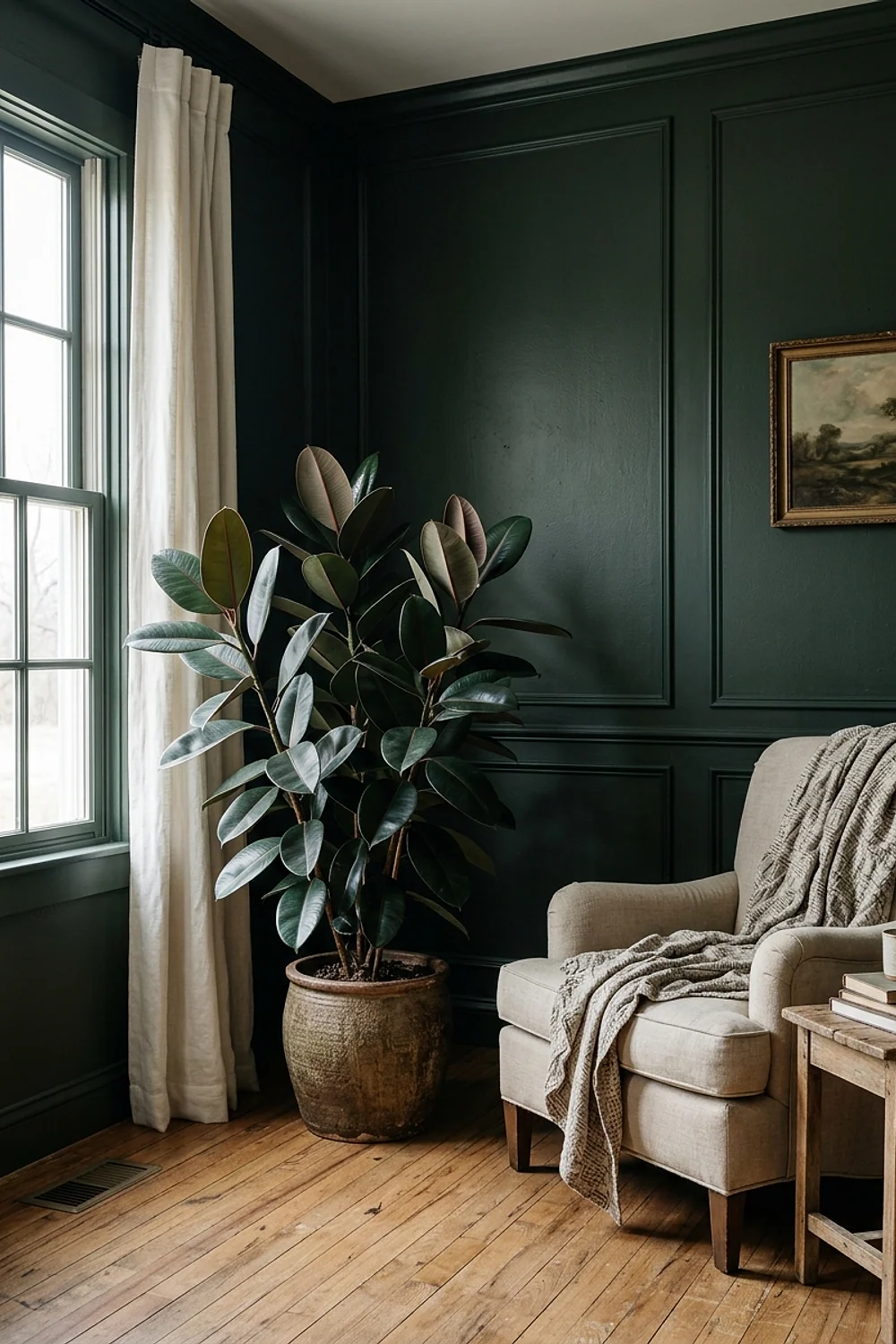
An empty corner beside the sofa wants one tall plant, and a rubber plant (Ficus elastica) around 5 feet is the dependable choice. Its dark, leathery leaves hold a clean silhouette, and a fingertip run along one feels like cool polished leather.
It suits living rooms with a window within 4 feet and ceilings of 8 feet or more. Hide the nursery pot inside a 14-inch basket or planter. And rotate the pot a quarter turn each week, otherwise the plant leans toward the glass and goes lopsided.
2. A thrifted ceramic crock as a cachepot

Hiding a plastic nursery pot inside a secondhand crock beats buying a new planter, and the math isn’t close. A 10-inch designer cachepot runs about $60, while the same size crock at a charity shop is usually $8 to $12. The plant stays in its $4 nursery pot, so repotting never touches the decor.
This suits anyone who swaps plants with the seasons. Check the crock for a drainage hole, or lift the plant out to water at the sink every time. Water pooling in a sealed ceramic base rots roots within a couple of weeks.
3. A north-facing sill lined with snake plants and ZZ plants

On a gray November afternoon around 4pm, a north-facing sill gives off a flat, cool light that makes most plants sulk. Snake plants and ZZ plants shrug it off, and their glossy upright leaves catch what little brightness arrives. Three across a 36-inch sill give the window a green edge without fuss.
This works in rental bedrooms and home offices where direct sun never shows up. Skip anything flowering or fuzzy-leaved here. And go easy on the watering can, because both plants store water in their leaves and rhizomes, and soggy soil kills them faster than a dim window ever will.
4. A pothos trailing off a bookshelf

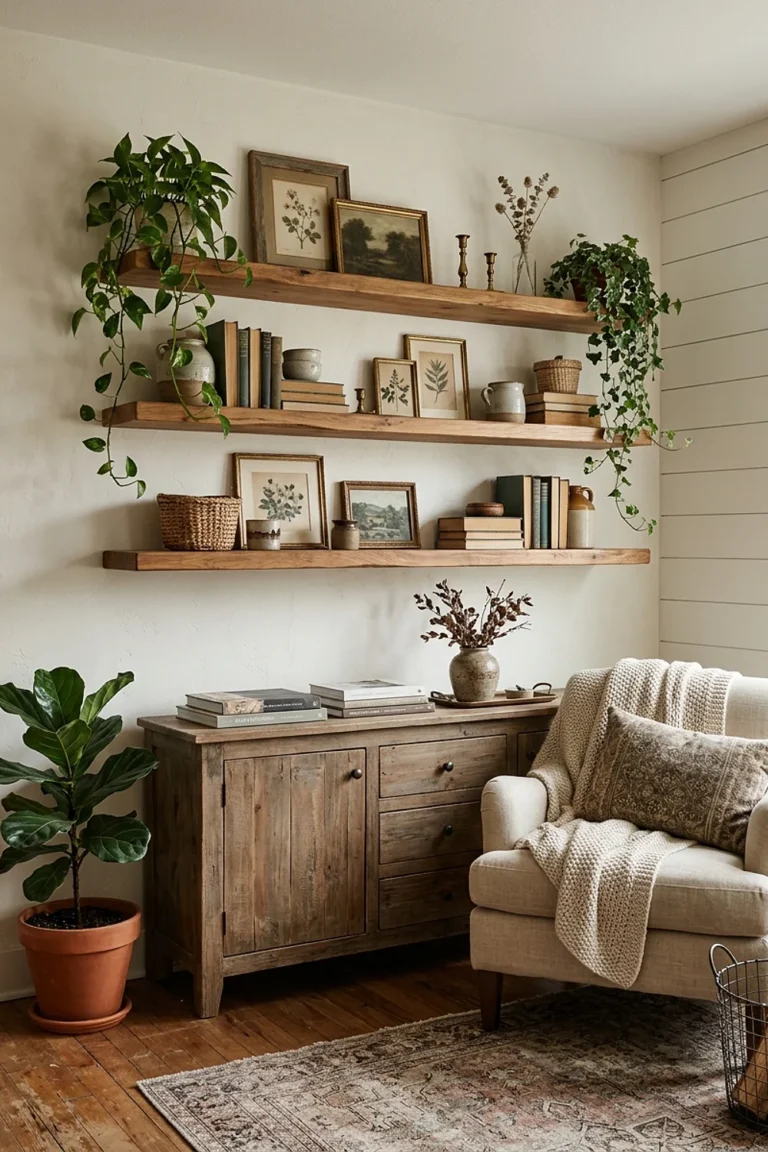
A pothos on the top shelf softens the hard rectangles of spines and frames, and its vines can drop 4 to 6 feet. It’s also the cheapest trick on the list. A 6-inch cutting with two nodes roots in a glass of water, and a friend’s overgrown plant costs nothing, against about $30 for a full hanging basket.
A few weeks into a water jar, white roots show up an inch or two long, and that’s the cue to pot it. Use this in a bookcase with bright indirect light. The common mistake is letting vines trail behind the books, where they get crushed and yellow.
5. Deep green foliage against warm white plaster
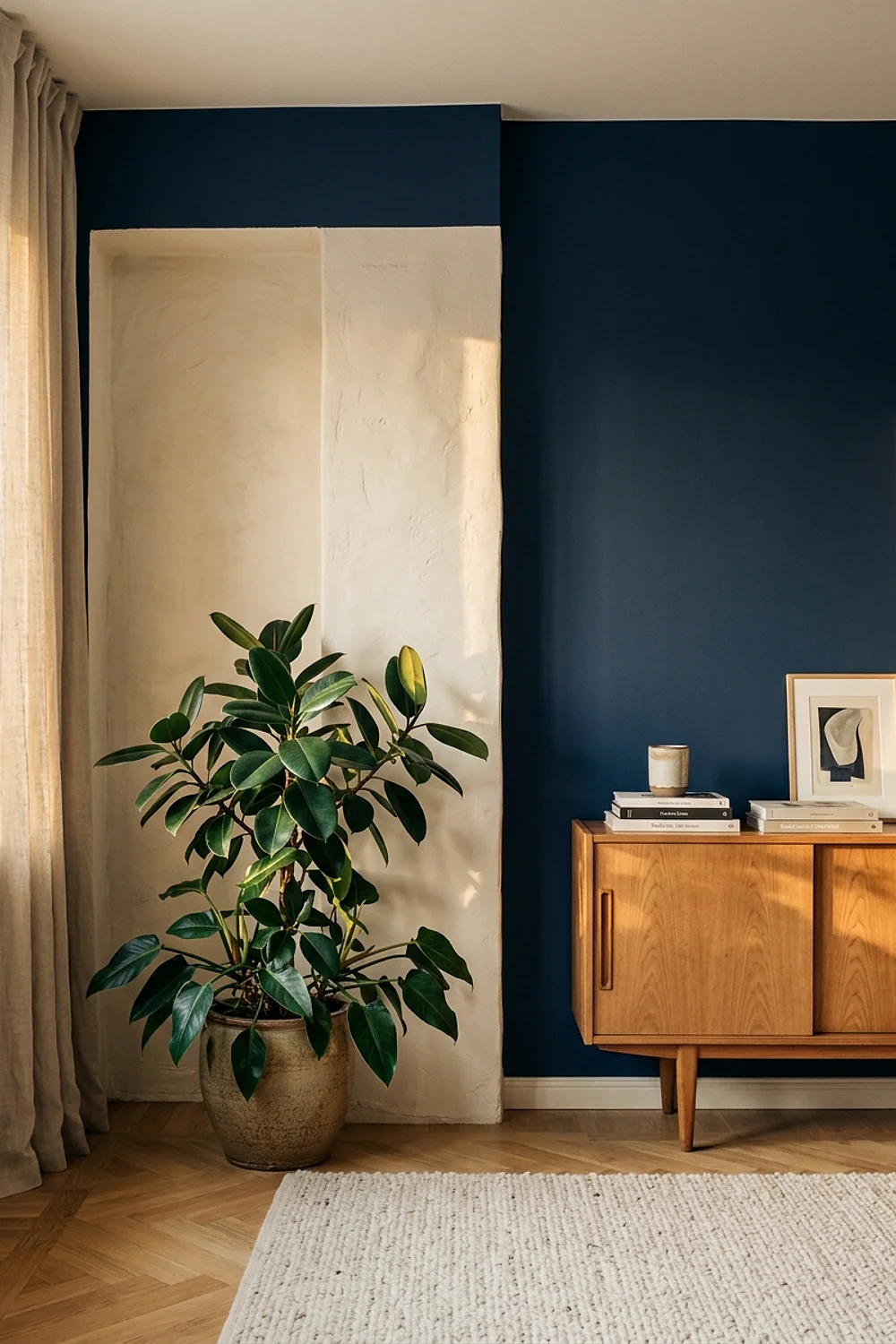
Dark green leaves look sharpest against a warm white or pale limewash wall, because the contrast does the styling for you. A monstera against something like Farrow & Ball Wimborne White reads crisp. Against a mid-tone greige, the same plant fades into the background.
This fits rooms with strong afternoon light, where the wall bounces brightness back onto the leaves. Avoid putting a variegated plant in front of busy wallpaper, because the patterns fight and neither wins. Keep the backdrop quiet and let the leaf shape carry it.
6. Three plants at three heights
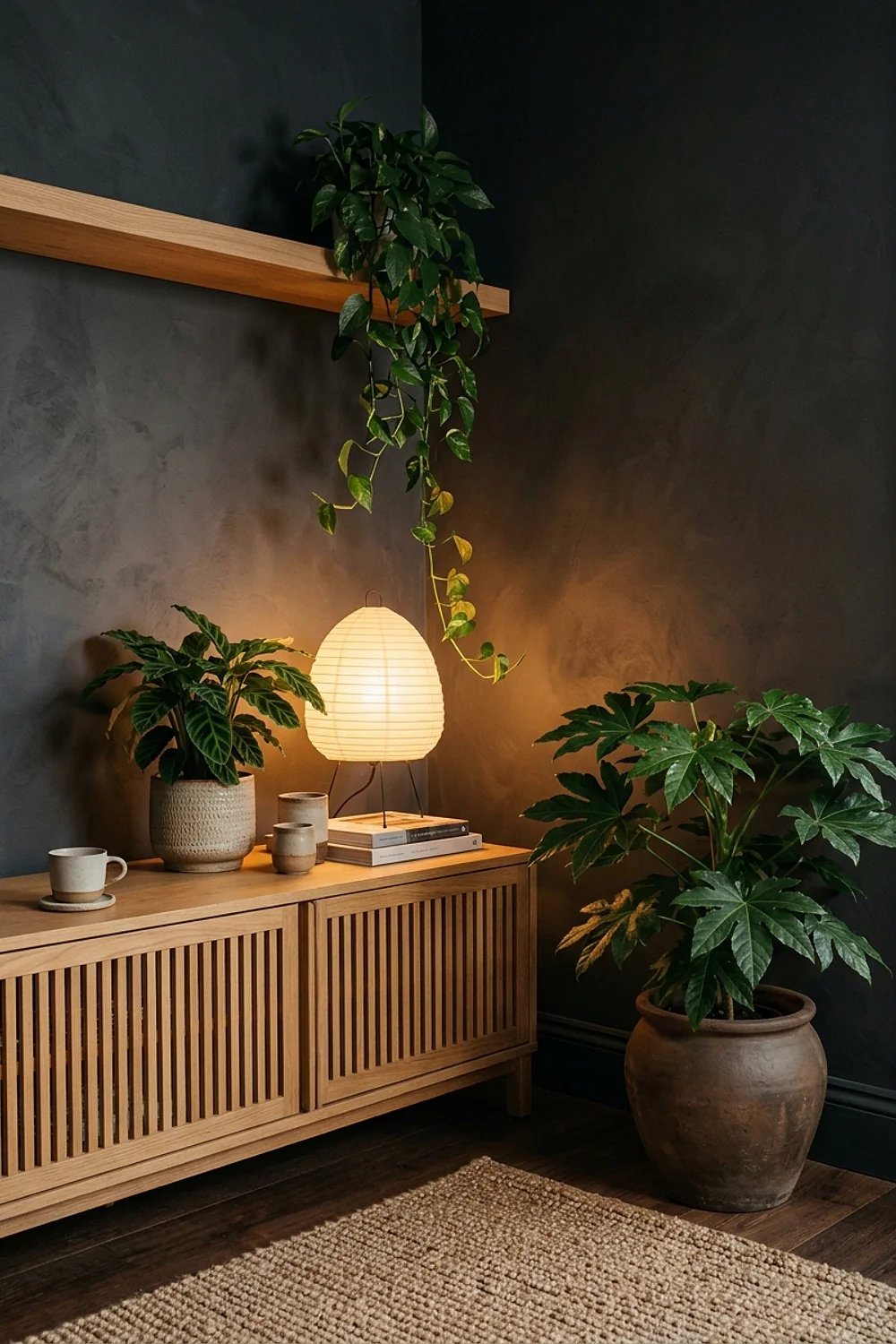
Group plants in odd numbers and stagger the heights: a 12-inch pot on the floor, a 20-inch plant on a low stool, a 30-inch plant on a stand. The eye climbs in steps instead of landing on one flat line. Odd counts look looser and less staged than pairs.
This is the move for an awkward spot beside a media console or at the end of a hallway. Leave 3 to 4 inches between leaf edges so air can move, since crowded foliage invites spider mites. Put the tallest plant nearest the window so it doesn’t shade the others.
7. A 72-inch ladder shelf for small pots
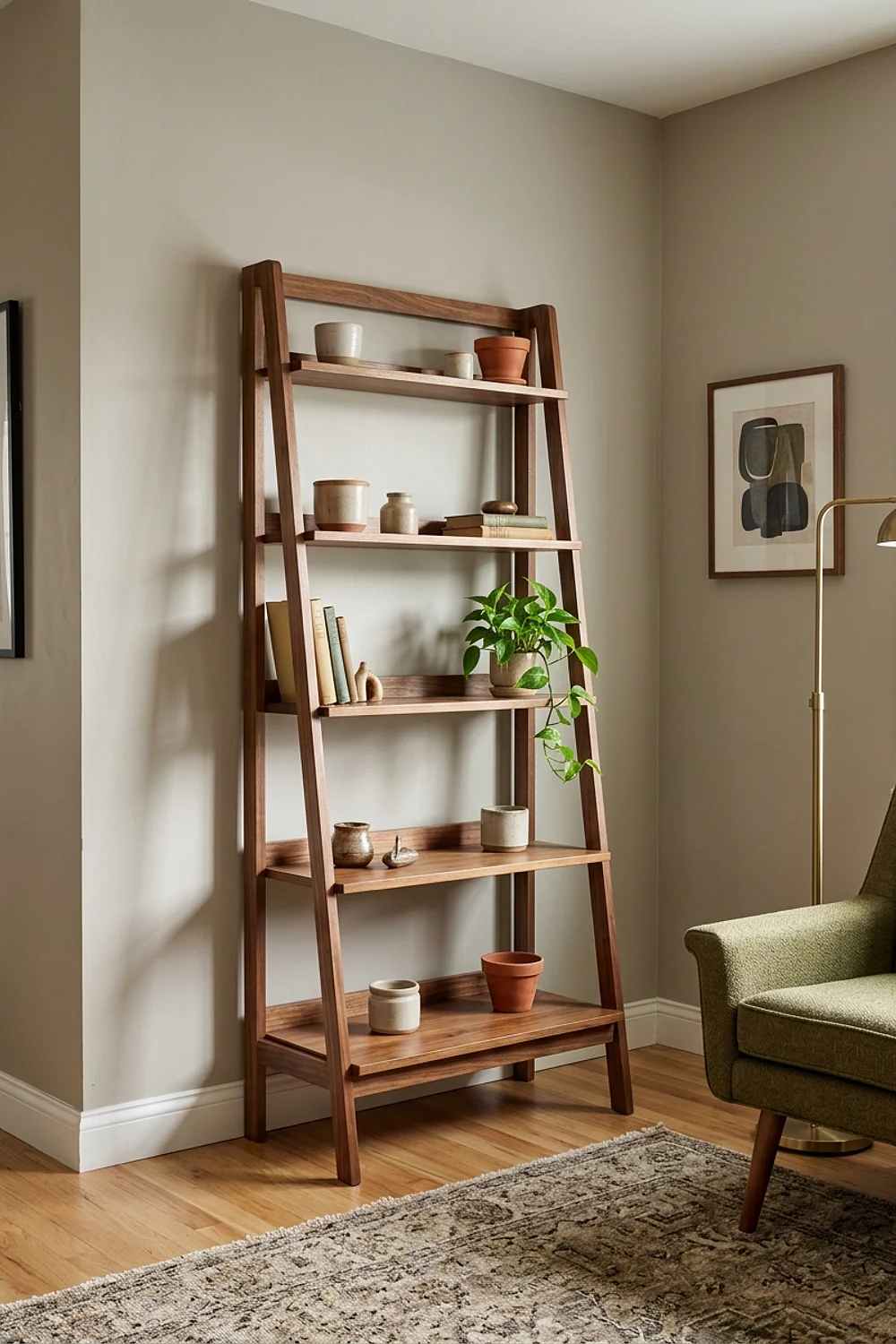
A 72-inch ladder shelf is only about 14 inches deep at the base, which makes it one of the few ways to hold six or seven small plants in a tight apartment. The slope leans against the wall and keeps the floor clear.
Oak or powder-coated steel handles damp saucers well, while bare pine warps and stains within a season. Put a cork mat or saucer under every pot, and keep the thirstiest plants on the bottom rung where drips don’t land on dry neighbors.
8. A fern on the tub ledge
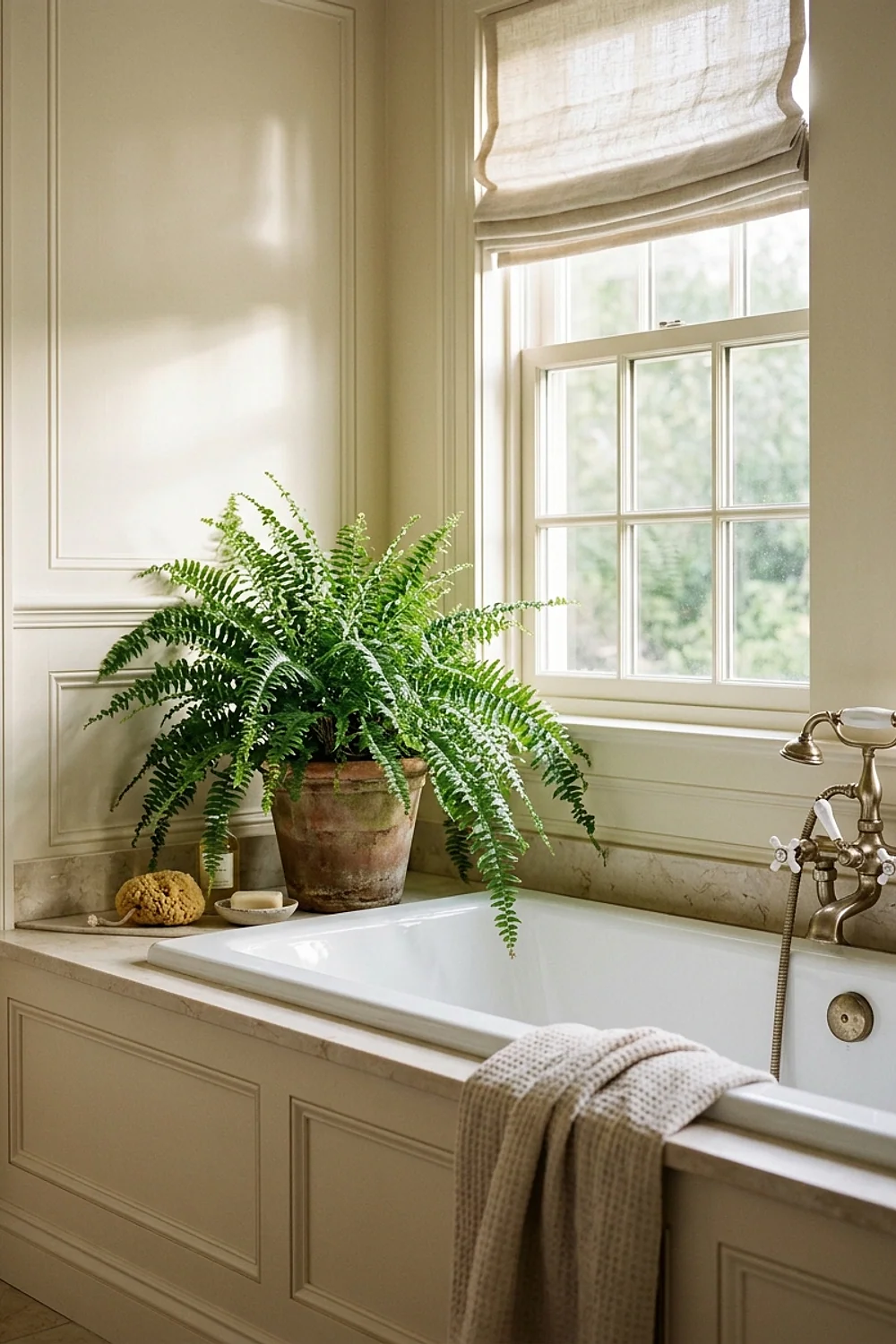
Steam from a daily shower is the reason a Boston fern or maidenhair does well on a tub ledge, and the fronds feel feathery against a wrist as you pass. After a hot shower the room smells faintly of damp soil, a greenhouse note no candle copies. It suits bathrooms with a window or a skylight.
The catch is a windowless bathroom, where living ferns drop fronds within a month. In that case, a bunch of dried stems in a small vase is the smarter call. Don’t let a fern sit in a standing saucer of water.
9. Pulling plants out of the dark middle of the room

The most common mistake in plant styling is parking a plant in the center of the room because it looks balanced there. Light falls off sharply with distance, so a plant 6 feet from a window gets a small fraction of what the sill receives. That’s counterintuitive, since the room feels bright.
The fix is to move the plant within 3 feet of the glass, or to swap it for a good faux stem in the dim spots. Leggy stems stretching toward the window and pale new growth are the warning signs. This is especially common in deep living rooms and long hallways.
10. A floor plant sized to the doorway

In a narrow entry with an 8-foot ceiling, a floor plant under 3 feet looks like an afterthought. Buying a 4-foot rubber plant costs around $80, while a 2-foot one runs about $25. Set the smaller one on an upturned 12-inch crate or a plant stand and the scale reads right today, then let it grow.
This is the right call for anyone furnishing on a slow budget. Keep the plant’s width roughly two-thirds of the console beside it. Anything smaller looks lost, and anything bigger blocks the door swing.
11. Cut stems from the grocery store in a tall vase

Five eucalyptus or olive stems in a 14-inch vase give a console table height and a clean line for little effort. Eucalyptus also scents the room with a sharp, medicinal note when the leaves are brushed. Stems last two to three weeks in fresh water, then dry well in place.
This suits renters and anyone with no light for a living plant. Match the stem length to the vase, with stems about 1.5 to 2 times the vase’s height. The usual mistake is a vase too small, which tips over under the weight of the branches.
12. Terracotta for dry-loving plants, glazed for thirsty ones

Terracotta is porous, so it wicks moisture out of the soil, and that’s why succulents, olives, and cacti stay healthier in it. Tap the rim and it gives a dull, hollow tock. Glazed ceramic holds water longer, which suits ferns and calatheas that hate drying out.
Match the pot to the plant’s habits, not just the room’s style. Terracotta grows a white crust of mineral salts over time, and a wipe with a vinegar-water mix clears it. If that chalky look isn’t wanted, seal the outside with a matte clear coat.
13. A warm-white LED bulb as a grow light
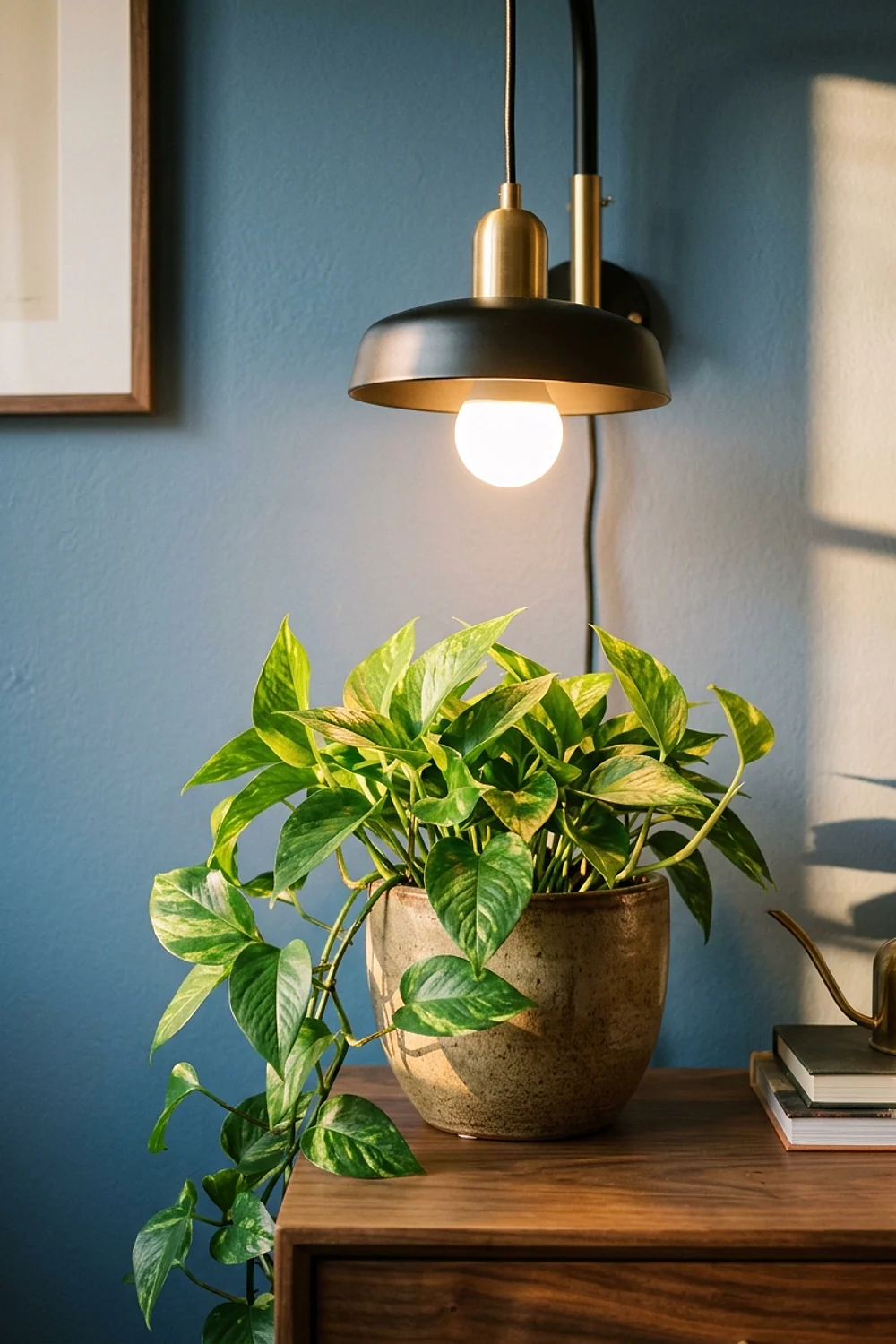
A full-spectrum bulb rated around 2700K to 3000K in a $20 clamp lamp does most of what a $90 designer plant light does. The glow looks like an ordinary lamp rather than a purple lab. Mount it 12 to 18 inches above the leaves and run it 10 to 12 hours on a cheap outlet timer.
This is for dark apartments, basement offices, and shelves far from a window. It works best with foliage plants such as pothos and philodendron. Flowering plants and succulents need stronger light than a single bulb gives.
14. Three snake plants as a room divider
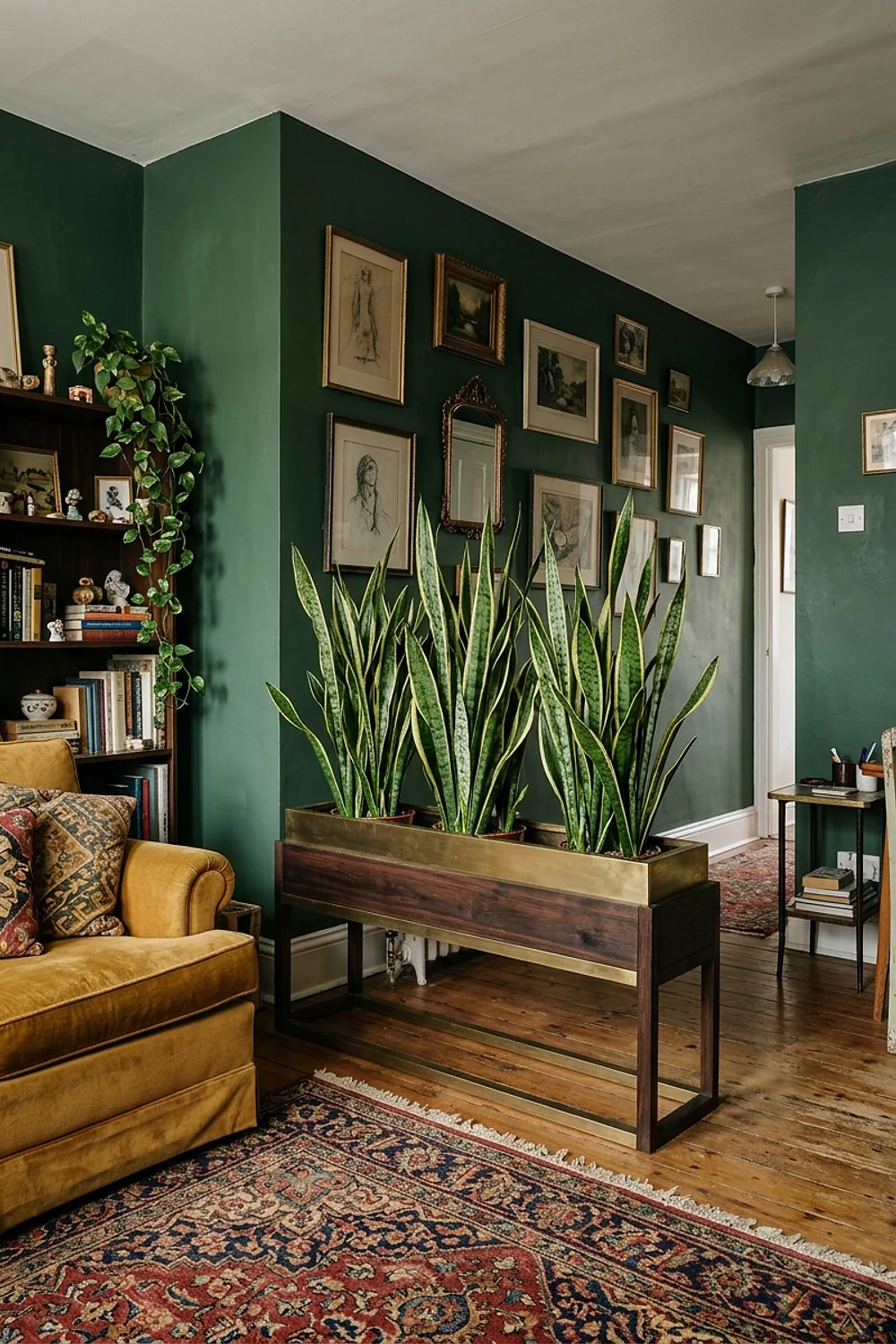
A 48-inch trough planter holding three snake plants at about 3 feet tall can split a studio into sleeping and living zones. The upright leaves read as a soft wall without blocking light the way a bookcase would. Casters under the trough let it move for cleaning.
Wet soil in a trough that size can weigh 40 pounds or more, so check the casters’ rating and use furniture pads on hardwood. This idea is best for open-plan rooms with at least 36 inches of walkway on either side.
15. Pots in one color family

Mismatched plants read as a collection once the pots repeat. Pick two finishes, such as matte oatmeal and unglazed terracotta, and carry them from room to room. A varied mix of leaf shapes then looks deliberate instead of accidental.
This helps most in smaller homes where the eye moves from room to room quickly. More than three pot colors starts to look like a garage sale. And when a favorite pot doesn’t match, put it on a shelf by itself where it can stand alone.
Design inspiration and ideas
The best indoor plant decorating ideas rarely work alone, and a room usually needs three or four of them working together. A few rules keep the mix from turning into clutter.
- Give each room one tall plant, one trailing plant, and one bushy plant.
- Vary leaf shapes: broad, spiky, and feathery next to each other.
- Repeat one pot finish across the room.
- Group plants with similar watering needs, so one trip with the can handles them.
Start with the largest plant and work down. The tall rubber plant sets the anchor, then a trailing pothos fills the shelf, then small pots fill the gaps.
And leave some bare surface. A room with a plant on every flat surface looks like a nursery, while three well-placed ones read as a plan.
Shopping guide
Investment pieces among indoor plant decorating ideas are the ones that last decades: a mature rubber plant, an olive tree, a snake plant. These grow slowly and get better with age. A good stand in oak or steel also earns its spot, since it moves with you from home to home.
Trend pieces are the rare variegated plants and the macrame hangers of the moment. A Thai constellation monstera can run $100 or more, while a standard monstera is about $20 and gives the same bold leaf shape. The standard one is the better buy for most rooms.
The sensible split is to spend once on the largest plant and the stand, and keep everything else cheap and swappable. Pots, cachepots, and small plants are where cost should stay low. Trends cycle faster than leaves grow.
Where to start
Indoor plant decorating ideas work best when they begin with the light, then the plant, then the pot. Pick one spot, check how far it sits from a window, and match the plant to what that spot gives.
Save or pin this list so it’s handy when you’re ready to shop. Then measure the distance from your brightest window to the emptiest corner, and try the 5-foot rubber plant from the first idea.