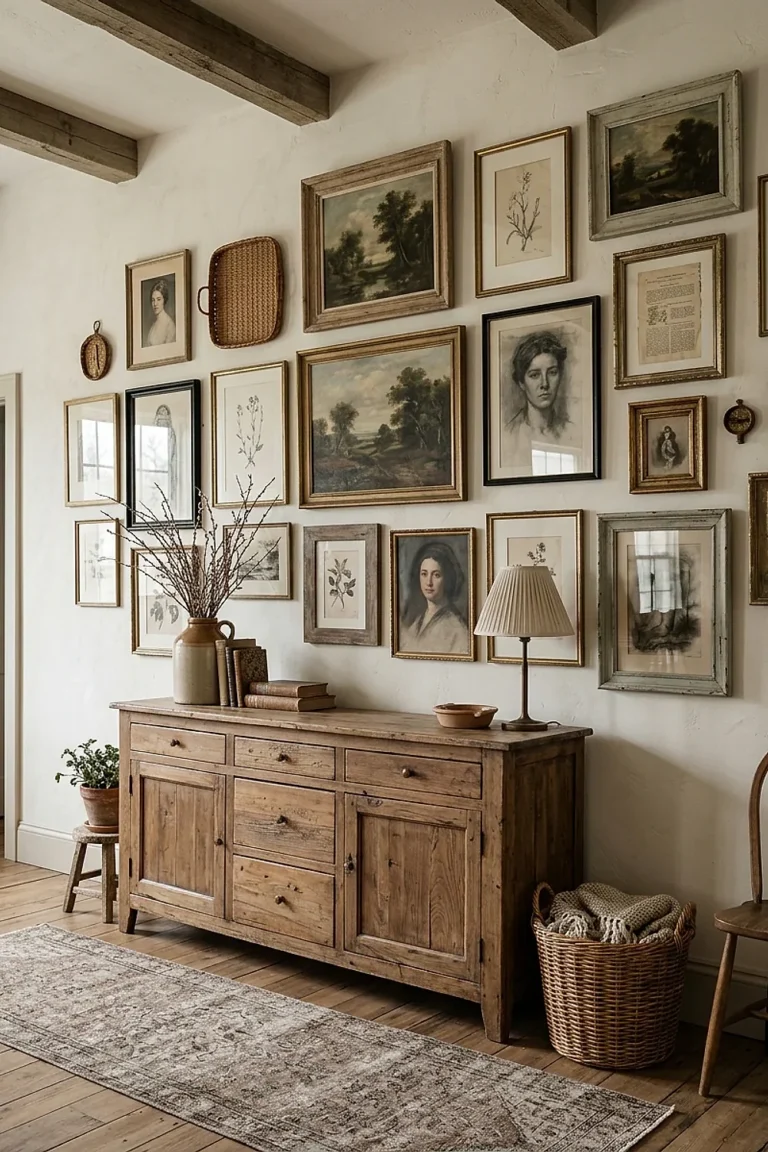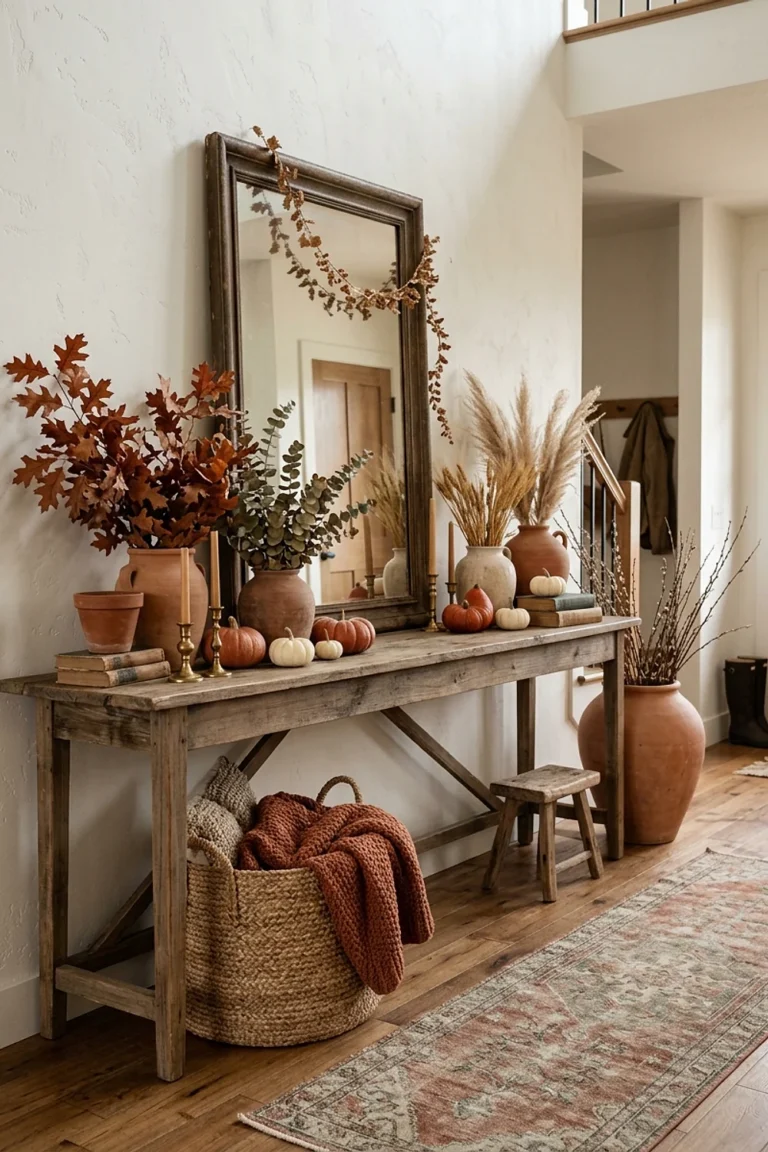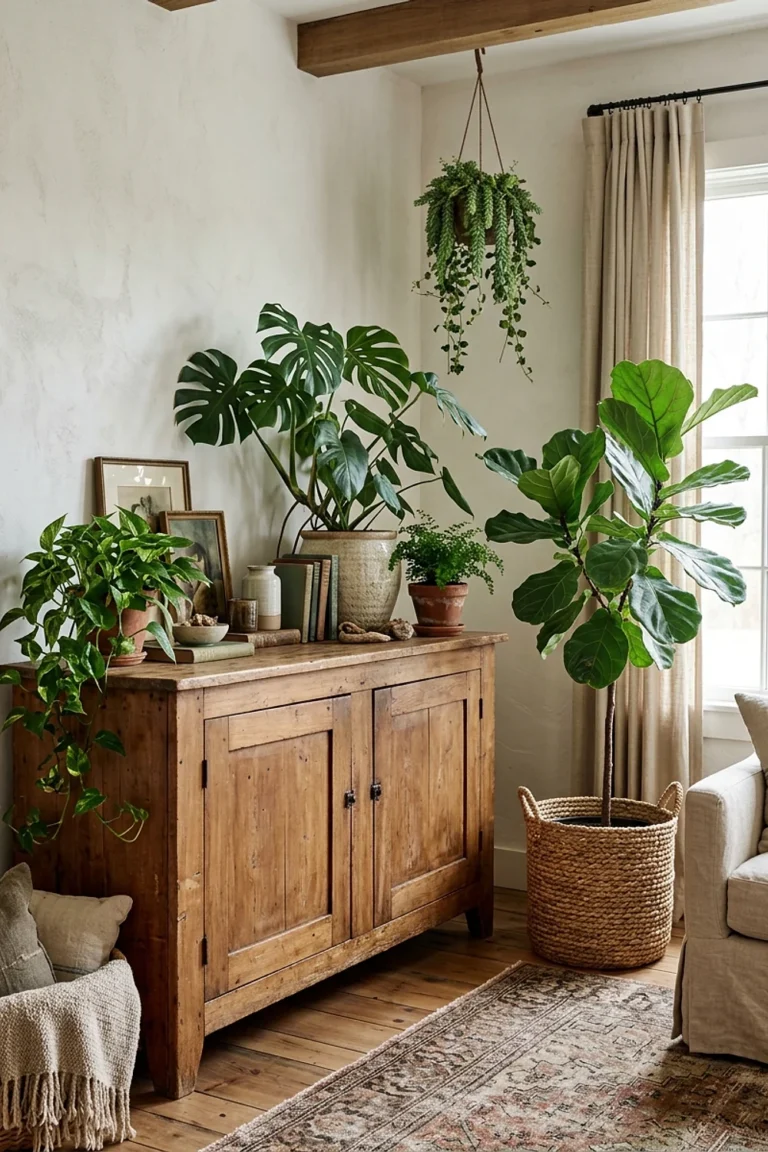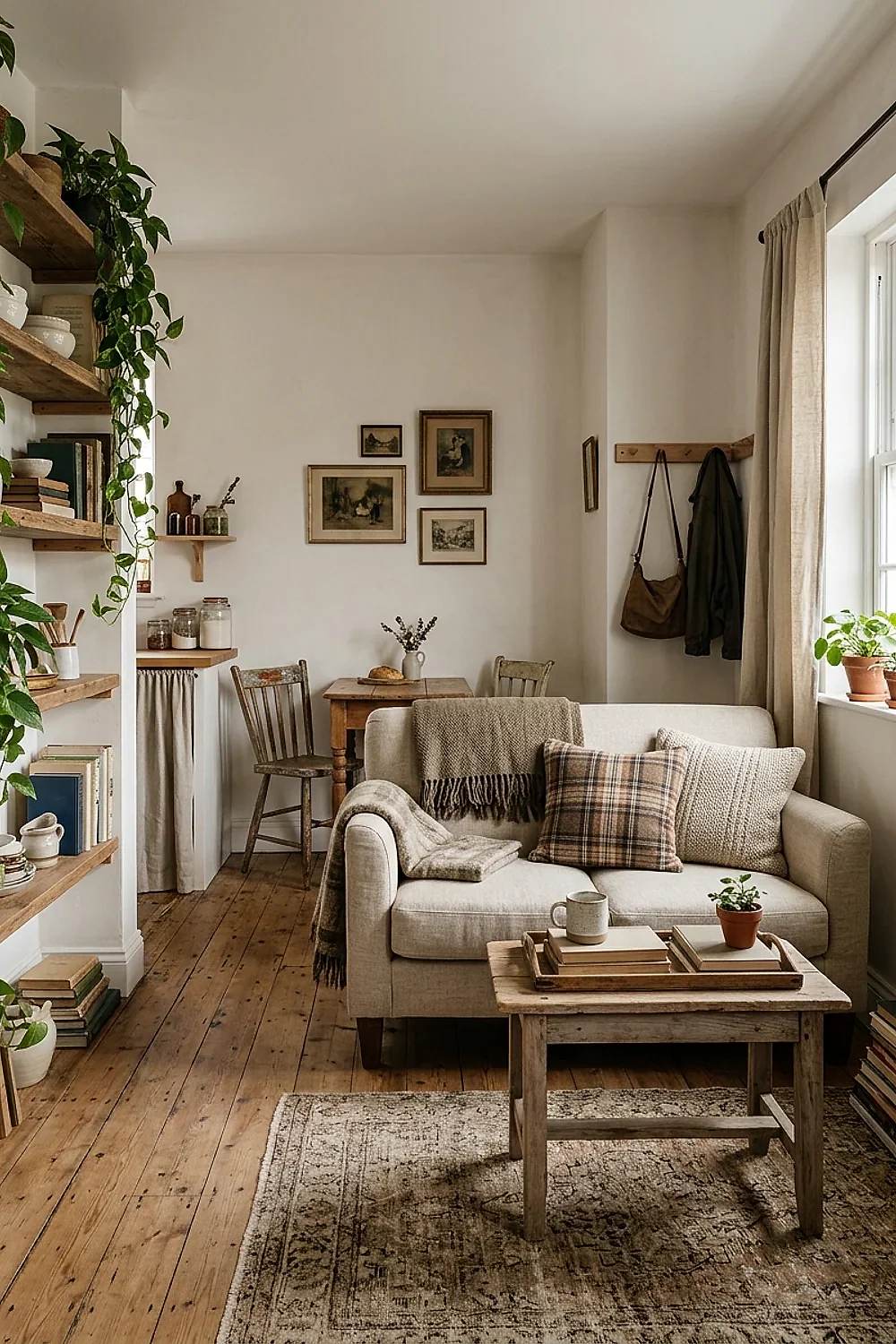
A small apartment that feels roomier, stores more and survives daily wear is well within reach, and these 40 small apartment decorating ideas show how to get there room by room. Every idea comes with a measurement, a price range or a trade-off, so you can judge it against your own floor plan.
Picture 450 square feet, one window and a landlord who frowns at nail holes. Most of these moves fit that situation, and plenty cost under $60. When it comes to 40 small apartment decorating ideas, the details matter.
40 small apartment decorating ideas: Mood board breakdown
1. Entry: a shelf with hooks beside the door
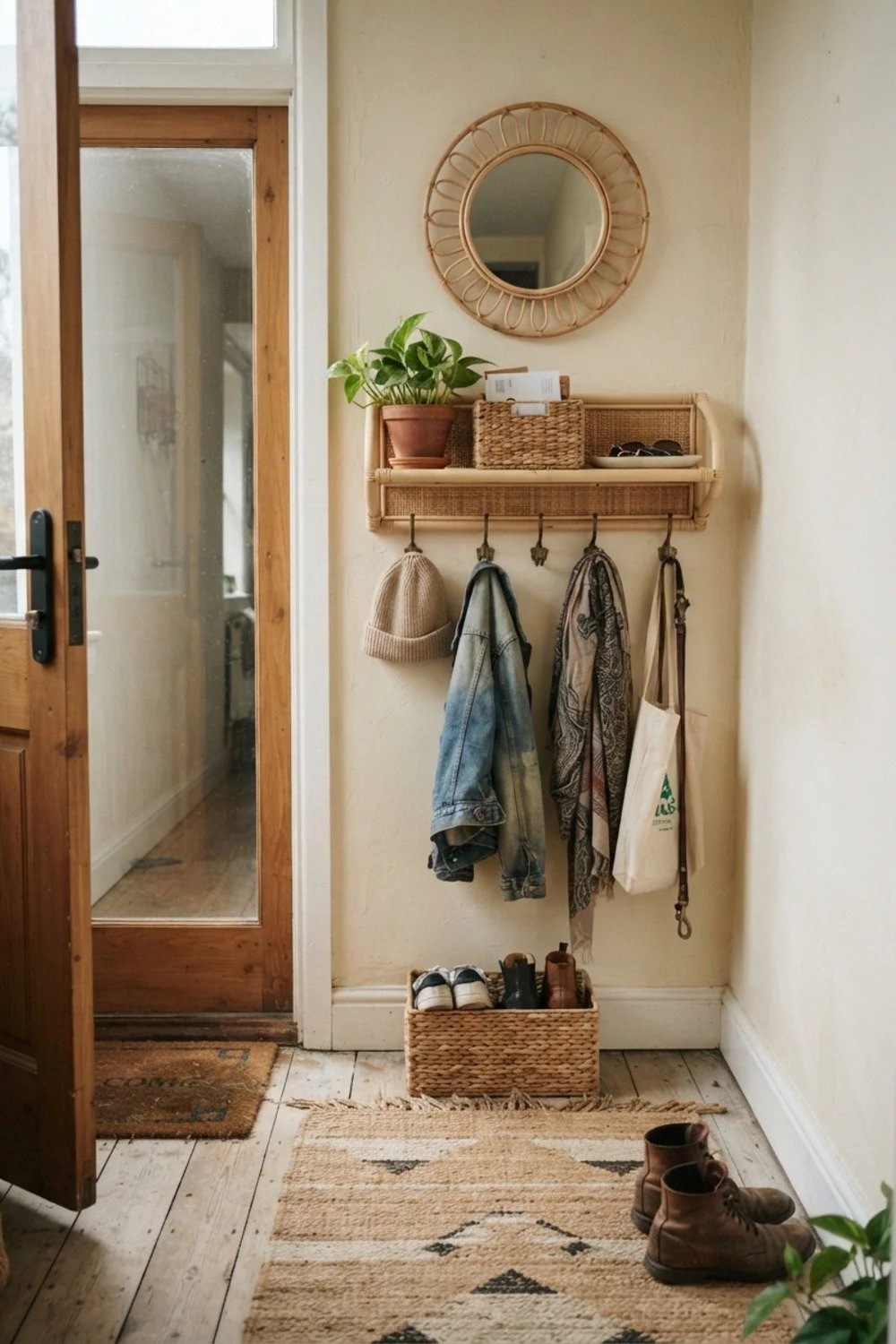
Mount a 36-inch shelf with four hooks beneath it next to the front door, and keys, mail and a leash stop migrating to the sofa arm. Set the shelf top at about 48 inches so tall guests don’t clip a hanging bag with their forehead. These 40 small apartment decorating ideas share one thing in common.
Solid oak or pine survives daily yanking. Thin MDF tends to sag around the screws within a year, so expect to spend $35-70 for the sturdy kind. It suits any apartment where the door opens straight into the living room. For the best 40 small apartment decorating ideas, focus on the basics first.
2. Entry: a round mirror across from the window

Hang a 30-inch round mirror directly opposite a window, centered at roughly 57 inches, and afternoon light bounces deeper into the room. At 4pm in a north-facing entry, that reflection is the difference between a dim hall and a bright one.
The common mistake is hanging it too high, which only reflects the ceiling. Round shapes also soften the hard corners that cramped entries have too many of. Budget $60-120 for a thin metal frame that won’t chip.
3. Entry: peel-and-stick tile for a landing zone
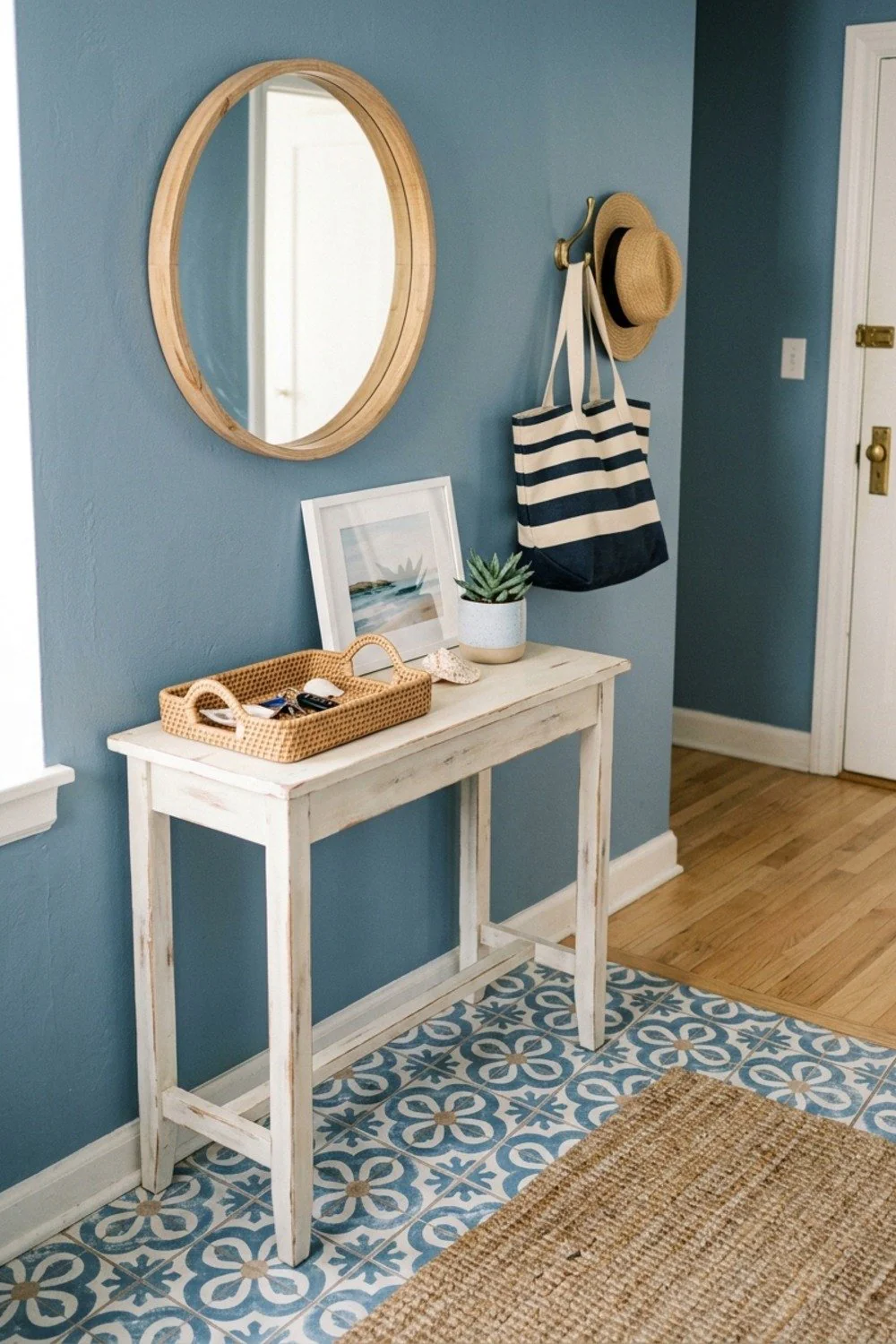
Vinyl peel-and-stick tile runs about $1.50 per square foot, so a 3-by-4-foot landing costs under $20. It hides scuffed builder-grade flooring and marks the entry as its own zone, which makes the rest of the apartment read as a separate room. Renters can lift it at move-out with a hair dryer on low.
Press every tile with a rolling pin and wipe the subfloor first, since dust is what makes corners curl. In damp climates, 2mm tiles outlast the thin 1mm kind.
4. Entry: a shoe cabinet only 9 inches deep
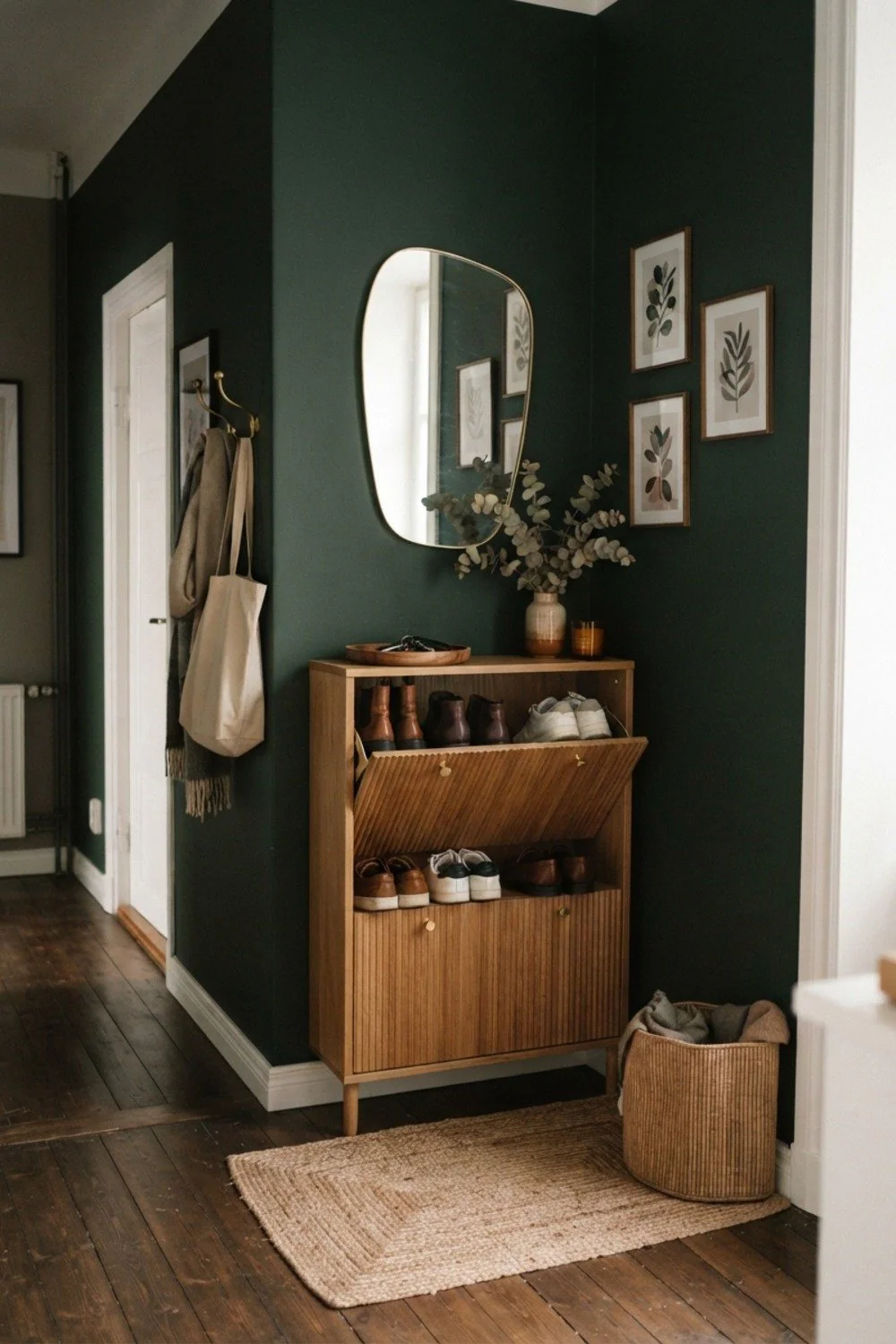
Tilt-out shoe cabinets measuring 8-9 inches deep hold about 12 pairs and stick out less than a winter coat does. Prices run $60-130. They fit hallways where you need to keep 36 inches clear for walking.
Skip the 12-inch-deep versions. The extra 3 inches doesn’t store more in a tilting drawer, but it does cost you an elbow bump every morning. Powder-coated metal or laminate wipes clean after a rainy commute.
5. Living room: a performance-fabric sofa under 80 inches
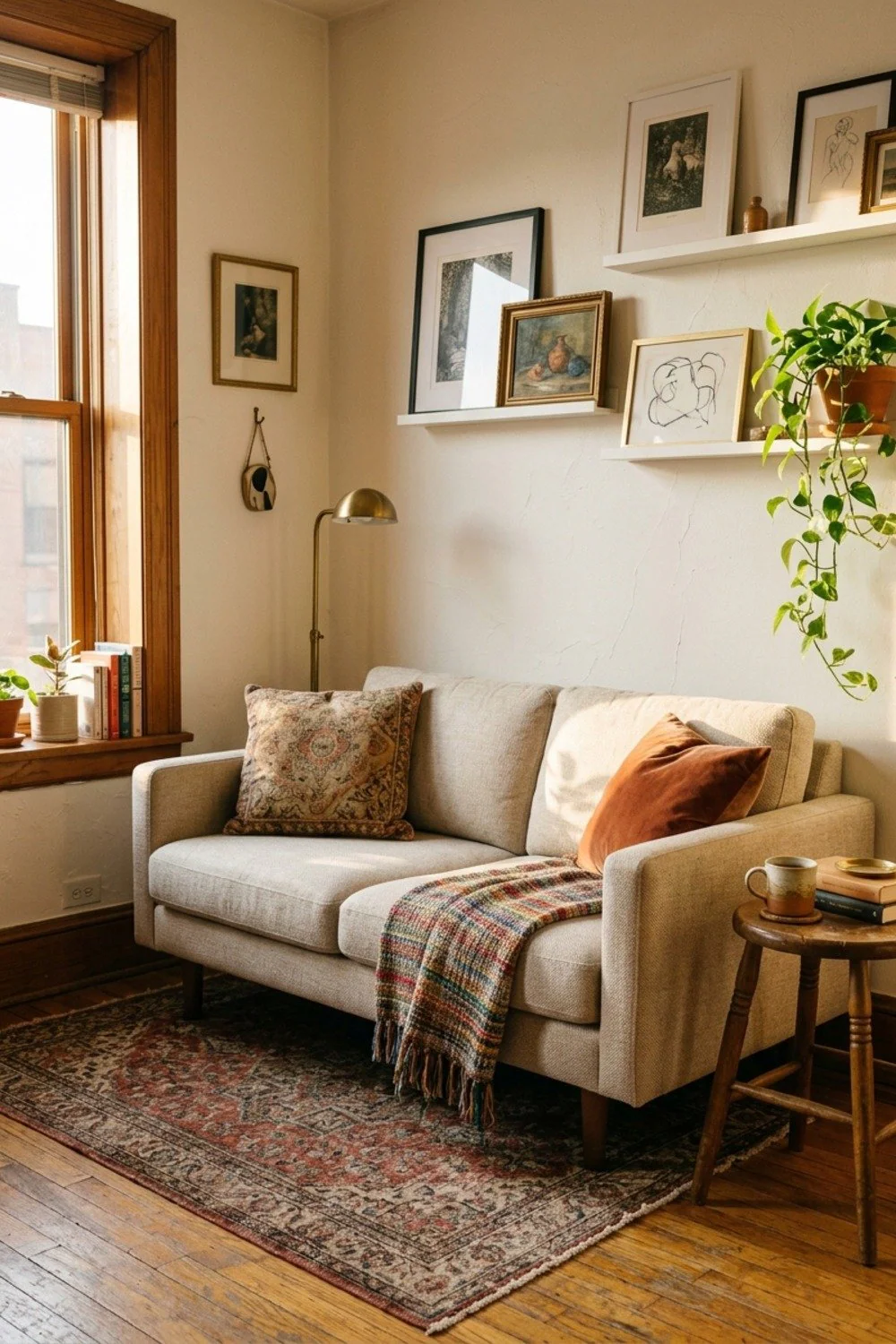
Sofas between 72 and 80 inches long seat three people without swallowing a 10-by-12-foot room. With dogs or kids in the picture, fabric matters more than the frame: tightly woven polyester velvet or a performance weave shrugs off claws, while bouclé loops snag within weeks.
Check the cushion cores too. High-density foam wrapped in batting keeps its shape for years, and a removable washable cover is worth an extra $100-200.
6. Living room: three light sources at three heights
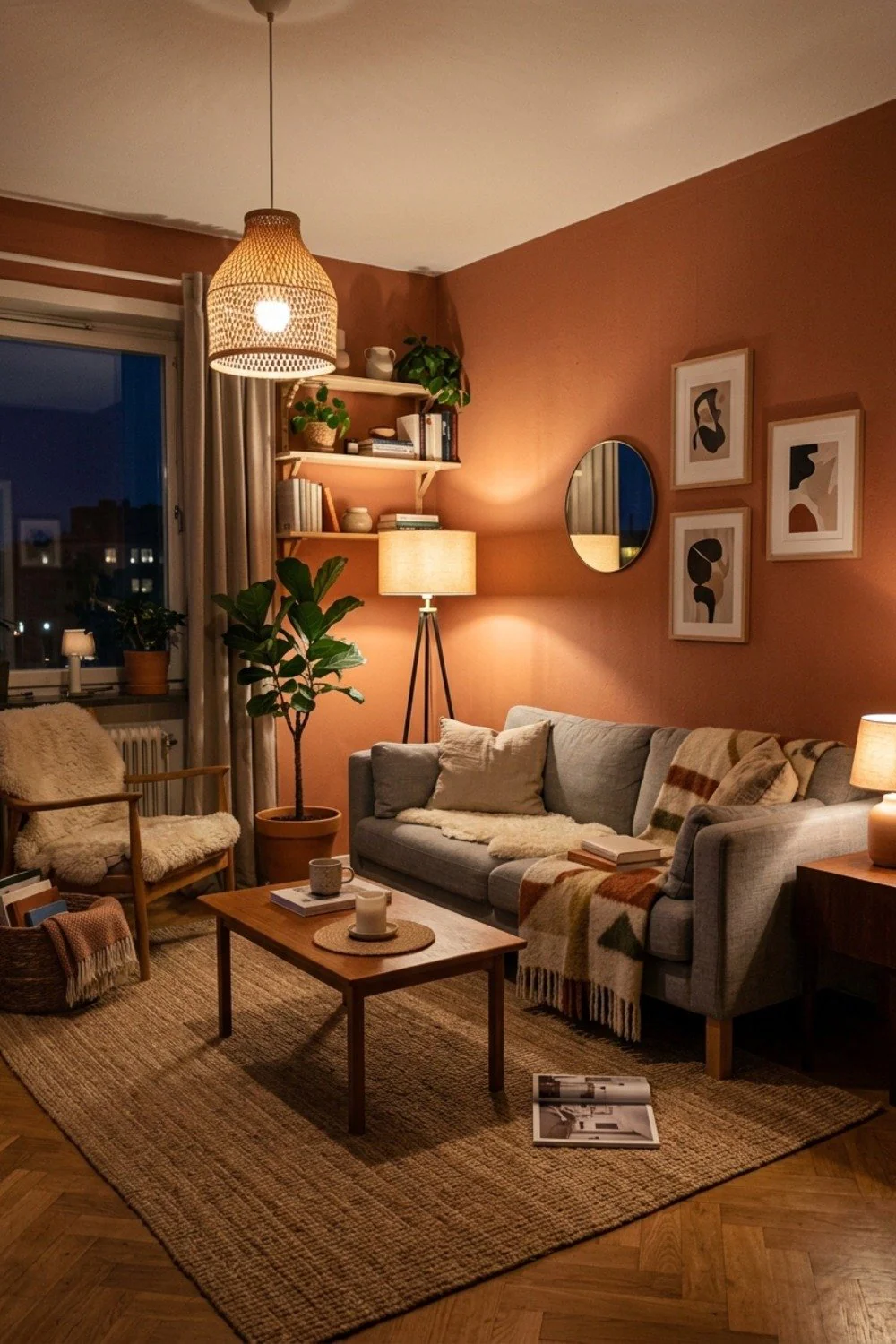
A floor lamp at 60 inches, a table lamp at 26 inches and a plug-in wall sconce at 66 inches give a low living room layers of light, which makes it read deeper. Use 2700K bulbs. Anything above 3000K turns evening light clinical.
Plug-in sconces cost $40-80 and need no electrician. A $10 paintable cord cover hides the wire. Overhead flush mounts flatten a room, so save them for cleaning day.
7. Living room: one deep wall color
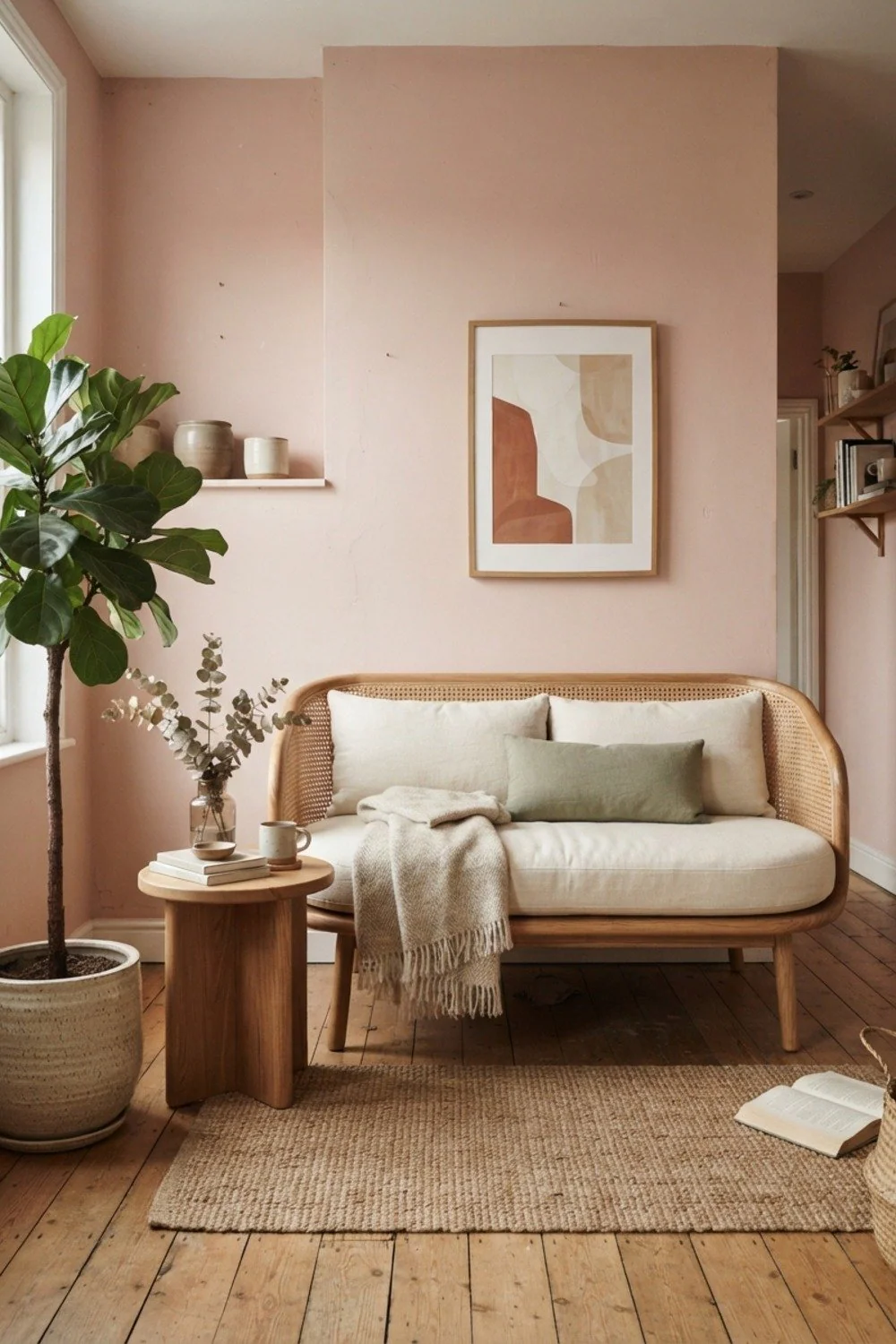
Deep green or navy on all four walls can make a small living room seem less boxy, which is the counterintuitive part. Dark color blurs the corners, so the edges stop announcing themselves. On a gray February afternoon, a shade like Sherwin-Williams Rookwood Dark Green makes the walls recede like velvet.
This suits rooms with at least one decent window. In a windowless box, stick with pale warm gray. Choose scrubbable eggshell, because flat paint marks up fast.
8. Living room: a 5-by-8 rug under the front legs
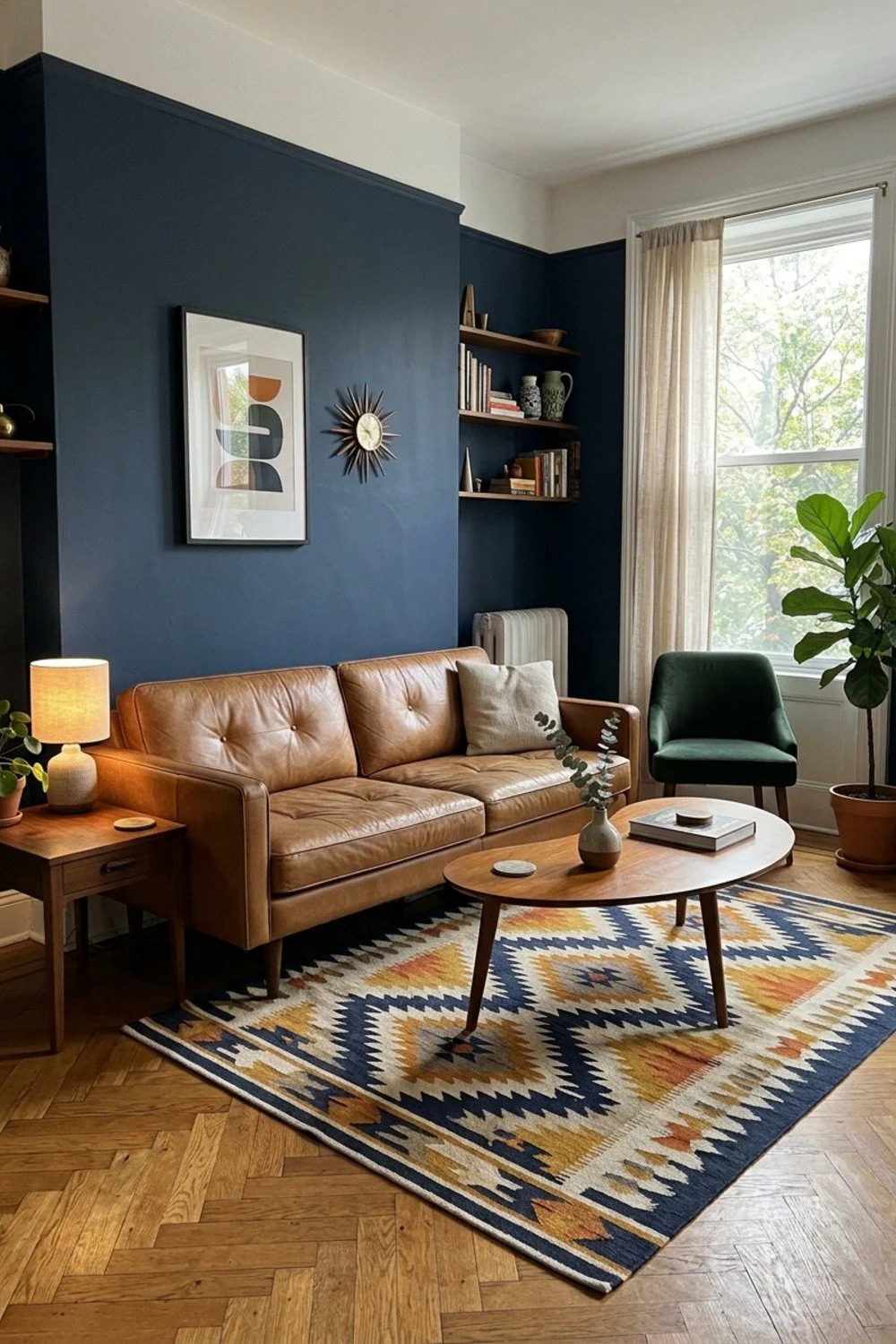
Five by eight feet is the minimum rug for a living area, and the front legs of the sofa and chairs should sit on it. Leaving 8-12 inches of bare floor around the edge makes the room read wider. A postage-stamp rug floating alone in the middle shrinks everything around it.
For heavy traffic, flat-weave polypropylene or a wool blend vacuums clean and handles paws. Expect $90-200 for one that doesn’t curl at the corners.
9. Living room: float the sofa to split a studio
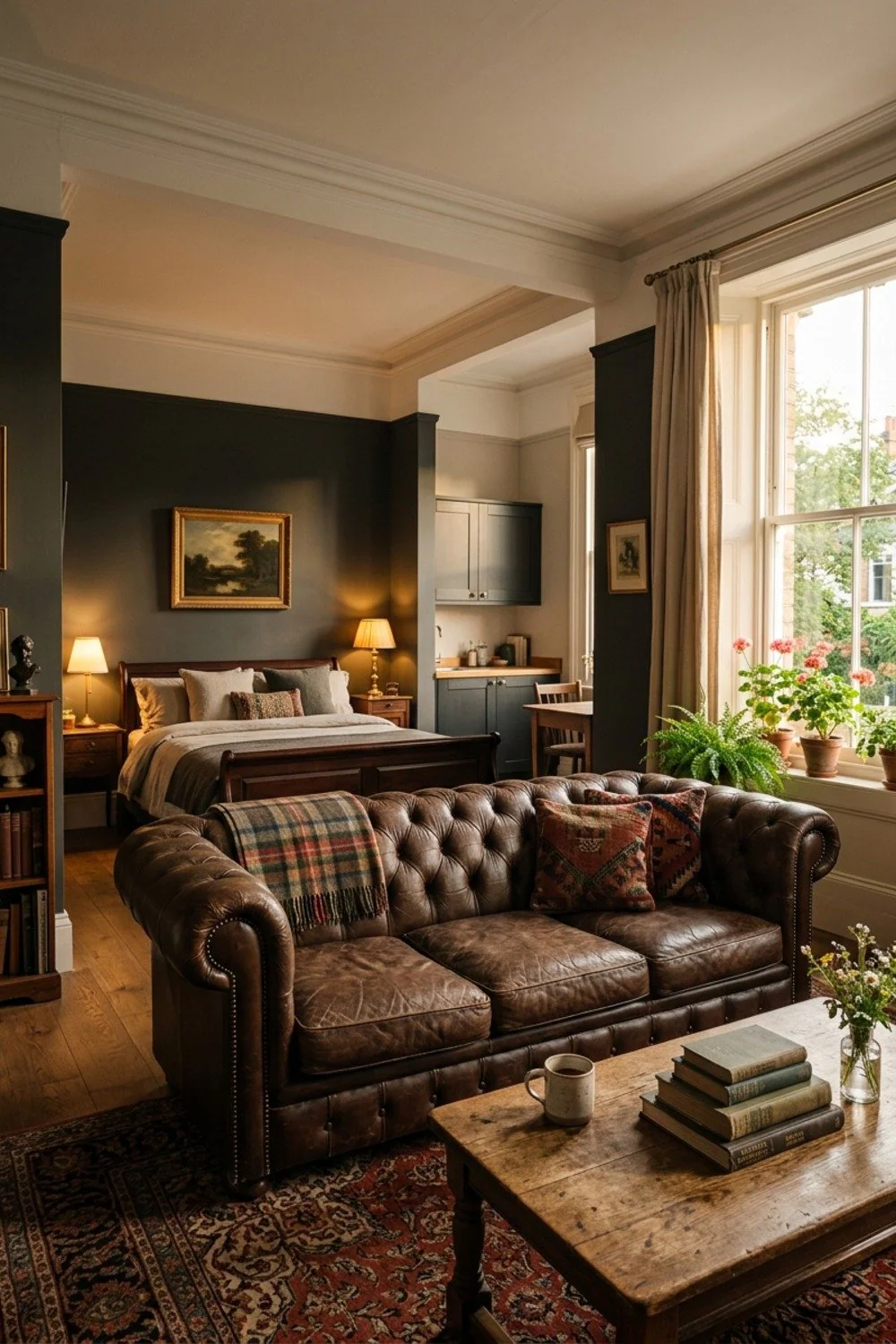
Float the sofa so its back sits about 4 feet from the wall, then tuck a 12-inch-deep console behind it. That divides a studio into a sitting zone and a sleeping zone. The console holds lamps and doubles as a laptop perch.
It works in rooms at least 11 feet wide. In anything narrower, the walkway behind the console falls under the 24 inches you need to pass through.
10. Living room: a round coffee table

Round coffee tables about 30 inches across have no corners to bruise a shin in a tight walkway. Keep the top 16-18 inches high and roughly 18 inches from the sofa edge. Nesting pairs, from $80-150, slide apart when guests arrive.
The usual mistake is a chunky rectangular table 48 inches long in a 10-foot room. It eats the path and collects clutter. Marble stains from a single wet glass, so sealed oak or powder-coated metal is the safer bet.
11. Living room: a lidded storage ottoman
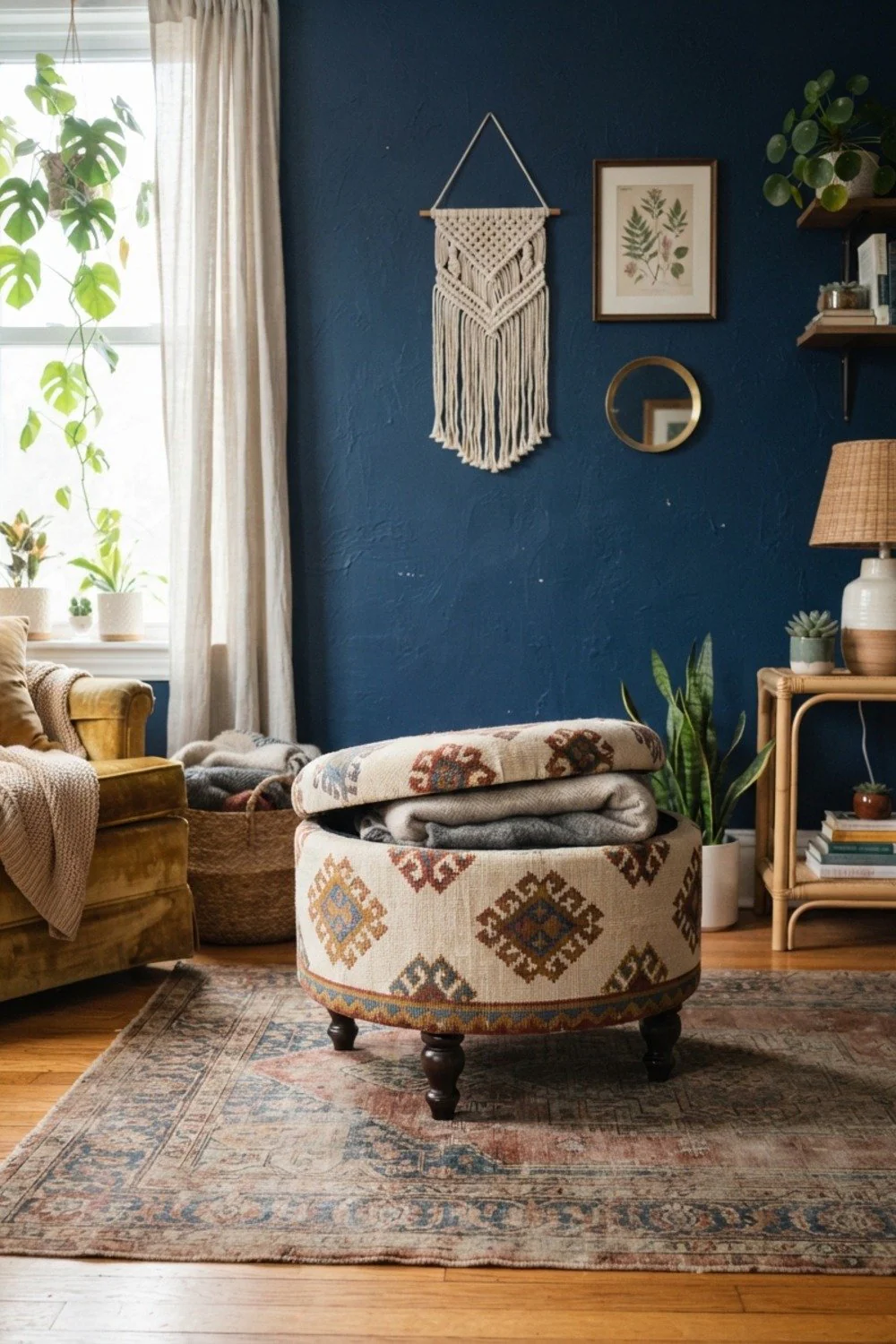
A 30-inch lidded ottoman swallows blankets and board games, then serves as a footrest or an extra seat. It replaces a separate chest and a pouf, which is a real saving in a small room. Expect $90-180.
Look for soft-close hinges, because a falling lid is how fingers get pinched. Faux leather and tight-weave polyester both wipe down after spills. This is the right call for apartments without a hall closet.
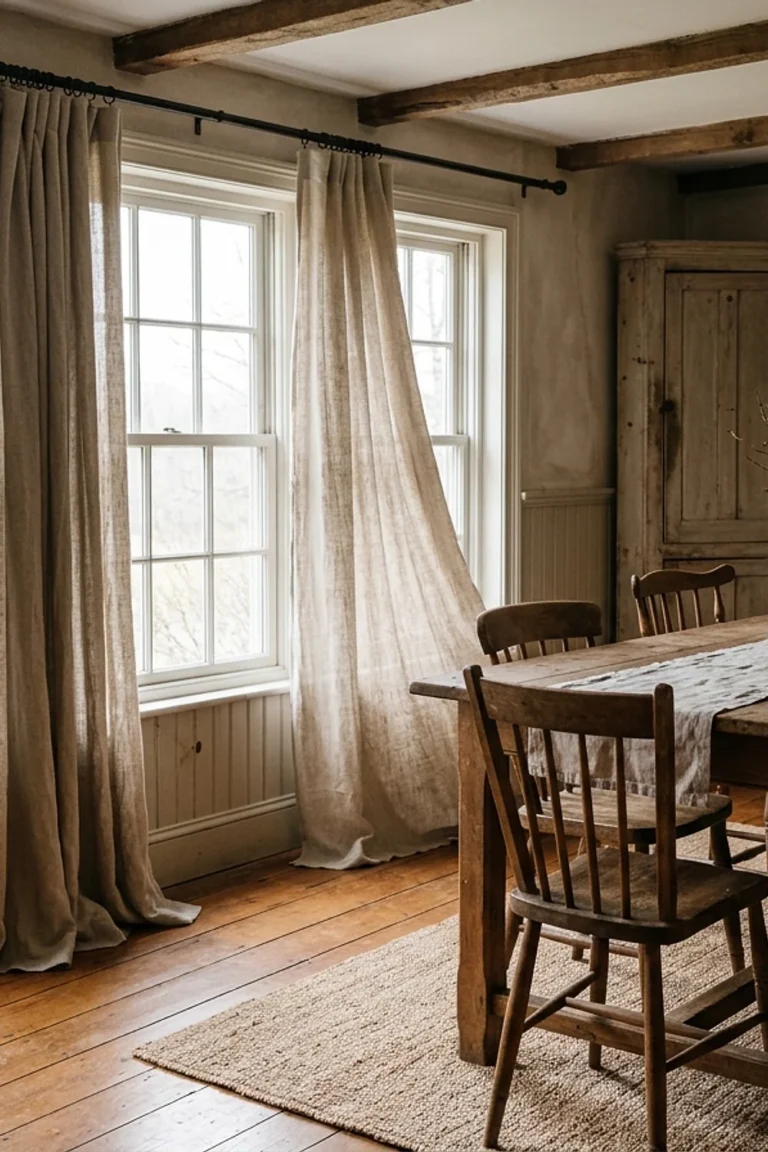
12. Living room: curtains hung high and wide
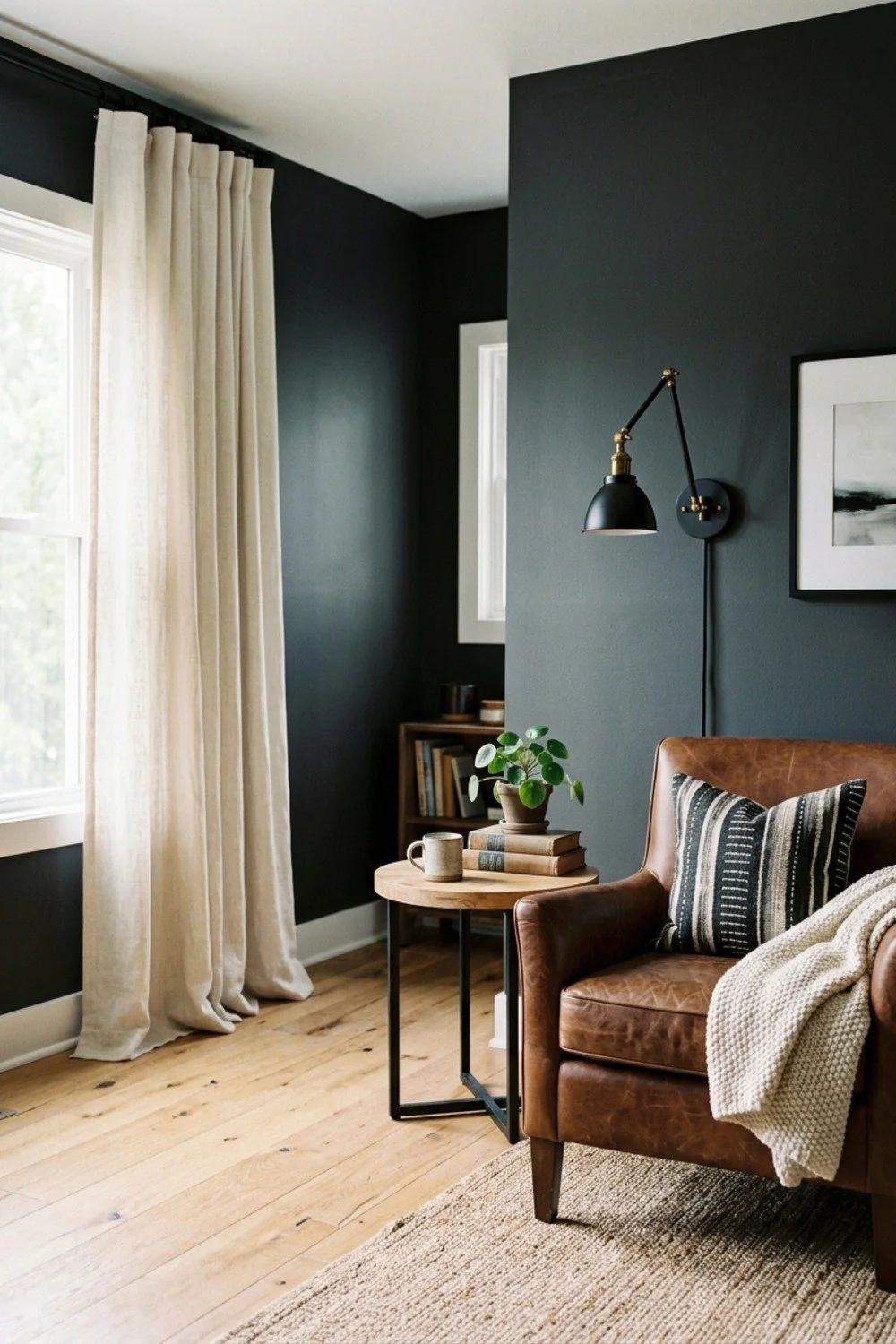
Mount the rod 4-6 inches above the window frame and let it extend 8-10 inches past each side. The window looks taller, the ceiling looks higher, and more daylight gets through. Linen-look panels in 84 or 96 inches usually cost $30-70 a pair.
Let the hem just kiss the floor. Puddled fabric is a vacuum-cleaner trap and a magnet for pet hair.
13. Living room: a flea-market side table
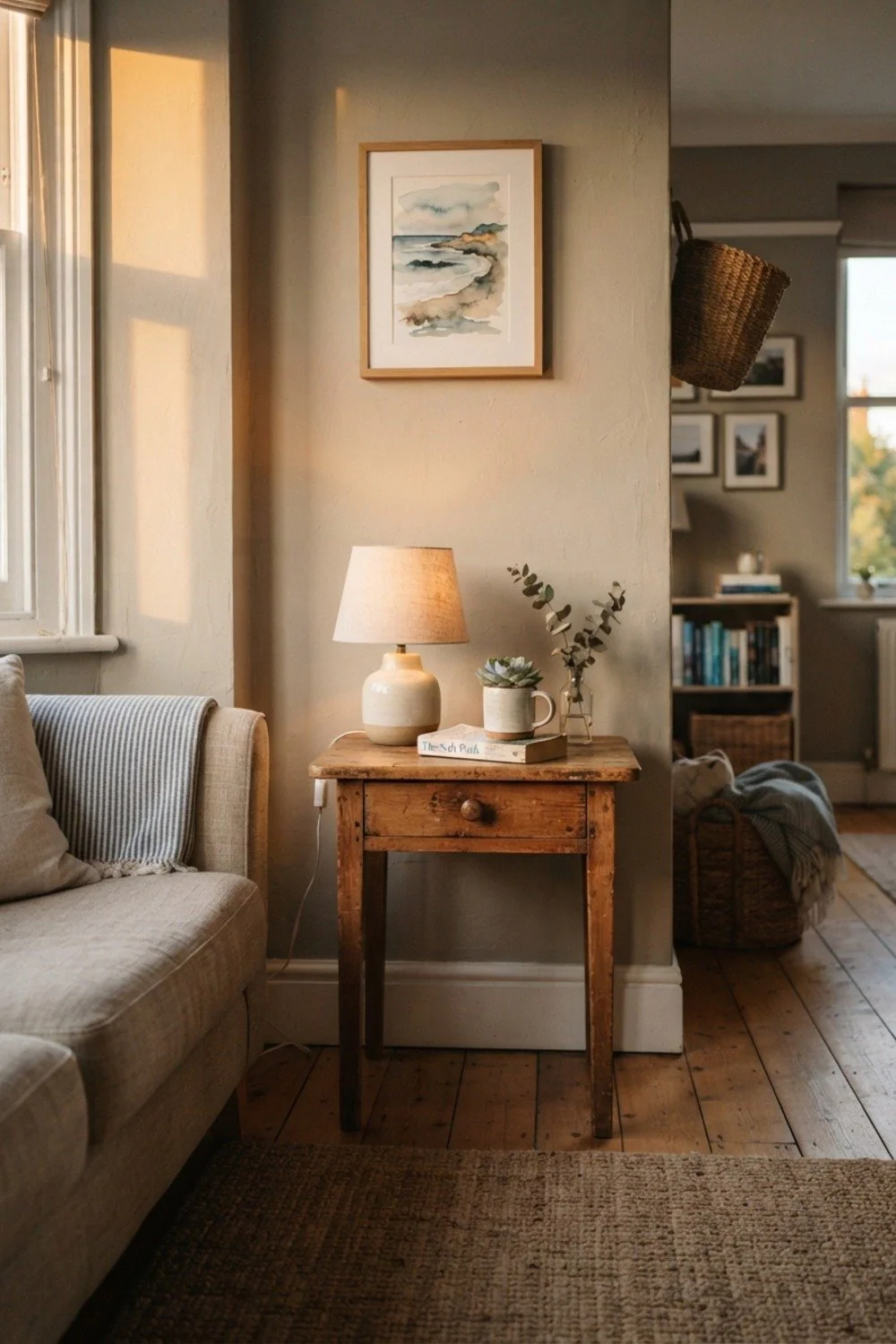
Secondhand side tables cost $20-45, and solid wood takes sanding and a coat of paint better than most flat-pack. A 16-inch-wide drum or pedestal shape fits beside a sofa arm without crowding it. It brings an aged finish that new furniture can’t fake.
Check for wobble by rocking each corner, and sniff the drawers for mustiness. Veneer lifting at the edge is a pass, since it rarely glues back well.
14. Living room: picture ledges instead of a bookcase
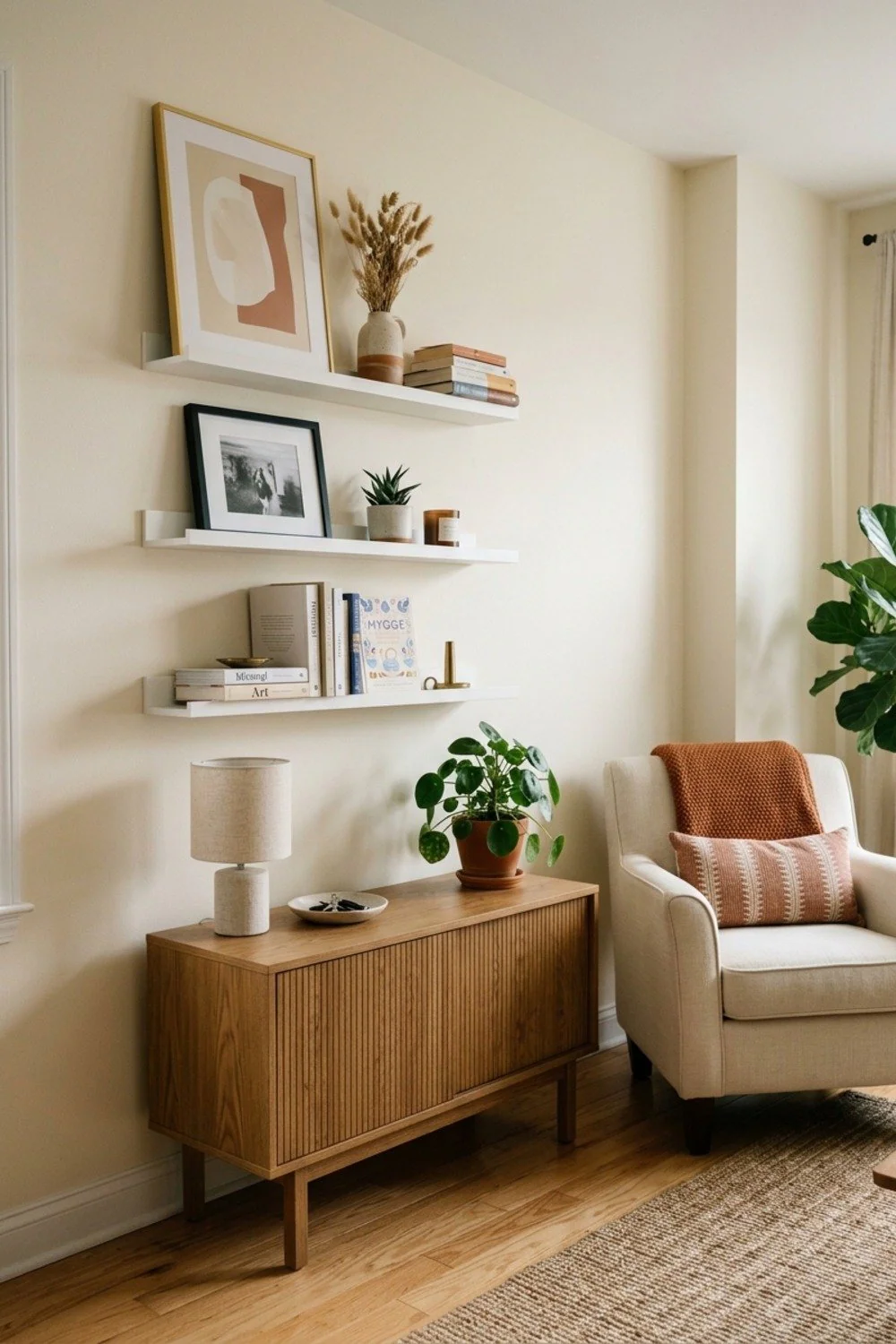
Picture ledges only 4 inches deep hold paperbacks and framed prints without eating floor space. Three 36-inch ledges stacked 10 inches apart cost about $60 in total. They suit rooms where a 12-inch bookcase would block the walkway.
Screw them into studs or use rated anchors. Hardcovers weigh more than they look, and a ledge pulling out of drywall is a messy lesson.
15. Kitchen: an over-the-sink board

An adjustable bamboo cutting board that spans the sink, usually 20-30 inches wide, adds about 2 square feet of prep area for $25-45. In a kitchen with 24 inches of counter, that’s the difference between chopping on a plate and having room to work.
Bamboo is hard but warps if wet water pools beneath it, so dry it upright after use. Pick a model with rubber feet.
16. Kitchen: plug-in LED strips under the cabinets
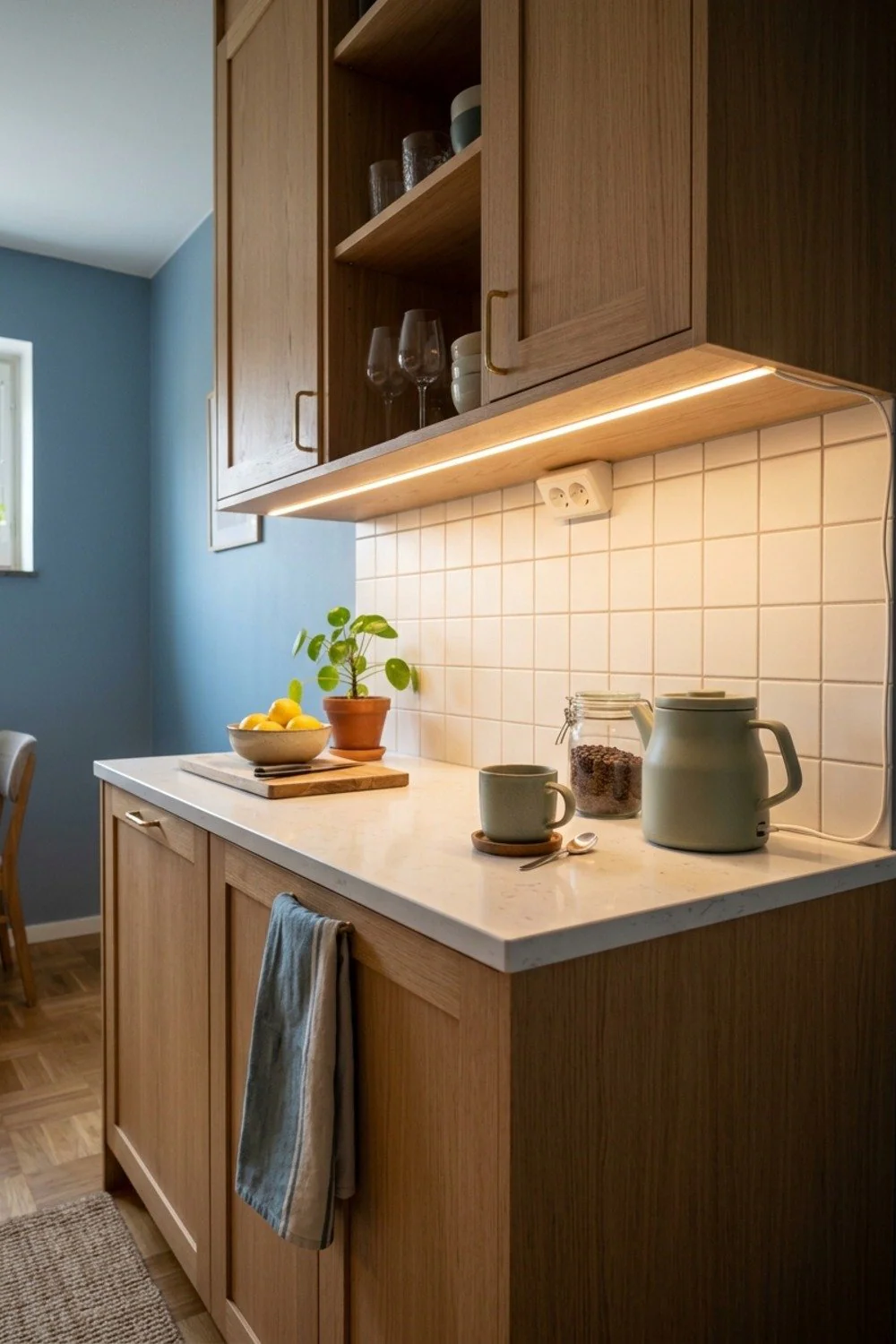
Under-cabinet LED strips at 3000K cost $25-40 per 24-inch run and plug into a standard outlet, so no electrician or wiring is needed. They wipe out the shadow your own body casts on the counter, because light comes from directly above the work surface instead of from the ceiling behind you.
This suits renters and anyone chopping vegetables in a dim galley kitchen. The adhesive backing lifts cleanly from most painted cabinets. Choose a strip with a diffuser lens. Bare dots reflect as glaring spots in a glossy backsplash, which looks cheap.
17. Kitchen: cabinets painted to match the walls

Painting cabinets and walls the same soft sage or warm white removes the visual chop that makes a small kitchen look busy. Use a urethane-modified cabinet enamel, since ordinary wall paint chips at the handles within months. Plan on 3-4 weeks for it to fully cure.
This suits kitchens under 80 square feet. In a larger room, a contrast color keeps it from looking flat.
18. Kitchen: a rolling cart 15 inches wide
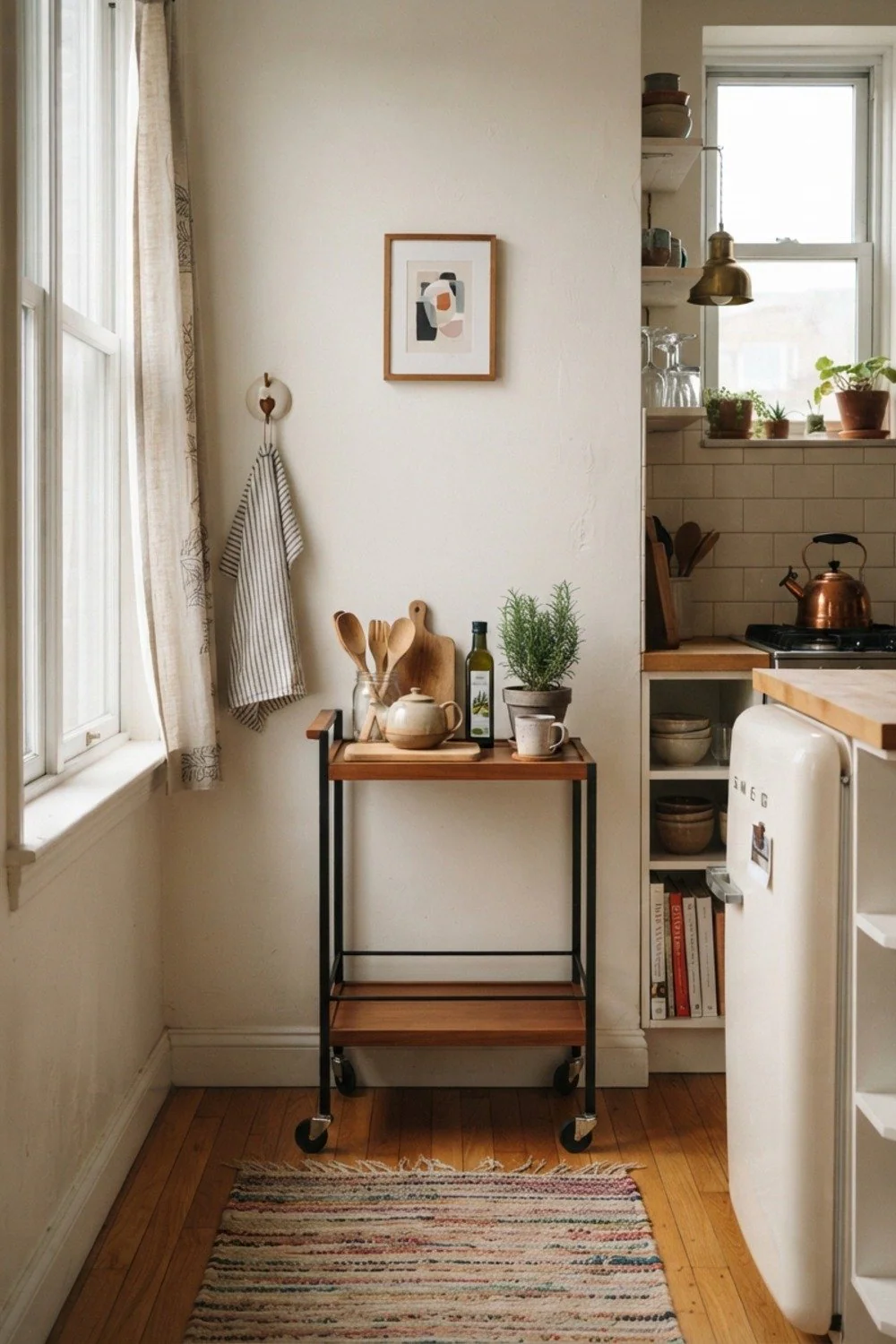
Three tiers on locking casters give a 15-inch cart enough capacity for oils, spices and a produce basket. At $50-100, it slides into the gap beside the range or between the counter and the wall. Anything wider than 16 inches gets stuck in a galley aisle.
Steel mesh shelves outlast painted wood, which blisters near the sink. Always lock the wheels before loading it.
19. Kitchen: open shelving in place of cabinet doors
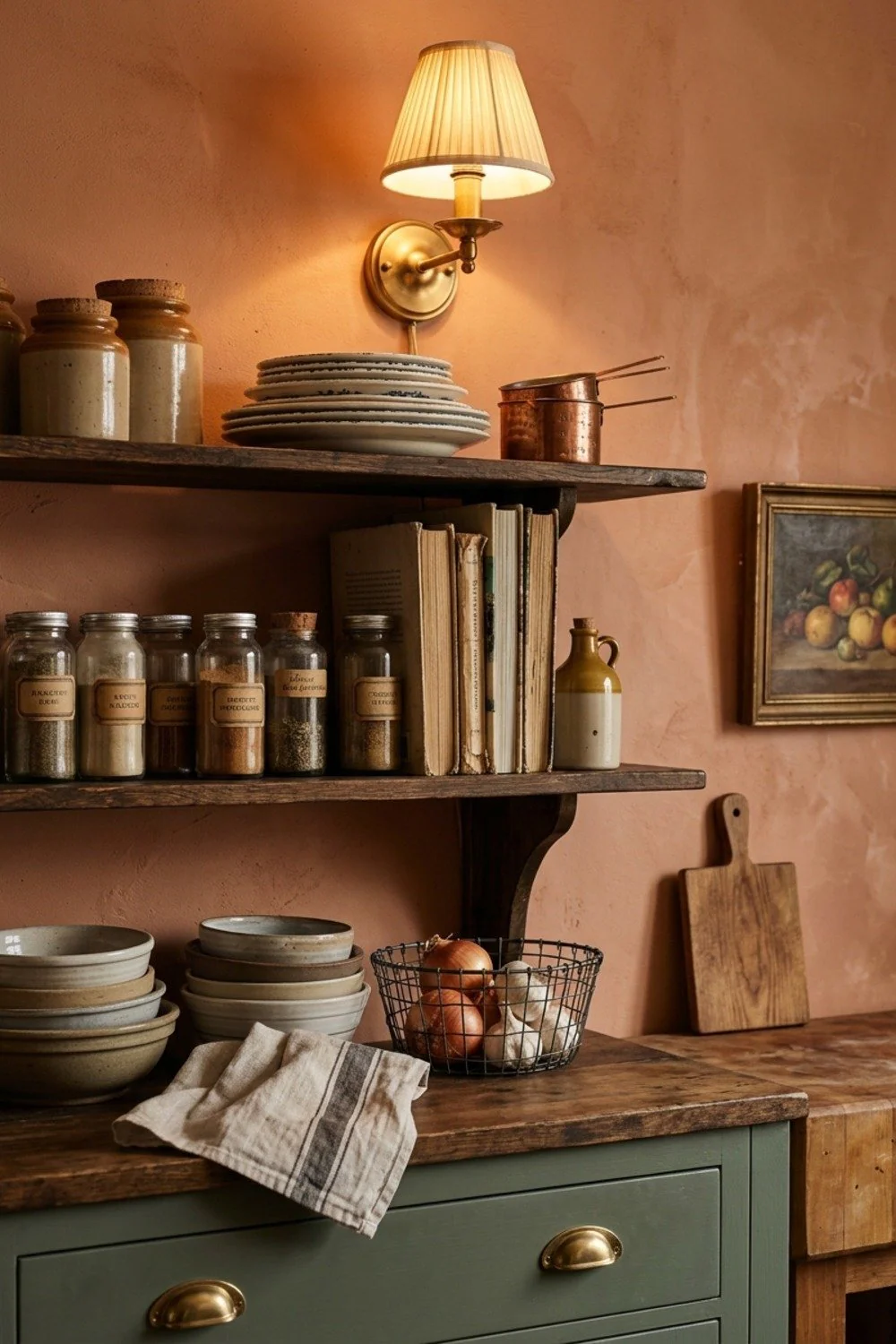
Remove two upper cabinet doors and the wall suddenly breathes. Shelves left open display plates and glasses at arm’s reach, which saves the motion of opening a door and lightens a wall of closed boxes.
Rental tip: store the original doors in a closet and rehang them before move-out. Open shelving punishes mismatched dishes and grease, so it suits a household with a matching white or neutral set and a modest cooking routine. In a heavily used kitchen, keep it to the two shelves farthest from the range.
20. Kitchen: a tray that corrals counter clutter
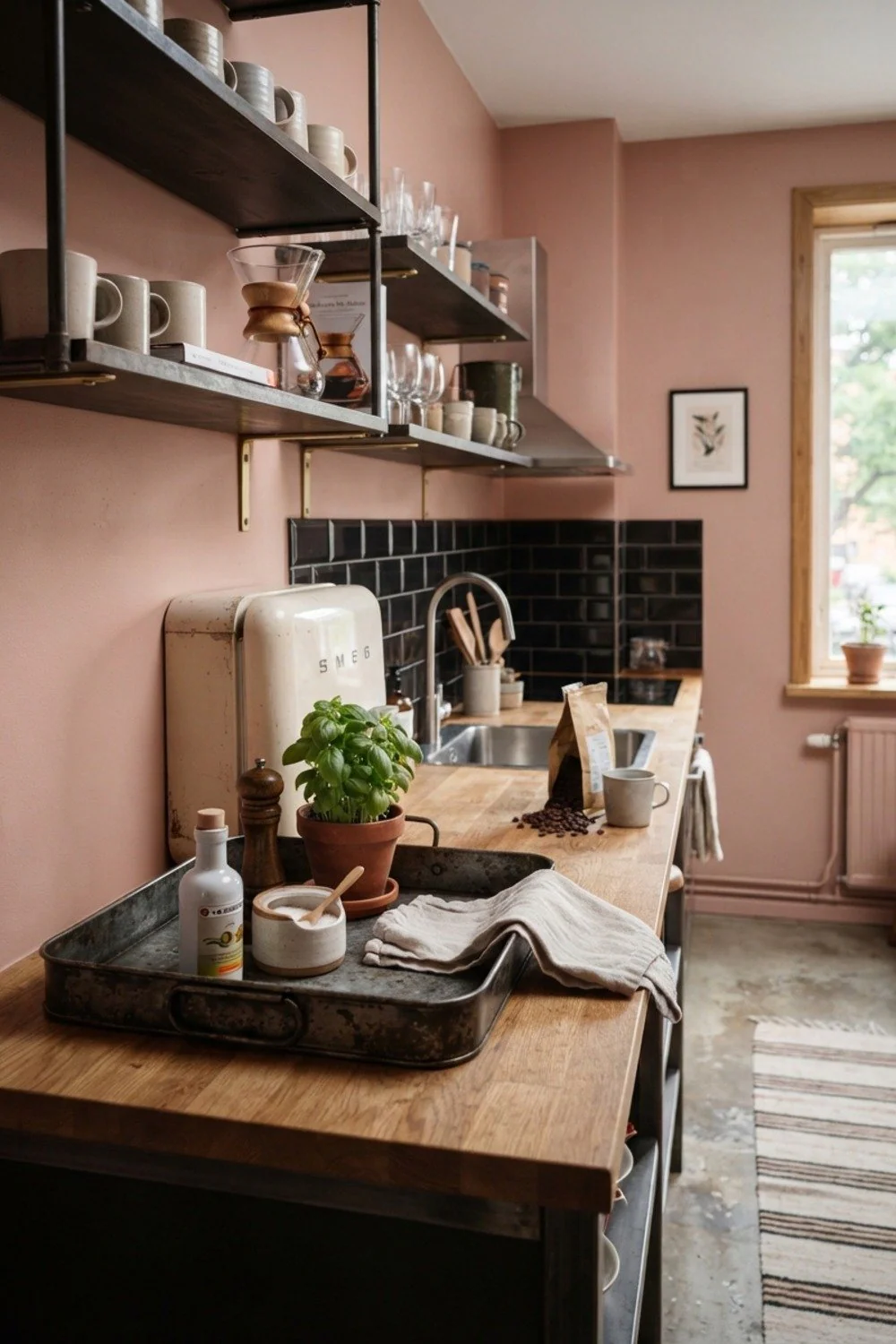
One 12-by-16-inch tray holding oil, salt and a pepper mill turns three loose bottles into a single object. Hold counter items to four or five, or the surface looks like a pharmacy shelf. A $15-30 tray in acacia or powder-coated steel does the job.
The mistake is buying a tray too small to hold anything. Measure the largest bottle first, then add 2 inches around it.
21. Kitchen: a drop-leaf table for two
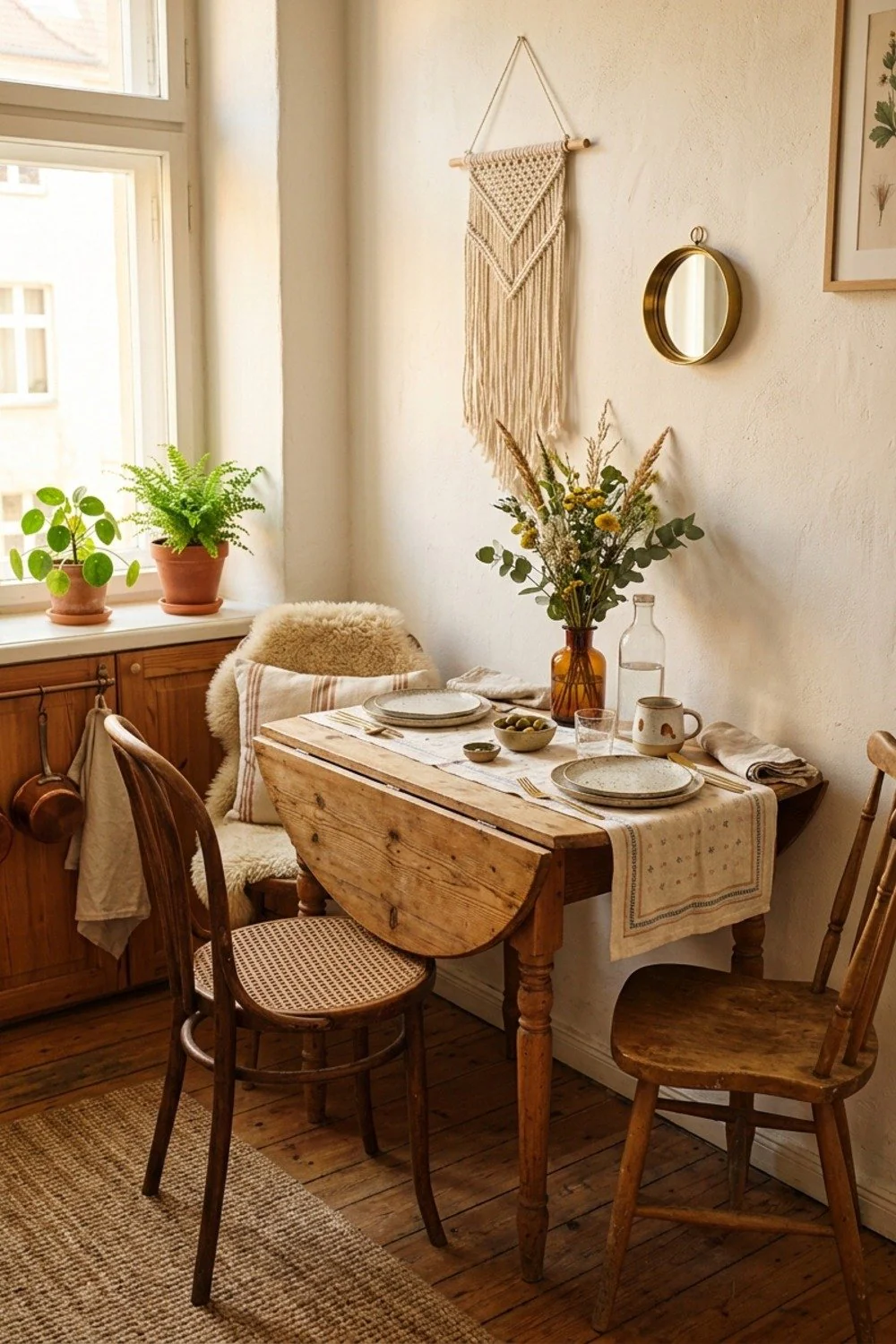
Drop-leaf tables are about 12 inches wide folded and 36 inches open, so the dining nook shrinks to a shelf on weekdays and expands only when two people sit down to eat. Prices start near $120.
Solid wood handles hot mugs and homework better than laminate, which scratches and peels at the edges. Check the leaf hinges before buying. Weak ones sag within a year, and a table that tilts under a bowl is just annoying. Couples and studio dwellers get the most from it.
22. Kitchen: peel-and-stick backsplash
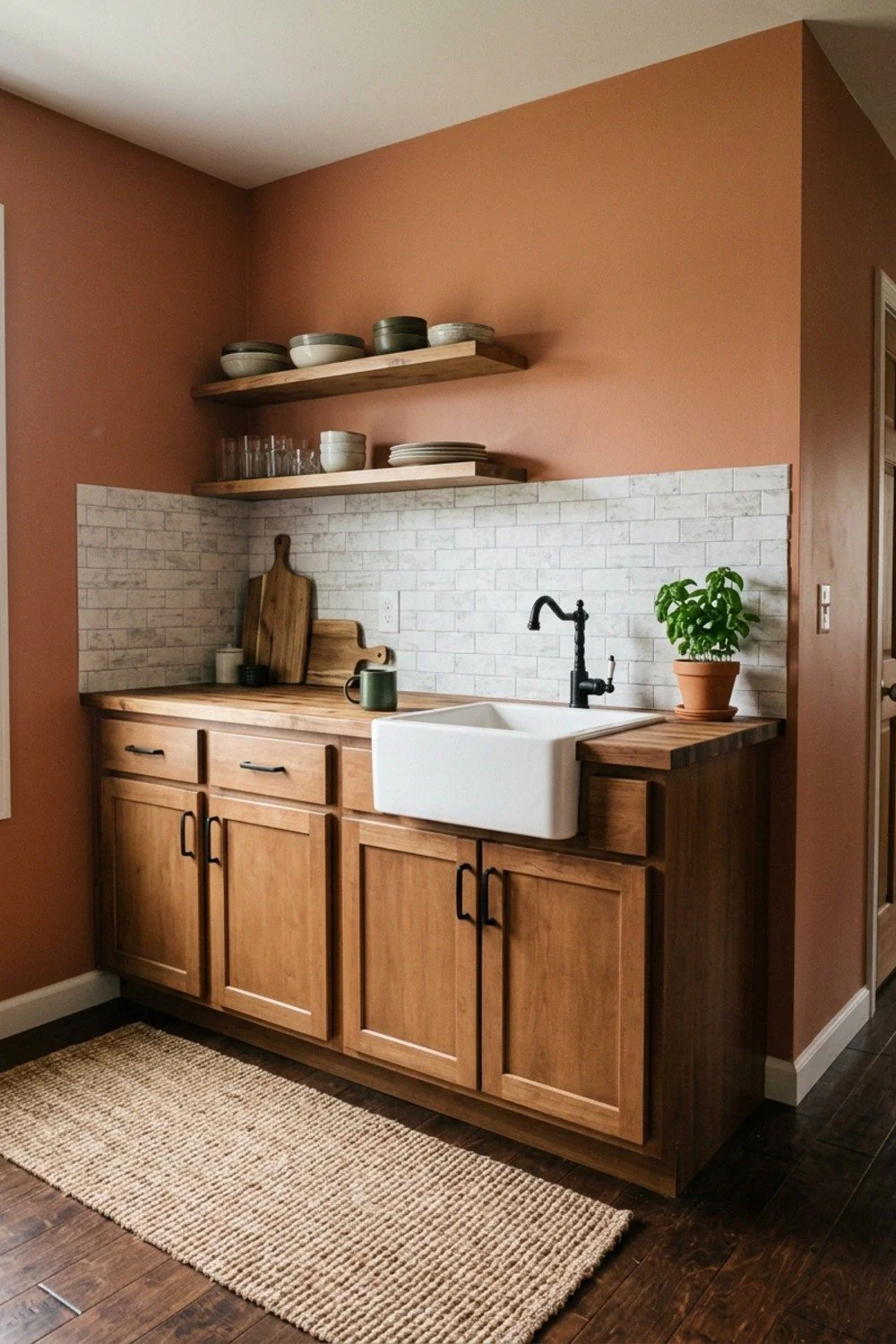
A 12-by-12-inch peel-and-stick tile backsplash for a 30-inch counter run costs $40-90 and installs in an hour. It covers worn paint and gives a boring wall some pattern, with no grout, no mess and no landlord argument.
Thin gel tiles with a raised surface mimic ceramic well from standing distance, which suits renters and anyone on a tight budget. Keep them 2-3 inches from any burner. Heat curls the adhesive and ruins the whole run. Wipe the wall clean of grease first so the tiles stick.
23. Bedroom: risers under the bed

Bed risers that lift the frame to 18-20 inches add around 8 cubic feet of hidden storage, space that otherwise collects dust. Clear lidded bins, about $15 each, slide underneath for off-season sweaters. Risers cost $20-35 for a set of four.
This suits a studio or a bedroom with no closet. Use risers with a wide, non-slip base. Tall, skinny ones wobble, and a wobbling bed is worse than no storage. Measure the bin height first so it clears the frame rails.
24. Bedroom: swing-arm wall lamps replace nightstand lamps
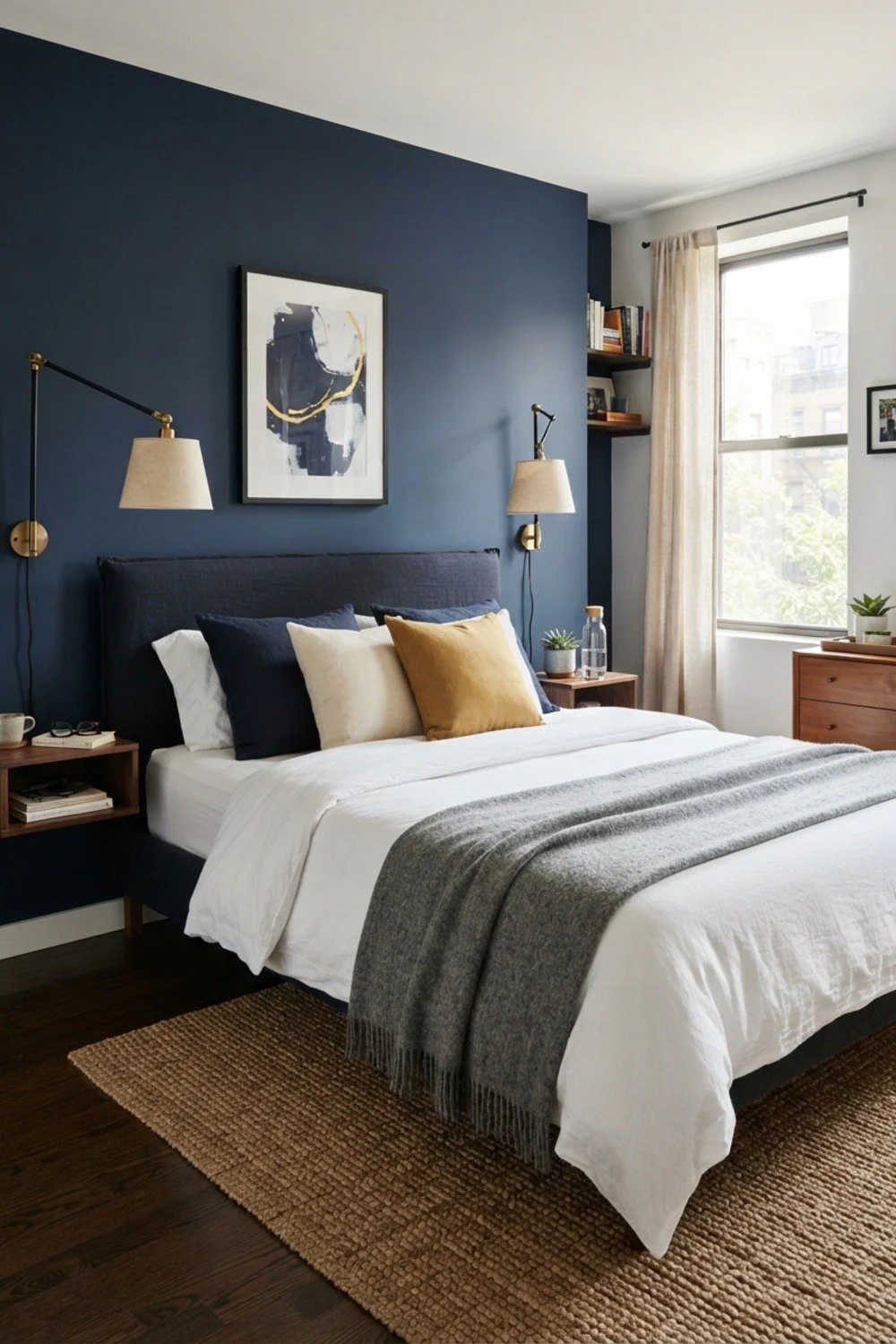
Swing-arm wall lamps free about 8 inches on each nightstand and angle light for reading without waking the other sleeper, since the beam can be aimed at the page instead of washing the whole room. A hardwired model needs an electrician, but plug-in versions run $35-70.
Mount the lamp bottom 20-24 inches above the mattress. This suits narrow rooms where nightstands crowd the bed. In a spacious room, a pair of lamps is fine. Hide the plug-in cord with a paintable cord cover, or it dangles down the wall.
25. Bedroom: tonal bedding in three shades

Sheets, duvet and throw in three shades of the same hue, say oatmeal, sand and cream, make a bed read as calm rather than cluttered, because the eye sees one soft block with texture instead of competing patterns. Linen-blend duvet covers run $60-110.
The tone keeps lint and pet hair less obvious than stark white does, which suits pet owners. A fourth color is where it falls apart. Restraint is the whole point, so vary texture, such as linen against cotton, rather than adding another shade.
26. Bedroom: a second closet rod
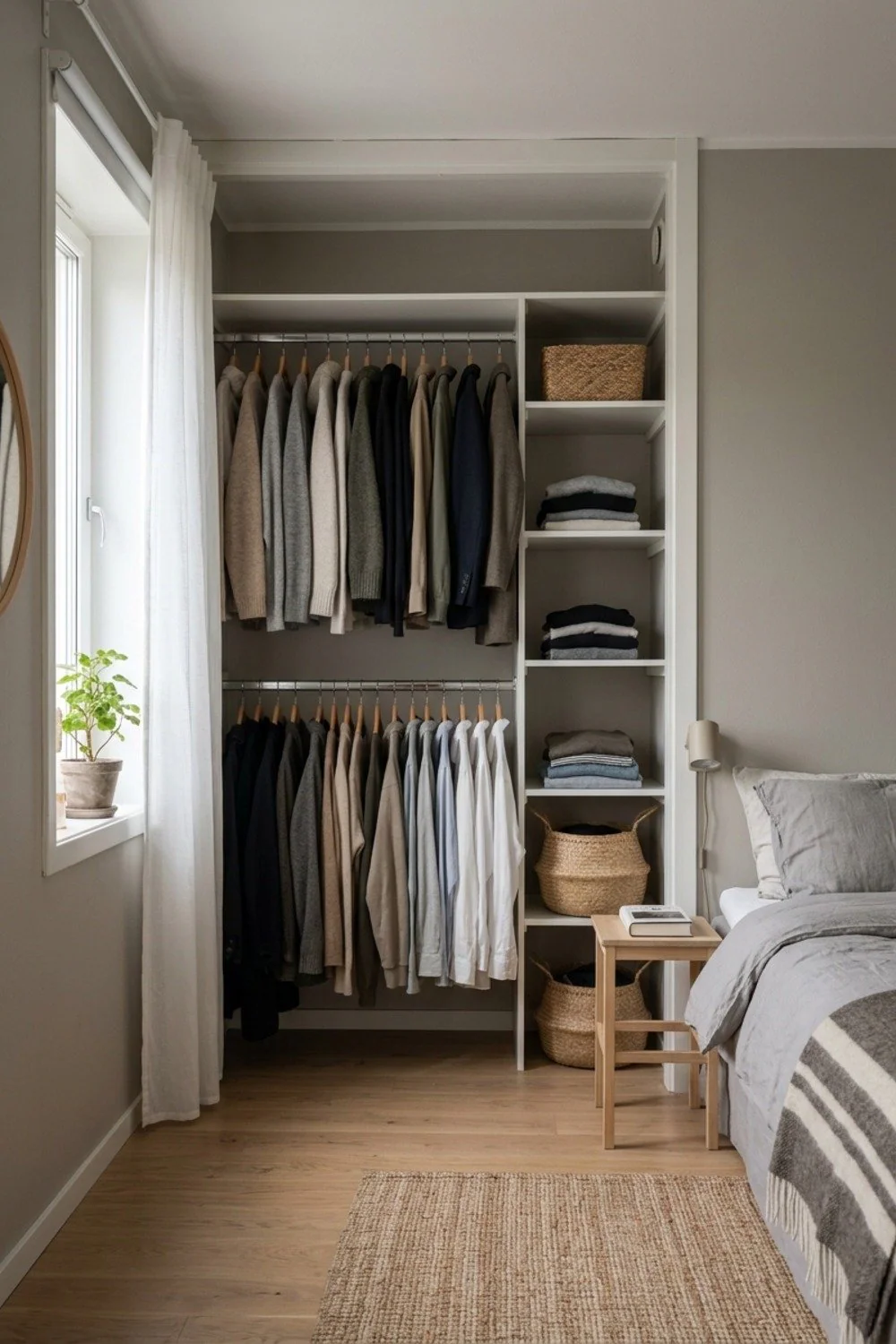
Install a second hanging rod at 40 inches below the first at 80 inches, and a closet that held 20 shirts holds 40. A $25 hang-rod kit works without drilling in many rentals. Shirts and trousers fit on the lower tier.
Dresses and long coats need the full 60 inches, so keep one section of the closet open for them.
27. Bedroom: washable cotton for real wear
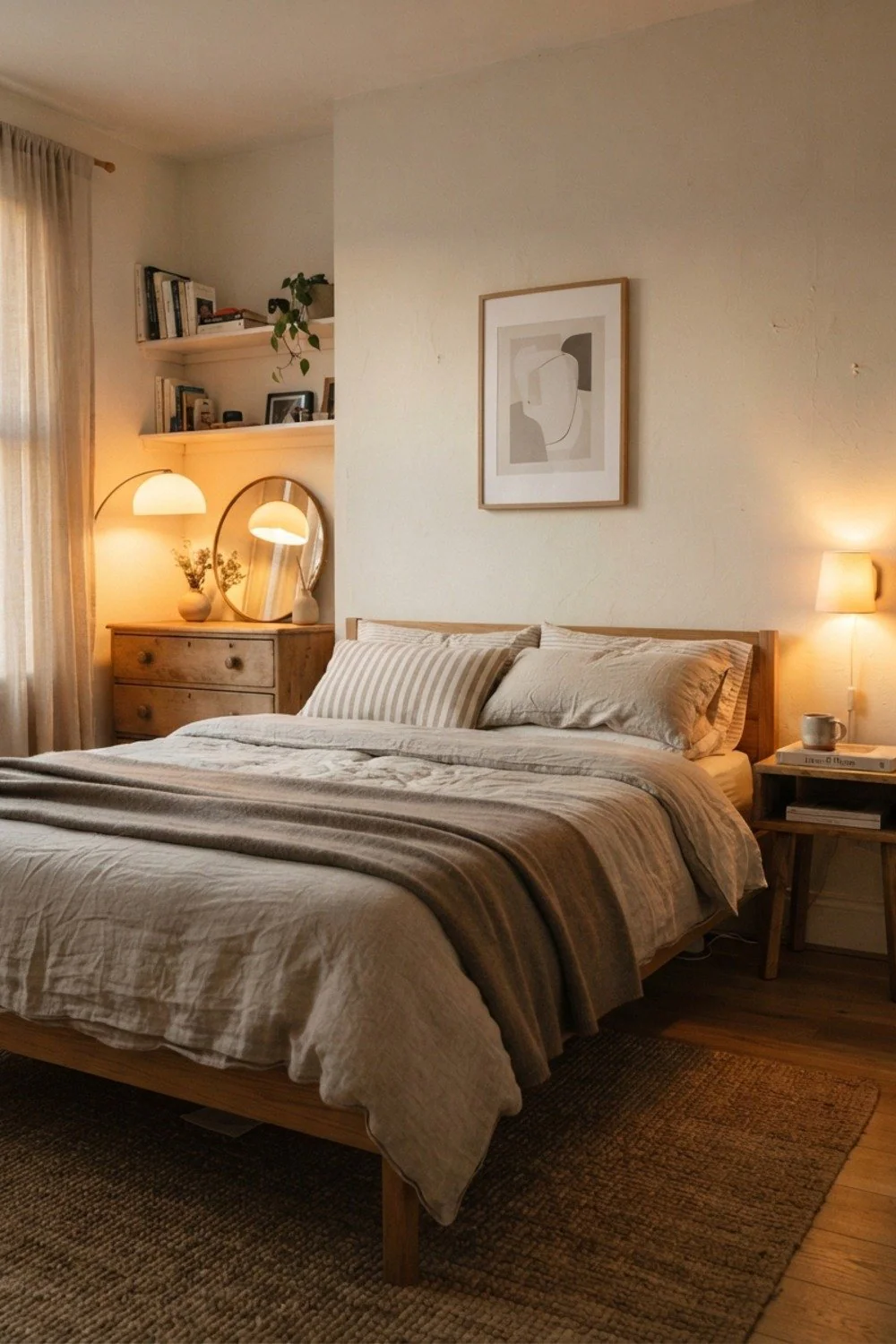
Cotton percale is crisp, sheds less than microfiber and survives hundreds of hot washes, so the set stays fresh for years instead of seasons. Expect $50-90 for a good set.
Anyone sharing a bed with a dog benefits from a duvet cover that zips off and goes straight in the machine. Durability beats thread count here. A 300-count percale outlasts a loosely woven 800-count that pills. Skip any set that lists only a thread count without naming the weave.
28. Bedroom: a plywood headboard wrapped in fabric
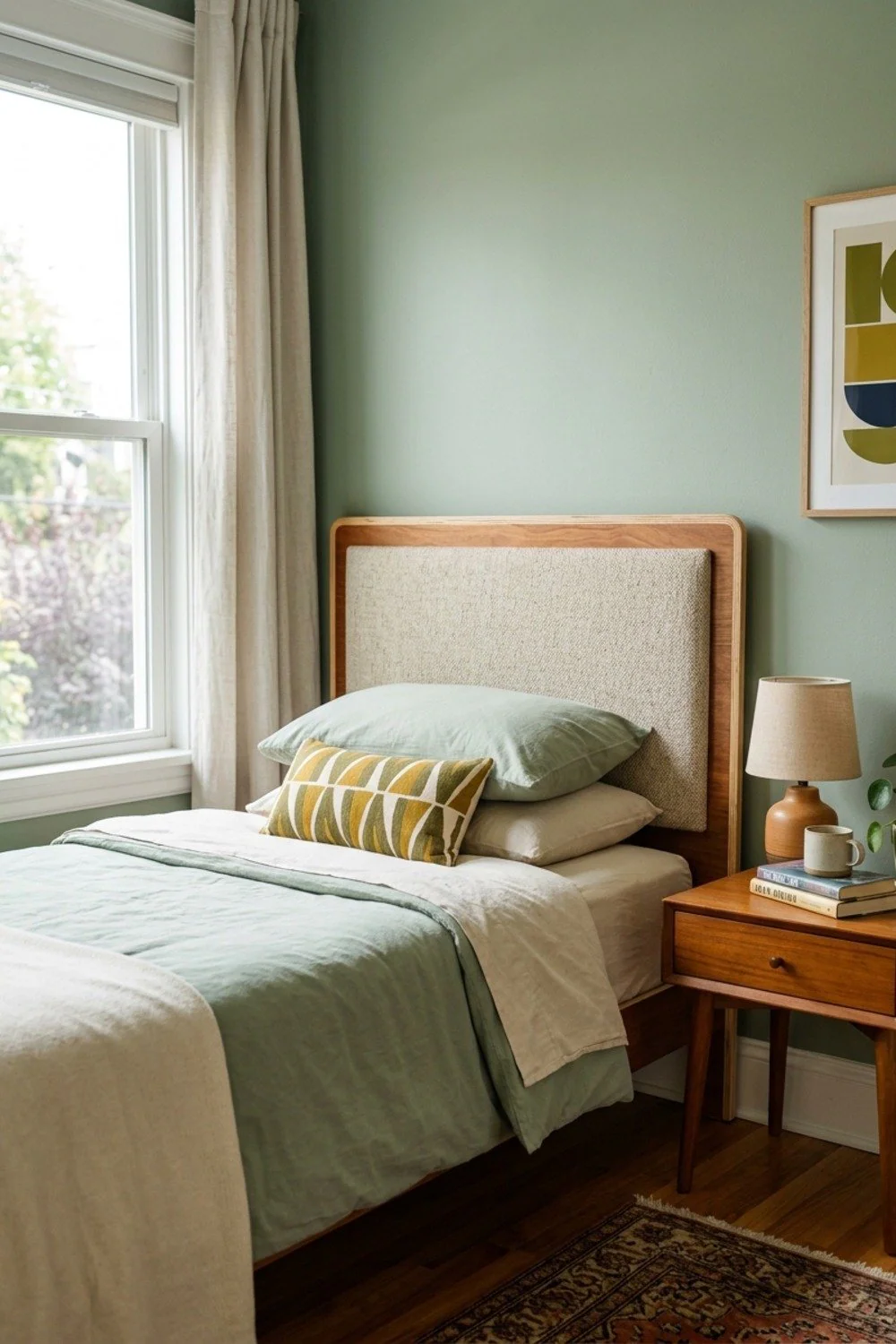
Wrap a 5-foot sheet of 3/4-inch plywood in batting and a heavy cotton canvas, and you’ve built a headboard for about $60. It adds height behind the bed and a soft surface to lean on, which makes a plain mattress look finished.
Hang it on a French cleat. It suits renters who can’t drill into the frame. Anchor the cleat into studs, since a full sheet is heavy. Sand the plywood edges, because splinters snag fabric.
29. Bedroom: floating shelves in place of a nightstand
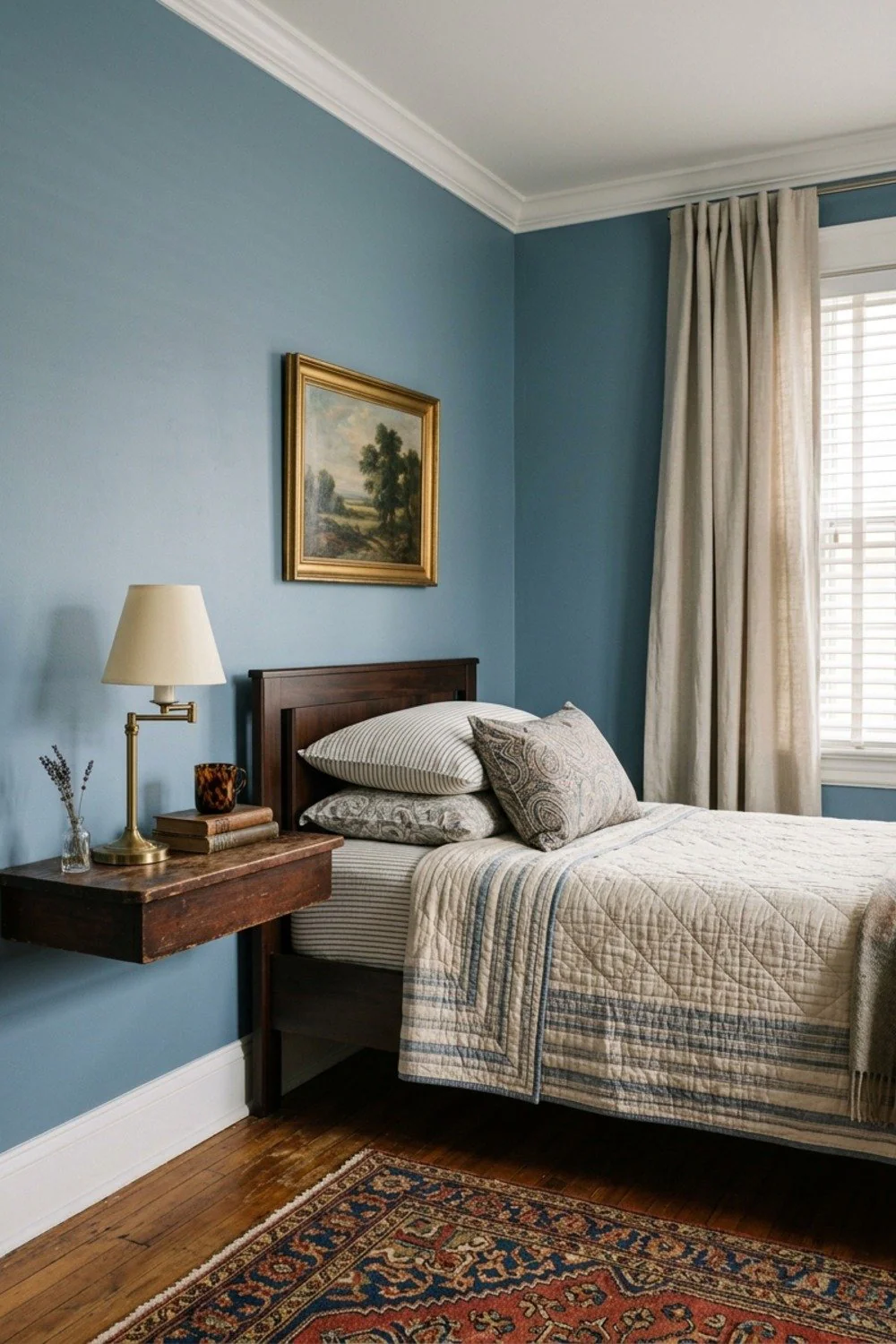
Instead of a 24-inch nightstand, a 14-inch floating shelf beside the bed holds a phone, a glass of water and a book. It recovers about 10 inches of floor on a room that might be only 9 feet wide. Shelves of solid wood cost $25-50.
Mount it 2 inches above the mattress top. A shelf too low bumps heads, and one too high is awkward to reach.
30. Bedroom: the bed pushed into a corner

Shifting a full bed into a corner of a 9-by-10-foot room recovers roughly 3 feet of open floor. You lose one side for getting in and out, so it works best for single sleepers or couples who don’t mind the trade-off. Leave 24 inches at the foot for dressers.
The mistake is blocking the window. Keep the bed clear of the glass so you can still open it fully.
31. Bathroom: shelving above the toilet
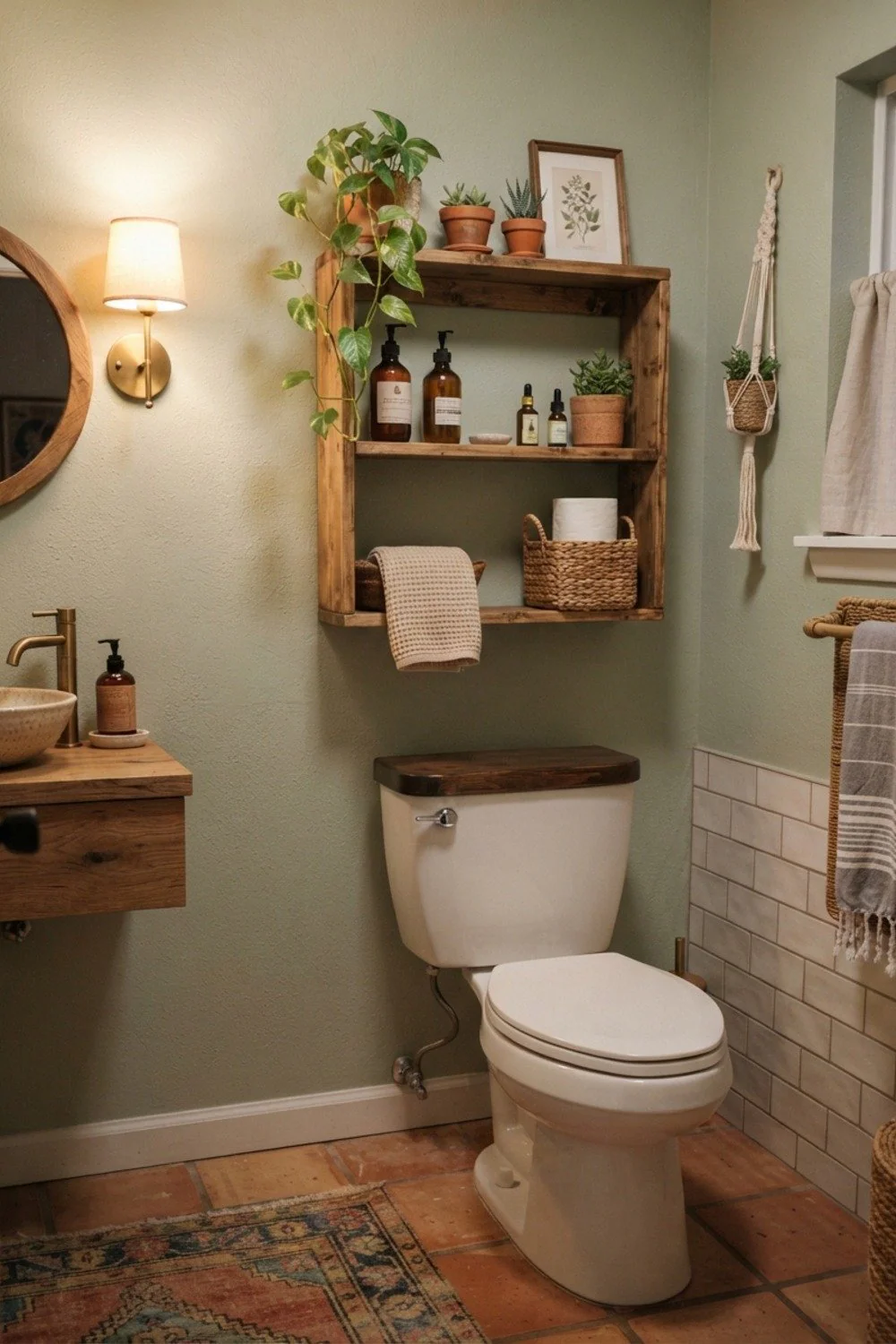
A freestanding or wall-mounted unit above the toilet turns dead air into 12 inches of towel and spare-roll storage. Metal frames with teak shelves cost $45-90, and the vertical stack keeps the floor clear in a tight bathroom.
It suits a bathroom with no vanity cabinet, such as one with a pedestal sink. Leave 6 inches between the tank and the lowest shelf. Anything tighter makes flushing and cleaning awkward. Teak tolerates steam better than particleboard shelves do.
32. Bathroom: a ceiling-height shower curtain
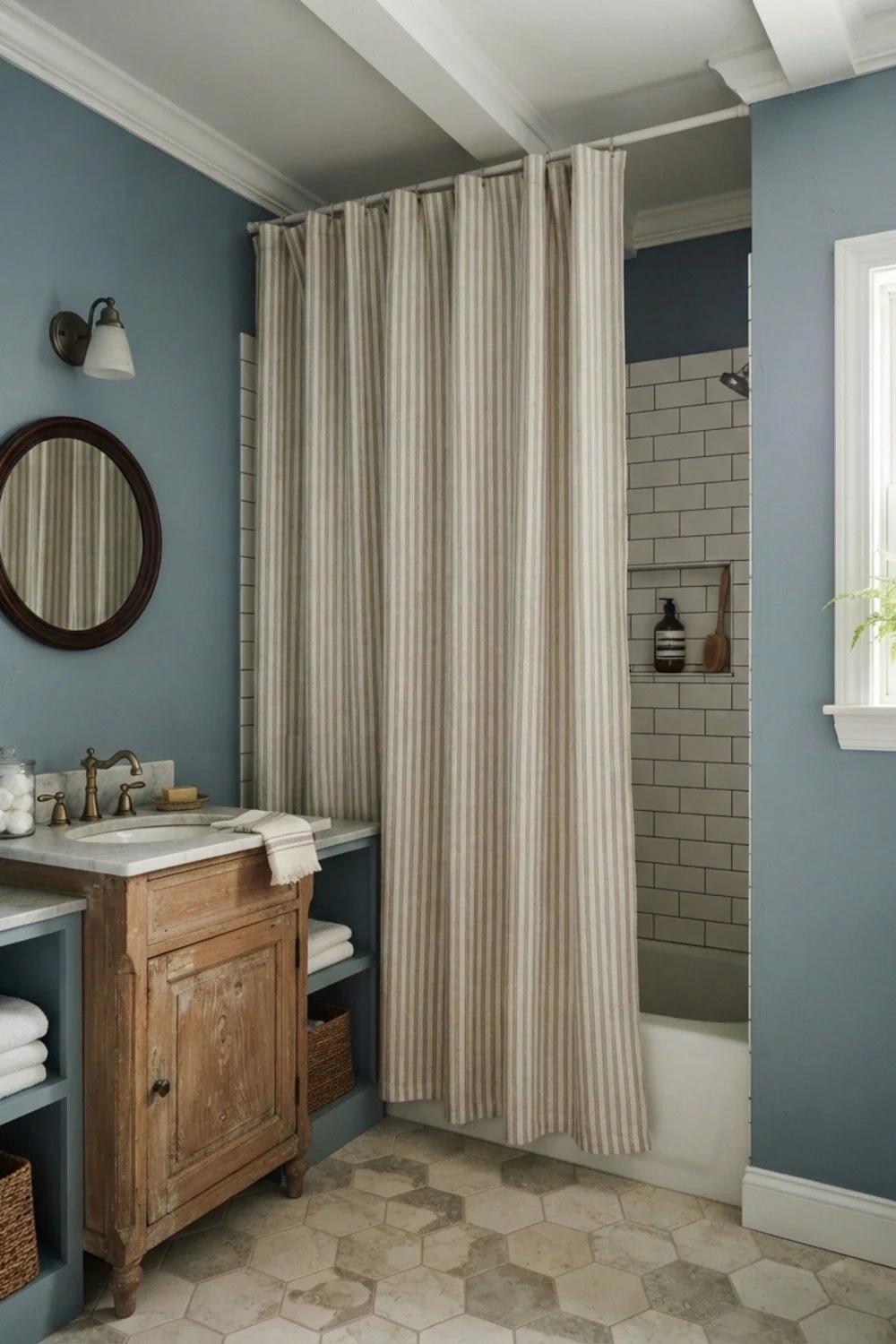
Hang the curtain rod 6 inches from the ceiling and use a 96-inch curtain. The bathroom looks taller because the eye follows one unbroken vertical line from ceiling to tub, and a stripe or waffle weave gives the room texture without clutter.
Polyester with a weighted hem costs $25-40, and it suits a tub-shower combination in a small, plain bathroom. Wash it monthly. Mildew shows up first on the bottom 6 inches, where the hem sits wet against the tub.
33. Bathroom: a leaning towel ladder
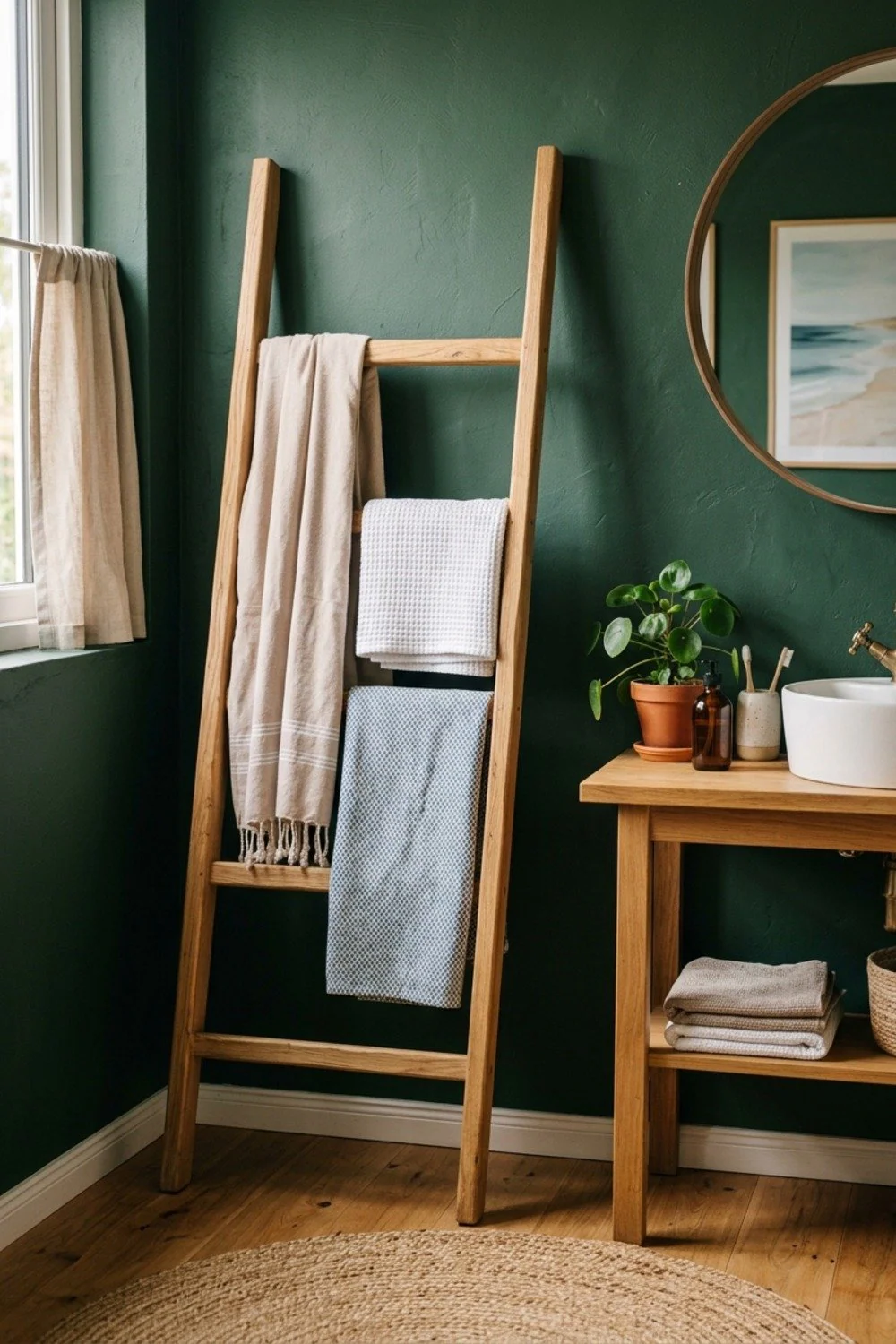
Five rungs spaced 8 inches apart hold two bath towels and a hand towel without a single drill hole. Lean the ladder beside the tub and wet towels dry faster, because air reaches both sides of every towel.
It’s a good fit for rentals with no-drill rules. Pick a ladder with rubber feet, since bare wood slides on tile. And keep it 4 inches from the tub edge, because anything closer gets splashed on every shower.
34. Home office: a fold-down wall desk
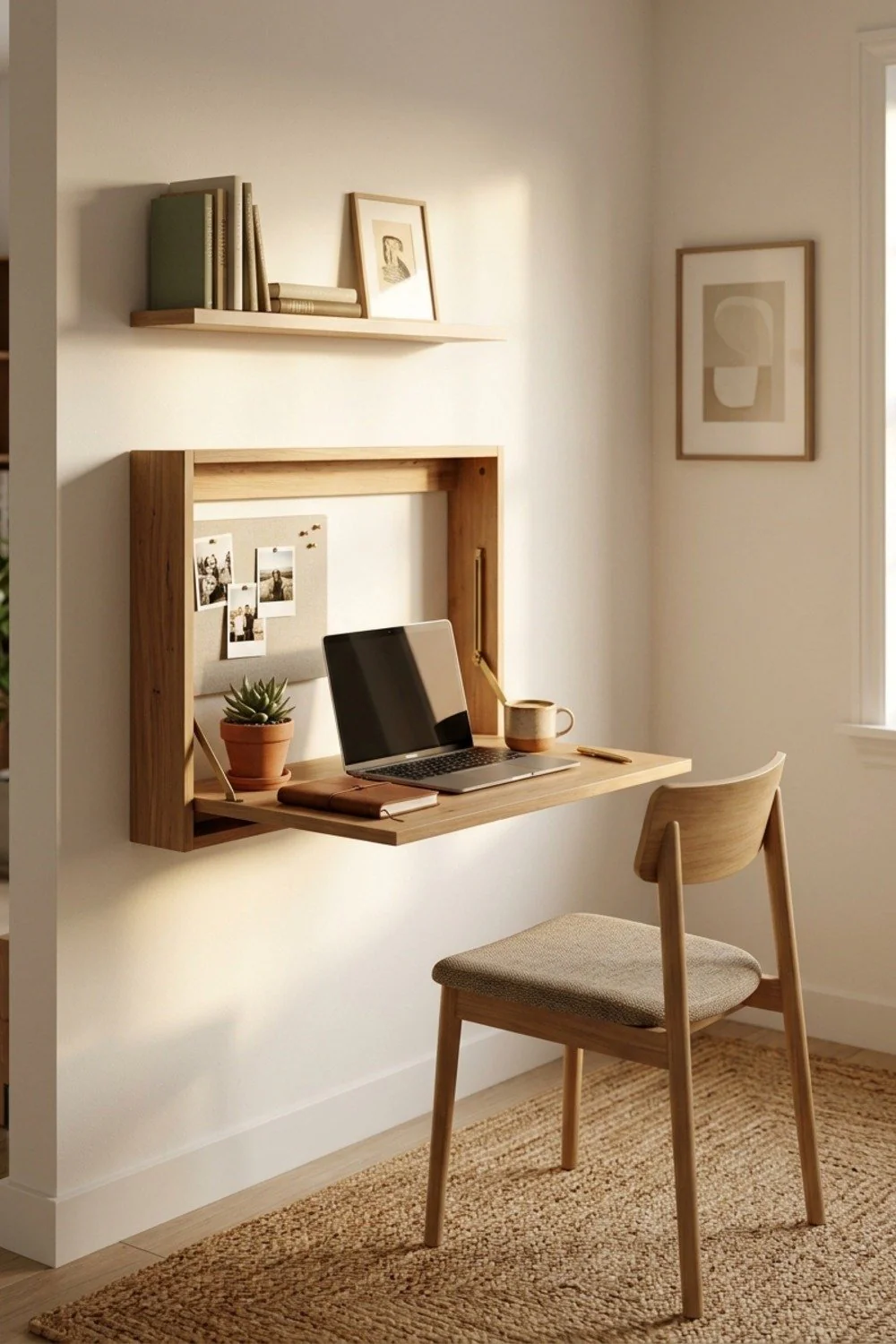
A fold-down desk 20 inches deep and 36 inches wide lies flat against the wall when work ends. It costs $90-180, and the room gets back about 5 square feet every evening.
Studios and one-bedrooms with no spare corner suit it best. Screw it into studs, not drywall alone. A laptop and a mug weigh little, but a monitor and leaning elbows pull plastic anchors out. Honestly, skip models held by a single center bracket.
35. Living room: a TV on a swivel arm
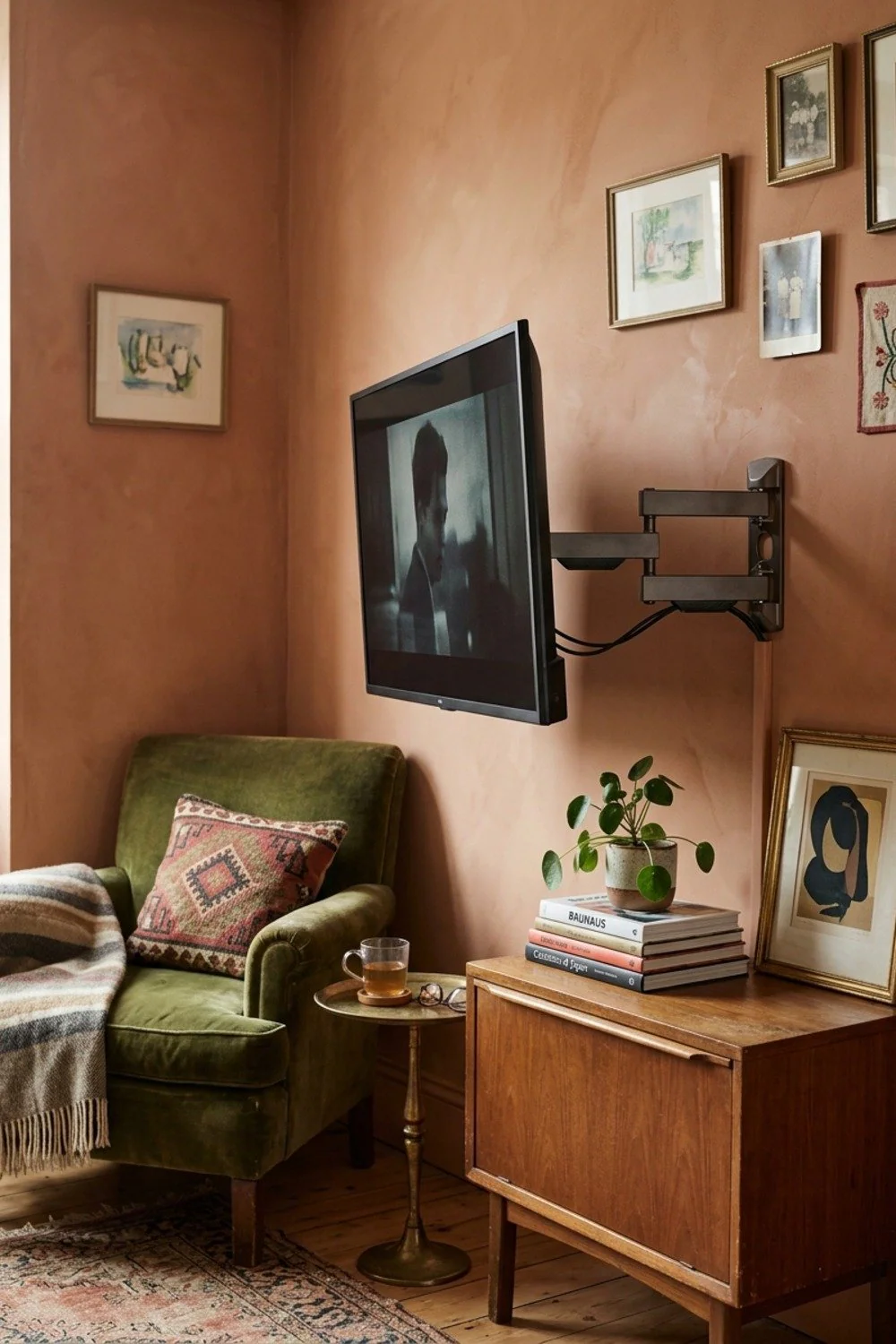
Bolt a 32-inch TV to a full-motion arm and the screen swings toward the sofa, the bed or the kitchen counter, then folds flat against the wall. That clears a 16-inch-deep media console off the floor.
It suits an open studio where one screen serves two zones. Check the weight rating first, and pick an arm rated at least 10 pounds above the TV. But find the studs too, because a swung-out screen pulls on the wall far harder than a flat mount.
36. Balcony: a folding bistro set
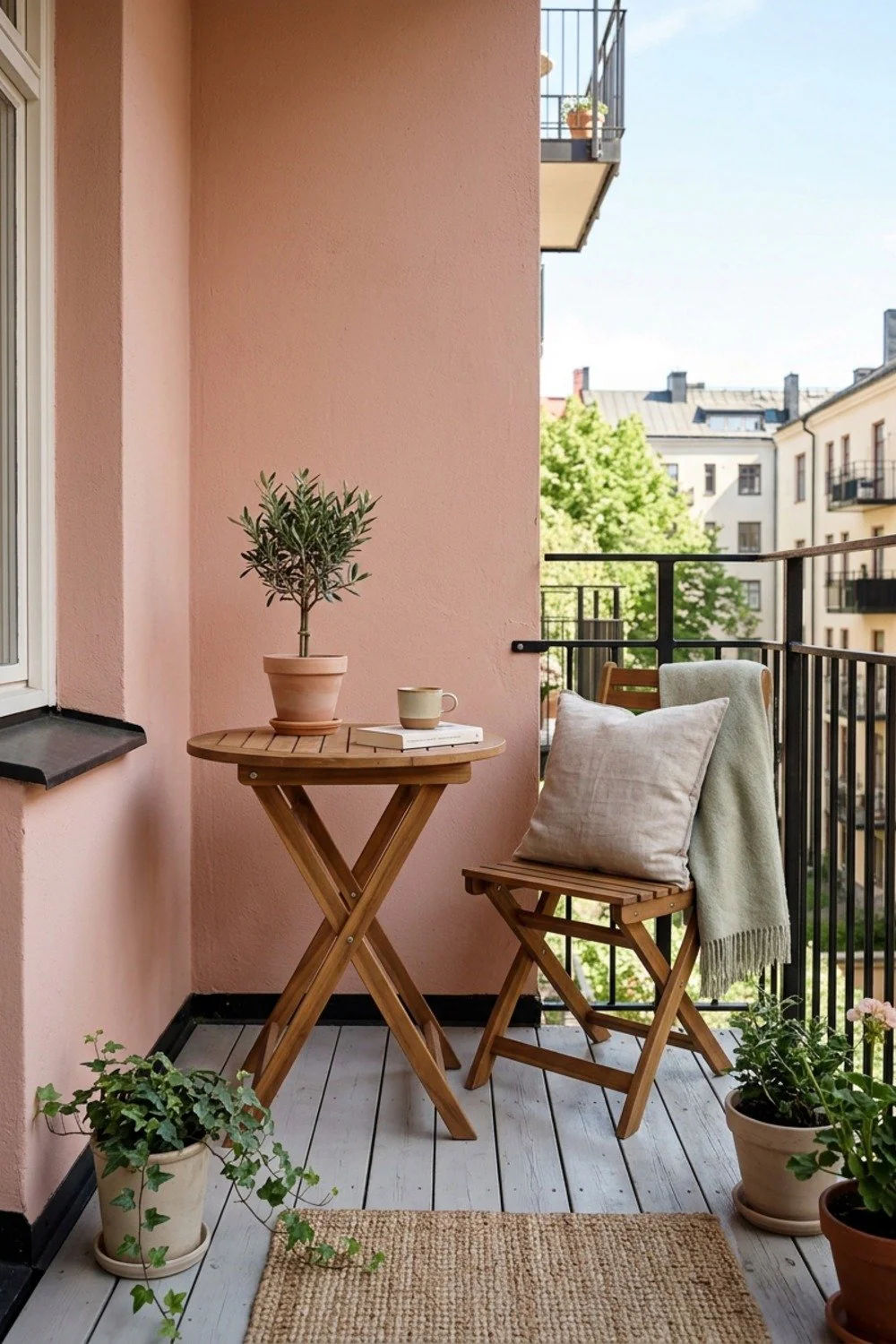
Two folding chairs and a 24-inch round table slide flat against the railing when the balcony is needed for something else. Metal sets run $80-150 and need about 2 feet of depth in use.
It works on balconies as narrow as 3 feet. But leave cushions out through one November rain and they turn to mildew, so store them in a bin with a lid indoors. Skip resin chairs if the balcony gets afternoon sun, since cheap resin cracks faster than powder-coated steel.
37. Dining: a bench along the wall
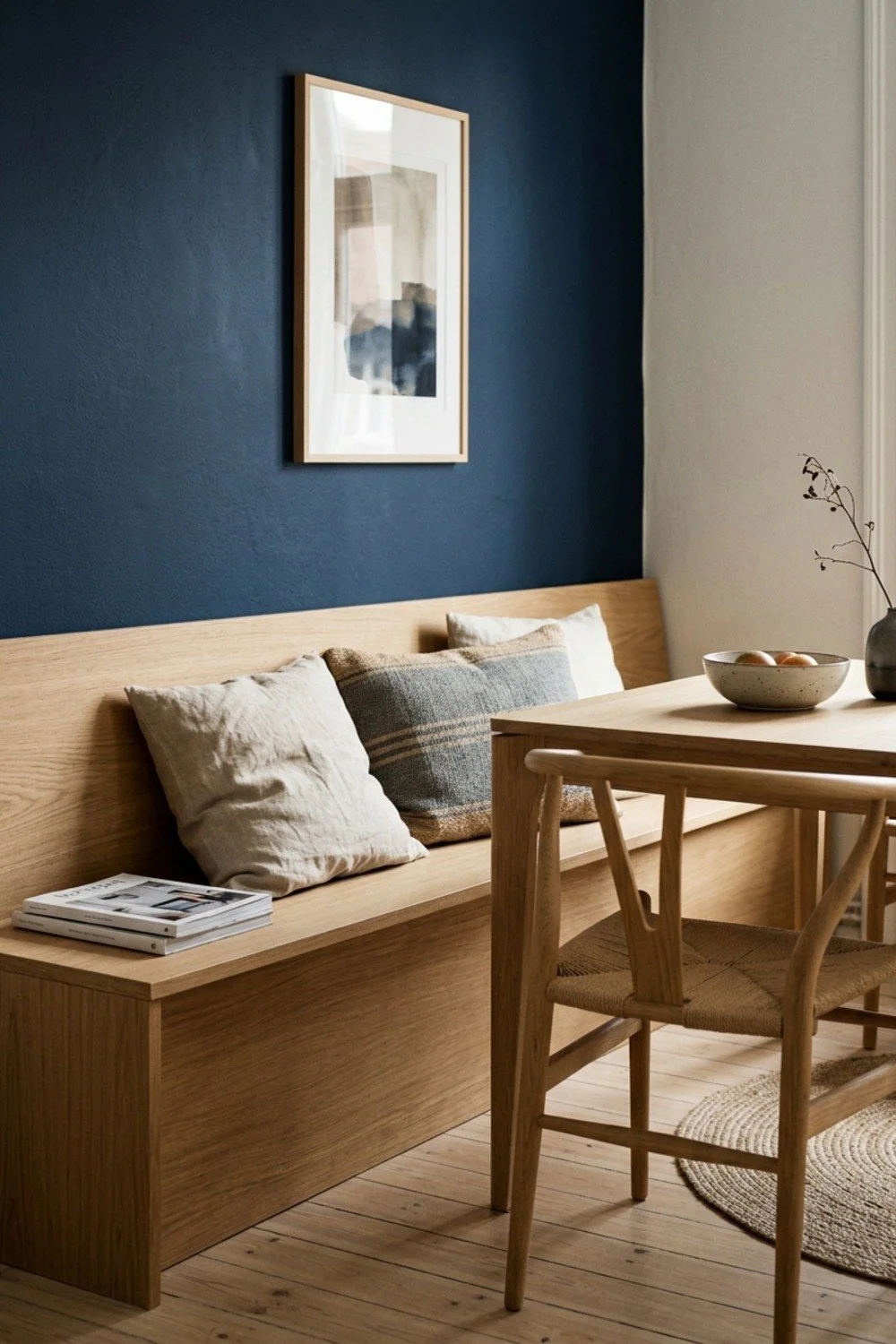
A 48-inch bench along one side of the table seats three, while the same edge fits only two chairs. That sounds backwards, but nobody needs elbow room between chair backs.
It suits a table pushed against the wall in a studio, where the bench slides under the tabletop and out of the walkway. Choose a seat height of 17-18 inches so knees clear the table apron. And skip pale fabric on the seat, since dinner spills land right there.
38. Kitchen: a magnetic knife strip
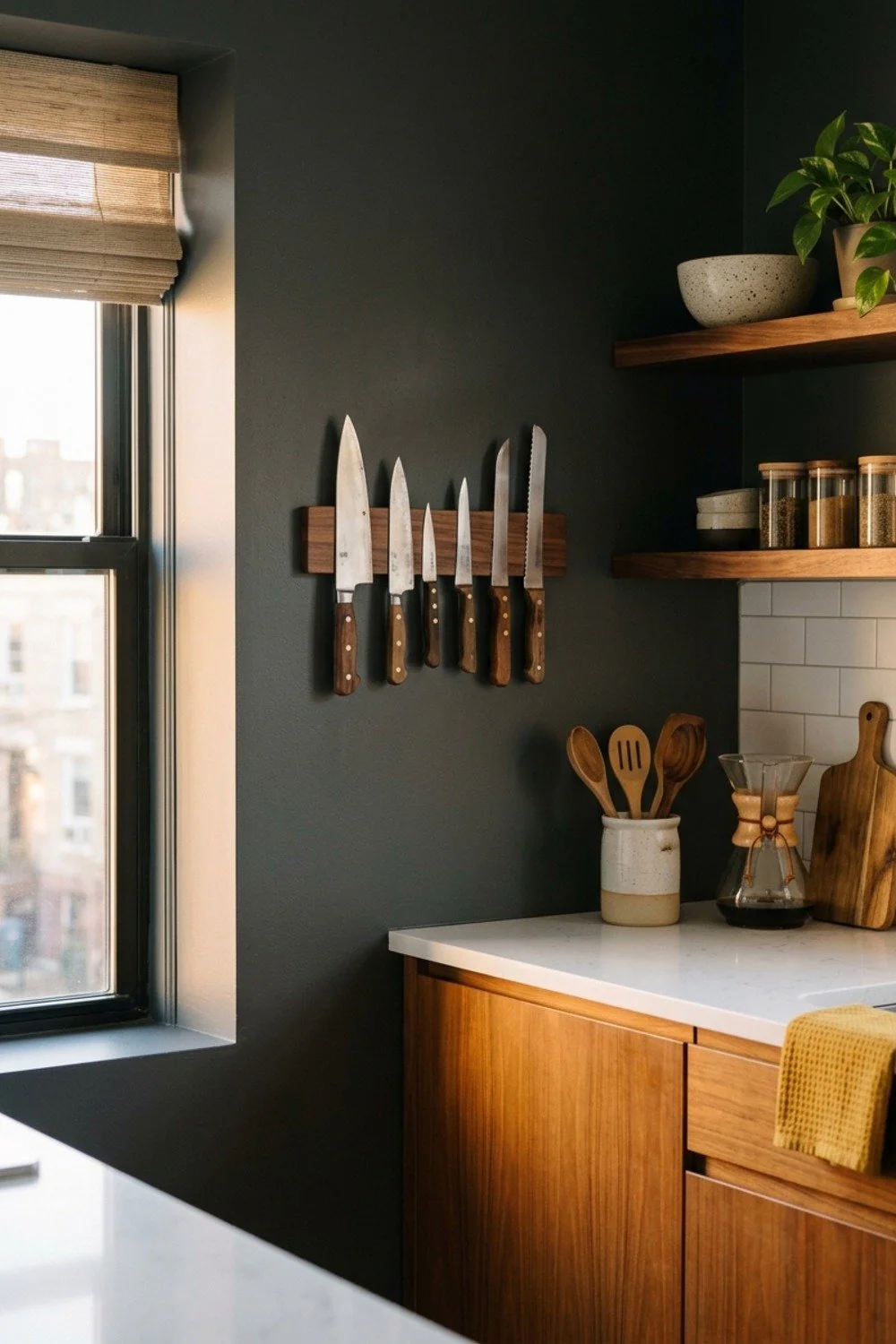
A 16-inch magnetic strip screwed to the backsplash holds five or six knives and frees the 12-inch footprint of a knife block. Hardwood-faced strips cost $25-40.
It suits a galley kitchen with one short counter. Place it at least 54 inches off the floor if kids live in the apartment, and keep it away from the stove, where grease coats the magnet and weakens the hold. Drill into studs or use tile anchors.
39. Bedroom: a curtain in place of a closet door
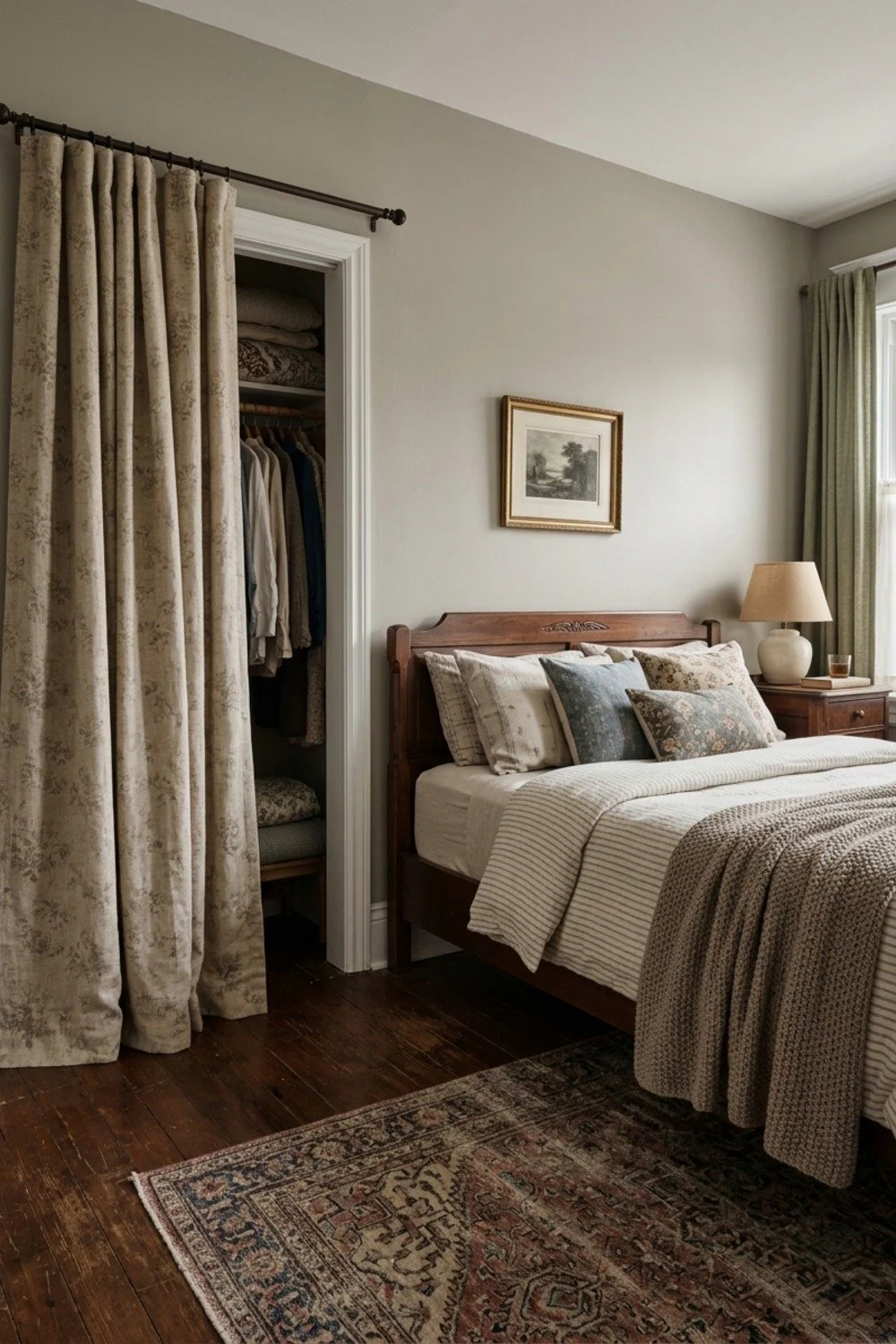
A swing-out closet door claims about 24 inches of floor in front of it. Take the door off its hinges, hang a tension rod and a floor-length curtain across the opening, and that floor is walkable again for roughly $30.
This suits a bedroom where the bed sits close to the closet. Pick a lined, heavy fabric so clutter doesn’t show through. But expect dust, because a curtain doesn’t seal, and shoes on the closet floor collect more of it than they would behind a door.
40. Closet: slim velvet hangers
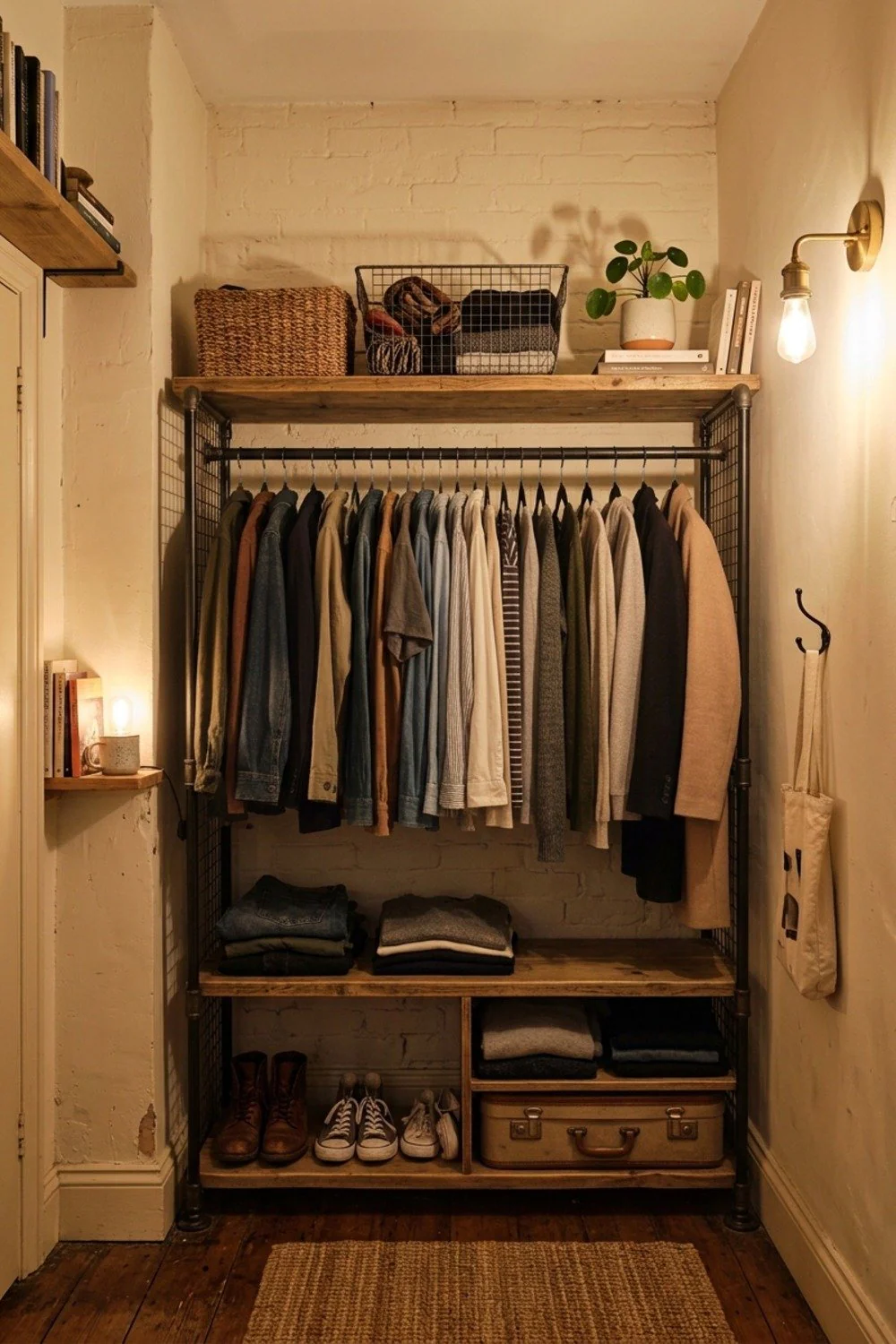
Slim velvet hangers cost $20-30 for a set of 50 and replace bulky 1-inch plastic ones, so a 36-inch rod holds noticeably more shirts. The fabric also keeps slippery tops from sliding off.
Swap the whole closet at once. Mixed hanger thicknesses leave uneven gaps that waste the gain. But skip velvet for heavy coats, whose shoulders slump on a thin hanger, and keep a few wooden ones for those.
Pick the one annoyance to fix first
Nobody needs every idea here. In small apartment decorating, a 500-square-foot apartment changes with three or four good moves, and the best ones fix the irritation you hit daily, like the wet towel on the doorknob or the closet door that blocks the bed.
Choose the weakest corner, try one idea from this round-up of 40 small apartment decorating ideas, and measure twice before buying anything. Then save or pin the list so it’s waiting the next time a room starts feeling tight.
Frequently Asked Questions
What’s the cheapest idea on this list to start with?
Slim velvet hangers ($20-30), a magnetic knife strip ($25-40) and a tension-rod closet curtain (about $30) each cost under $50 and take under an hour. Start with the hangers. They need no tools, and the extra rod room shows up the same evening.
Can I use these ideas in a rental?
Yes, with limits. The leaning towel ladder, tension-rod curtain, peel-and-stick tile, bed risers and plug-in LED strips need no drilling. Wall-mounted items such as the fold-down desk or swivel TV arm leave screw holes, so check the lease first. Small holes can usually be filled with spackle before move-out.
Which room should I tackle first?
Begin with the room used for the longest stretch each day, usually the living room or bedroom. Fix one problem there, such as lighting at three heights or storage under the bed, then live with the change for a week before buying anything else. Small rooms punish impulse purchases.
Do dark wall colors make a small apartment feel smaller?
Not if the lighting is right. A deep wall color blurs corners so the edges seem to fade, but it needs lamps at three heights, since one ceiling fixture leaves it gloomy. Paint the trim and ceiling in the same shade or a soft white, and keep one light surface nearby for contrast.