
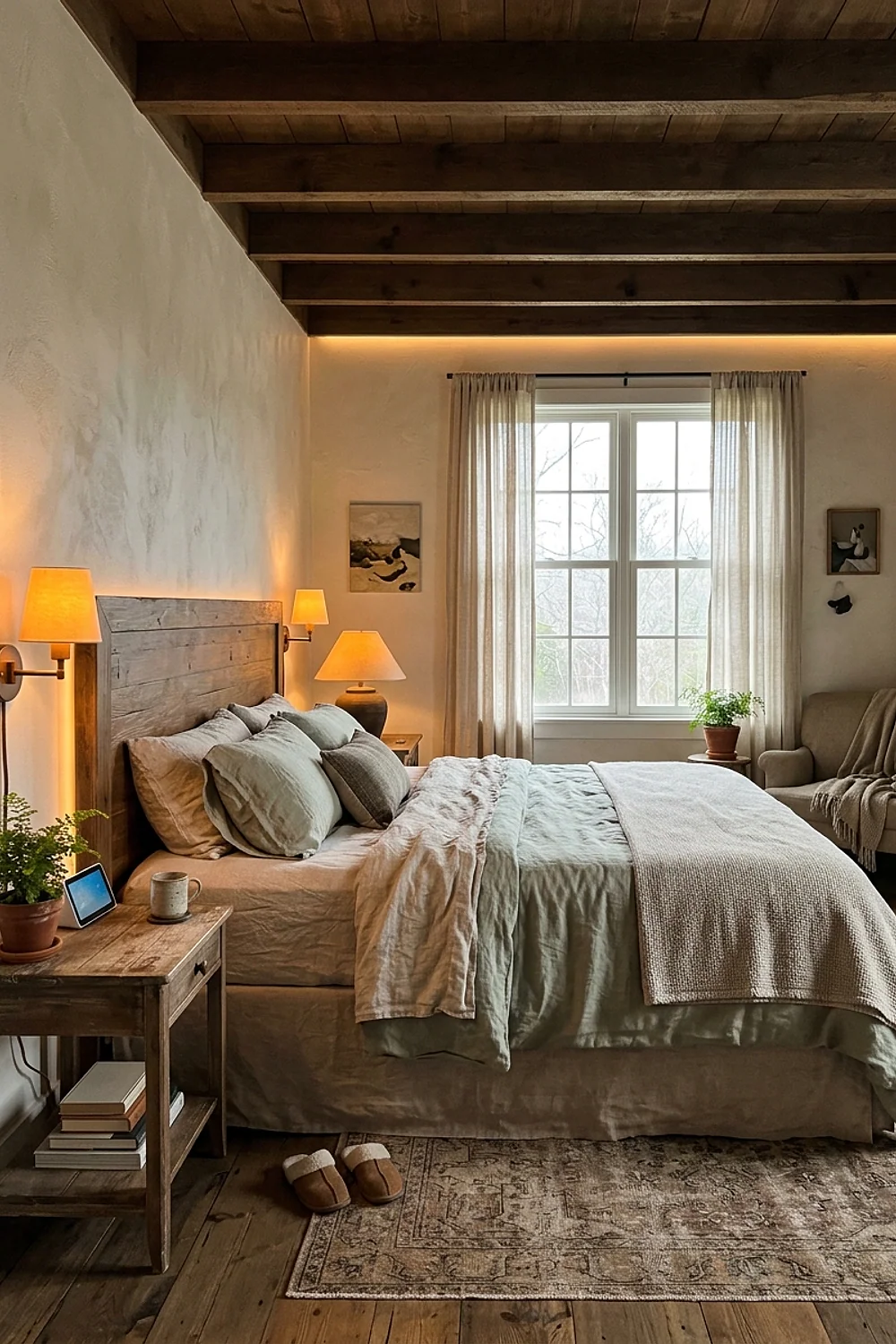
A 10-by-12 rental bedroom with one ceiling fixture and no permission to touch the wiring can still run on a body-clock schedule. These circadian lighting bedroom ideas swap one flat overhead glare for light that changes by the hour: brighter and bluer at wake-up, low and amber by 9 p.m.
Picture it as a before and after built from lamps, bulbs, and fabric. Before: a single 4000K ceiling light, a bare window, and a phone glowing at 1 a.m. After: a room that wakes you gently and dims itself toward sleep.
Circadian lighting bedroom ideas: Starting points for your space
The short answer to what this look is: bright, cooler light (roughly 5000-6500K) in the morning, warm and dim light (2700K or lower) after sunset, and real darkness for sleep. The decor does the supporting work. Pale walls bounce morning light, and fabric shades soften the evening glow.
Here’s the part most guides skip. Your eyes respond to light level and color together, so a dim warm lamp at 9 p.m. beats a bright “warm” overhead every time. The first five ideas cover the wake-up half of the day.
1. Sheer linen curtains behind a blackout layer

Two curtain layers on a double rod let you choose between dawn and darkness. Open the blackout panel and the sheer linen scatters daylight across the room instead of spotlighting the pillow. Linen has a dry, slightly rasping feel when you pull it, and that small sound becomes part of a morning routine.
This suits bedrooms facing east or south. Hang the rod 4-6 inches above the window frame and let the panels brush the floor. Linen wrinkles and needs a steamer every few months, so choose a linen-blend if you hate ironing.
2. Walls in a warm, pale white with a matte finish
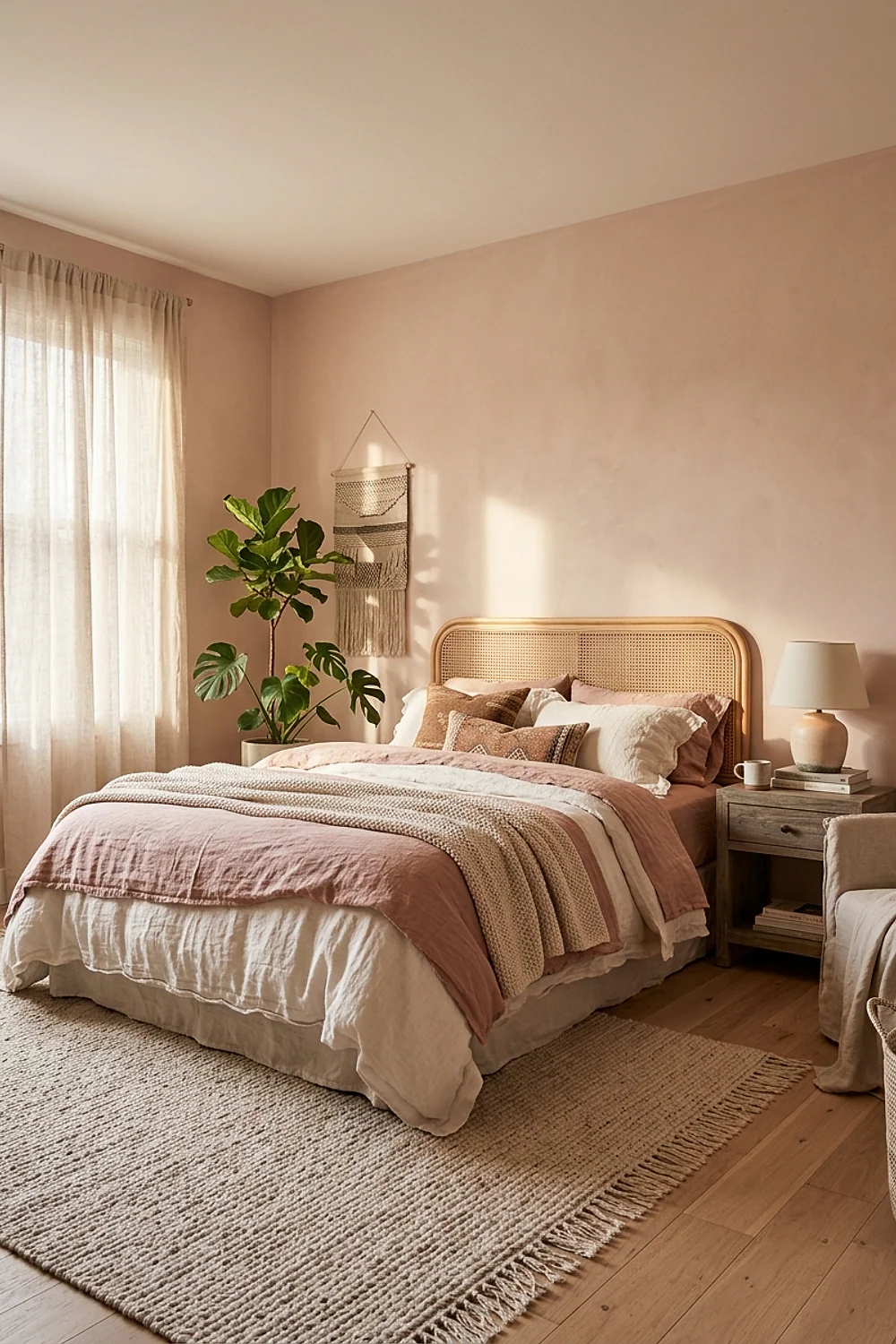
A matte off-white with a little yellow in it (think a soft cream rather than a stark builder white) reflects morning light without glare. It also turns honey-colored under a 2700K lamp at night, which is exactly the shift you want from one surface.
Skip eggshell or satin on bedroom walls. The sheen throws bright streaks across the room at low angles, and it shows every roller mark. Matte hides patches and wipes clean with a damp cloth.
3. A bed angled so the window sits at your side

Pull the headboard away from the wall that faces the window, and place the bed so daylight hits your shoulder rather than your face. You get the wake-up signal without the squint. It works best in rooms at least 11 feet wide, where there’s space for a walkway on that side.
If the room is narrow, don’t force it. A bed shoved crosswise leaves 18 inches of passage, which is too tight to walk through comfortably. Keep the bed on its natural wall and fix the light with curtains instead.
4. A sunrise alarm clock on a 14-inch nightstand

A sunrise lamp such as the Philips Wake-up Light or a Hatch Restore brightens over 20-30 minutes before the alarm. Prices run about $50 to $200. Doesn’t an east window make that pointless? Right, from May through August. In a gray February or a December that sunrises at 7:40, the lamp fills the gap.
It needs about 8 inches of nightstand depth and a spot within arm’s reach. The trade-off is one more charging cable on the bedside table, so route it behind the furniture with an adhesive clip.
5. A dimmable ceiling fixture running at 5000K

One overhead light on a dimmer switch handles the 7 a.m. to 5 p.m. shift. Use a bulb or flush-mount at 5000K with a CRI above 90, so skin and fabrics keep their real color. A rotary dimmer gives a faint click as it turns on, and that tactile feedback beats tapping a screen half asleep.
This suits bedrooms that double as home offices, since 5000K helps at a desk. It backfires if the bulb is cool and undimmable. Evening is when you’ll regret that choice, so make sure it dims to 10% or lower.
The vision board
After sunset, the goal reverses. Lower, warmer, and closer to eye level at the bedside. These next five ideas build that layer.
6. Bedside lamps with warm bulbs, not cool-white ones

The most common mistake is a nice-looking lamp loaded with a 4000K or 5000K bulb. Evening reading under that light pushes the body clock later and leaves the room feeling like a break room. Swap the bulb to 2200-2700K and the same lamp becomes a sleep aid.
Check the box for the color temperature, not the word “soft white,” which varies by brand. Match both lamps, or one will look yellow and the other gray.
7. Linen or pleated paper shades that diffuse the glow

A shade works as a filter, so material matters. Thin, unlined linen lets a little light through and turns the wall behind it into a glowing surface. Pleated paper gives a similar spread and costs less. Both feel crisp under your fingertip.
Choose shades with a 14-16 inch diameter for a standard nightstand lamp. Dark, opaque shades throw light in a hard cone up and down. That’s dramatic, but it’s the wrong mood for winding down.
8. Smart bulbs on a schedule that shifts through the day

Philips Hue or similar color-tunable bulbs, around $15-$20 each, can shift from cool white at 7 a.m. to amber by 8 p.m. without anyone touching a switch. They suit households with irregular routines, where manual dimming gets skipped.
Here’s the catch: smart bulbs need constant power. If anyone flips the wall switch off, the schedule breaks. Tape a plastic switch guard over it, or fit a smart dimmer such as Lutron Caseta that keeps the circuit live.
9. A lidded box that hides the chargers and clutter

Cables and glowing standby lights ruin an otherwise low-lit room. A lidded wooden or felt box, about 10 by 7 inches, keeps chargers and a phone out of sight but powered. A closed lid also removes the temptation to check notifications.
Drill a small cable notch or choose a box with a back slot. Wood wipes clean in seconds. Felt traps dust and lint, so it needs a lint roller each month.
10. An 8-by-10 wool rug that feels good at 6 a.m.
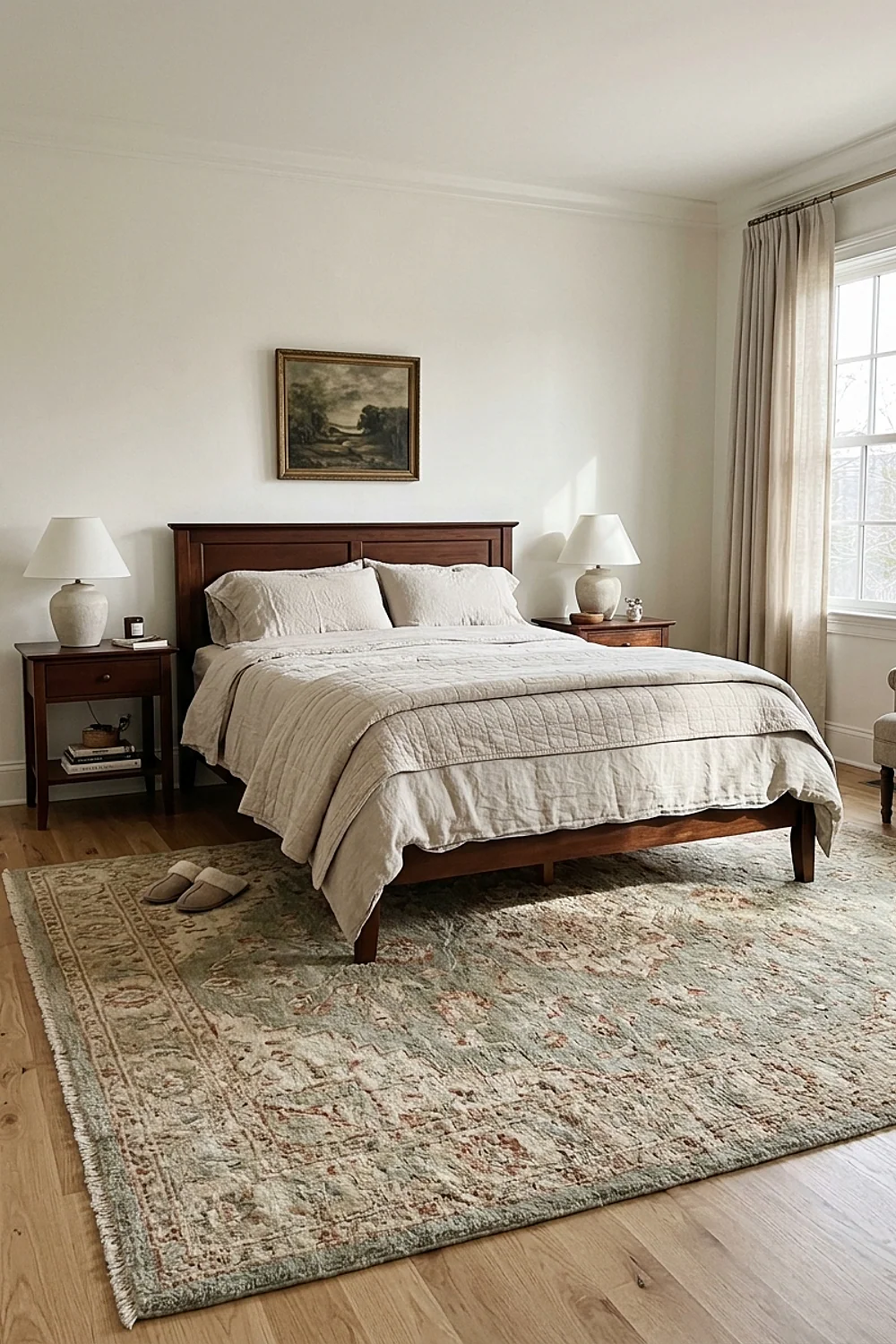
Warm-colored wool underfoot makes getting up gentler, particularly on a cold floor. A rug extending 24 inches past each side of the bed catches the first step from either direction. Choose cream, oatmeal, or clay to bounce warm lamp light back up.
Wool resists stains better than most people expect, but it sheds for the first few weeks. Vacuum with the beater bar off to protect the pile.
Design inspiration and ideas
Evening light works best at several heights. Use two or three small sources instead of one bright one, and the room reads as calm.
11. Three lamp heights stepped around the room

A floor lamp near 60 inches, a bedside lamp near 26 inches, and a small shelf light near 12 inches give the eye several places to rest. Light spread across levels fills corners without any single source feeling bright. That’s the reason hotel bedrooms feel calmer than home ones.
This suits rooms of 120 square feet or more. In a smaller room, drop to two heights. Three lamps in a tiny bedroom means three cords and three tripping hazards.
12. Amber glass or terracotta lamp bases

Amber glass tints already-warm light even deeper, which suits late evening. A vintage amber base from a flea market usually runs $25-$60, and the glass has a heavy, cool, slightly bubbled feel in the hand. Terracotta works the same way with a matte surface.
Test for chips along the base before buying, and check the cord. Old wiring is the real expense, and rewiring a lamp kit adds about $15 and 20 minutes.
13. Wall sconces mounted 60 inches above the floor
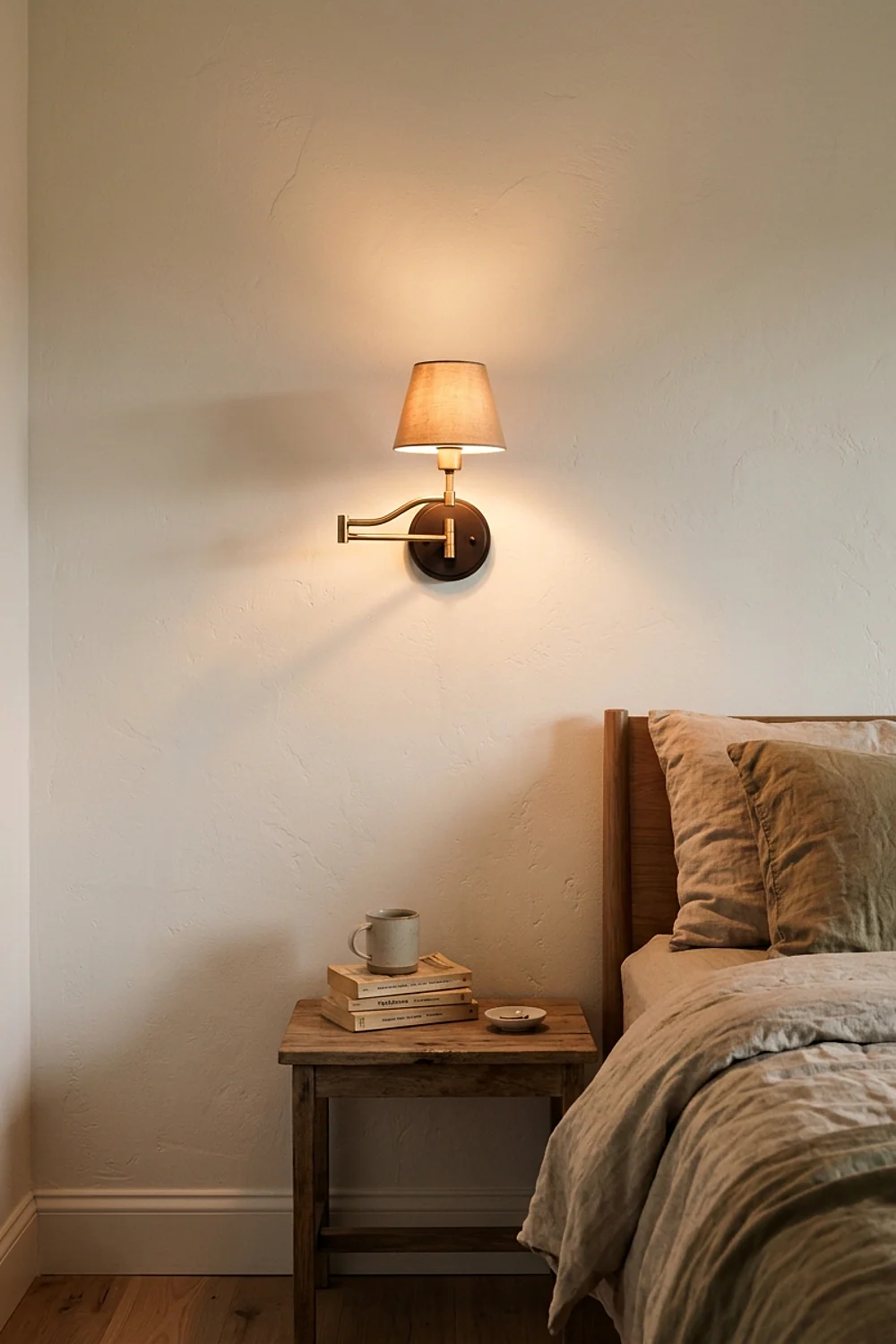
Plug-in sconces free up the nightstand and place the light at eye level when you’re sitting up in bed. Mount them 8-12 inches above the mattress, roughly 60 inches from the floor, and 24 inches out from each side of the headboard.
Renters should choose plug-in models with a fabric cord cover painted to match the wall. Hardwired sconces look cleaner but need an electrician and a patched wall if you move.
14. Table lamps sized 24-26 inches tall

A bedside lamp should sit with the bottom of the shade near your shoulder when you’re propped on a pillow. Too tall and the bulb shines in your eyes. Too short and the light skims the bedside table without reaching the page.
Nightstands of 24-28 inches pair best with 24-26 inch lamps. Check the base width too: anything over 8 inches wide eats half the surface.
15. Dim-to-warm bulbs for the dimmer you already own

Here’s a surprise: a regular LED doesn’t get warmer when you dim it. It just gets darker, still at 3000K or whatever the label says. A dim-to-warm bulb slides toward 2000K as it dims, like a candle, and costs about $12-$25.
These suit bedrooms with an existing dimmer where rewiring isn’t an option. Check dimmer compatibility first, because mismatched pairs buzz faintly or flicker below 20%.
Things that elevate the room
The last four ideas protect the part of the day that matters most: the dark hours.
16. A bright hallway or bathroom light left on at night

A bathroom fixture at full 4000K at 2 a.m. undoes the evening work in seconds. Replace those bulbs with a warm 2200K nightlight, or put the bathroom on a dimmer set to 5%. The fix is mostly about the walk from bed to door.
Shut the bedroom door if light leaks through the gap, or add a rubber door sweep. A strip of light under the door is one of the sneakiest sleep disruptors.
17. Blackout lining stitched behind existing curtains
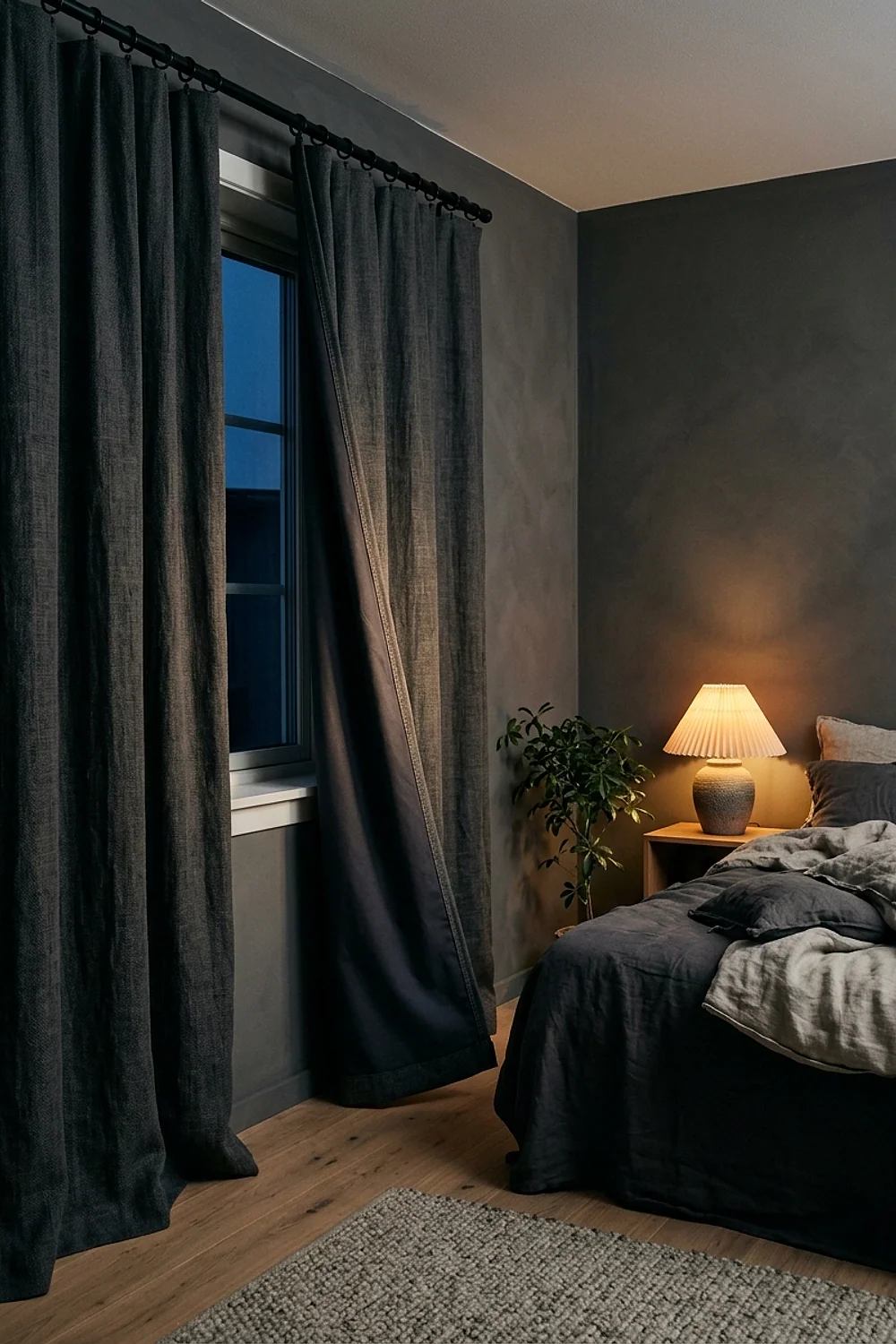
Blackout lining adds a dense back layer to curtains you already own, for roughly $12-$18 per yard. Triple-weave polyester blocks about 99% of light, and it stays quiet when the curtain moves. It suits street-facing rooms and shift workers who sleep in daytime.
The trade-off is weight. Heavier panels need a rod rated for it and brackets every 40 inches. Otherwise the center sags within a season.
18. A red or amber nightlight at ankle height

Place a small plug-in nightlight 6-12 inches off the floor near the route to the bathroom. Red and deep amber light barely affect melatonin, so you can see where you’re stepping without waking up fully. It works well for households with older adults or small kids.
Choose a model with a dusk sensor so it turns off in daylight. Skip cool-white nightlights, which defeat the purpose.
19. One bedside switch that sets everything to “off” at once
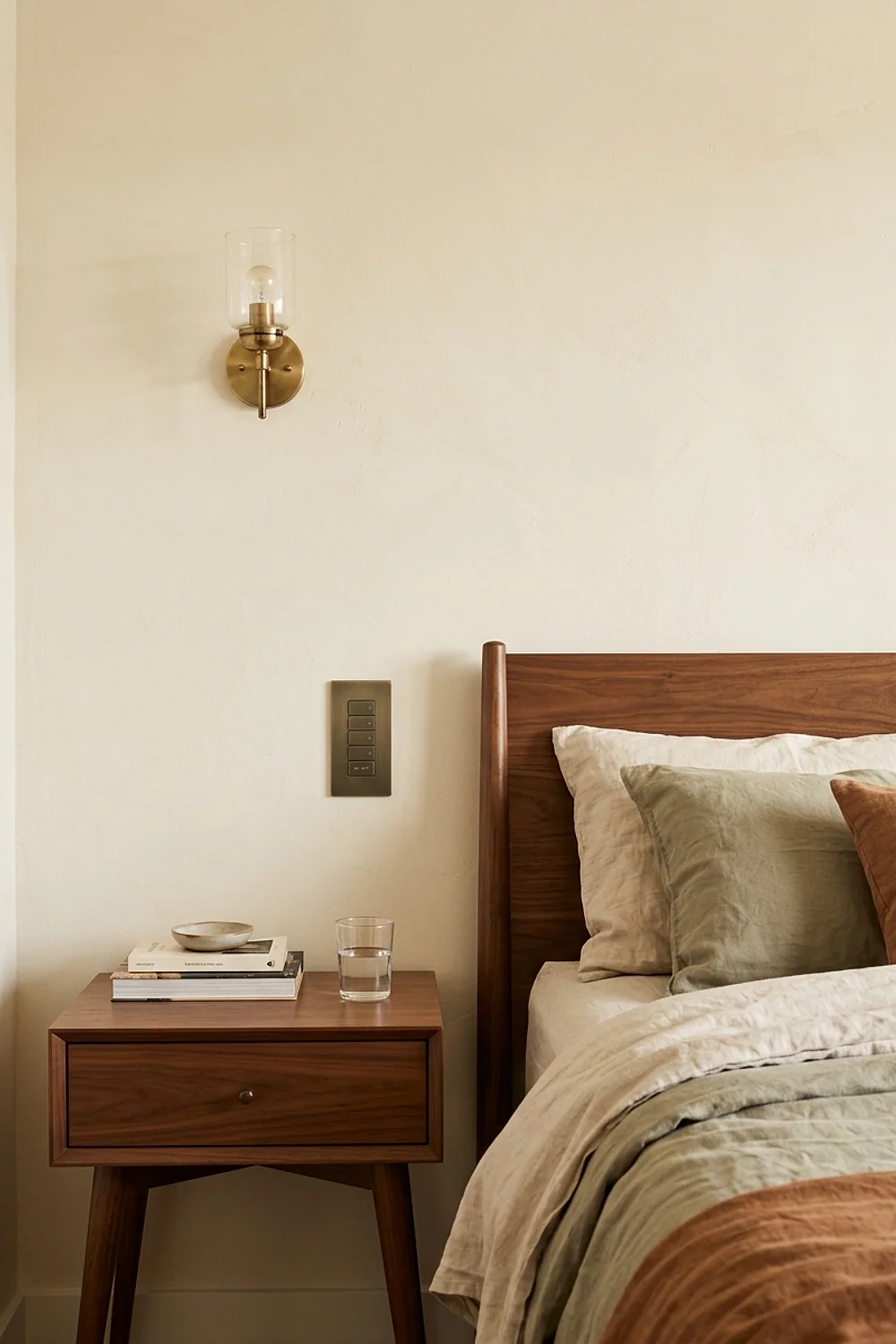
A single master switch or smart button by the pillow shuts off lamps, sconces, and the hallway nightlight in one press. It removes the last-minute walk across a cold floor, which is what keeps people from turning lights off at all. A switch plate feels weighty and clicks with a definite thud.
Program it as a scene so the red nightlight stays on while everything else goes dark. Without that detail, the first midnight trip is a stumble.
Room by room breakdown
Circadian lighting bedroom ideas work best when built in layers over a few weekends, not bought in one rush. Start with the bulbs, because they cost the least and change the most.
- Swap every bedside bulb to 2200-2700K.
- Add a sunrise lamp or a 5000K dimmable overhead for mornings.
- Layer in blackout lining and sheers.
- Put the chargers in a box and the nightlight low.
- Set a schedule only after the hardware feels right.
Live with each stage for a week. If you wake up easier and your evenings feel quieter, the sequence is working.
Small details, big impact
Circadian lighting bedroom ideas fail most often in the details, not the big pieces. Matching every bulb to the same “warm” label is a classic miss, since one brand’s 2700K reads orange and another’s reads yellow.
- Cool bulbs in lamps used after dark.
- Glossy walls that reflect lamp glare.
- Smart bulbs on a wall switch that gets flipped.
- Lamps taller than the bedside surface can handle.
- Skipping a dimmer on the overhead fixture.
Each is cheap to fix. Most take under 10 minutes and a single trip to the hardware store.
Care and upkeep after the first year
Circadian lighting bedroom ideas ask for a few small chores. Linen shades and curtains collect dust, so a soft brush every month keeps them from yellowing. Wool rugs need a vacuum once a week, and sunrise lamps need their diffuser wiped.
Smart bulbs occasionally lose their schedule after a power flicker, so check the app after a storm. LED bulbs last years, but a cheap dimmer can fail sooner than the bulbs. Budget for replacing one around year three.
Closing thoughts
Circadian lighting bedroom ideas come down to temperature, brightness, and timing, with fabric and color doing the finishing. The bedroom stops fighting your body and starts helping it.
Save or pin this list so it’s handy when you’re ready to start. Try the bulb swap first, and measure your nightstand height before buying lamps.
Frequently asked questions
What color temperature is best for circadian lighting bedroom ideas?
Aim for 2200-2700K in the evening and 5000-6500K in the morning. Brightness matters as much as color, so keep evening light low and dimmable. Anything under about 2000K works well in the last hour before sleep.
Can I use circadian lighting bedroom ideas in a rental?
Yes. Smart bulbs, plug-in sconces, tension rods, and adhesive cord clips all remove cleanly. The only thing to avoid is hardwiring anything without your landlord’s approval.
Do blue-light glasses replace a warm bedroom setup?
No. Glasses filter some blue light at the eye, but they don’t lower overall brightness or change the room’s color. Low, warm light from the source is more reliable.
How long before I notice a difference?
Most people notice easier evenings within a week, and steadier mornings in two to three. Results vary with shift work, screen use, and how much daylight you get. Keep the schedule consistent to see the effect.