
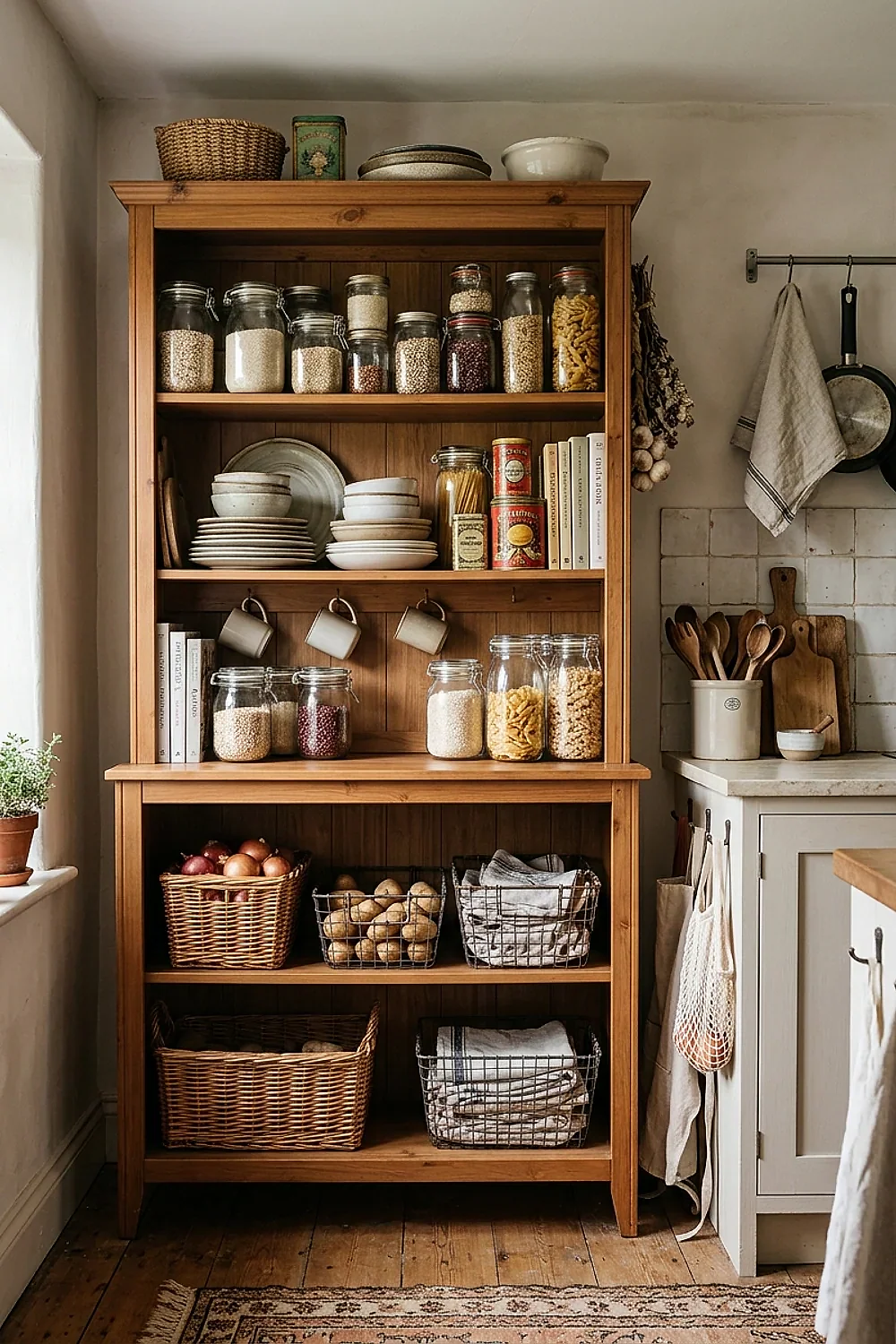
Where does a stand mixer go when the kitchen has 6 feet of counter and eleven cabinet doors? The 27 small kitchen storage ideas below answer that for galley layouts, rentals and 1960s apartments where the cabinets were sized for a smaller set of belongings.
Every one of these ideas comes with a price range, a measurement or a warning. Skim the headings to find your problem, then read the item for the details.
27 small kitchen storage ideas: Mood board breakdown
Three things are pushing small kitchens into the spotlight at once. Rents have kept people in smaller floor plans for longer. Open shelving fatigue has set in, since nobody wants to dust forty glasses every week. And the organizing-video boom taught a generation to treat a drawer as a design problem.
The historical reference point is the 1926 Frankfurt Kitchen by Margarete Schütte-Lihotzky, which treated every inch as a work surface or a storage slot. Today’s best small kitchens borrow that discipline but use peel-and-stick materials and $15 hardware instead of custom joinery.
The ideas run from cheap fixes to the occasional carpentry job. Each one targets a specific kind of wasted space: the door interior, the toe-kick, the wall above the sink, the gap beside a tall cabinet.
1. Contact paper-lined drawers
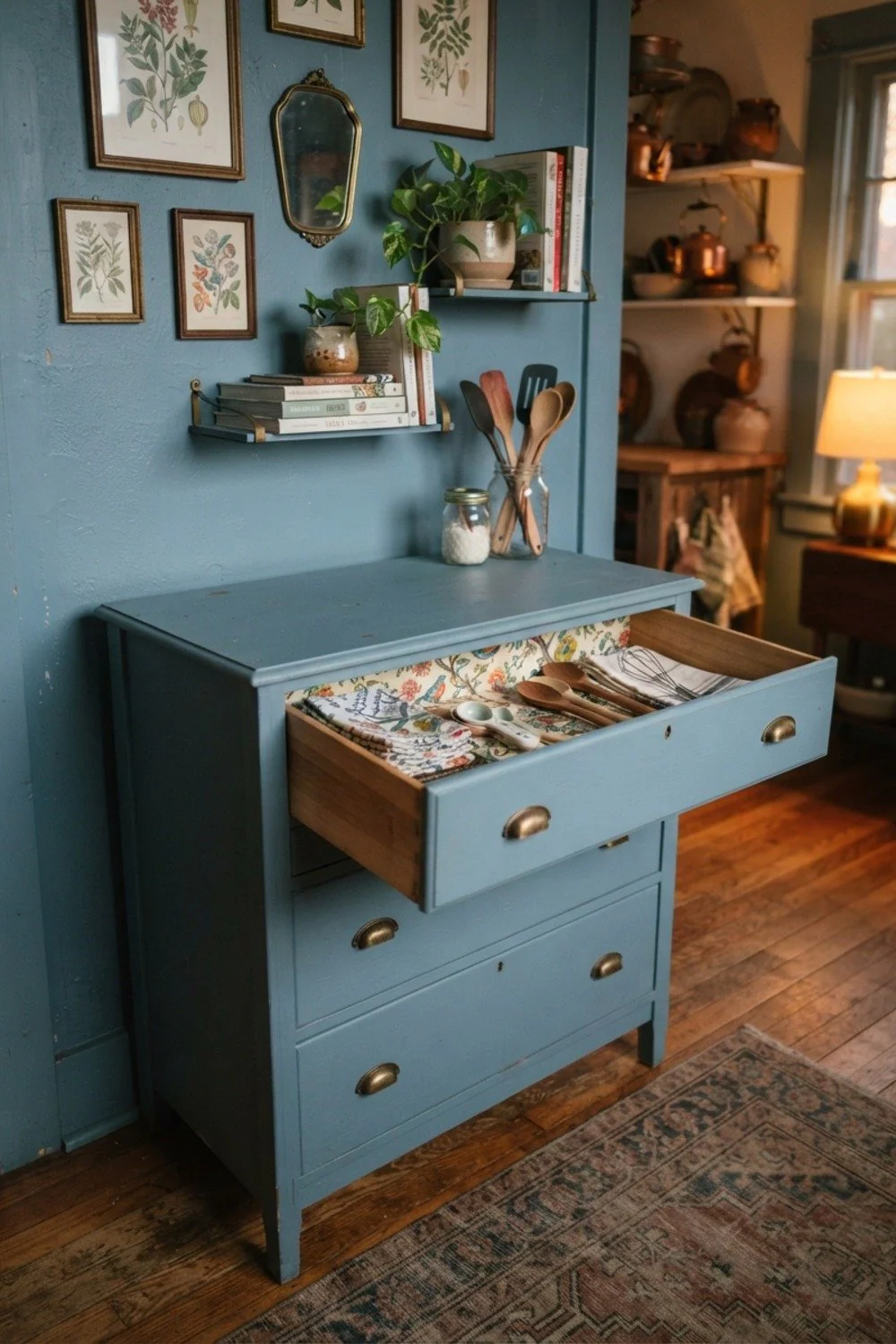
Peel-and-stick contact paper in a matte oak or marble pattern costs about $10 to $15 per 18-inch by 9-foot roll. It turns scarred laminate into a clean surface in an afternoon. Cut each piece to the drawer’s footprint with a craft knife and steel ruler, then smooth from the center outward so air escapes.
This suits rentals and tired builder-grade cabinets best, because the adhesive lifts from factory finishes when warmed with a hair dryer. Skip it on raw, unsealed wood, where removal can tear the grain.
2. A roll-up drying rack over the sink

Roughly 17 by 13 inches, a stainless roll-up rack bridges the basin and frees the 24 inches of counter that a plastic drainer usually claims. It costs about $20 and rolls into a drawer when guests arrive. Measure the sink lip before buying, since a rack an inch too short slides into the water.
It works for single-basin sinks and apartment galleys where counter space is already rationed.
3. A steel rail along the backsplash
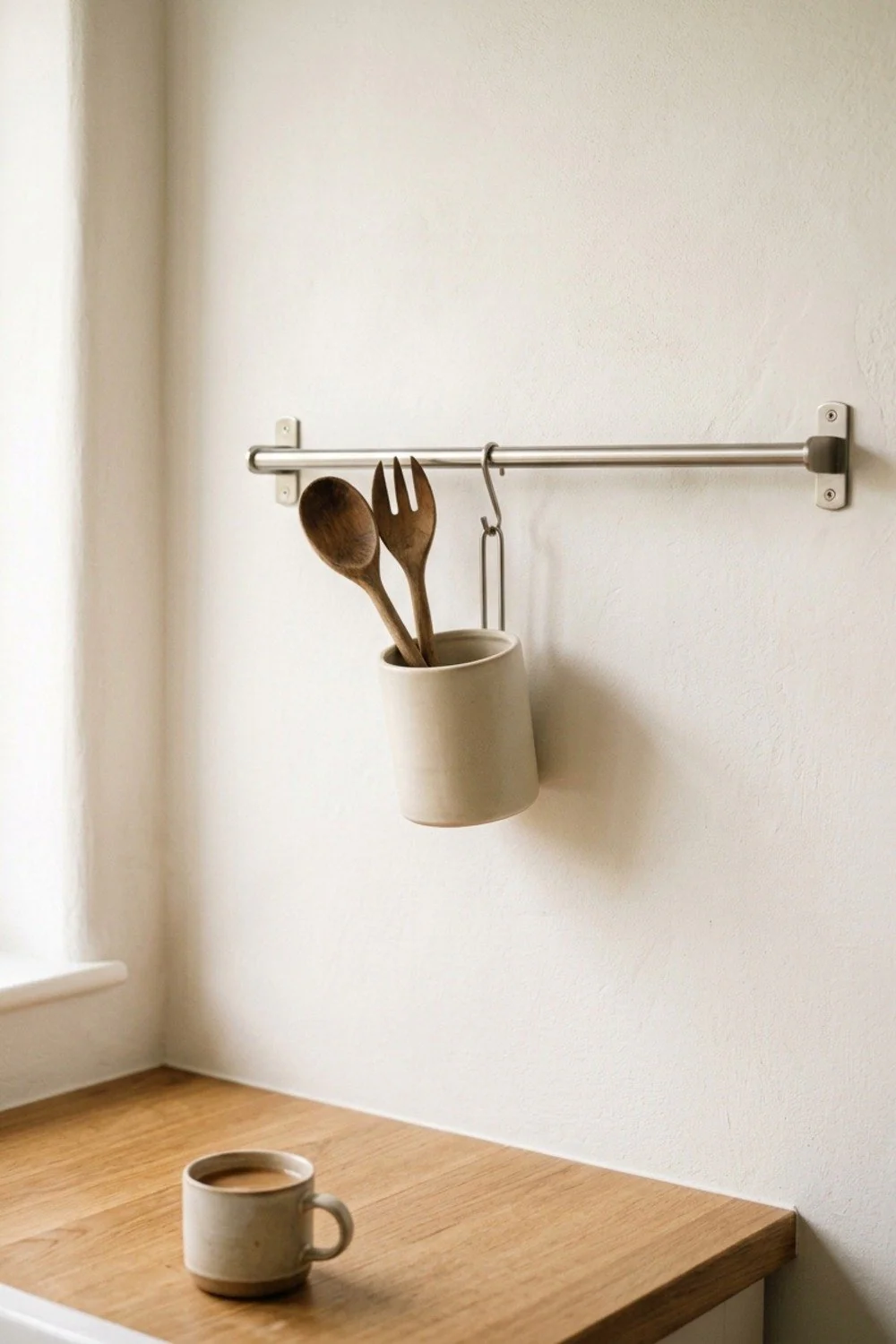
Under $10 at IKEA, a slim steel rail (the Grundtal line is the usual example) carries S-hooks, small buckets and utensil cups at eye level. Screw it into studs or use the toggle anchors in the box. Drywall alone won’t hold a loaded rail for long.
The layout works best along a 30-inch run between counter and upper cabinets, where the wall otherwise sits blank. Keep the heaviest items nearest the ends, where the screws carry the load.
4. A pegboard wall
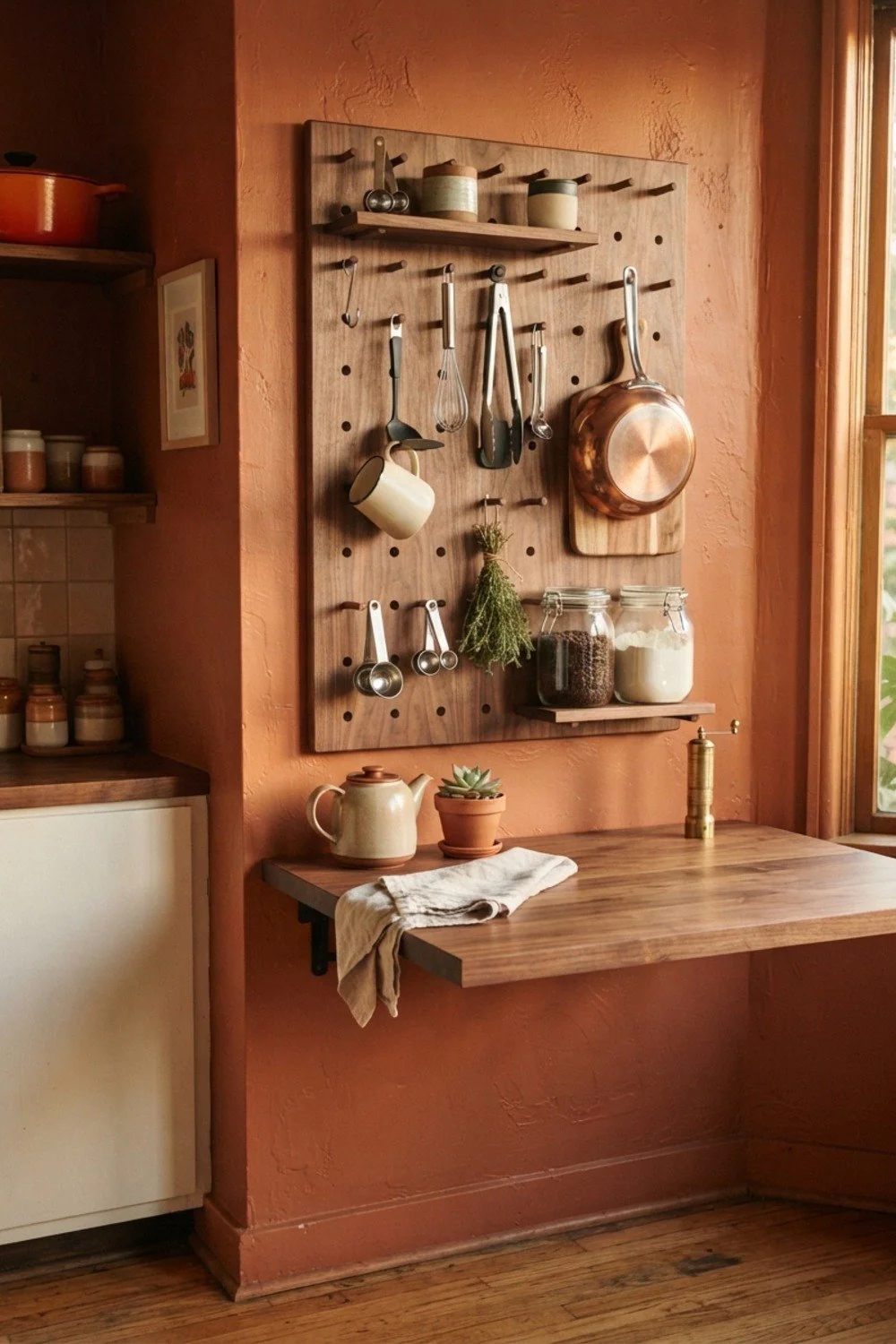
Julia Child’s pegboard, with painted outlines marking each pan’s home, is still the best argument for the format. A 24 by 48 inch board with a 1-inch gap behind it runs about $30 to $60, plus hooks. Paint it the same color as the wall and it disappears. A pegboard is the answer to every tiny kitchen… no, scratch that. A pegboard is the answer to a kitchen with one blank wall and too many pans.
Trace each item in marker before hanging so the outlines are visible. Without them, the board turns cluttered within weeks.
5. A magnetic knife bar
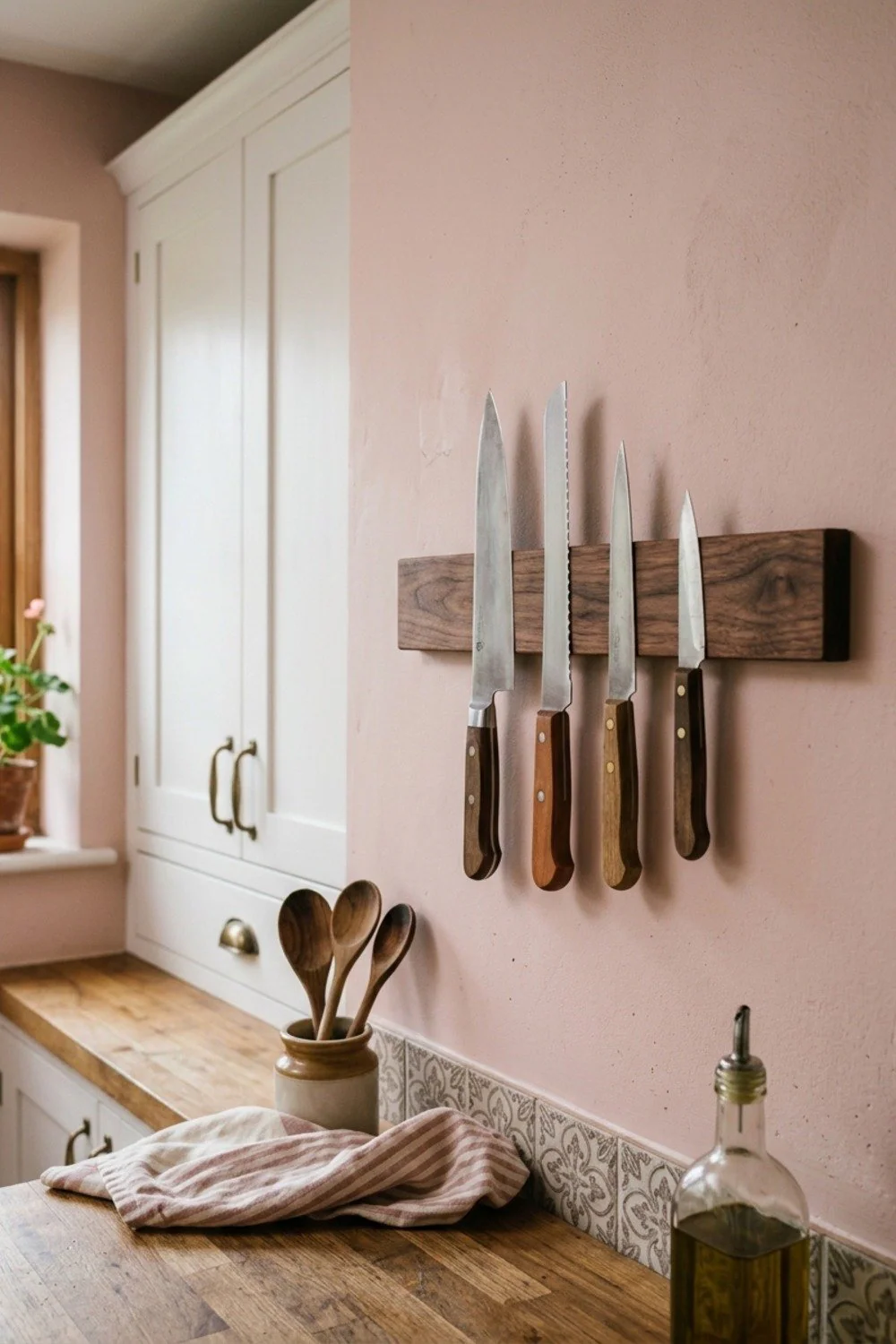
Sixteen inches of magnetic bar costs $15 to $25 and clears a drawer of loose blades, which is the slowest drawer to dig through. Walnut and bamboo bars grip well and look warmer than bare steel. Mount it around 54 inches off the floor if kids are in the house, and keep it out of the path where an elbow could clip a handle.
It fits renters willing to use two screws, and anyone whose knives currently rattle in a drawer.
6. A 6-inch pantry pull-out
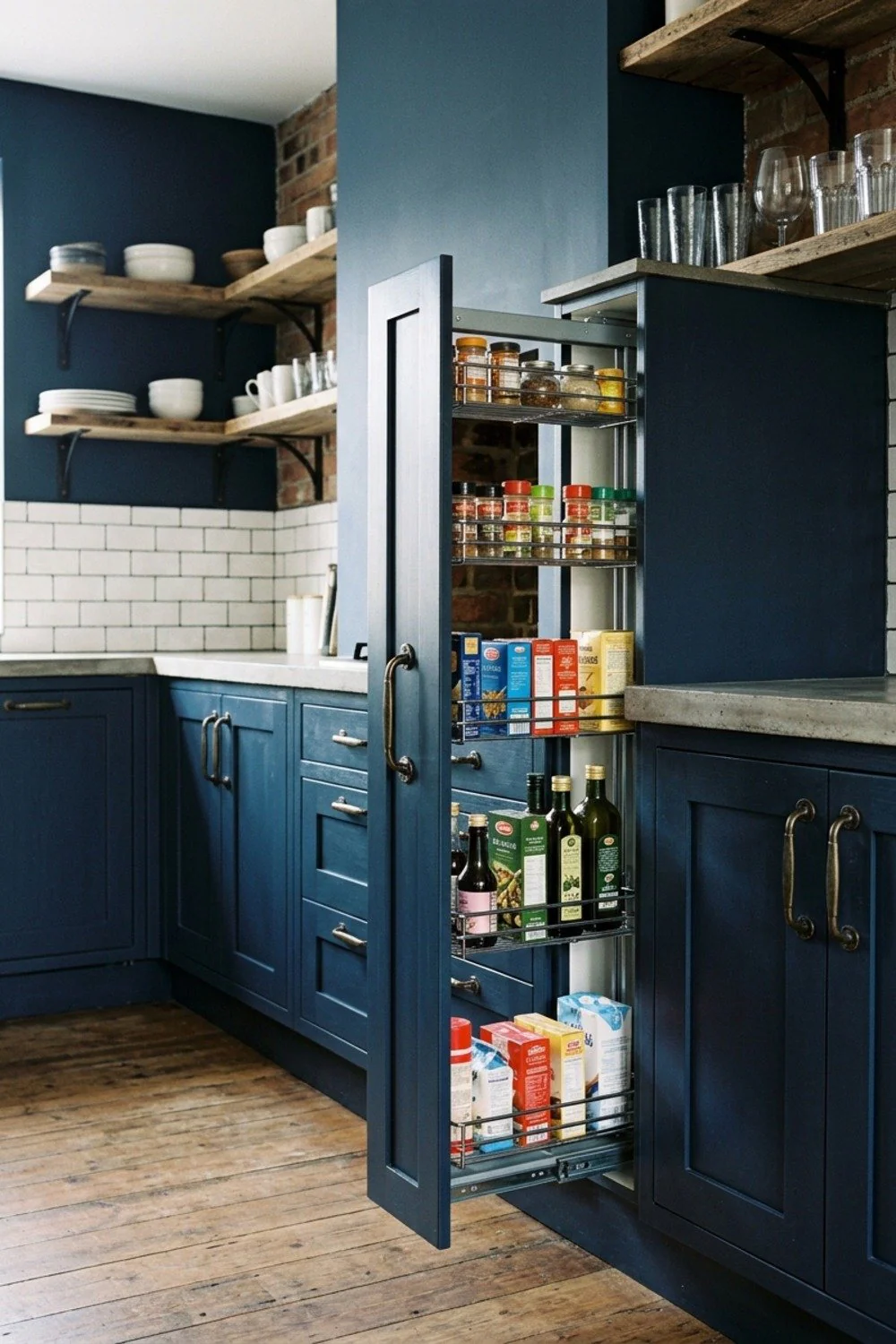
Six inches is all a pull-out needs, which makes the dead gap beside a tall cabinet or a wall suddenly useful. Rev-A-Shelf and similar brands sell units from about $120 to $250, with soft-close slides and wire baskets rated for 25 to 50 pounds per tier. Canned goods and oils live well here.
Check that the gap is a clean 6 inches before ordering. A cabinet face frame that overlaps by half an inch will block the door from opening fully.
7. Spice racks inside the cabinet door
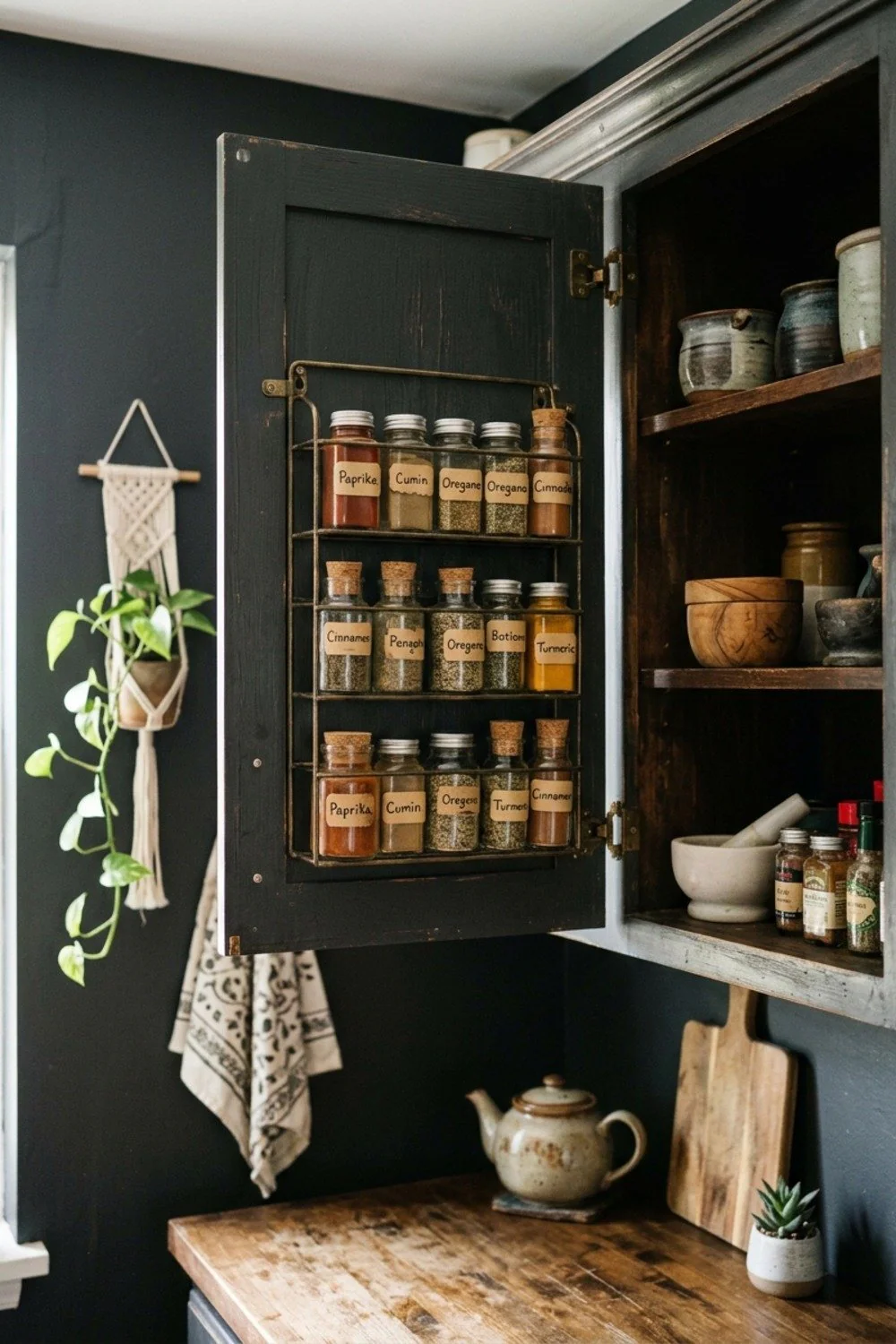
Inside the upper cabinet door, a shallow rack holds 12 to 18 spice jars within one arm’s reach of the range. Racks run $12 to $30. Hang them at least 1.5 inches clear of the shelves inside, or the door won’t close.
This works for anyone whose spices currently live in a drawer on their sides, where labels vanish. Skip it if the cabinet door is a thin slab that can’t take the added weight on its hinges.
8. Open-shelf backs in a saturated green
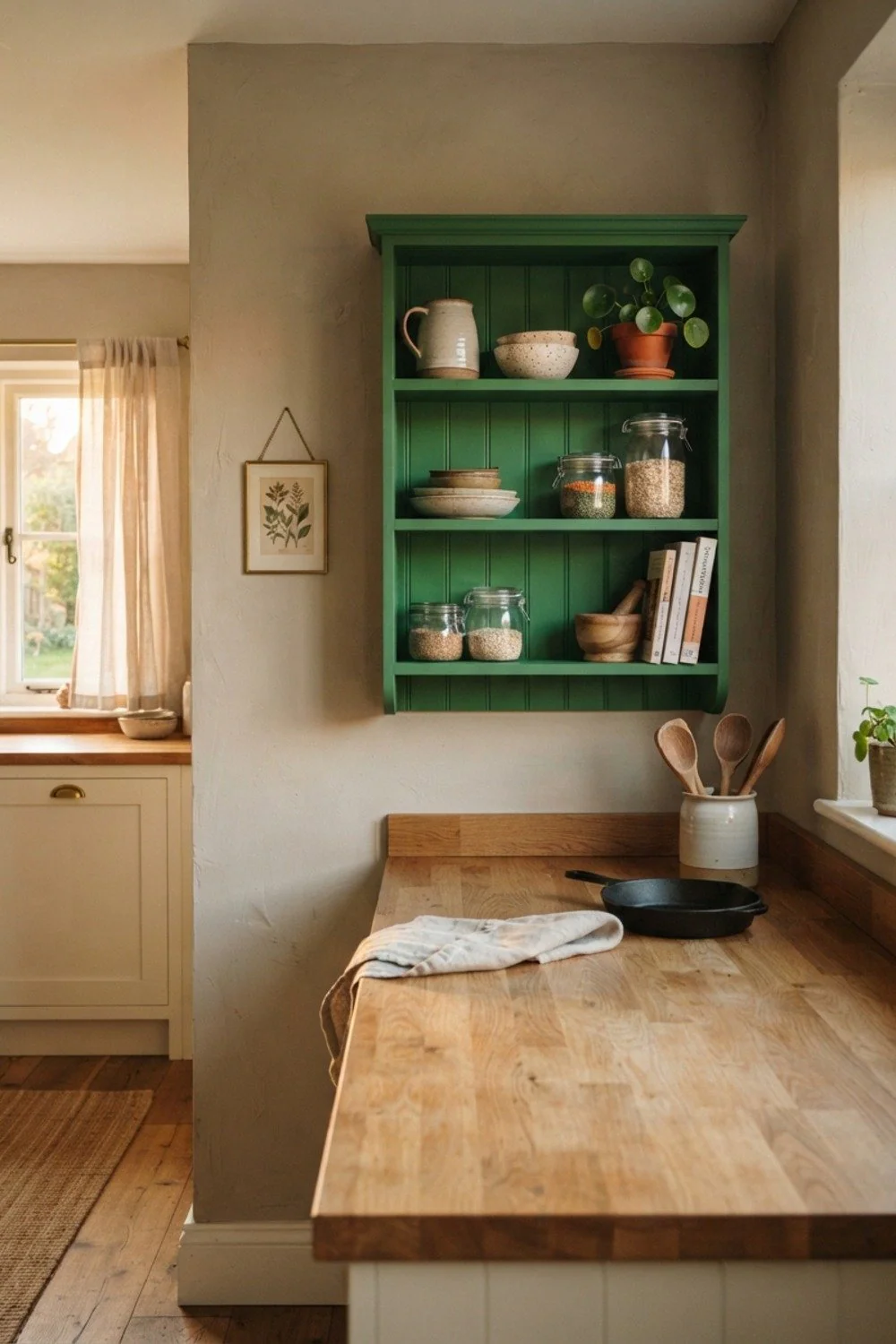
The back wall of an open shelf painted a saturated green, such as Farrow & Ball’s Studio Green, makes white plates read as pale shapes against a dark field. A quart costs about $30 and covers the shelf backs of an entire kitchen. Dark backs also hide the shadow lines that make shelves look cluttered.
Keep this to a single run under 4 feet wide. A full wall of dark paint in a windowless galley pulls the room inward.
9. A lazy Susan in the blind corner
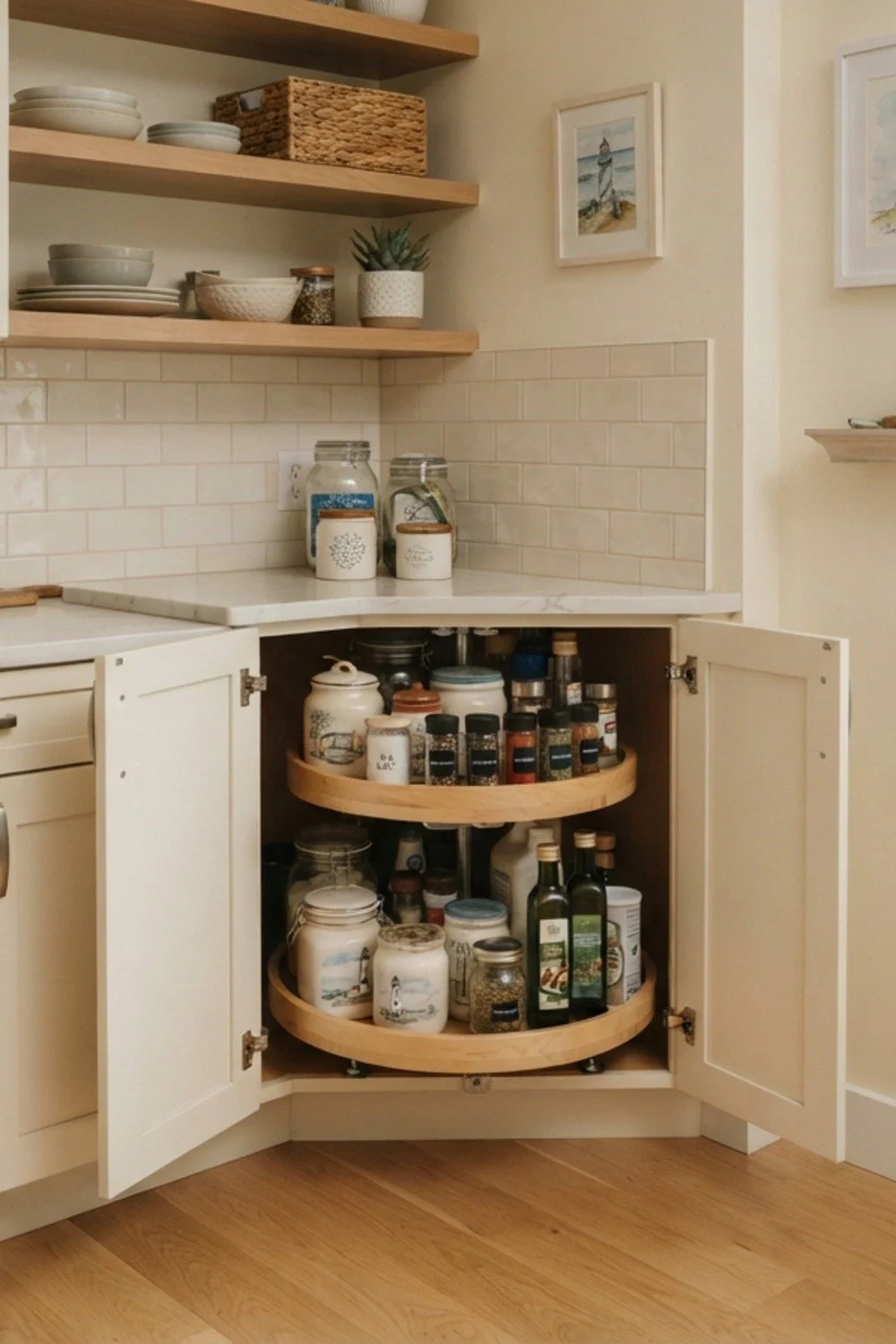
Corner cabinets swallow anything placed past arm’s reach. A 28-inch lazy Susan, about $40 to $90 in plastic or $150 and up for a full wire-and-chrome set, rotates the back into view. Here’s a counterintuitive fact: it often holds less by volume than the empty square it replaces, yet gets used far more.
The common mistake is buying a round unit for a cabinet with a narrow door opening. Measure the doorway, not just the interior.
10. Under-cabinet LED strips with mug hooks
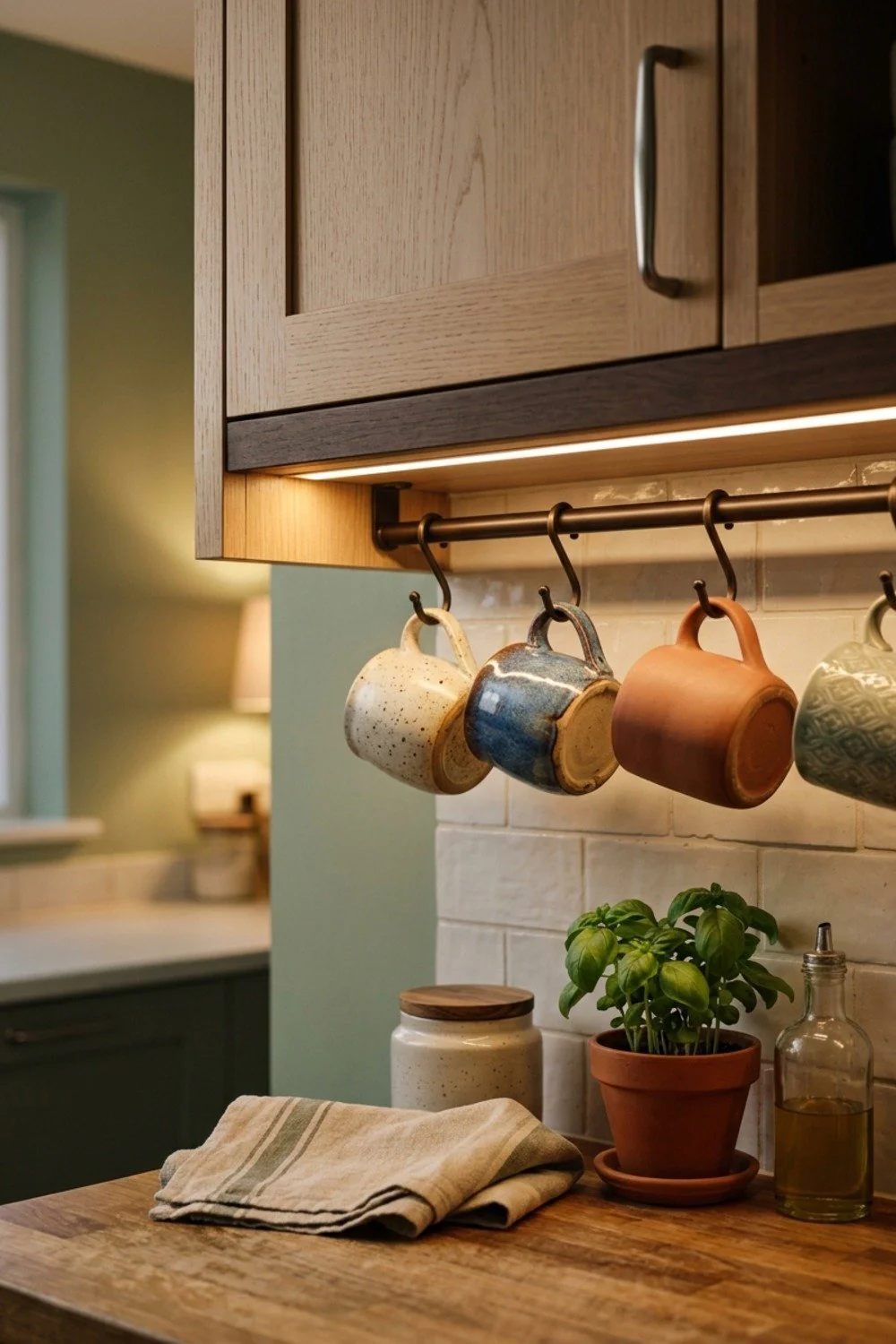
Under-cabinet LED strips in a 2700 to 3000K warm white wash the counter in light at 4pm in winter, when the window gives up. Add a row of small brass hooks beneath the same cabinet and mugs hang at exactly the height you reach for them. Plug-in strips run about $25 for 6 feet.
Hide the strip behind the cabinet’s front lip so the bulbs never glare at seated guests.
11. A rolling cart in powder-coated steel
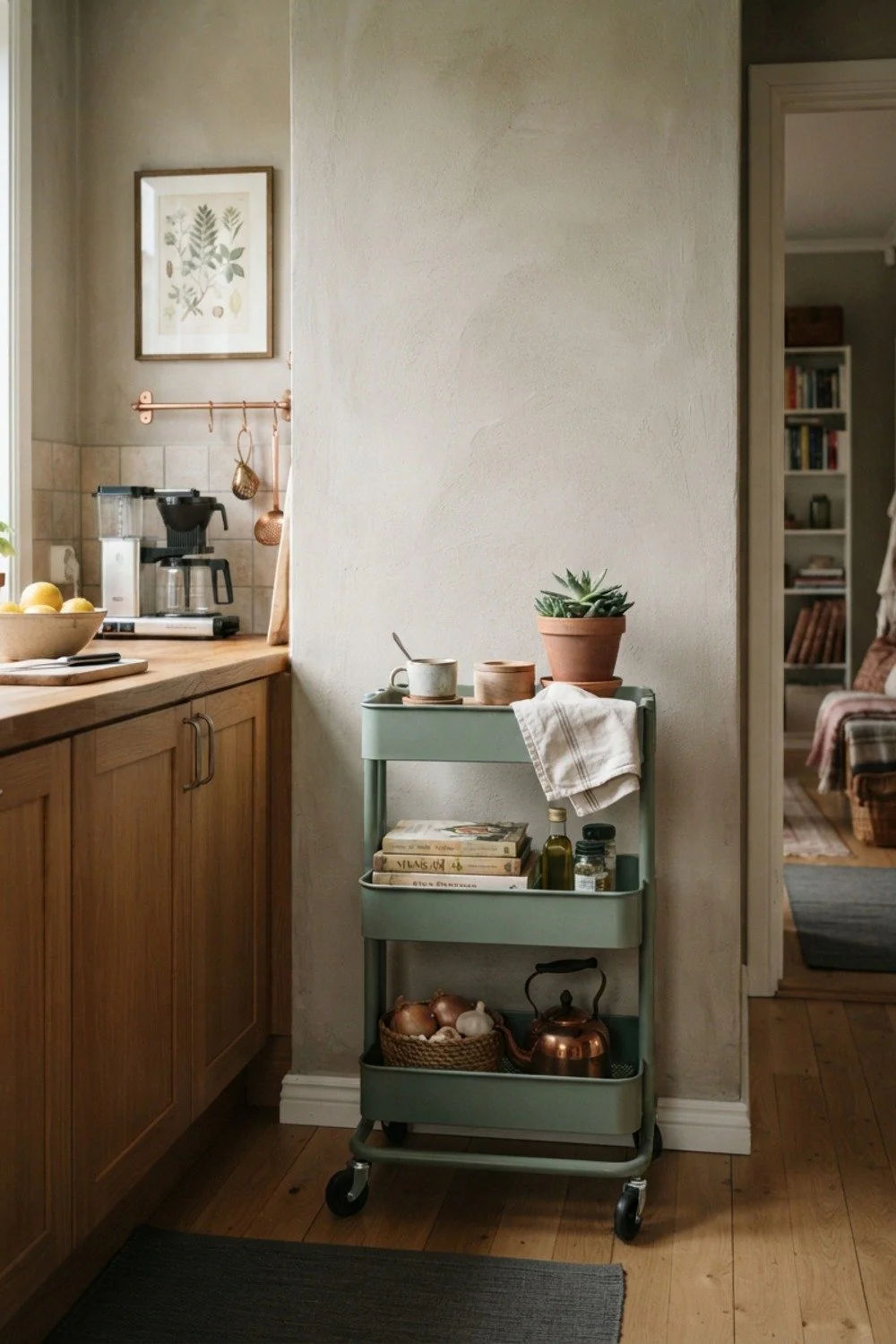
Rolling carts in powder-coated steel, such as IKEA’s Raskog at roughly $40 to $60, slide into 15 inches of floor width and carry three tiers of produce, oils or baking supplies on the move. Steel outlasts the wooden versions in a space with steam and splashes.
This suits small kitchens without an island. Lock the casters before loading it, or a heavy bottle of olive oil will roll away with the cart.
12. Two-tier shelf risers inside cabinets
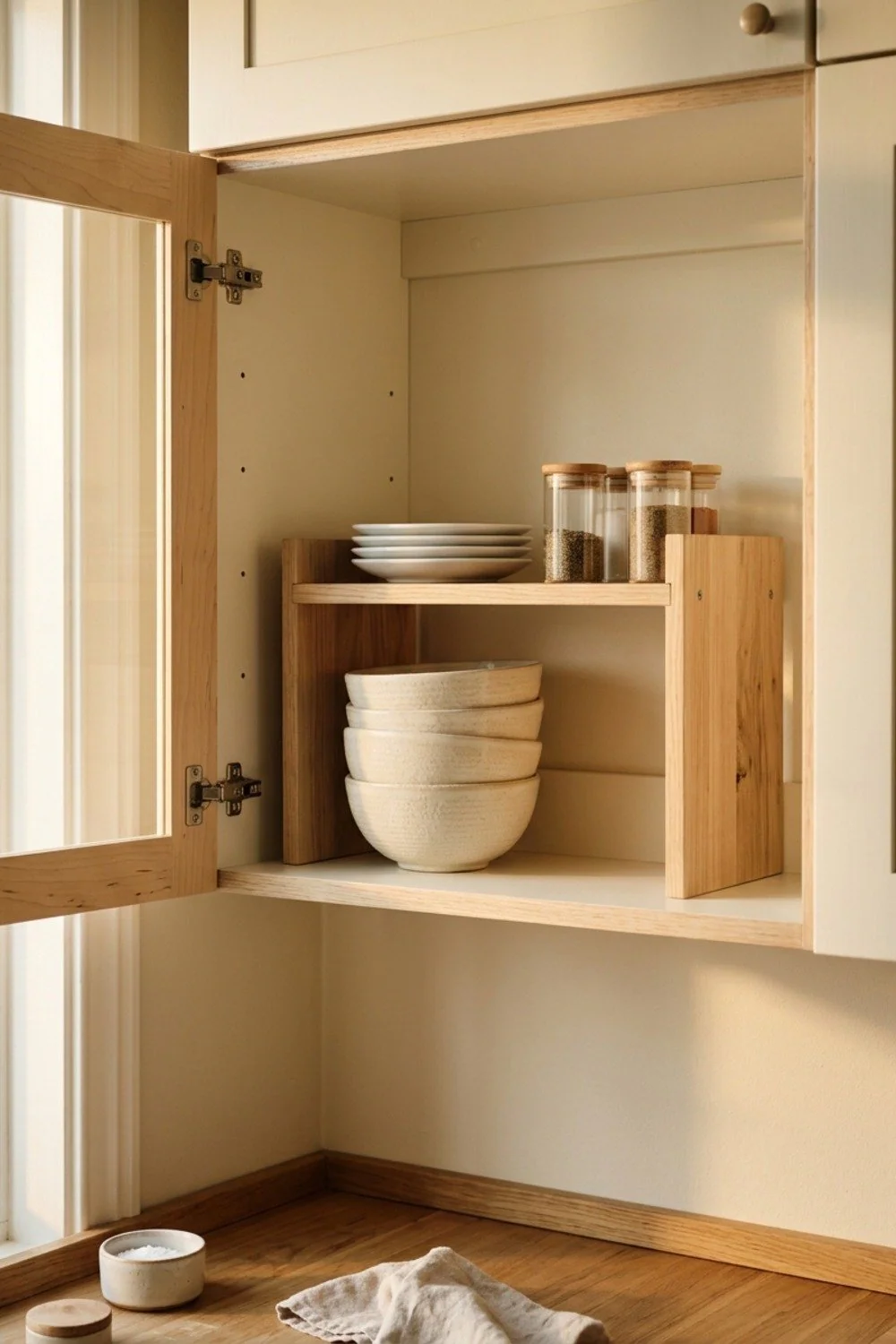
Two-tier shelf risers turn a 14-inch-tall cabinet shelf into two usable levels. Expandable steel units cost about $15 to $25 each, and plates sit on the top tier while bowls sit below. The trade-off is clearance: measure from shelf to the next one before buying.
Wire risers can scratch shelves and rattle, so pick ones with rubber feet. They make the most difference in cabinets sized for a single stack of plates.
13. A tension rod under the sink
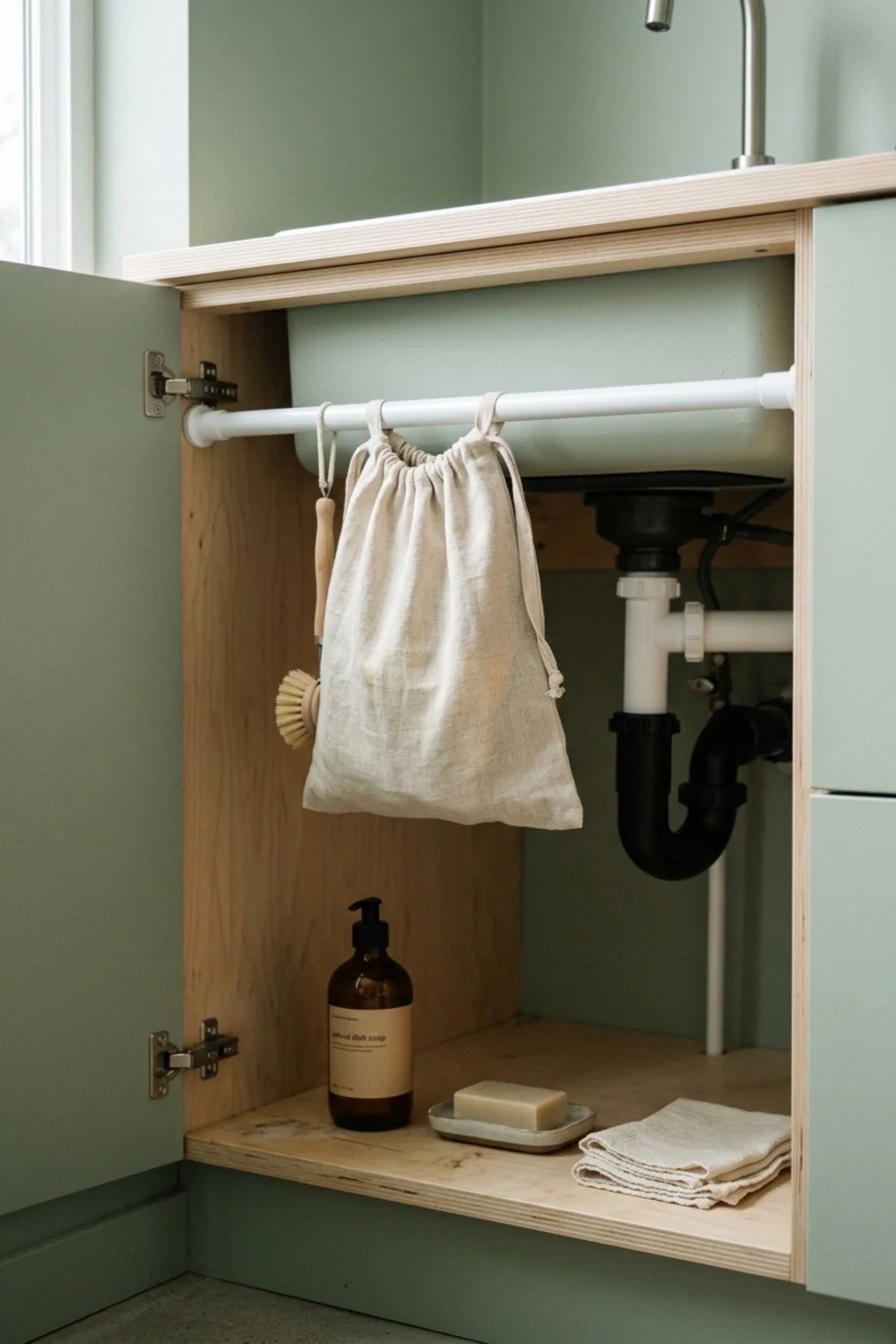
Spring-loaded tension rods, 24 to 36 inches wide and about $8, span the cabinet under the sink and let spray bottles hang by their triggers. The pipes stay clear and the floor of the cabinet opens up for a bin. Check the weight rating, which is usually only 10 to 15 pounds.
This works only if the cabinet walls are solid laminate or wood. A thin particleboard side will bow under the pressure.
14. A picture ledge for oils and salt
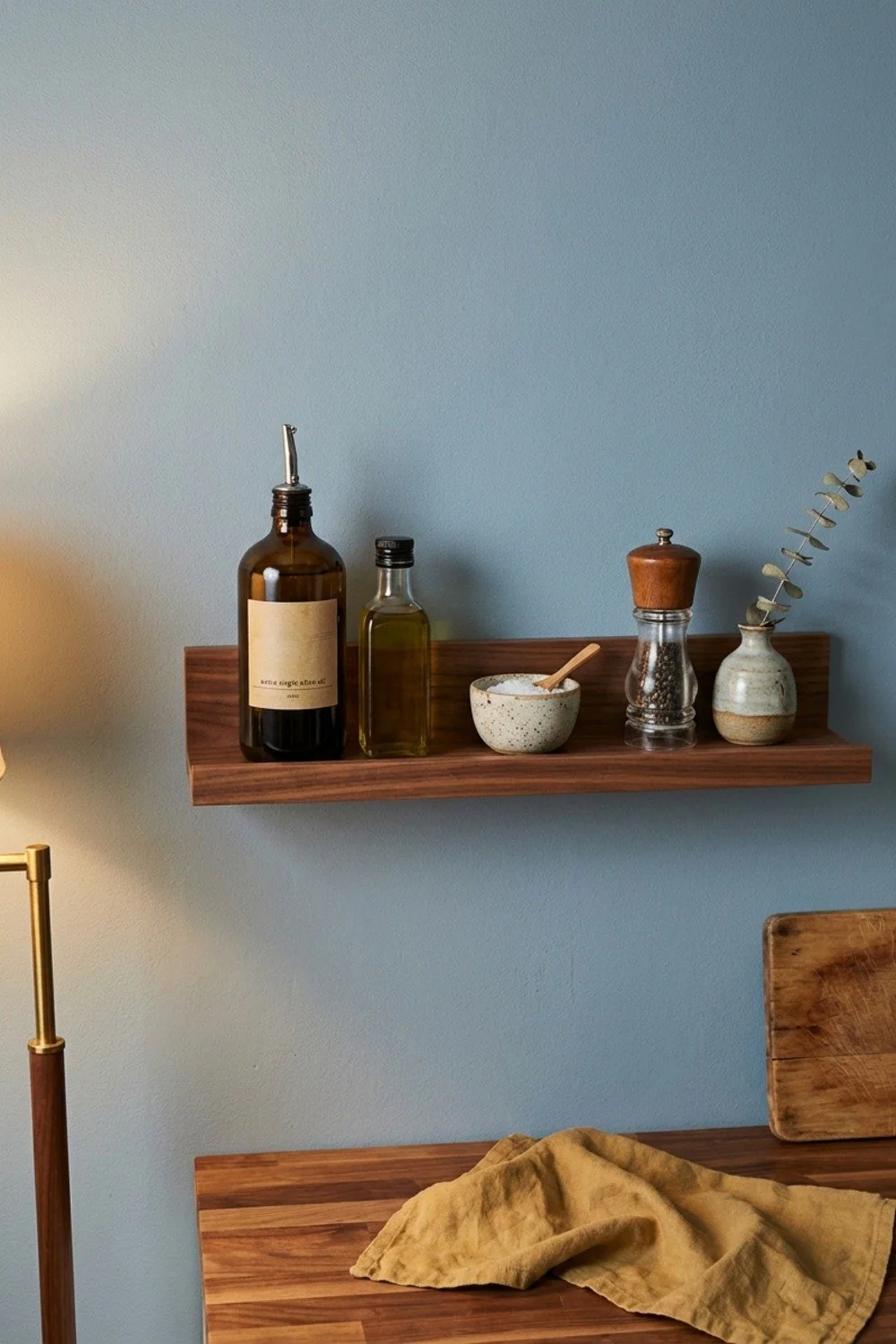
Four inches of depth is enough for a picture ledge, which holds oil bottles, a salt cellar and a pepper mill at the back of the counter. Oak or painted pine ledges run $15 to $30 for 3 feet. The ledge makes a still life out of daily items.
Mount it 3 feet or more from the range. Grease from spattering will leave a film that only shows on a matte finish.
15. A wall-mounted plate rack
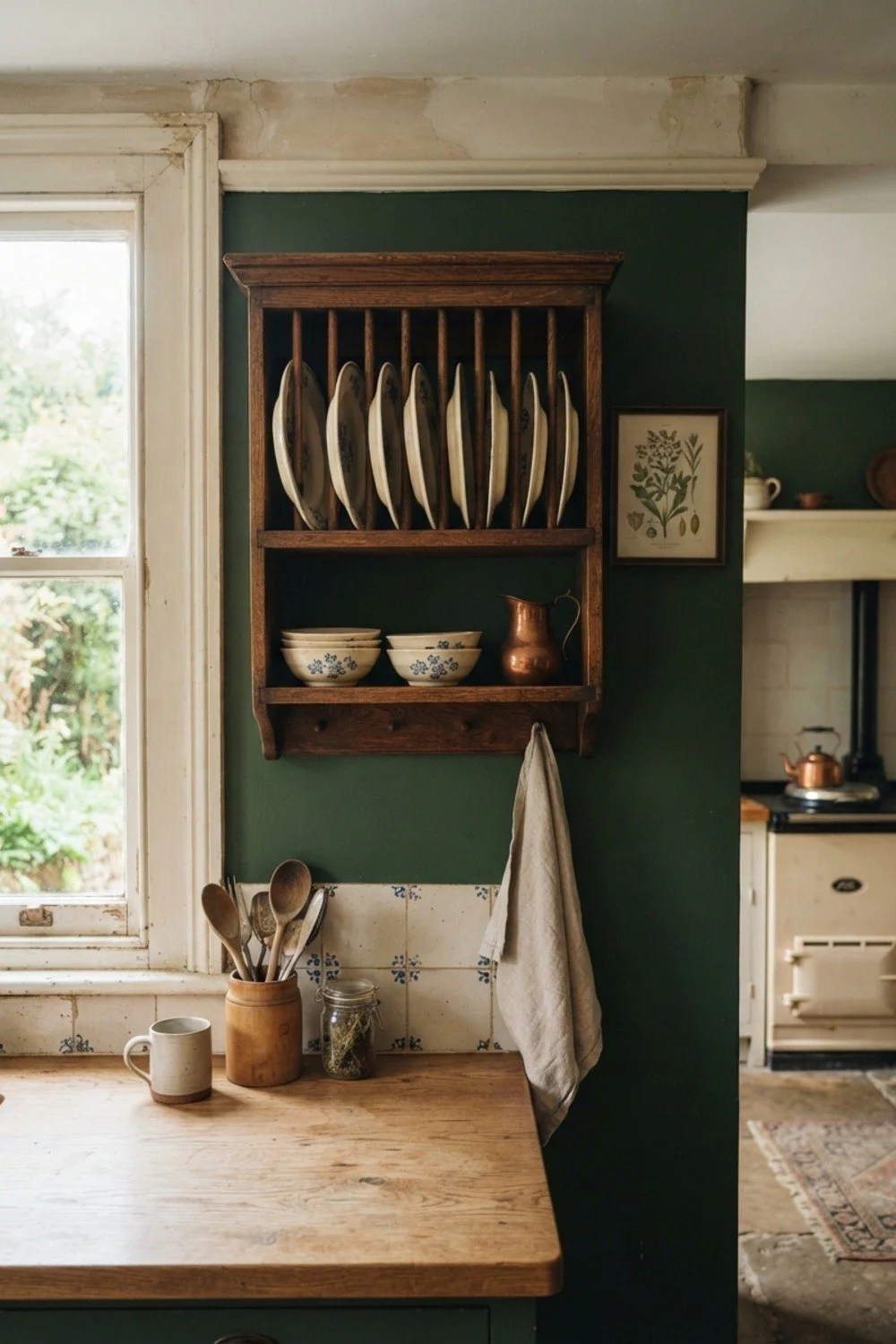
Wall-mounted plate racks in birch cost about $35 to $60 and drain straight into the sink below. They replace the drainer and the cabinet shelf, and they put everyday plates within one reach. A rack 24 inches wide holds about 10 plates.
It suits households that wash by hand daily. In a home that relies on a machine, it becomes a decorative shelf for the plates that never fit elsewhere.
16. Expandable bamboo drawer dividers
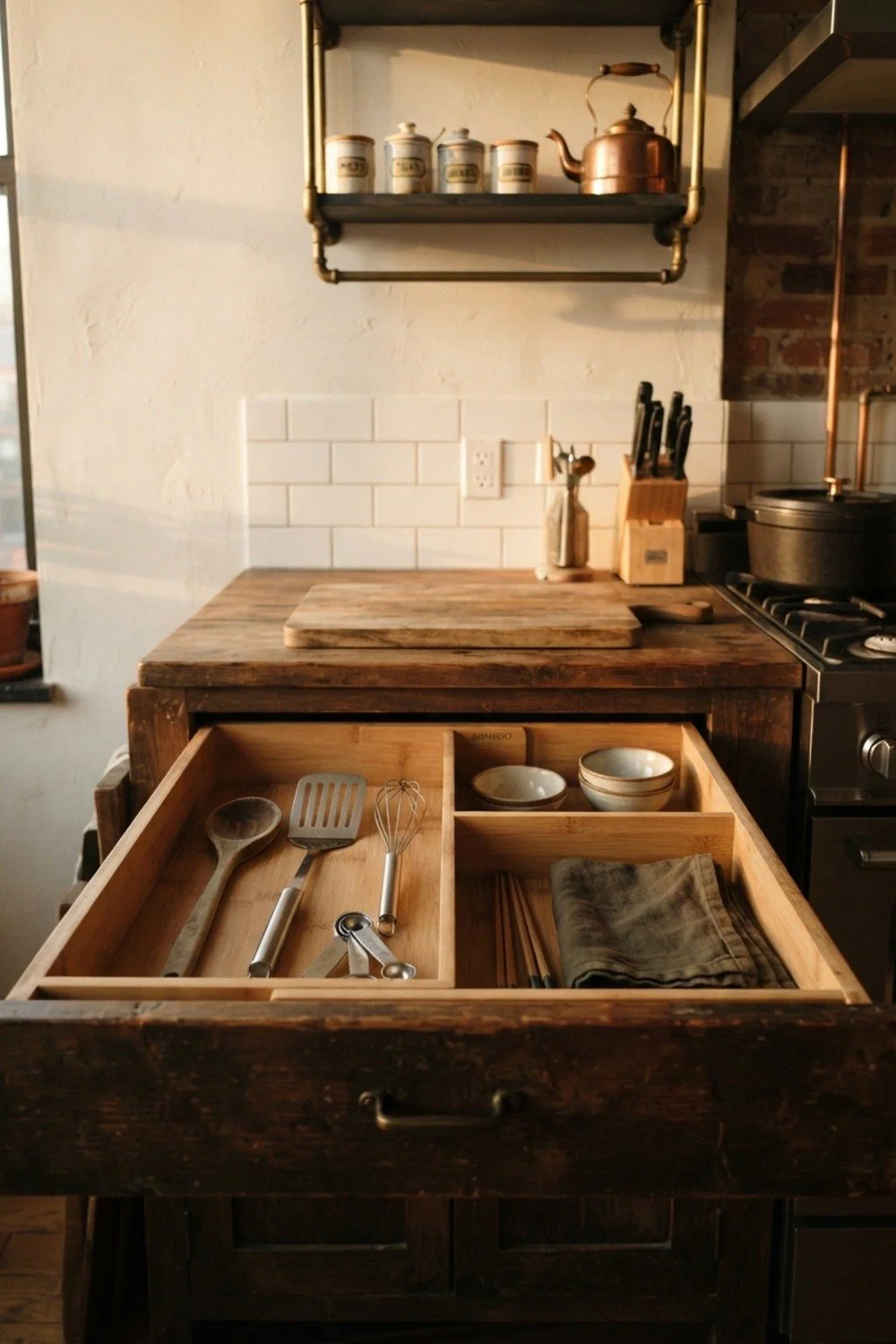
Expandable bamboo dividers, about $20 to $30 per drawer, stop utensils from migrating into a tangle. The slats slide to fit drawers from 12 to 22 inches wide, so one set suits older cabinets with odd dimensions as well as standard ones. Bamboo beats plastic here because it grips the drawer bottom and doesn’t slide when the drawer slams.
Clear the drawer completely first, because buying dividers before sorting just organizes the clutter. Check the width against the 12 to 22 inch range, since a drawer outside it leaves dividers loose or bowed.
17. A pot lid organizer on the door
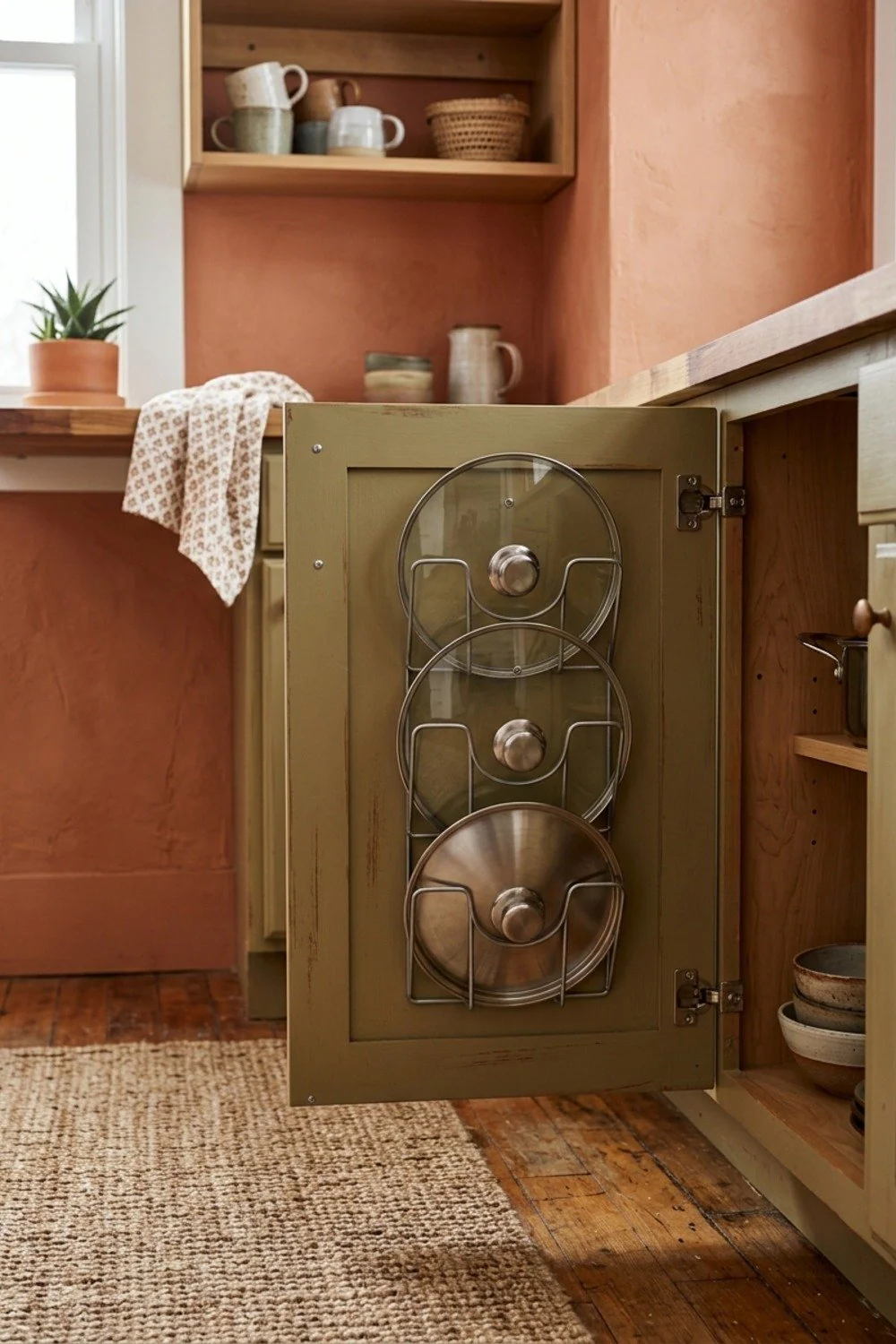
Pot lids clatter when stacked in a cabinet and slide sideways when someone reaches for the bottom one. A door-mounted wire rack, about $10 to $15, holds six lids upright against the cabinet door. It takes about 2 inches of depth.
It suits anyone with a full set of pots and a single base cabinet. Check that lids with tall knobs fit between the rails.
18. Matching glass jars for dry goods
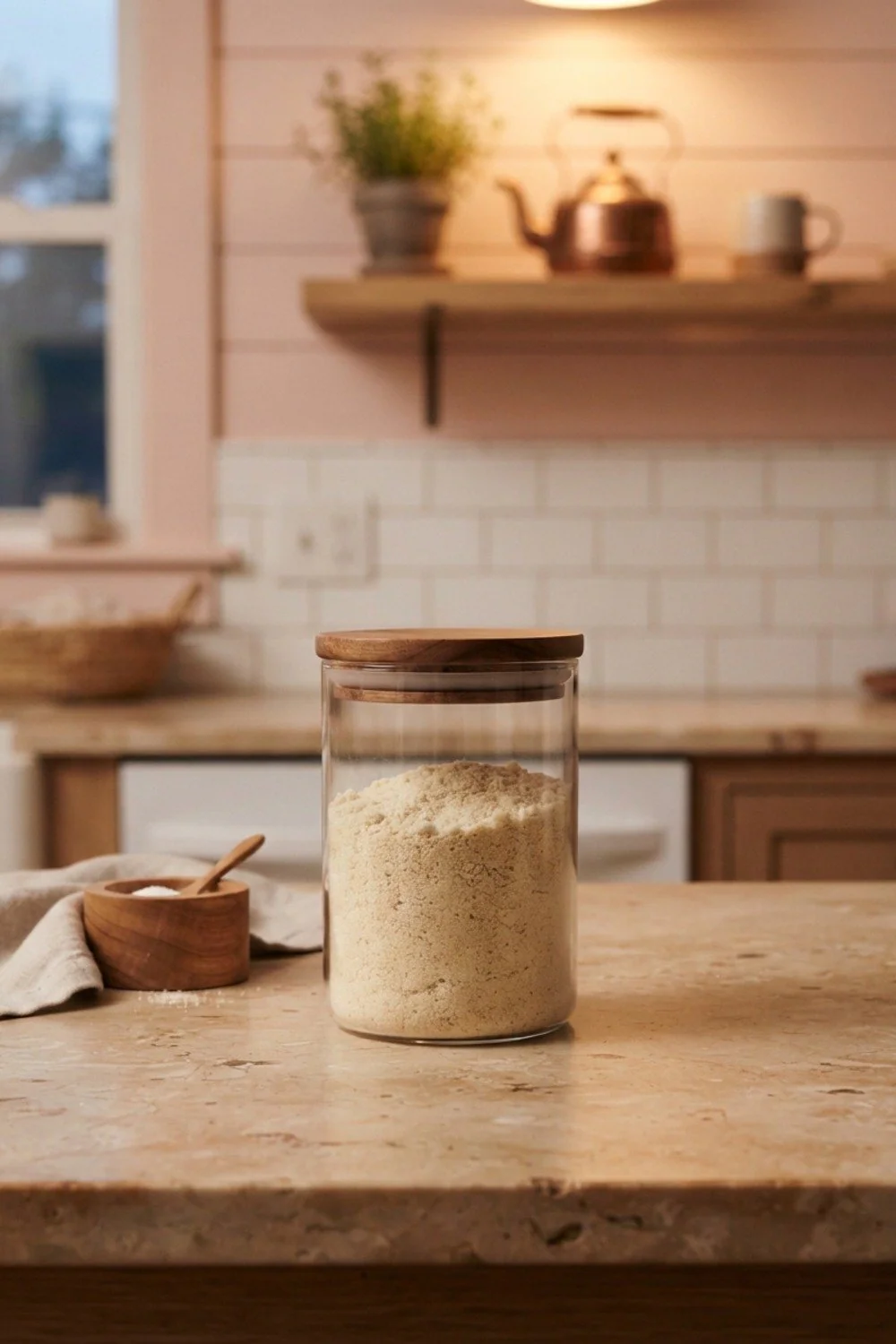
Matching 1-liter glass jars, such as Weck or similar clamp-lid styles at about $6 each, calm a pantry shelf into a single visual block. Flour, rice and pasta read as one tone, with only the labels differing. Uniform containers also stack neatly.
The trade-off is losing the best-by date on the original bag. Photograph the label or write the date on the jar’s lid.
19. A toe-kick drawer
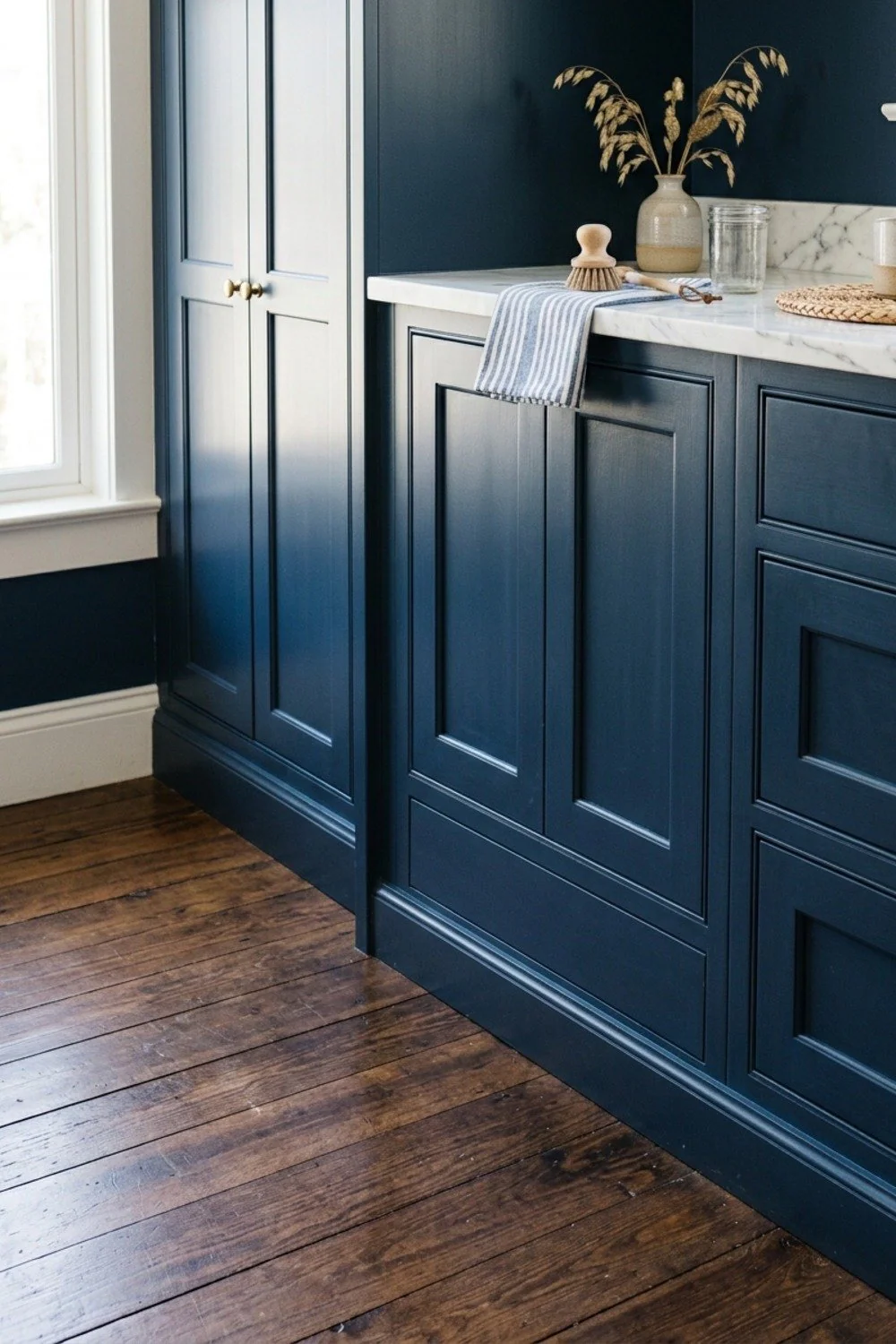
Toe-kick drawers, only 3 to 4 inches tall, turn the dead space under base cabinets into a home for sheet pans and platters. A custom cabinet maker charges about $150 to $300 per drawer, and kits exist for DIY. The most common mistake is installing one in front of a dishwasher or floor vent, where the depth isn’t there.
This one is for kitchens being renovated, since it requires removing the base trim.
20. A motion-sensor light in the pantry
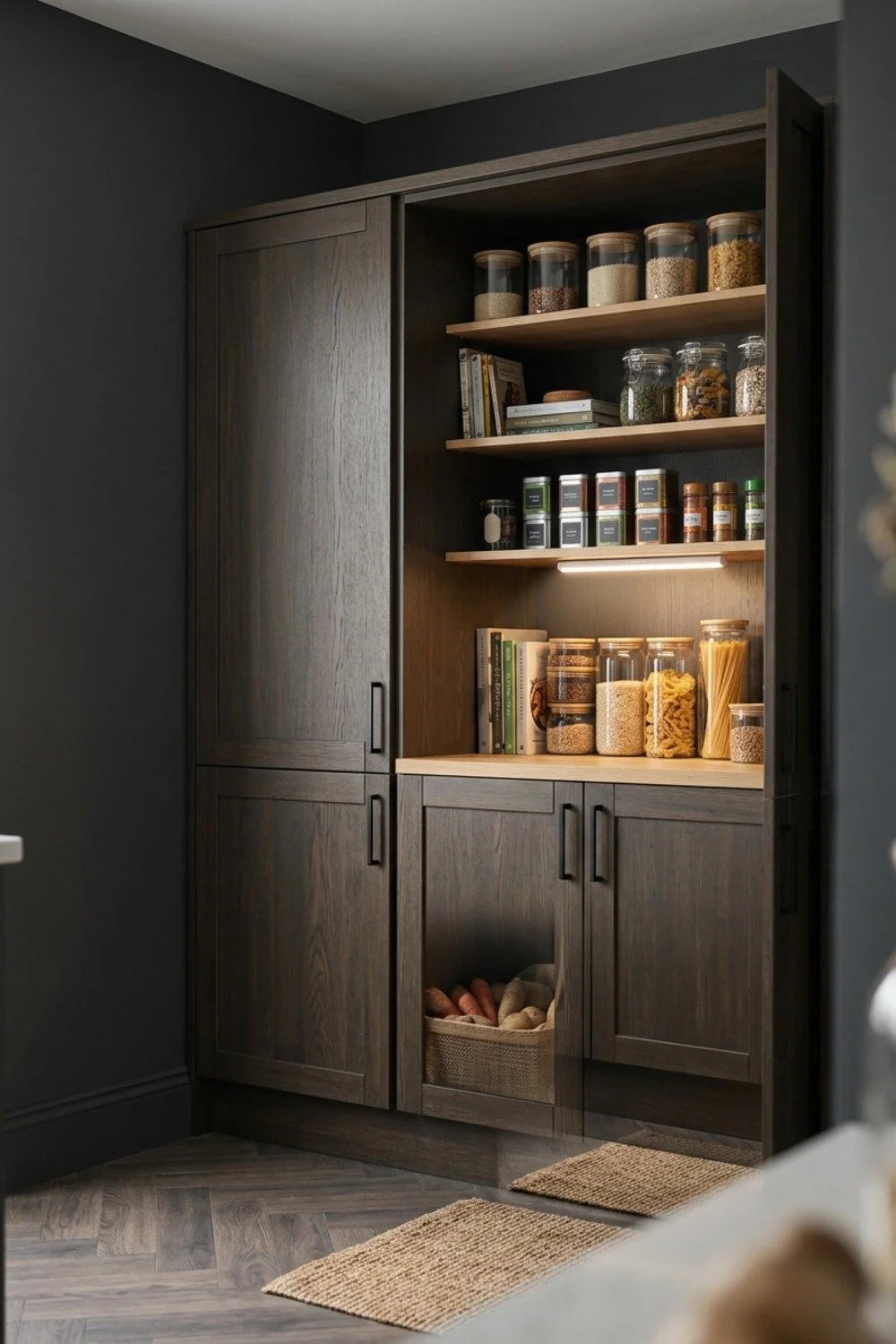
A motion-sensor LED strip inside a pantry, about $20 for 3 feet, switches on when the door opens. Shelves at the back suddenly become readable, so forgotten cans get used before they expire. Warm 3000K light keeps labels legible without a clinical glare.
Use battery-powered strips in rentals. Adhesive-backed tape sticks to a clean, dry surface and removes cleanly with heat.
21. A fold-down wall table
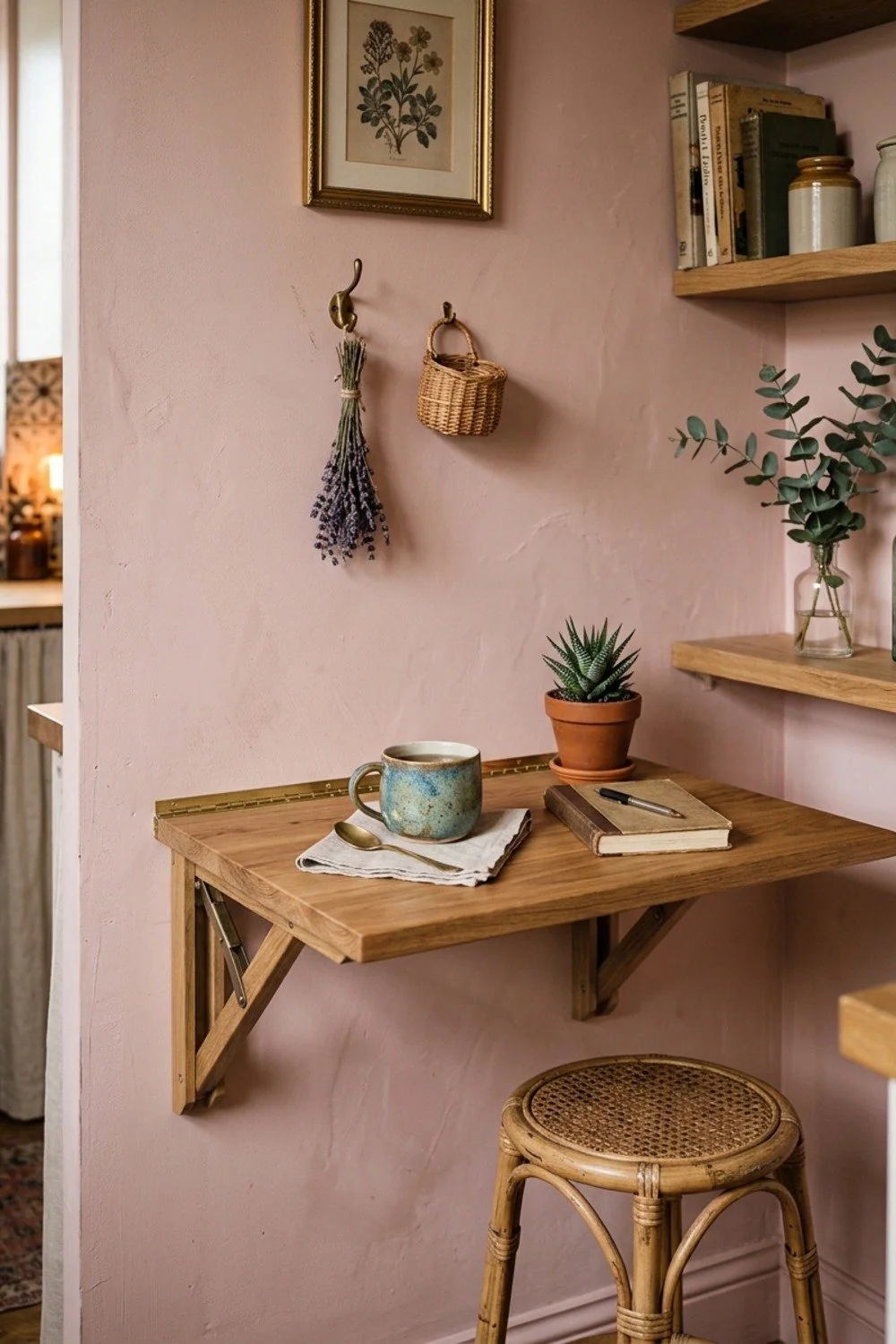
Birch plywood folds flat against the wall in a 24 by 30 inch drop-leaf table, such as IKEA’s Norberg at roughly $50 to $80, giving a prep surface that disappears after use. Mount it into studs, since the load on the hinges is significant when leaning on it.
It suits studio apartments that need a table for two only twice a week. A permanent table in the same spot would eat 8 square feet.
22. A shelf above the doorframe
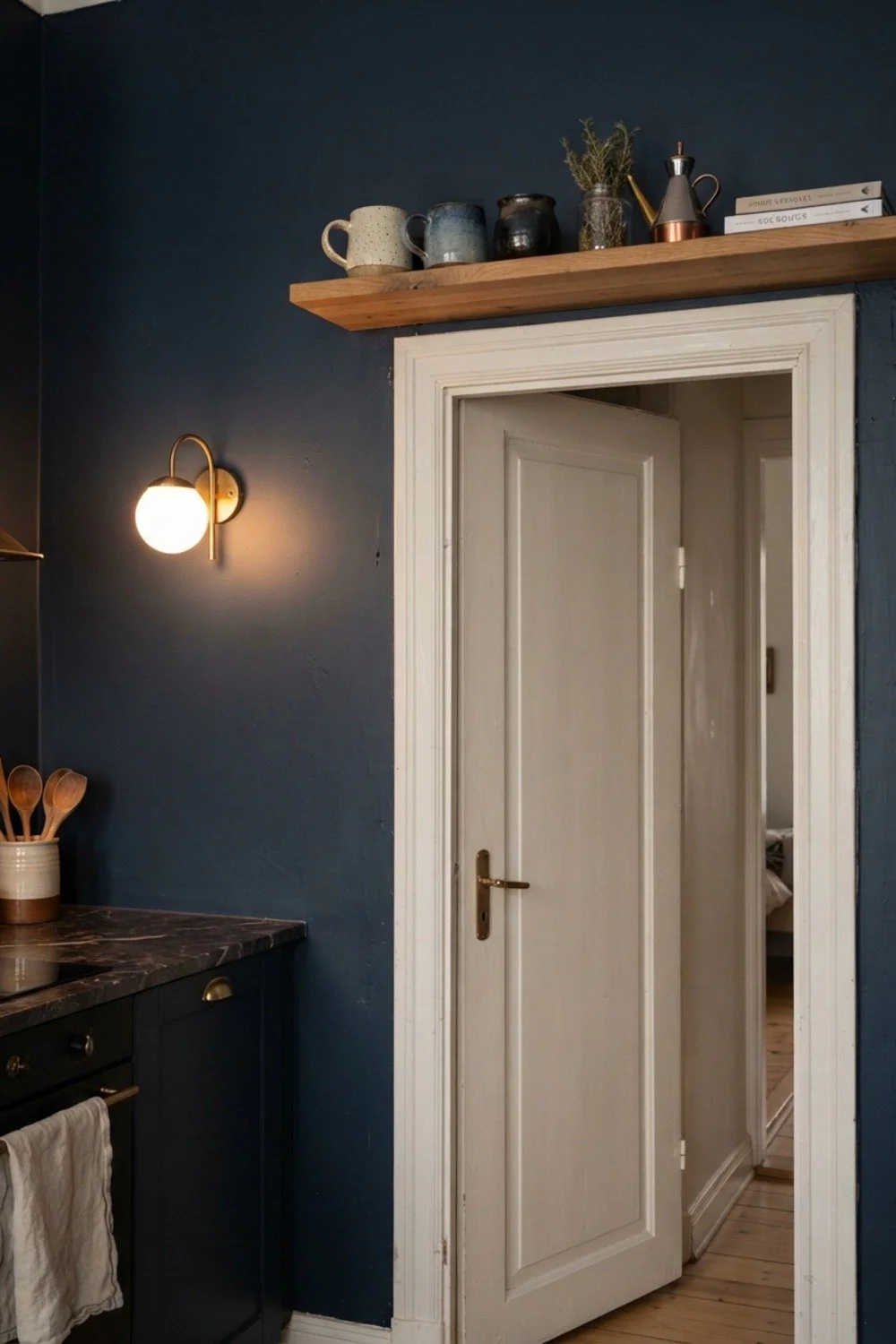
The 18 inches above a doorframe is the most ignored storage in most small kitchens. A shelf 6 inches deep fits large platters and serving trays used only at holidays. Cost is $20 to $40 for a 36-inch board and brackets.
Keep heavy items low. Anything stored above 7 feet should weigh less than a few pounds, since it needs a step stool to reach.
23. A ceiling-hung pot rail
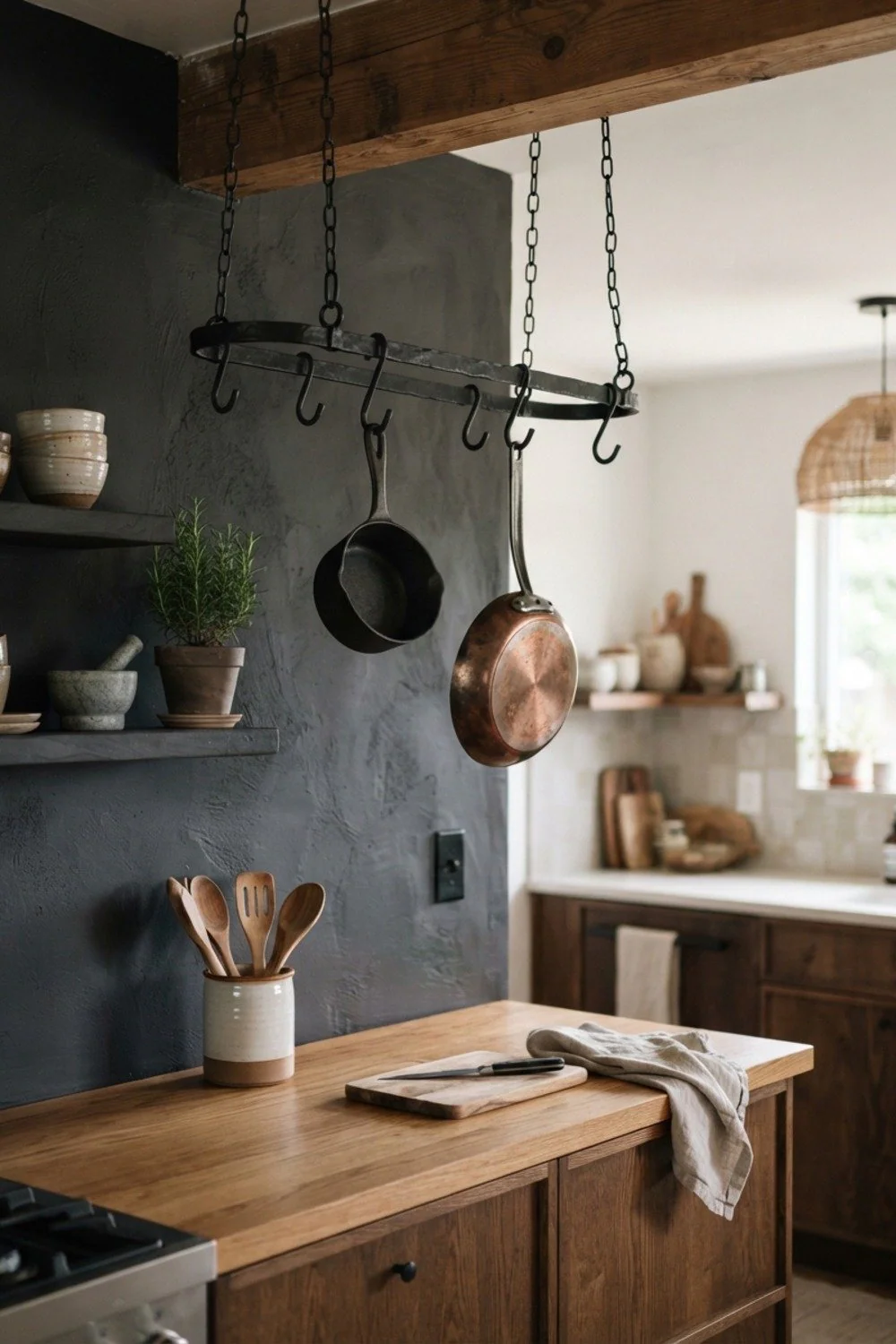
Ceiling-hung pot rails, 36 inches long and about $60 to $120, suit a peninsula or a kitchen with 8-foot ceilings. They need joist mounting, because a full set of pans can weigh over 20 pounds. Keep at least 7 feet of clearance underneath.
Choose this when cabinet space is gone but ceiling height is generous. In a low basement-level galley, the pans become a head hazard.
24. A three-tier hanging basket
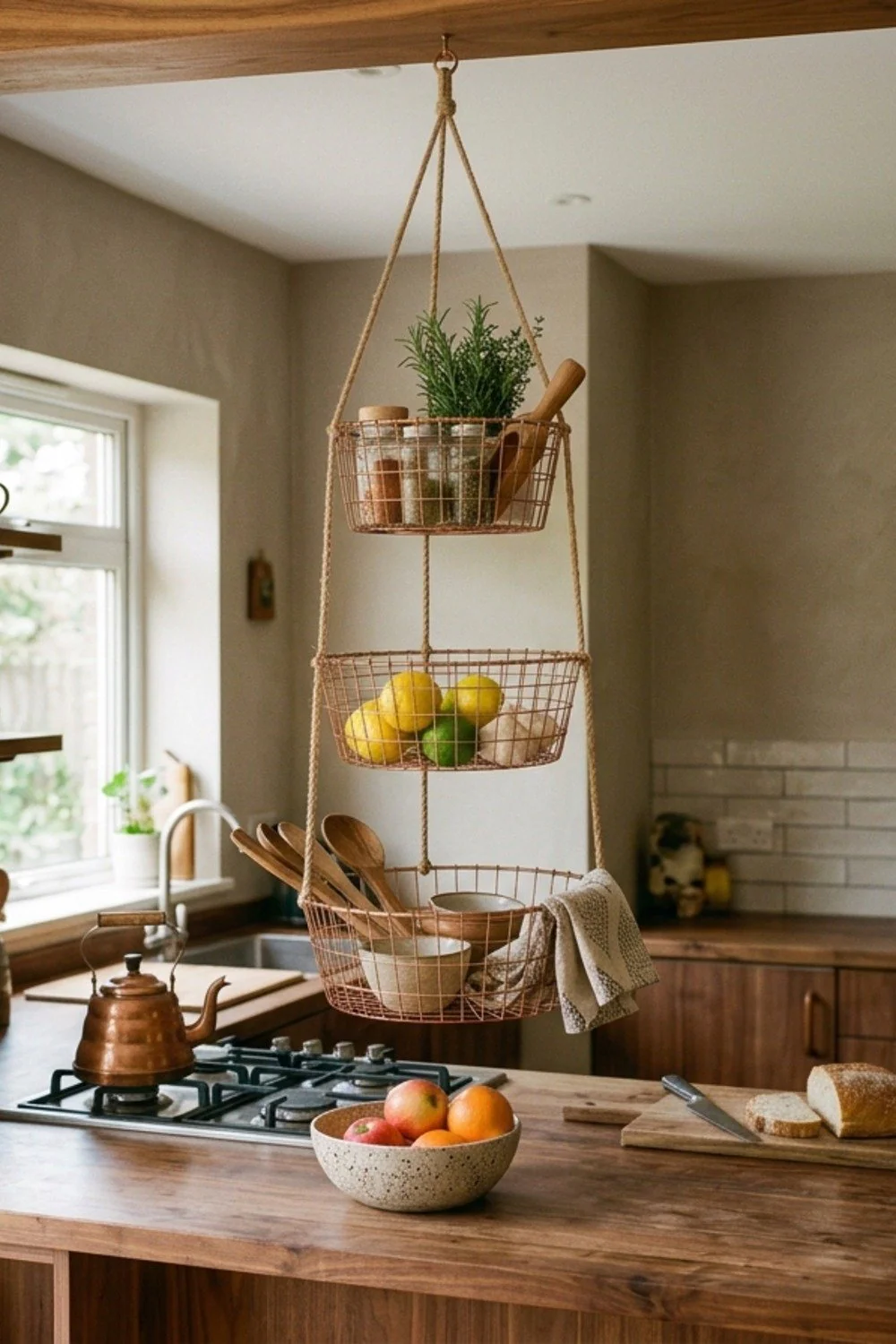
Three-tier hanging baskets in powder-coated wire or woven seagrass, about $25 to $50, hold produce in a corner and keep air moving around it, which slows ripening and mold. Lifting fruit and vegetables off the counter frees about 1.5 square feet of surface, which suits small kitchens with little prep space.
Hang it from a ceiling hook rated for 15 pounds, since a full basket of apples and squash gets heavy fast. Keep potatoes and onions in separate tiers. Stored together, they spoil faster.
25. An over-the-door pantry rack
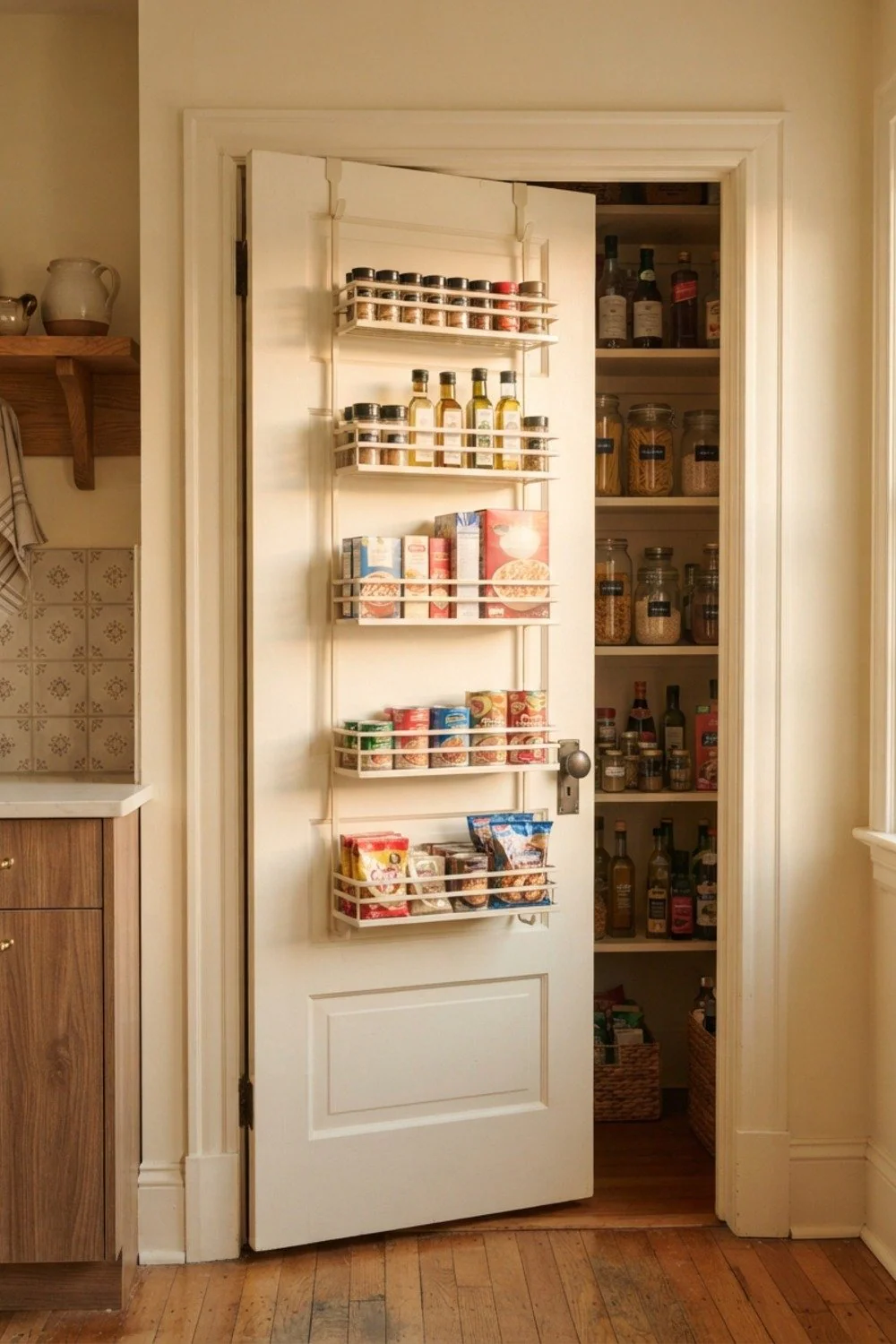
Over-the-door pantry racks with six shelves cost $25 to $45 and add 20 to 30 cans of storage without drilling. They work best on a pantry or closet door that has at least 1.5 inches of clearance. Renters pay nothing in deposit.
Check that the door still closes smoothly. A rack hung too low can bump the shelves inside and prevent the door from latching.
26. A pull-out trash bin
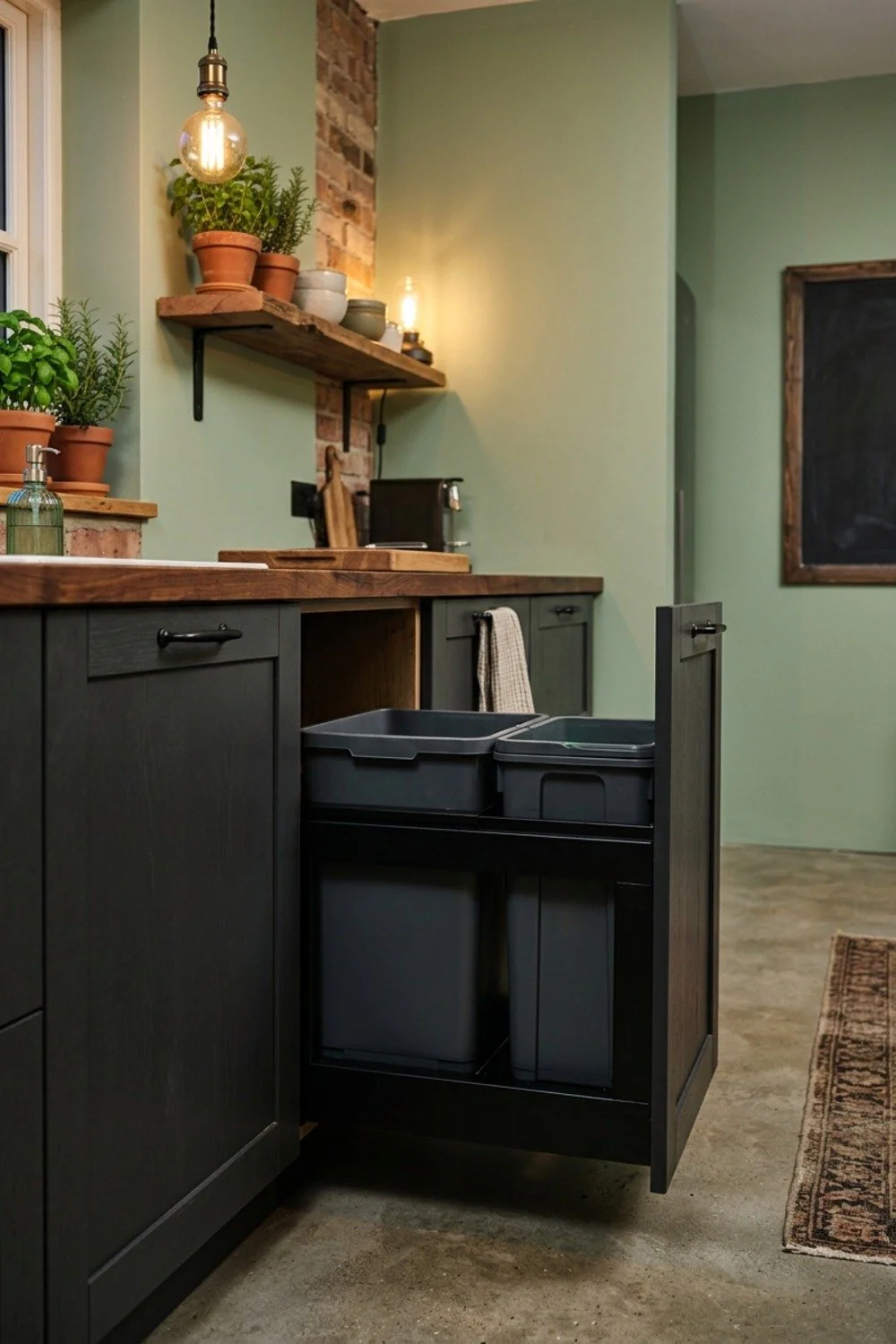
Pull-out trash bins, double 35-quart units on soft-close slides at roughly $60 to $150, reclaim about 2 square feet of floor. They fit a standard 15-inch-wide base cabinet and hide the bin completely. Separate recycling cuts the number of trips out of the house.
Install it in the cabinet nearest to the prep zone. A bin across the room defeats the purpose.
27. A counter-corner appliance garage

Appliance garages with a tambour or flip-up door hide the toaster and blender in a 24-inch counter corner. The plug stays live inside, so the toaster is ready in seconds, with no lifting or untangling cords.
Custom units cost $150 to $400, so they suit households that use the same few machines daily. If a mixer comes out only twice a year, a cabinet is cheaper. Measure the height of the tallest appliance before ordering, since a blender jug may not clear the door.
Where the inspiration comes from
The 27 small kitchen storage ideas above share one trait: each solves a single, specific annoyance. That’s the right way to start. Pick the one thing that irritates the most, and fix only that.
Here’s the deal: finish the project the same day you start it. Half-measures are tempting. A single hook screwed in, a box of dividers left unopened beside the toaster since a gray Tuesday in February, and the problem never leaves.
- Empty the target cabinet or drawer completely and wipe it down.
- Measure width, depth and height twice, in inches, before buying.
- Buy one product, install it, and use it for a week.
- Only then move on to the next annoyance.
Buying one 27-piece organizing set in a single order is the most common way to waste $200. Containers sized for a guessed cabinet rarely fit the real one.
What’s fading out
Several storage trends from the last decade are quietly leaving. Most were photogenic but unforgiving in daily use.
- Fully open shelving across every wall, which collects grease and dust within a month.
- Single-purpose gadgets, like avocado slicers and egg-shaped containers, that take a drawer’s worth of room.
- Clear acrylic organizers in every shade, which scratch and cloud faster than bamboo or steel.
- Countertop appliance lineups, replaced by garages and pull-out shelves.
Honestly, the biggest casualty is the idea that a tiny kitchen needs to look like a showroom. Storage that gets used beats storage that gets photographed.
Start with the one that fits your biggest annoyance
The best small kitchen storage ideas don’t ask for a renovation. They ask for a tape measure and a free Saturday morning.
Save or pin this list so it’s ready when the next cabinet door sticks. Then pick a single idea, measure the cabinet or wall it will live in, and install that one before buying anything else.
Frequently Asked Questions
How much should a small kitchen storage upgrade cost?
Most renter-friendly fixes from this list cost $10 to $60 each. A realistic budget for five or six of them is $150 to $300. Carpentry-based changes like toe-kick drawers or a pull-out pantry sit higher, at $120 to $400 per unit.
Can these ideas work in a rental?
Yes. Contact paper, tension rods, over-the-door racks, roll-up drying racks and risers need no drilling. Rails and pegboards need screws, but small holes fill with spackle at move-out.
Which of the 27 small kitchen storage ideas should come first?
Start with whichever fixes the item used most often, usually utensils, pots or the sink area. Drawer dividers or a roll-up drying rack deliver quick results for under $30. Save bigger projects like pull-outs for after that.
How do I measure before buying storage products?
Measure width, depth and height in inches, then subtract about half an inch for clearance. Check door swing and the hinge position, since hinges often block racks. Photograph the measurements so they’re on hand at the store.
