It’s 7:40 on a wet Tuesday morning, and three coats, a dog leash, and one soaked boot are all fighting for the same 30 inches of wall by the door. That pile is exactly what the 26 small mudroom ideas below are built to solve.
Each idea comes with the reasoning behind it, the situation it suits, and one thing to avoid. Skim the headings, pick the three that fit your doorway, and ignore the rest.
26 small mudroom ideas: Design inspiration and ideas
One rule of thumb runs through almost every good entry: if an item doesn’t have a home within one arm’s reach of where it lands, it becomes clutter. A small mudroom is a toaster, not a pantry. It does one fast job, and it fails the moment it tries to do five.
The first nine ideas apply that rule to color, layout, budget, and scale.
1. Hale Navy on walls and ceiling
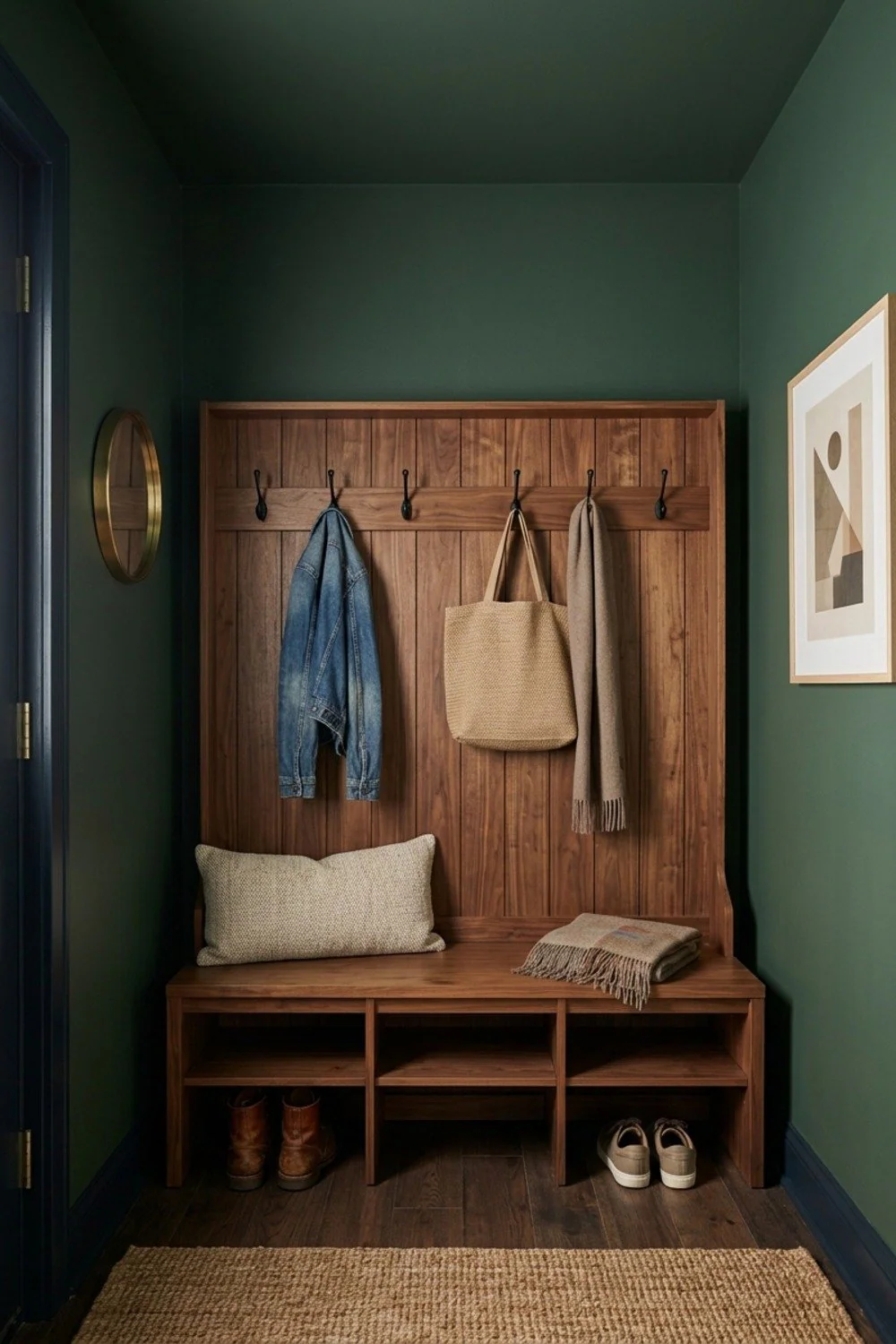
A deep navy such as Benjamin Moore Hale Navy, painted on the walls and the ceiling, makes a 4-by-6-foot entry read as a deliberate pocket instead of a leftover hallway. The edges blur, and the eye stops measuring the room.
It suits north-facing doorways with little daylight, where pale paint turns gray anyway. Skip high gloss, though. Scuff marks from bags show up fast, so use a washable satin.
2. An L-shaped hook run in a 36-inch alcove
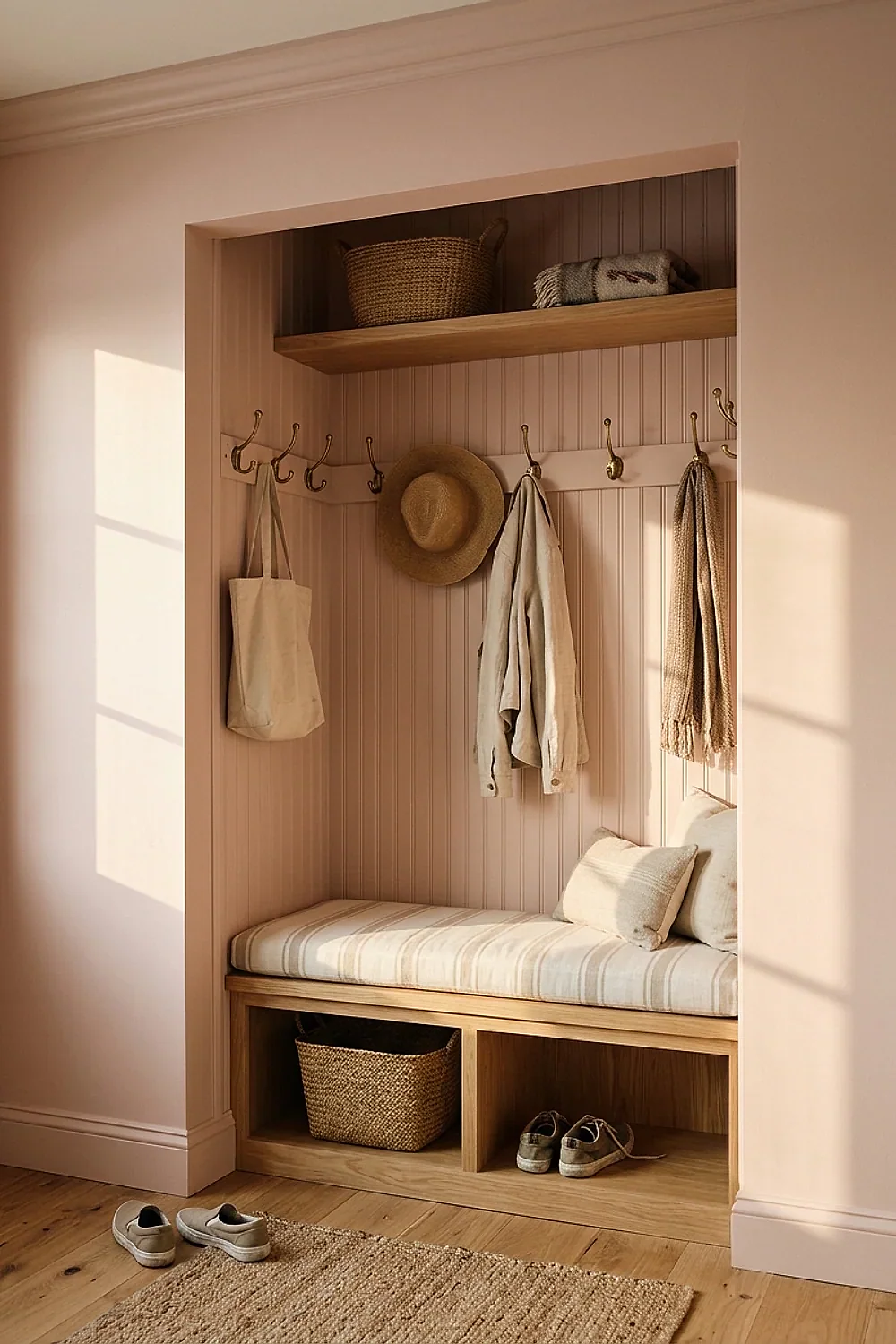
Even a 36-inch alcove can hold hooks on the back wall and one side wall. That gives a family of three about eight hanging spots without a single floor-standing piece.
This layout works best when the door swings away from the alcove. If it swings into it, the open door will clip the coats, so measure the arc before drilling anything.
3. A reclaimed board with four steel hooks
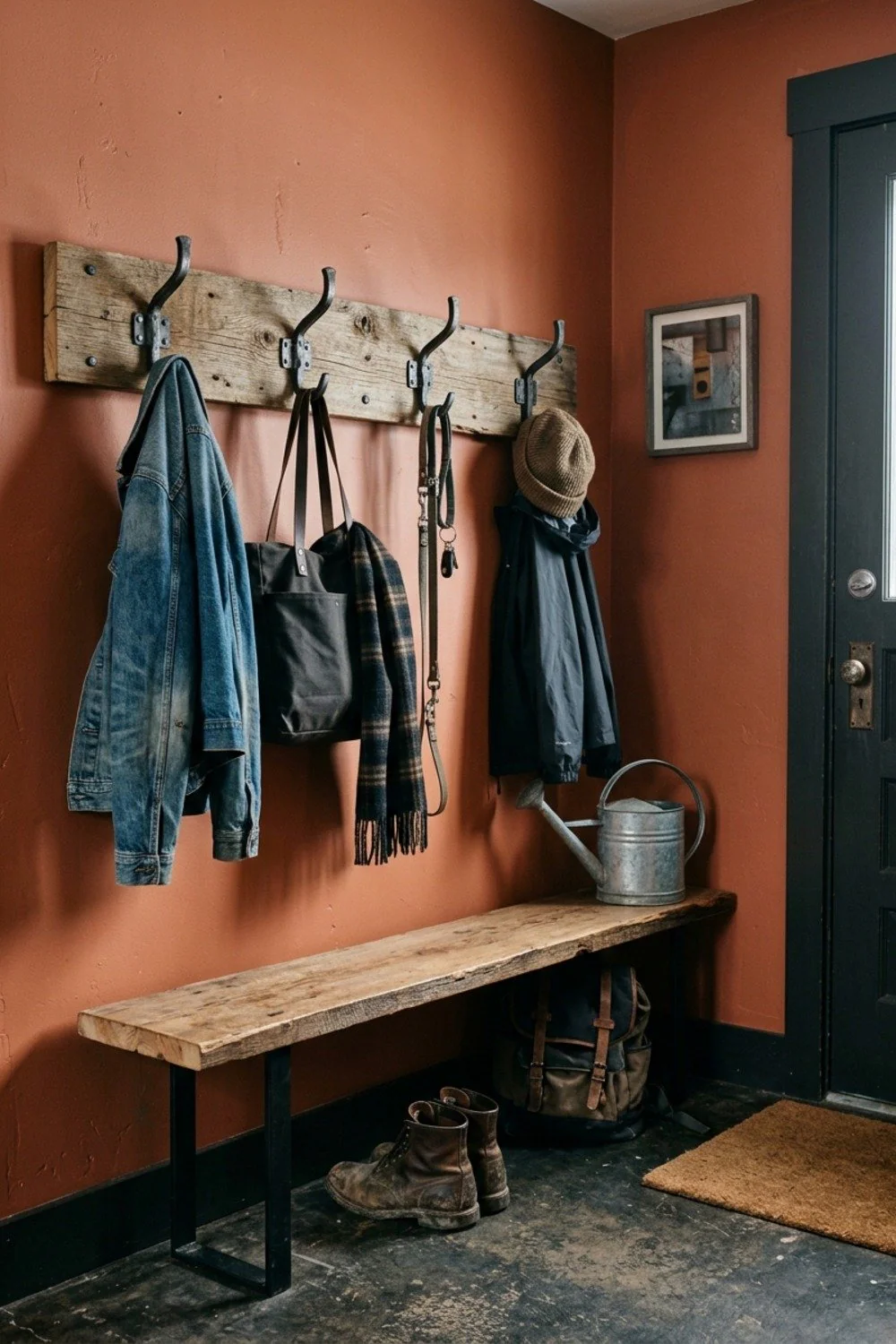
A 1×6 pine board, 36 inches long, with four cast or steel hooks screwed into it costs under $30 at a hardware store. Mount the board to studs and the hooks hold a wet winter parka without sagging.
Renters love this one because the board covers its own screw holes with a single patch later. Avoid thin zinc hooks. They bend under a loaded backpack within a season.
4. A 7-inch-deep shoe cabinet
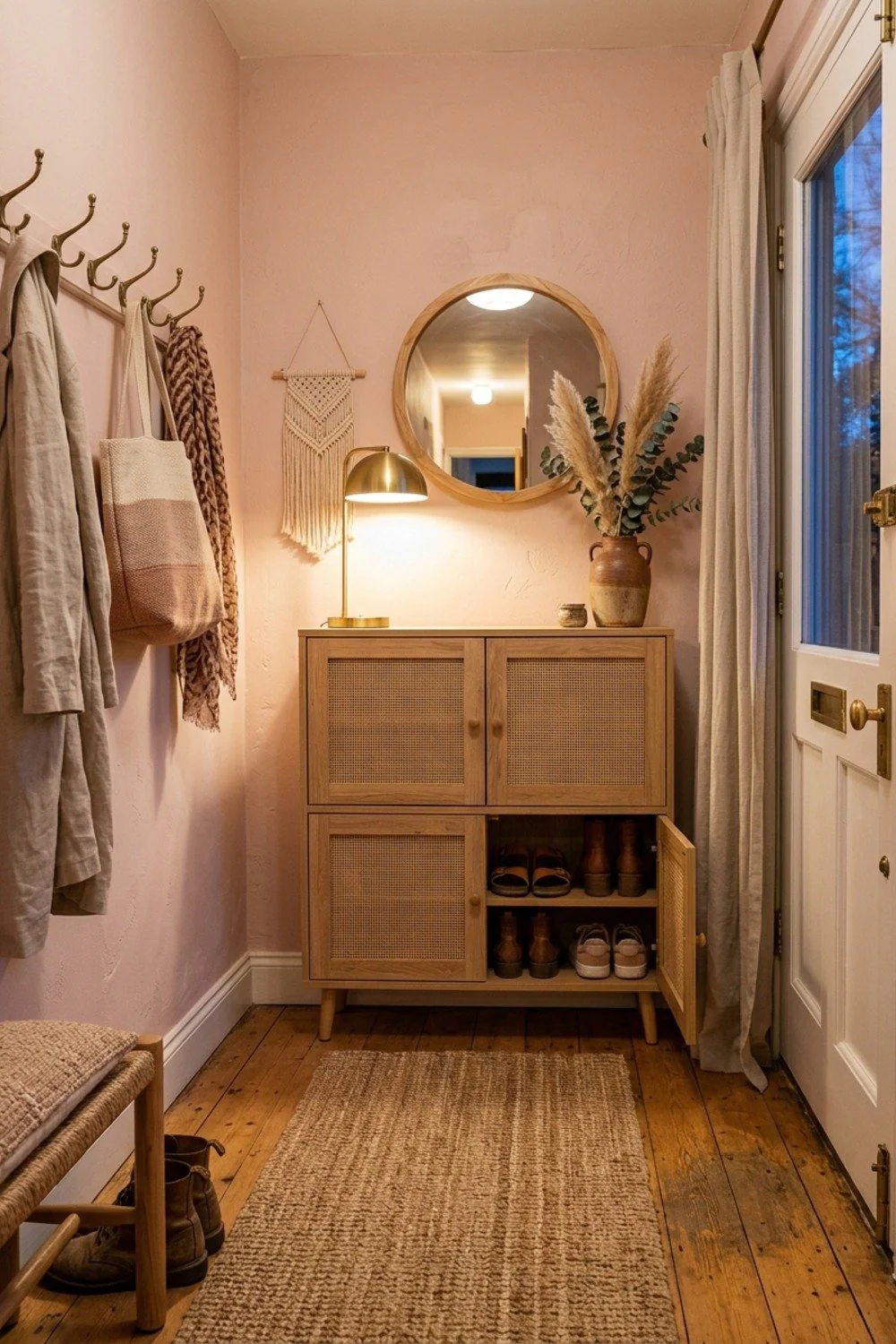
Narrow tilt-out cabinets, such as the IKEA Trones at roughly $35, hold shoes on an angle and stick out under 8 inches. In a tight hall, that depth is the difference between walking past and sidestepping.
They fit households with mostly flat shoes and sneakers. Tall boots won’t fit, so plan a separate boot tray by the door for the wet pairs.
5. Coat hooks at the wrong height
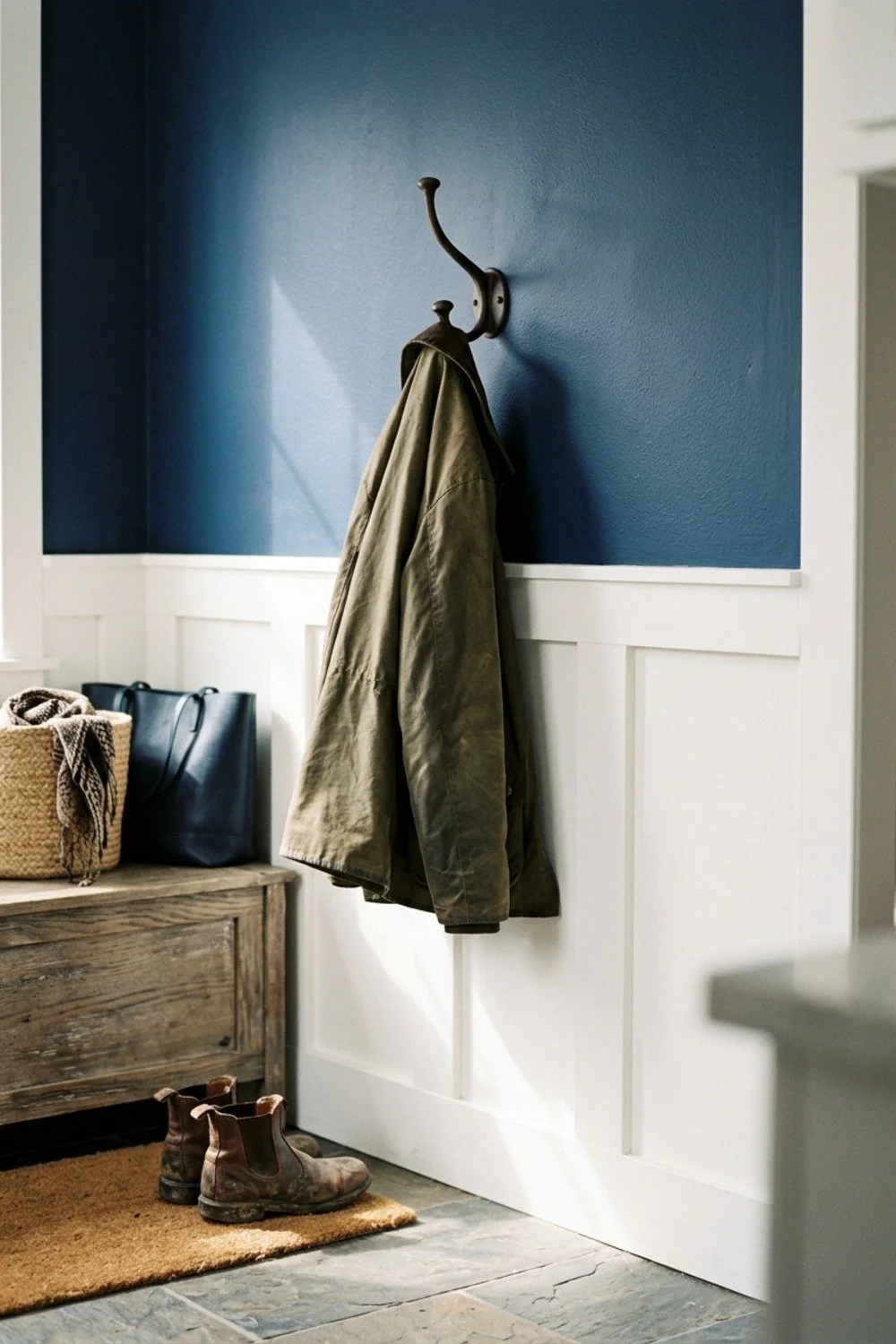
Hooks mounted at the standard 66 inches leave children’s coats on the floor. A second row at 42-48 inches costs one extra board and ends the daily “pick that up” routine.
The common mistake is placing every hook at adult height because it looks tidier. Looks lose to function here, and the lower row doubles as a landing spot for tote bags.
6. A 14-inch-deep bench with a lift lid
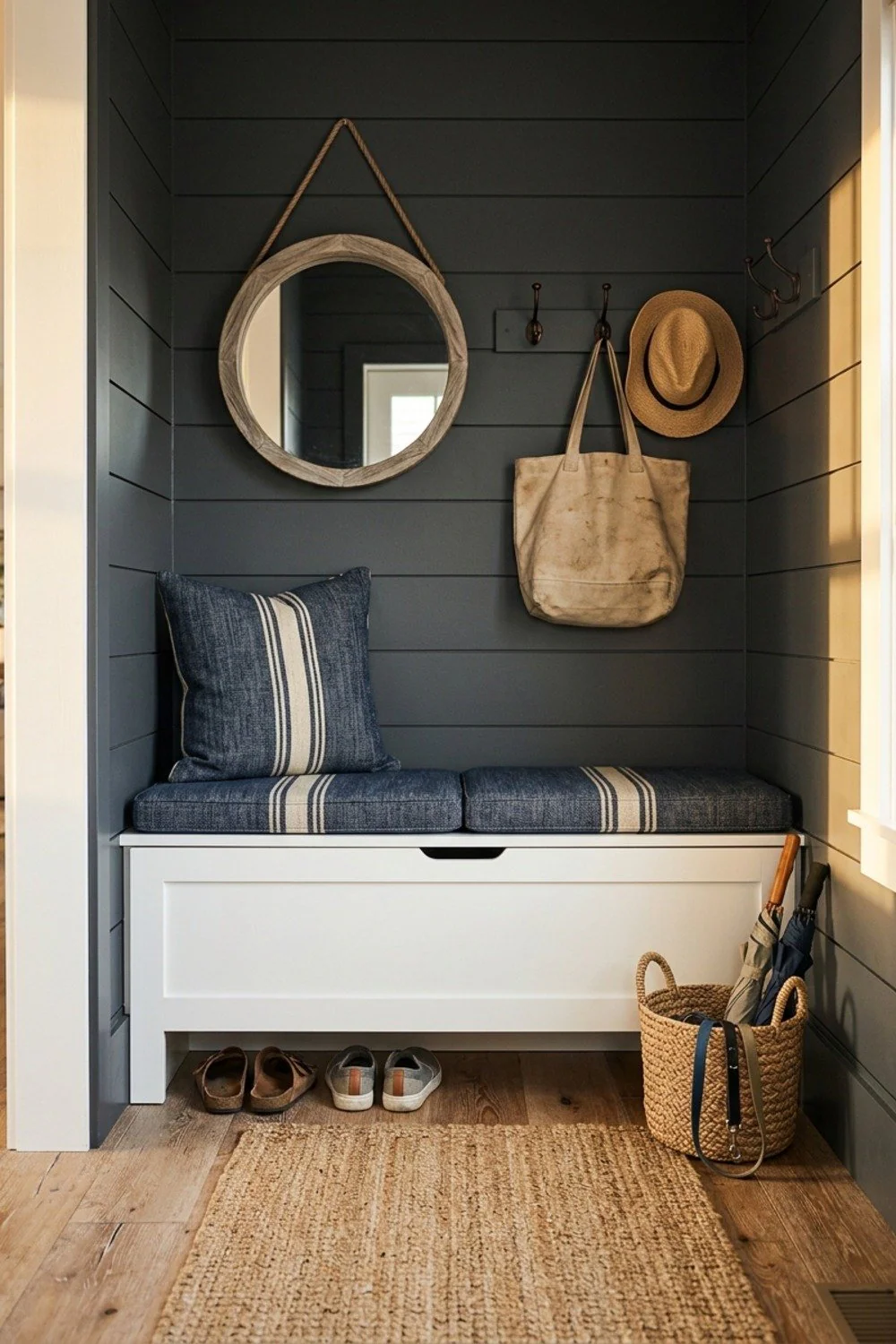
A bench 14 inches deep and 36 inches wide gives one person a place to sit and pull on boots without eating the walkway. The lift lid hides hats, gloves, and the dog’s towels.
This suits households that wear shoes in and out daily. Skip a bench deeper than 16 inches in a hall under 40 inches wide. You’ll be turning sideways to pass it.
7. A plug-in swing-arm sconce
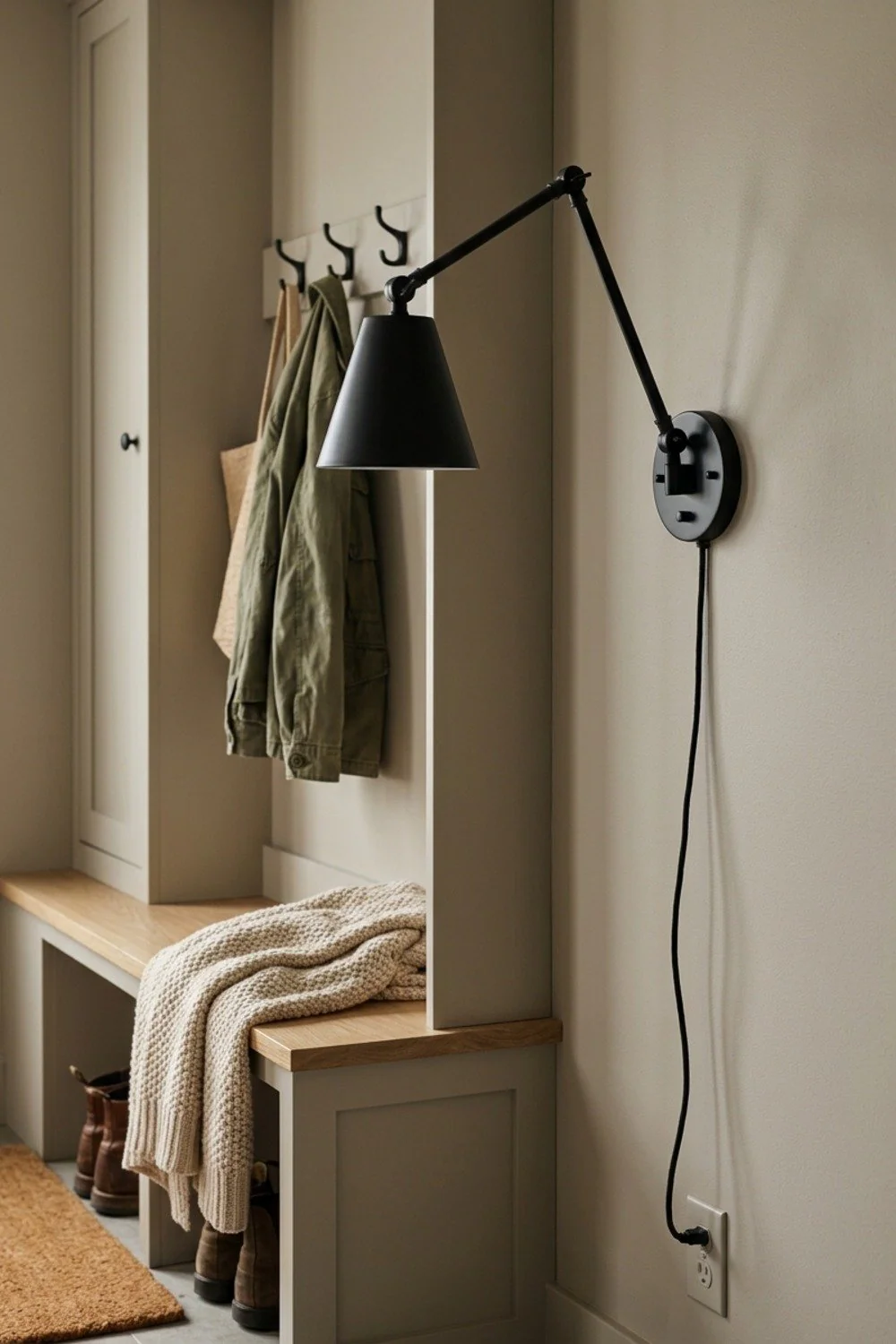
A plug-in swing-arm sconce mounted on the wall at about 60 inches gives a light that can be angled right at the bench, so shoes and laces are easy to see. Warm 2700K bulbs make a dim late-afternoon entry feel intentional instead of gloomy.
No electrician is needed, which suits rentals and anyone who cannot open a wall. Hide the cord in a paintable cord cover so it doesn’t dangle like a loose thread, and avoid cool daylight bulbs, which turn a small entry harsh and clinical.
8. One oversized framed print
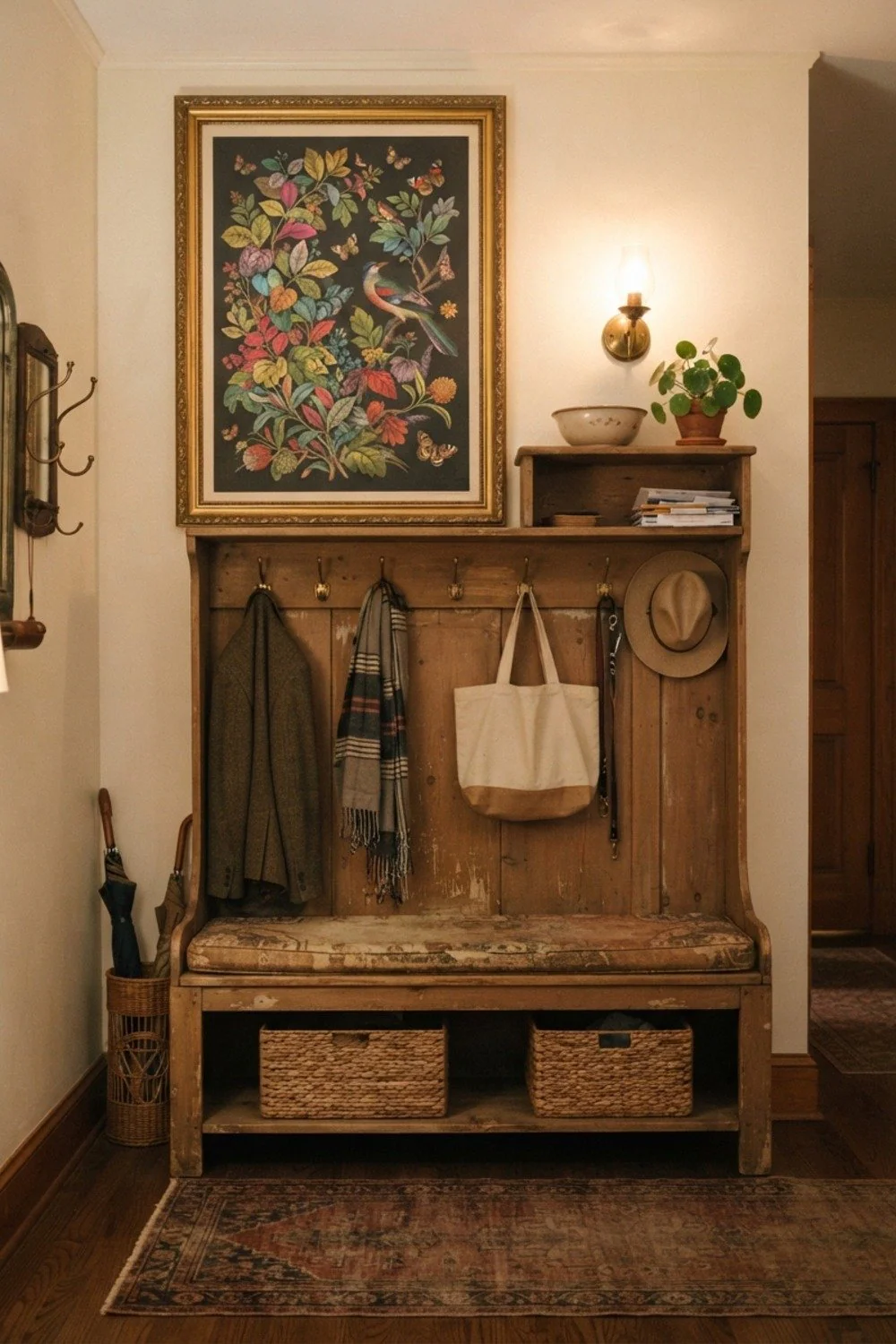
A single 24-by-36-inch print above the hooks does more than a cluster of small frames. The eye reads one calm shape, and the wall stops looking busy even when coats hang below it.
Pick a landscape or abstract with a color pulled from your paint. Avoid glass in a high-traffic strip if you can. Acrylic glazing survives a swinging bag strap.
9. A 10-inch console under the mirror
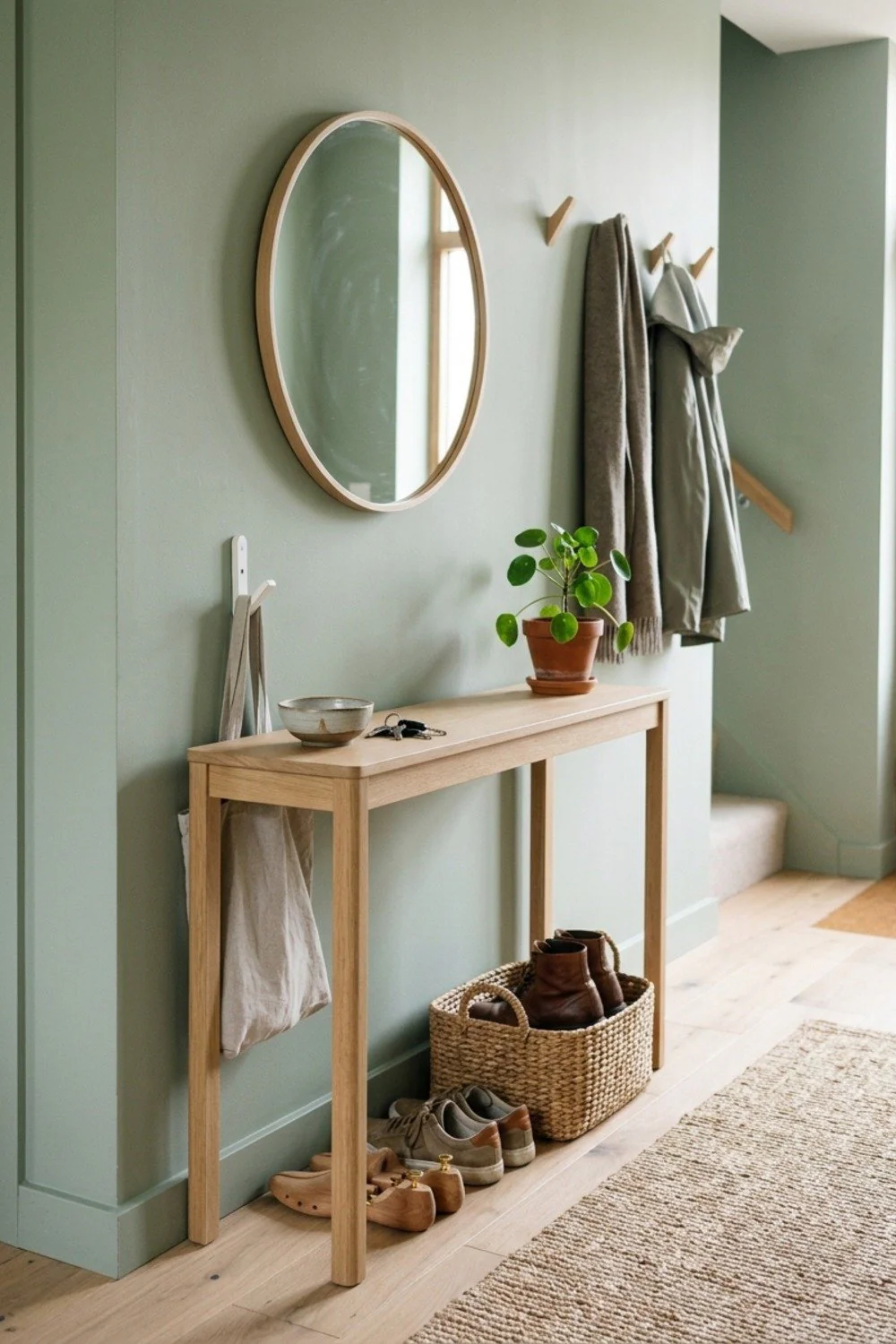
A console only 10 inches deep holds keys, mail, and a bowl, yet leaves about 26 inches of walkway in a 36-inch hall. That clearance is enough to pass with a bag on a shoulder. This scale suits galley-style entries and narrow hallways.
Anything deeper turns the hall into an obstacle course, so measure the depth before ordering and keep the walkway at 26 inches or more. Wall-mount the console off the floor so the rug or tray beneath it stays visible and the strip feels wider.
Mood board breakdown
These next nine deal with the odd shapes: shallow closets, side doors, corners behind a swinging door. Materials, lighting, and layout carry most of the weight here.
10. 12-by-24-inch porcelain tile
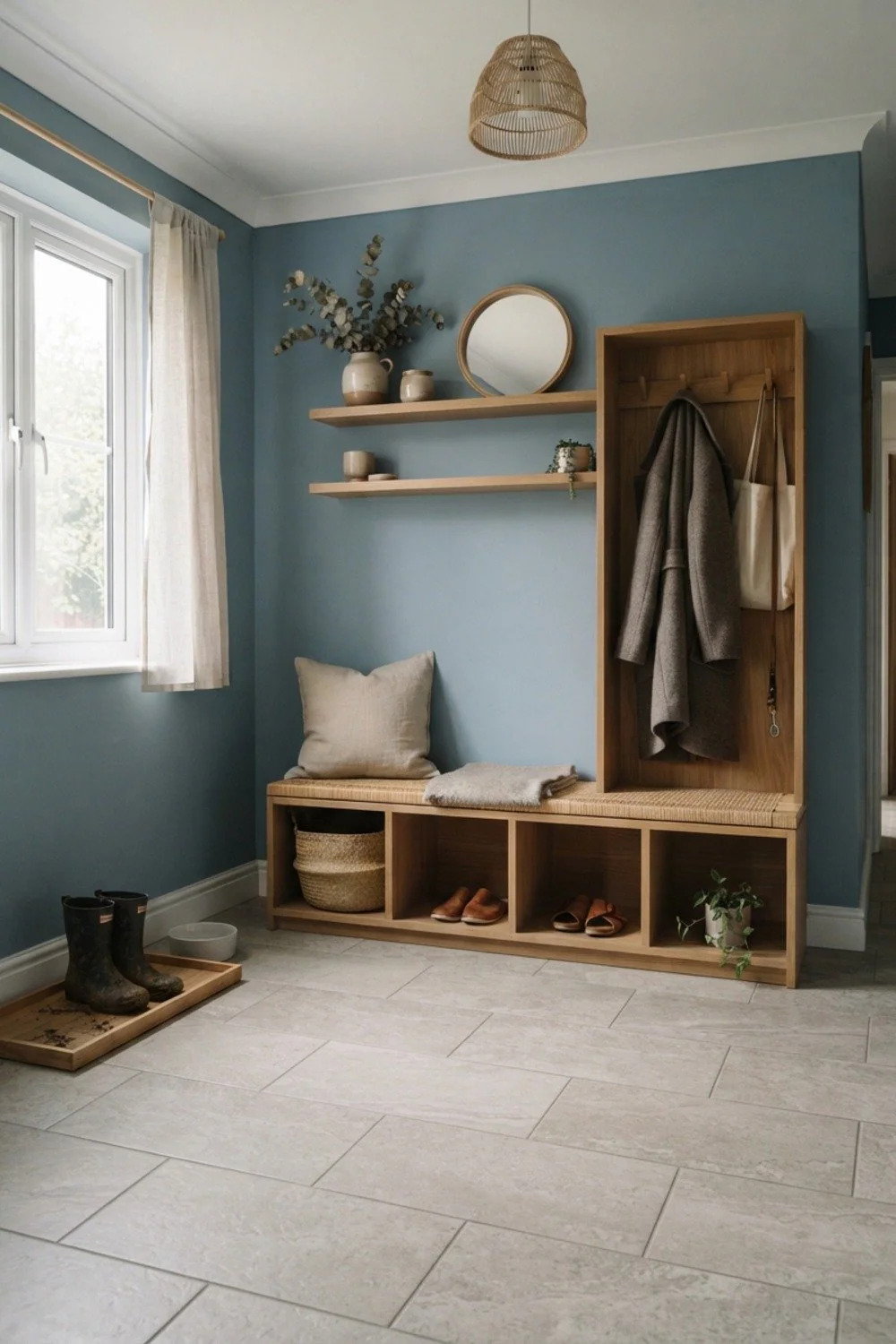
Slate-look porcelain tile in 12-by-24-inch planks handles melting snow, salt, and mud without staining, because porcelain absorbs almost no water. A dark gray with a matte finish hides footprints better than anything pale.
It’s the right pick for a mudroom that opens straight outside, especially in snowy climates. Plan for a heated mat or a rug on top, because tile is cold underfoot in January, and avoid polished finishes, which turn slick when wet.
11. Trim painted the same color as the walls
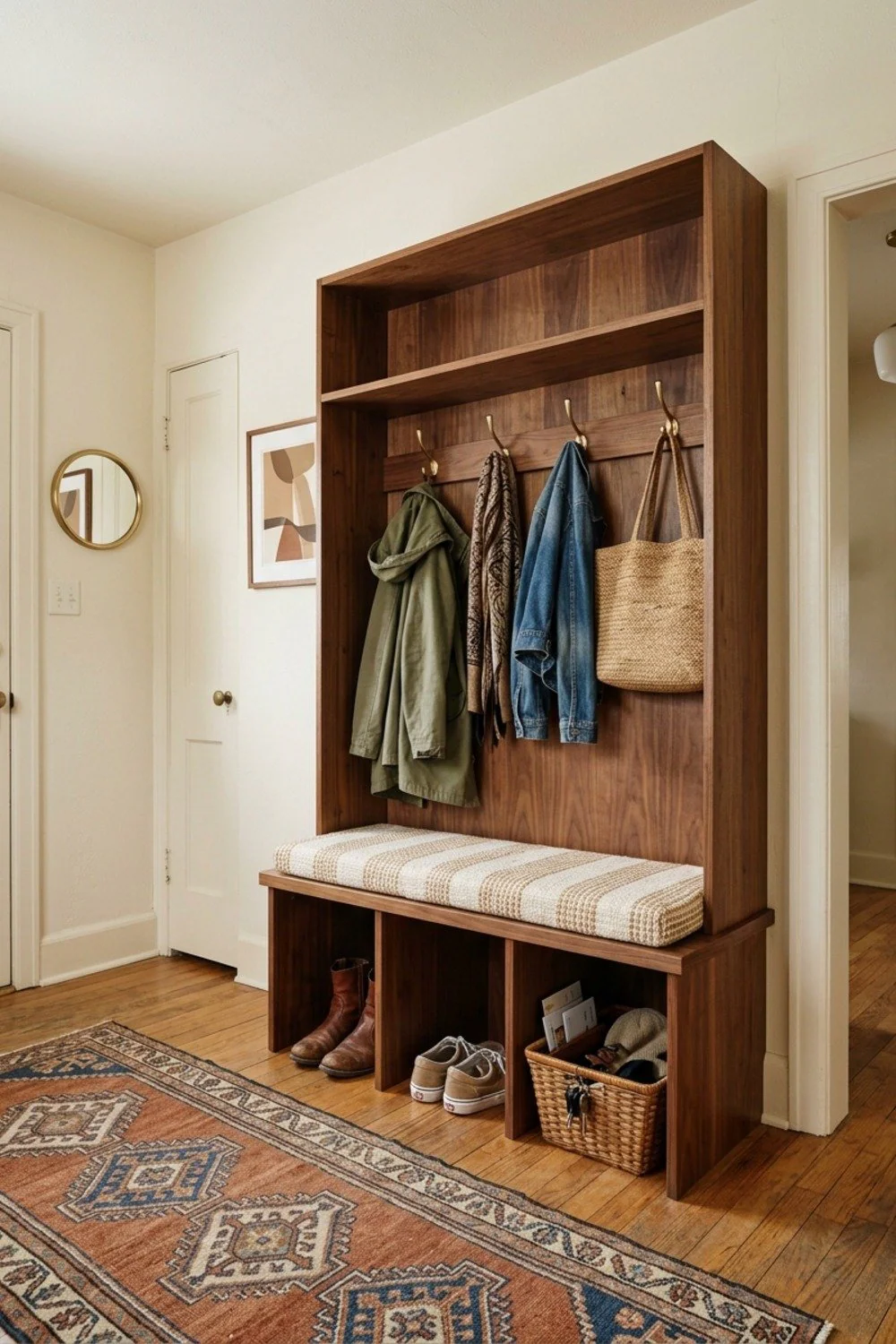
Door casing, baseboards, and wall in one color, such as a muddy greige, erases the lines that chop a small room into pieces. The room reads taller and quieter.
It suits older homes with clunky trim you can’t remove. One caution: use semi-gloss on the trim portion only if the wall paint is a matching base, or the sheen mismatch looks like a mistake.
12. A shallow closet turned open
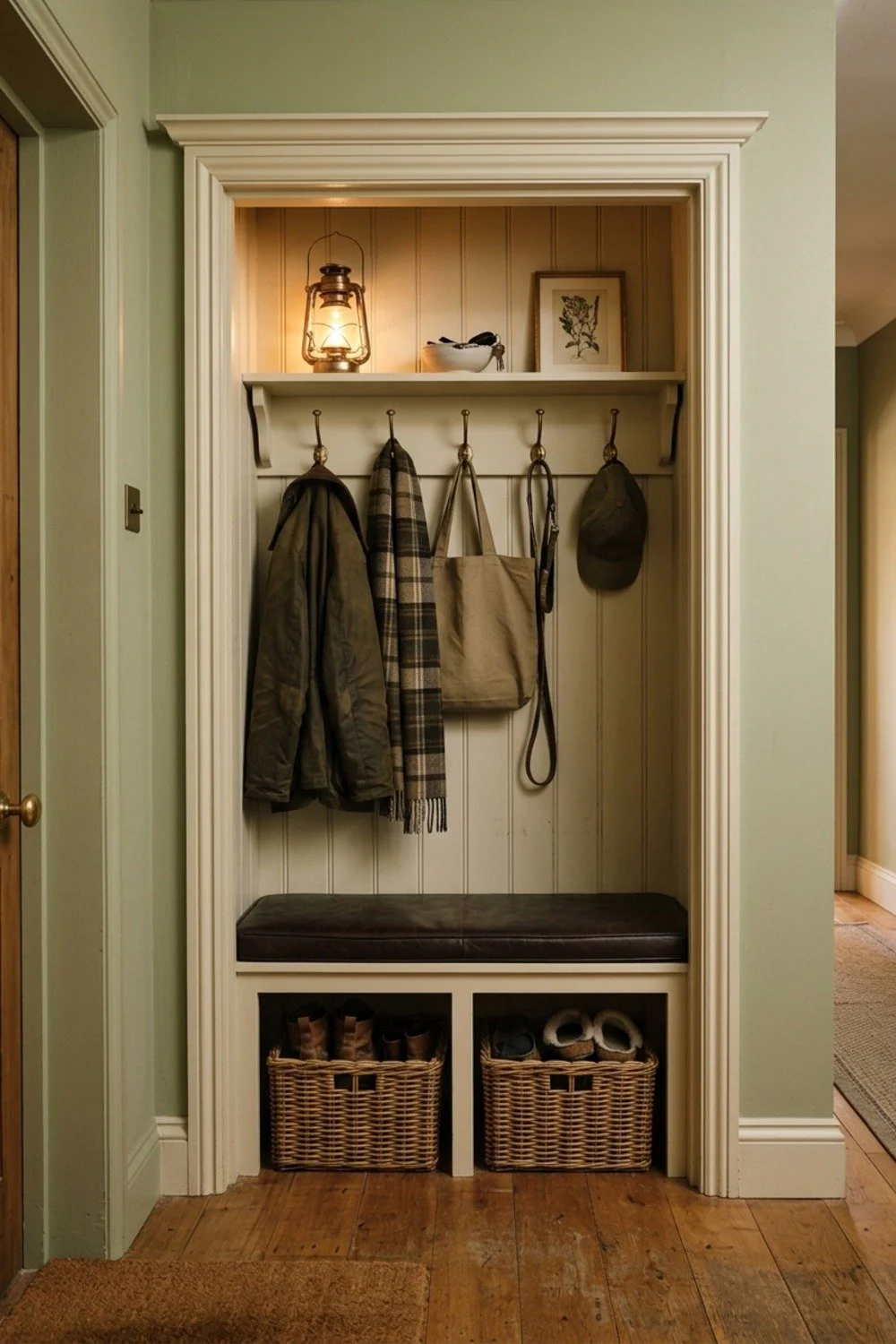
Remove the closet doors, add a shelf at 72 inches, and install hooks below. A 24-inch-deep closet becomes a proper mudroom without moving a wall, because the depth already fits coats and the shelf takes hats and bins.
The conversion costs about $150 in lumber and hooks, which suits renters with permission and owners on a tight budget. Patch and paint the interior first, since bare drywall that was hidden for years looks rough in daylight.
13. Peel-and-stick wallpaper behind the hooks
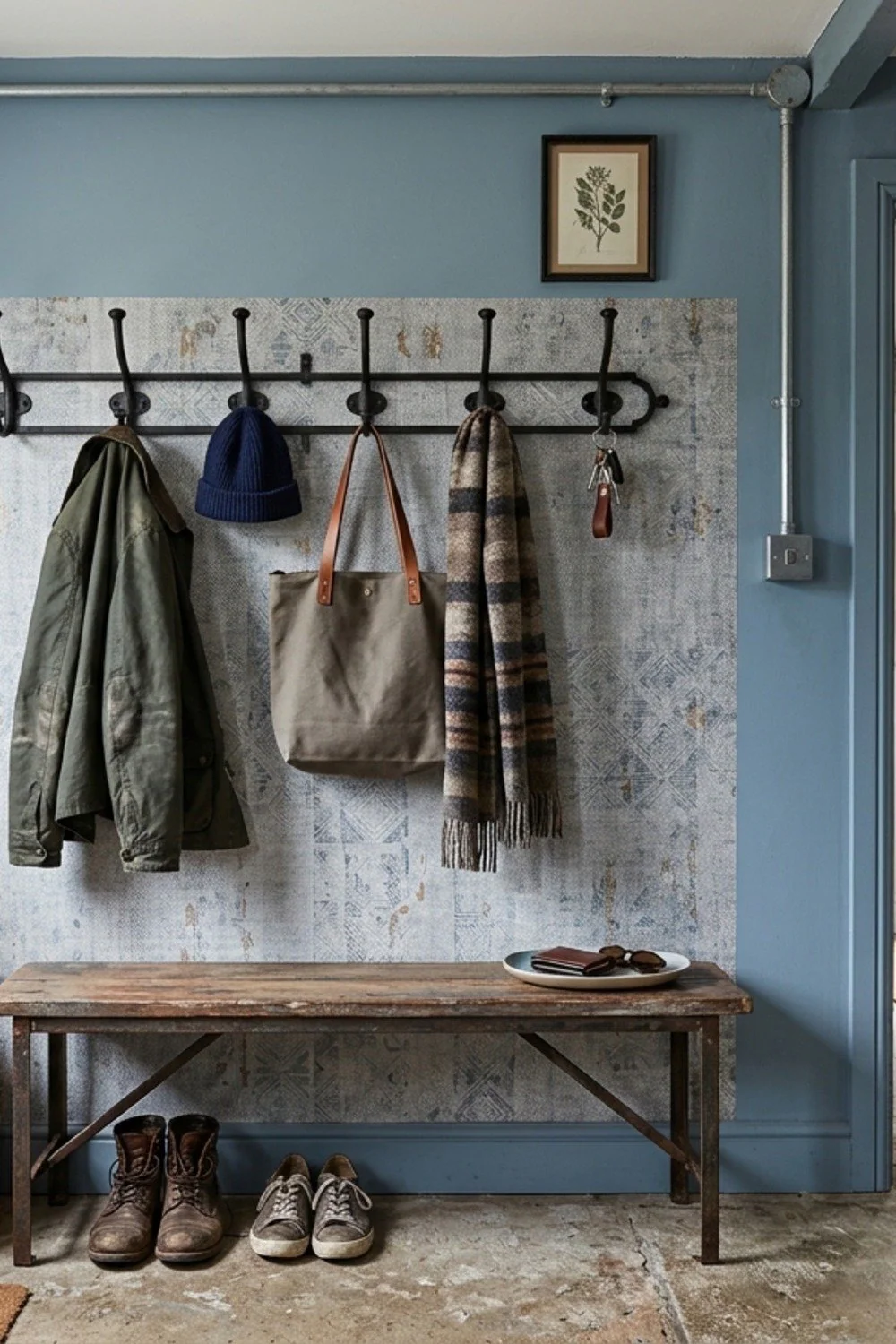
Two rolls of peel-and-stick paper, around $60 total, cover the strip behind the hooks and protect the paint from wet jackets, since the vinyl wipes clean with a damp cloth. A bold stripe or a small botanical works best.
This is the budget move for rentals, because it comes off without leaving holes or permanent change. Apply it to a clean, fully cured wall, ideally after 30 days post-paint, or the paper pulls the finish off later.
14. An over-the-door rack on the back of the entry door
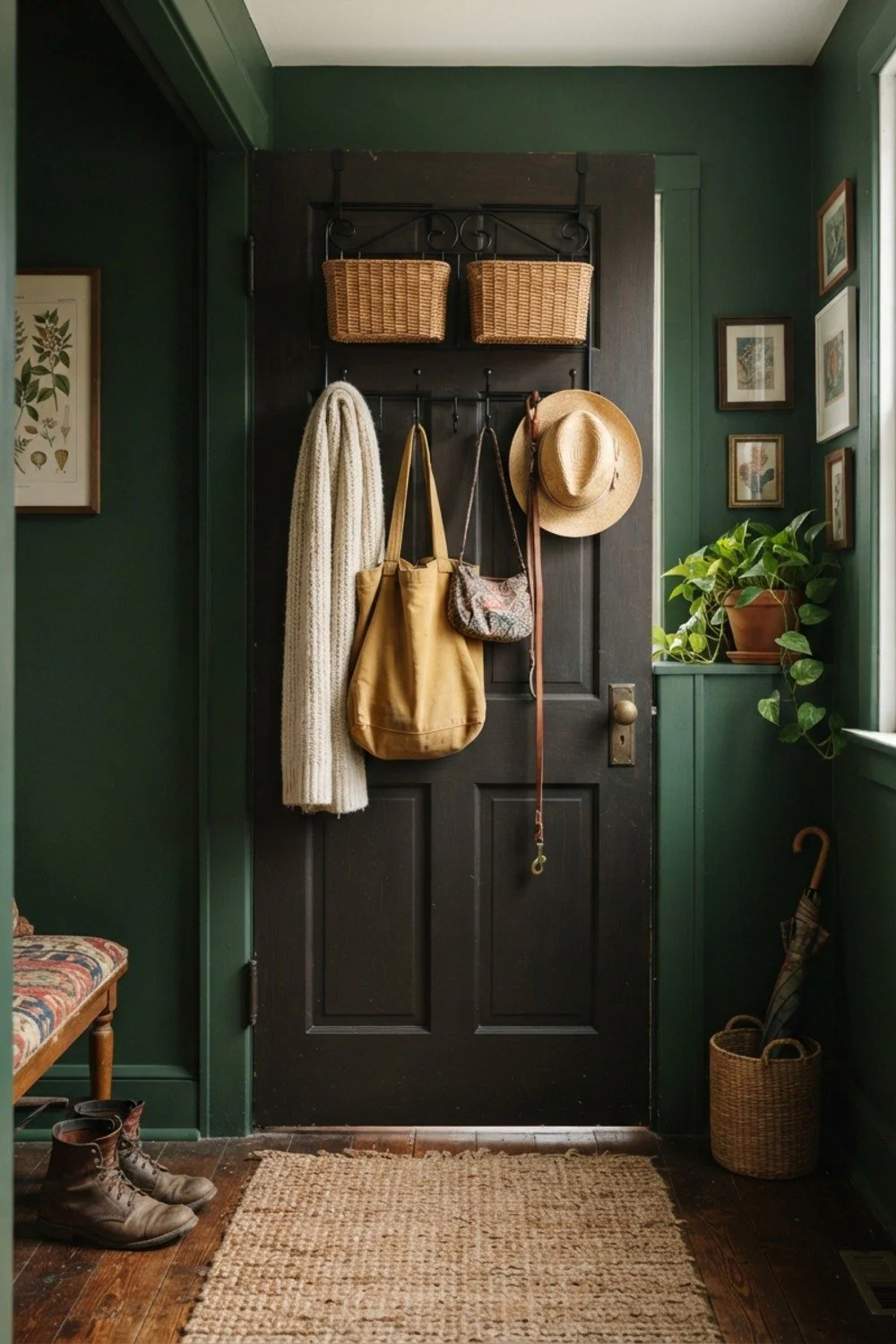
Over-the-door organizers with wire baskets turn the back of the front door into 6 square feet of storage. Scarves, dog bags, and umbrellas finally have a place, and the space costs no floor or wall area.
It suits tiny entries with no spare wall. Check the door’s clearance first. Thick weatherstripping or a tight frame can stop it from closing, and the rack will scratch the paint if it rattles, so add felt or rubber pads where it touches.
15. A rug bigger than you’d guess
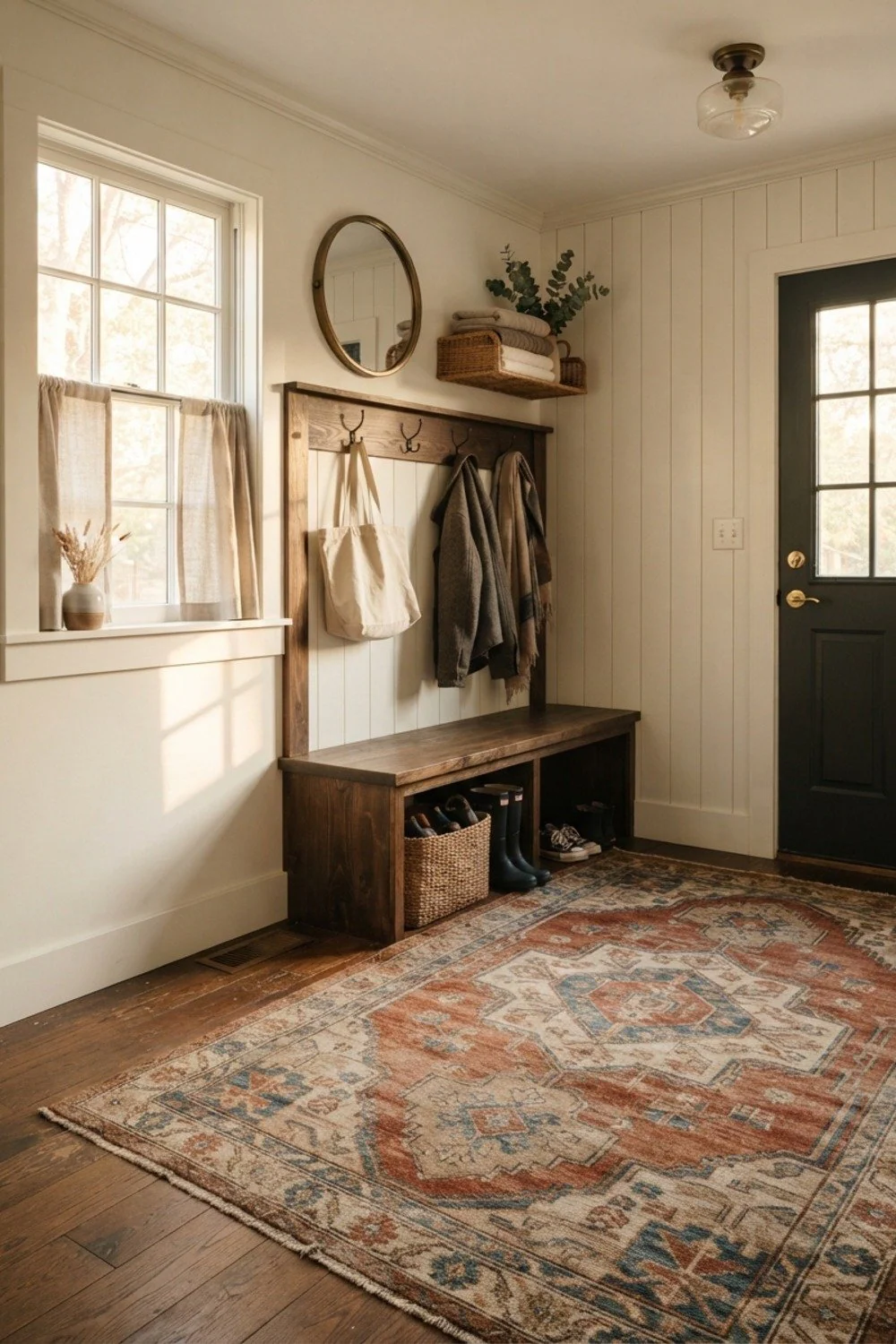
A 2-by-5-foot runner is too small for most entries. Wet boots land past the edge, and the floor still gets wet. Go 3 by 5 feet in a low-pile, washable weave, around $90 for a machine-washable style.
Rugs with a thin non-slip pad stay put under a bench, and they dry faster than wool. That makes the larger size a good fit for busy households with kids and dogs. Avoid thick pile, which traps grit and can jam the door.
16. A rubber boot tray with a 1-inch lip
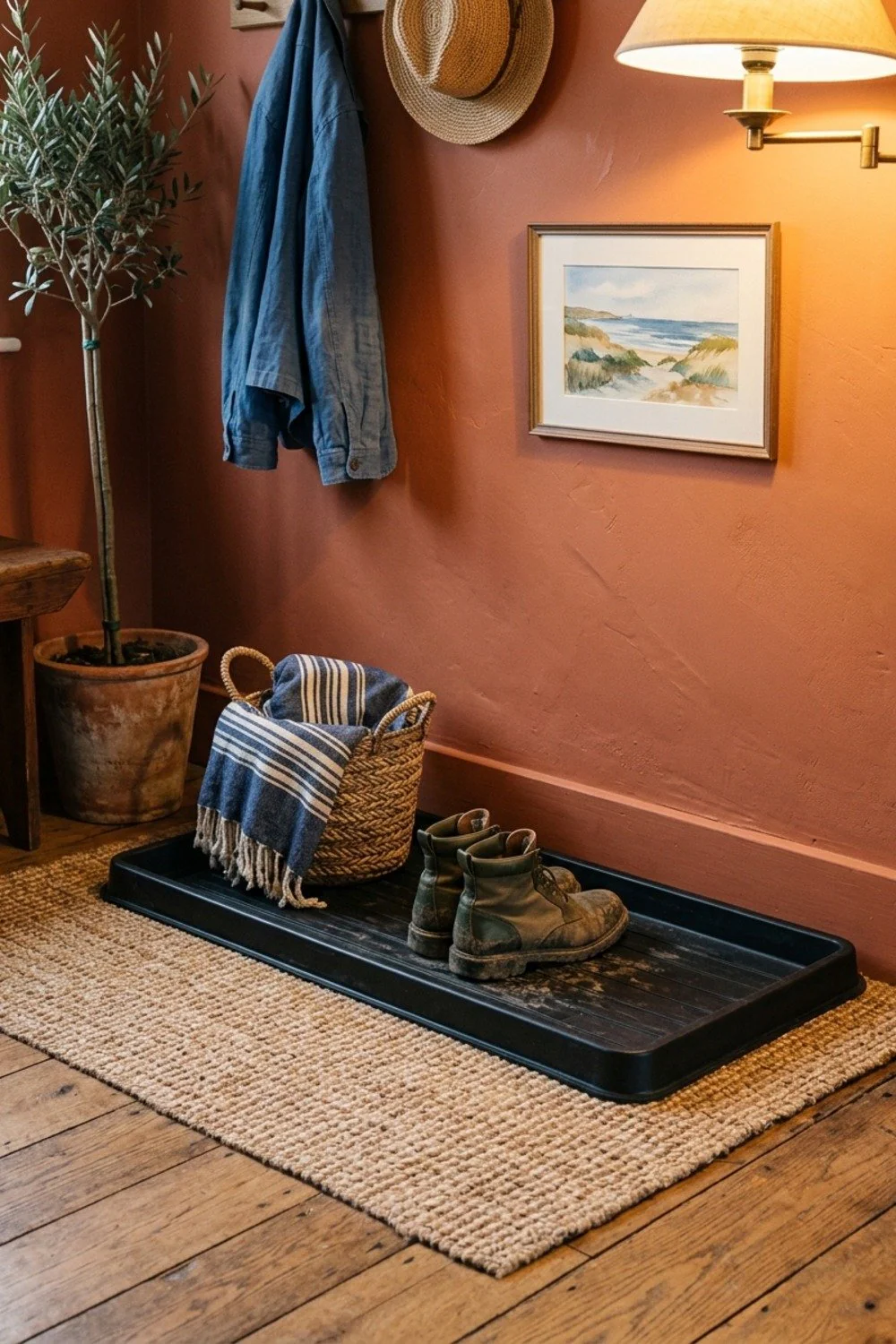
A 30-by-15-inch boot tray with a 1-inch lip catches the meltwater from four pairs of boots, so it stays on the tray instead of seeping into the floor. Rubber or PVC wipes clean in seconds.
It’s the best fix for homes with hardwood right inside the door. Fill the bottom with river stones if the family is happy with a drip-dry setup. Skip decorative trays that are only a half-inch deep, since they overflow on the first slushy day.
17. A frosted glass pendant at 7 feet
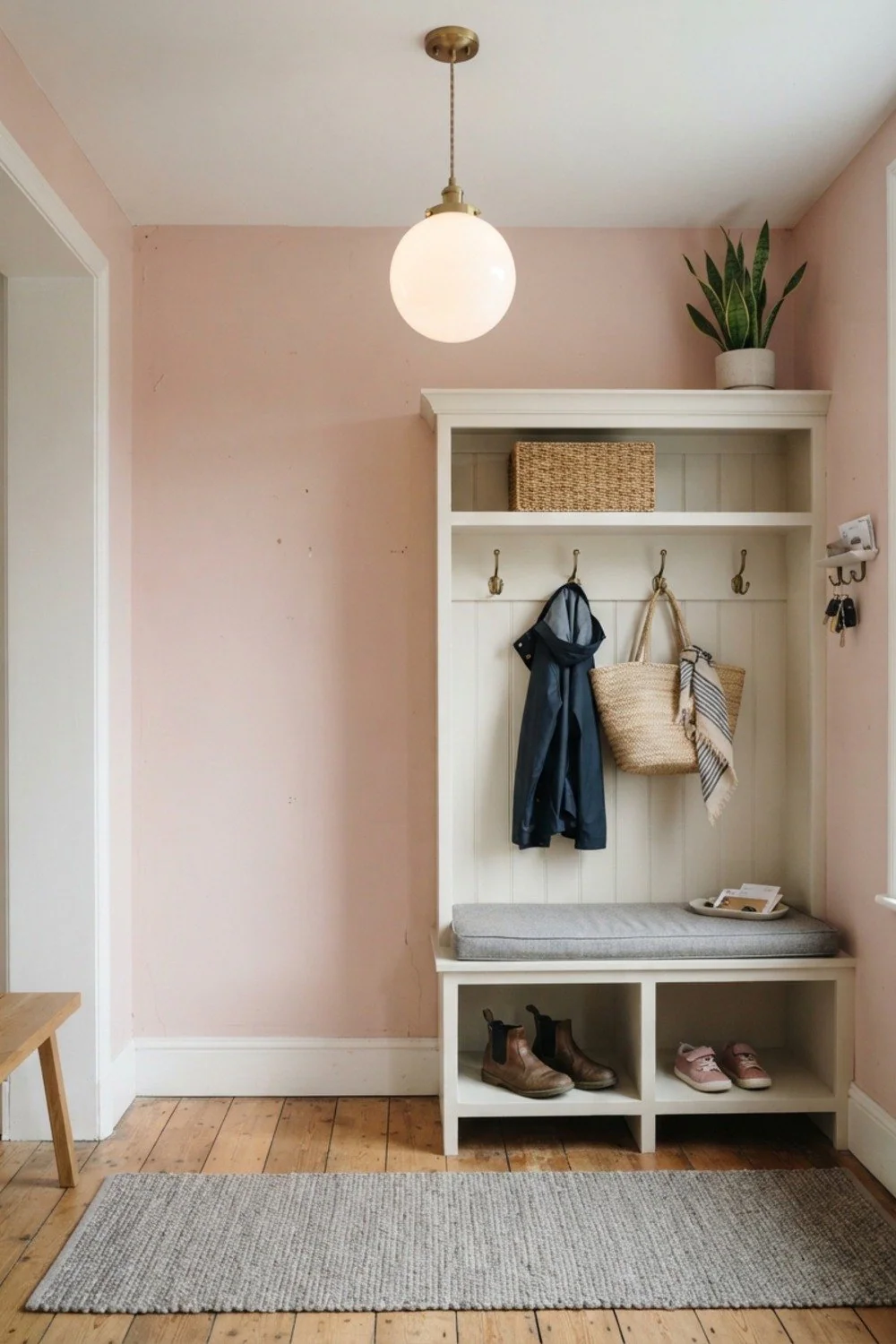
A small frosted pendant, around 8 inches wide, lights the center of the room evenly. It spreads soft light across the ceiling at 4 p.m. in winter, when the sun has already dropped behind the neighbor’s roof.
Keep it flush or semi-flush if the ceiling is under 8 feet. A long drop cord gets hit by tall visitors and swinging umbrellas.
18. A ceramic catch-all by the door
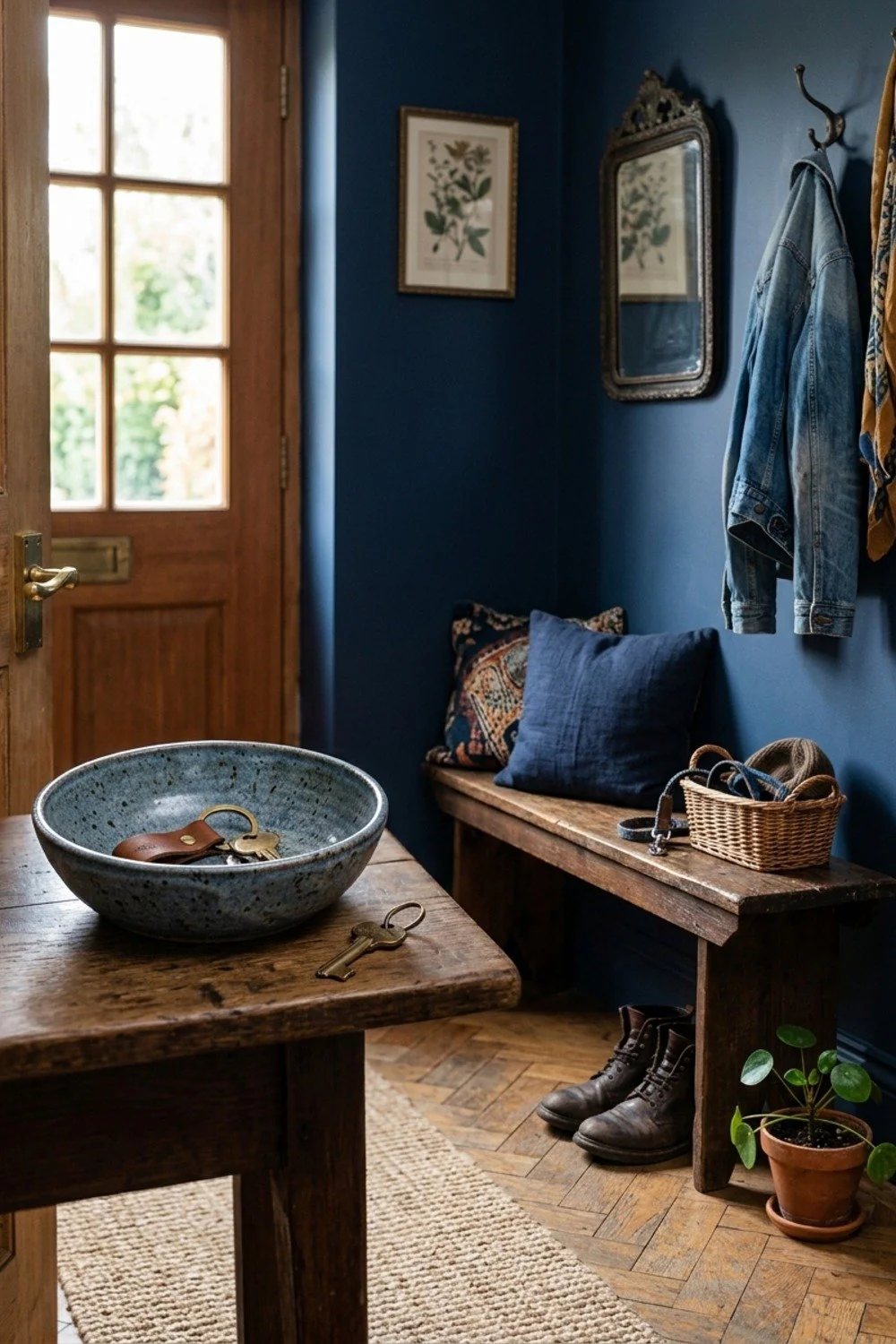
A heavy 6-inch ceramic bowl on the console holds keys, sunglasses, and loose change. It has weight, so it doesn’t slide when a hand drops something into it, and a single spot for keys cuts down on searching.
It suits anyone who loses keys weekly. Pick glazed stoneware over lightweight resin, which skates across a glossy surface and chips when keys hit it. Check that the bowl is wide enough to take a full key ring, or the habit won’t stick.
Styling tips
The last eight ideas are the final layers: small adjustments that decide whether the space still works in month six.
19. A mirror about two-thirds the width of the console
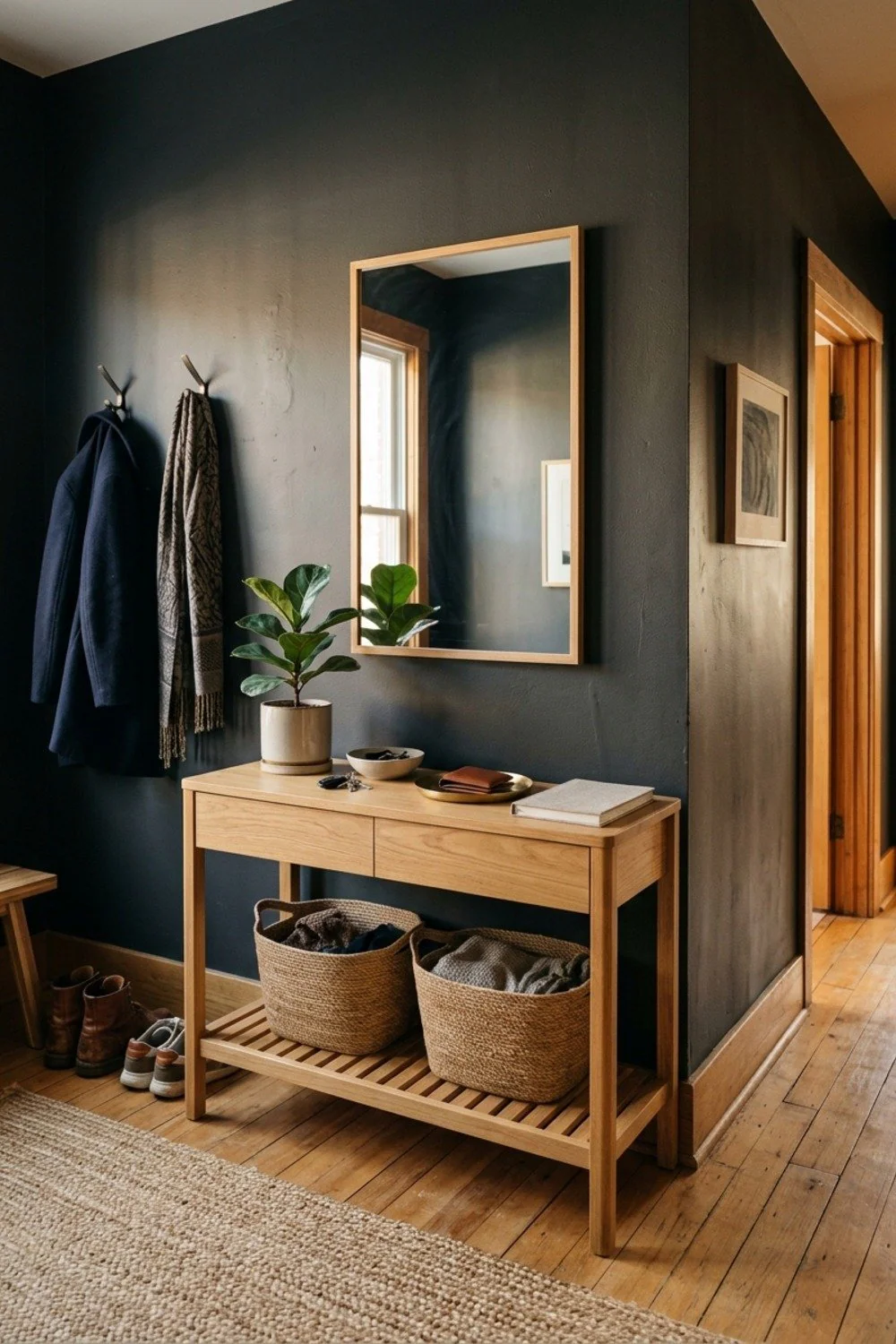
A 20-inch-wide round mirror over a 30-inch console sits in proportion and bounces window light down the hall. Wider mirrors start to dominate the wall, and the console looks undersized beneath them.
It’s a quick check before buying: hold cardboard cut to size and tape it up. The cardboard test is worth it in a narrow hall, where a wrong-sized mirror is hard to hide. Beveled edges catch more light than a flat sheet in a dim entry.
20. Powder-coated steel instead of cheap plastic
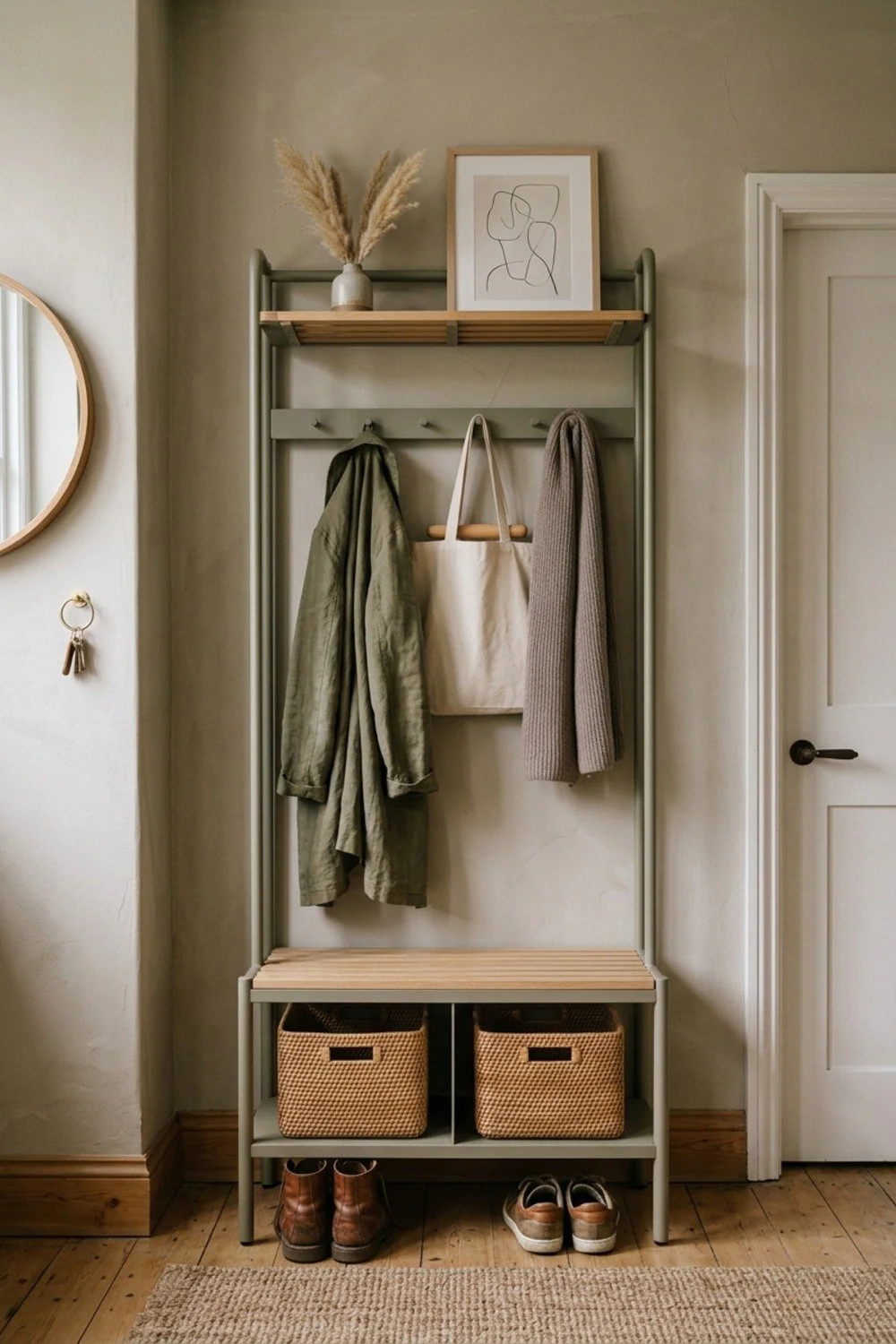
Powder-coated steel baskets and hooks survive daily banging; plastic cracks in the first cold snap. The weight also keeps them from swinging forward when loaded. Steel also resists the dents and chipped edges that come from kids hanging on it.
For a family with heavy bags, pay the extra $10-15 per piece, since steel holds up under a loaded backpack. Brass looks great, but solid brass costs a lot more, and plated versions flake, so check what the finish really is before buying.
21. A single accent color repeated three times
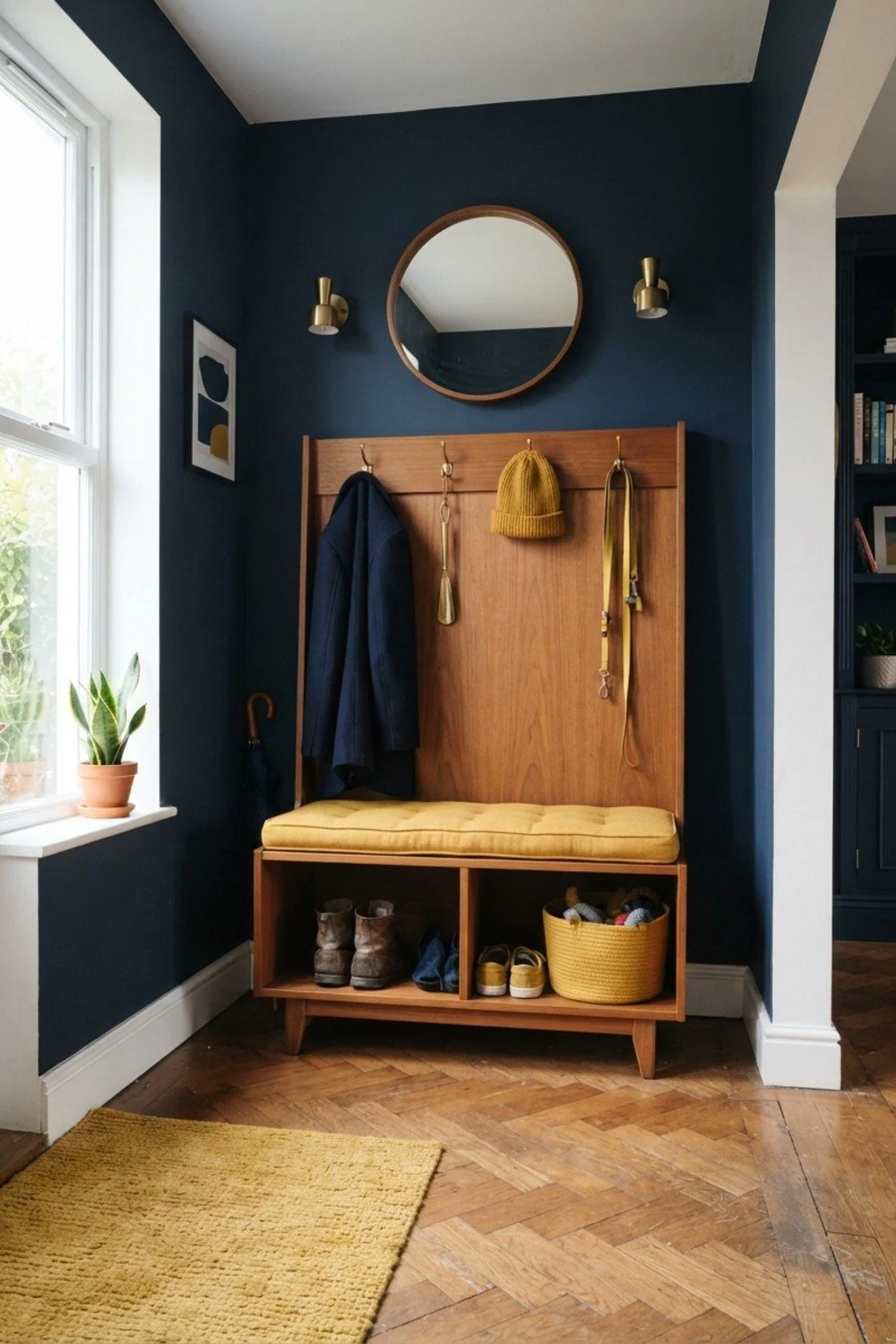
Pick one color, like a rust orange, and repeat it in a rug stripe, a hook, and a print. Three echoes feel planned, while ten feel scattered, because the eye reads a small number of repeats as a deliberate scheme.
This helps when the mudroom borders a more colorful room. Keep the rest neutral, and the entry doesn’t fight the living room. Match the undertone across the three pieces, since a rust that leans pink beside one that leans brown will look like a mistake.
22. Hooks stacked in two rows on a short wall
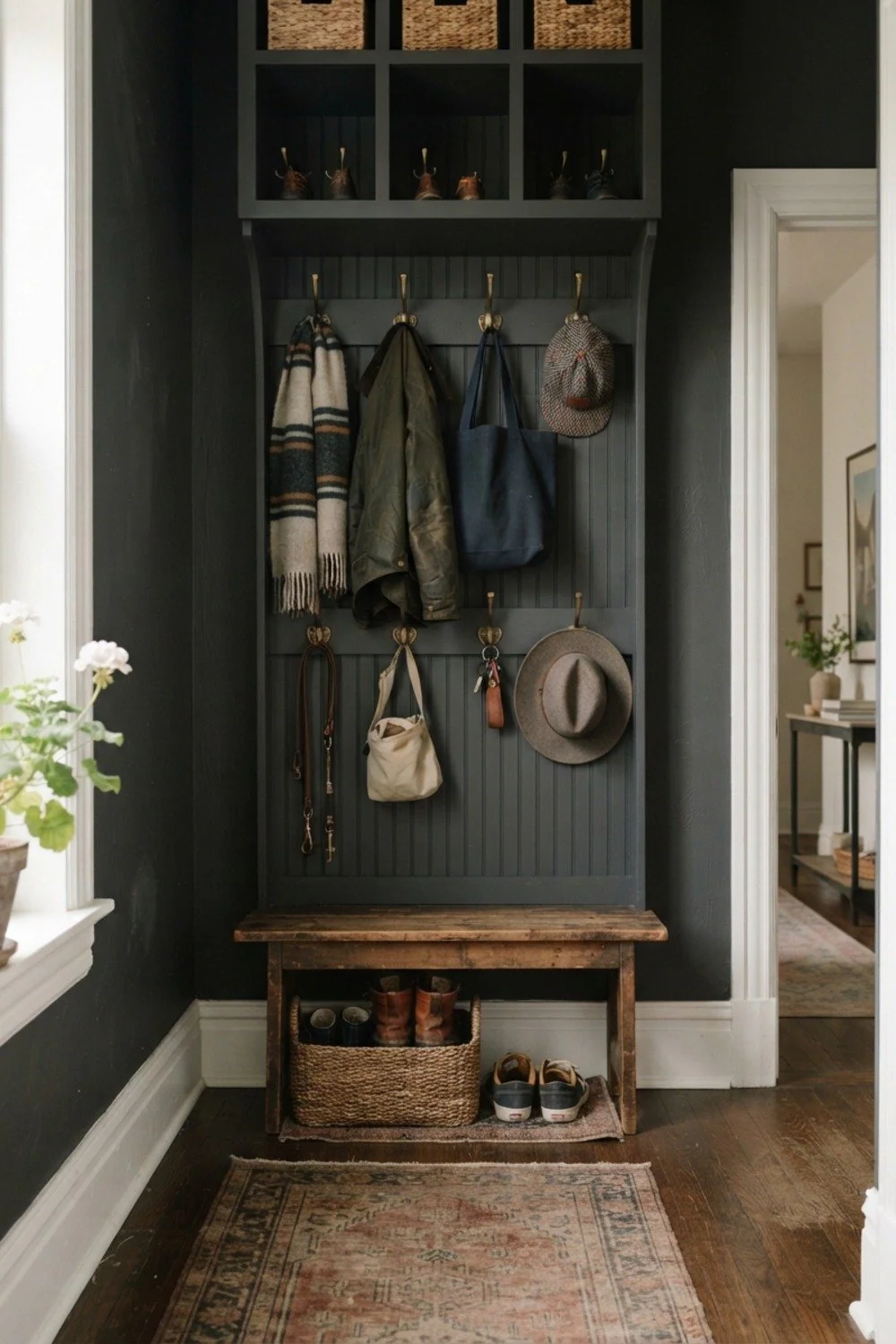
A 24-inch wall can still hold six hooks if the second row is staggered 6 inches higher. The staggering stops the sleeves from overlapping and tangling, so each coat hangs on its own.
That’s the layout move for a tiny side entry. Test with painter’s tape on the wall before drilling to check where actual coats hang. Keep the lower row for kids or lighter jackets, and avoid loading six heavy parkas, which will crowd the wall anyway.
23. A thrifted bench refinished for under $40
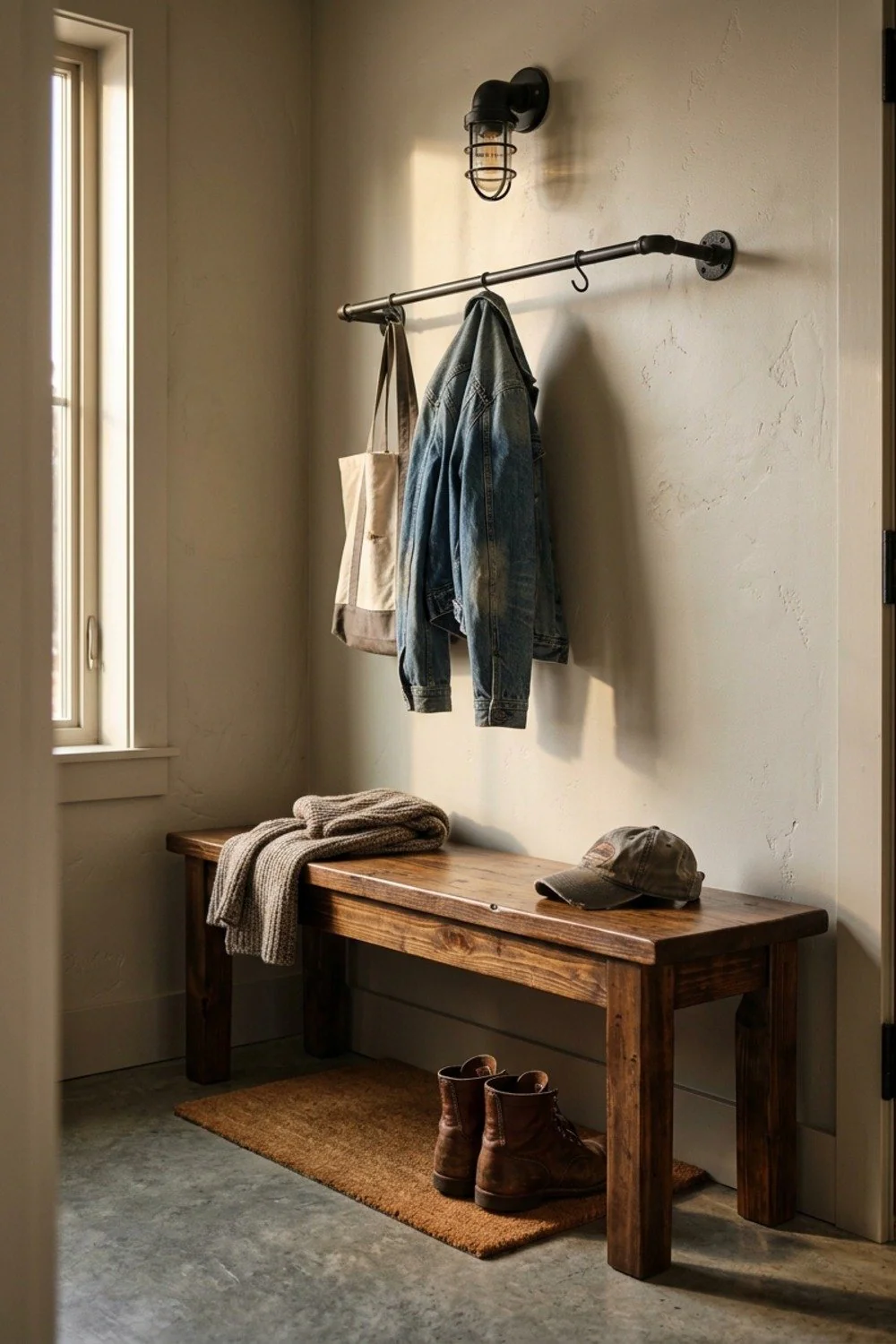
A secondhand pine bench from a flea market runs about $25. A sanding block, a quart of paint, and a coat of water-based polyurethane finish it for roughly $15 more, which keeps the total under $40. The topcoat matters, because bare pine stains the first time a wet boot lands on it.
It suits beginners and tight budgets, since pine sands easily. Look for solid wood legs and a flat seat. Wobbly joints are fixable with wood glue, but cracked seats are rarely worth the trouble.
24. A wall-mounted shelf with a basket below
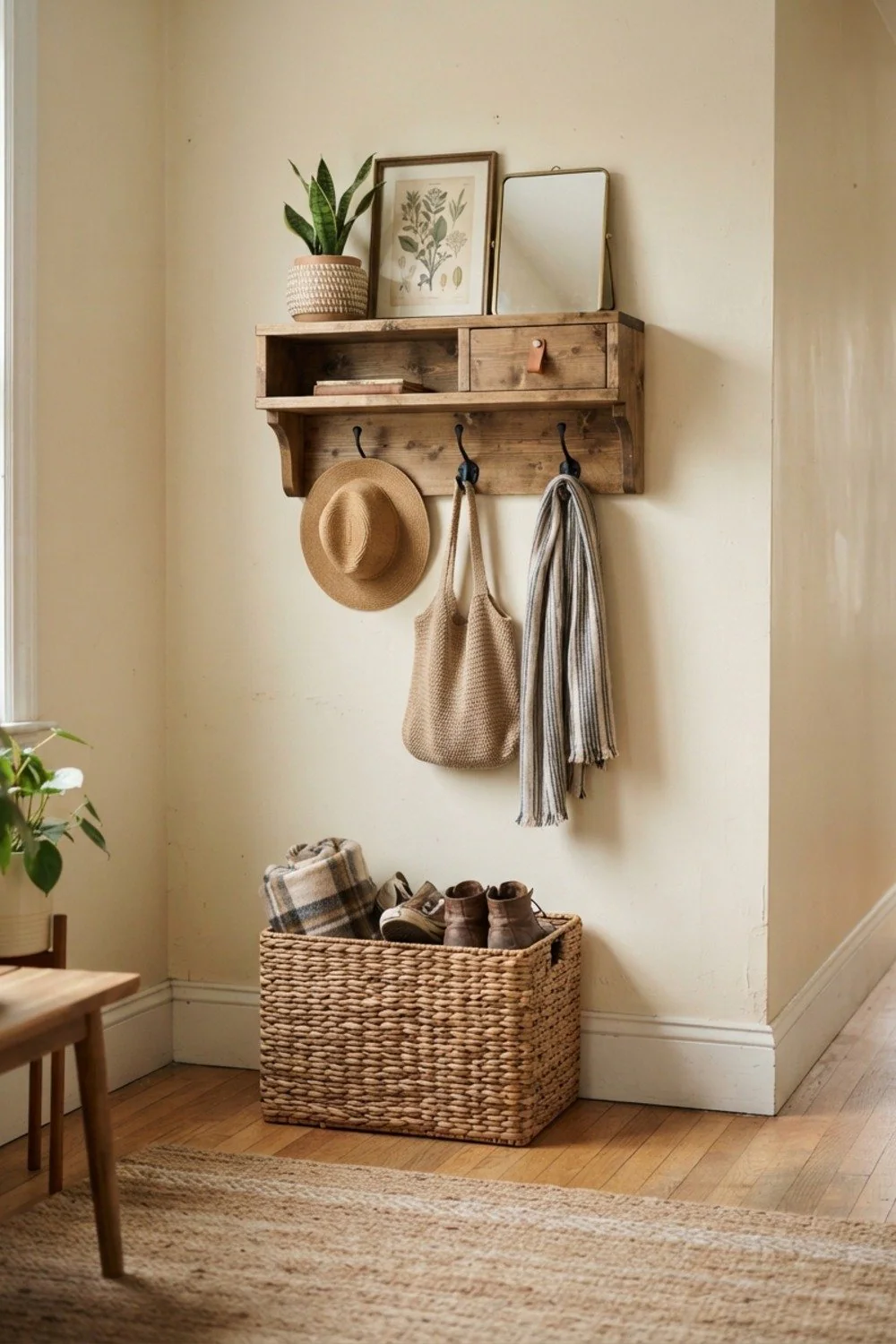
A 6-inch-deep shelf at 60 inches with a woven basket tucked beneath holds hats on top and gloves below. The basket pulls out to the kitchen counter for sorting, which suits households that dump everything at the door.
Choose a basket with a rigid base so it doesn’t slump. Seagrass looks good but soaks up water, so keep it away from wet-boot territory. Keep the shelf shallow, since anything much deeper than 6 inches juts out at head height.
25. A cluttered “everything” drawer
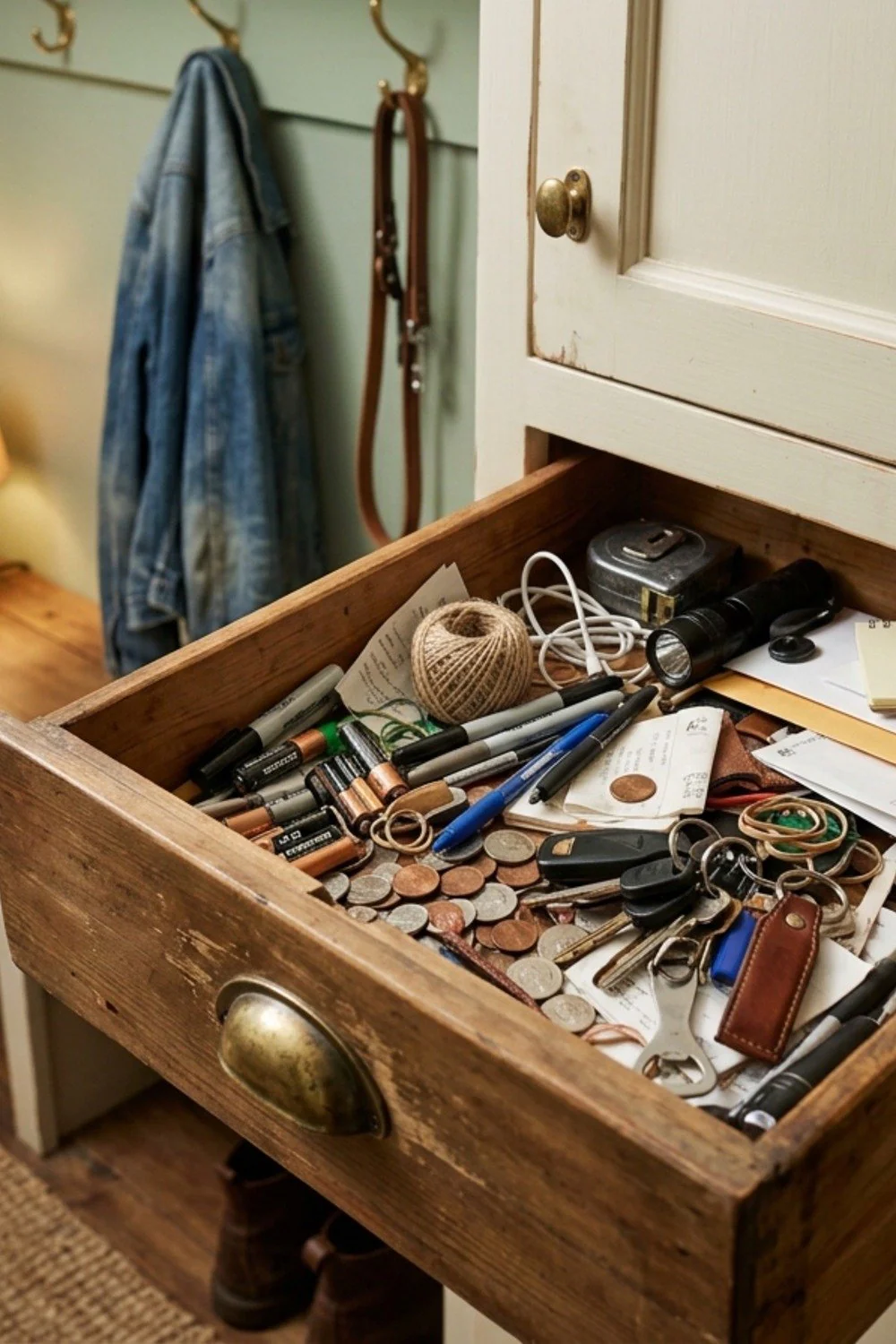
One drawer for everything sounds efficient, and it becomes a junk pit in about three weeks. Sorting by person or by category, with dividers, is what actually keeps it usable, because every item then has a defined home.
Give each family member one 8-inch bin. Label the front with a clear tag so children can find their own gloves in the morning rush. This suits families with several kids; a single adult needs fewer divisions, and too many small compartments just create new clutter.
26. A slim wall-mounted umbrella holder
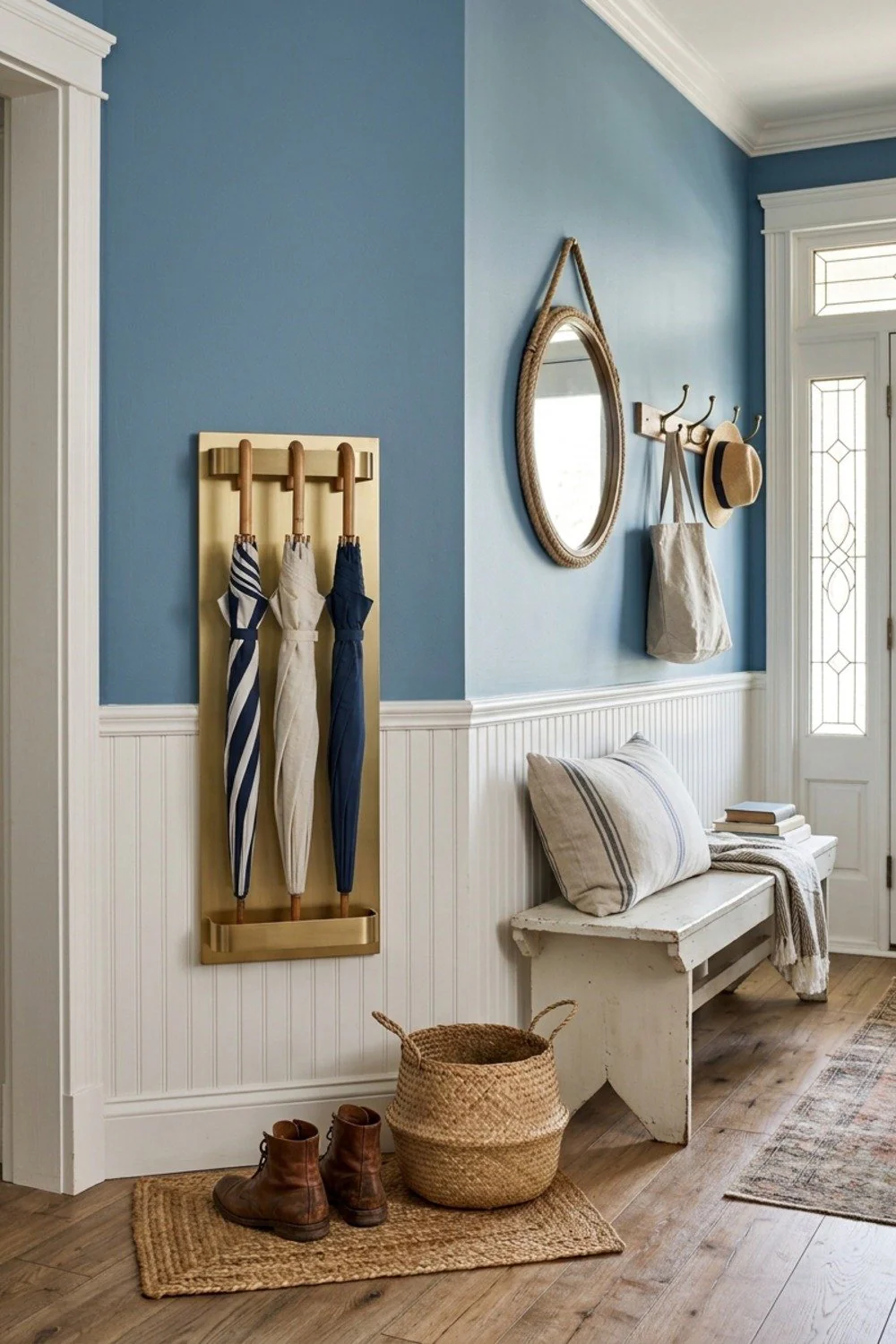
An umbrella stand on the floor takes up a square foot nobody has. A wall-mounted tube, about 4 inches wide, parks umbrellas vertically and lets water drip into a small tray.
It’s the right fit for anyone who owns more than two. Mount it near the door, not deep in the room, so wet umbrellas never cross the floor. Empty the tray after each storm, or it will sit and grow musty.
Breaking the rules on purpose
26 small mudroom ideas usually come with the advice to hide everything behind closed doors. In a space under 25 square feet, that advice backfires.
Doors need swing room, usually 15-20 inches, and that clearance eats the very floor the cabinet was meant to save. Open hooks and a single open shelf take zero clearance and make daily use faster, because nobody opens a cabinet with wet hands.
The trade-off is visual noise. Keep the open wall to a tight palette, and the mess reads as a deliberate display instead of chaos.
Common mistakes
The same errors show up in almost every cramped entry, and 26 small mudroom ideas can avoid them with a tape measure and a little patience.
- Buying furniture before measuring the door swing and walkway width.
- Mounting every hook at one height, adult height.
- Choosing a rug with no non-slip backing, so it creeps across wet tile.
- Skipping a light source and relying on a hallway fixture 15 feet away.
- Filling every shelf, leaving no spot for the bag that arrives today.
Leave about 20 percent of the storage empty. A mudroom at 100 percent capacity on Monday is overflowing by Wednesday.
More design inspiration and ideas
Few homes need all 26. Most small entries are fixed by three moves: a hook row at two heights, a washable rug, and a light source you can aim.
Save or pin this list so it’s waiting when you’re ready, then measure the width of your wall and the swing of your door before buying anything. Try the staggered hook row first, since it costs the least.
Frequently Asked Questions
What is the smallest space that can work as a mudroom?
A wall about 30-36 inches wide is enough for hooks, a narrow shoe cabinet, and a boot tray. Most of the 26 small mudroom ideas here work in an alcove that size.
How much does it cost to set up a small mudroom?
A basic setup with a hook board, boot tray, and washable rug runs about $100-150. Adding a bench, a sconce, and paint pushes it toward $300-400.
Can I do a mudroom in a rental?
Yes. Plug-in lighting, peel-and-stick paper, over-the-door racks, and freestanding shoe cabinets leave no permanent marks. Use studs or anchors for hooks and patch the screw holes when you leave.
Which of the 26 small mudroom ideas should I try first?
Start with the two-height hook row. It costs under $30, takes about 20 minutes, and fixes the daily pile of coats on the floor.