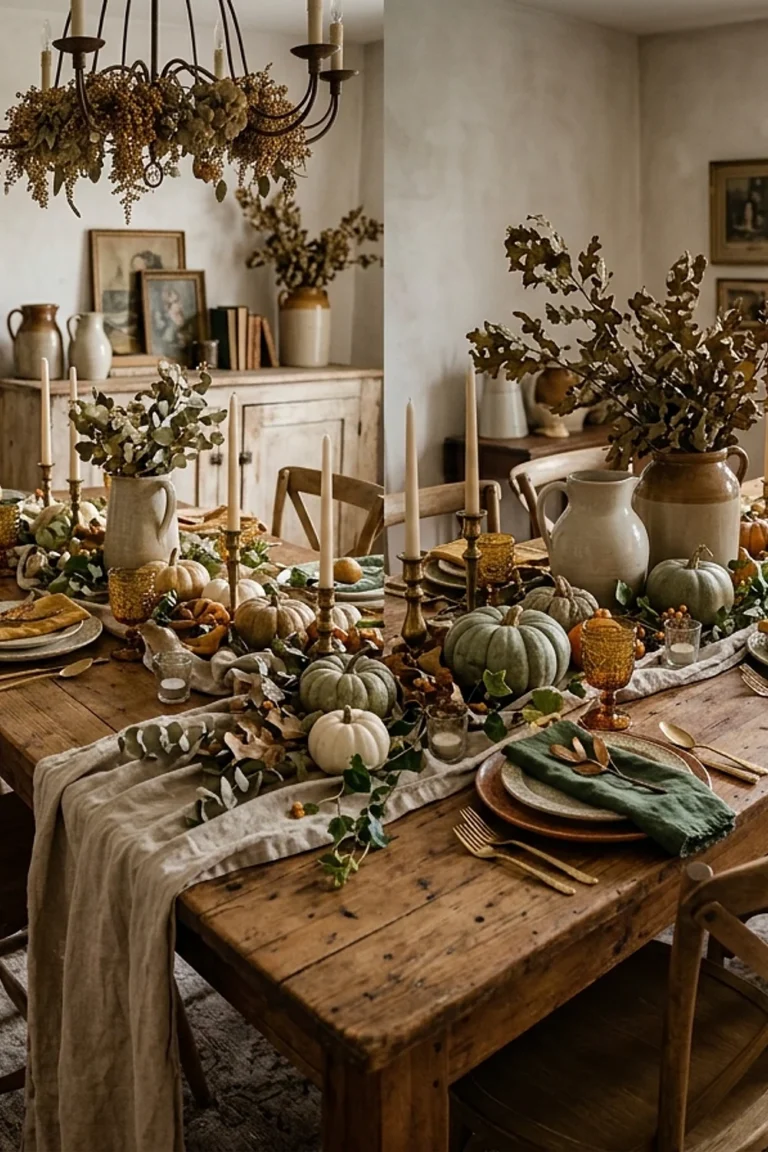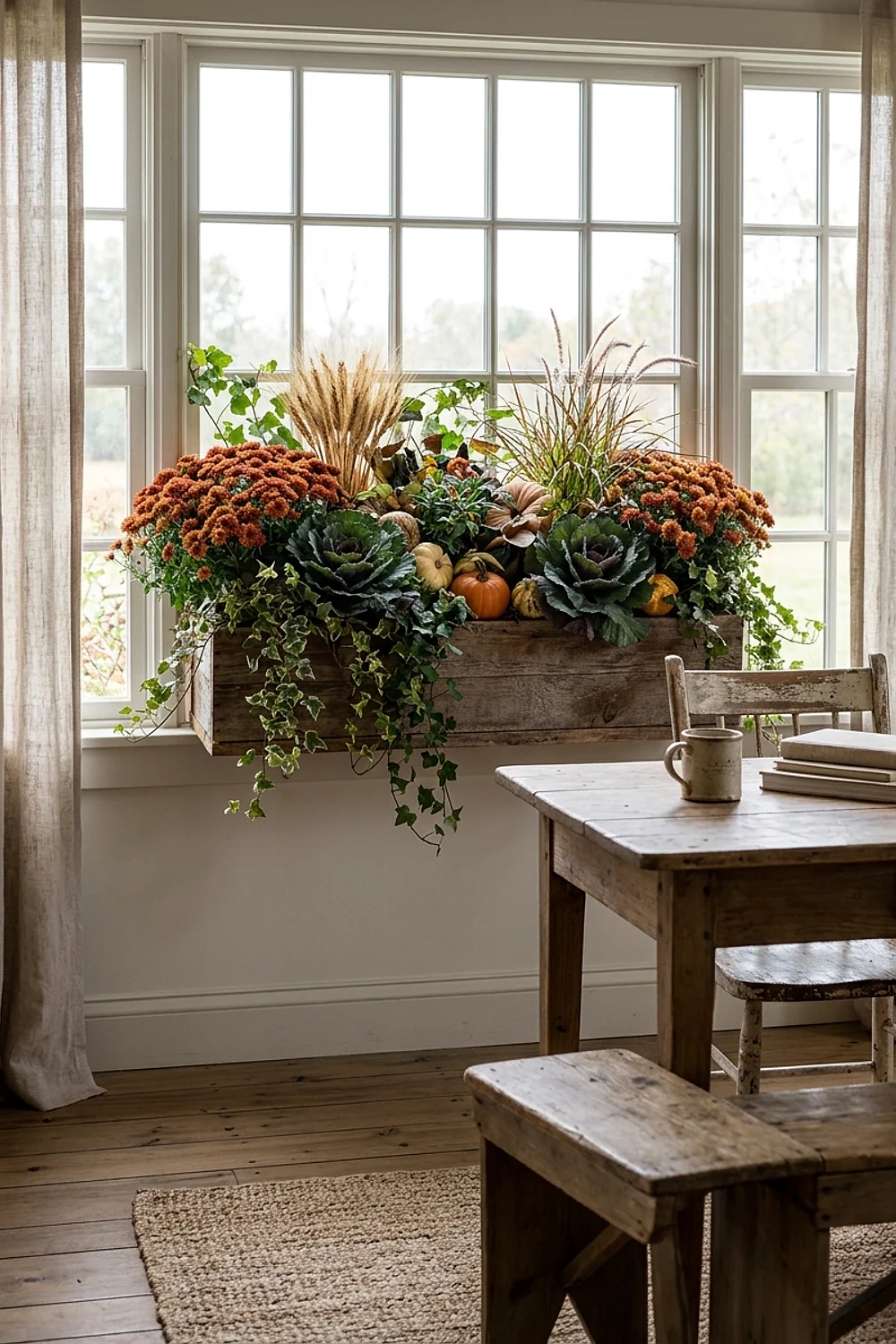
It’s 4:15 on a gray October afternoon, the low light is turning the brick gold, and the empty window box under the front window looks like a missing tooth. Good fall window box ideas fix that gap without a $400 invoice from a catalog.
This post takes the arrangements that high-end garden retailers charge a premium for and pairs each one with a cheaper version that reads almost identically from the curb. Twenty-two of them, each with the reasoning behind it, so the budget version never looks like a compromise.
Fall window box ideas: Ideas worth borrowing
Expensive boxes share three traits: a tight palette, a clear shape, and plants that look healthy past Halloween. Everything below is built on those three.
1. A three-color palette of burgundy, rust and cream
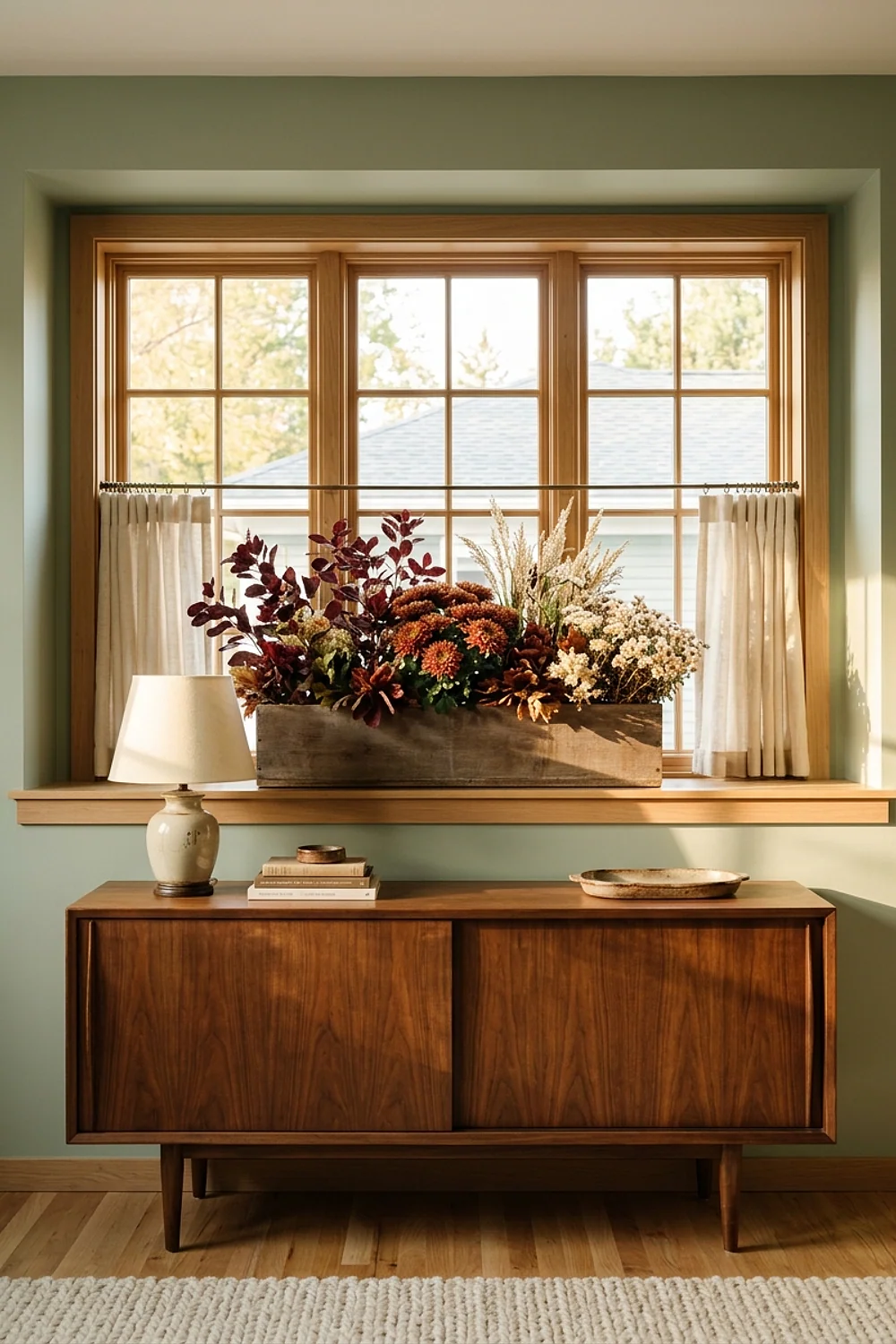
The boxes in Terrain-style fall displays stick to three tones and repeat them. The budget version is the same palette from the grocery store: 8-inch mums in burgundy, cream and rust run about $7-10 each, so a 36-inch box fills for roughly $45.
Repetition is why it works. The eye reads two repeated colors as planned, even when the plants came from a checkout aisle.
Skip the yellow mums if the house is red brick. Yellow against that red fights instead of glowing.
2. Thriller, filler and spiller in a strict order
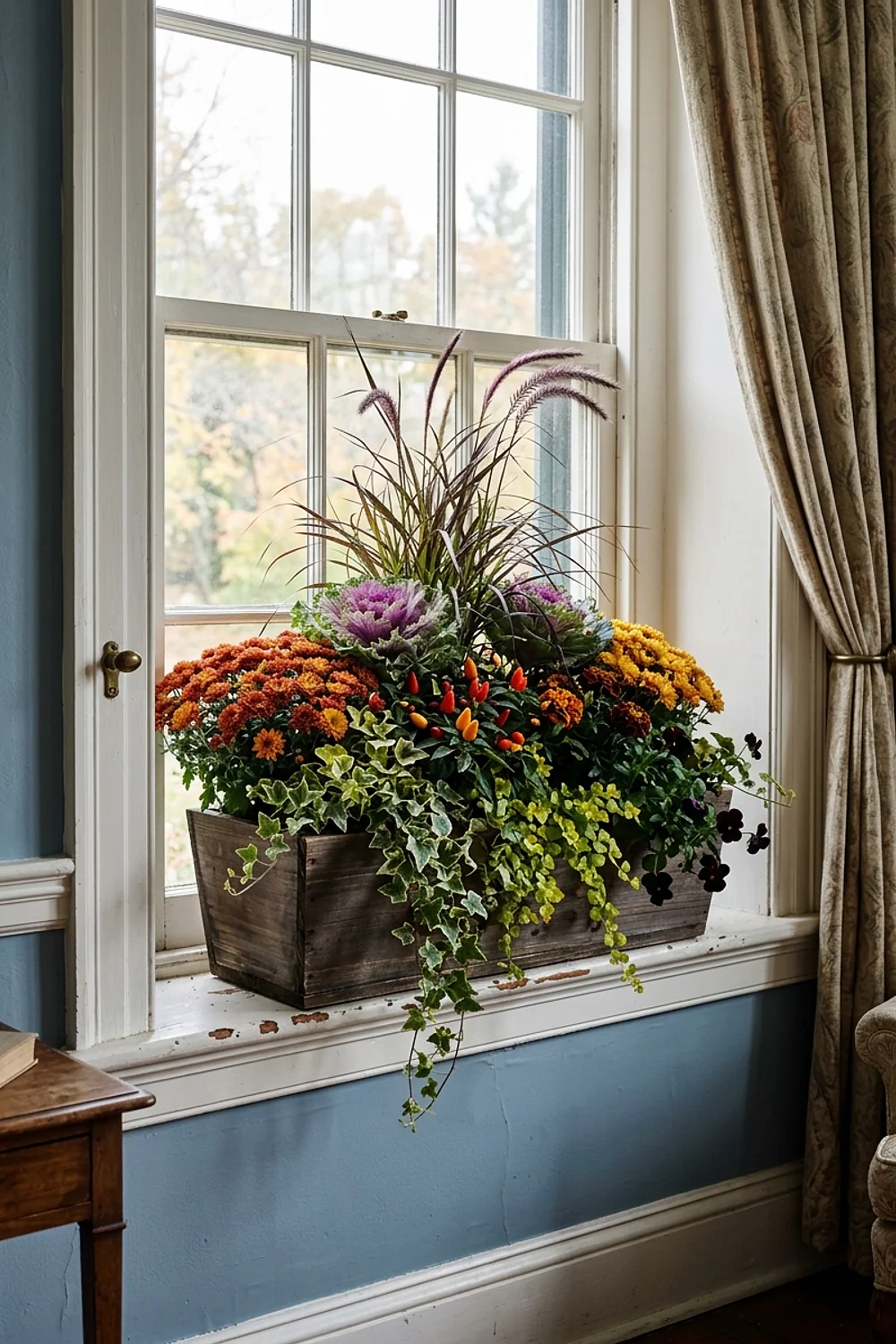
Place one tall element at the back center, mounded plants in the middle, and something trailing at the front corners. That’s the formula behind nearly every Ballard Designs-style box, and it costs nothing to copy.
A 10-inch-deep box handles this best, since the tall stem needs room for roots. Shallow 6-inch boxes can only manage low plants, so choose the layout to match the depth you already have.
3. Warm fairy lights woven through the stems
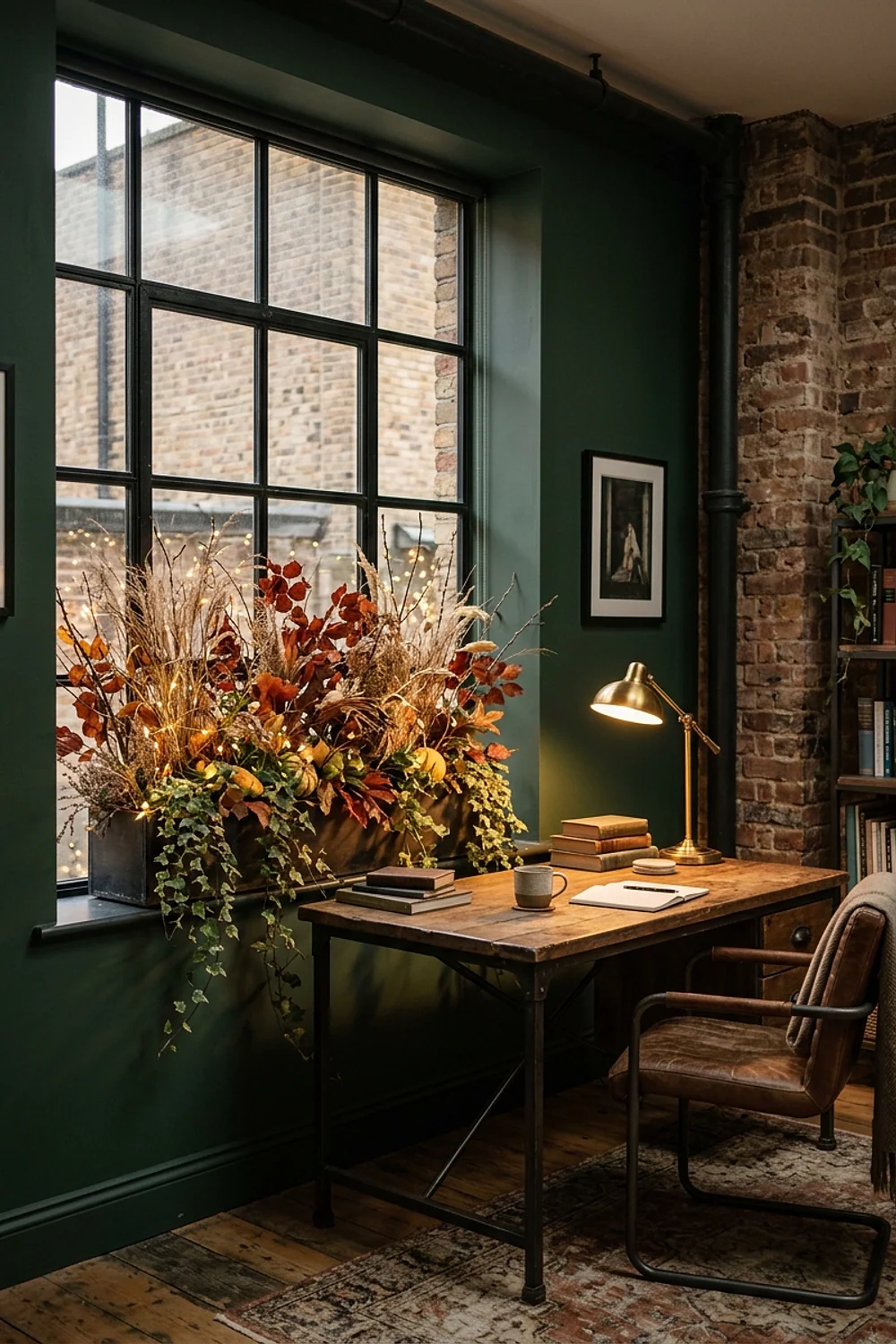
Designer displays often hide low-voltage lighting in the greenery so the box glows at dusk. A battery string of 2700K warm-white LEDs, about 20 feet long, does the same job for under $12.
Choose copper wire over green wire, because it disappears against bark and dried stems. Warm white matters too: cool white turns orange foliage a flat, hospital gray after dark.
4. Nursery pots dropped into the box as inserts
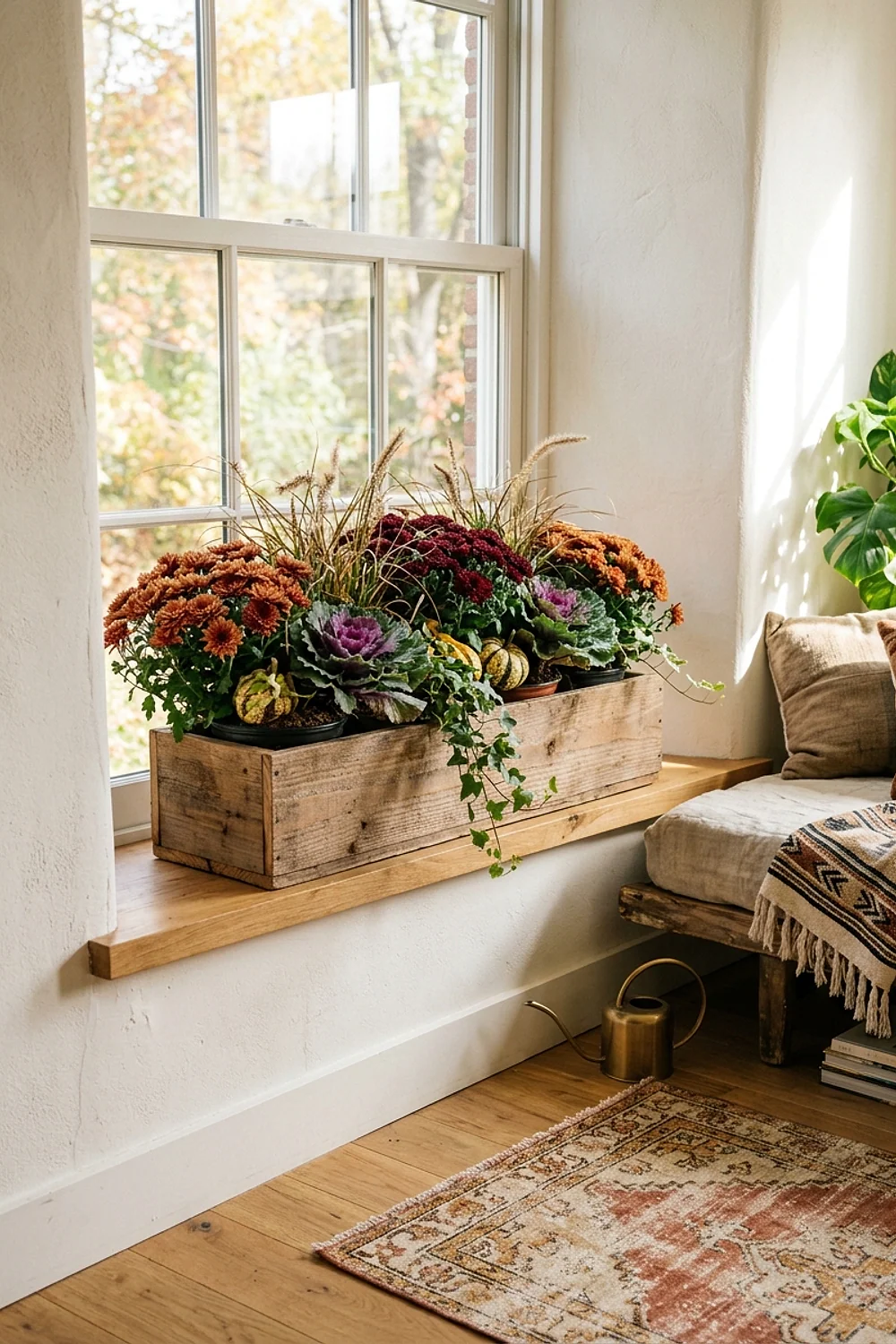
Fancy boxes use fitted liners, but the cheaper trick is leaving each plant in its plastic nursery pot and nesting the pots inside. Drainage holes stay intact, and a tired plant swaps out in about ten seconds.
This suits anyone who dreads the “dig out the dead mum” chore in November. Pack crumpled kraft paper or moss around the pots so no plastic rim shows.
5. A painted plastic box instead of faux cast stone
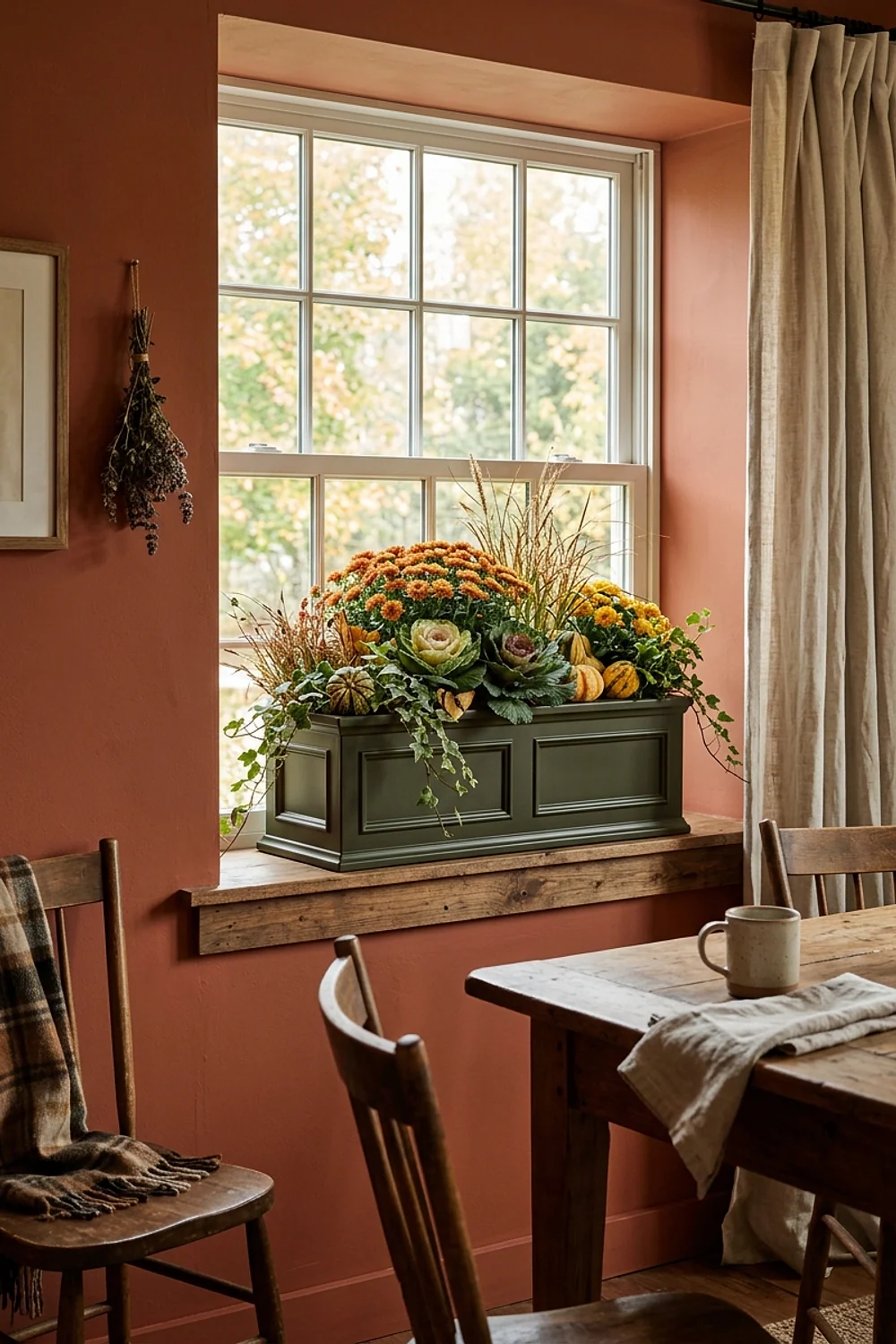
Cast-stone-look boxes in the 36-inch range often cost $150 or more. A plain plastic box at roughly $20, sanded lightly and coated in matte black or deep charcoal spray paint, passes for iron from the sidewalk.
Plastic also weighs a few pounds instead of a few dozen, which is easier on brackets. The one thing to skip is glossy paint, which shouts “plastic” the moment the sun hits it.
Mood board breakdown
These next six rely on plant choice and timing. They’re where cheap plants start to look like a designer chose them.
6. Ornamental kale and cabbage in clusters of three
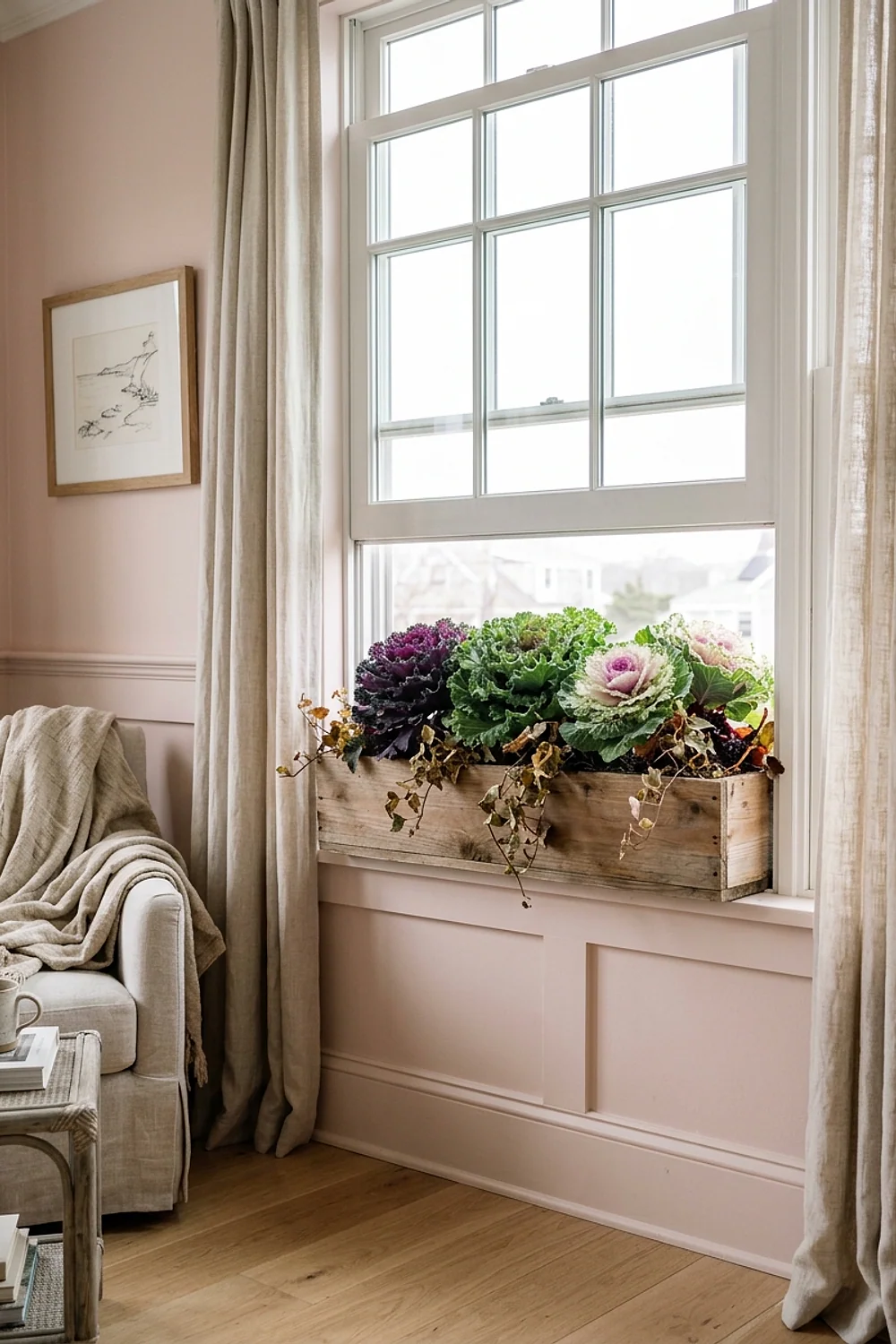
Frill-edged purple and cream kale gives the same architectural rosette shape you see in Frontgate-style planters, and its tightly layered leaves hold their form when softer plants slump. Odd numbers beat pairs here because the eye reads them as natural. Plant three heads in a loose triangle, with the largest off-center, and the box looks arranged rather than lined up.
A 4-inch pot is usually cheap at any garden center in September, which suits a small budget. Avoid squeezing heads so close that outer leaves overlap, since trapped moisture invites rot.
7. Mums bought tight in bud, not in full bloom
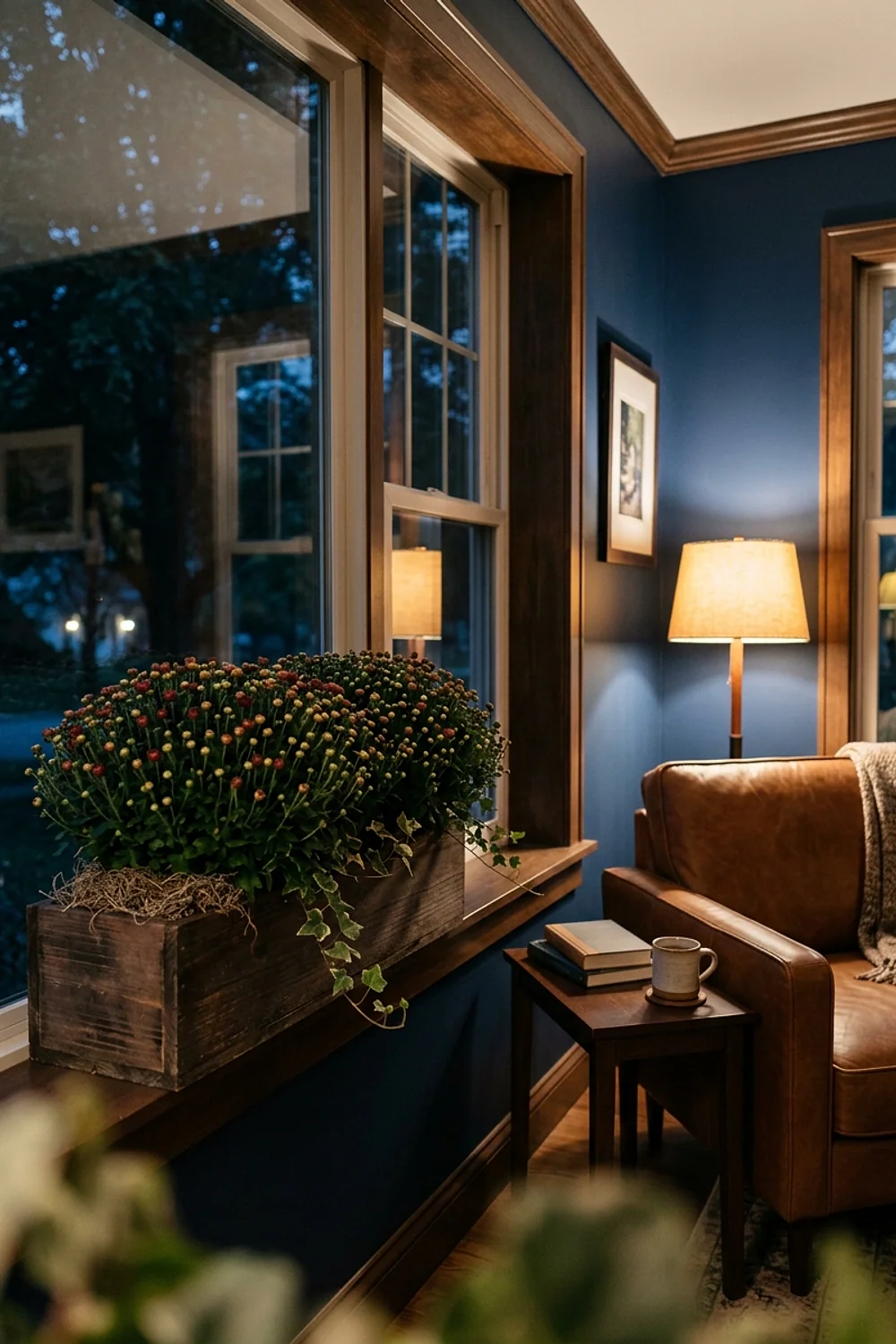
Here’s the counterintuitive part: the cheapest mum on the shelf is often the best, because a plant sold in tight bud flowers for four to six weeks. A mum already in full color may be spent by mid-October.
Look for green buds with just one or two petals showing. A $6 bud-stage pot outlasts a $14 showpiece, so the plain-looking one wins on cost per week of color.
8. Dried hydrangea heads rescued from late summer
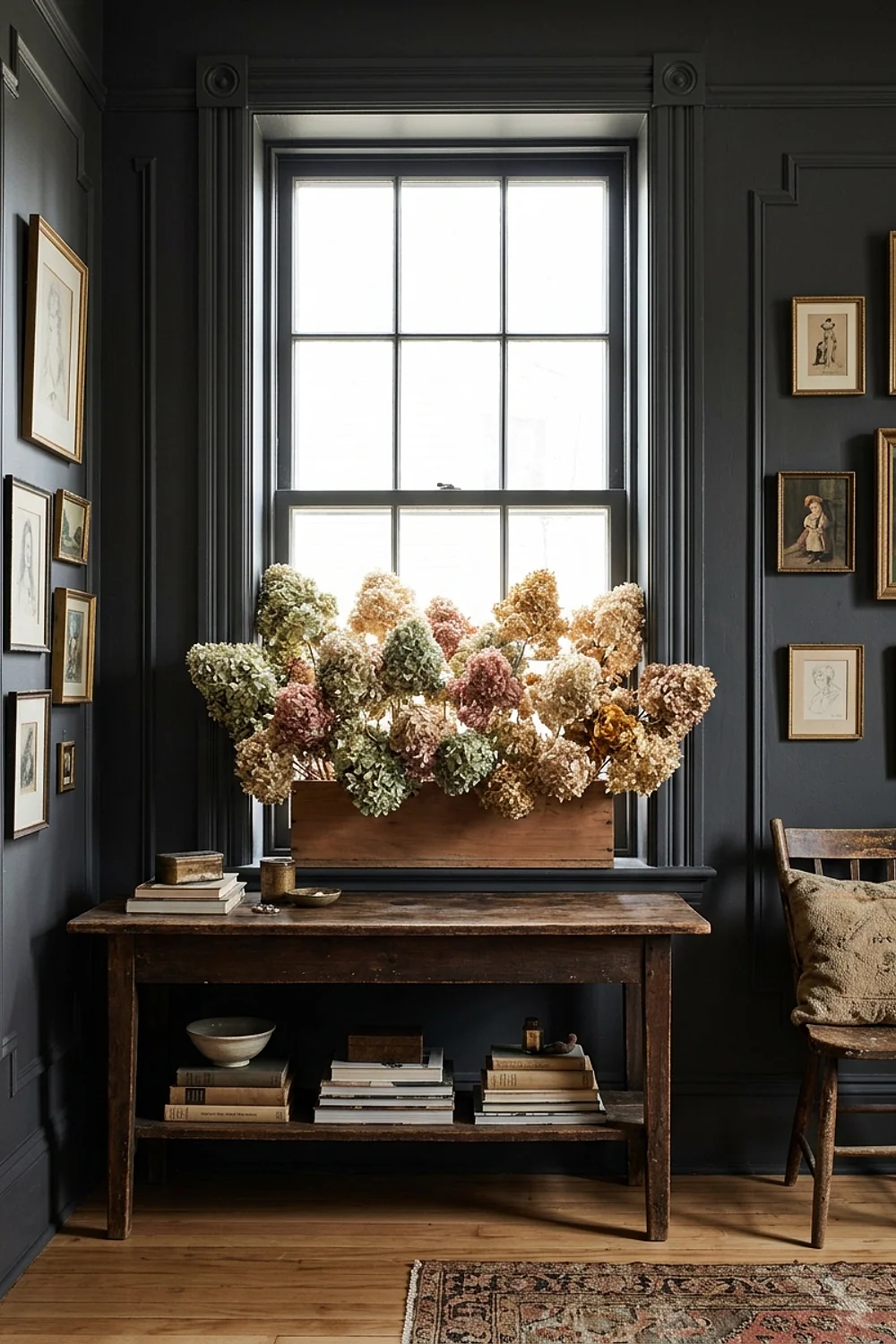
Papery, antique-looking hydrangea heads run a few dollars each in florist shops. The free version is cutting them from a garden or neighbor’s bush once the petals feel dry and slightly leathery in late September.
Dry them upside down in a dark closet for about two weeks, then stand them in the back of the box. Hold them in your hand and you’ll hear that soft rustle that tells you they’re ready.
9. Sedum ‘Autumn Joy’ for people who forget to water
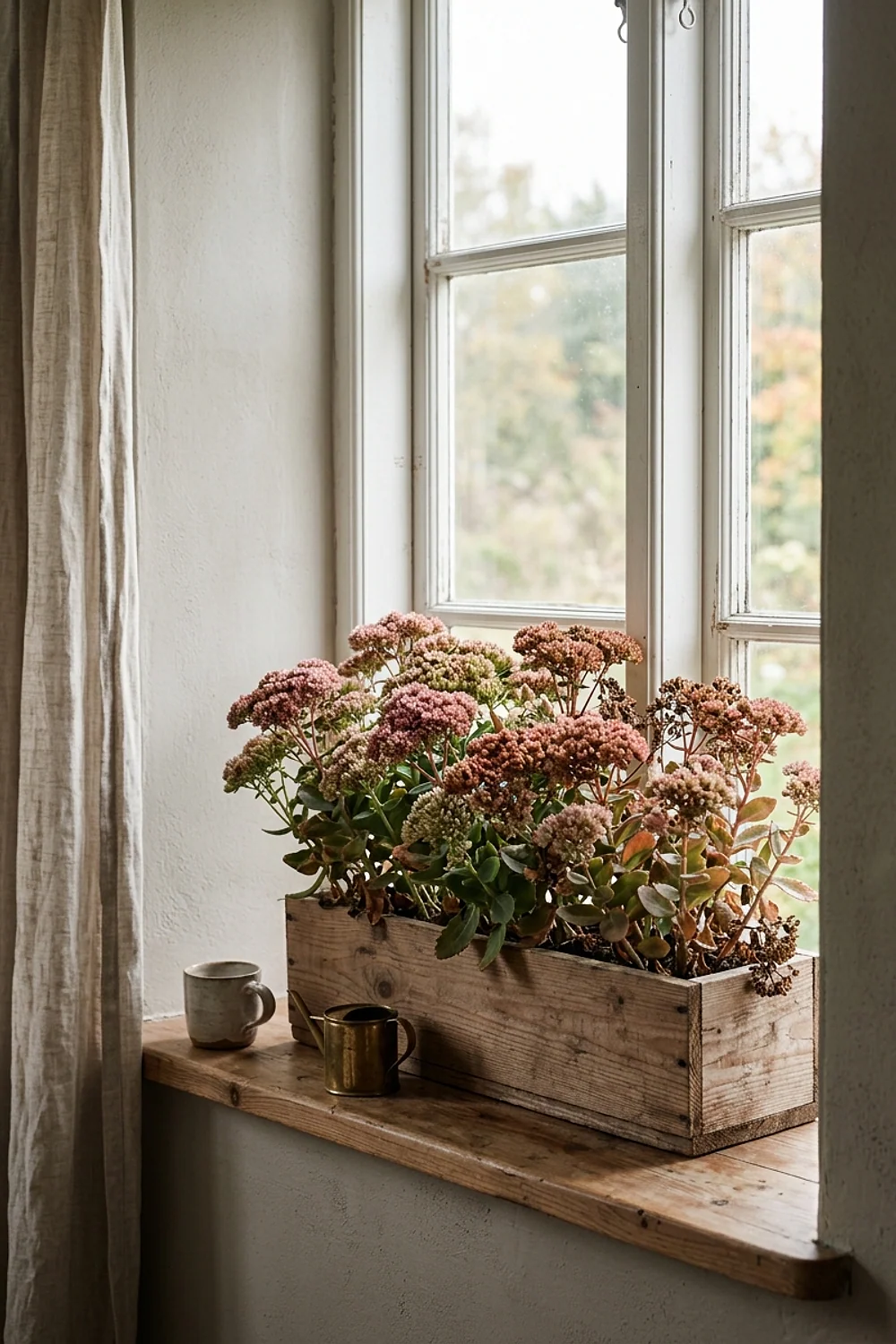
Sedum is a succulent, so it tolerates a missed week without sulking, and its flower heads shift from pink to deep rust as nights cool. It suits anyone who wants color without a watering routine.
The trade-off is that it flops if overfed. Skip fertilizer, and pinch back the tallest stems in early summer if the plants are being carried over from a previous season.
10. Pumpkins sized to the depth of the box
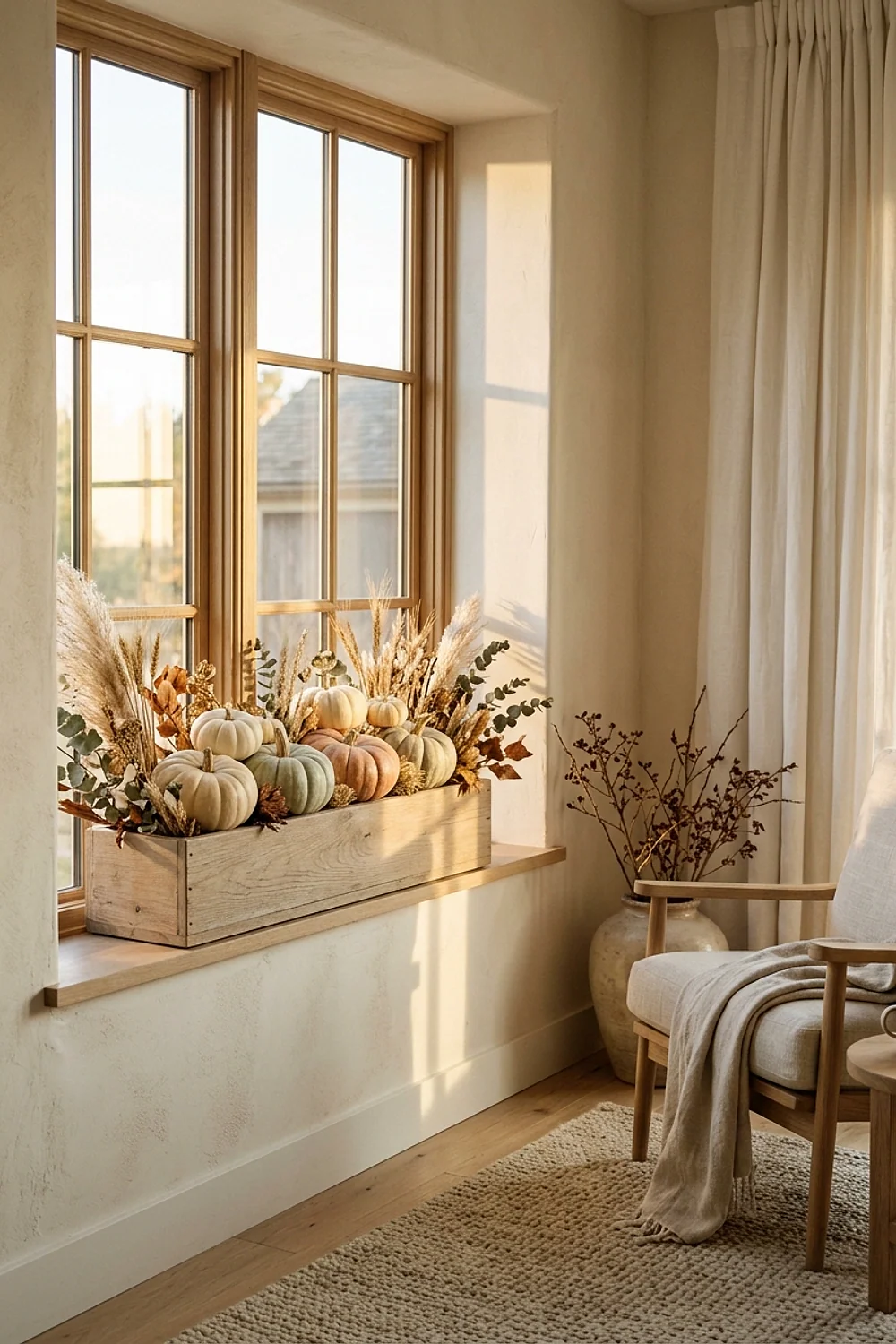
Mini pumpkins about 3 inches wide fit an 8-inch-deep box with room to spare, while a standard 8-inch pumpkin tips the whole composition forward. Catalog-style boxes get away with larger gourds because their boxes are wider and sturdier.
Warty and white mini varieties sell by the pound in bulk bins, and a dozen runs around $8. Tuck them between plants rather than lining them along the front edge.
11. Fountain grass plumes in copper and wheat tones
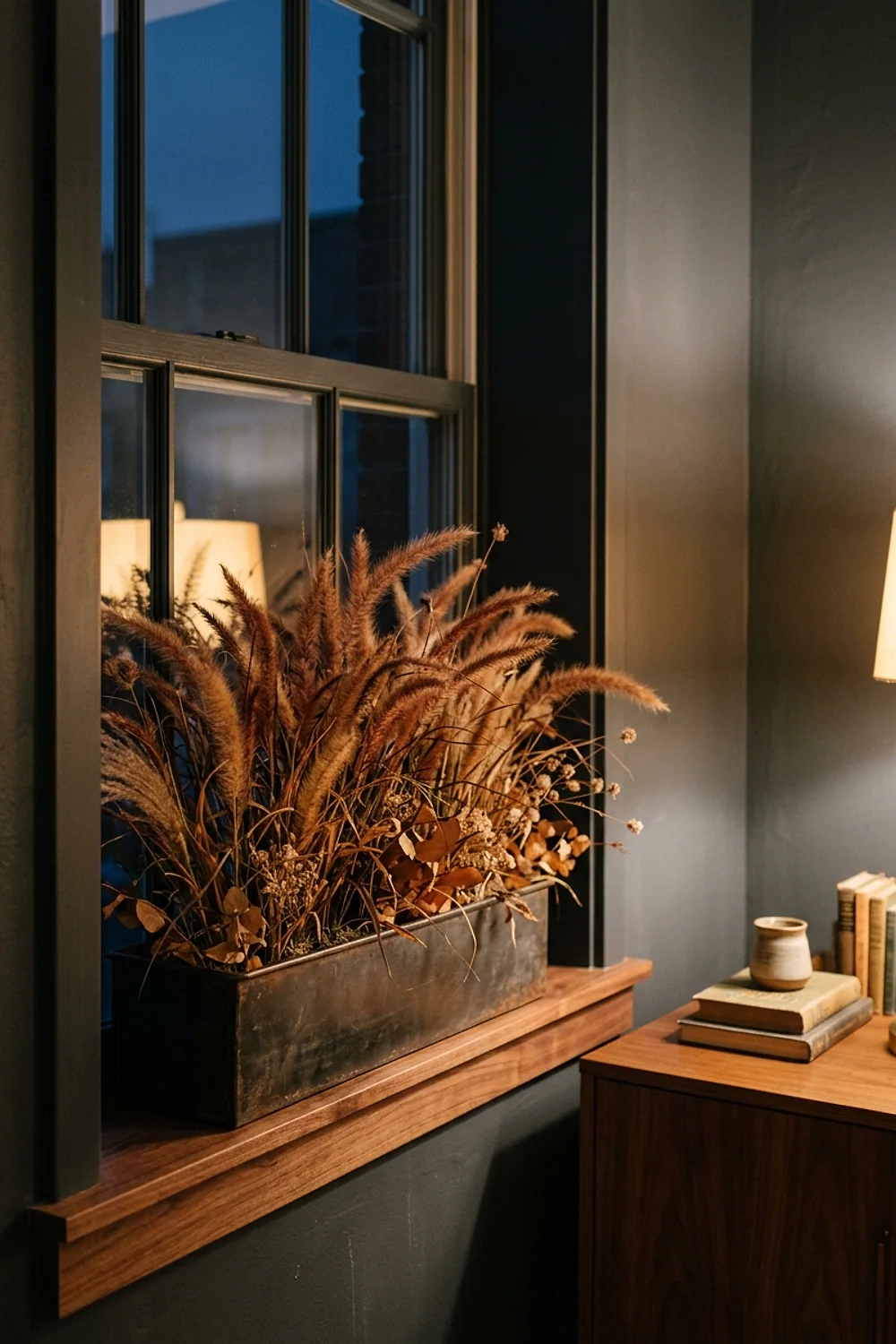
Dwarf fountain grass sends up soft, bottlebrush plumes that catch late light and glow a little at 4pm. In ochre and bronze tones, it makes the kind of back-lit edge designers pay extra for.
A single 1-gallon grass is enough for a 36-inch box. It also pairs well with rust mums, which repeat the same warm range without overlapping it exactly.
Styling tips
Fall window box ideas start to feel expensive once the edges and silhouettes are right. These six handle the shape.
12. Creeping Jenny or ivy spilling over the front lip
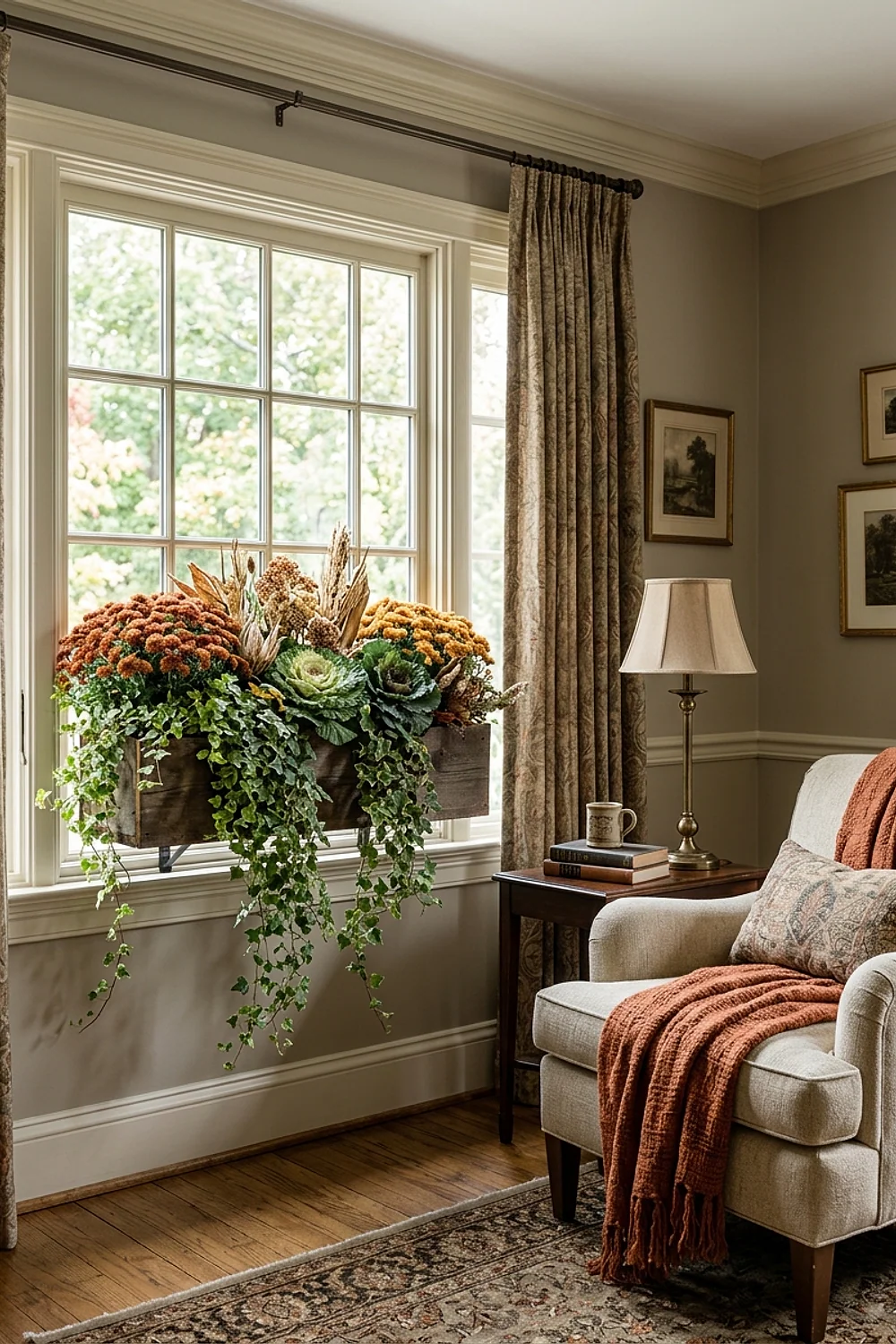
A trailing plant that drapes 8 to 12 inches over the front edge hides the box rim and softens the straight line. Restoration Hardware-style displays use this trick constantly.
Chartreuse creeping Jenny survives light frost and costs very little in a 4-inch pot. Plant it at the front corners, not the center, so it frames the window instead of covering the middle.
13. Plants chosen by which way the window faces
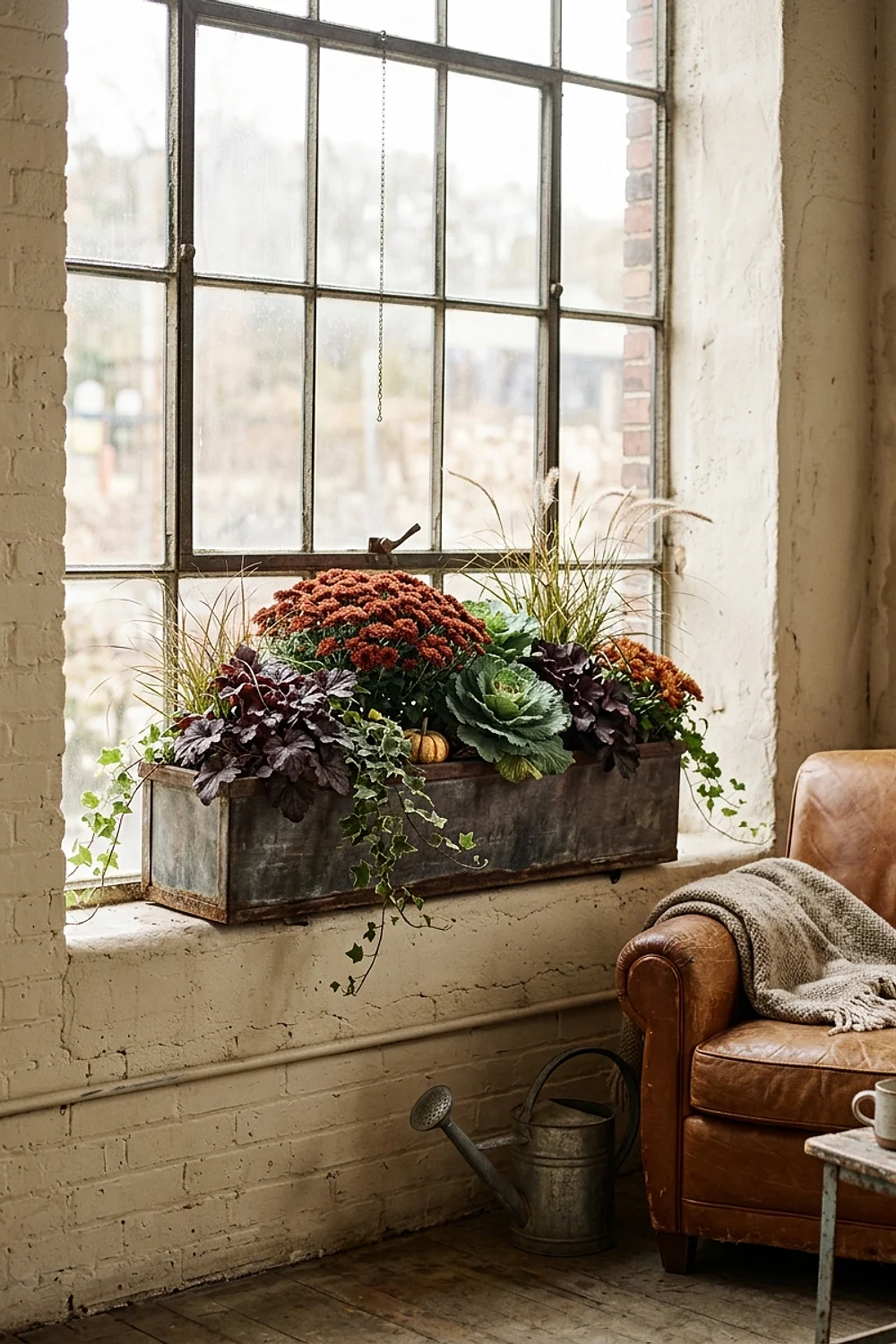
A south-facing window floods the box with hours of sun and bakes out thirsty mums. A north-facing window suits foliage like heuchera in plum and caramel, which holds color with only a few hours of light.
This is the cheapest design decision available, because the wrong plant dies and the right one doesn’t. Watch where afternoon light lands on the wall for a day before buying anything.
14. Heavy-duty brackets under a wet, loaded box
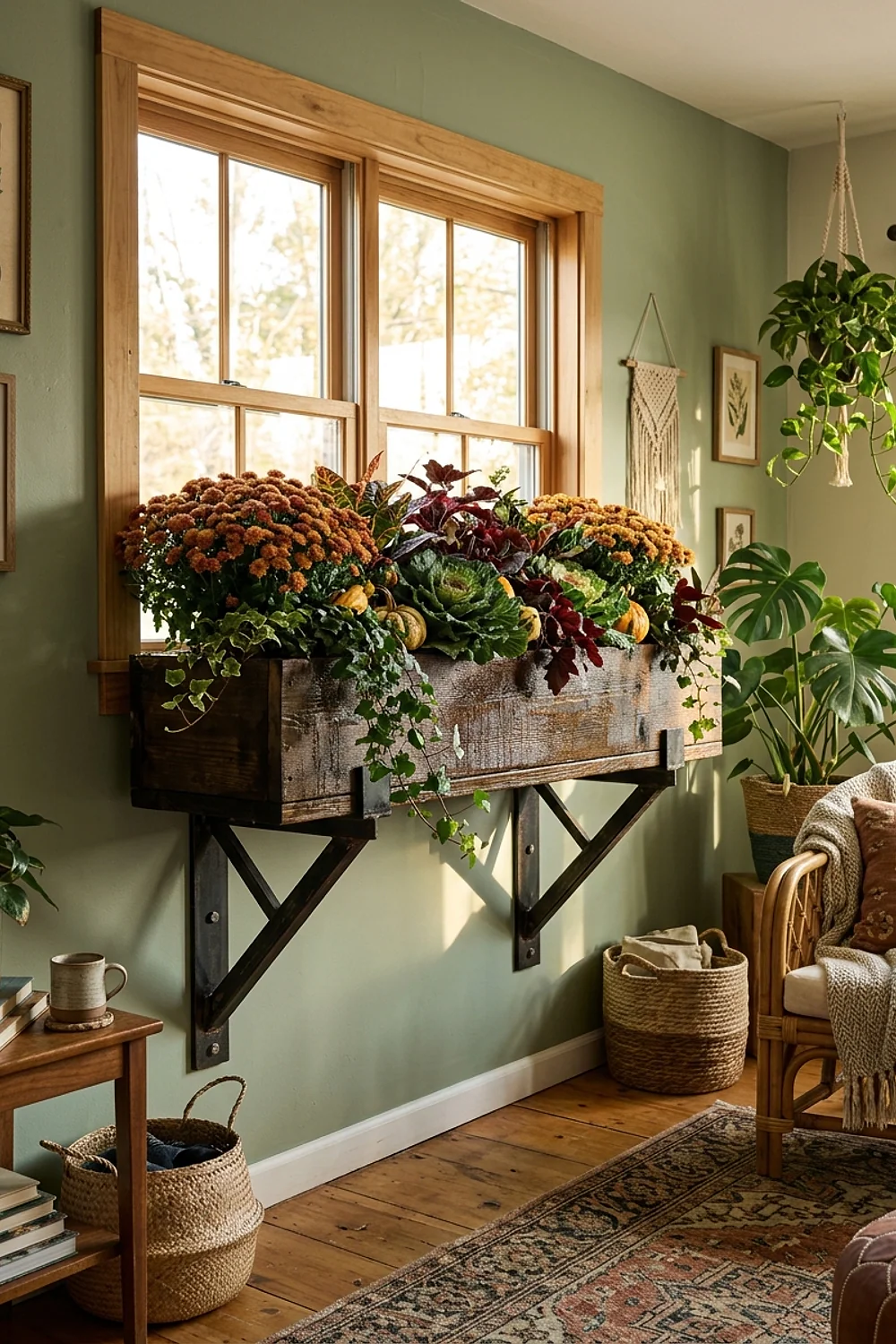
A 36-inch box of moist soil and plants can weigh 25 to 40 pounds, and a $6 pair of decorative brackets from a hardware store handles that only if screws hit studs. Designer installs use through-bolted cleats for the same reason.
Check the siding before mounting. Vinyl and cedar shingles need different fasteners, and a sagging box after the first rain is a hassle to fix.
15. Foraged branches: red twig dogwood, birch and bittersweet
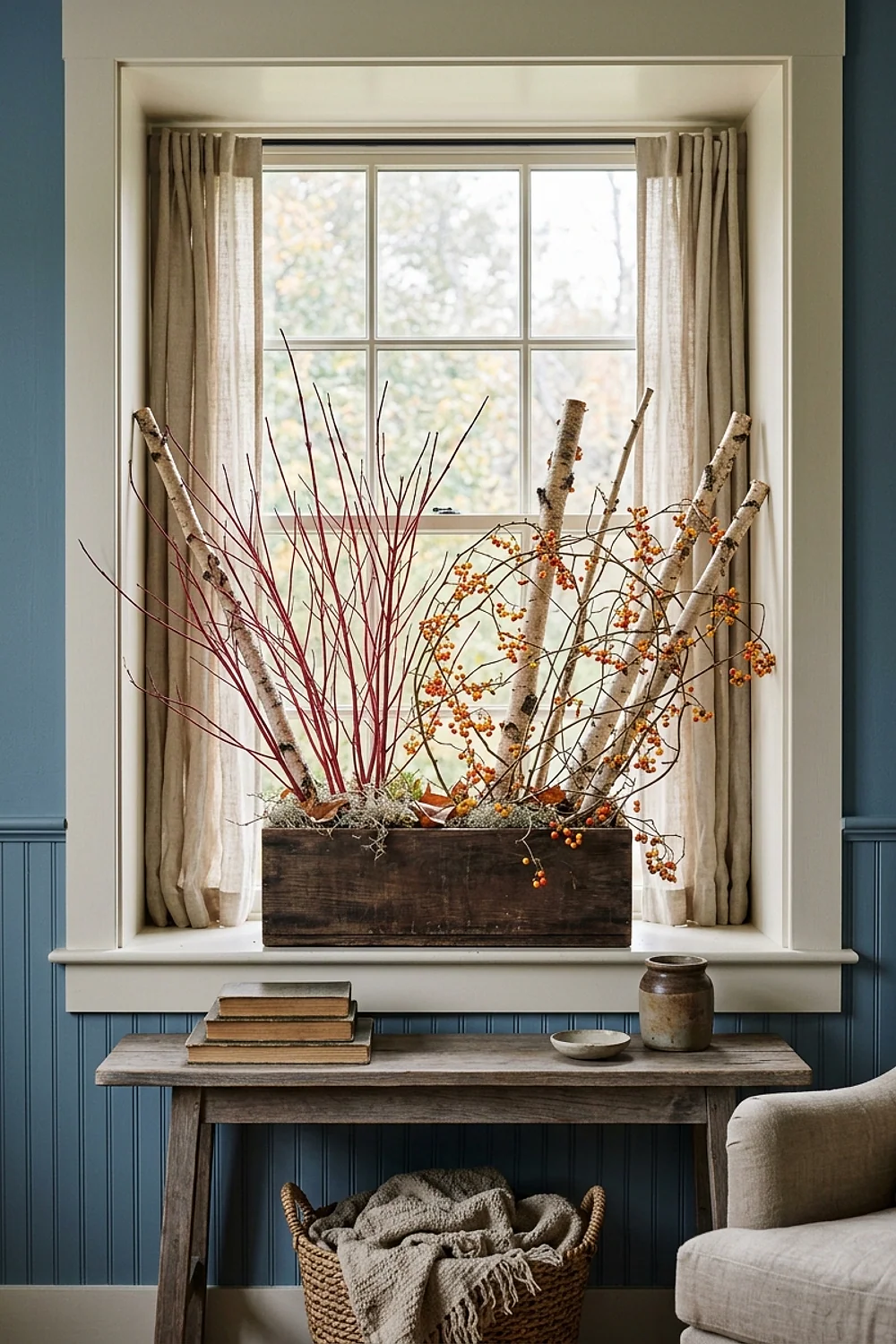
Tall branches in the back of a box give the vertical drama that florists charge by the stem for. Cut 24-inch pieces of red twig dogwood, birch or bittersweet from a roadside or backyard, with permission and pruners.
Push each stem 4 inches into the soil so it stays upright in wind. Bittersweet berries are toxic to pets, so leave them out if a dog likes to sniff around the porch.
16. Wheat and millet sheaves for height
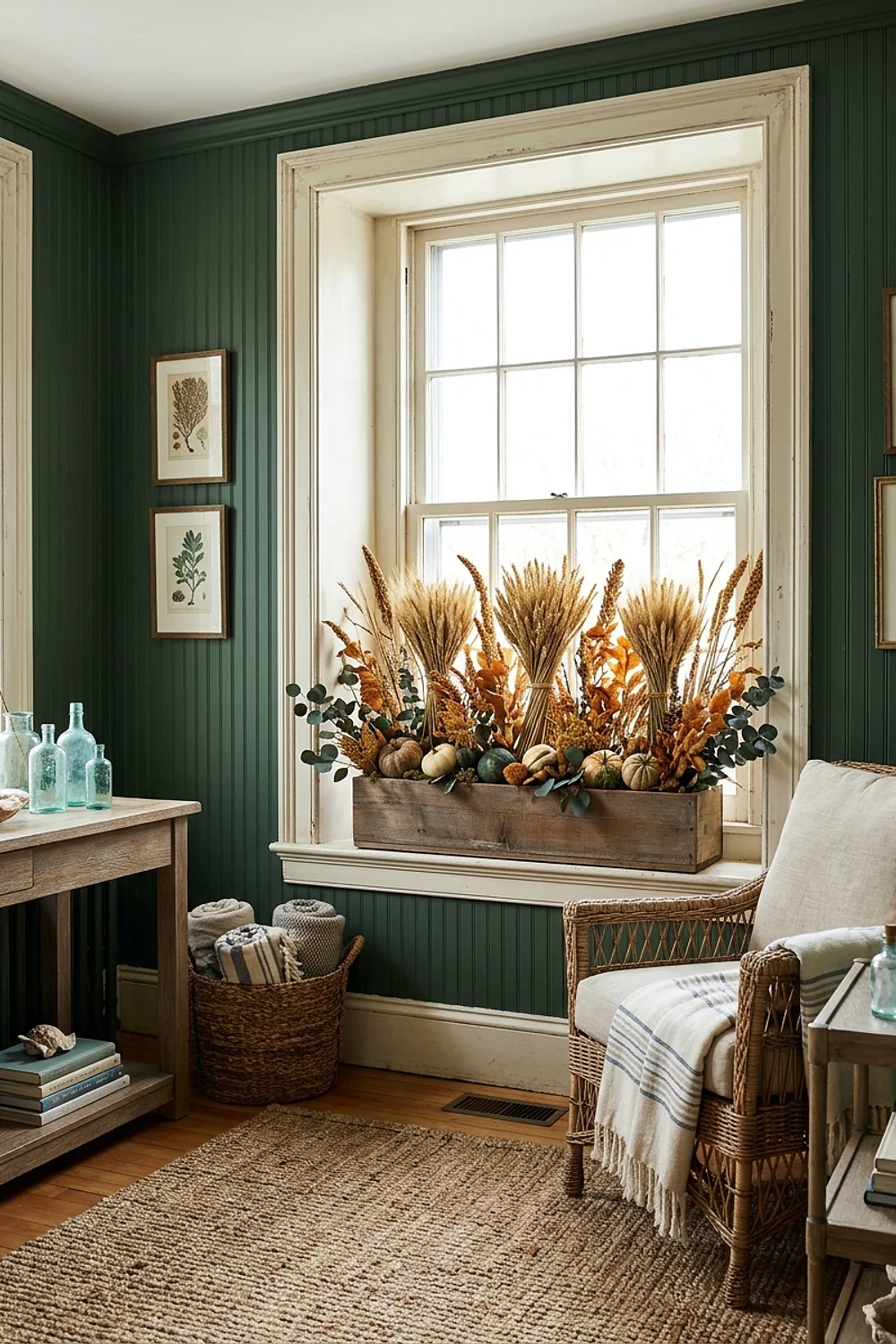
Dried wheat bundles in a pale gold tone look like the farmhouse-style arrangements in Pottery Barn catalogs. A craft-store bunch about 18 inches long is easy to cut down and tuck in.
Tie three or four stems together with a loose twist of jute so they stand as a clump, not a scatter. Bundled stems read intentional, while single strays look like leftovers.
17. Cool-weather watering that avoids soggy roots
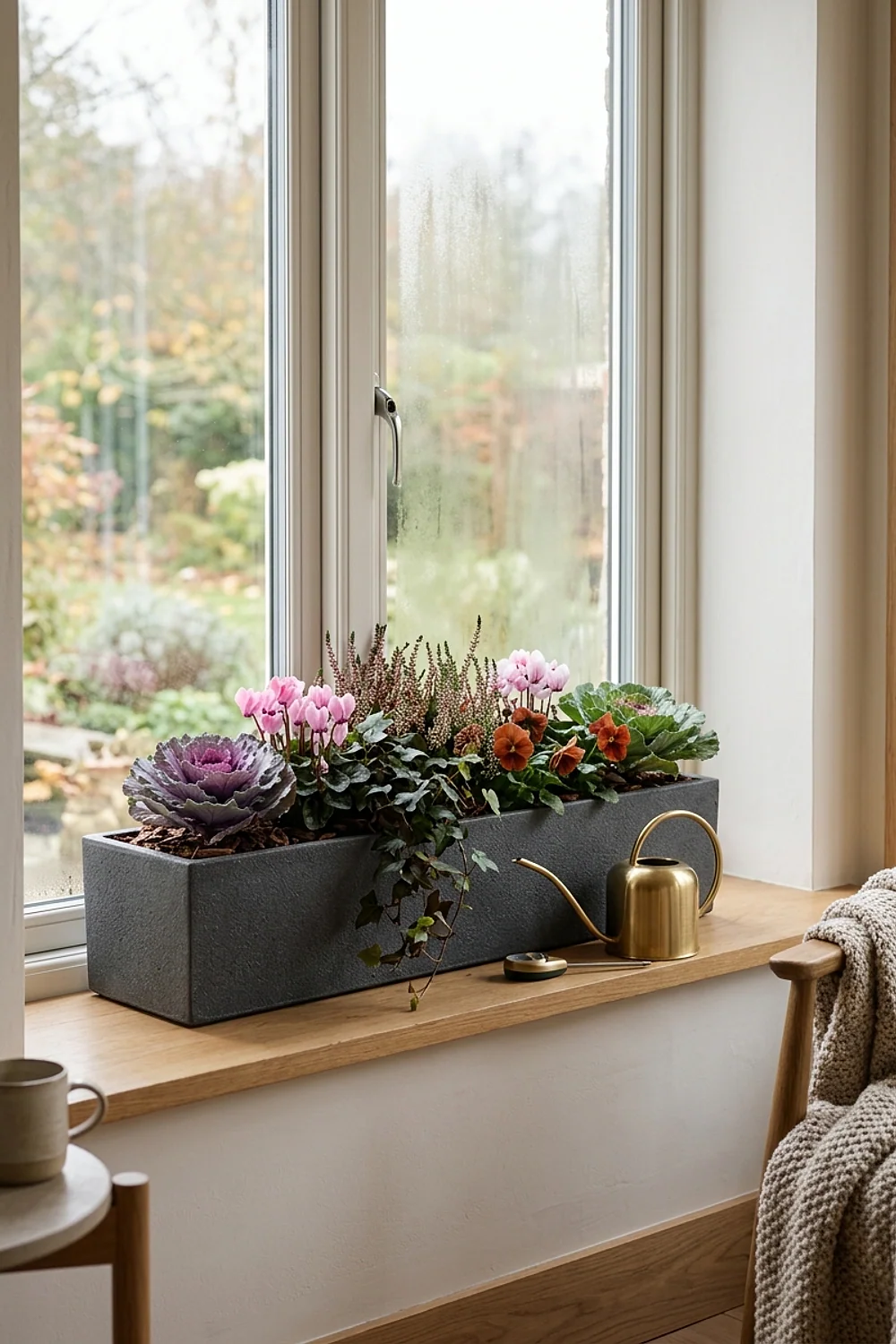
Push a finger one inch down into the soil before watering. If it’s damp, wait. Cool fall soil stays wet for days, and mums with waterlogged roots turn brown from the base up, so a summer schedule slowly drowns them.
In October, a box usually needs water about twice a week, less in a cold snap. Boxes under an eave or on a shaded north-facing sill dry slowest and need the finger test most. Avoid following a fixed calendar, and keep drainage holes clear of debris.
Small details, big impact
The last five ideas handle storage, touch, proportion and color, which are the details that decide whether a box looks pulled together.
18. Stackable plastic liners saved in a garage tote
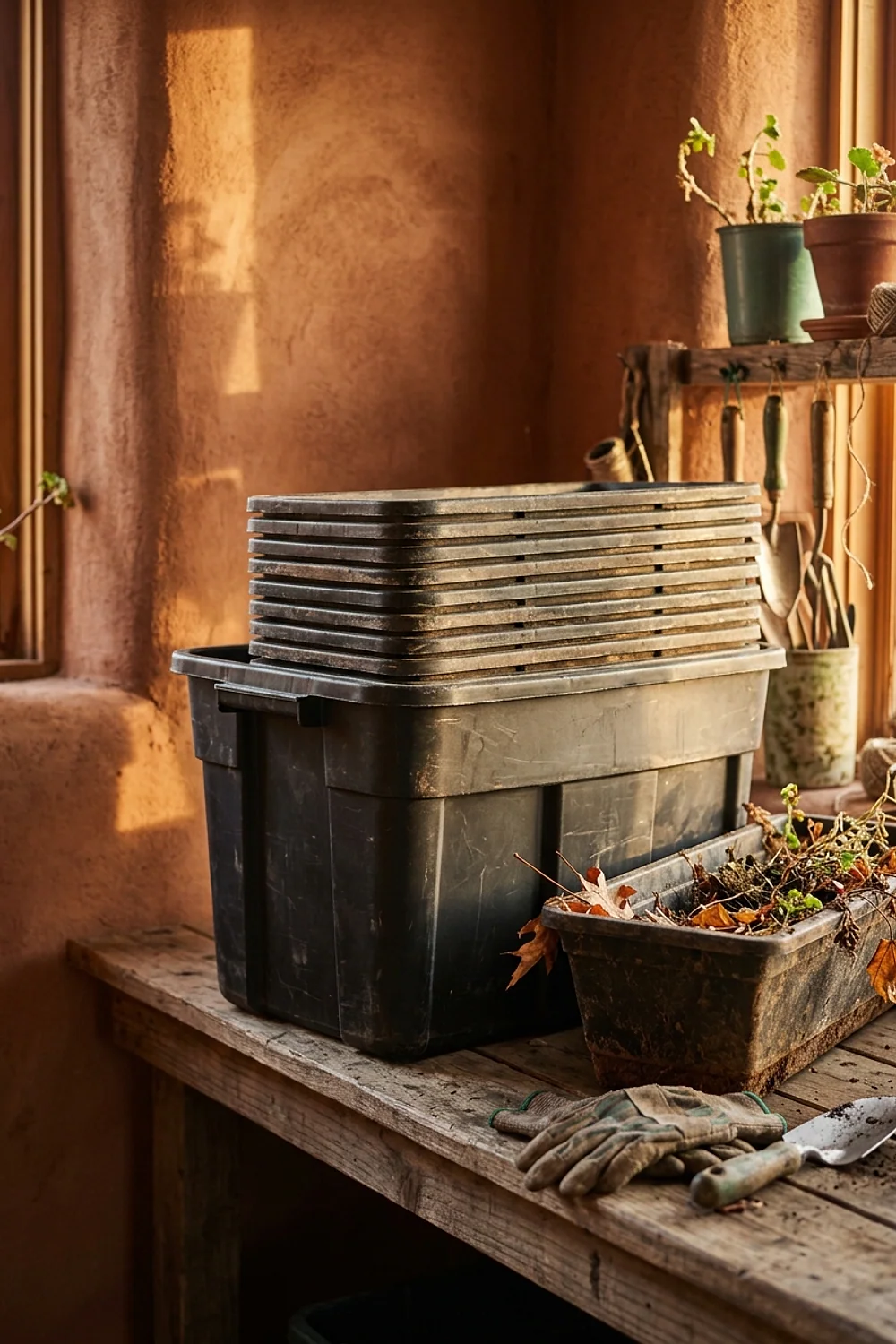
Fitted liners from specialty retailers run close to $30 each, while a plain nested set of plastic inserts is about $10 for two. Both do the same job: holding soil and letting water drain.
Stack the empties in a tote after Thanksgiving and they’re ready for spring. Wash them with a bucket of diluted vinegar first, since leftover soil can carry fungus into next year’s planting.
19. Lamb’s ear and dusty miller for soft, silvery texture
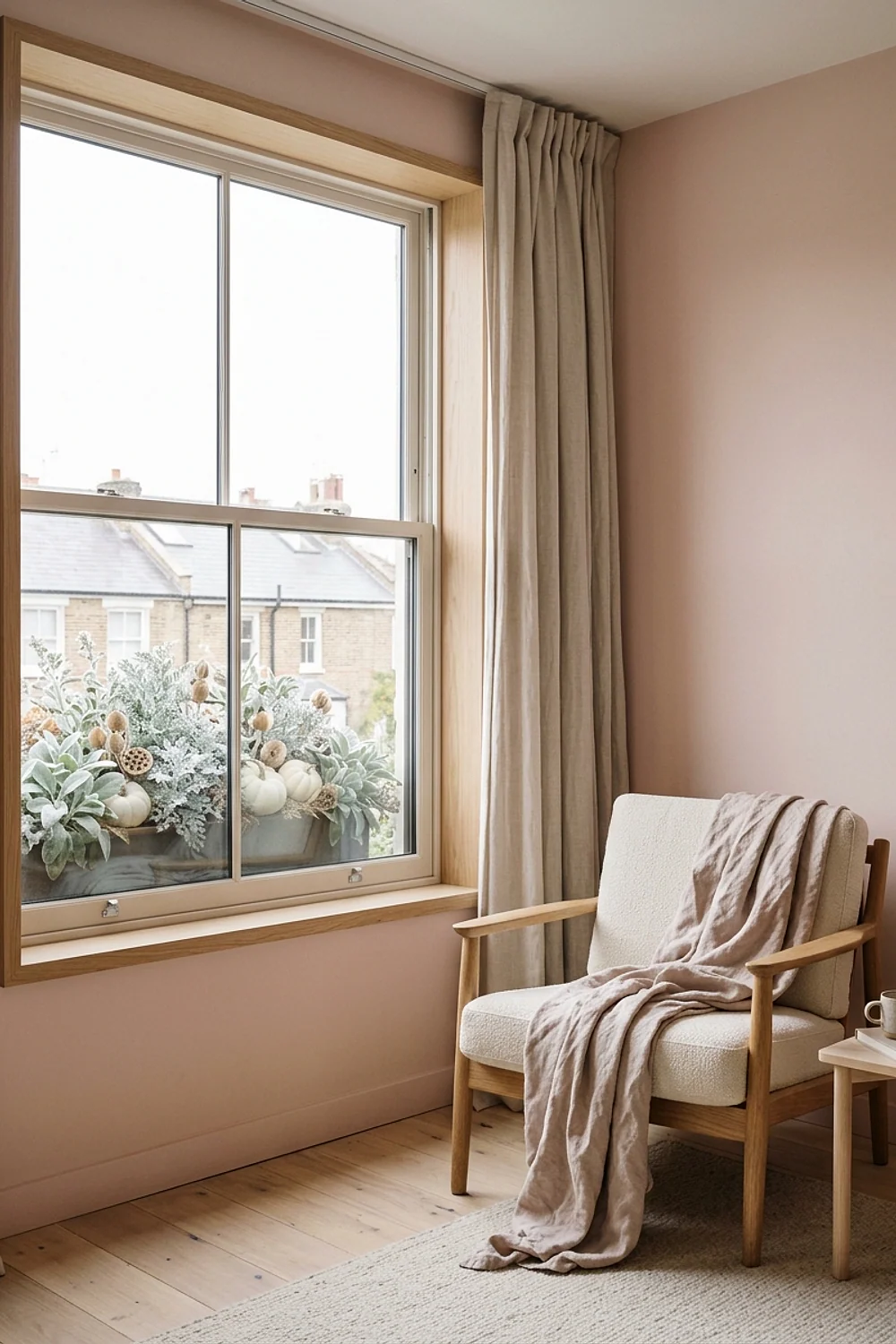
Lamb’s ear has a felted surface that feels like the underside of a suede jacket, and dusty miller has a cool silver tone. Both calm down loud orange mums, much like a neutral rug calms a busy room.
They suit a front porch where people brush past the box. One caution: lamb’s ear rots if it stays wet, so tuck it near the edge where air moves.
20. A box sized to two-thirds of the window width
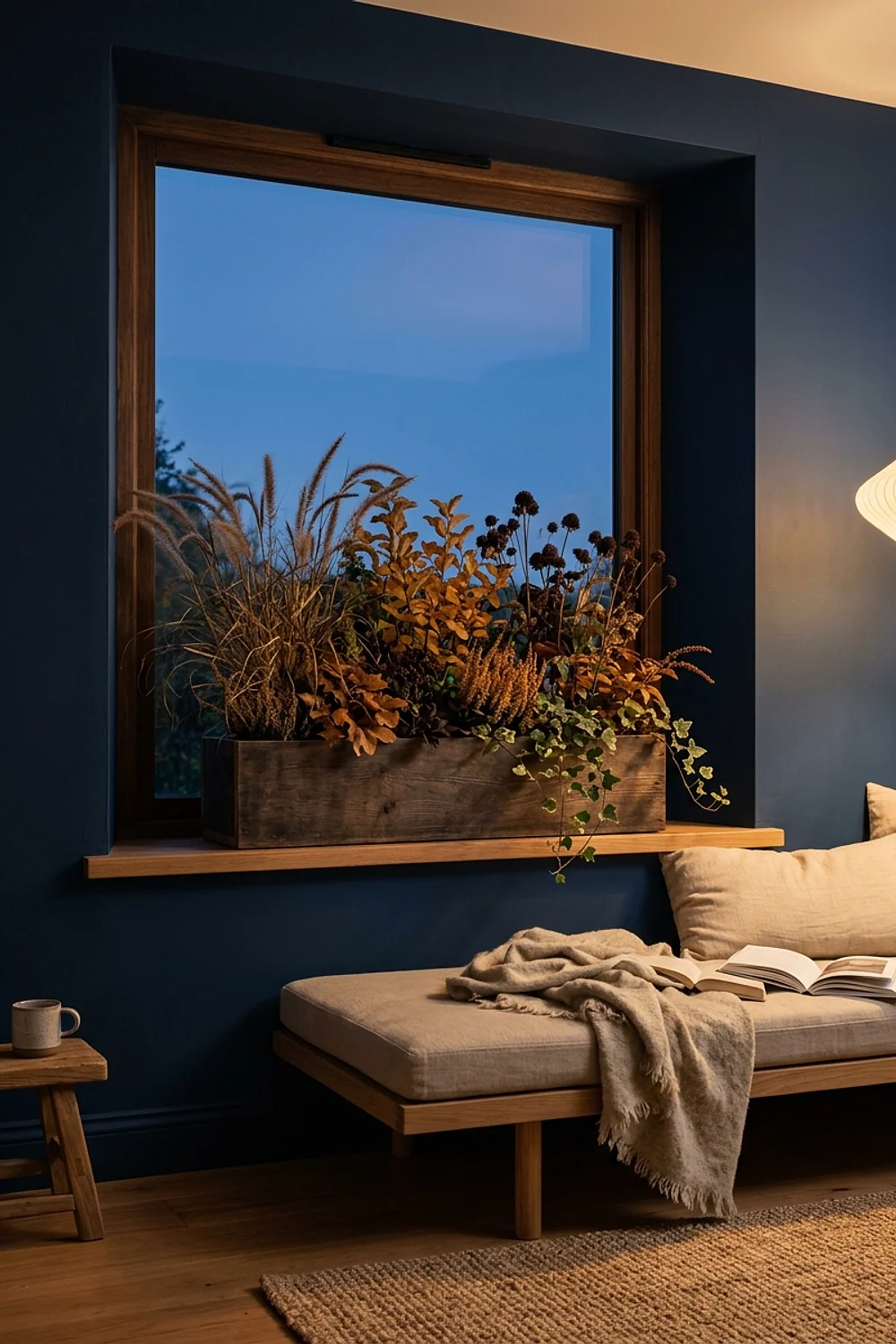
A box that spans about two-thirds to the full width of the window reads as built-in, and a 24-inch box under a 48-inch window looks undersized. Custom cedar boxes can run several hundred dollars, but stock boxes from big-box stores in 36 and 48 inches cost a fraction of that.
Measure the window frame first, then buy. If the numbers fall between sizes, go slightly wider rather than narrower.
21. Purple cabbage against chartreuse sweet potato vine
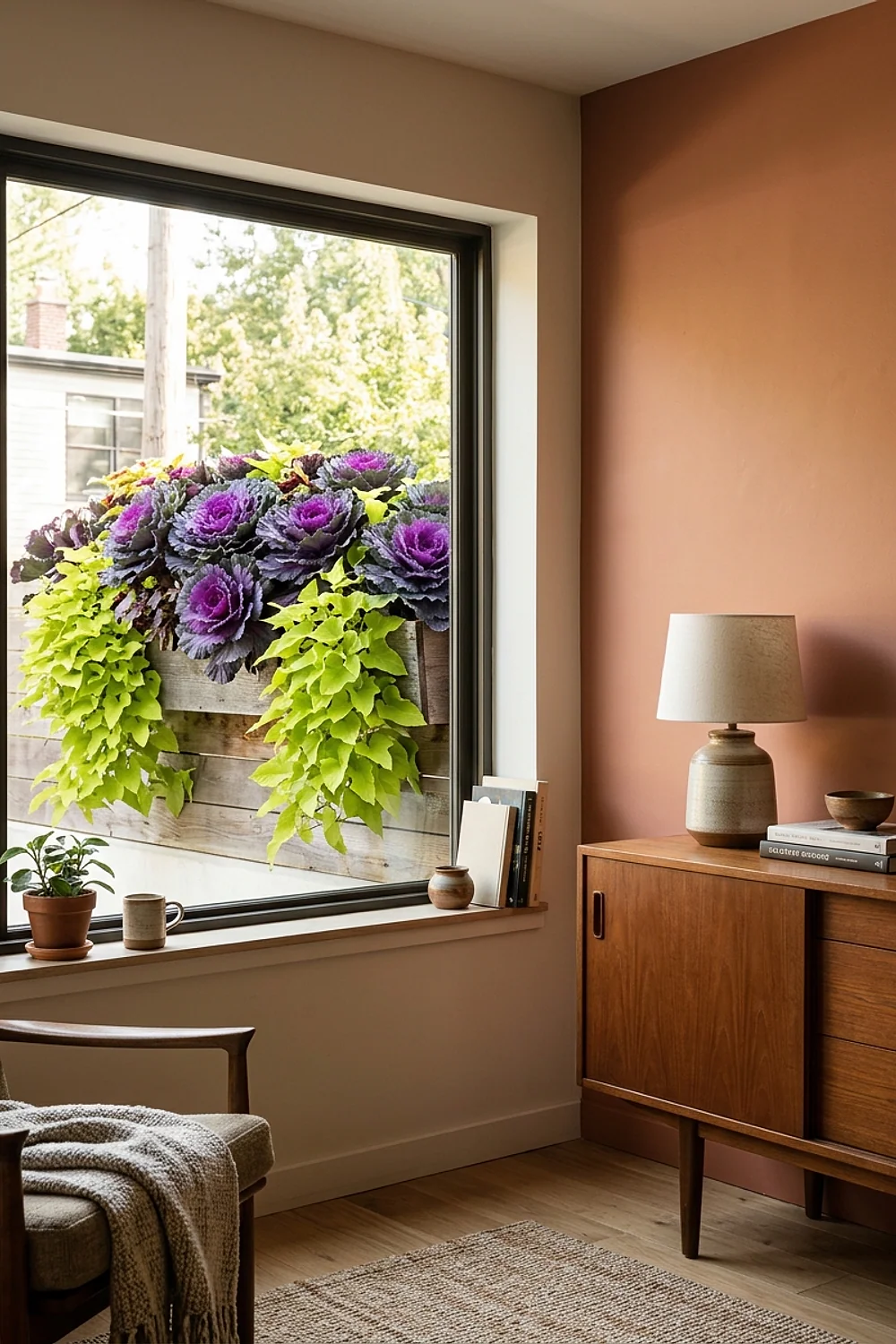
Purple cabbage planted beside chartreuse sweet potato vine pairs plum with acid green, opposite colors on the wheel that make each other look richer. It’s the same contrast that makes an eggplant velvet pillow pop against a lime-green wall.
Sweet potato vine is cold-tender, so it fades after the first hard frost. Use it for early fall, then swap in creeping Jenny when temperatures drop below freezing. This suits gardeners in mild-autumn regions or anyone happy to refresh a box midseason, but avoid planting the vine and expecting it to last into December.
22. A mirrored pair for double windows
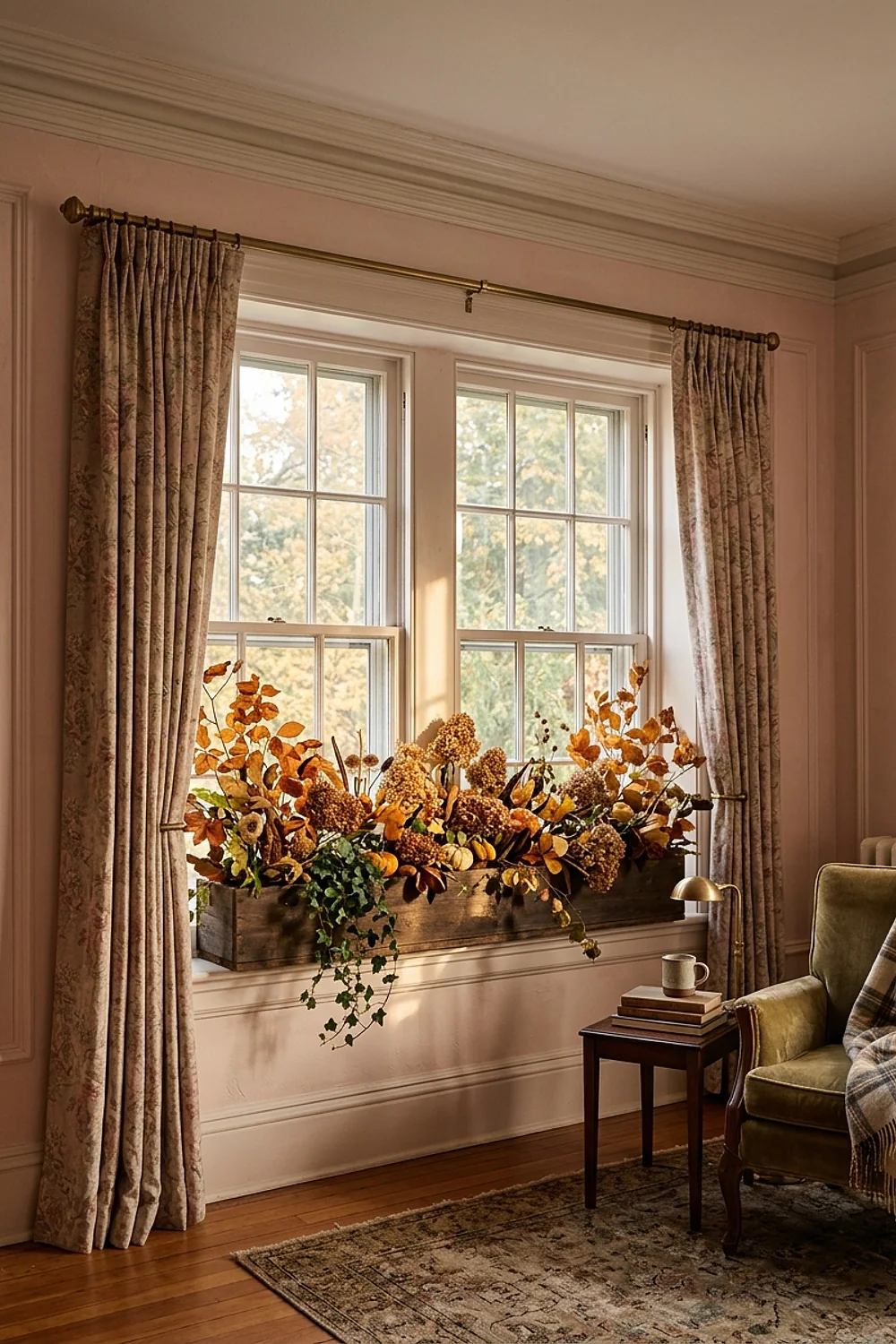
Two matching boxes under side-by-side windows look more expensive than one long box stretched across both, because the repetition feels symmetrical and intentional. Two 30-inch boxes cost about $35 total in plain plastic.
Plant them as a true mirror image, with the tallest stems near the center wall and the trailers at the outer corners. Slight differences in plant height are fine, but identical palettes matter.
Where to splurge and where to save
Fall window box ideas cost the most in the wrong places. Real cast stone, custom cedar and pre-planted showpieces are where retailers make their margin.
The savings math is simple. Three 8-inch mums at $8 each plus a $20 plastic box come to about $44, and a comparable pre-planted box at a specialty retailer runs well over $100 for the same footprint.
Spend on these:
- Brackets and fasteners, since a falling box damages siding and plants.
- One good focal plant, like a full ornamental grass.
- Warm LED lights with a weatherproof battery pack.
Save on these:
- The box itself, because paint disguises plastic.
- Pumpkins and gourds, which are cheapest bought by the pound.
- Filler stems, since branches and wheat are free or close to it.
The budget route beats the splurge here because a box only has to look good for about eight weeks. Paying for a heirloom-grade planter for that window doesn’t make sense.
Spotting quality at any price
Expensive-looking boxes share traits that have nothing to do with receipts. Check these before buying anything.
- Leaves are firm and evenly colored, with no yellowing at the base.
- Soil is damp but not dripping, and roots don’t circle out of the drainage holes.
- Buds outnumber open flowers on every mum.
- Paint finish is matte, with no brush marks or drips.
A quick squeeze test helps too. Healthy mum stems feel springy and crisp, and weak ones feel limp or hollow.
Look for the same signals on dupes as on originals. A $6 plant with firm stems and tight buds will outperform a $15 one that has been sitting on a warm loading dock.
Bringing it all together
Fall window box ideas don’t need designer pricing, only a limited palette, a clear layout and plants bought at the right stage. Start with one color story, build height in the back, and let something trail at the corners.
Save this list or pin it so it’s handy at the garden center. Before buying anything, measure the window width and note which way it faces, then try idea 1 first.